The first stork of the season is easy to miss and hard to forget. It comes back alone or in a pair, often before the weather has settled, and it stands in a wet field or on an old nest as if the winter had never happened. Once you have seen one, the season has started, whatever the calendar says.
The last week of February
White storks begin to return to Europe in late February, and the first birds usually arrive in a mild spell. A warm south wind helps them. Cold rain holds them back. The last week of February is the time to start looking properly. Local bird groups post their first arrivals, and those records can save you a week of empty fields. In a late year the first birds may not appear until the middle of March, and that is normal too.
The weather decides more than the date. Storks travel on warm air, and a run of mild days can carry a group north in a hurry. A cold snap can keep them waiting for a week or more. Many cross into Europe at Gibraltar or the Bosphorus, where the sea crossing is short. Watch the forecast for a southerly wind, then watch the sky. The same wind that brings the first birds can carry them past your valley, so check a second field before you go home.
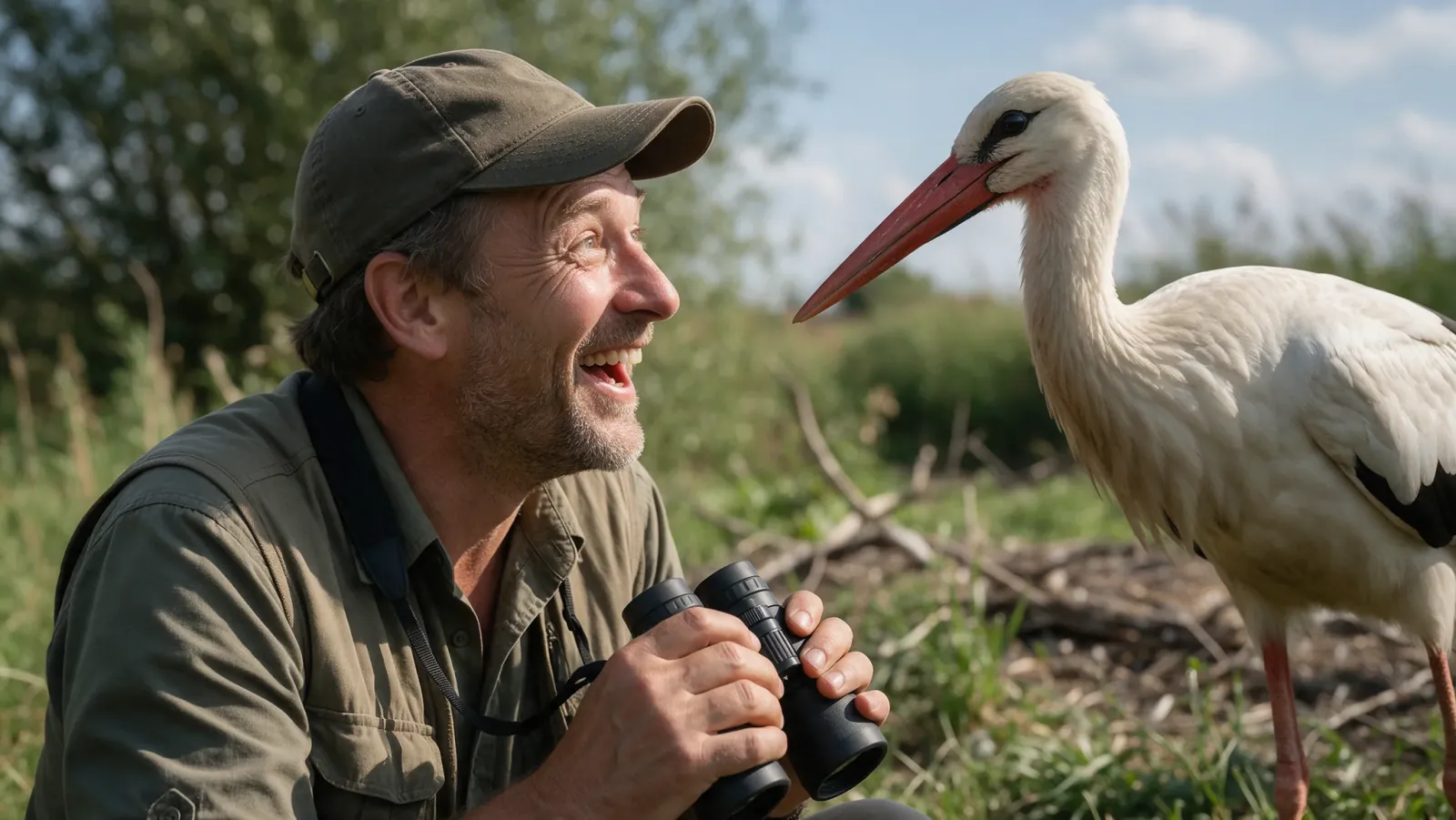
Scan the wet fields
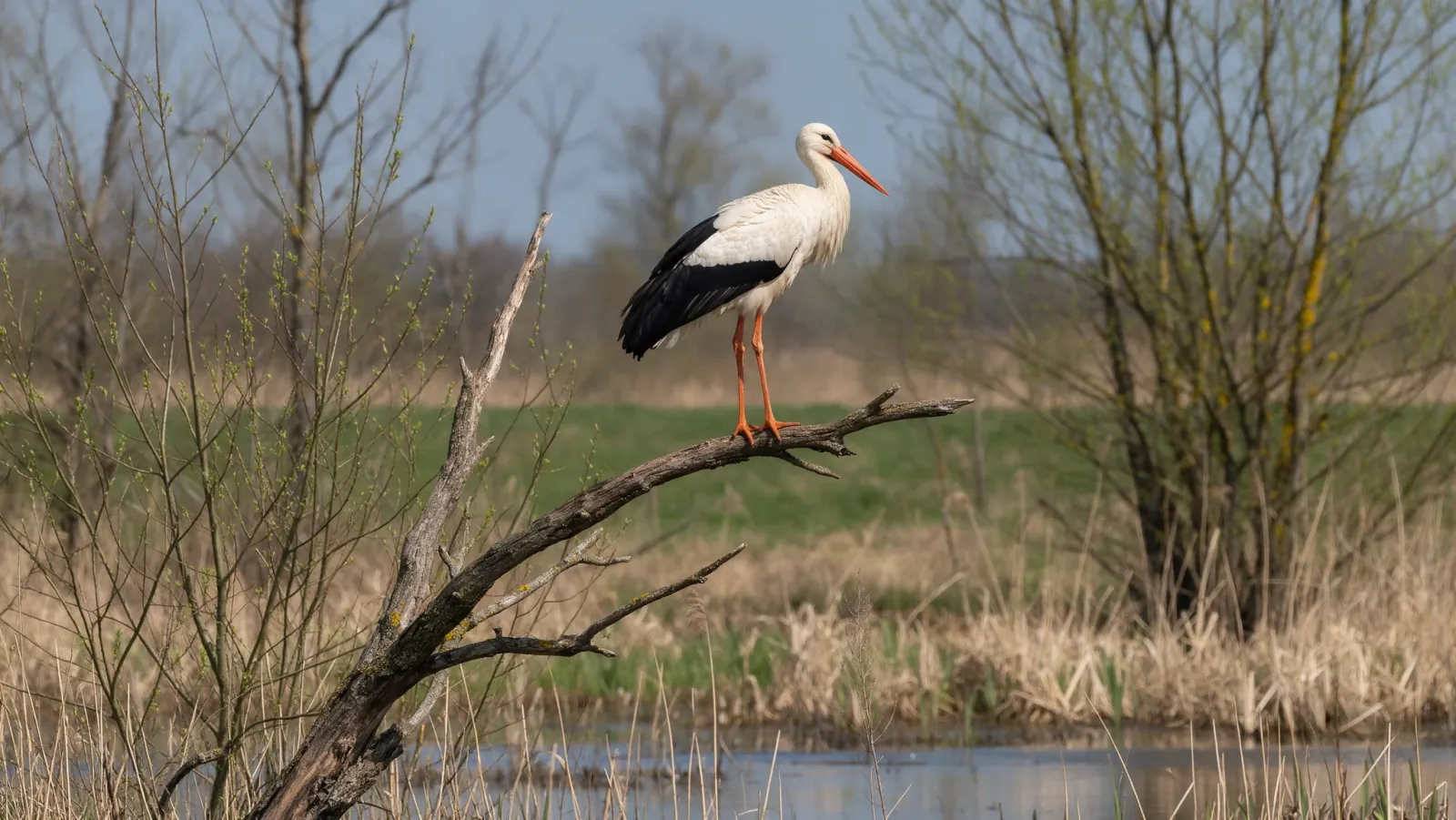
A returning stork needs food after the journey. Look at wet meadows, shallow ditches, flooded corners, and the muddy edge of a river. These are the places a tired bird will stop. The first stork of the year is more often feeding than flying. Drive or walk slowly along lowland roads and check every field with standing water. A car makes a good hide: stay inside, slow down, and check the verge before you stop.
Water is the first thing to read. A white stork hunts by sight and by the touch of its bill, and it needs ground it can wade through without sinking. Hay meadows that have just been cut draw birds because the cut grass exposes every small creature that was hiding in it. Ditches beside farm tracks and the shallows of fish ponds work in the same way. Walk the edge of a field and scan slowly, one field at a time. A bird feeding with its head down can be surprisingly hard to see until it moves.
Watch the old nests
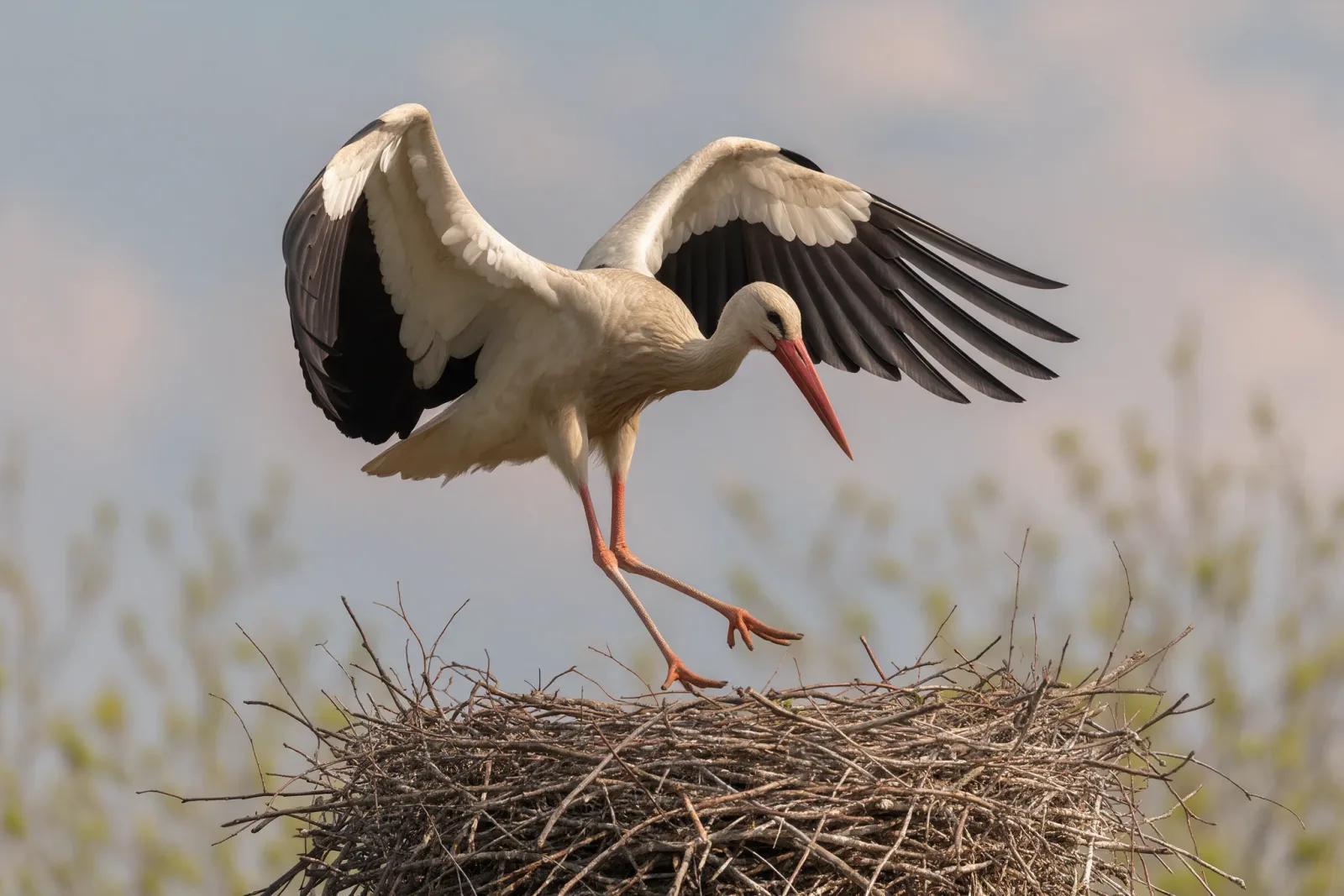
Many storks return to the nest they used the year before. A bird standing on a bare nest in early March is a strong sign that the season has begun. Watch the nest for a second bird and for the first clatter. A repaired nest is a better sign than a single flyover. Sticks carried in and a bird lying low mean a pair is settling.
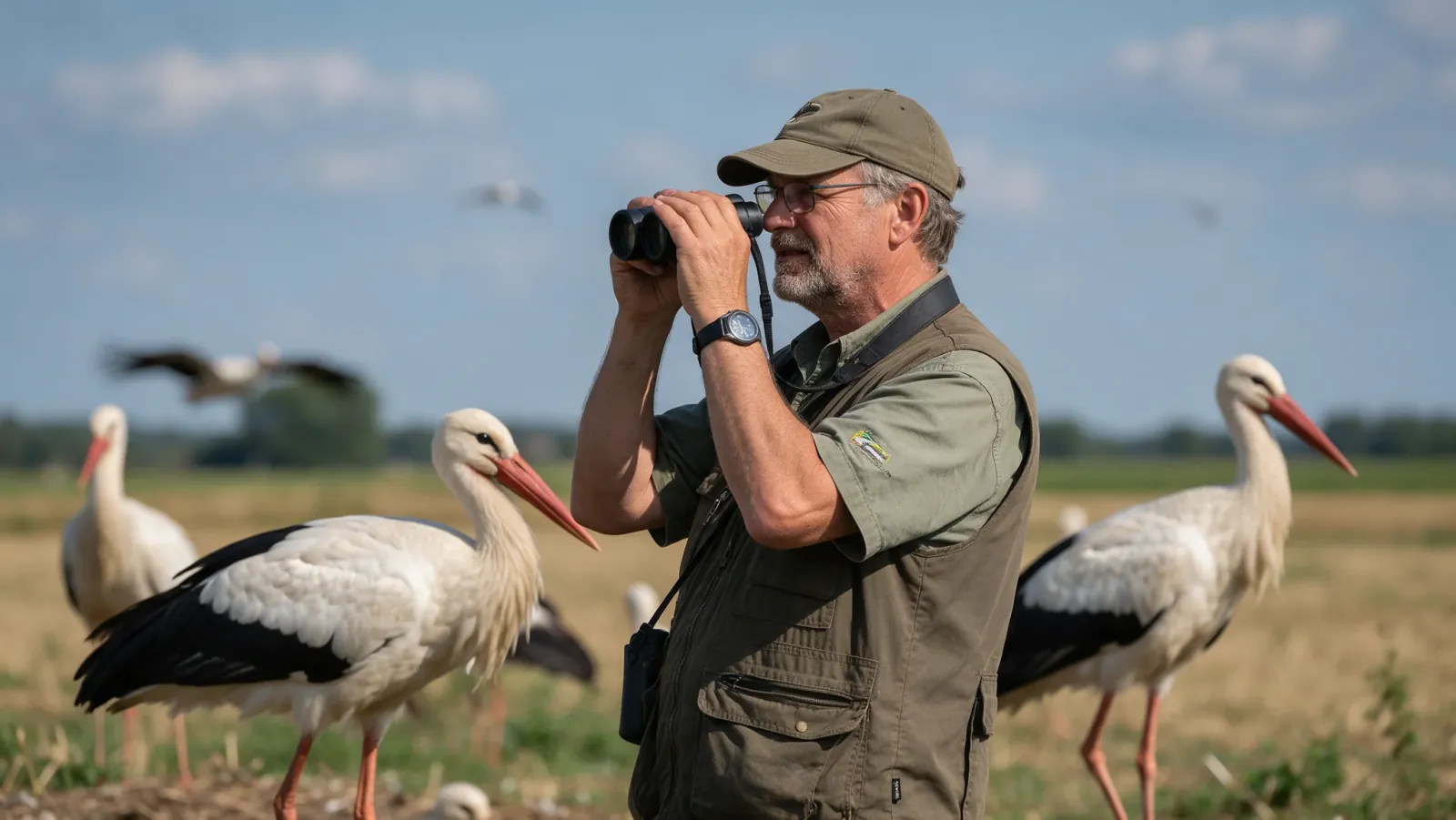
A nest on a chimney, a church tower, a telephone pole, or a platform put up for the birds is usually visible from a public path. Add the known nests to a short loop so you can check several in one morning. Keep your distance. One bird often stands guard while the other feeds, so the nest is rarely empty through the day. A white shape on a roof at dawn or dusk is worth a stop.
Neck out, legs trailing
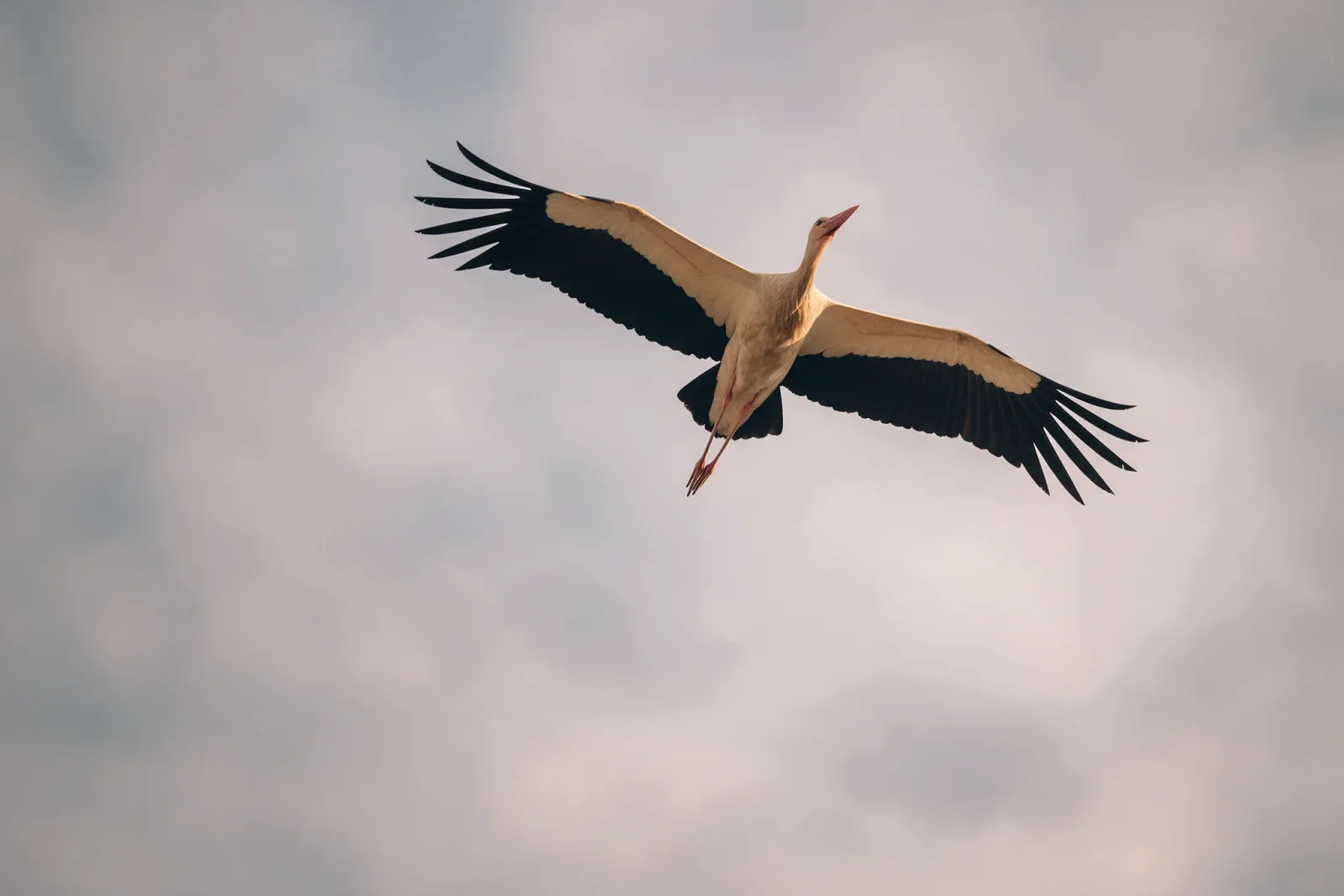
A stork crosses a field with slow, steady wingbeats and long glides. The neck is stretched out and the legs trail behind. A heron, the bird most often confused with it, flies with its neck pulled back into an S. Neck out, legs trailing: that is a stork. The white body and black flight feathers show clearly against a grey sky.
Size helps at a distance. A white stork stands about a metre tall and carries a wingspan near two metres. It reads as too big for the gulls around it, and its flight is slower and steadier. Cranes also fly with the neck out, but they are grey and their legs trail further. Once you know the stork's outline, you will spot it above a field before you see the colours.
The first bird is a traveller
Most of these birds have spent the winter in sub-Saharan Africa. A bird over your field may have flown thousands of kilometres in the past few weeks. The first stork is a long-distance traveller arriving on a familiar roof. The same bird may return to the same nest for several years, and a ring can prove it. A ringed stork carries a small metal band on the leg, and the number on it can tell you where the bird was born and how old it is.
The journey is the reason the arrival feels like news. It has crossed sea and mountain and found one particular chimney again. That is also why the first bird matters for the record: a date and a place, written down, become part of a longer account of how the season runs in your corner of the country.
A ring is one sign of a returning bird. The same nest, used year after year, is another kind of proof. Storks repair what winter loosened and add new sticks to the platform, so the nest grows into a record of every spring. A pair that comes back to the same roof tells you something about the place: the food is reliable, the perch is safe, and the people below have left the birds alone.
The weeks that follow
After the first bird, the rest arrive quickly. Nests are claimed, pairs greet each other with clattering bills, and the village gets loud. By April the colony is at its busiest, and the first bird is hard to pick out of the crowd. Watch the same field through March and you will see the whole arrival. The season begins with one bird and ends with a sky full of them.
Courtship leads to eggs within a few weeks. A white stork clutch is usually three or four, laid a day or two apart, and the pair takes turns incubating for about a month. From the ground you will see one bird standing while the other lies low, and a changeover marked by a short clatter. The nest goes quiet once incubation starts, and that quiet is a good sign.
Write the date
Note the date, the place, and the weather. The record is worth more each year. A run of first dates will show you whether your birds are early or late, and which winds bring them. The first stork is a data point as well as a pleasure. Ten years of dates make a small local history of the season.
Add the wind and the weather beside the date. A date with weather beside it becomes a pattern. Next spring you will want to compare it, and in ten years the notebook will show whether your storks are arriving earlier or later. The first return is a single moment, and the notebook is how you keep it.
Explore the gift