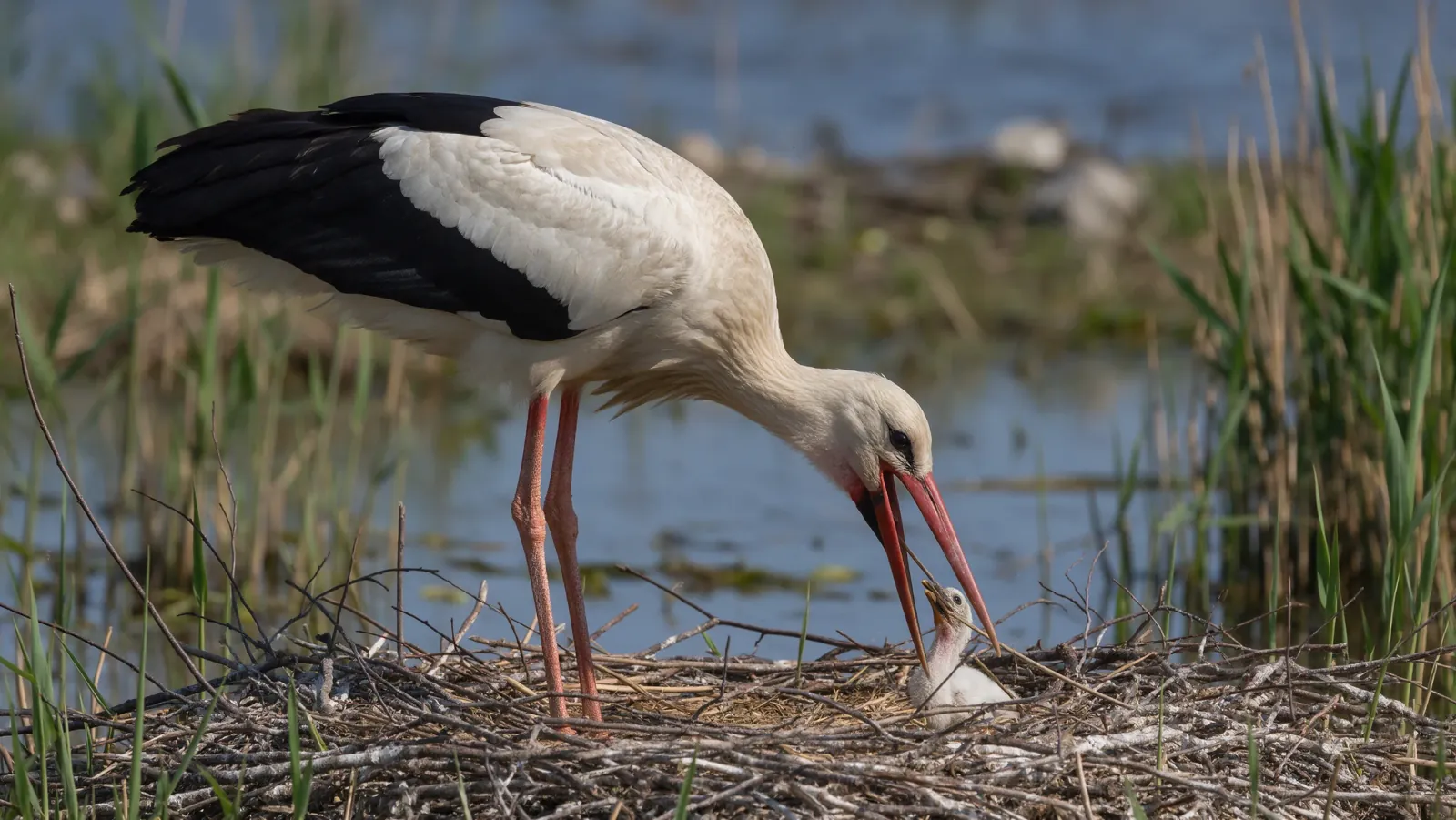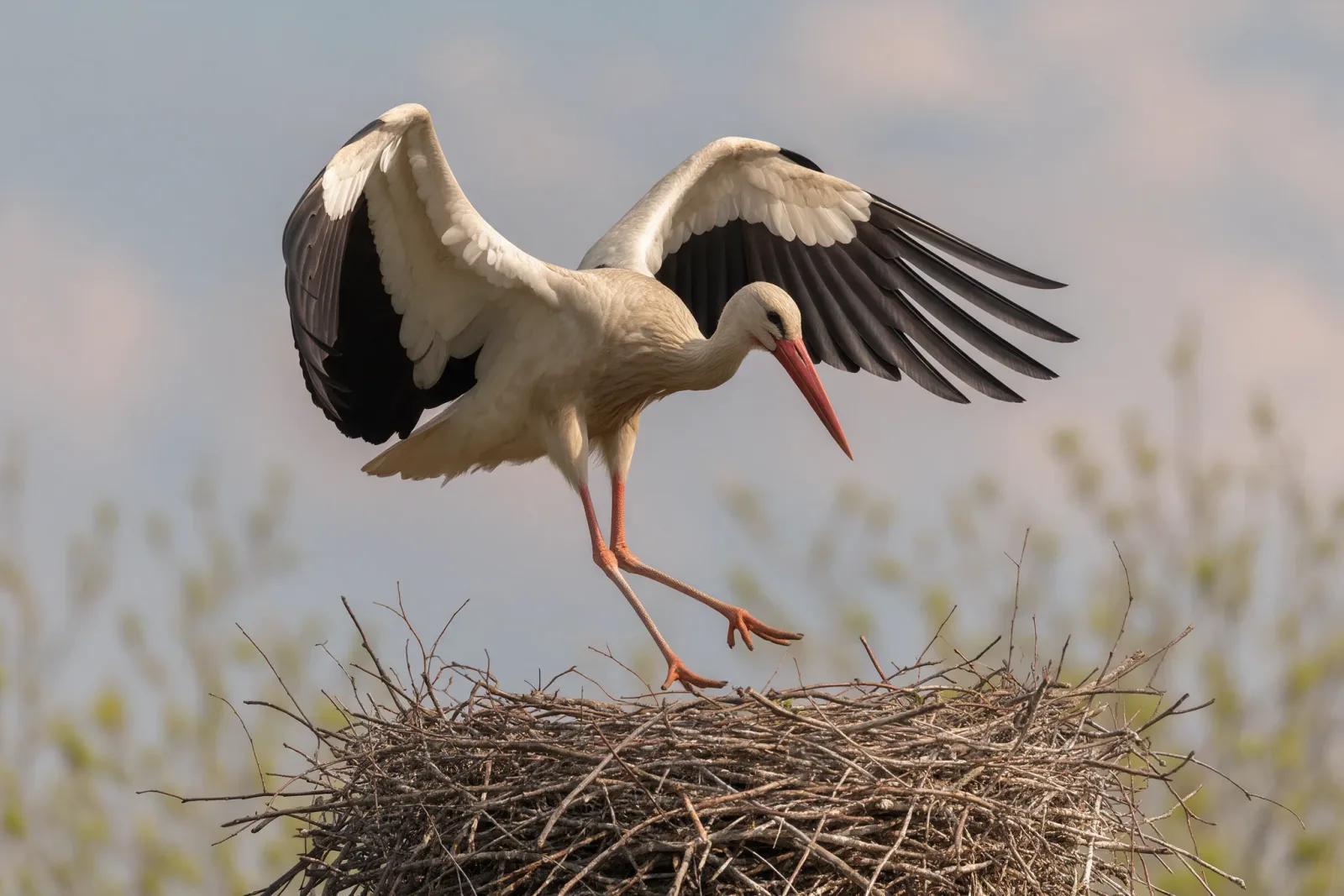
April is the month when storks are most visible in Europe, and it is also a month when a lot of babies are born. The two facts sit close together, and they explain most of the interest in storks each spring. The birds are on the nests, the chicks are hatching, and the old story about the stork and the newborn is at its most believable.
Why April is the loud month
The birds are back, the nests are occupied, and the clattering carries across rooftops. Eggs are being laid and chicks are appearing, so there is something to see every day. People notice, and noticing turns into looking things up. April is when the most people see a stork, and seeing one is what starts the search. The pattern follows the bird rather than any campaign. The bird is simply at its most present.
The baby season overlaps
Births do not cluster as tightly as storks do, but spring is a busy season for new babies. April and May bring a steady run of births, and the old story joins the two calendars without much effort. A bird that arrives with the warm weather and a baby that arrives in the same weeks make a single picture. The story works because the bird and the birth arrive in the same season. That overlap is old, and it is the reason the stork is still the first animal people think of when a child is born.
What that means for a gift
When a baby arrives in spring, the people around the family look for something that fits the moment. A stork gift fits because the bird is already in the air and in the conversation. The choice is wide, from a soft toy to a printed card to something that lasts longer. If you want a present with a story attached, adopt a stork gives the baby a named bird with a route to follow. The link to the season is honest: the gift is about the same bird people are watching on the roof.
Timing the gift
The date matters more than the object. A gift that arrives before the birth can sit in the room and wait, and it gives the parents one less thing to think about in the first days. A gift that arrives after the birth can carry the name, which many people prefer. The best time to order is before the birth if you want it in hand, and after if you want the name on it. For a christening or a first birthday, the spring window is wide enough that a little planning is all it takes.
A gift for the grandparents too
Grandparents are often the ones watching the nests. A gift that names a stork can go to them as easily as to the baby, and the route gives them something to check through the summer. The bird leaves in late summer, and the record of it stays. A named stork gives a household a bird to follow after the pram is put away. That is a small thing, and it lasts longer than most small things.
A season with a date on it
By June the chicks are standing at the rim of the nest, and the gift is on a shelf or a wall. The birds leave in late summer, and the nest empties. What stays is the date and the name, and the memory of a spring when a baby and a stork arrived in the same month. The season passes, and the record of it does not. That is the practical case for ordering in April: the bird is here, the baby is here, and the moment has a date.
In late summer the storks go south and the platform goes quiet. The nest stays up, and the date on the gift stays with it.
Explore the gift