The sound a white stork makes does not work like a blackbird's song. It is a rattle, produced by the bill, and it carries across a village on a still spring morning. Once you know it, the noise becomes a small grammar.
A bill in place of a voice
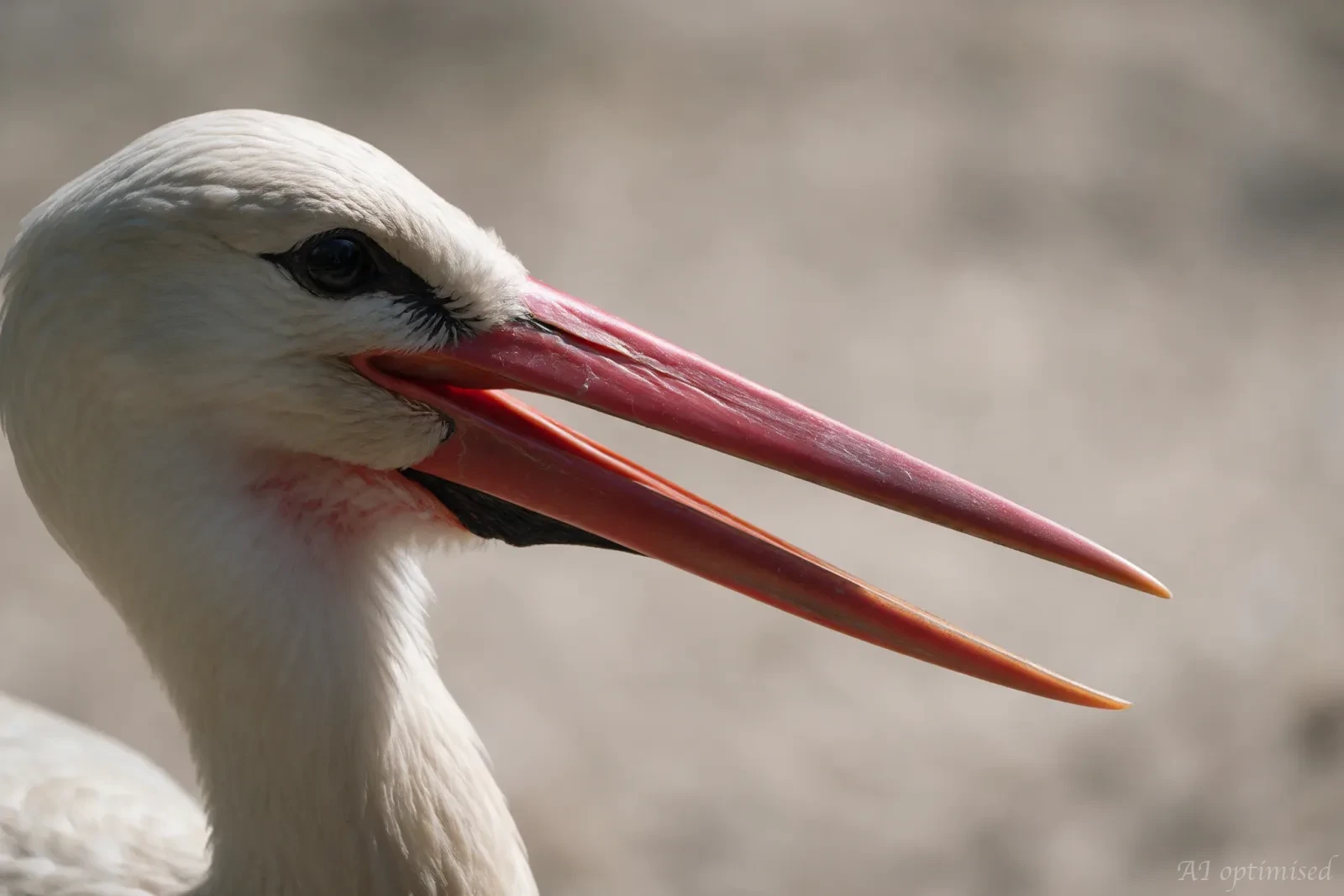
Birds sing with a voice box, and a stork's is small and weak. What it has instead is a long, hard bill and a neck strong enough to snap the two halves together many times a second. The upper mandible strikes the lower, the knocks blur, and the result is a dry, wooden rattle that travels far over open ground. The clatter is the closest thing a white stork has to a voice. It has rhythm and little melody, and each bird's rattle has its own pace.
The bill is long, hard, and slightly hollow, which helps the sound carry. A stork can vary the rate, and the rate changes the meaning. Close up the noise is almost painful. From a field away it is a dry flutter, like a distant woodpecker. People hearing it for the first time look in the hedges, and the sound is above them, on the chimney or the pole. Look up first, then follow the sound to the nest.
The greeting on the nest
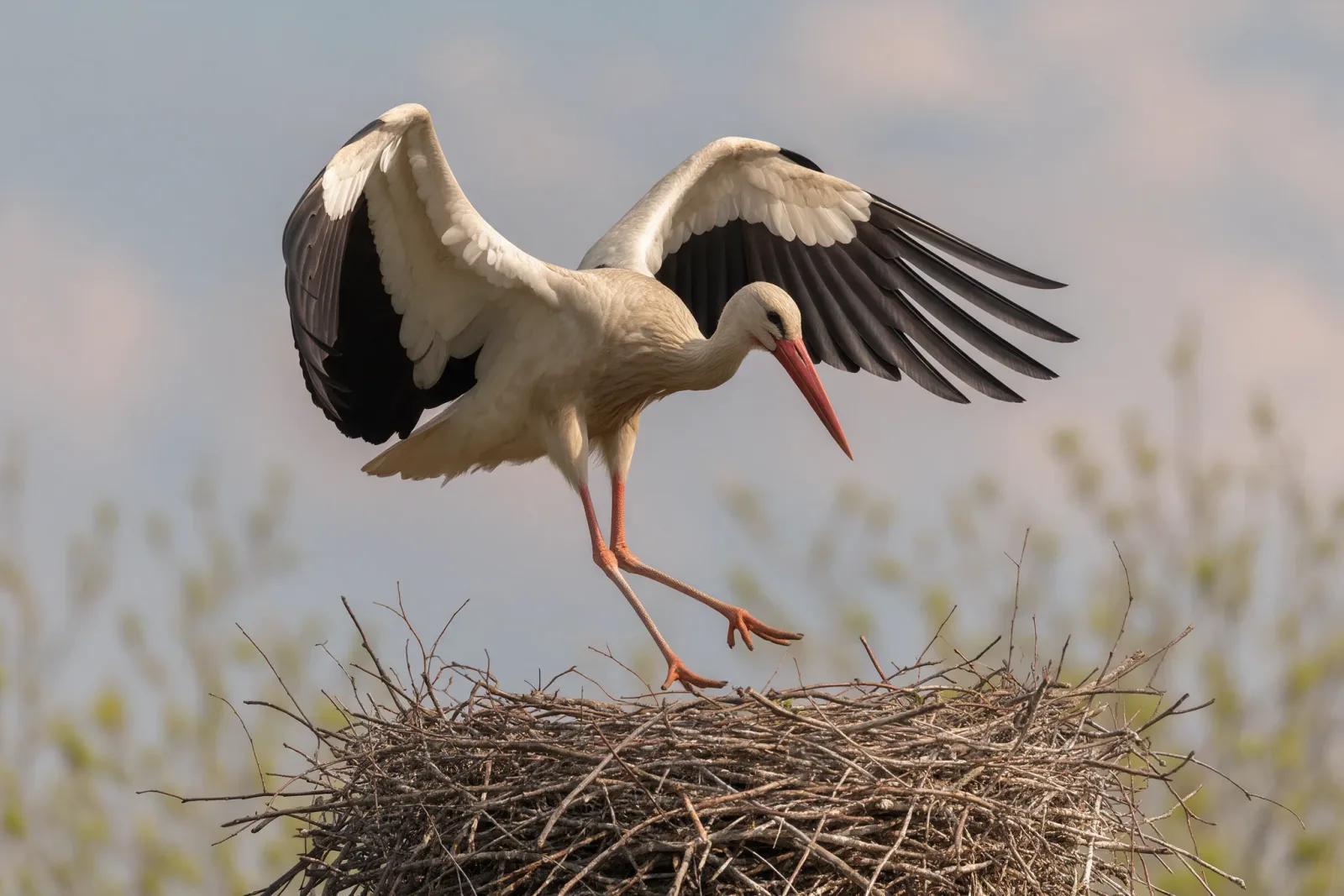
The clatter you are most likely to hear is the welcome. One bird of a pair flies in and lands on the nest, and both throw their heads back over their shoulders and rattle at each other. The bills point at the sky, the heads rest on the back, and the sound rolls out like a stick dragged along a fence. It looks like applause and sounds like a wooden toy being shaken. The greeting says the same thing every spring: I am here, and so are you. A pair may keep it up for a minute before settling. They greet each other every time one returns, and the small ceremony is easy to watch from a road.
The habit keeps the bond visible, and it gives the watcher a reliable moment to watch. Two birds may clatter at once, bills pointed at the sky, and the sound arrives from above before you have found the nest.
Courtship and answering
In early spring the greeting becomes the courtship. The two birds stand close, bow, spread their wings, and clatter in turn, one starting as the other stops. The exchange can go back and forth for several minutes. It binds the pair to the nest and to each other, and it is one of the few displays a stork performs at close range. Two large birds, heads thrown back, making a noise like a small wooden mill. The birds may repeat it several times before one settles.
You do not need to understand it to feel the warmth in it. Watch which bird starts, how deep the bow goes, and whether the other answers at once. A pair repeats its own small ceremony, and after a few mornings you can recognise them by the pattern before you see them clearly.
The hard rattle of a warning
The same instrument makes a harder sound. When a stranger comes too near the nest, the rattle quickens and sharpens. The bird stands over the nest and clatters until the intruder moves on. The difference between greeting and warning is in the speed and the posture. A greeting is loose and rhythmic. A warning is fast, repeated, and aimed at you. If a stork starts that rattle while you are watching, you are the reason, and the kind thing is to back away. A warning often stops as soon as you step back, and the pair returns to the nest.
A pair can switch between the two within a minute if a person walks past the nest. Listen for the change. A greeting rises and falls and often ends in a shared pause. A warning keeps going, faster and harder, until the intruder moves.
How far it carries
On a still morning a clatter can be heard across several fields. The sound travels best over open ground and water, and it is muffled by trees and buildings. That is why a colony is often heard before it is seen. Stand on a quiet lane at first light and listen for a dry rattling from the roofs. If the air is moving, the sound breaks up and you may need to be closer. The distance a clatter carries is a rough map of the weather. A clear, carrying morning usually means a calm day ahead. The sound is one of the few bird sounds that is easier to imitate than to describe: tap two pencils together in a quick burst and you have the idea.
The first and last hours
The two ends of the day are the best hours for listening. Cold air holds sound and settles the wind. At dawn the marsh is quiet enough to hear a bill snap from a long way off. Mist lies in the hollows, and a stork that spent the night on a roof will stretch, preen, and sometimes clatter a greeting to its mate. You may hear a redshank, a curlew, water moving. The low sun also separates a white bird from a pale sky. You see shape instead of a bright blur.
Dusk is gentler. Birds that have fed all day drift back toward the nest or the roost, singly and in small groups. White bodies show against a darkening sky. A pair meets on the nest and exchanges a soft rattle. The field goes quiet in stages. The dusk watch asks less of you and gives back almost as much. You can stay until the last shape is gone and still walk out in usable light, which makes dusk easier than dawn for most people. Bring a hat and a flask, because the edges of the day are cold even in summer.
The clock moves through the year. In early spring the dawn watch begins late and the dusk watch comes early. By June the light lasts from before five until after ten, and you must choose one. Take the hour you can keep. A watch you repeat is worth more than a perfect watch you manage once.
Chicks learn the sound
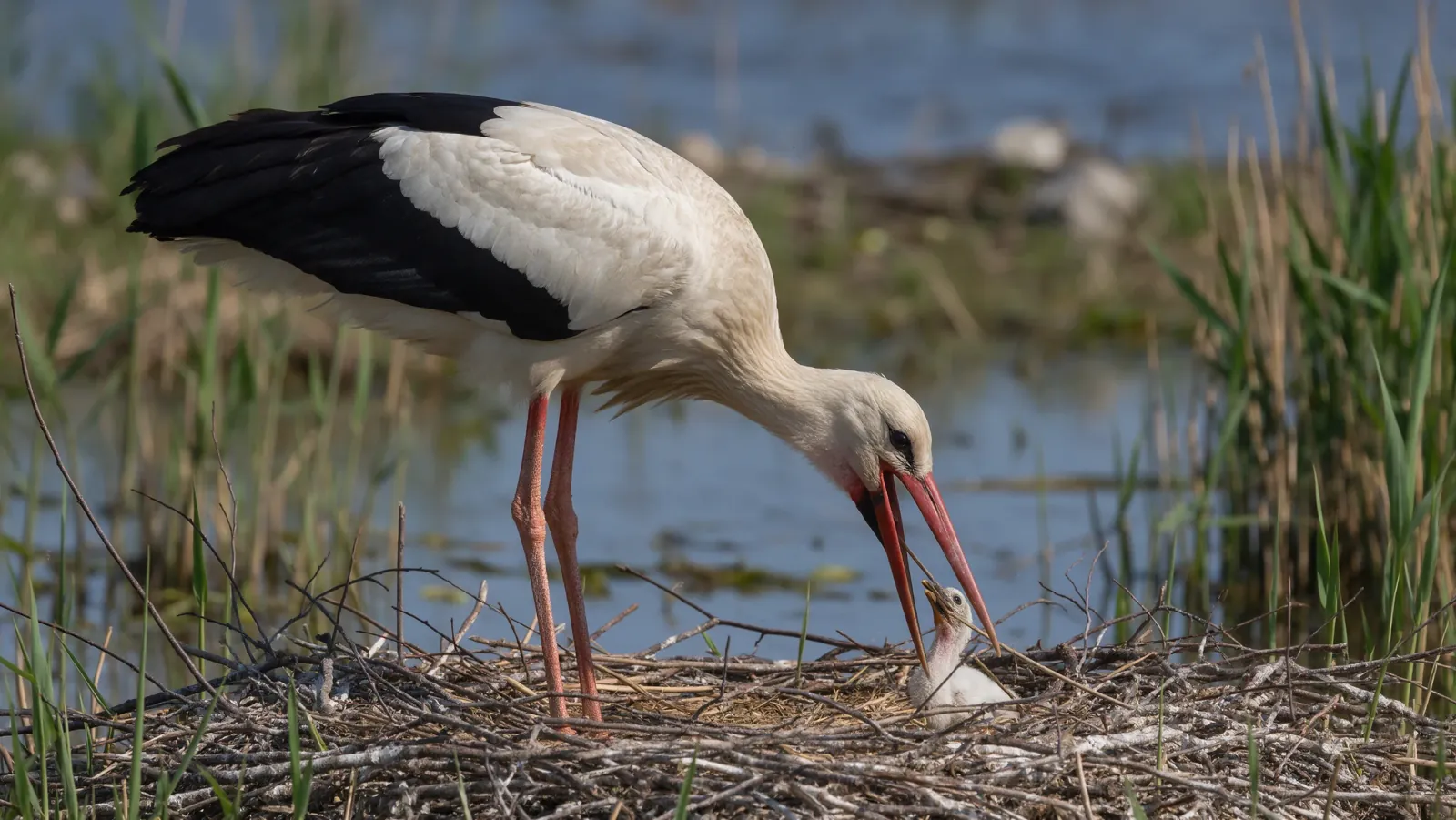
Young storks beg with a thin piping hiss, nothing like their parents. They hear the clatter from their first days and learn it before they can make it. By the time they stand on the rim and flap, the sound is part of the household. A colony in summer is a lesson in how a call is passed down. The thin begging stays, and the adult clatter becomes more frequent and more insistent as the chicks grow. You can hear the change in a colony as the season moves on.
A pair you hear often becomes recognisable by rhythm alone. You do not need a name for every bird. Knowing that one pair is faster than another is enough to make the colony feel inhabited. Listen for the first clatter in late winter, when the first bird returns.
You will hear the pair before you see them on the nest, and the sound will tell you which pair you are standing under.
Explore the gift