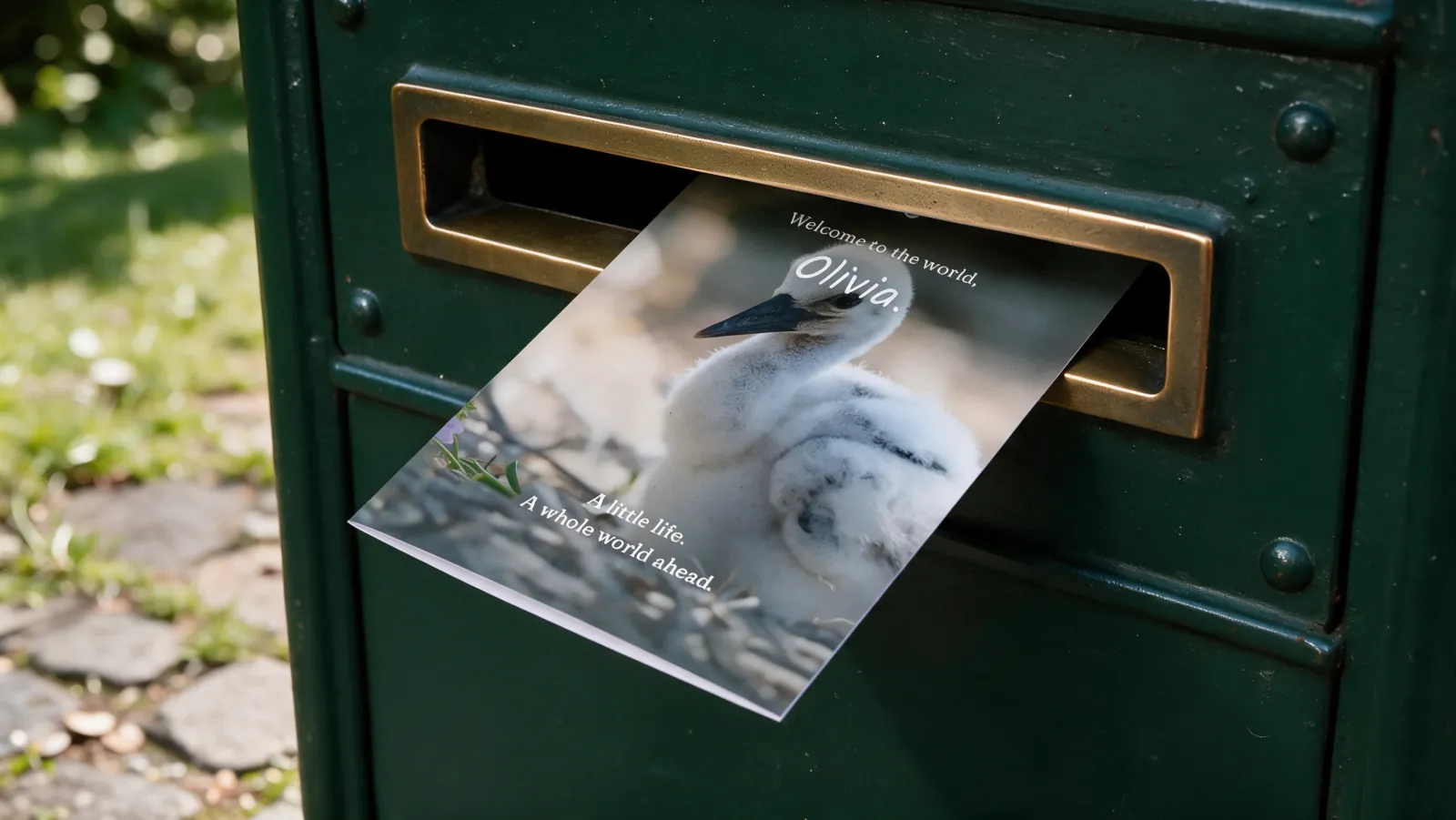
The gift that connects two homes works on a simple principle: two people looking at the same thing at the same time stay closer than two people looking at different things. A new baby usually arrives into more than one household. There are grandparents, godparents, aunts in other countries, friends who moved away.
A nursery and a meadow
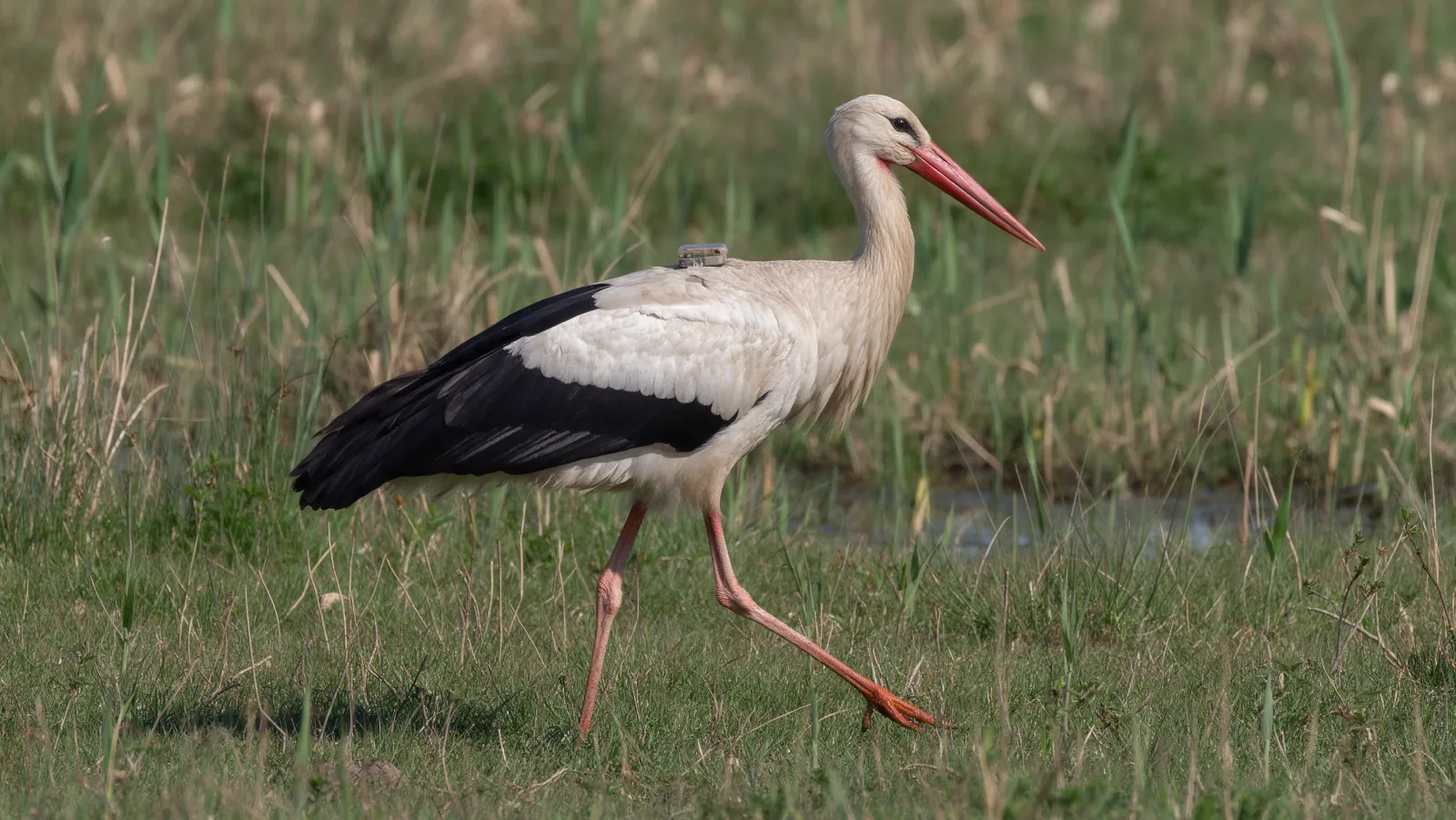
One room has a cot, a lamp and a card on a shelf. Somewhere else there is a wet field, a nest on a pole, and a bird standing in shallow water.
The two places have nothing in common except the name on the card. That is enough. The name is the thread, and the thread holds because it is renewed every few weeks with a new position or a new photograph. A cot and a wet field are not close, and the card makes them adjacent.
A shared object that changes on its own is more than most gifts manage. A blanket stays where it is put. A bird does not.
A subject for the phone call
Most calls between grandparents and new parents follow the same track: sleep, feeding, whether the baby has been out yet. These are important subjects and they get thin after twenty minutes. A grandparent remembers the first weeks in a way the parents cannot yet: the exhaustion, the visitors, the way the house reorganises itself around a small person.
A bird gives the conversation somewhere else to go. Where has it got to. Has it left yet. Did you see the photograph of the chicks. A third subject is small infrastructure for a family, and it is especially useful when the first thing and the second thing are both difficult.
A child of three and a grandparent of seventy can follow the same stork and talk about it on equal terms. Neither has an advantage. The bird is doing something neither of them can see, and both of them are guessing.
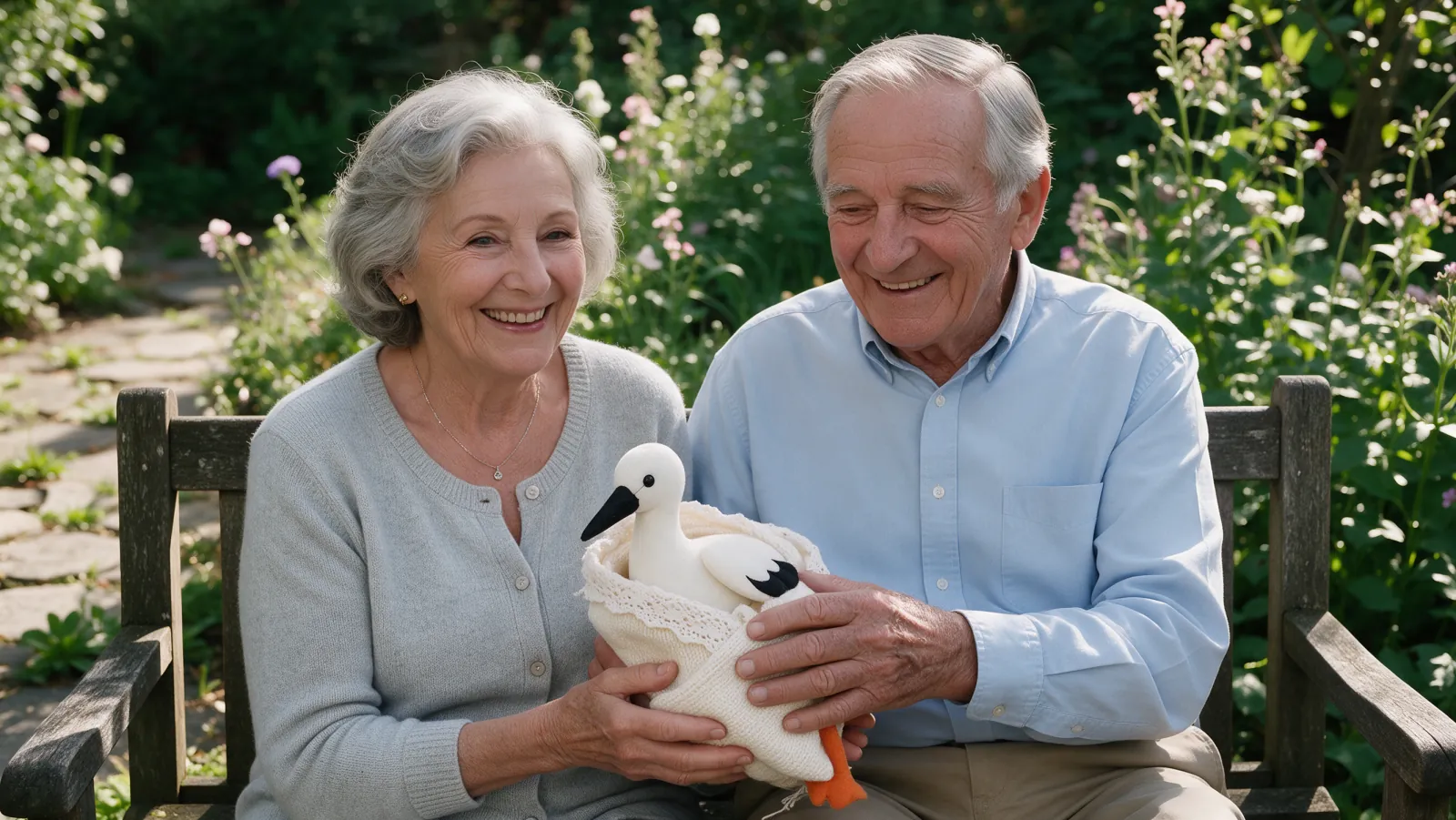
Grandparents often give this gift themselves, which changes its character. It becomes a thread that runs from one generation to the next: the people who watched the parents grow up now watching a bird with the grandchild. Some write the message on the card in their own hand, and that handwriting ends up being the part that lasts.
Many grandparents have a stork story of their own: a nest on a barn, a bird on a chimney in a village they lived in, a rhyme about where babies come from that they were told and then told again. Ask for it. A child who has heard a grandparent describe a stork on a roof in 1962 has two birds to think about.
Grandparents are good at the long view because they have had one. A stork that returns to the same nest for years fits that view: the bird comes back, the child grows, the seasons repeat. They are also the people most likely to keep the card after everyone else has tidied up, which is how family archives begin.
When the relative is far away
Distance changes what a gift can do. A blanket cannot be shared. A visit cannot be arranged. But a bird can be followed from anywhere there is a screen, and the messages arrive at the same time in both houses.
That simultaneity is the useful part. It means the relative is not always hearing about things after they have finished. For once they are in the middle of something with the family, at the same moment as the family. A grandparent in another country gets the same message on the same morning as the parents, which is not true of a first step or a first tooth.
A gift that produces a correspondence is a different order of present from one that produces a thank-you note, and it costs the same. A photograph is a one-way transaction: the relative asks, the parent sends, the relative says lovely, and the exchange ends. A bird generates its own news, so the relative can message first.
The first exchange
It is usually small: a message from the relative asking whether the bird has moved, and a reply with a screenshot and a date. Nothing dramatic, which is what makes it repeatable. The exchange works because it costs nothing to continue.
The messages themselves should stay short. A screenshot of the position, the date, one line about what the bird is doing. That is enough to keep the thread alive without turning it into a job.
A shared subject needs room to be forgotten between updates, and the gaps are what make the next message welcome rather than routine. Daily reports would kill it. Some families settle into a rhythm without discussing it: a message when the bird reaches a new country, a photograph when the chicks hatch, silence through the winter.
The classroom version
A class is a group of people who are together for a year and share almost nothing else. A single named animal gives them a subject in common that is not the timetable. One bird is better than thirty for this purpose. Thirty birds would be a data exercise. One bird is a character.
Print a map of Europe and Africa, large, and put it where everyone can reach it. Mark the bird's positions as they arrive, with the date beside each one. Five minutes a week is enough: one child opens the page, reads the position aloud, another marks the map, a third writes the date. Rotate the jobs. A class that checks every morning for three weeks with no change learns that most of a wild animal's life is uneventful.
Five minutes a week for a school year buys a shared vocabulary about migration. The losing names in the class vote matter too. The class remembers them, and a few will be funnier than the winner.
When the visit happens
Eventually the relative visits, or the family travels. By then the bird is a known subject. The child, if old enough, will want to show the card, and the relative will already know the name. That is a different kind of meeting from the usual one, where a distant relative is a stranger with a present. The conversation starts in the middle rather than at the beginning.
There is often a return gift, and it tends to be small: a postcard from the relative's own town, a photograph of a stork on a roof where they live, a note about the weather. A relative who sends details instead of presents is building a map in a child's head. Children collect that currency without knowing what it is for, and later, when they are old enough to travel, the place is already familiar.
A child growing up with a distant relative and a shared bird learns that distance is a fact rather than a verdict. The relative is far away and still present, because there is something to talk about. A stork gift is €9.99 once, and the following runs on its own wherever the relative happens to be.
Explore the gift