A gift that tells a story usually means a book. This one begins with a card and then arrives in the order the year happens. The white stork does something, the news is passed on, and the ending cannot be read ahead because it has not been lived yet.
A story that runs in real time
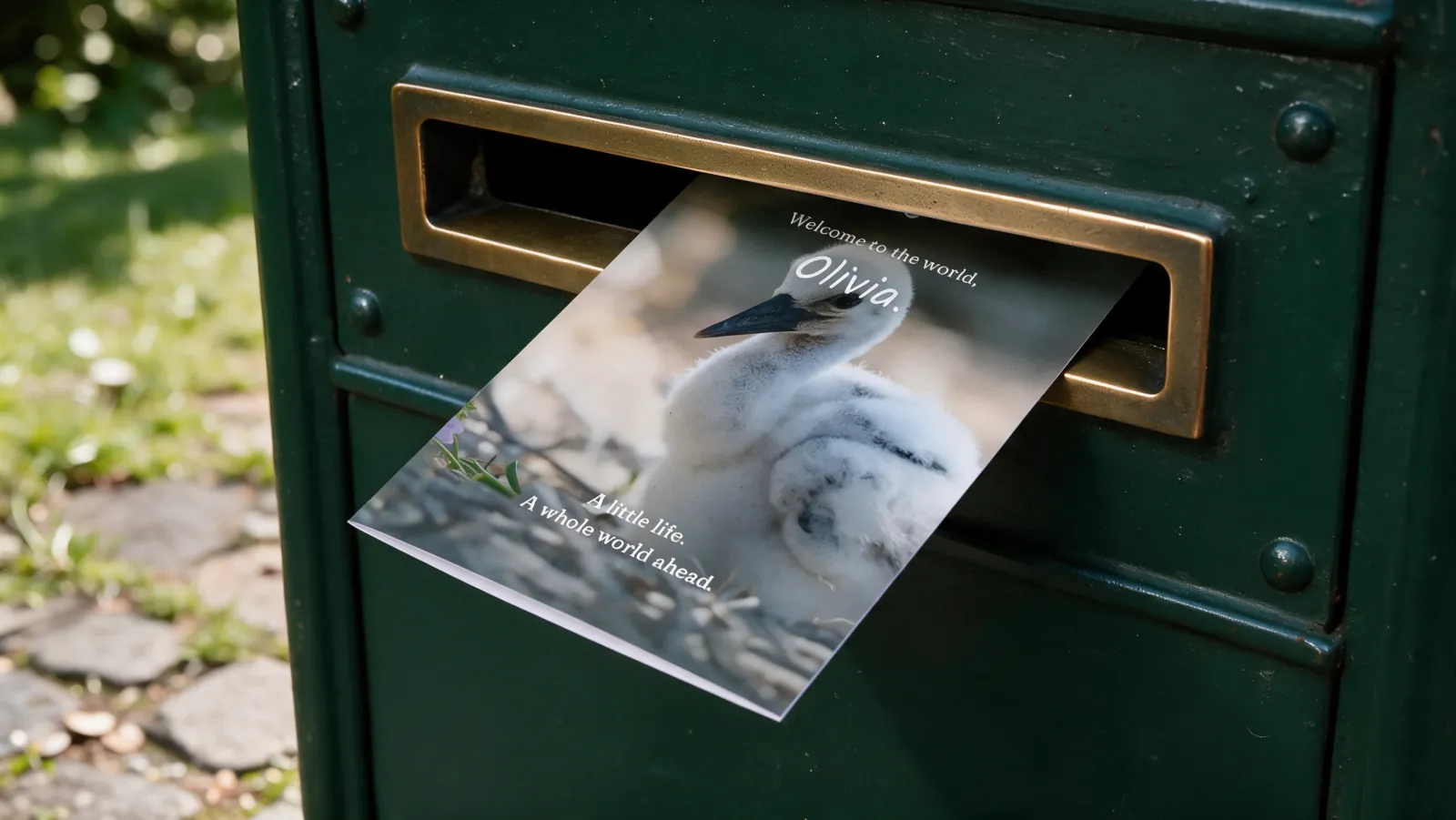
A newborn is handed a card long before they can read a word of it. The card carries a name, a photograph and a date, and the story it belongs to starts anyway, at the pace of a bird rather than the pace of a reader.
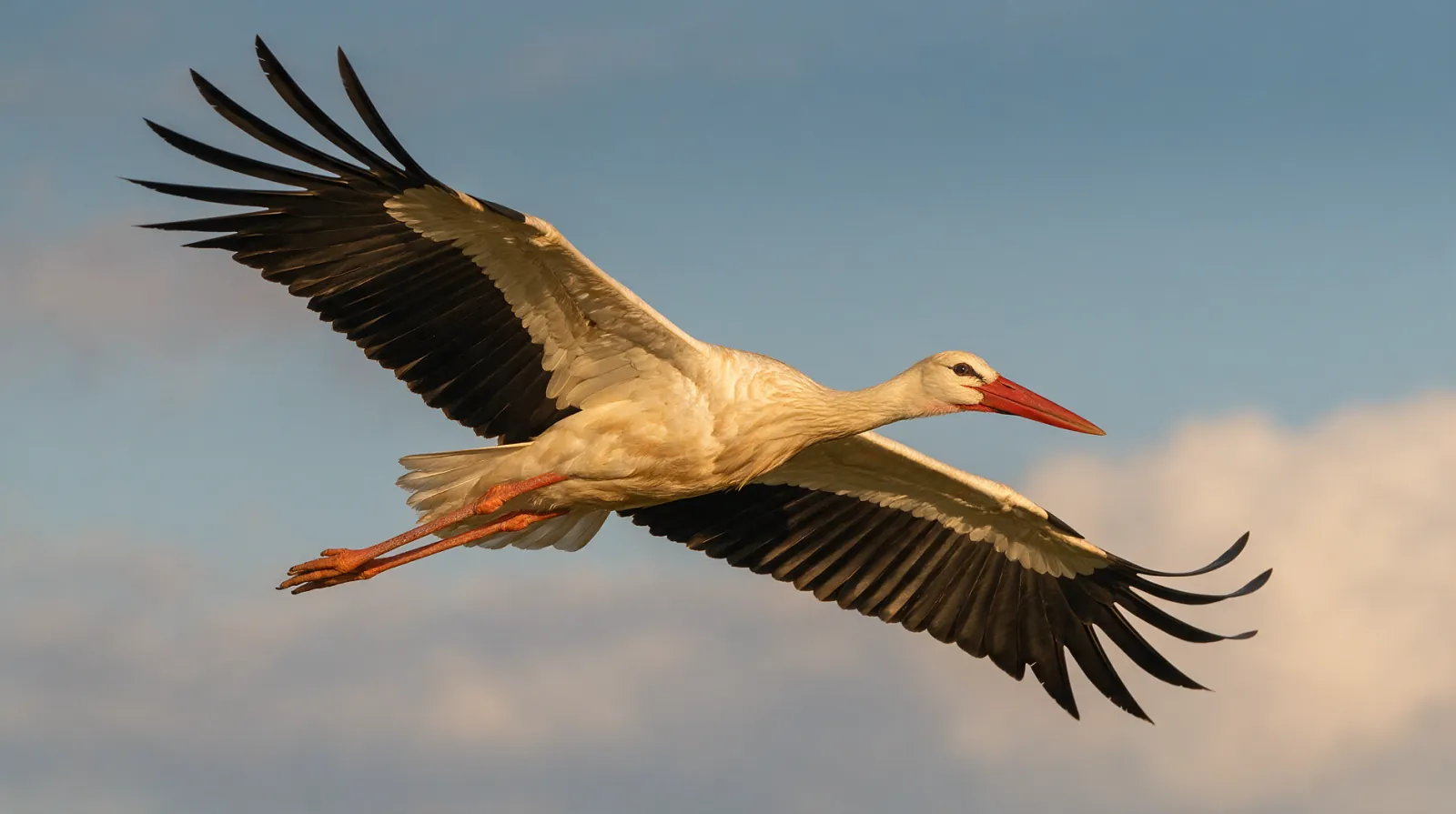
That is the strange part of the stork gift. A chapter about the crossing arrives in September because the crossing is in September, and a chapter about the return arrives when the bird arrives, not when the family is ready for it. The updates keep the bird's calendar, not the reader's.
The gaps are long. Nothing happens for weeks and the child does not ask, because the child is two and has other business. Then something happens, and for a day the bird is the most interesting thing in the house. That rhythm suits small children better than a plot. They do not need the next chapter. They need to know there is one.
A chapter about the crossing arrives in September because the crossing is in September, not because the family has reached a page. A chapter about the return arrives when the bird arrives. The story runs on a clock nobody in the house controls, and that is part of its hold.
Why a real bird beats a plot
A plotted story is arranged to be satisfying. A real one is not. The bird might fail to breed. The nest might be taken by another pair. A chick might not make it. The crossing might be slow and uneventful, which is exactly what everyone hopes for.
Nothing in the year is shaped to please the reader, which is why the good news lands. When the bird comes back, it comes back because it survived.
A stork's year contains material nobody would invent. The bill-clattering that sounds like a woodpecker in a rain barrel. The way a chick sleeps flat on its face. The habit of standing on one leg for an hour without apparent reason. The arrival of a plastic bag in the nest, woven in among the sticks. Those details are the reason to keep reading.
The bird might fail to breed, and the updates will say so in plain language. A nest can be taken over. A chick can be lost. The crossing can be slow and uneventful, which is exactly what everyone hopes for. The uncertainty is not a flaw in the story. It is the reason the good news has weight.
A story with a moral gets boring. A story with a plastic bag in it does not. The small, unplanned details are the ones a family repeats at the table.
The card at two, six and twelve
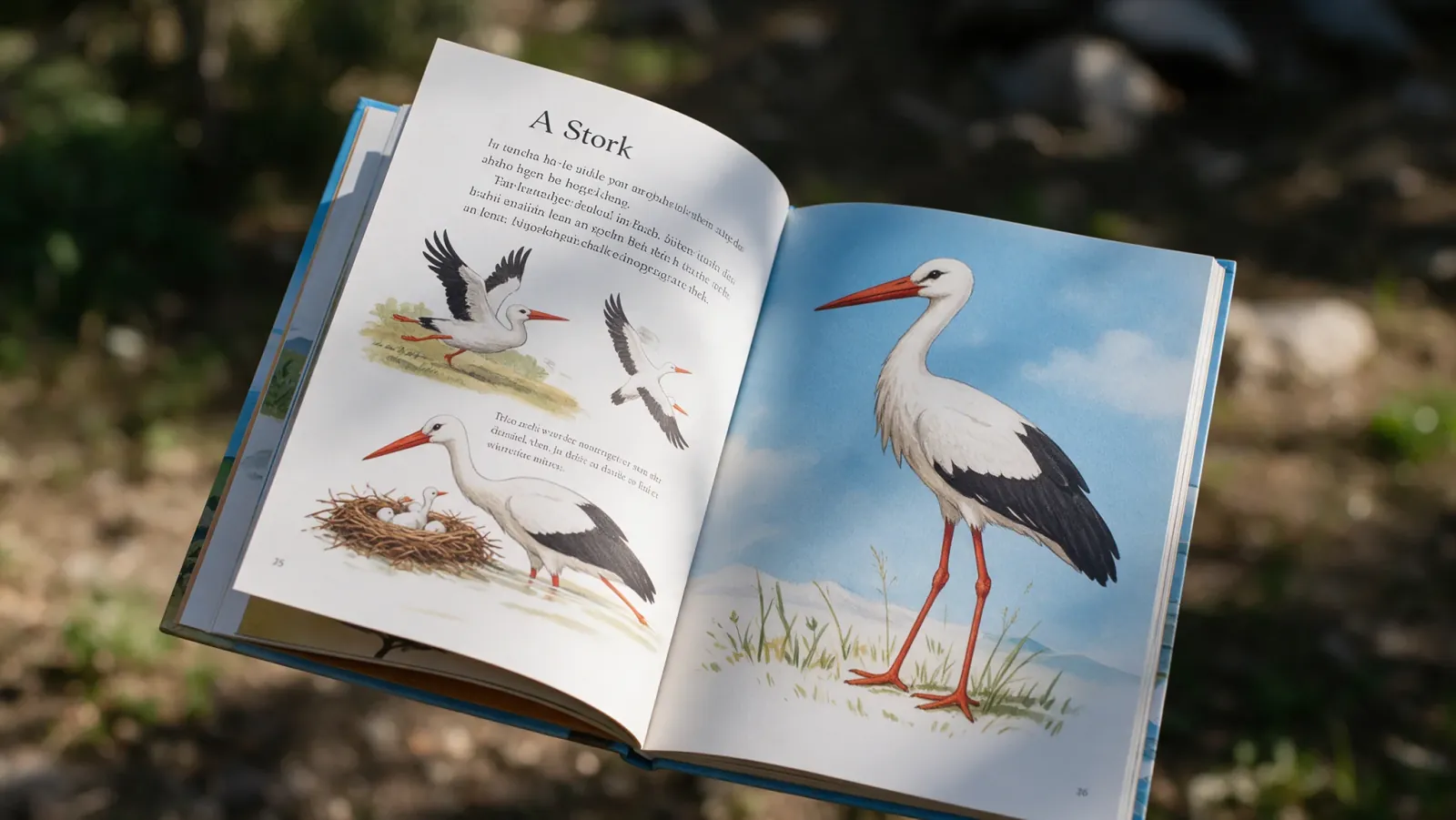
A stork card is short: a name, a date, a photograph, a message. A two-year-old gets one thing from it. A six-year-old gets another. A twelve-year-old gets something a parent did not expect. The text has not changed, and the reading has.
At two, the child sees a bird. At six, the child can read the name and the date, and can do the arithmetic: this happened before I can remember. At twelve, the child reads the message the way an adult reads a letter, for tone, for who wrote it, for what they were thinking. The card is evidence that adults made a decision about the child before the child had done anything to deserve it.
The card also becomes a fixed point in a room that keeps changing. The cot goes, the chair goes, the wallpaper gets painted over. The card stays and says the same four things: a name, a date, a bird, and a sentence from someone who was there.
There is also the bedtime use. A card is short enough to be read aloud in a minute, which makes it a reliable last item before lights out. The story is the same every night, and the child does not want it to change.
Reading it aloud
Most families read the updates aloud, at least at first. A story read aloud belongs to the room rather than the screen. The child hears the bird's name in a familiar voice, and the bird becomes part of the household's spoken furniture, like a grandparent or a dog.
Keeping up is the hard part. The updates arrive in the middle of weeks that are already full, and some of them get read in a queue at a supermarket and then lost. One habit fixes this: when an update matters, print it or screenshot it and put it with the card. Six or seven saved moments are enough to reconstruct the year.
By the time the child can read, they will want to do it themselves, and the updates will already be familiar in the ear. Some families print the update and put it beside the card, which turns a shelf into a small record of the year.
The returning spring
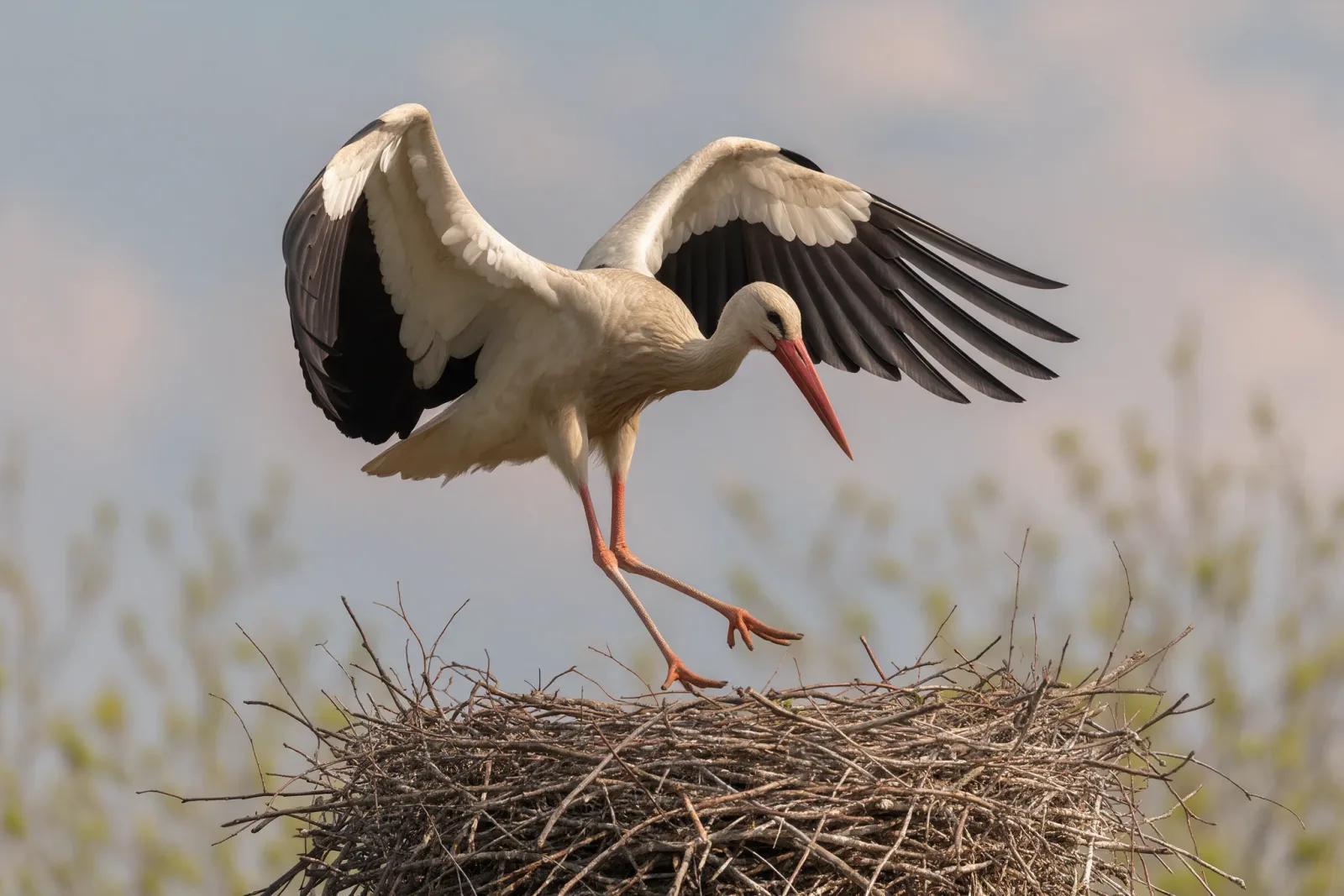
A good nest is hard to build and worth keeping. A stork nest is a heavy structure of sticks and grass, added to season after season, sometimes for decades. Starting again means weeks of work. There is also the pair bond: storks often meet the same mate at the same nest, and the reunion is loud.
A bird that comes back teaches a seasonal kind of hope. The world has rhythms that do not depend on anyone's mood, and a child who has noticed one of them has a steadier place to stand.
The return is not quiet. A pair reclaiming a nest clatters for days, and the sound carries. The nest gets rebuilt and enlarged, stick by stick, and the work is visible from the ground. Then the eggs, the sitting, the change of shifts. A family that has followed one bird for a year can read the sequence without being told.
When the bird does not come back
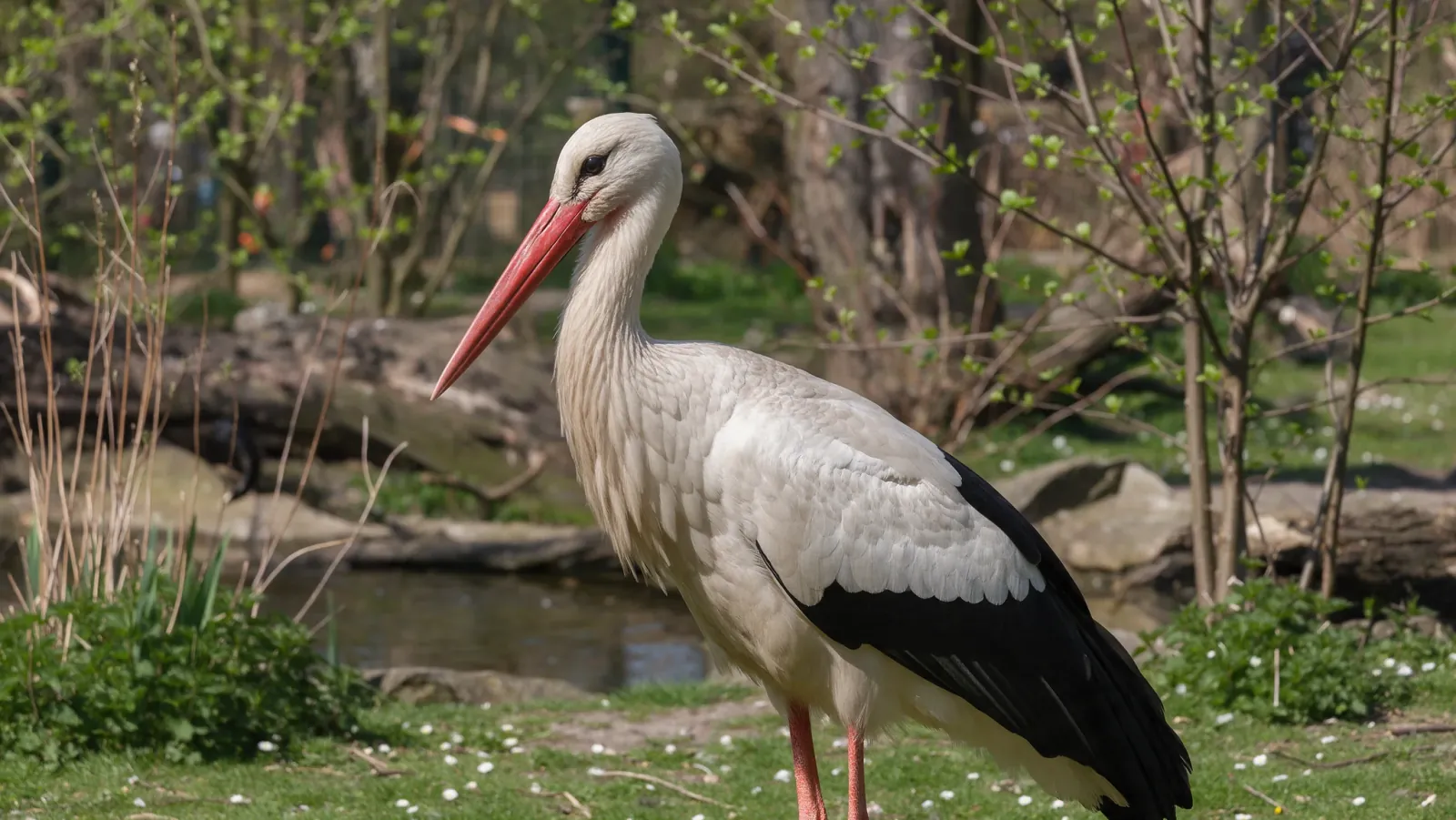
Not every bird returns. Nests fail, birds die, pairs change, and a platform can be taken over by another pair. A family that follows for several years may meet a spring with no news.
A wild animal's story has no guaranteed ending, and a child who learns that early is not harmed by it. The autumn is the counterweight. The nest empties, the platform stands there through the rain, and the updates come from a different country. Some families write the date of the last sighting on the calendar, which turns the absence into something with a beginning.
Then the winter passes, and the first message of the new year arrives when it arrives. Nobody can bring it forward. Years later, the whole story can be read in an afternoon: the first position, the spring return, the chicks, the crossing, the winter, the second spring. It is short. It has a real animal in it.
Explore the gift