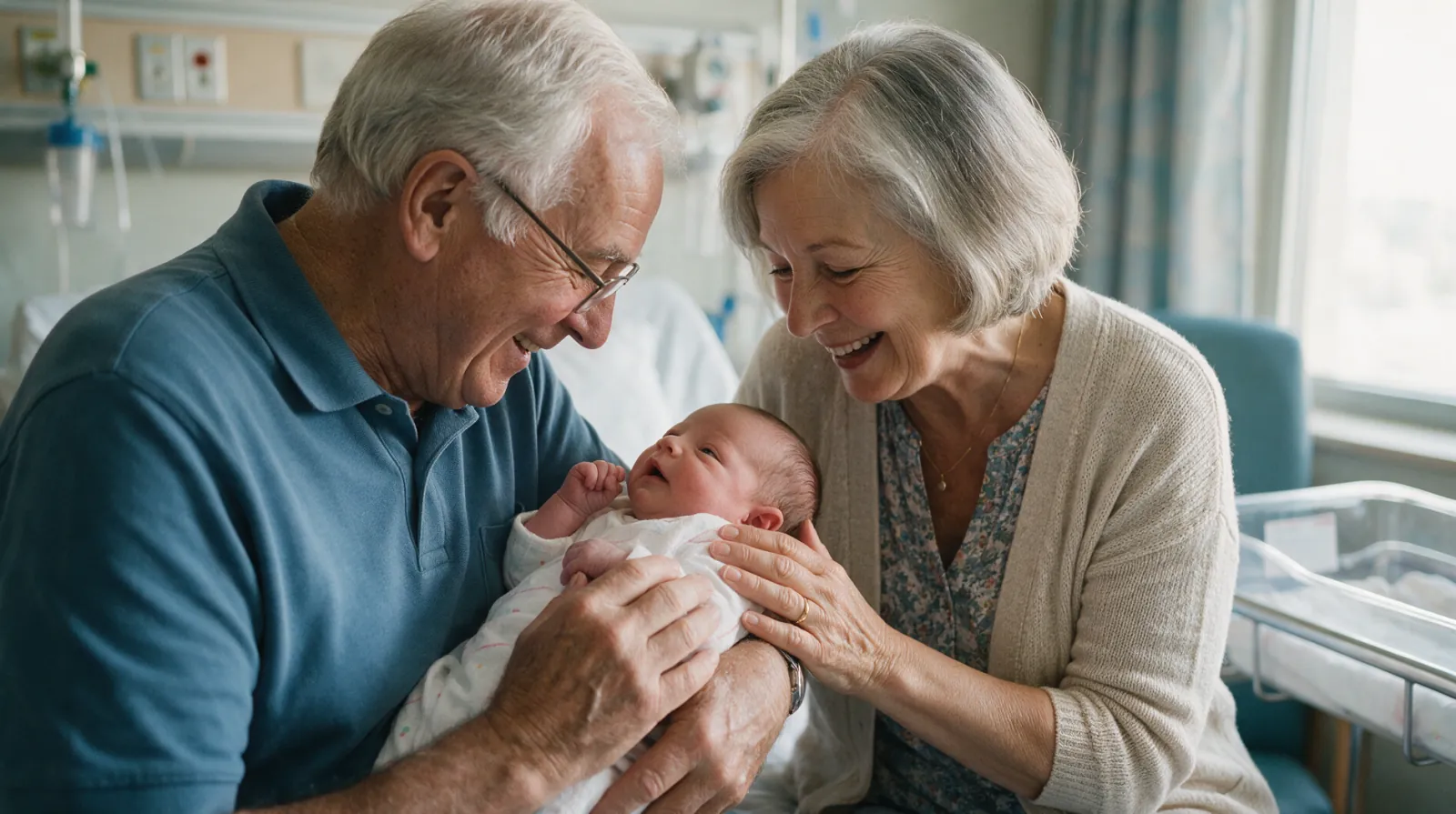
The grandparents' first visit is a small diplomatic event. Two people who have been waiting weeks arrive at a door, and a new family has to decide how to receive them. A visit that ends while everyone still likes each other is a success. Do not measure it by how long they stayed.
Before they knock
Decide what you need before they knock. A short visit, an hour, maybe two. Ask them to bring food rather than a gift. Ask them to wash their hands and to stay away if they are unwell.
If you are not ready for visitors, say so. The grandparents will be disappointed and they will survive it. A visit that starts with a resentful parent is worse for everyone. If they are travelling a long way, suggest a hotel or a nearby bed rather than a camp bed in the living room. Everyone sleeps better, and the visit stays shorter.
The tired days are the ones nobody photographs. They are also the days that build the thing a baby leans on for years: the knowledge that someone comes back. If someone offers help, ask for something specific. Let them take the baby for an hour at two in the afternoon, when the day is longest. An hour of sleep at the right time is worth a whole evening of good intentions.
Give them a job
People are easier to have in the house when they have something to do. A grandparent holding the baby while you sleep is worth more than a grandparent admiring the baby while you make tea. Washing up counts. Walking the pram around the block counts.
This also gives them a way to be useful that does not involve advice. Most grandparents want to help and do not know how. Tell them. Some will bring a bag of clothes the baby will never wear, and some will bring a meal you can eat with one hand. Both are attempts to help.
Give the job a clear end. Hold the baby until I come back. Make the tea and then sit down. Vague help turns into hovering.
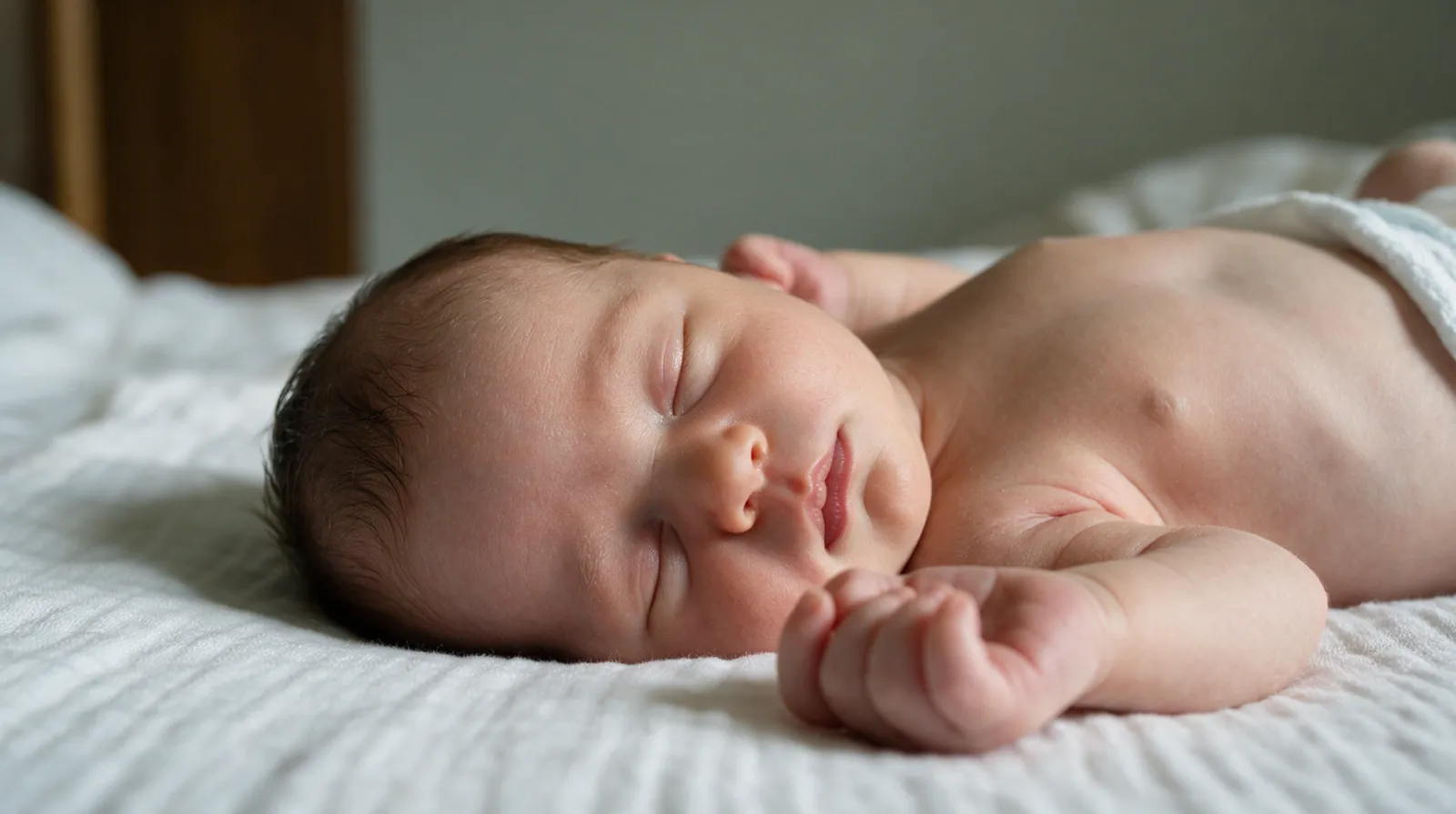
Take the photograph of the four of you, or the five. The first photograph of a grandparent and grandchild will still matter in fifty years. Take it before everyone is tired. Take one of the hands, too. The old hand and the new one. Ask someone to take a picture of you with your own parents and the baby. You will be in very few photographs this year.
The midwife at the door
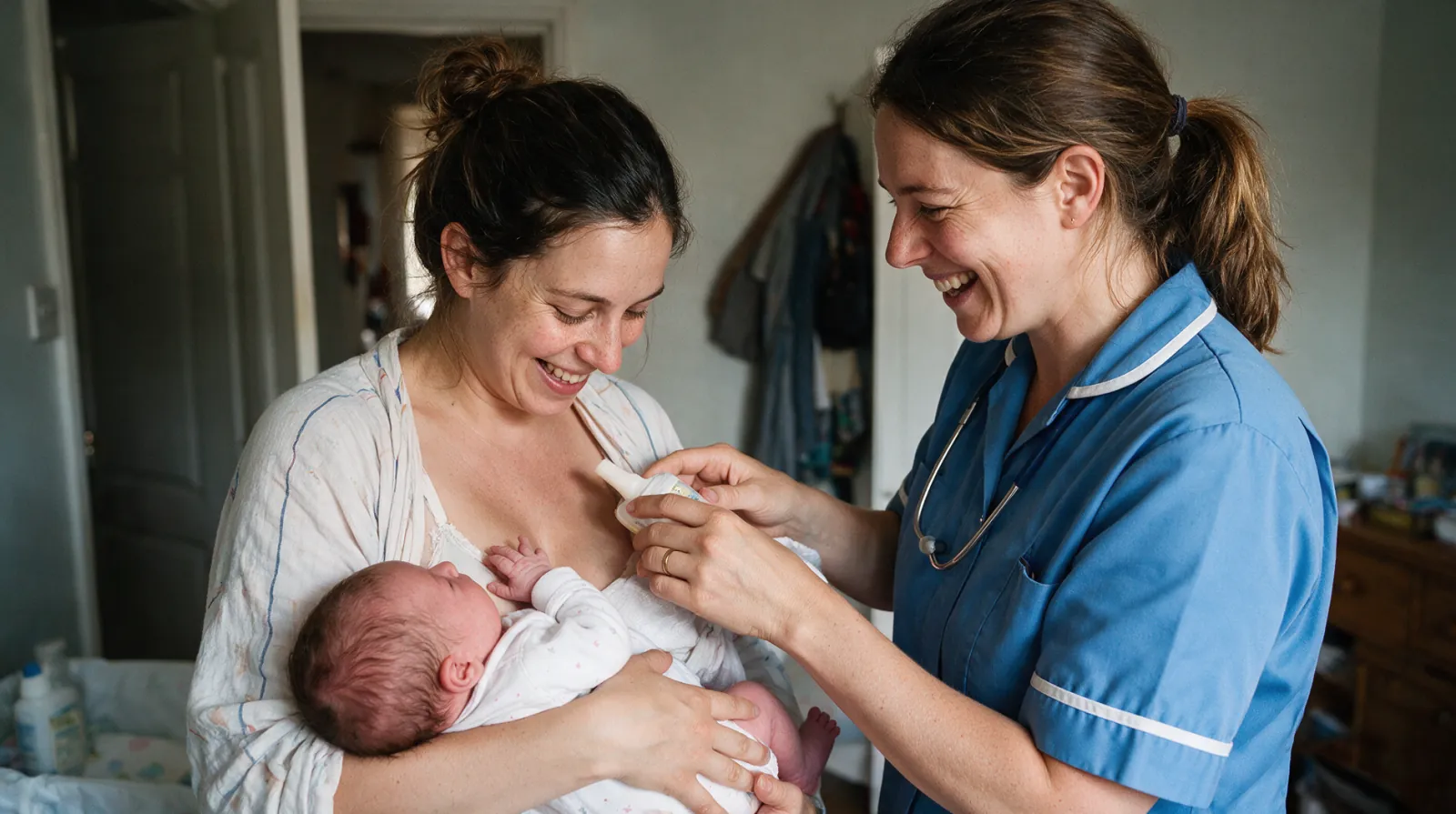
The midwife who comes to the house turns it back into a place where things are going to be all right. You will tidy before she comes, which is funny later. She has seen every kind of house and is not inspecting yours. Put the kettle on. Put the dog somewhere else.
Have the notes ready, and the baby's red book if you have one. Have a list of questions, because you will forget them the moment she asks how you are. If the house is a mess, say so and let her in.
She will weigh the baby, check the cord if it is still there, ask about feeding and nappies, and take your blood pressure. The medical part is quick. The rest is the visit. She is also looking at you: how you move, how you talk about the nights, whether you have eaten.
Ask her to show you how to check the cord, or how to hold the baby for a bath. Watching once is worth more than reading about it three times.
The questions you save
Write questions down as they occur to you, at three in the morning, in the notes app. A question that feels silly at night feels sensible in daylight, and she has heard it before.
Ask about the things nobody mentions: the weeping, the leaking, the strange dreams, the fear that you are doing it wrong. She will not be shocked. If you are worried about your mood, say it plainly. Postnatal low mood is common, and it is treatable. The midwife would rather hear it early.
Keep the number. Keep the red book. Keep the habit of writing questions down. The midwife who stayed an hour was teaching you how to ask, and that lesson outlasts the visits. If you are not sure what happens after she signs off, ask her before the last visit. She will tell you who to call at two in the morning, and that number is worth writing on the fridge.
Advice arrives
Advice will arrive. Some of it will be thirty years out of date, some of it will be unexpectedly good. You do not have to follow any of it, and you do not have to argue about it. Say thank you, then do what you were going to do.
If a piece of advice is unsafe, say so plainly. Sleeping positions and car seats have changed since the grandparents had babies, and they may not know. If the advice keeps coming, give it somewhere to go. That is interesting, I will ask the midwife. It is polite, it is true, and it ends the conversation.
The hour after she leaves
When the door closes, the house feels different. An hour of calm attention can steady a whole week. You will repeat something she said to your partner, and it will become the rule of the house for a while. Write down what she said about feeding, if feeding is hard. You will not remember the details by evening.
If something she said does not fit, take the useful part and leave the rest. The visit is mostly talk, a blood pressure cuff, and a weighing, and it can change how a whole week goes. Ask her before the last visit who to call at two in the morning, and write that number on the fridge.
When the door closes
When they leave, the house will feel strange after the door closes. They will cry in the car, or you will cry after the door closes. Both are normal. The visit has stirred something old in everyone.
The next visit will be easier. By then the baby will be a person with a face and a schedule, and the grandparents will be part of the furniture of its life. A child with more than two people who love it is a lucky child. The next time they come, the baby may smile at them, and that changes everything. You will be in very few photographs this year, and the picture of your own parents with the baby is one worth having.
The visits from the midwife will end, and you are on your own with a health visitor at the end of a phone. The ending is a promotion, and it will not feel like one at first. By the time the visits stop, you will have become the person who knows the baby best.
If you want a small marker for the week the visitors came, adopt a stork and write the date on it. The house will be quieter, and the date will hold the week.
Explore the gift