Most of a baby's first conversations happen without words. A newborn learns a parent by smell, by the rhythm of a chest, by the particular grip of a hand under the head. Long before a first word arrives, a great deal has been understood and filed away.
The world through skin and sound
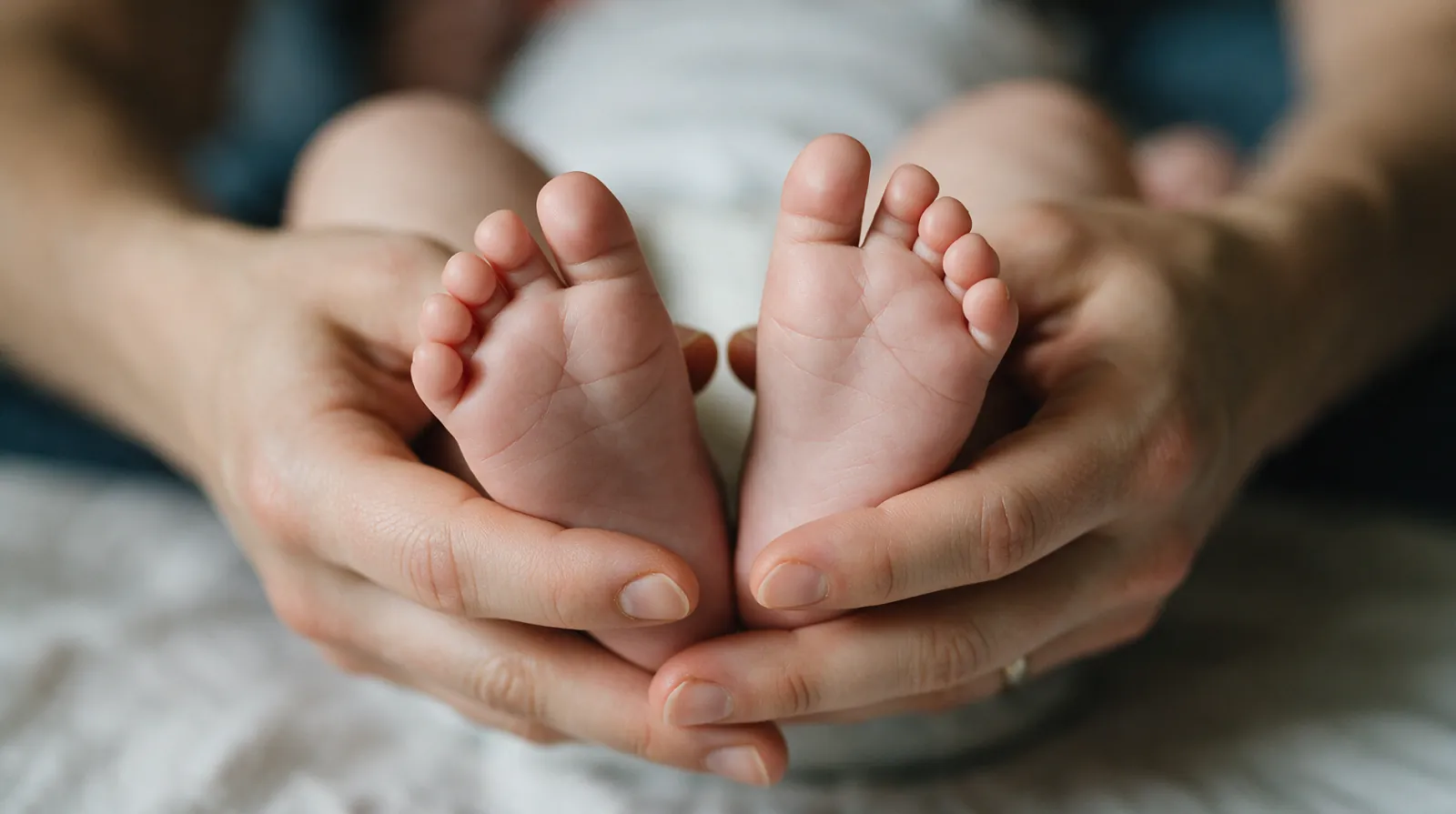
A newborn cannot name anything and can recognise plenty. The smell of a parent's neck, the difference between a firm hold and a loose one, the sound of a voice that has been talking for months through a wall of water. Sound reaches the baby before meaning does.
This is why a calm voice can settle a crying baby and a sharp one can make them startle. The baby is reading the tone and ignoring the words. A familiar chair can calm a baby in a strange room, and one particular blanket does work that a new one cannot.
By the end of the first year, a baby has a map of the household that nobody drew for them. The sound of the front door means someone is home. The rattle of a certain cupboard means food. The lamp being switched on means the day is ending.
The learning is physical. A baby learns that hunger ends, that a cry brings footsteps, that being set down is followed by being picked up. None of it is stored as a scene. It is stored as a set of expectations about how the world behaves.
Coos and turn-taking
Around six weeks, many babies begin to make soft vowel sounds aimed at whoever is leaning over the cot. A parent answers, the baby makes another sound, and without anyone deciding it a conversation has begun.
Baby makes a sound, adult waits, adult answers, baby waits. That pause is the rehearsal for talking, and it happens months before the first word. A baby who is answered learns that sounds do something.
Babbling arrives later with a burst of noise. Ba, da, ma, repeated with great seriousness. Parents hear a name in the middle of it and repeat it back, and the baby says it again. The sounds are practice for the mouth, and the mouth is learning to work with tongue, lips, jaw, and breath.
A baby who is talked over learns something else. The pause is where the lesson lives.
The first laugh
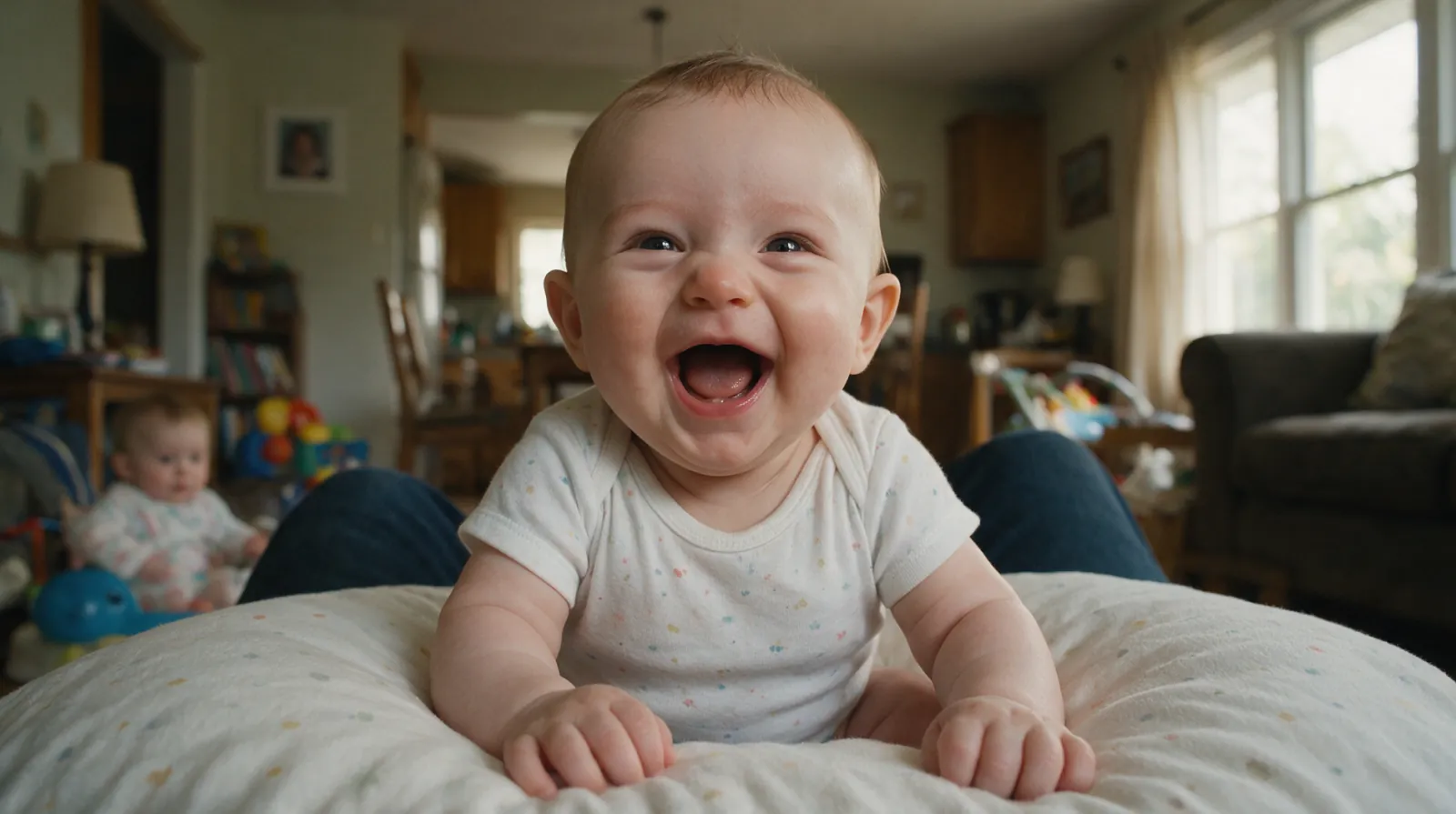
The sound has no rehearsal behind it. It arrives in the middle of an ordinary afternoon, often while a parent is doing something silly, and it stops the room. The baby looks as surprised as anyone.
Most first laughs come from something physical and ridiculous. A tongue poking out. A raspberry blown on a belly. A scarf dropped over a face and pulled away. The laugh is short, uncontrolled, and sounds like a small engine starting and stalling. By around four months most babies laugh, and by six months they laugh at things they expect.
The game where a parent hides and reappears gets funnier because the baby can predict the payoff. Anticipation arrives before the punchline. A laugh is social: a baby telling an adult that something landed, then waiting to see what happens next.
The laugh gets easier to trigger and then harder, as the baby develops taste. What worked in month four is dull by month eight. Parents remember the first laugh for the same reason they remember the first smile: it is the moment the relationship becomes two-way.
Pointing and naming
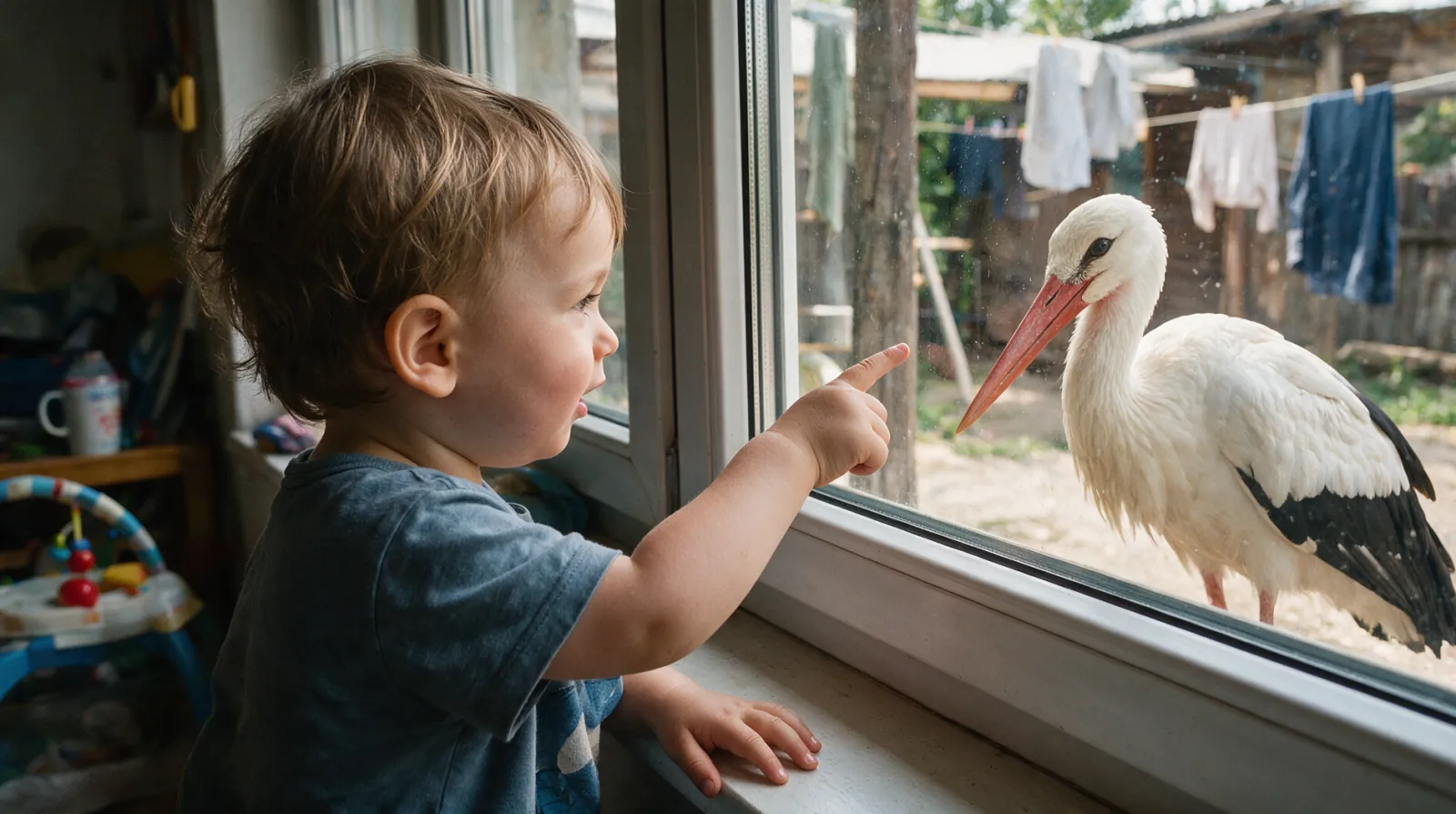
Before the word there is the point. A toddler points with the whole arm, the whole body leaning behind it, because pointing is the first way of saying look. Look at that. Look with me. The gesture reaches past the glass toward something that cannot be touched.
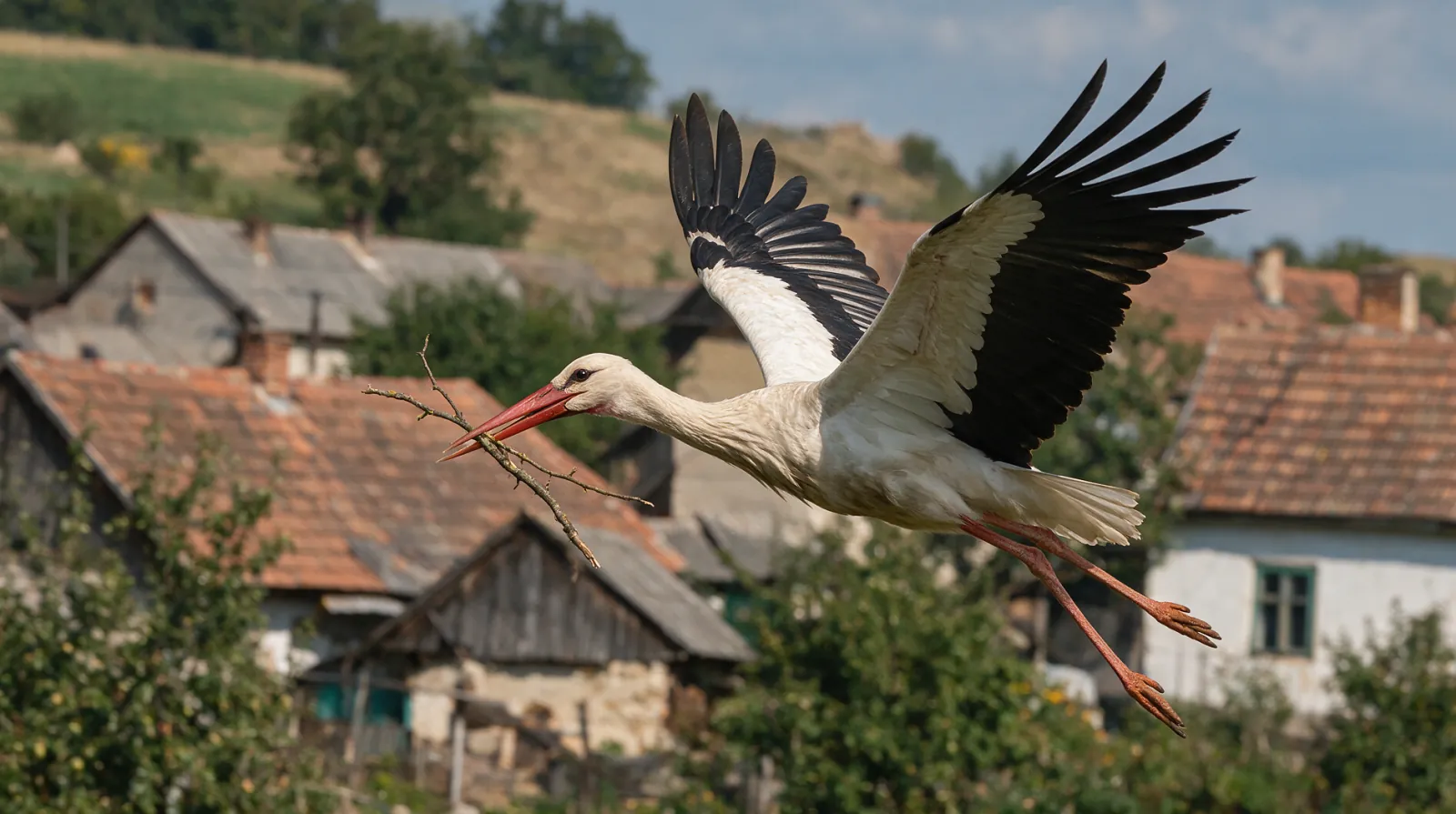
A parent follows the finger, finds the bird, and says the word. Stork. The child hears it and the sound settles beside the shape: the white body, the black wingtips, the slow glide. A white stork is large, slow, and easy to see, which makes it a good first bird. It stands on a roof or a pole in full view, and it comes back to the same nest year after year.
A first bird that returns each spring becomes a first memory that returns with it. Once a child notices one bird, the sky begins to sort itself into named things. Sparrows on the fence. Pigeons on the wire. A heron at the river, standing still in shallow water.
For a while bird may mean anything that moves in the sky. Stork may mean the particular bird on the chimney across the road. The parent repeats the word without correcting. Slowly the sound attaches to the real animal.
The stork stays the landmark. It is big enough to see from a high window and strange enough to remember. A child who has watched one stork will keep looking at the sky, waiting for the next. The habit of looking up lasts longer than the name.
Every spring the stork returns to the same rooftops, and the child, a little taller each time, can point and say the word with more certainty.
A bird without a voice
White storks have no song. They do not whistle or trill. Adults clatter their long bills together in a fast wooden drumming, heads tipped back, and the noise carries further than a song would. Pairs greet each other with it, and the sound crosses a village square.
The clatter is not random. Chicks in the nest hear it early and answer it, and the nest is loud long before any of them can fly.
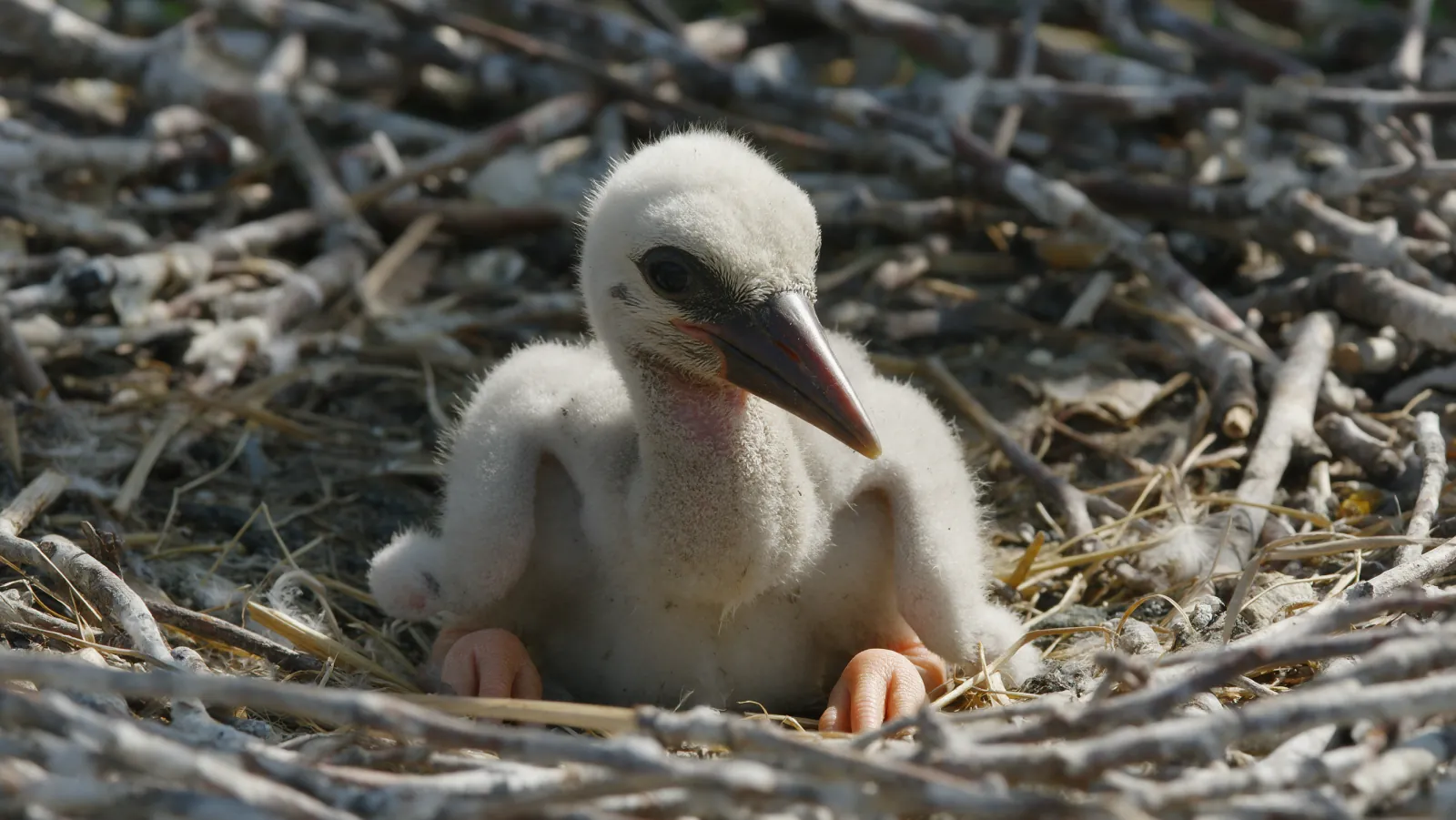
Chicks start with something rawer. Before they can clatter properly, they hiss and beg, beaks open, necks stretched. A hungry stork chick sounds like a small engine that has not learned to idle.
The nest is a rhythm of demand and answer, repeated all day. A parent arrives with food, the chicks crowd forward, and the noise rises. Then it falls as the food is swallowed. By midsummer the chicks are tall and grey, and their clamour has deepened.
The first word
It usually arrives after months of this rehearsal, often somewhere around the first birthday, though the range is wide. It comes out flat and uncertain and is often not repeated for days.
A first word is not a finished thing. It is a sound tried out, dropped, and tried again. The word is the tip of a long preparation, and under it sit the months of being held, answered, narrated, and read to.
The parents hear it anyway, because they have been listening since the beginning. Under the word sit the months of being held, answered, narrated, and read to. Speech arrives on top of all that, and the first word is a receipt for everything that came before it.
Some families mark the season with a stork that carries the name, a small object for a milestone no photograph quite catches. Adopt a stork and set the name and date on the base, then keep it where the child can point at it later. The child will not remember the first pointing. The parents will remember the sound that came with it.
Explore the gift