Stork watching runs all year, and each season has its own work. Spring is for arrivals and nest repair. Summer is for chicks and first flights. Autumn is for gathering and leaving. Winter is for nests, notes, and the slow wait. A pair of binoculars and one familiar field will carry you through all four.
Find one place
Choose a field, a village, or a stretch of river you can reach in twenty minutes. The closer it is, the more often you will go, and frequency is what makes a year of watching work. A local bird group may know which nests are occupied. Proximity beats a famous site. The best stork field is the one you pass on an ordinary day.
Visit at different hours in the first week, then settle on the hour that suits both you and the birds. Keep the route short enough to repeat without effort. One field watched through a year will show you more than ten fields seen once, because the interest comes from the changes between visits. A notebook from the first year gives the second year something to compare against.
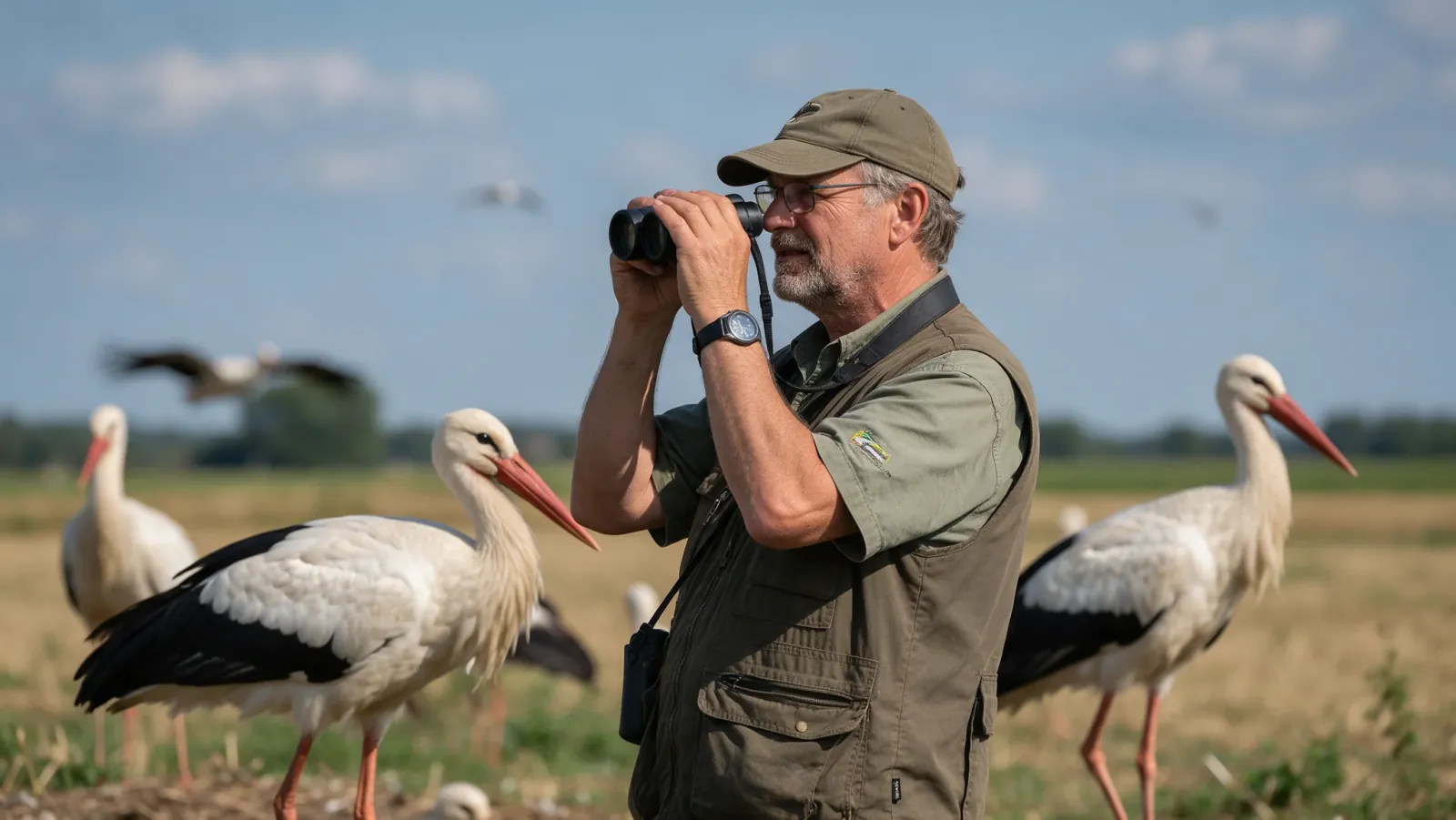
A local bird group may know which nests are occupied, and the people who watch a colony already have a route you can borrow. Ask what time they count and which streets they use. Walking a known route in your first season saves months of guessing, and the records you keep after that add something local to the picture.
Spring: the nests fill
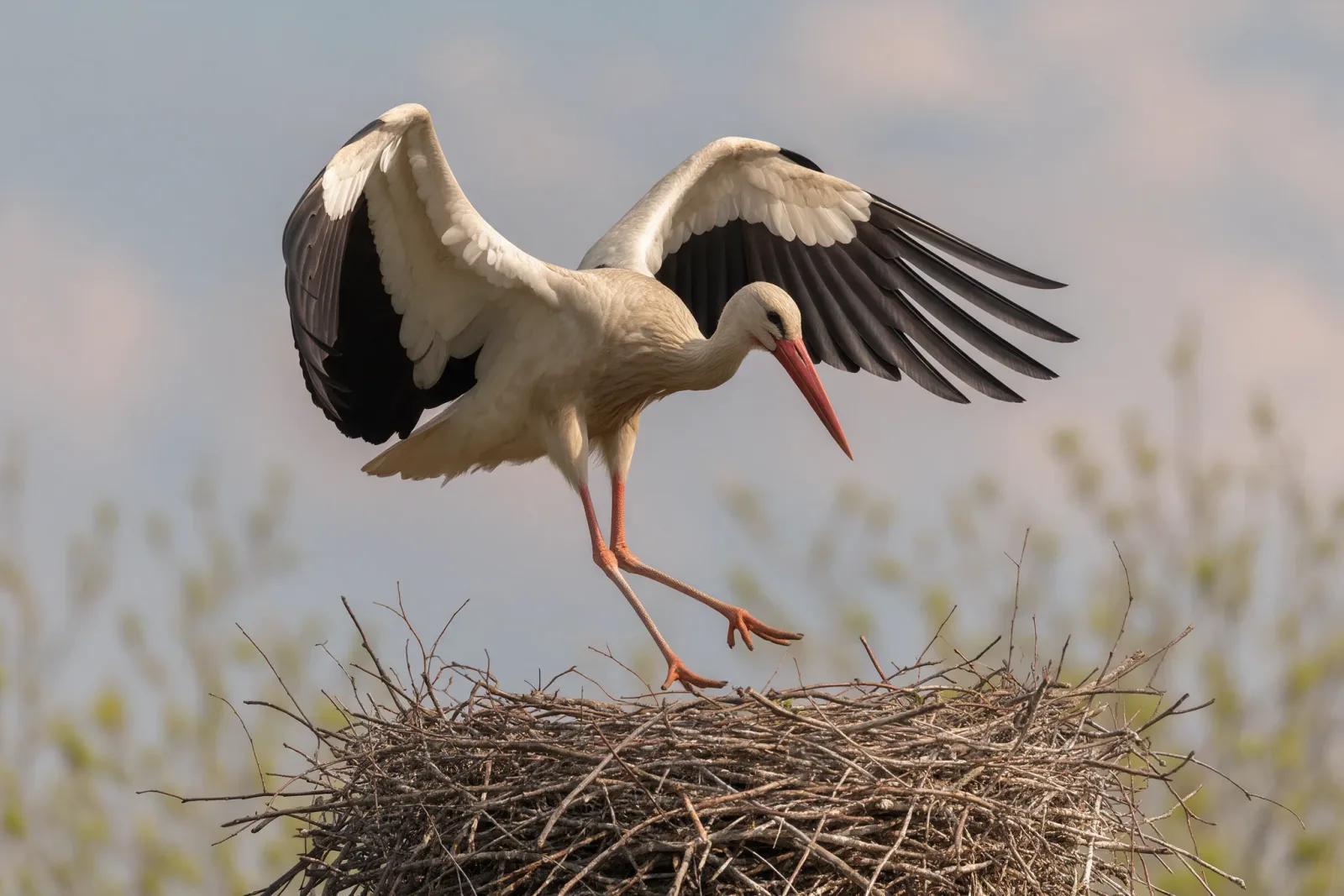
White storks come back from Africa in late February and March. The first birds are often males returning to a nest they used before. Look for a bird standing on the old nest, then a second bird arriving and clattering a greeting. Sticks are carried in and the cup is repaired. The best spring watching is close to a nest you can see from a public path. Keep your distance and let the pair settle. A nest repaired in March is often the first to hold eggs.
By April the colony is at its busiest. Nests are claimed, pairs trade places over the eggs, and the village is loud with clatter. Walk the same loop each week and note which nests are occupied. A cold snap can empty the roofs for a day, and a warm spell can fill them again. The weekly difference is the story the season is telling.
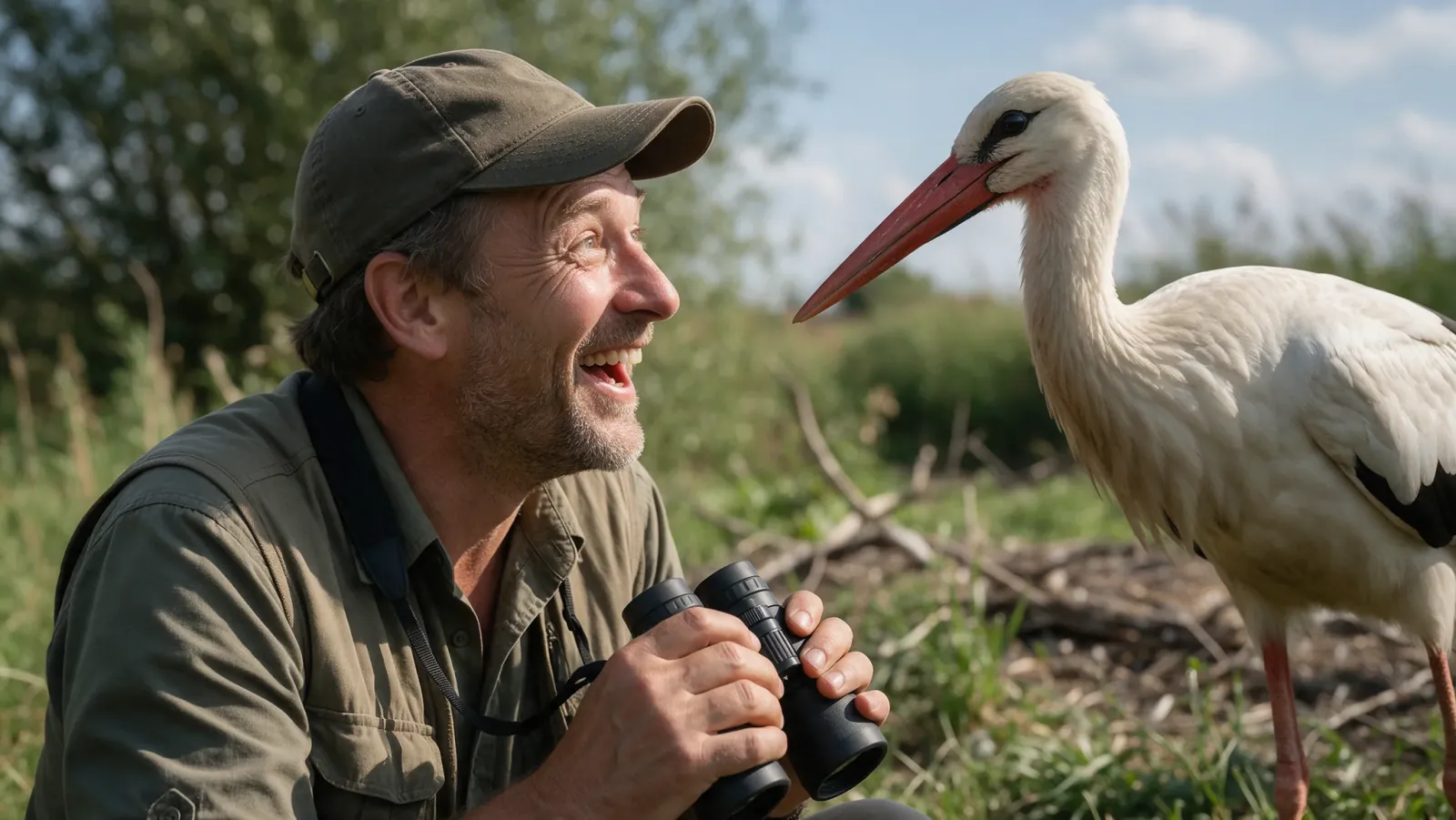
Summer: the roof gets busy
By May the eggs have hatched, and the nest becomes a household. One adult stands guard while the other feeds. Chicks grow fast, and by July their heads are above the rim. The roof gets louder as they practise their wings. Summer watching is about patience at one nest instead of walking a long route. Sit still and the birds forget you are there.
A white stork pair usually raises three or four chicks. By midsummer those chicks fill the nest, jostle for space, and lean over the edge. The adults arrive with food and are mobbed. A quiet nest with chicks lying flat is usually a nest still growing. A crowded nest with wings half open is one getting ready for the next stage.
The thermal hours
As the ground heats, birds take to the air. A stork spreads those two metres of wing, finds a column of rising warm air, and circles without a flap until it is a white cross against the blue. Some afternoons it drifts to another field. Some afternoons it simply goes up. A stork can travel a long way on thermals alone, spending almost no energy to stay aloft. That is how the long flight between Europe and sub-Saharan Africa is possible.
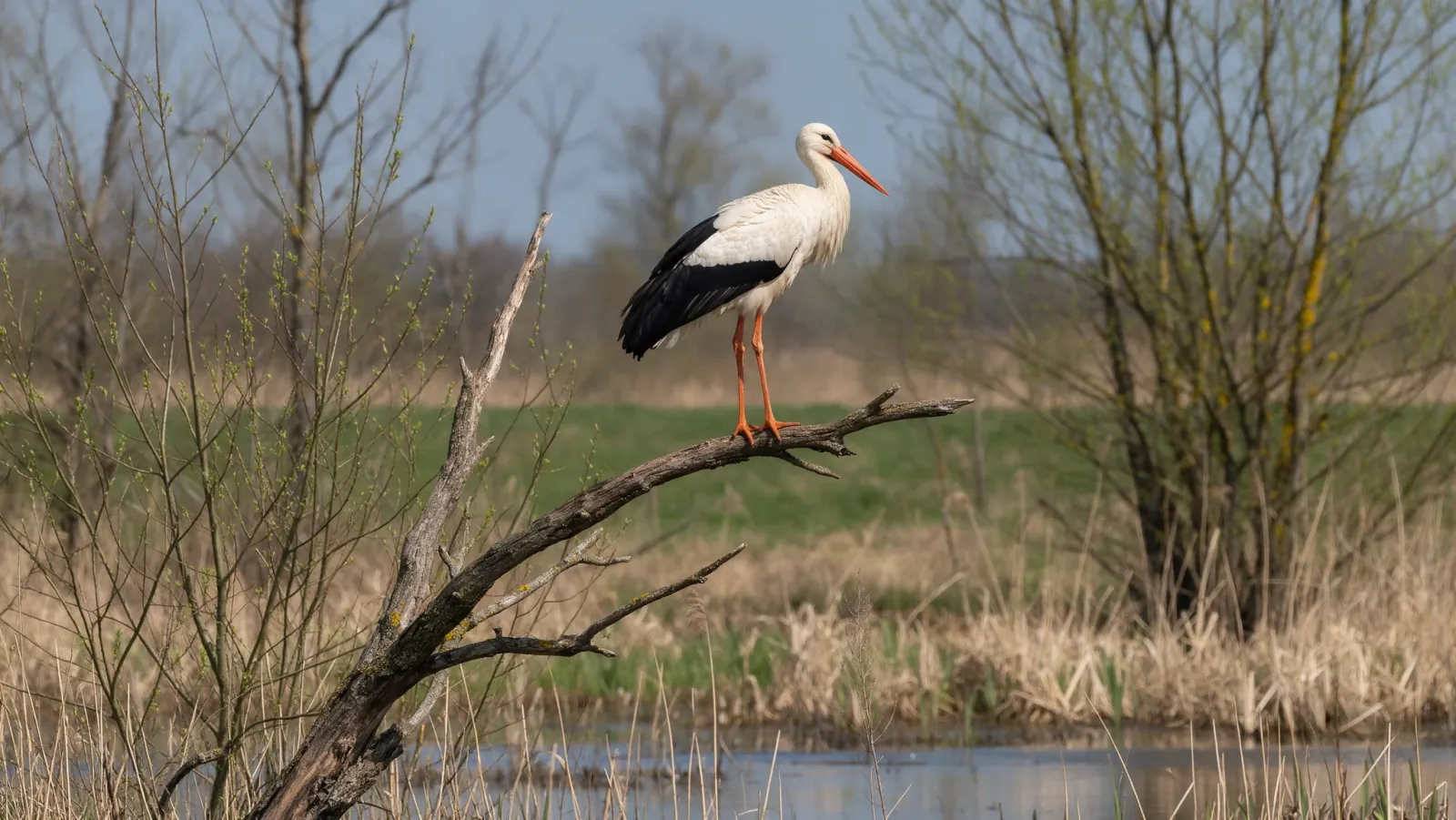
The middle of a warm day is a quiet time for a watcher on the ground. Many birds stand still, preen, or loaf at the edge of the water while the air builds. Use the lull to study the outline: the set of the shoulders, the way the white of the neck meets the black of the wing. If you want movement, come back when the light leans.
Autumn: the gathering
August brings the first flights, and September brings the gather. Storks collect in wet fields before migration, sometimes in loose groups of dozens. They feed hard and rest in the open. Then one morning the field is empty. The departure is sudden, and the date is worth writing down. A notebook of autumn dates will show you the pattern in a few years.
The last bird is harder to catch than the first, because departures are quiet and spread over weeks. Check the known gathering fields after a cold night and again after a warm one. Young birds move with their parents to the fields once they can fly, and by September the family groups have begun to break up. An empty field in the evening after a busy morning is its own kind of record.
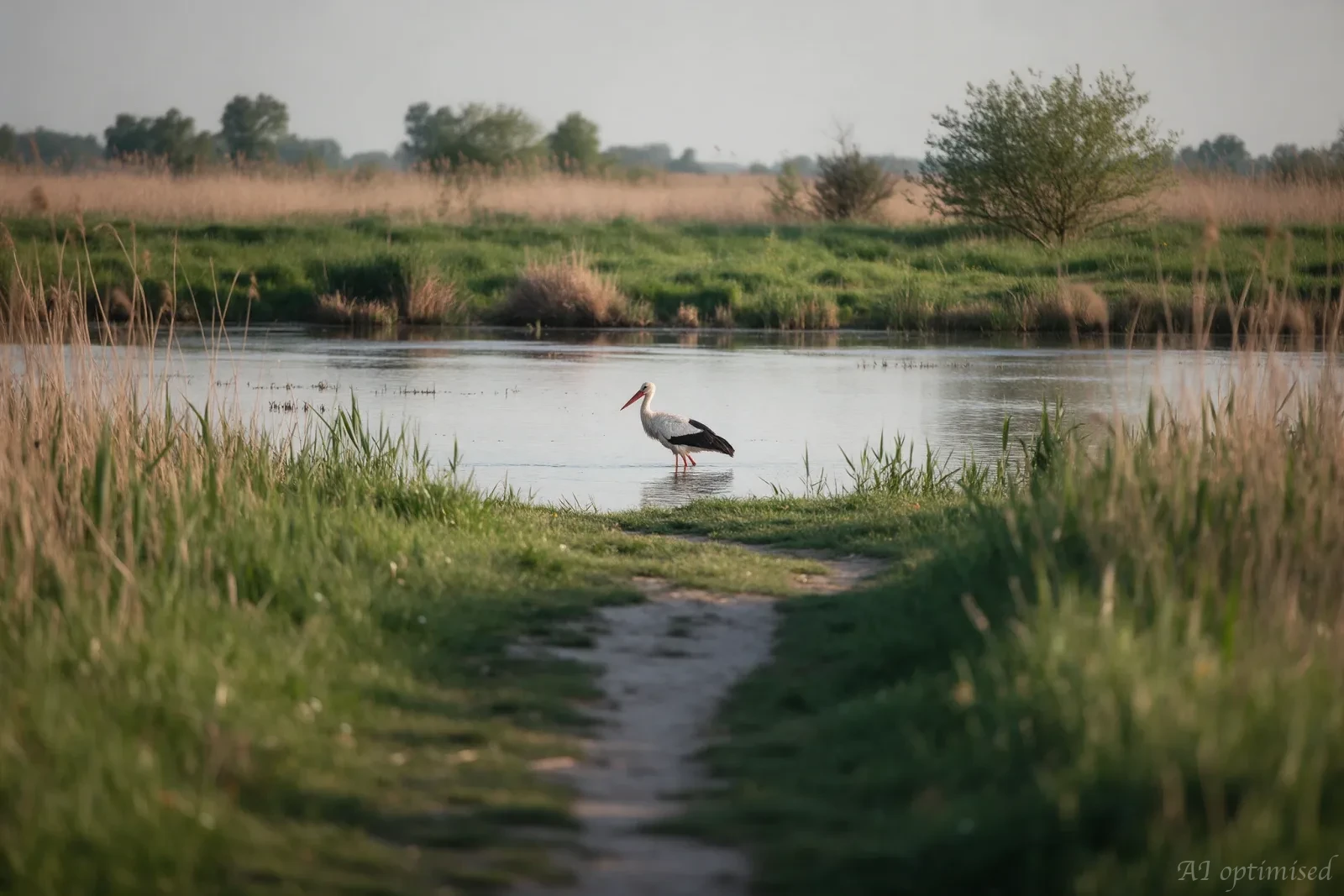
Winter: nests and notes
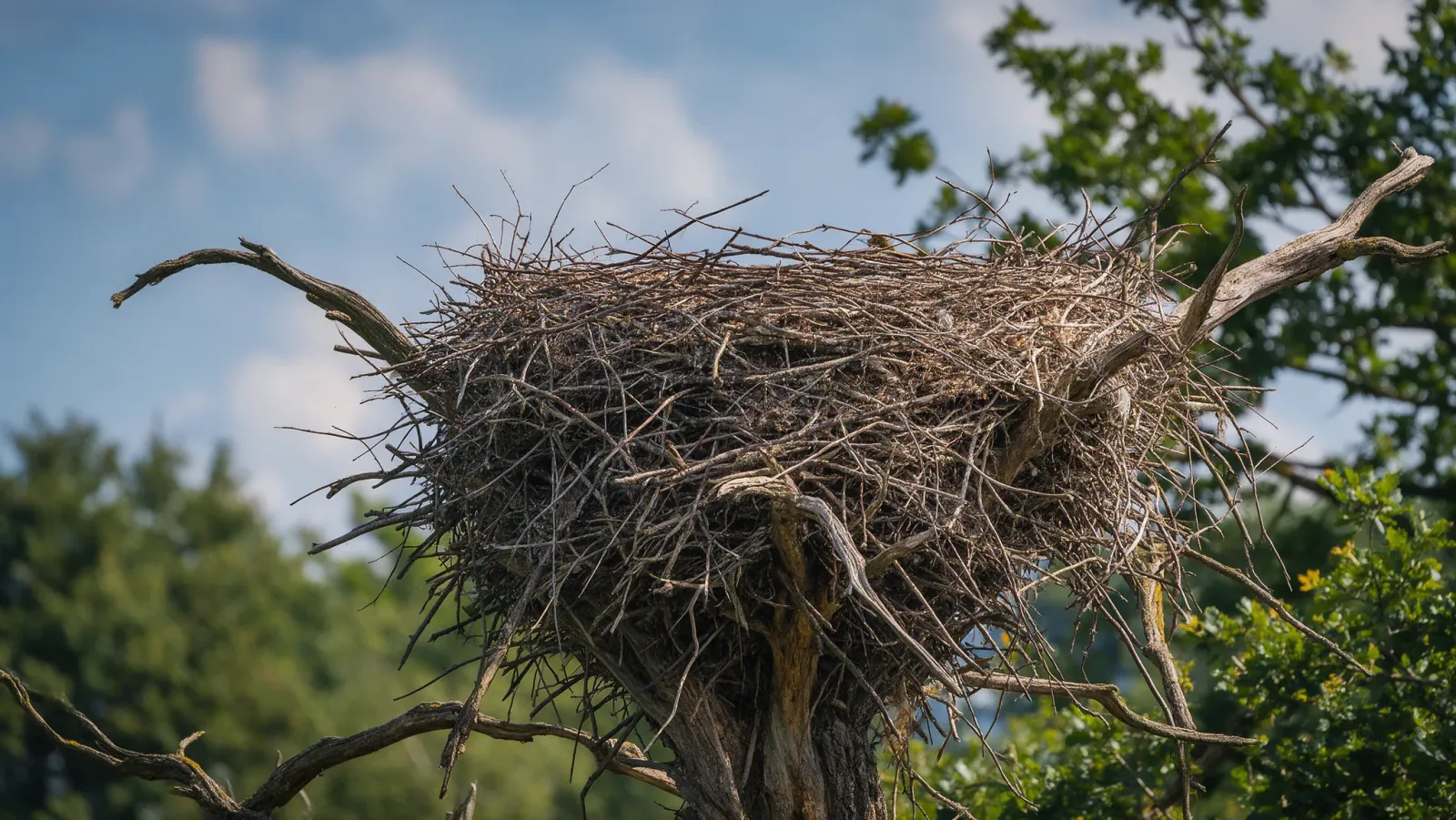
Winter is the quiet season. The nests stand empty, and there is no bird to find. This is when you read your notes, check the nest for damage, and learn the shape of the land without birds on it. An empty nest in January is a promise of the spring. Walk past it now and then, because the first returning bird may be standing there before you expect it.
Repair a nest platform only with the landowner's permission, since a good one is reused for years. Note which nests survived the weather and which have lost sticks. The land is easier to read without the birds: which field floods first, where the ditches run, which hedge gives shelter from a south wind. When the first stork comes back, you will see it against ground you already know.
Winter is also the time to put the year's dates in one place. First arrival, first chick, first flight, last bird before the cold. Four lines are enough, and after a few years the lines show whether your season is early or late. The calendar costs a minute and gives the whole year a shape.
The best hour
Light matters as much as the calendar. Storks feed hardest just after dawn and just before dusk, and they feed hard before a change in the weather. In the middle hours they often stand motionless or ride thermals far above the ground, where they are hard to watch. The silhouette of a stork landing against an orange sky is the reward the whole day has been building toward.
Weather can beat the clock. A cloudy, breezy afternoon can be better than a clear morning, and a calm evening after rain can bring a whole field of birds to the wet grass. A daily glance at the sky, hooked to something you already do, will put you in the way of the first arrival and the last departure. The sky above your own street keeps a rough calendar, and the birds follow it. Look up at the same four moments each day and note anything large and white, and by the weekend you will have a small record of what crosses.
Explore the gift