A white stork can live a long time, and in a life of twenty years or more it will see an extraordinary amount of the world. It will cross from Europe to Africa and back again many times, raise many broods, and come home to the same nest year after year. A lifespan in the sky is a thing measured not in months but in migrations, and a long-lived stork carries the map of a whole continent in its memory. A bird that has lived for twenty years has crossed the world many times over, and it has done so the way we cross a street, with the ease of long practice. That long life, lived mostly in the air, is a thing to marvel at. It turns every returning stork into a small argument for patience and endurance.
How long storks live
A white stork that survives its first, dangerous year can go on to live for a long time. Many storks reach an age of a decade or more, and some live well into their twenties. The first year is the hard part, when a young bird must learn to fly, to find food, and to make its first migration on its own. Those that pass that test go on to lives of remarkable length, lived almost entirely in the air and on the wing. The difference between a stork that dies young and one that lives long is often simply the luck of that first year.
The years and the journeys
Think of what a long life holds for a stork. Each year brings two great journeys, one south in autumn and one north in spring. Over two decades that is dozens of crossings, each one thousands of kilometres, each one a test of weather and stamina. A bird that lives long has survived storms over mountains, dry crossings over desert, and the long blue reaches of the sea straits. Its age is written in its experience, and every new migration is added to a store of knowledge no young bird yet has.
A nest that returns
Part of a stork's long life is a strong loyalty to place. A stork tends to return to the same nest year after year, repairing it, adding to it, and raising its young in the same spot. An old nest, grown huge with years of use, is a record of a long life, a structure that has sheltered many broods and weathered many winters. And a stork often keeps the same partner, the pair reunited each spring after the winter apart. The long life is a life of returns, to the same nest and the same companion.
What age looks like
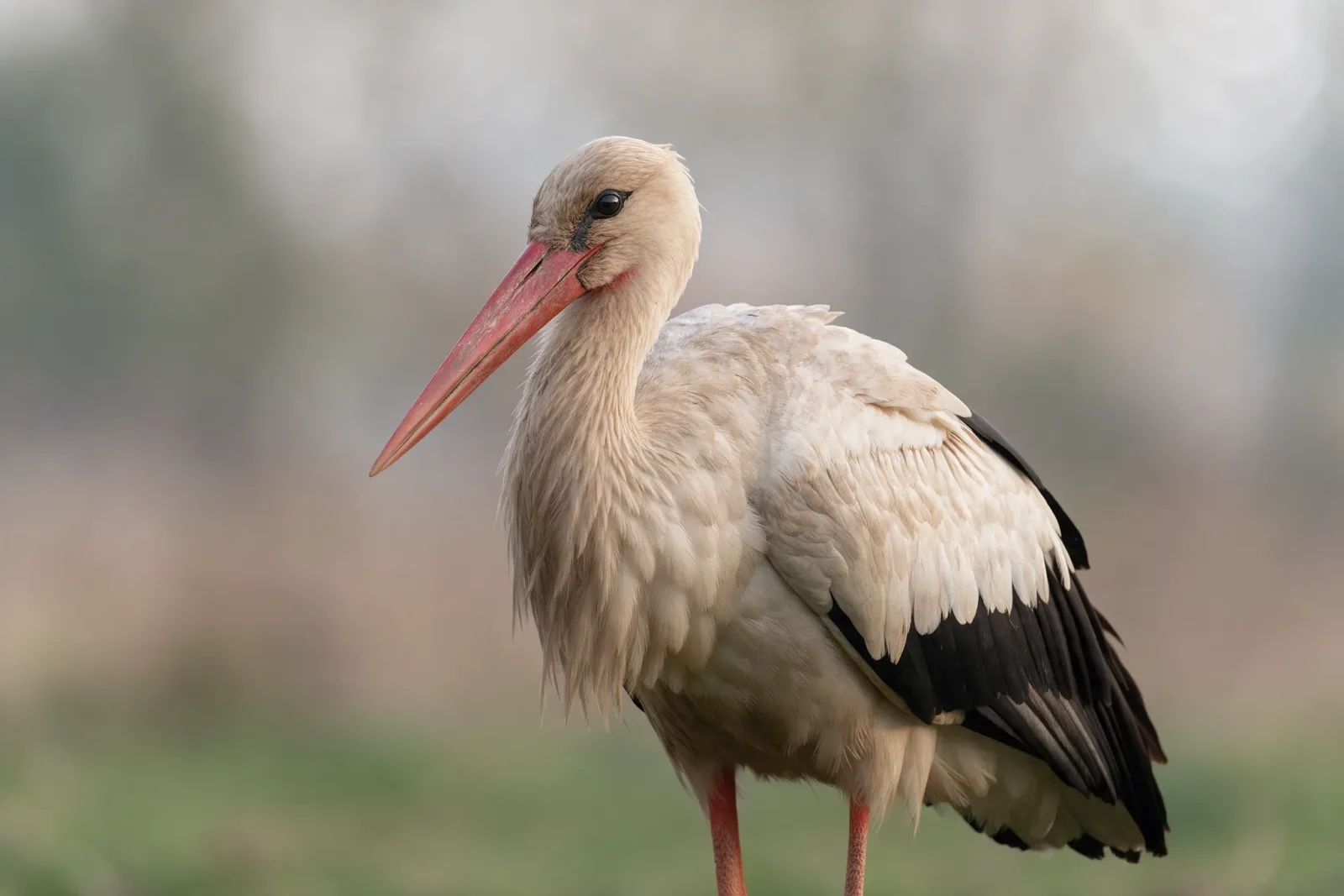
You can sometimes read a stork's age in its feathers and its manner. An older bird moves with a calm economy, sure of itself, wasting nothing. Its plumage may show the wear of many seasons, feathers a little less crisp than a young bird's. There is a patience in an old stork that only years of long flights can teach, the quiet confidence of a creature that has seen the route many times and knows it will see it again.
What a long life teaches
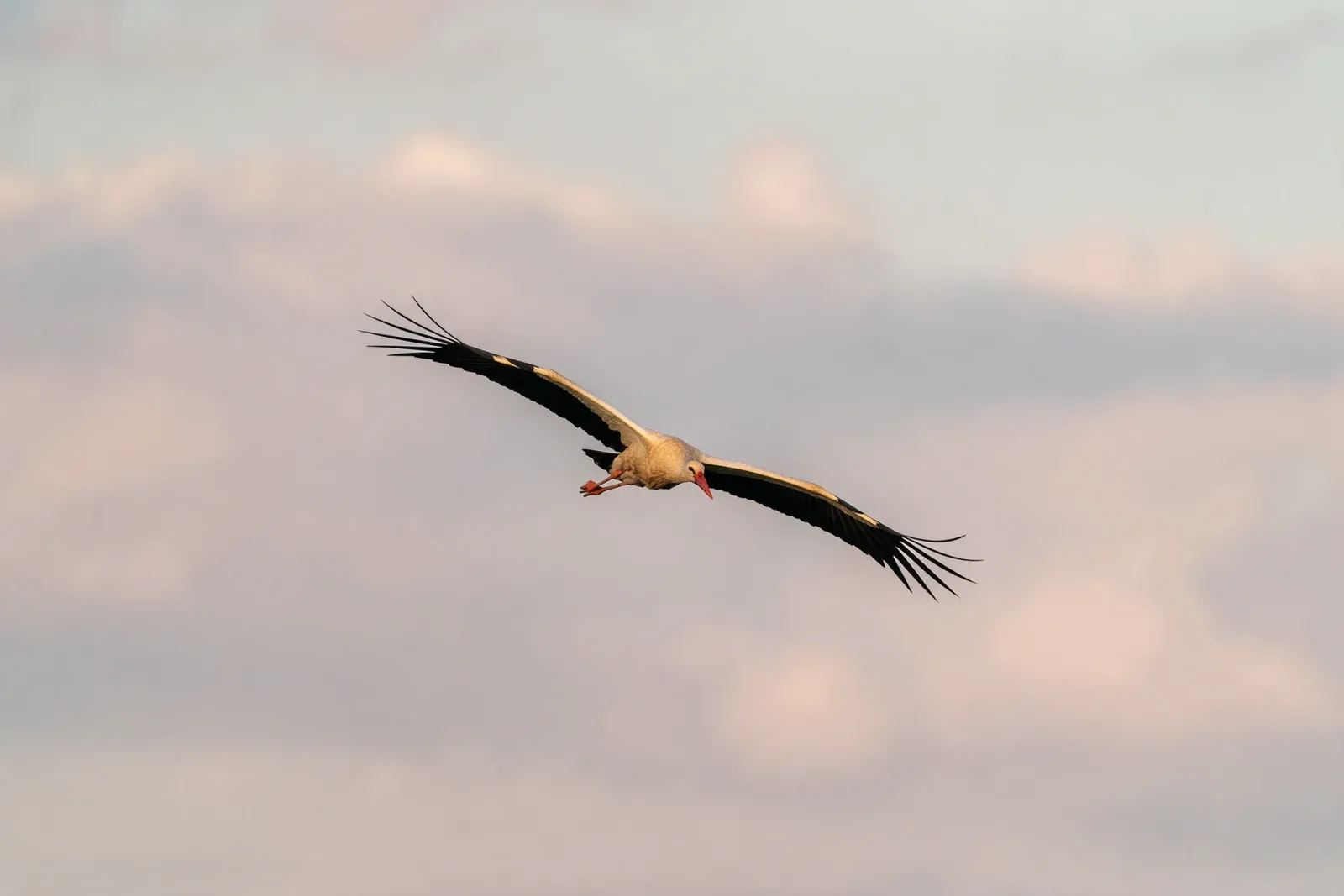
An old stork is a kind of living record. It has seen more sunrises over more countries than any human watcher, and it carries the route of its migration in its bones the way we carry the way home in ours. To watch an old stork rise is to watch a lifetime of journeys compressed into a single lift of the wings, all the years of practice gathered into one sure movement. The bird is old, and it has never stopped moving. An old stork is a kind of living proof that a life of hard travel can also be a long one, and that endurance is its own kind of reward.
So when you watch a stork rise into the sky, remember the years behind it. It may be halfway through a long and travelled life, carrying the memory of many migrations, and setting out once more on a road it knows by heart. The years do not slow it, and the road never loses its pull.
Explore the gift