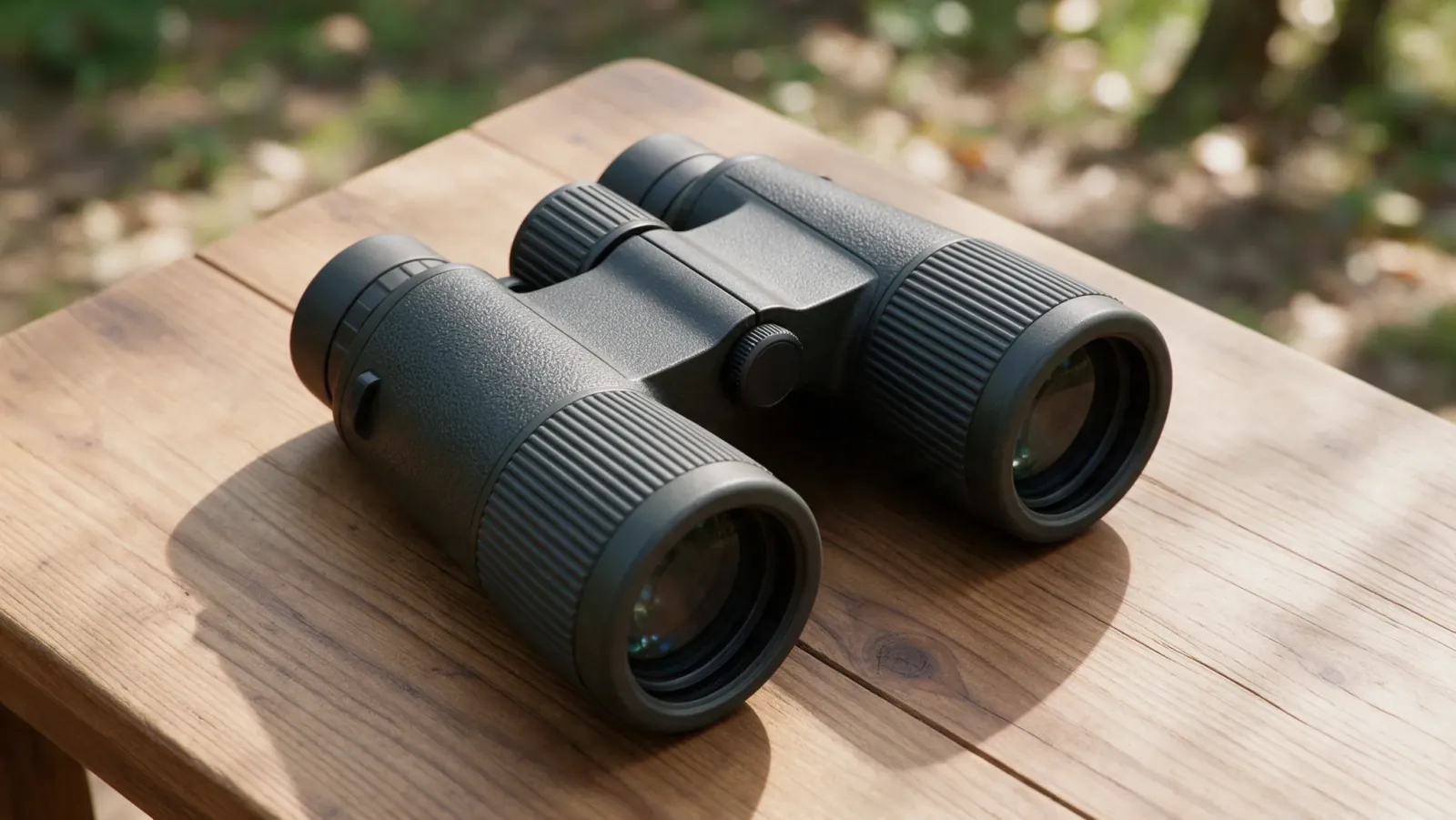
A first pair of binoculars has one job: to be in your hand when a white bird lifts from a wet field. Shops sell plenty of pairs that can do it. The choice comes down to two numbers on the barrel, a weight you can hold still for a minute, and glass that stays clear in rain. Get those right and you stop thinking about the instrument.
The two numbers on the barrel
Every pair carries a figure such as 8x42 or 10x32. The first number is magnification, so an 8x view brings a stork eight times closer. The second is the width of the front lens in millimetres, and it sets how much light reaches your eye. A 42 mm lens gathers more than a 32 mm one, which matters at dawn, at dusk, and under low cloud. Divide the second number by the first and you get the exit pupil, the small disc of light that meets your eye. An 8x42 gives a generous disc. A 10x25 gives a thin one, and the image dims just as storks become active. A bright view at first light is worth more than a long reach at noon.
Why 8x often beats 10x
More magnification sounds better until you try to hold it. At 10x every tremor in your hands is magnified too, and a stork two hundred metres away swims in the view. At 8x the image settles, the field is wider, and you find a moving bird faster. A wide field matters with an animal this large. Most stork watchers are better served by a steady 8x than by a shaky 10x. If your hands are very steady, or you watch from a hide with a rest, 10x is a fair choice.
Fit, focus, and rain
Raise the binoculars and keep them at your eyes. The weight should sit in your palms and not pull at your neck. Turn the focus wheel with one finger; it should move smoothly and reach a sharp image without a fight. If you wear glasses, check that the eye cups twist or fold down far enough to show the full view. Look at a shelf across the shop, then at something close, and notice how far the wheel has to travel. A stiff focus is the fault you will meet every time a stork changes distance.
The two common shapes are the straight roof-prism tube and the offset porro-prism barrel. Roof prisms are lighter and easier to seal against rain. Porro prisms often give a bright view for less money, with more bulk. Neither shape makes you a better watcher. Waterproofing and a comfortable strap will do more for a wet morning than an expensive name. A pair you carry beats a better pair left at home. Spend enough to make the glasses comfortable and sealed, then stop.
When a scope earns its place
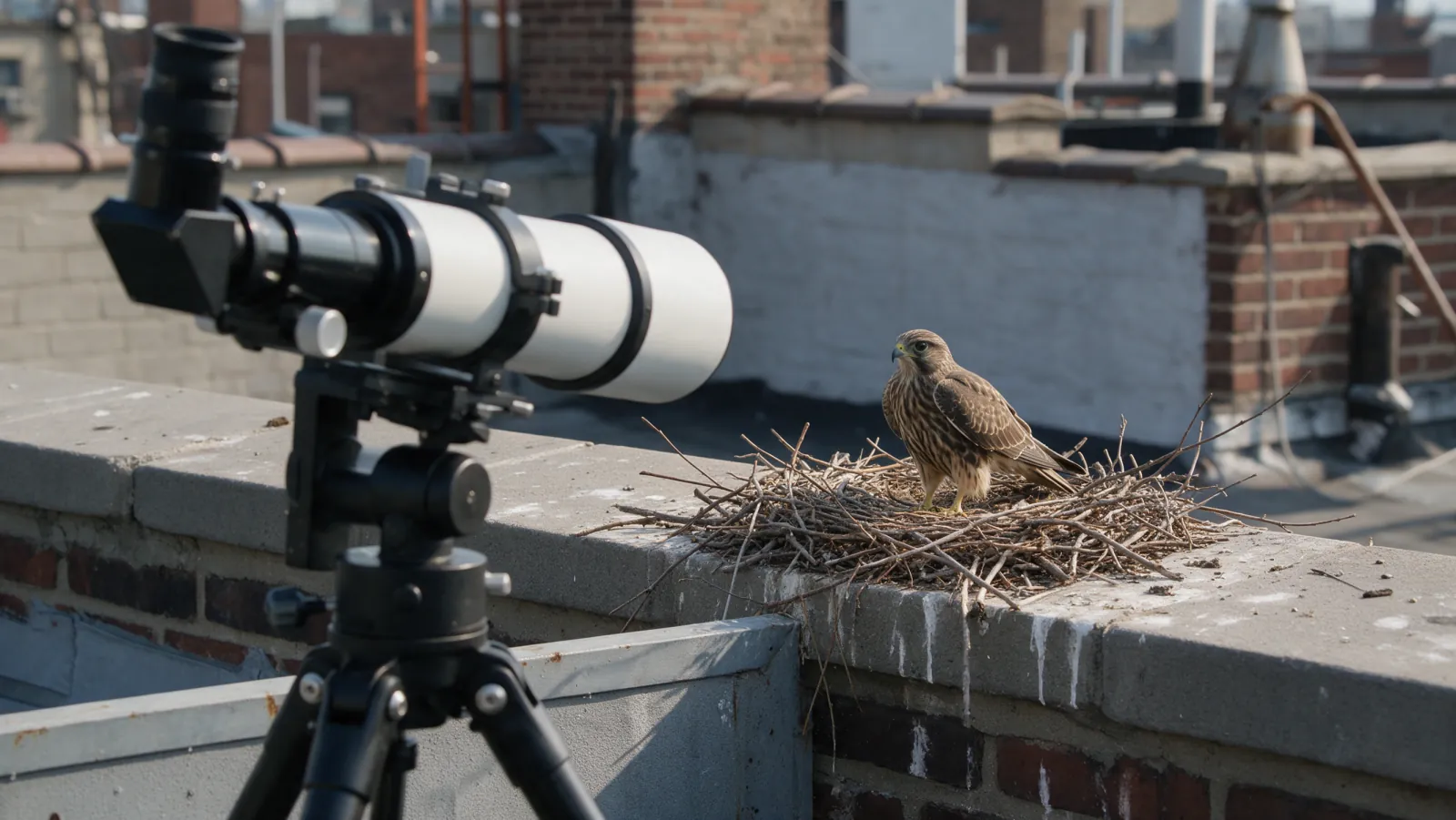
A rooftop nest is the best subject for a spotting scope. It is high, open, and fixed in place. You can stand on a public road, set the scope on a tripod, and study the nest for an hour without crossing a garden. The nest stays where it is, and so do you.
A modest scope at 20x to 30x will show a stork's bill, its ring, and the heads of chicks. Higher magnification magnifies heat shimmer and every tremor of the tripod. A steady 25x beats a shaky 60x. The tripod matters as much as the glass. A light tripod on a windy day will wobble, and the image will swim. Add a quick-release plate so you can set up without fumbling.
Choose a spot where you do not block a pavement or point the scope through a window. Keep the tripod off the road and the sun behind you, so the nest is lit and the lens is free of glare. Focus slowly, starting low and turning until the sticks sharpen. Do not stand under the nest. A scope lets you keep a respectful distance and still see the detail. Bring a chair, a flask, and a cloth for the lens. If someone asks what you are looking at, tell them and offer a look.
The view from a hide
A small shelter with a slit for a window removes the human shape. Birds that would leave a field if a person walked in will tolerate a dark box in the reeds. After a few minutes they treat it as part of the bank. A stork may land close, feed, preen, and sleep within a few metres of the window.
The narrow frame helps. You see the water move, the bill drop, the wing shake. Detail replaces the wide view. The frame also teaches you to wait for the bird to enter rather than chasing it with your eyes.
Sound carries across water. Speak low, move slowly, and do not bang the wood. A zipped bag or a dropped flask will empty the pool. Silence is the rent you pay for the view. Arrive before first light or well before dusk and let the hide settle with you inside. The first ten minutes are the price of the next hour. Do not open the window wider or lean out. When the first bird lands, stay still and let it decide that the hide is harmless. Share the space quietly, offer the scope, and leave it cleaner than you found it.
Try before you trust them
Buy from a shop that lets you take a pair outside, or order from a seller with a fair return policy. Use them for a week on fences, rooftops, and distant trees before you commit. Borrow a friend's pair and compare. The right binoculars feel unremarkable in use. You stop thinking about them and start watching the bird.
A wide strap spreads the weight on a long walk, and tethered lens caps save a fumble in the rain. Those small fittings decide whether the glasses come out of the bag on a grey morning. The best pair is the one you use without a second thought. You can spend a little or a great deal, and the view improves fastest at the bottom of the range. Above the middle the gains get smaller and the weight often grows.
The guide at the kitchen table
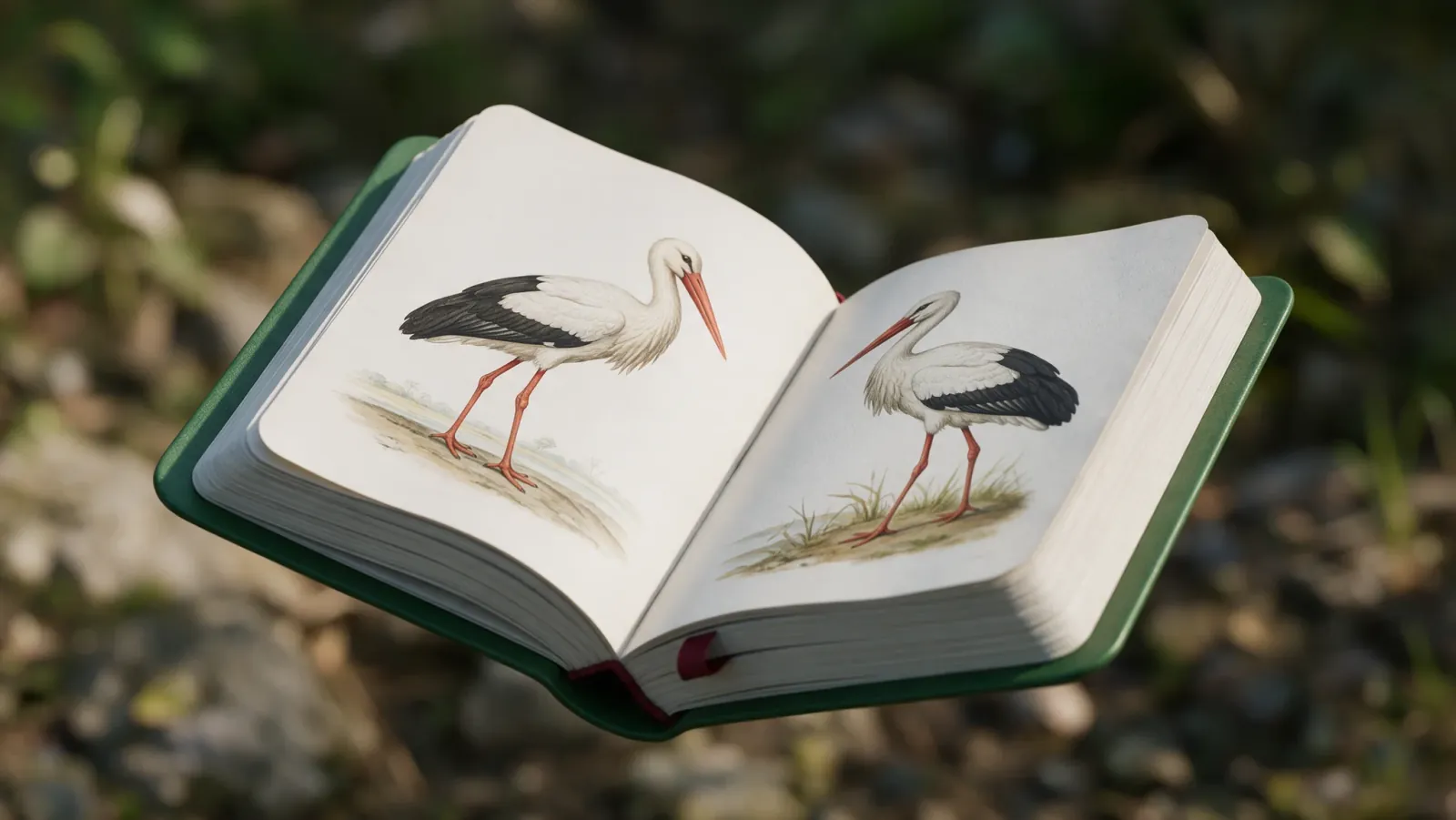
A guide is most useful after the walk, when the bird is gone and the light has changed. At home you can open the book, compare the plates, and turn a glimpse into a name. Used that way, it sharpens the next watch.
A good guide gives you the facts in the order you need them: size, shape, habitat, season, and the marks that separate one bird from another. The best pages put similar species side by side. A guide is a set of differences, and the differences are what you learn. Put the white stork beside the grey heron and the common crane. Look at the bill, the neck in flight, the way the legs trail. A name attached to a difference stays in memory.
Watch first and read later. Every second on the page is a second off the bird. Note what you saw in your own words, then look it up at home. The delay forces you to notice what you actually saw.
A guide will also show you the wider family: the black stork of quiet forest streams, the marabou of African savanna, the saddle-billed stork with its bright bill, the painted stork, the adjutant, and the woolly-necked stork. Seeing them together on a page makes the white stork's own shape clearer. If you want to meet a few of them, start with the flock.
A regional guide is often more useful than a book that covers a whole continent. It shows the birds you can actually see, in the seasons you can see them. Buy for the place you watch. When the book runs out, your notes take over. A gap in the guide is a prompt to look harder. The best guide is the one with a cracked spine and a coffee ring on the heron page.