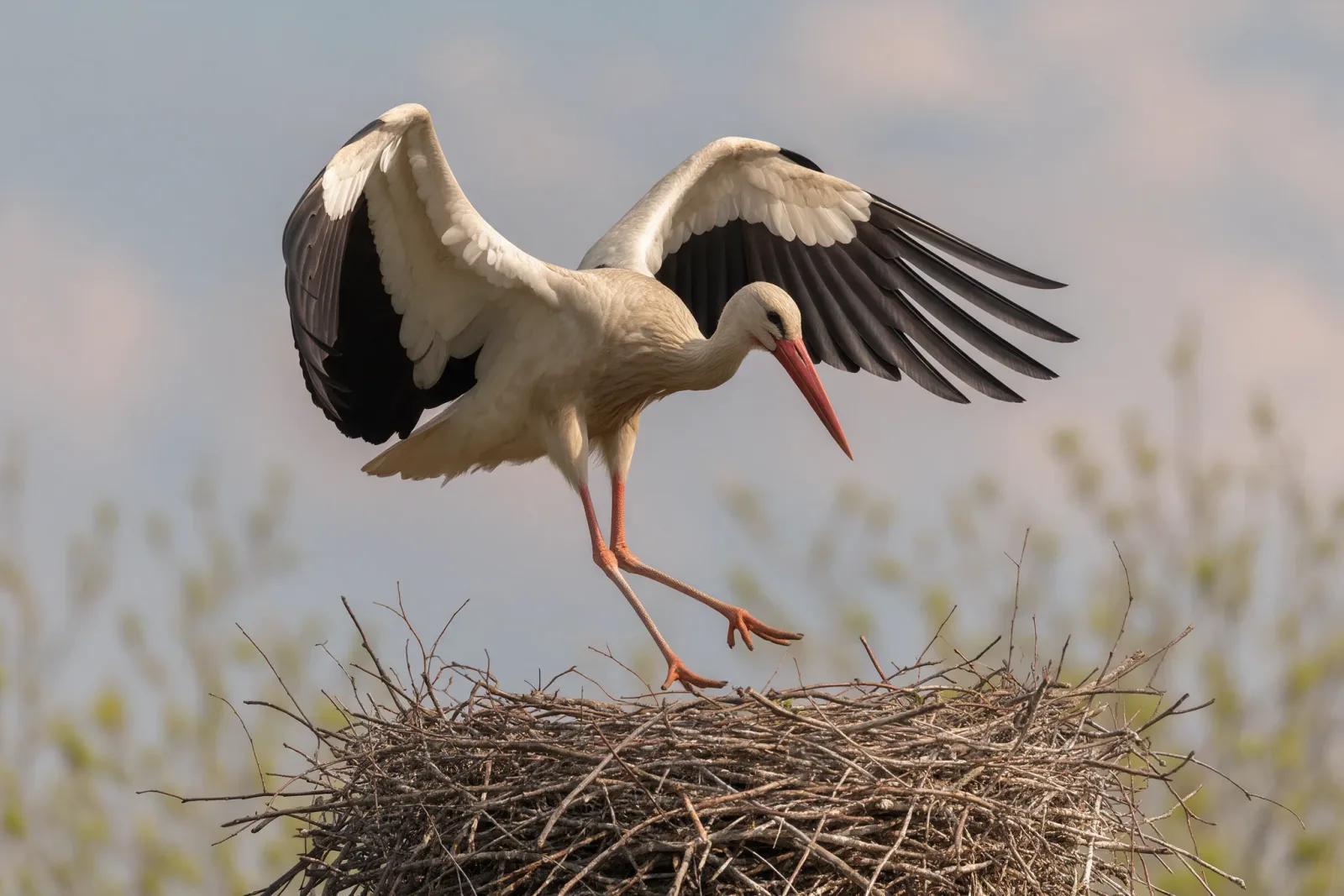
Of all the creatures people have trusted with their most precious cargo, the stork is the gentlest. The gift bearer is the bird's lasting office, the reason it still descends, in our imagination, toward a pair of waiting hands.
A gift that arrives without a price
The stork never seems to ask for anything. It arrives, delivers, and goes. The bundle is handed over without price or condition, and that is what makes the image tender.
A gift, to feel like a gift, has to arrive freely. The stork is the one bearer in folklore who never charges a fare. It asks nothing back, and the child is received as something given. The bird does not wait on the windowsill for a reply.
A blanket, a meal, a card with a name on it: none of them asks for payment, and all of them are carried to a door by someone who thought about the household first. The stork is a picture of that errand, and the picture is why a small gift can feel larger than its price. The gesture is small, and the care in it can be large. The bird does not linger for thanks. It leaves the bundle and goes, which is how the best gifts avoid becoming a transaction.
The care in the carrying
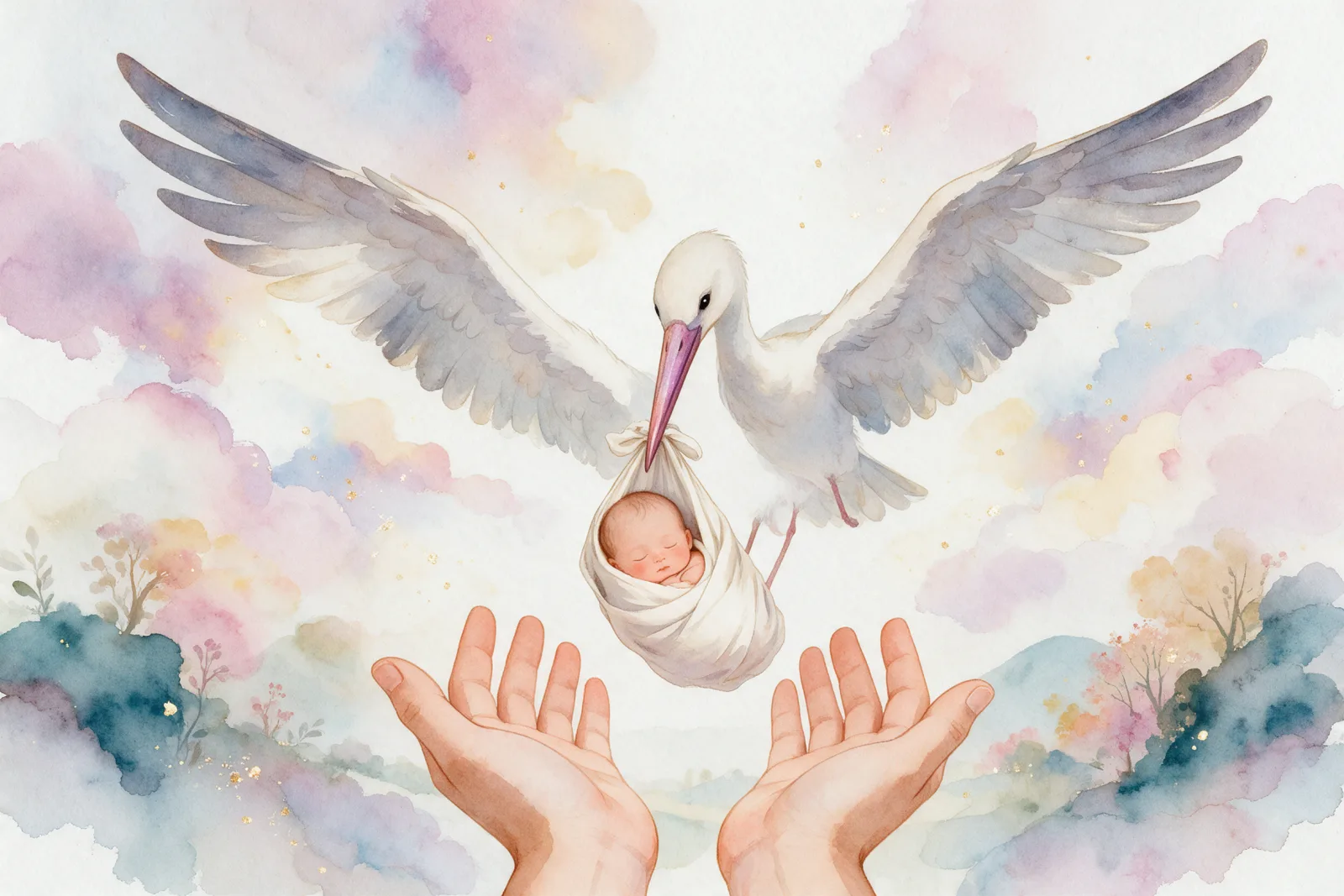
Every version of the image agrees on the bird's gentleness. The bundle is held in the beak or slung across the back, never dropped, never hurried. The stork flies carefully, because the cargo is a life.
This care is the meaning of the symbol. The bird protects as it delivers. The whole flight is an act of attention, and the child arrives safe because the grip never slipped.
The stork earned the office through its own nature. It is loyal, patient, and careful, the qualities a bearer of gifts should have. A hawk would be too fierce. A swallow too quick. The stork's slow, deliberate wingbeat is the pace of something carried with care. The bird moves like a promise being kept.
The herald
Good news arrived on white wings long before babies did. The bird announced marriages and blessed new homes, and its whiteness, faithfulness, and spring return made it a promise people could almost see.
To see a stork in flight was, for many communities, a good omen. The bird announced the news the way a herald rides ahead of a king. A stork overhead meant something welcome was on its way. The promise stayed open. It might be a child, a wedding, a fine harvest, or simply the end of a hard winter. The bird carried the general shape of hope, and each household filled it with its own longing.
The stork's faithfulness made it a natural symbol of marriage. The bird returns each spring to the same nest and, in the folk understanding, to the same partner. That loyalty looked to human eyes like a wedding vow kept year after year. A stork seen by a young couple was read as a promise of a good match, and the bird appeared on embroidered cloths and on gifts meant for a bride. It stood for the idea that love, like the stork, could be counted on to come home.
A blessing on a new house
A family moving in hoped that a stork would one day settle on the roof. The nest was the final blessing, the mark that the house had been accepted and would be protected.
So the stork became part of housewarming itself, a sign that a new roof would gather luck as well as rain. The bird was imagined gliding toward a lit window, bringing the promise of a warm and full house.
The bird also appeared on household cloth, on towels and covers and the linen kept for guests, where a pair of storks could be read at a glance. A symbol that lives on a cupboard shelf is a symbol a family uses, and use is what keeps a meaning alive between one generation and the next. Guests had grown up with the same picture in their own homes.
Pocket luck
People once kept "stork stones" and other charms to summon the bird's blessing: a carved bird, a polished stone, a scrap of cloth tied at the door. Each one was a tiny request, a way of keeping the bird's luck close while it was far away in the south.
A charm is a wish made small enough to carry. Where a prayer needed a church, a charm needed only a pocket, and the stork's luck could travel anywhere. A mother might keep a wooden stork near the cradle. A farmer might bury a shaped stone at the edge of a field. These objects were addressed to the bird itself, a way of saying: return to us, and bring the good weather and the children with you.
The stork stone was a natural choice, because stones survive. A smooth stone from a marsh or a riverbed, shaped or marked or simply kept, carried the memory of the wet places where the stork stood. To hold it was to hold a piece of the bird's own country. Some stones were carried in a pocket for luck. Others were laid in the hearth or beside the cradle. The stone worked because it was remembered and kept, whether or not it looked like a stork.
Woodworkers carved small storks for the nursery, painted white with a red bill, and these stood watch over sleeping children. Women stitched the stork into cloth as well, a bird on a hem or a cradle cloth, so that a child would sleep under the symbol of the bird said to have brought it. The stitched stork was a blessing worn close to the skin, and it wore out with use.
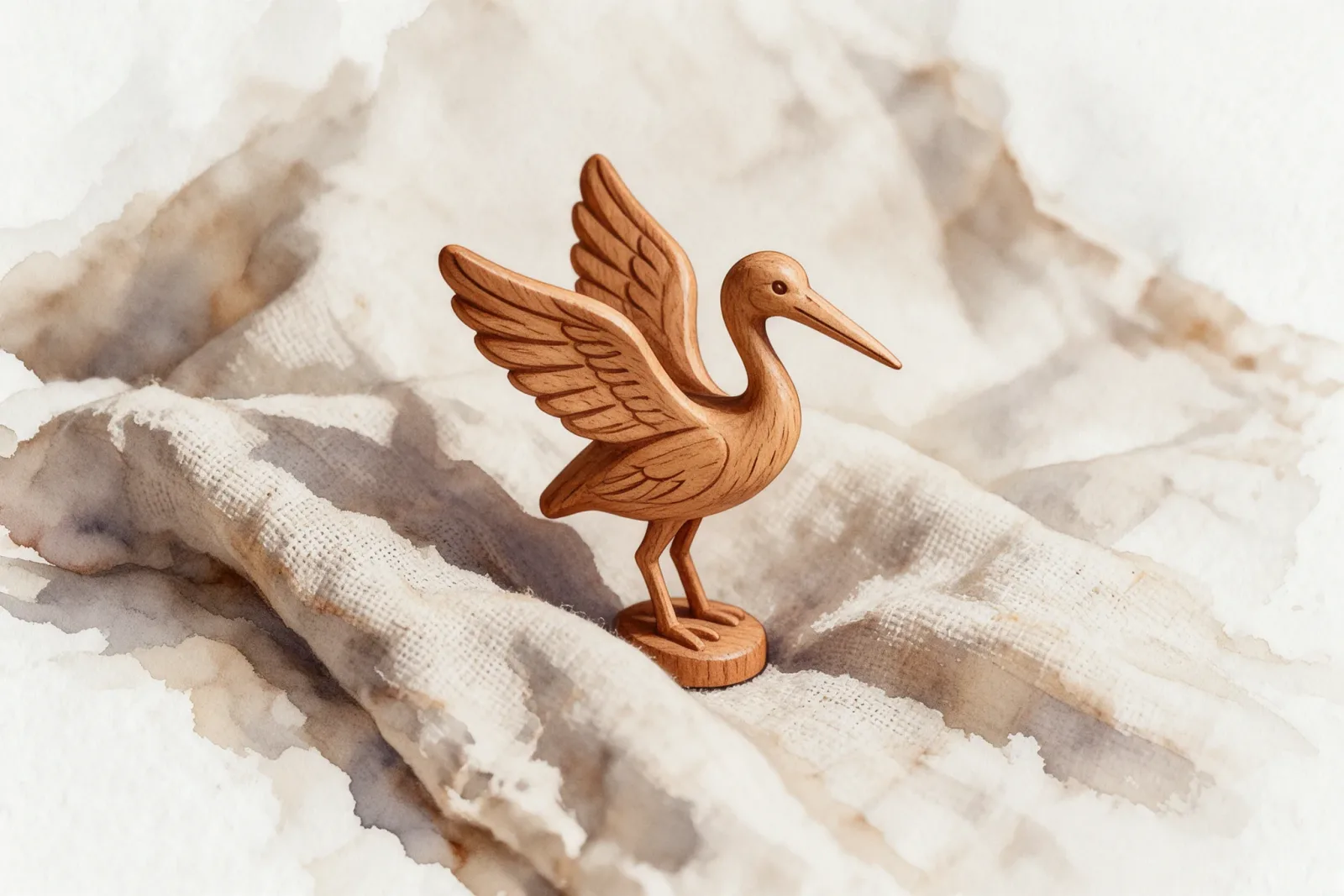
The deepest purpose of every charm was the return. Winter was long, and the stork's departure left a kind of absence over the house. The charm held the bird's place, keeping the nest warm in hope until spring came back. When the first stork appeared, the charm had done its work. It had kept the promise alive through the cold months, and the household could put it away until the next autumn.
A gentleness that endures
The symbol has outlasted the belief behind it. Nobody waits for a stork at the door, and the bird still appears at every birth, on the card, the blanket, the first photograph. A card printed today can use the same bird and the same bundle. The image keeps giving because the feeling behind it has not gone.
We still want our welcomes to feel carried, and our gifts to feel free. That is why adopting a stork for a new baby feels natural: the gesture borrows a very old picture and uses it for a real household.
The old story had no need of a shop. It needed a bird, a door, and someone willing to carry something carefully. A white bird on a card still does the work: it says someone carried this news to you with care.
Explore the gift