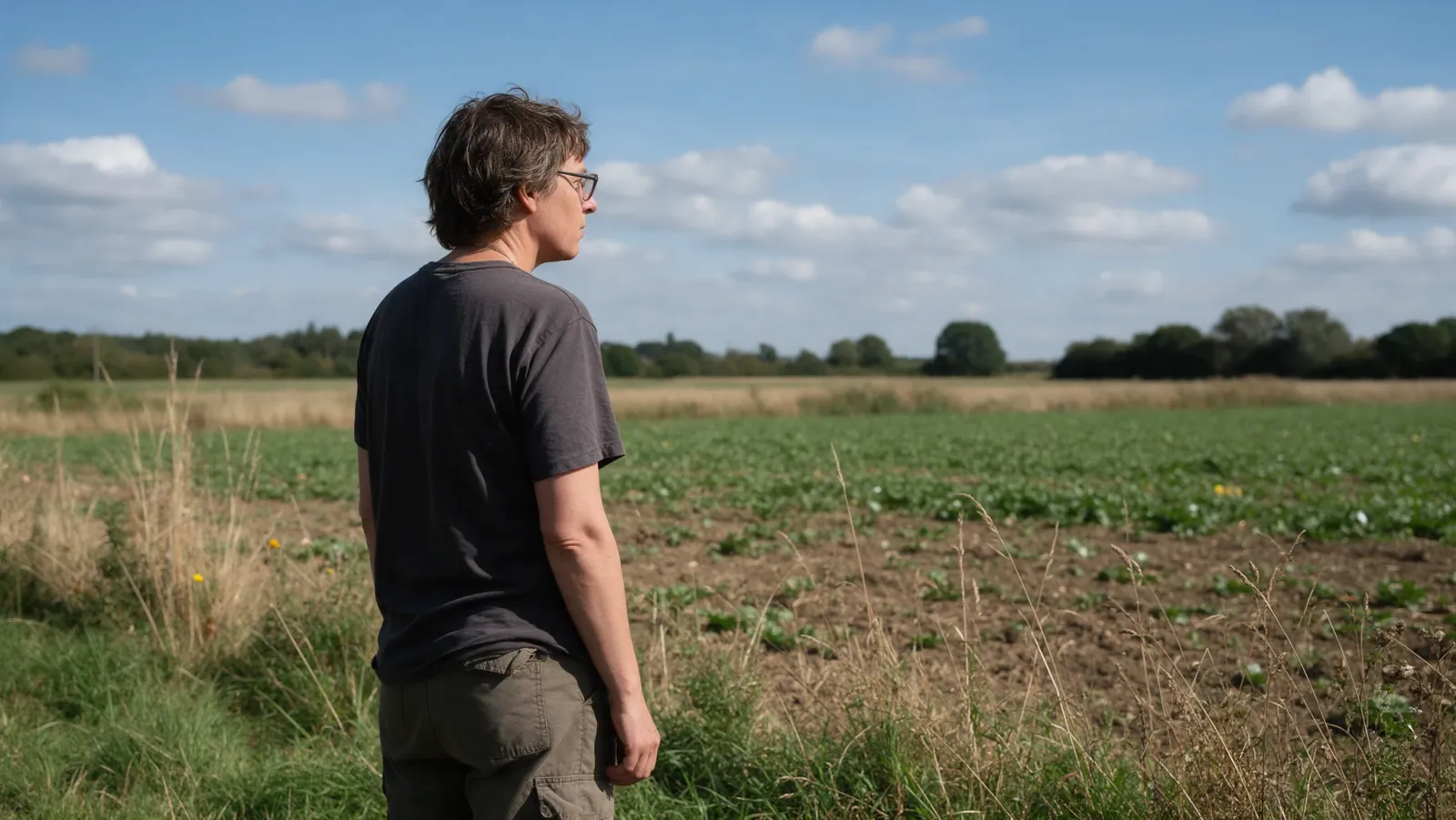
The first skill of stork watching costs nothing but time. A white stork reads movement long before it reads shape or colour. A walker who shifts from foot to foot, raises an arm, or turns too quickly becomes a threat, and the bird lifts before you have had a proper look. The watcher who settles and lets the field forget them sees a different animal.
Movement is the whole conversation
A stork spends much of its day motionless in shallow water, waiting for a frog to betray itself. Its eye is tuned to small changes. Your movement stands out against a flat meadow the way a frog's jump stands out against mud. Stillness is active work, the way you stop being the thing the bird watches. A single raised arm can lift a whole field of birds at once.
Pick a spot with an edge
Open ground makes you obvious. Look for a hedge, a fence, a gatepost, a parked car, or a line of reeds that breaks your outline. Stand so the bird is in front of you and the cover is at your side. Keep the sun behind you if you can, because a face in shadow is easier for a bird to ignore. The spot should be comfortable enough to hold for twenty minutes, since a watcher who shifts weight is already moving. The edge of cover is worth more than any clothing.
How to stand for twenty minutes
Plant your feet about shoulder-width apart and let your arms hang. Keep the binoculars down until you need them; the slow lift to your eyes is a movement too. Breathe evenly and keep your shoulders low. If you must turn, do it in small steps, pausing between each one. Lean on a post if there is one. Put your hands in your pockets when they are cold, but keep your weight balanced. A body braced against the wind will start to sway, so find the lee side of the hedge.
A steady wind carries your scent away from the bird when you stand downwind, and carries it toward the bird when you do not. Choose the side of the hedge that puts the breeze at your back. Sound matters too. A zipped jacket, a rustling bag, or a phone that buzzes can end a good watch. Quiet clothes and a still body work together. Leave the noisy gear in the car and keep the pockets that matter closed.
The first five minutes
The field will not settle at once. Birds that were disturbed may circle, call, or stay away. Give them time. The lapwings come back first, then the ducks, then the storks. Listen for the ordinary sounds to return: water, wind in dry stems, a distant dog. When the small birds resume, the large ones usually follow. The five minutes after you arrive are the price of the next hour. Most people leave during those minutes. Sit tight through the first quiet half hour, and the field will come back to you.
Approach in an arc
A figure walking straight at a bird reads as a predator. A figure crossing the bird's view at an angle reads as something passing. Approach in a wide curve, keep your pace even, and pause now and then to look at the ground or the sky. Sudden stops are almost as bad as sudden starts. Slow, sideways movement is the closest thing to invisible that a person can manage. Give the nest a wide berth and let the arc do the work. If the bird raises its head, freeze and let it settle. A stork that goes back to feeding has given you permission to stay.
Distance depends on the bird, the place, and the day. A stork nesting above a busy street may let people walk beneath it all morning. The same bird feeding alone in a wet field will flush when a walker steps onto the grass. Let the bird's posture set the distance. If it is feeding, preening, or resting, you are far enough away. If it stops and turns its head toward you, you are too close, and the kind move is to stop and give the moment back.
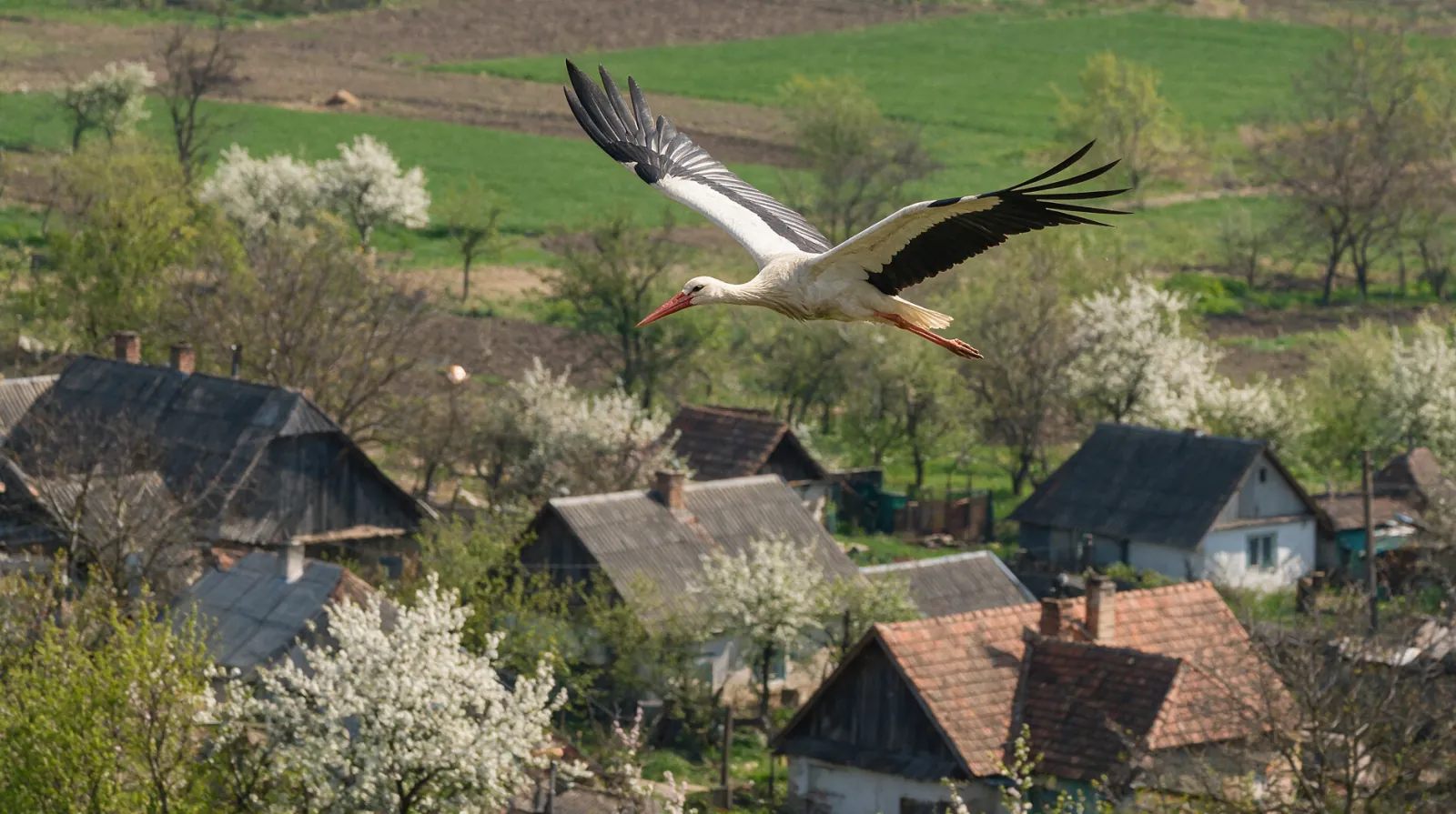
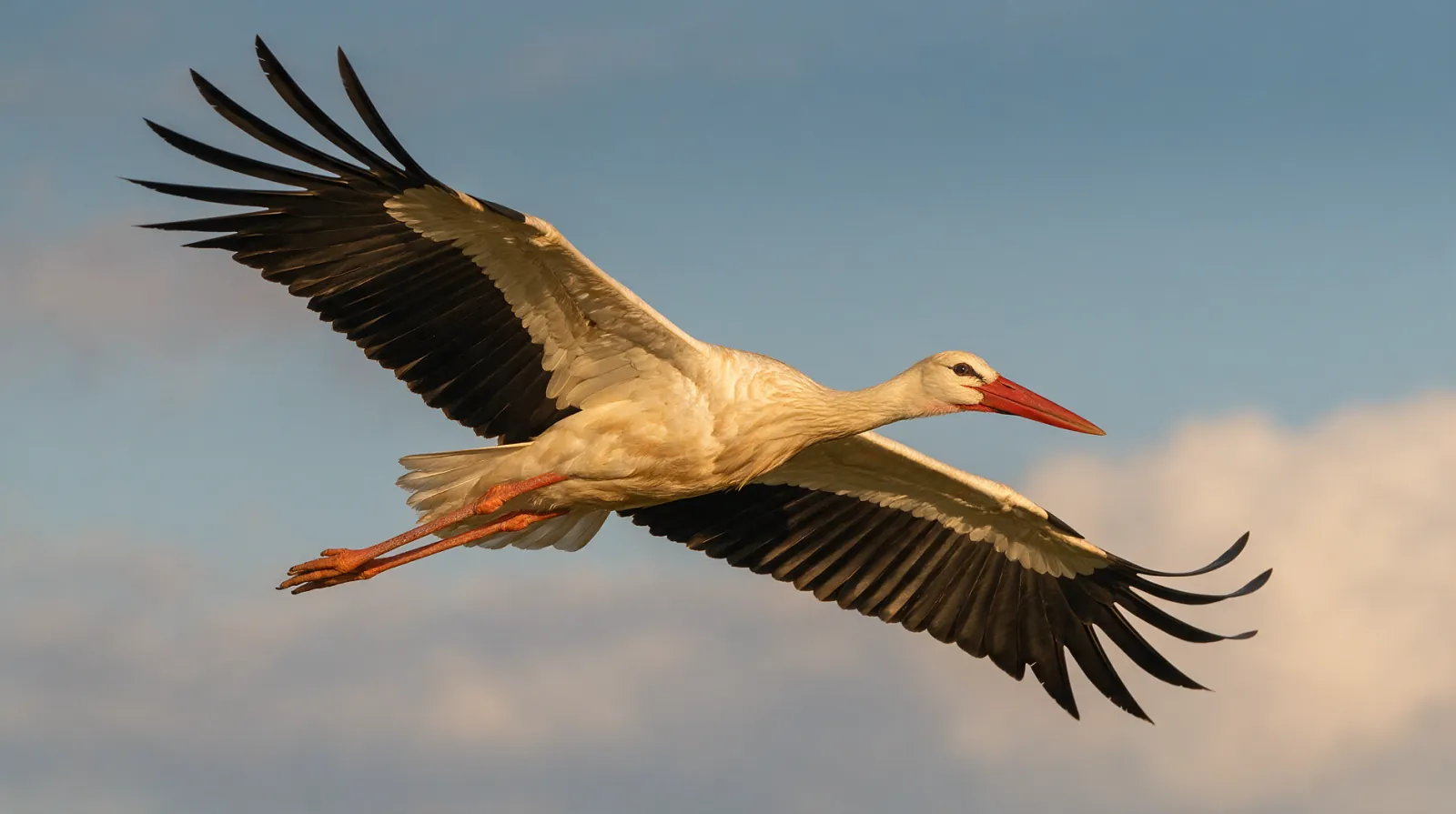
A stork rarely leaves without warning. The head comes up first. The neck straightens, the body stills, and the bird shifts its weight from one leg to the other. Then the wings loosen, a step is taken away from you, and the first beat lifts it clear. Freeze at the first sign. Do not follow, raise a camera, or take one step closer. If the bird settles again, you have been given a second chance.
You will eventually need to move. Do it when the bird is busy, head down in the water or preening with its bill buried in its back. Move along a line across the bird's view, and keep your pace even. Stop before the stork looks up. If it raises its head, freeze and let it settle. A stork that walks away has told you the truth about your distance. Take the answer and give it room.
Never cut between bird and nest
There is one line that should never be crossed, and that is the space between a stork and its nest or its young. A parent with chicks is alert and will leave the nest if you press it, exposing the young to cold and to predators. Walk around a nesting bird, even if it adds ten minutes to your route. Watch from the far side of the road or the field. The nest is the one place where distance is not negotiable.
The breeding season raises the cost of a mistake. Early on the birds are settling and courtship is under way, and a brief disturbance can cost them a nest site. Once the eggs are laid, a flushed bird leaves the clutch exposed. Later, when the chicks are large, the parents are tied to the nest. Use a scope, stay on the path, and let the family get on with the work.
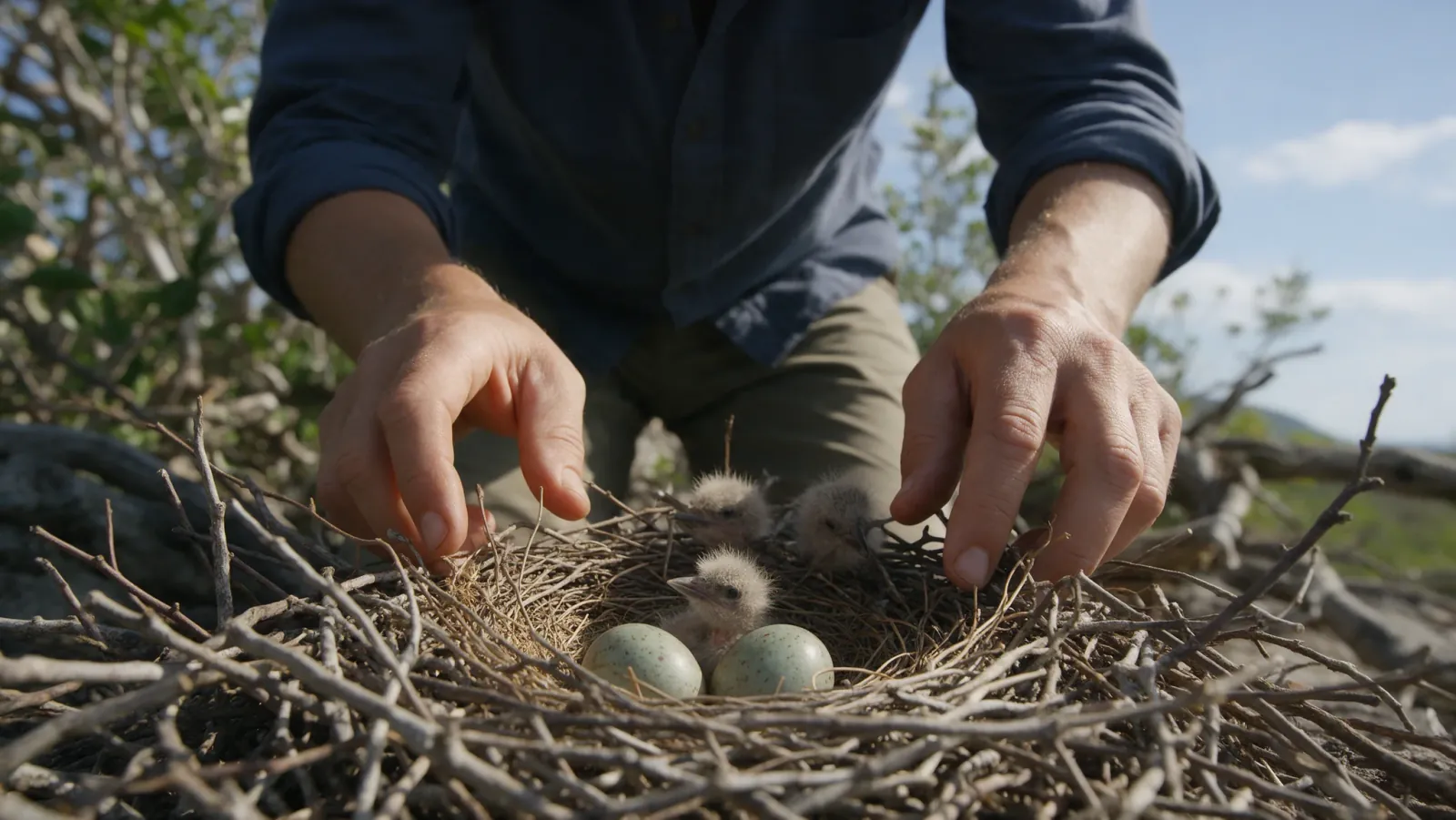
Dogs, drones, and bad weather
A dog off the lead will flush birds that a quiet person can approach. Keep it close and on the path where birds are present. A drone is worse, because it comes at the nest from above, where the bird has no cover and no experience. Leave the drone at home. Car doors, picnic bags, and bright jackets add up. The quietest watcher is the one who brings the least disturbance.
Wind and rain change what a stork will tolerate. On a cold, windy day the bird is already working hard, and it flushes sooner. On a mild, still day it may let you closer. Give more room in bad weather. A bird with energy to spare can afford to ignore you. Close gates, take your litter home, and stay on the track where the ground is soft. Do not use recorded calls to pull a bird closer. Leave the nest, the hedge, and the water as you found them.
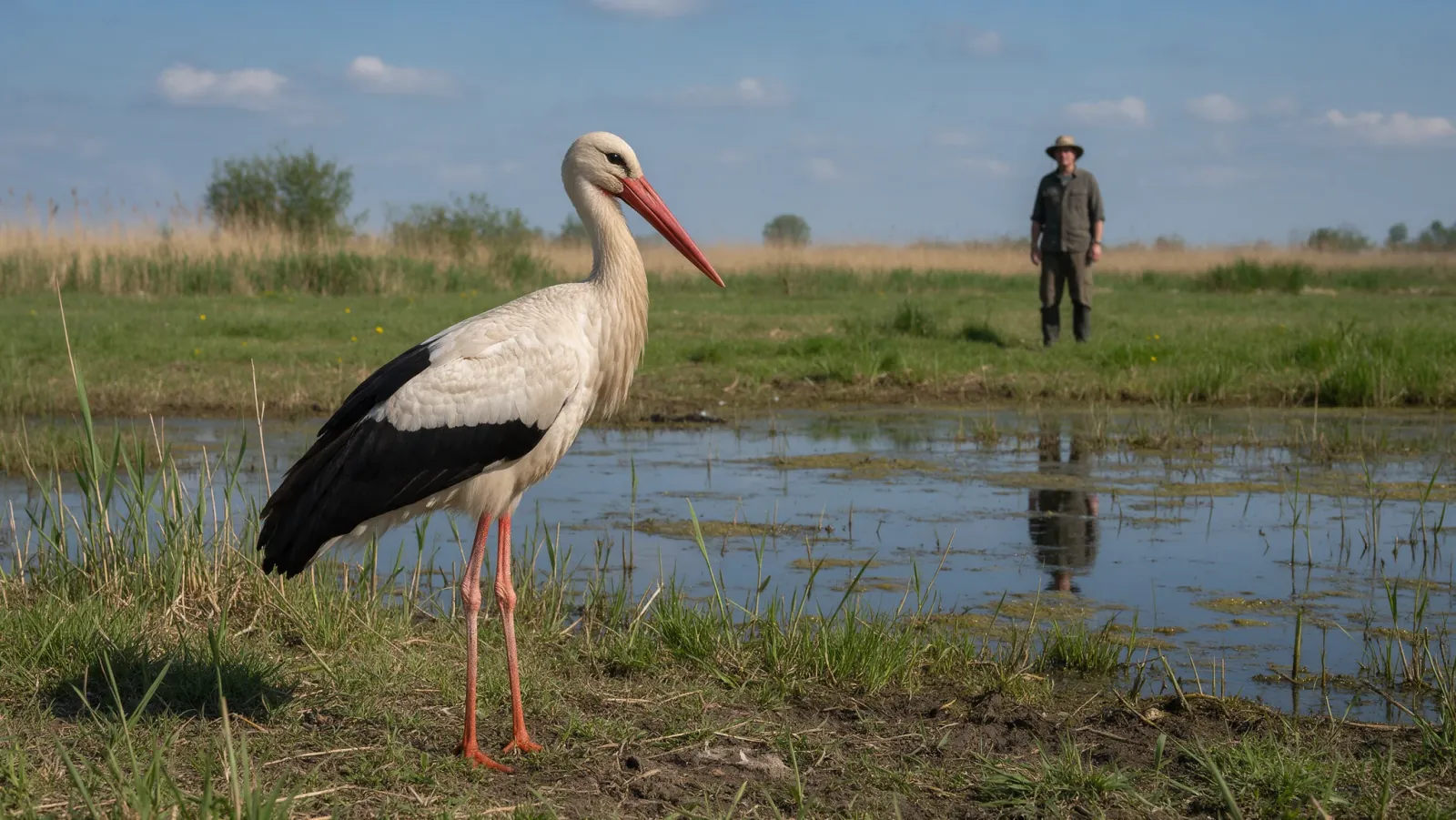
A field that is unchanged after your visit is the mark of a good watcher. Walk back the way you came, close the gate, and leave the birds to their afternoon.
Explore the gift