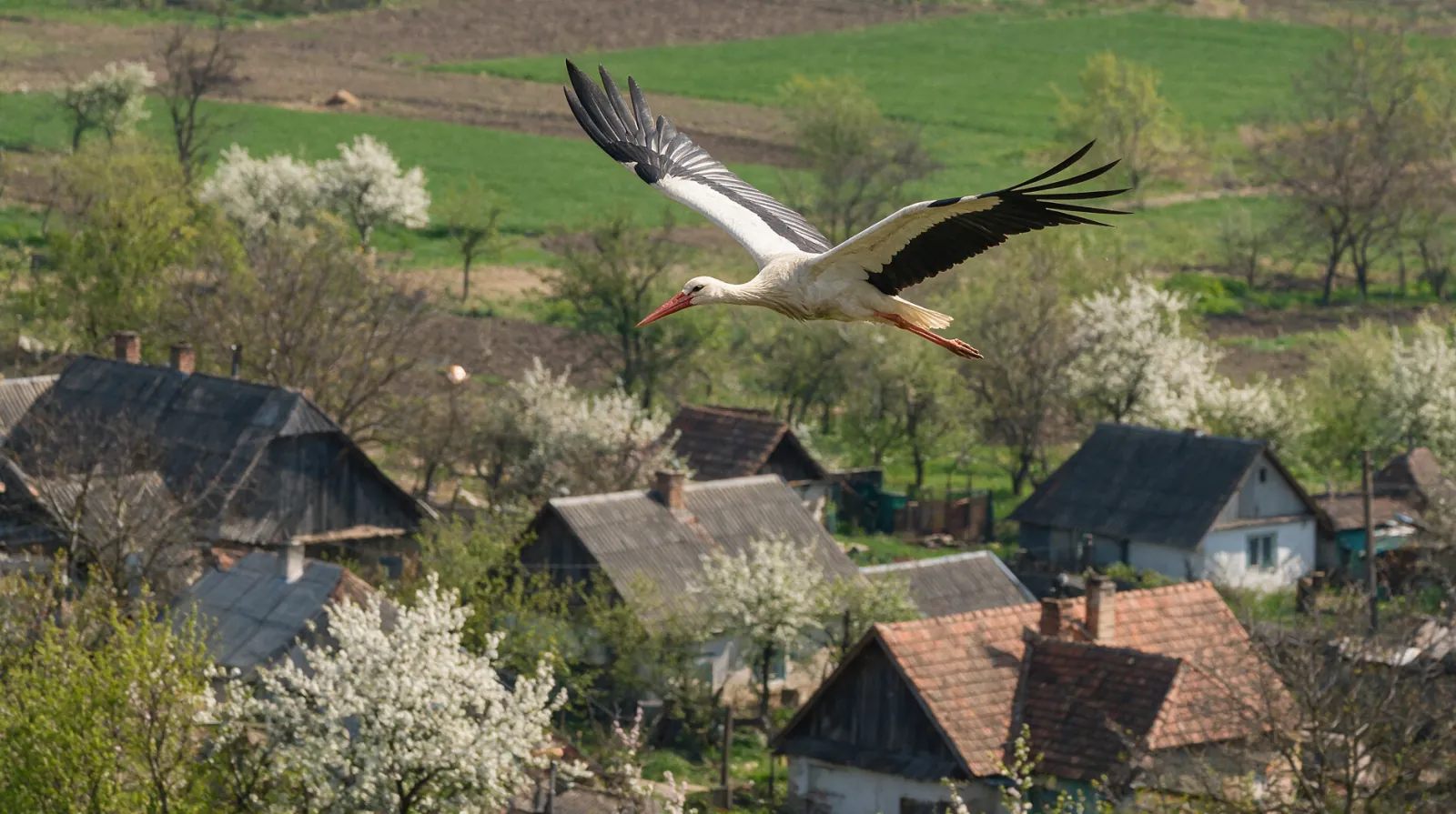
Germany lost most of its white storks during the twentieth century, and the birds that remain are concentrated in the east and along the great rivers.
A German village without a stork nest is the normal case in the west. In parts of the east, the nests came back.
The decline
Drainage and intensive farming removed the wet meadows where storks feed. Rivers were straightened, ponds filled, and hay meadows cut early. Storks were also shot in some places and their nests removed. Western Germany lost the bird almost completely.
A stork needs a wet field and a high nest. Germany removed the wet fields first, and the nests followed.
The recovery
Protection, nest platforms and feeding stations helped. In the east, where small farms and wet meadows survived longer, storks held on and then increased. Villages put up platforms on poles and roofs. Conservation groups monitored nests.
The German recovery happened where the countryside still worked, and it stalled where the fields stayed dry.
Where they are now
Brandenburg, Mecklenburg, Saxony-Anhalt and the Elbe floodplain hold many of the birds. Some nest in the west again, often near reintroduction schemes or wet reserves. The population is stable in some regions and falling in others.
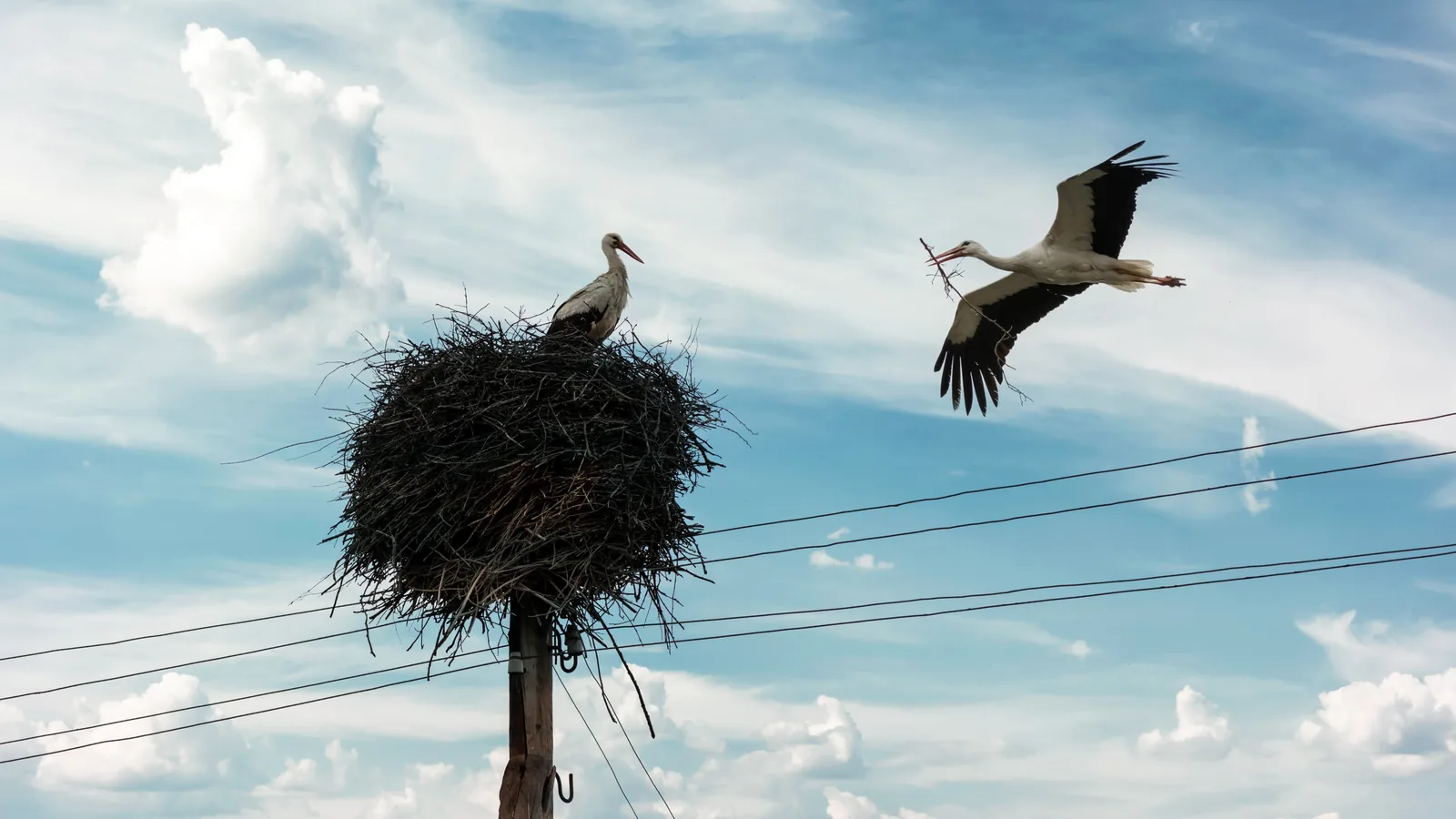
A stork nest on a brick chimney is the classic picture. The birds also use poles, church towers and specially built platforms.
Why the west stayed empty
Western Germany drained earlier and farmed harder. Villages that once had nests lost the wet fields that fed them, and the birds did not come back when the fields were gone. A release can bring birds to a place. It cannot bring back the water.
The return of the wet meadow
Where rivers were reconnected to their floodplains and meadows were rewetted, storks have followed. The birds are a sign that the water came back. That work is slow and local, and it decides the map as much as any release scheme.
The journey
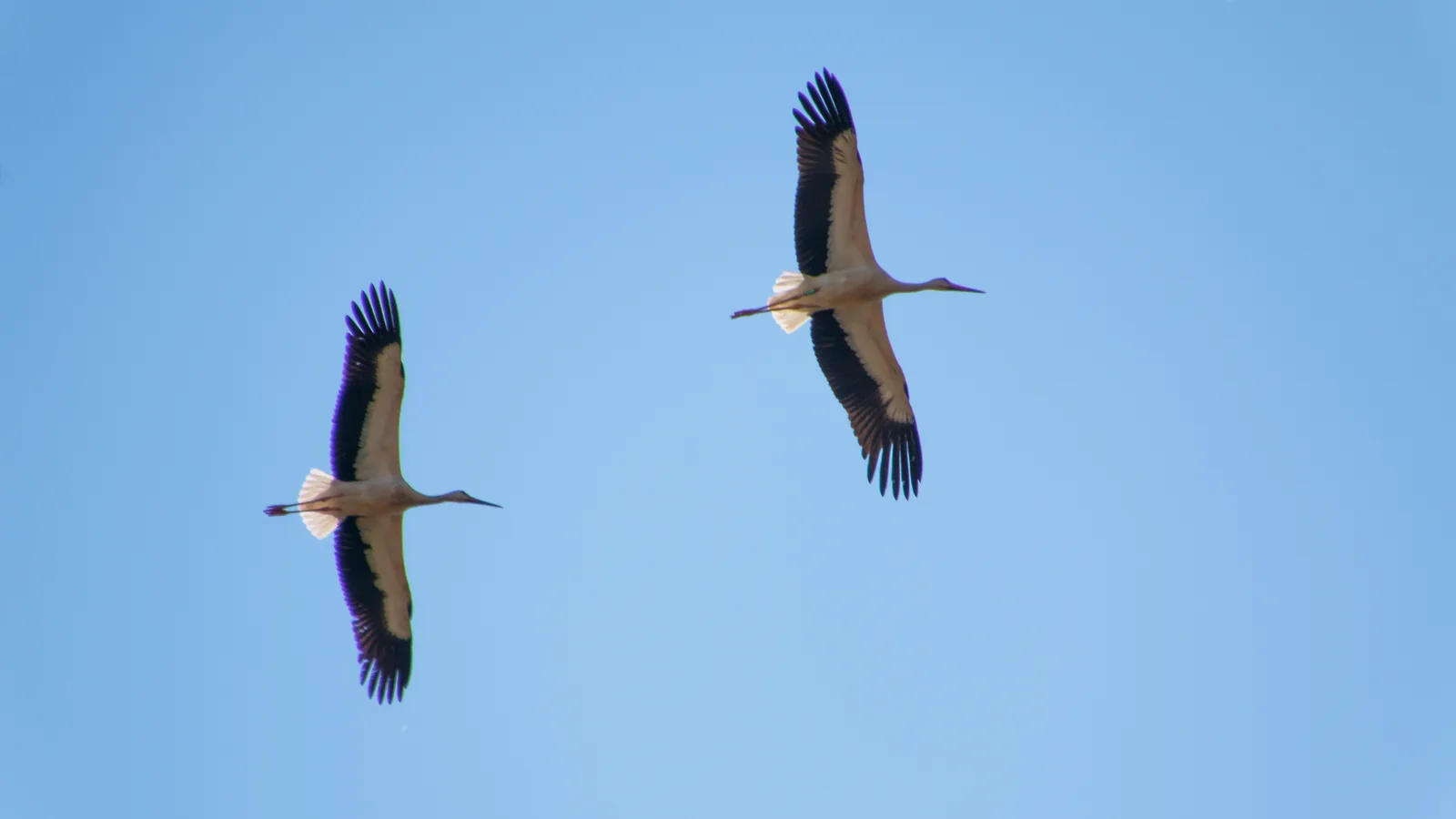
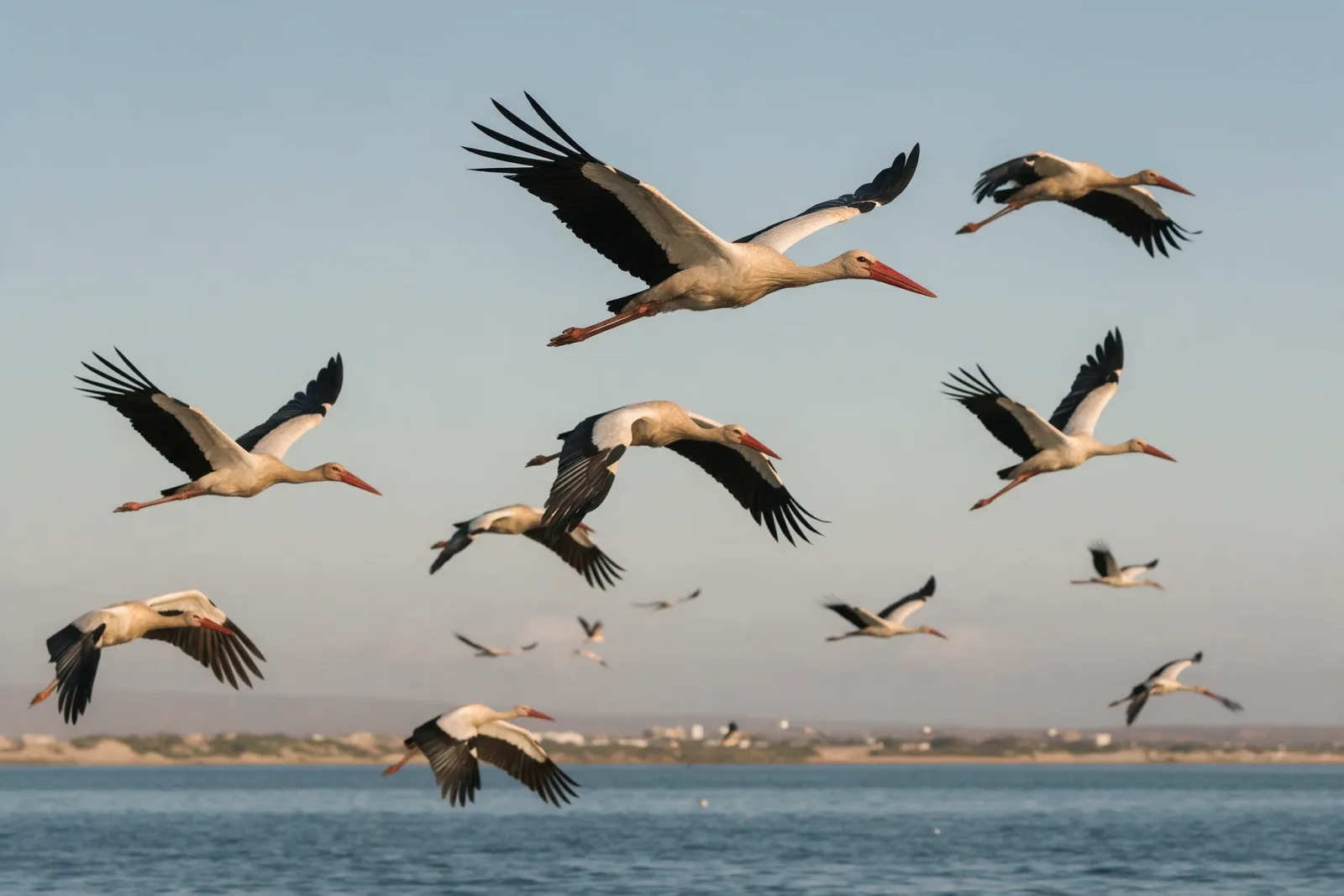
German storks use two routes. Western birds cross France and Spain and pass Gibraltar. Eastern birds go through the Balkans and the Bosporus. Ringing and tracking have shown the split for decades.
Many birds still fly to Africa. Some stop in Spain or stay in Germany through winter, especially where food is easy.
A year in the village
The birds arrive in late March and April. Pairs return to the same nest, clatter their bills and repair the platform. Chicks hatch in May, and the adults hunt the wet meadows from morning to evening.
In August the young birds gather with adults in the fields. The village nests empty, and the birds move south. A few late birds may stay into autumn, feeding on insects in the stubble.
What they need
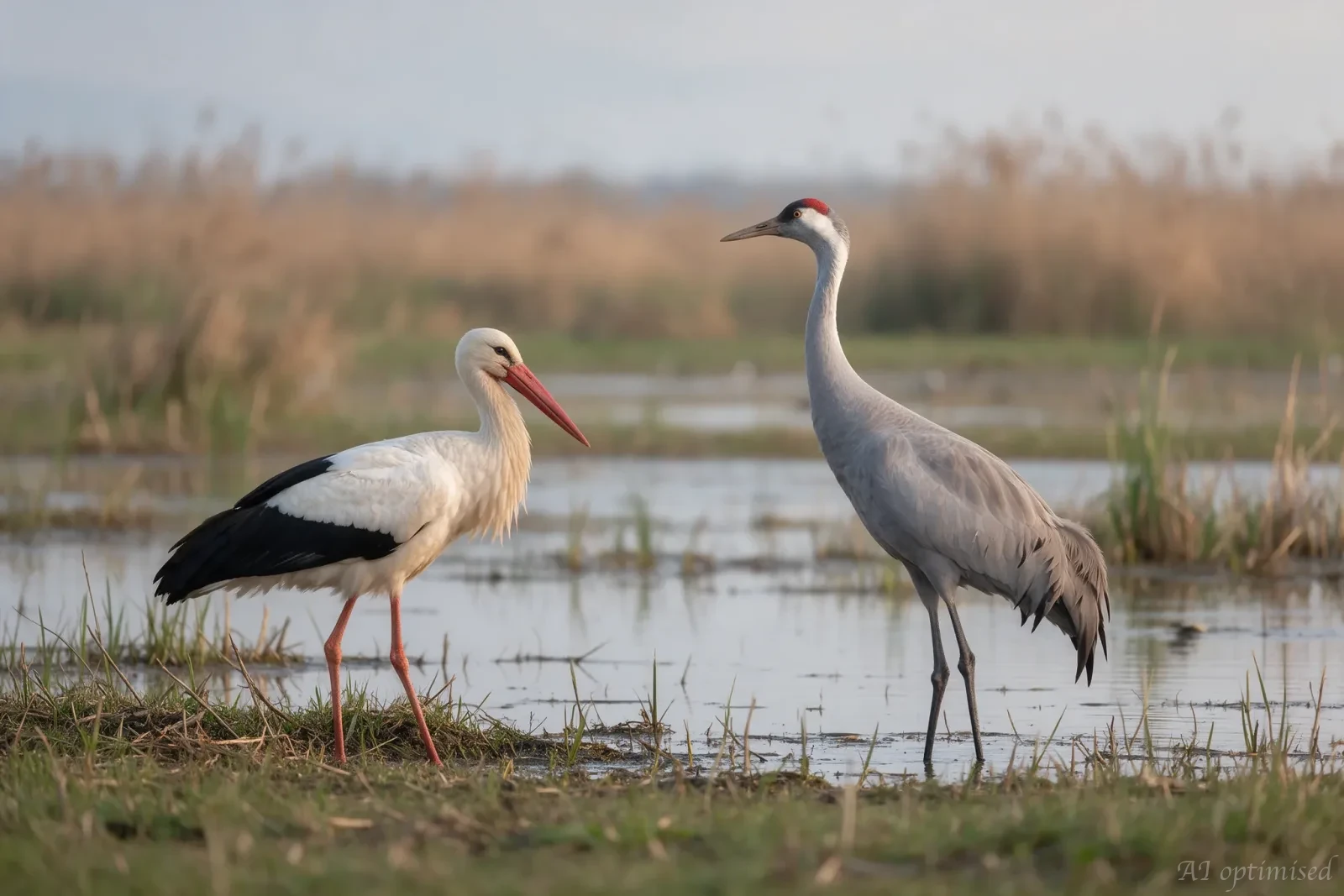
Wet grassland, shallow water, insects, frogs and voles. Nest sites close to food. Quiet around the nest. The birds can live alongside people, and they do, as long as the fields hold water in spring.
Mowing dates matter. A meadow cut in May takes the cover and the food that a brood needs, and a meadow cut in July has already done its work. A wet meadow in spring is the difference between a nest with chicks and a nest that fails.
Watching them
Spring and summer in the east. Keep distance from nests on private buildings. The Elbe floodplain and the large meadows of Brandenburg are good places to look.
A stork on a nest platform above a village street, and a wet meadow at the edge of the houses: that is the arrangement that decides whether the birds stay.
Explore the gift