Ecology & wildlife
The wetland web around a stork, from frogs and insects to fish, reeds and the animals that share the marsh.
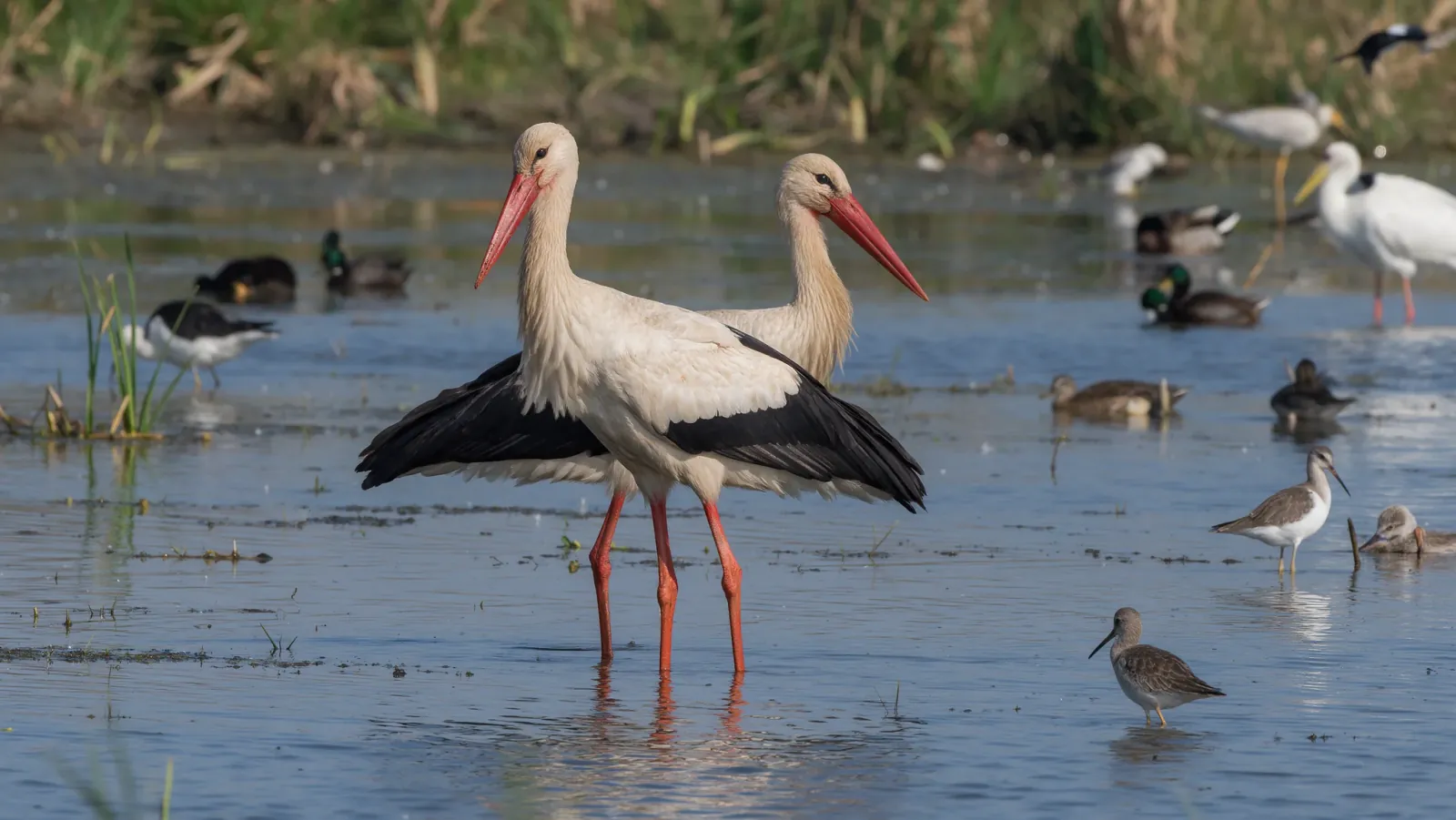
The stork's wetland neighbours: herons, egrets, watchers
Grey herons wait, little egrets shuffle and storks walk, and the same shallow marsh feeds all three at different depths.
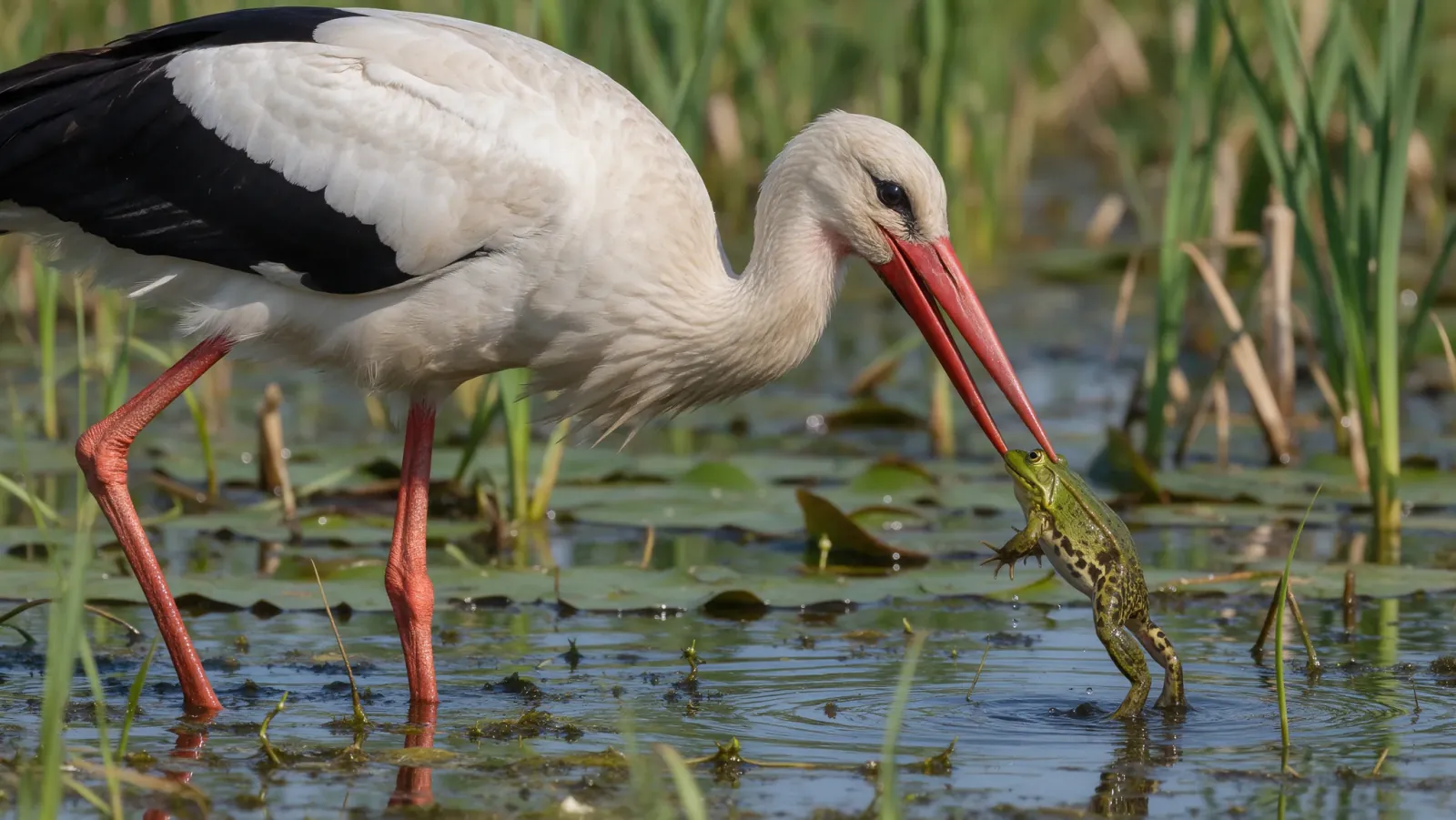
What a white stork eats: frogs, grasshoppers and voles
Frogs come first in spring, grasshoppers carry the chicks through summer, and voles fill the gap when the ditches shrink.
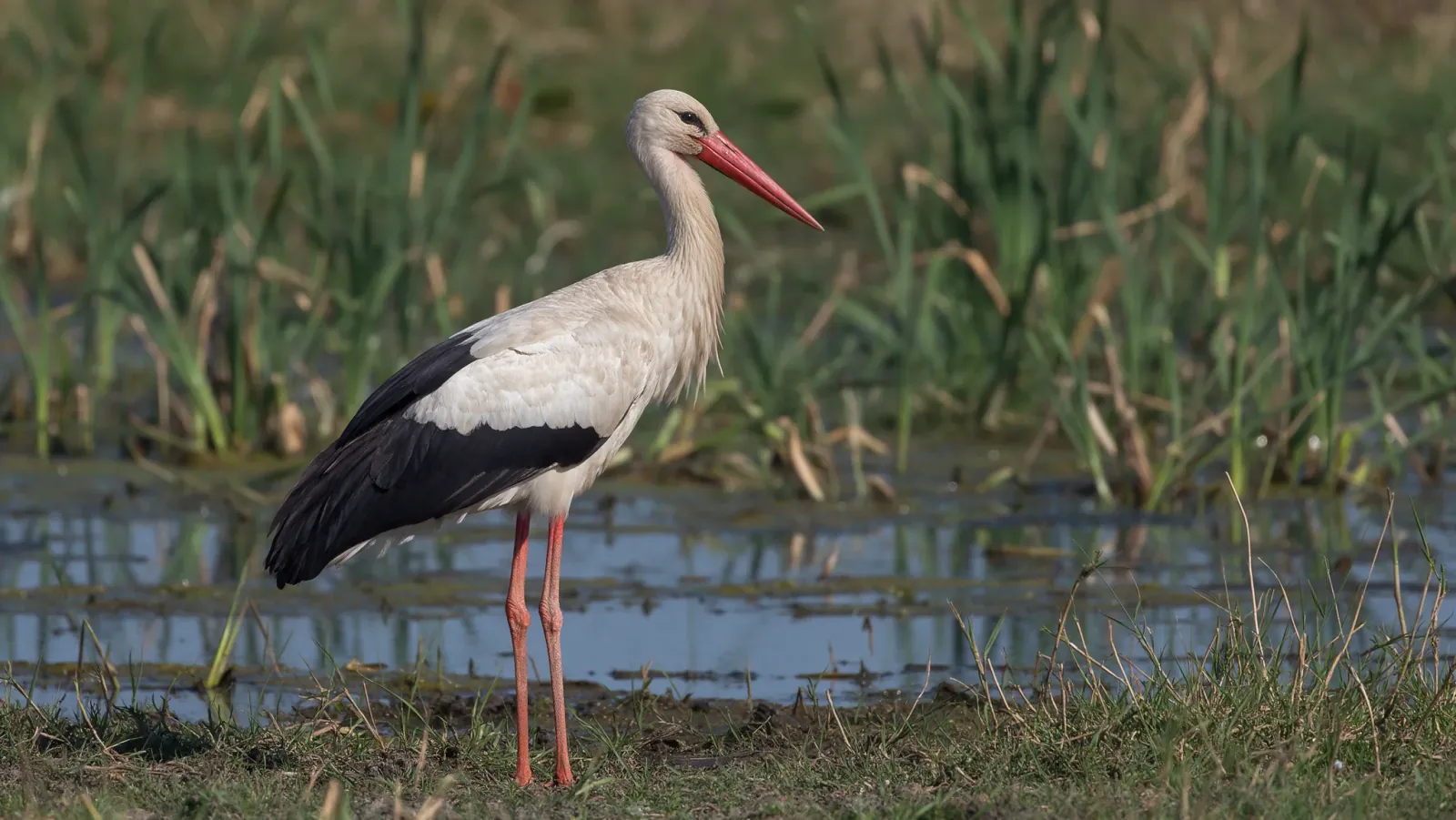
What eats a stork? Eagles, foxes and the nest at dusk
An adult stork has almost no predators, but eggs, chicks and young birds on their first migration face foxes, eagles and wires.
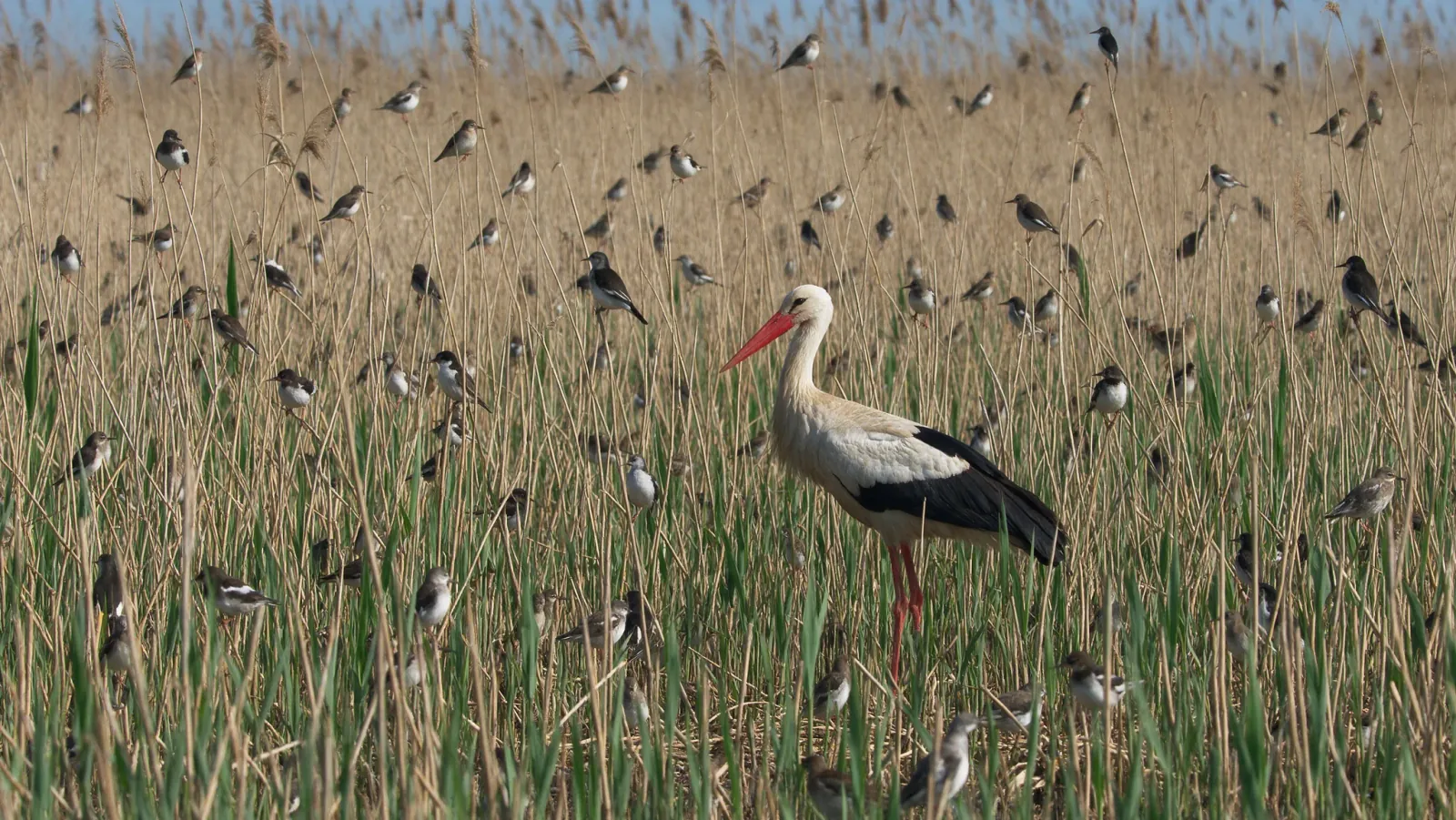
Inside a reed bed: warblers, bitterns and dragonflies
A reed bed holds warblers, bitterns, water voles and hunting harriers, and most of its residents are heard before they are seen.
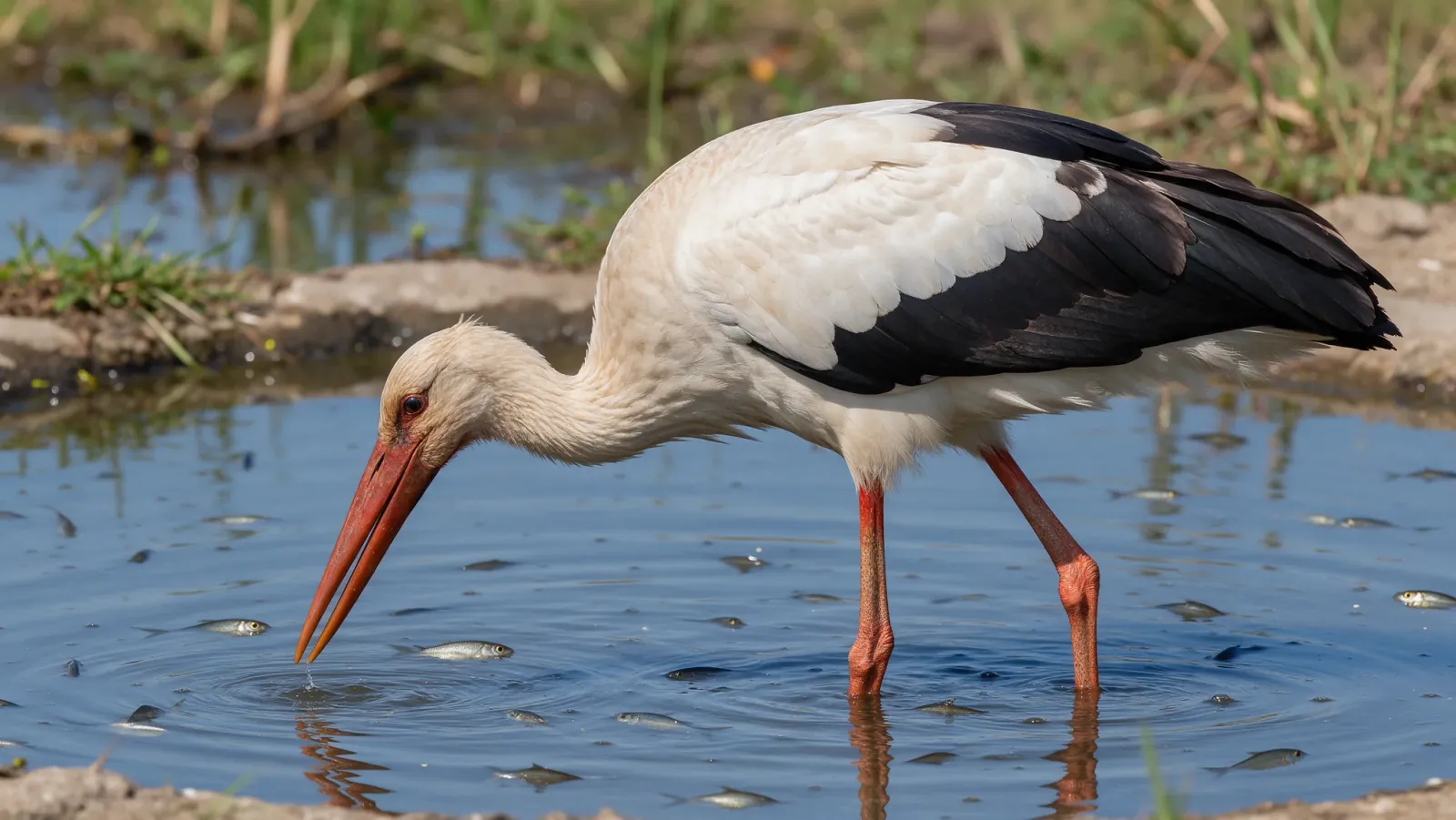
Fish in shallow pools: a larder that shrinks by July
Eels, minnows and tadpoles crowd shallow pools that shrink through summer, and a stork returns to each one as it fails.
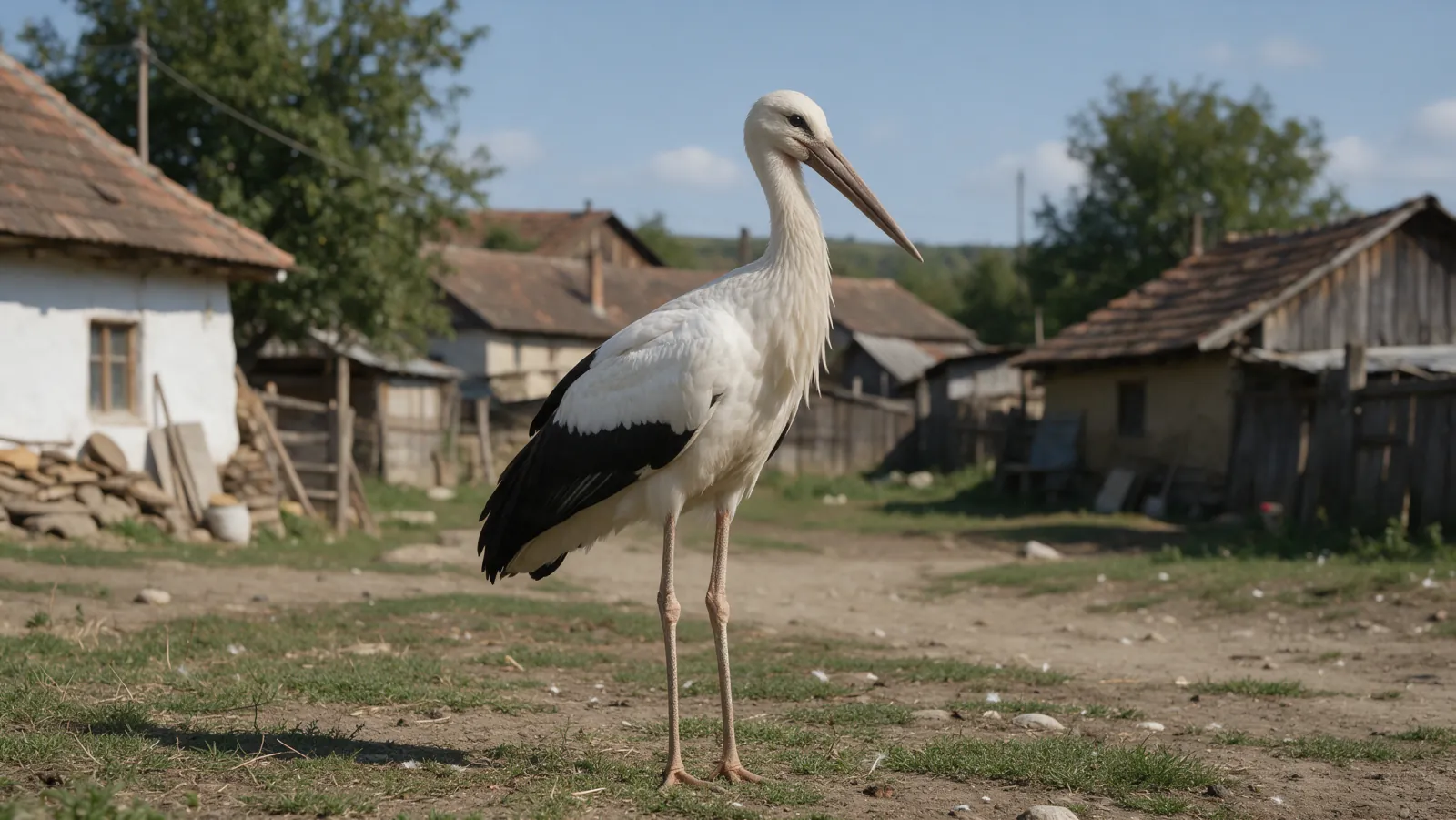
A stork village's biodiversity: nests, eaves and ponds
A village with storks on its roofs also keeps sparrows, swallows, bats and old trees, because the same land use supports them.
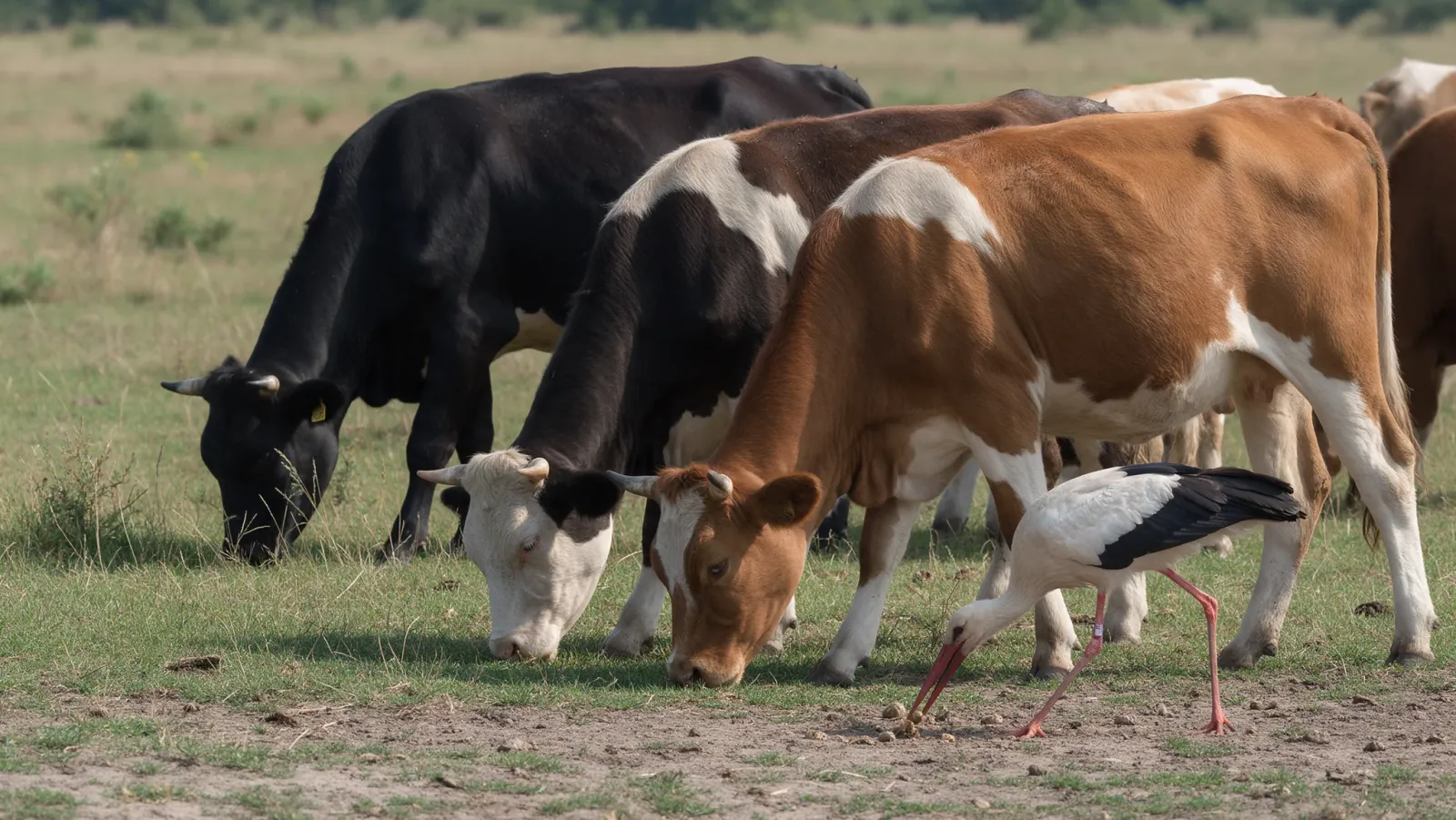
Cattle, buffalo and storks: hooves that keep a meadow wet
Cattle hooves press hollows that hold water, buffalo wallows open the reeds, and storks follow the mess both animals leave.
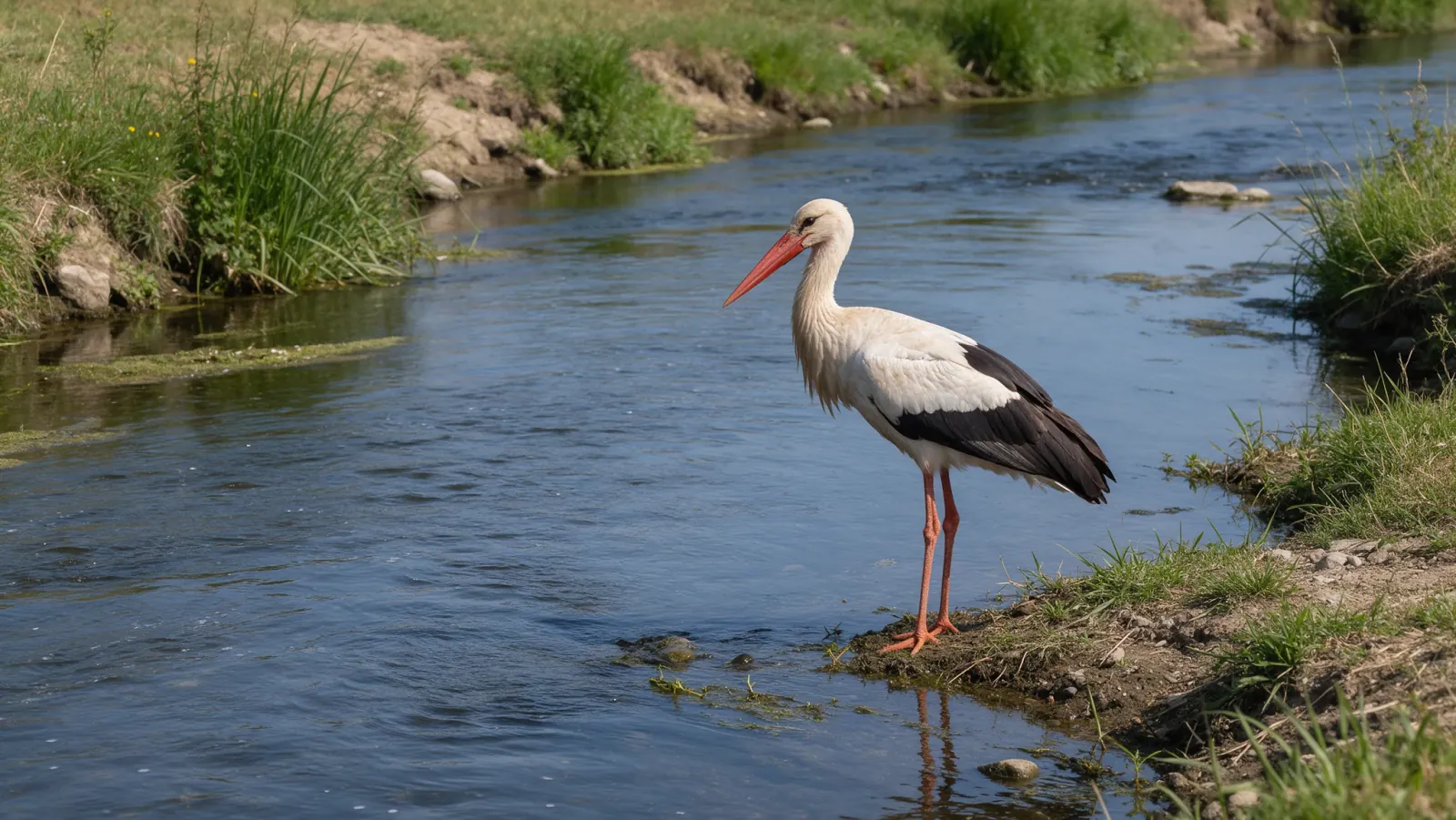
Why a stork needs a river with room to wander
A braided river drops gravel, cuts side channels and spreads shallow water, and a stork feeds on the edges it leaves behind.
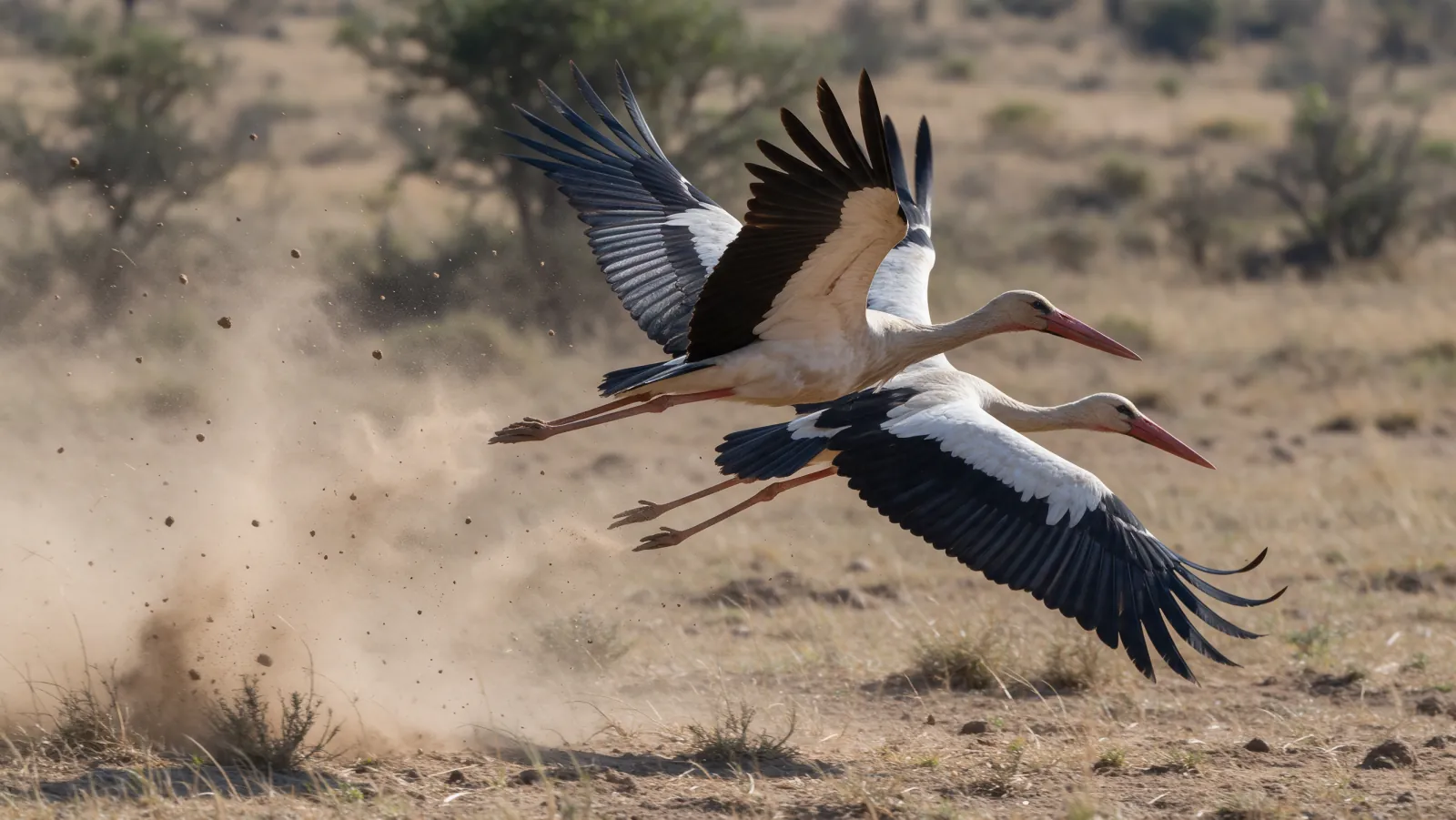
Two journeys south: storks, cuckoos and drifting insects
White storks, cuckoos and dragonflies all leave Europe in autumn, and each finds its way south on the same weather.
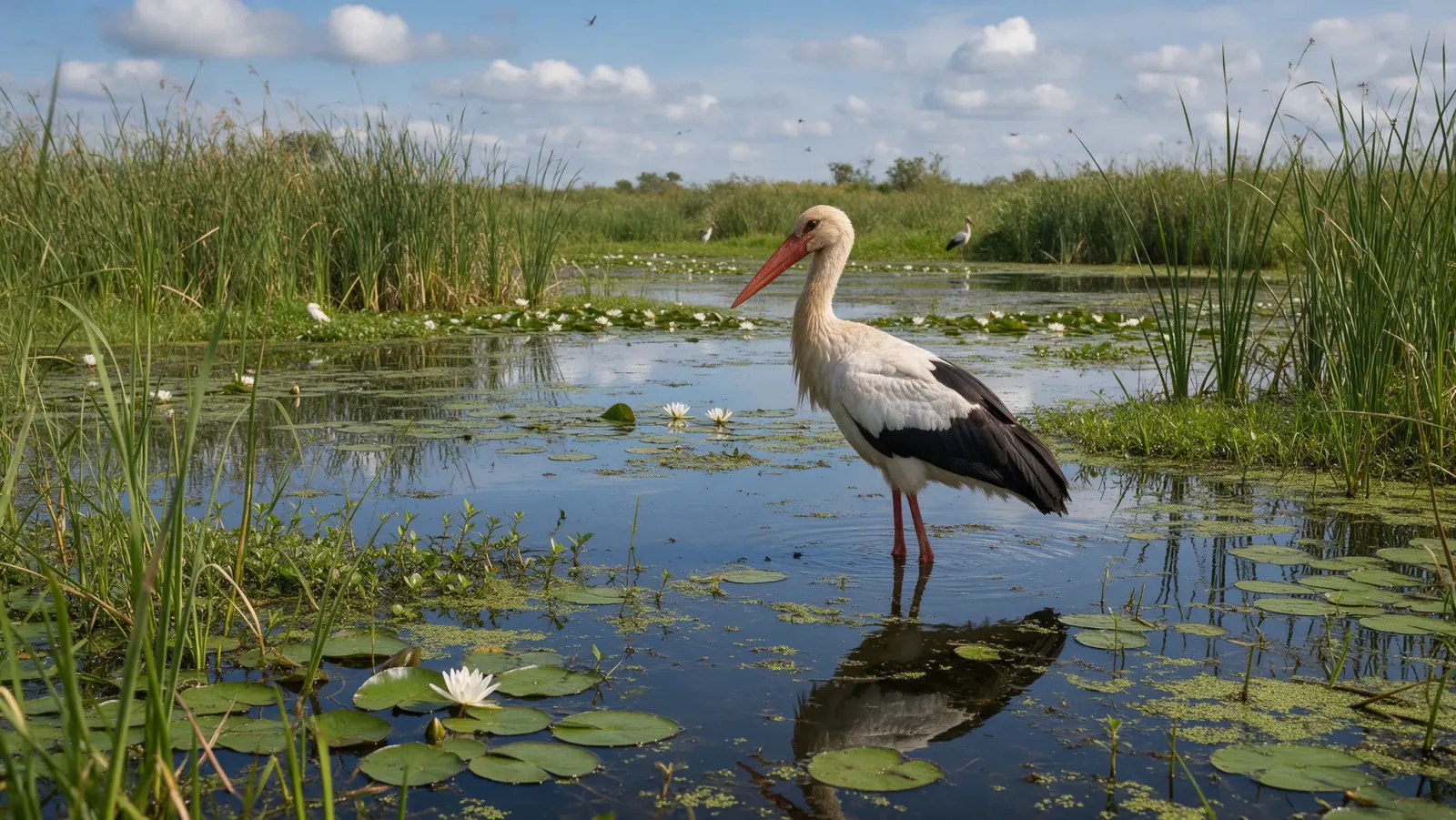
The whole web of a wetland, from black mud to stork
Algae, tadpoles, frogs and herons form a short chain from sunlight to a stork's bill, and the mud underneath holds it together.