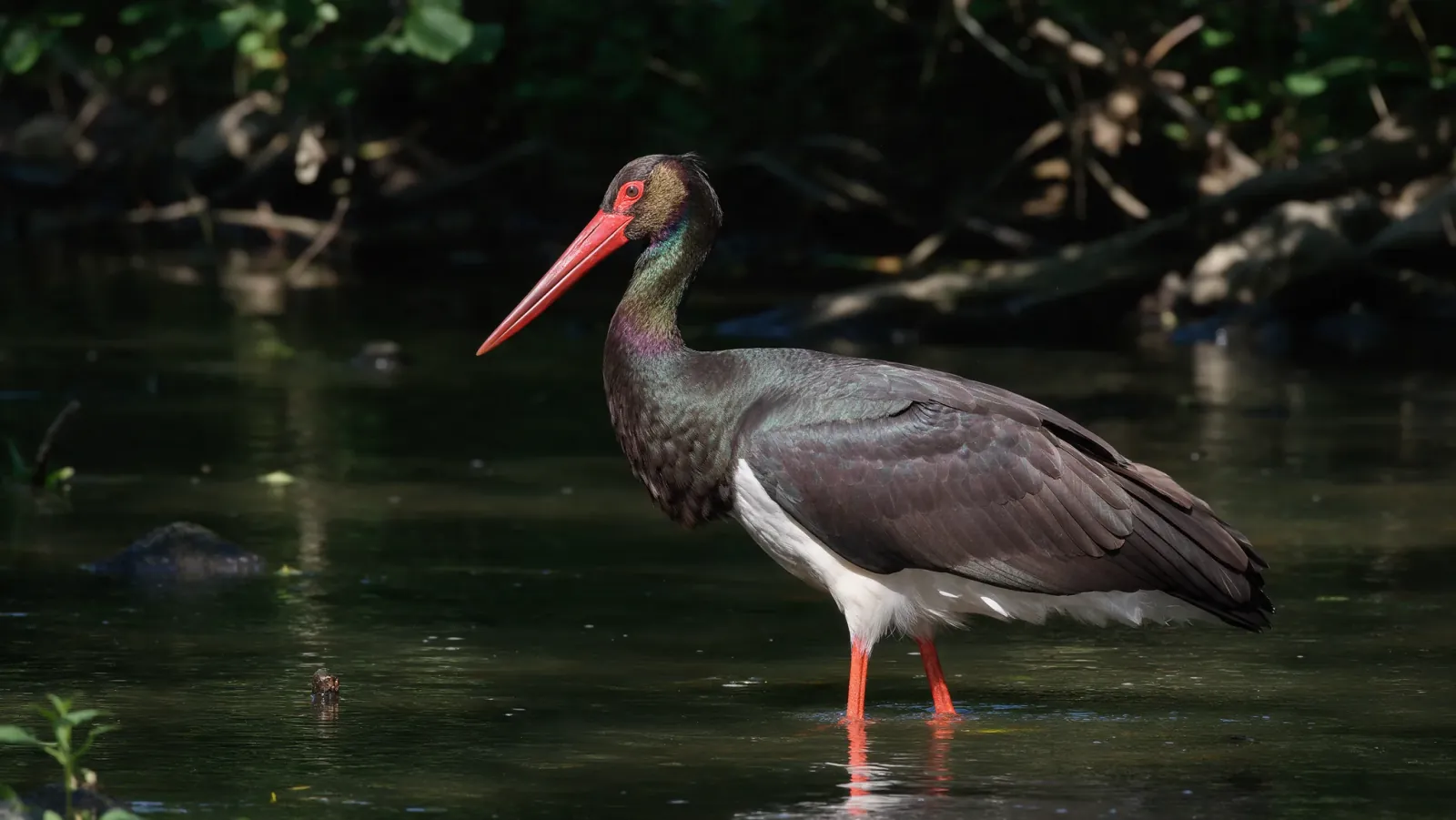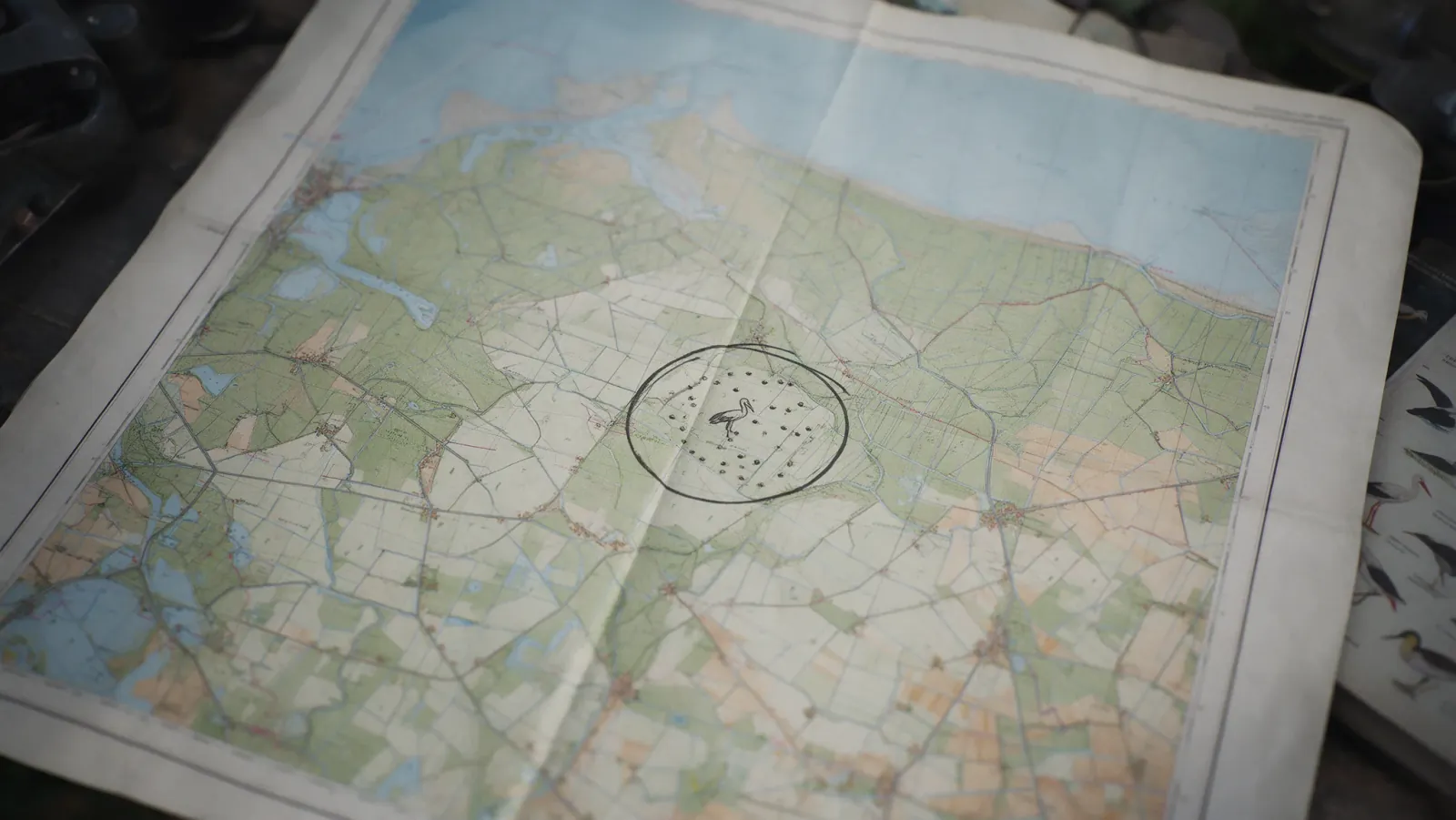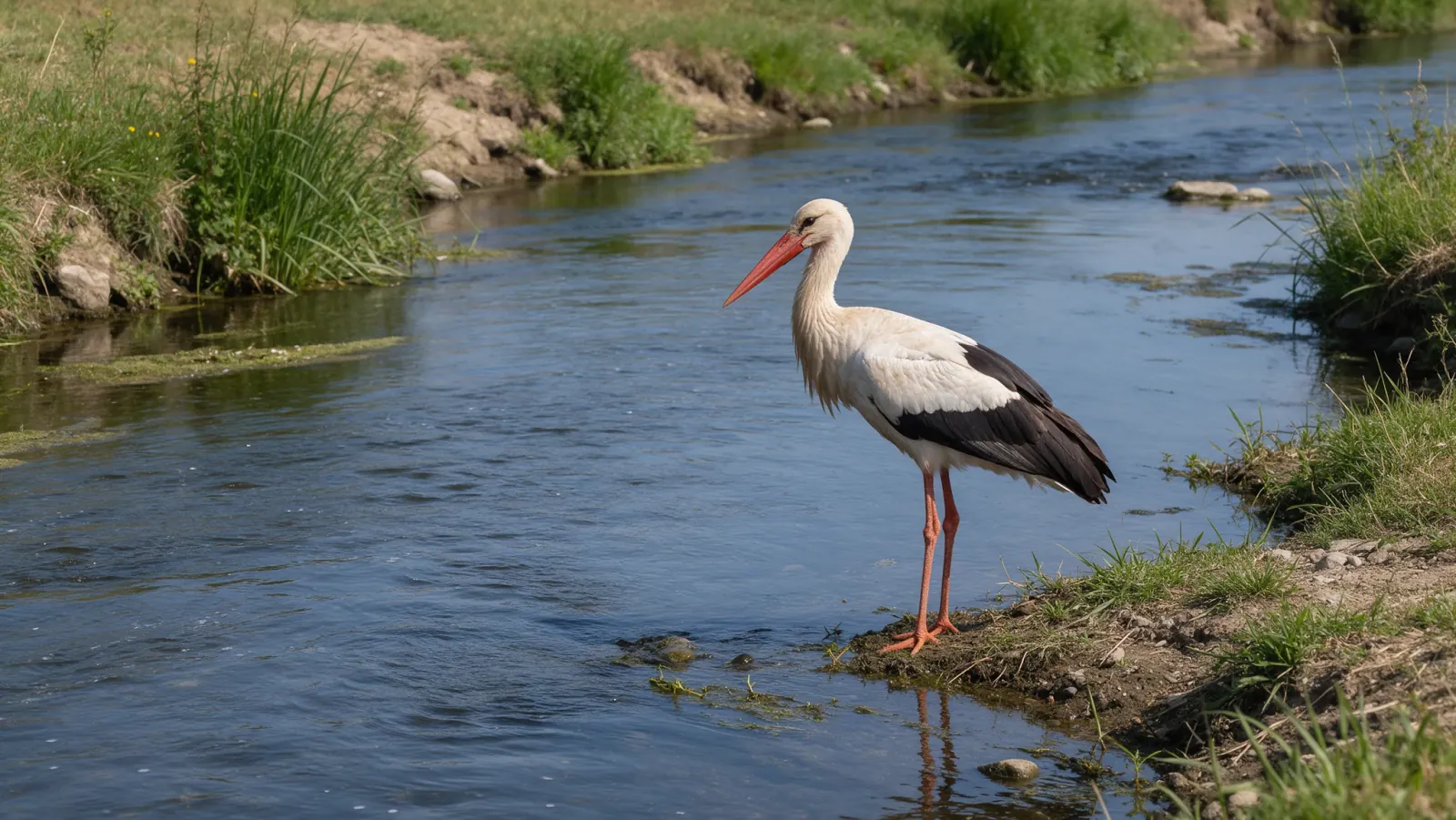
A river that is allowed to wander builds its own wetlands. It drops gravel in one place, cuts a new channel in another, and spreads shallow water across the plain after rain. A white stork needs that spread. It hunts the edges of side channels, the pools left behind by a falling river and the wet meadows the water reaches. A straight, deep, fast river offers none of this.
The river as a maker of marsh
Water leaving the main channel does the work. It fills old channels, seeps into the soil and stands in hollows, and each of those places becomes a small wetland with its own animals. A braided river with many channels creates a patchwork that changes every year. The marsh is what the river does when it has space. Floodplains, oxbows and wet meadows are all products of the same water, and the stork uses them as one larder. A river that drops gravel and cuts new channels is never finished. The wetland it builds this year is not the one it built last year.
Gravel bars and side channels
These bars slow the flow, force water sideways and create the shallow runs where small fish and amphibians live. Vegetation grows on the older bars and holds them, and the river moves around them. A stork walking a gravel edge can hunt fish trapped in the shallows and frogs moving between the stones. The least stable part of a river is often the richest for birds, because it is always being remade. The bare stones warm quickly, and the shallow water around them is a good place a stork hunts in spring.
The flood pulse
A flood gives a floodplain water, silt and fish, and it fills the temporary pools. Spring flooding is the engine of the system. Water spreads over the plain, fills old channels and soaks the soil, then drains slowly. Fish move out into the flooded grass to spawn, amphibians breed in the temporary water, and insects multiply in the warm shallows. The flood is a delivery of water, nutrients and fish to the whole plain. The flood also carries silt onto the plain, and the grass that grows after it is the base of the next season's insects.
When the water drops, some of those fish are trapped in pools, and the birds that hunt the pools arrive. The stork feeds heavily after a flood, when prey is concentrated in the retreating water. River managers who release small floods at the right season can keep this working without endangering towns. A controlled flood can do the ecological work of a natural one, and the birds respond within days.
Trees that expect water
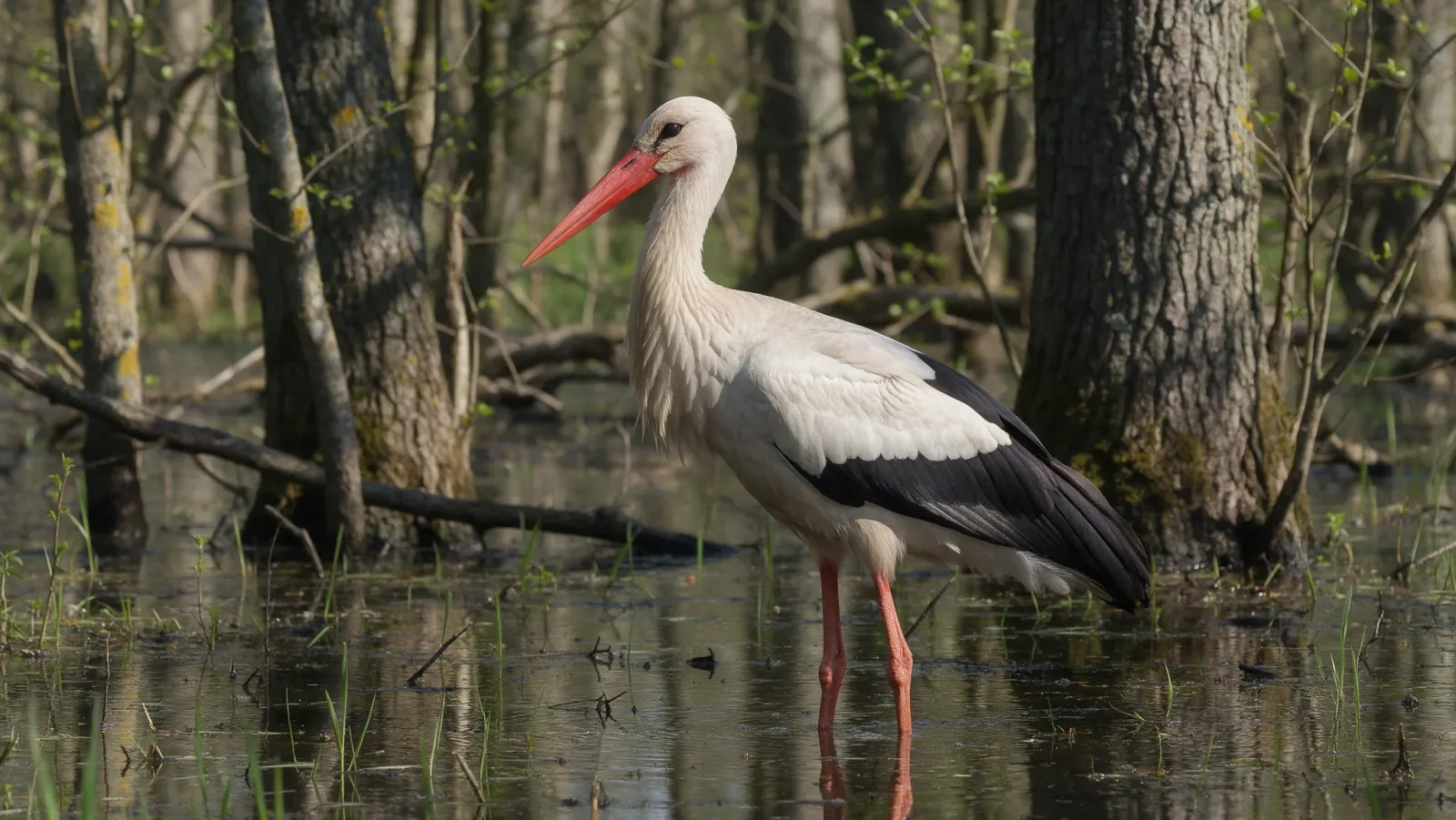
Willows and poplars stand in the silt, and for a few weeks each year the river runs between their trunks. A white stork uses the edge of such a wood for nesting where buildings are scarce, and it hunts the flooded ground beneath. Willow, poplar, alder and oak grow in floodplains, and each handles wet roots in its own way. Willows root easily from broken branches and grow fast, which is why they line so many river banks. Poplars grow tall and straight, and alders put nitrogen into the soil. A floodplain wood is a filter between the river and the land, slowing the water and trapping silt. The trees are built for the disturbance, and the forest returns after every flood.
The flooded wood is a nursery. Young fish shelter among roots and fallen branches, and frogs lay eggs in the still water between the trees. A stork walking the shallows can hunt both, and the trees make the water calm enough to see into. The same roots that shelter fish also hold the bank together, which is why a wooded floodplain loses less soil than a bare one.
Nests above the flood
White storks prefer roofs and poles, and in places without them they nest in tall trees, often oaks or poplars near water. A tree nest is harder to see and harder to reach than a rooftop, and it offers shade that a platform does not. The birds add to the same nest year after year until it becomes a heavy mass of sticks. An old tree with a stork nest is a landmark in the floodplain, and the nest is often used by other birds when the storks are away. The nest is often the oldest thing in that stretch of wood.
What straightening does
When a river is straightened, deepened and walled, the water moves faster and the plain dries. The channel cuts down into its bed, the water table drops, and the side channels and wet meadows disappear. Fish lose their spawning places, amphibians lose their pools, and the stork loses its shallows. A river that cannot reach its floodplain is a river that has stopped making marsh. The water still arrives at the sea. It just does no work on the way. A straight river carries its silt to the sea and leaves the plain poorer.
Embankments and dams separate rivers from their floodplains, and the wood above the water changes. The floods stop, the silt stops, and the old channels dry. Trees that need periodic wet feet give way to drier species, and the fish and frogs lose their spawning water. A floodplain forest without floods is a wood in slow decline, even if the trees are still standing.
Dead wood in the water
A fallen tree in a river is worth more than it looks. Trunks slow the current, trap silt and create pools and eddies where fish hold. A trunk across a side channel can raise the water behind it and keep a pond alive through a dry summer. The messiest parts of a floodplain are often the most productive, and the stork hunts exactly there. Fish shelter among the branches, dragonflies perch on the exposed tips, and kingfishers use the overhanging wood as a hunting post.
A dead tree standing in a marsh is the start of a crowded decade. The wood is soft and full of holes, fungi are working through it, beetles are laying eggs in the bark, and birds are using the cavities. Woodpeckers excavate cavities in dead and dying trees, and those holes are later used by tits, starlings, stock doves and owls. Most of the birds that nest in holes cannot make the hole themselves, so they depend on woodpeckers and on trees left standing.
A dead tree can be dangerous, and near a path or a road it may have to come down. Away from people, it is worth leaving. The ecological value of a standing dead tree is high, and the risk can often be managed by removing a limb rather than the whole trunk. The safest compromise is usually to keep the trunk and take the branch that overhangs the path. Leaving some fallen wood in place is one of the cheapest ways to keep a river and its forest working. A marsh edge with trees at different stages, living, dying and fallen, holds more than a tidy line of the same age.
Explore the gift