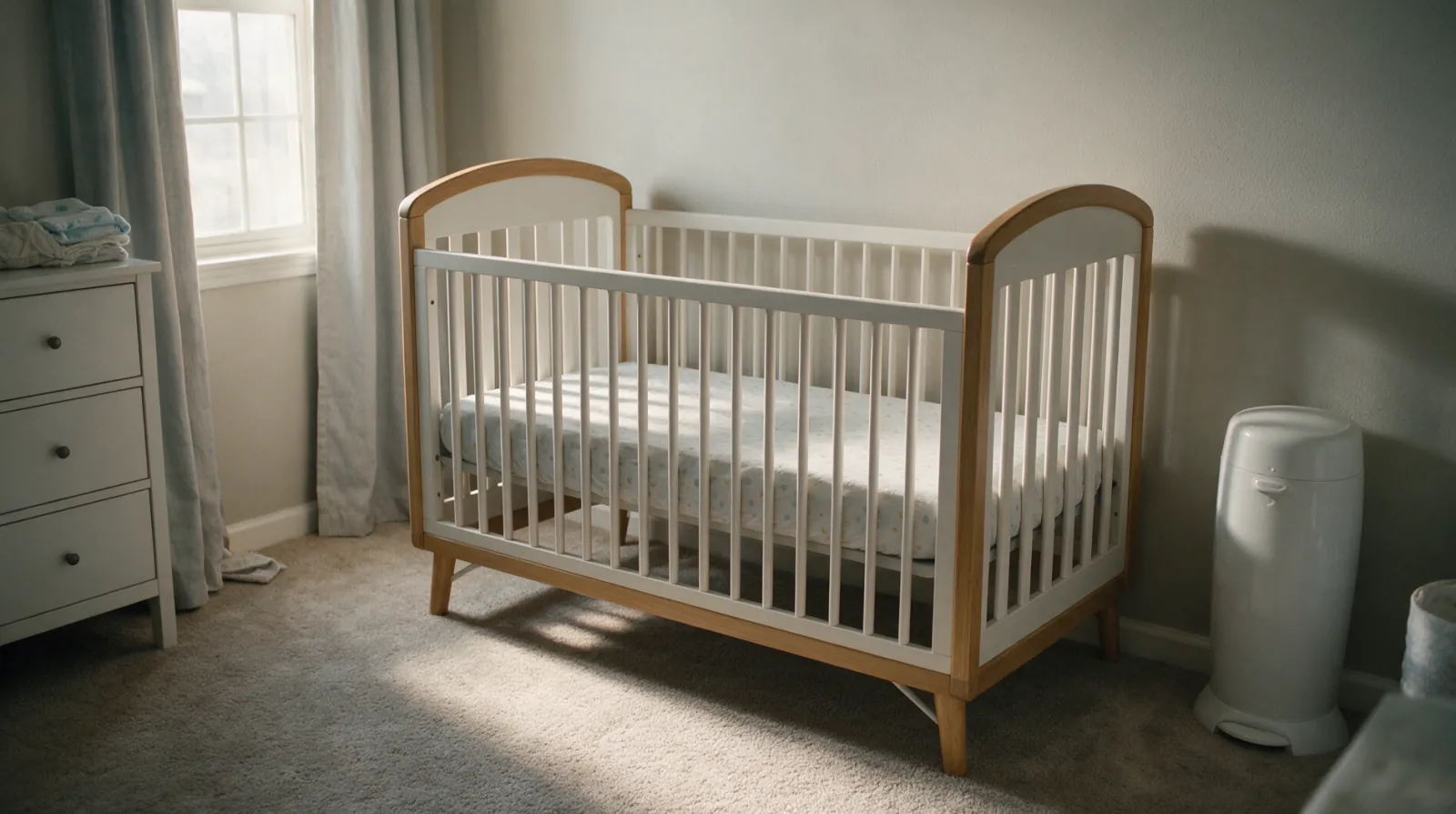
The room where a life began is usually the smallest room in the house and the one that took longest to arrange. Before the baby arrives it holds a cot with nothing in it, a chair by the window, and a lamp someone switched on and off a dozen times to check the colour of the light. The room is ready weeks before it is needed, and the waiting is part of the story.
The room before the baby
Most nurseries start as something else. A study, a spare room, a corner of a bedroom where the ironing board lived. Clearing it takes an afternoon and then a month, because every object raises a question: keep, move, give away. The winter coats go to another cupboard. The boxes go to the loft. The ironing board is exiled to a kitchen corner, and the room stands bare and swept in a way it has not stood for years.
A small room asks for very little and is about to be given a great deal. The paint goes on last. People who have never agreed on a colour in their lives develop firm opinions about whether a baby needs white, or green, or a wall of small clouds. The argument is never really about paint. It is about the person who is coming and the kind of room they should wake up in.
By the end the door is kept closed. People walk past and glance in. The cot looks small and expectant, and the house is waiting for the one thing the room cannot supply.
Measurements get taken twice. A curtain rail is fitted, then adjusted. Someone sits in the chair to see what the window shows from there, and stays a while. The room is small enough that every choice is visible at once, which makes each one feel larger than it is.
Built to a smaller scale
Everything in a nursery is sized for someone who weighs a few kilos. The clothes in the drawer look like they belong to a doll. The cot mattress is shorter than an adult's arm. The lamp sits low, because the light is for a person in a chair at three in the morning, not for someone standing at a switch.
That scale changes how a room feels. Adults lower their voices without deciding to. They step more carefully. A room built for a small person makes everyone in it a little more careful, and the care stays long after the baby has outgrown the furniture.
The whole of the first months fits into a few square metres, and the parents learn every inch of it. There is nowhere far to walk at three in the morning. The chair is two steps from the cot. The lamp is within reach. The pram does not fit, so it lives in the hall, folded, with one wheel that sticks. The changing mat goes on top of the drawers. The room is a workaround, and the workaround works.
The waiting
Nobody photographs this part. The cot stands empty under a clean sheet. The mobile turns when a window is open. The room smells of new wood and washing powder, and nothing has happened in it yet.
Parents wander in during those weeks with odd jobs in their hands, folding the same blanket twice, moving a chair two feet and moving it back. Every object is ready to be used, and none of them has been. A bag of nappies sits by the door. A card from a neighbour is propped against the wall. The tidy nursery in the photographs is a five minute window between the last clean and the next feed.
A room can be finished and still be waiting for its purpose. The cot has stopped being furniture and become a question. The answer arrives in a car seat, in a blanket, at the front door.
The first night it is used
A room that has stood ready all spring finally has a use, and it sounds different. A nasal breath. A blanket shifting. A floorboard under a parent's foot. Outside a car passes, and inside everything is amplified. The house listens, though nobody would admit to listening.
Somebody opens the door a dozen times before morning. Each time the baby is asleep, or awake and staring at the ceiling, or asleep in a position that looks impossible. The door gets left ajar. A slice of landing light falls across the floor. The parents stand in it and listen, then go back to bed and lie there listening anyway.
The first night is mostly two people in the dark, doing the arithmetic of risk with no numbers to work with. Morning arrives without anyone deciding it should. Grey light, a sleeping baby, the chair where someone sat for an hour at four. The room has been used. It smells of the baby now.
A room the house listens to
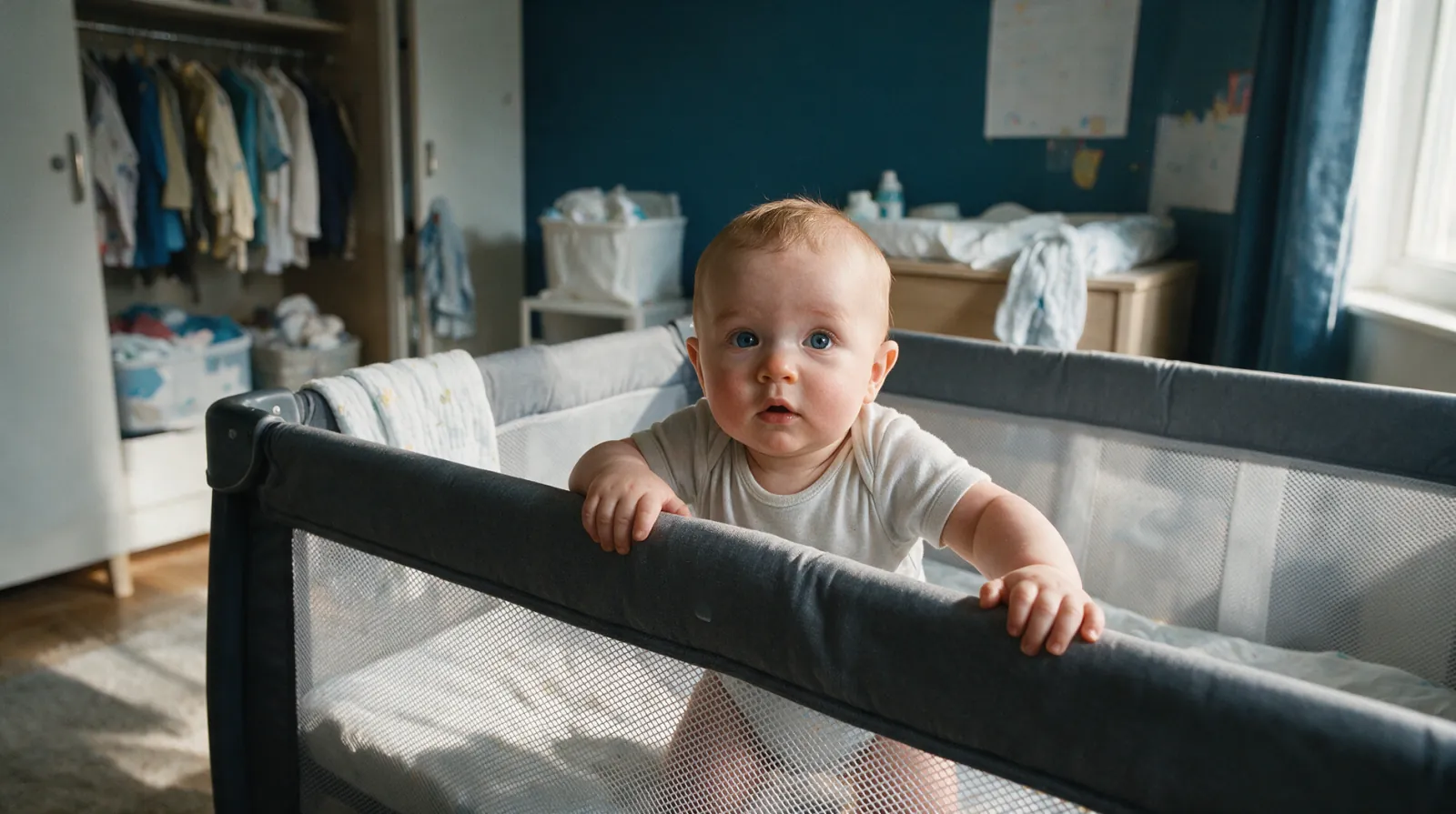
The smallest room is rarely the quietest. It is the one the whole house listens to. A parent in the kitchen stops still when a sound comes down the stairs. Someone in bed hears a rustle through a wall and is awake before deciding to be.
The sounds are small: a breath, a blanket, a floorboard. The silence is worse. A house with a baby in it is tuned to a room the size of a cupboard. At night the landing light stays on, and anyone walking past can see the cot without going in.
For weeks the room stays half finished. A cup on the windowsill, a bag of nappies on the floor, a card propped against the wall. The mess is the honest version, and it lasts longer than the photographs suggest.
What the room keeps
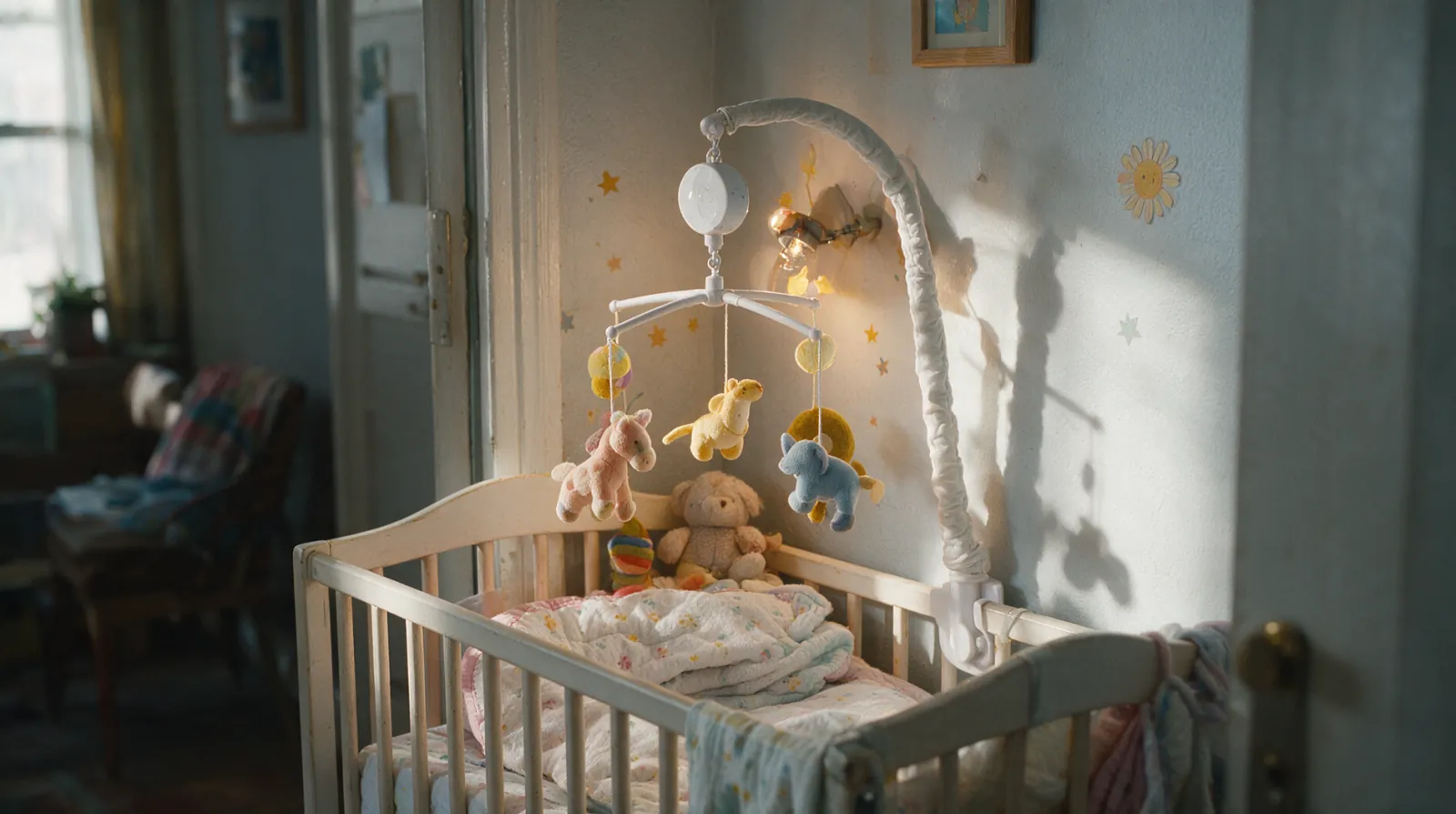
The baby will not remember the room. Most people cannot recall the wall they slept beside at three weeks, or the lamp, or the exact place the cot stood. The parents will remember all of it, especially the first night, which they will describe for years with the precision of people who were awake for every hour.
Children grow out of cots and into beds. The room gets repainted. The chair goes to a charity shop. The cot is gone, and the lamp is the same lamp. Years later the door is open and the room holds a desk, a guitar, a stack of schoolbooks.
The photographs of the finished room are always taken before the baby comes. They show a cot with a folded blanket and a shelf with nothing on it, and they are the least true pictures in the album. The room that mattered was the one with a cup on the sill and a card falling off the wall.
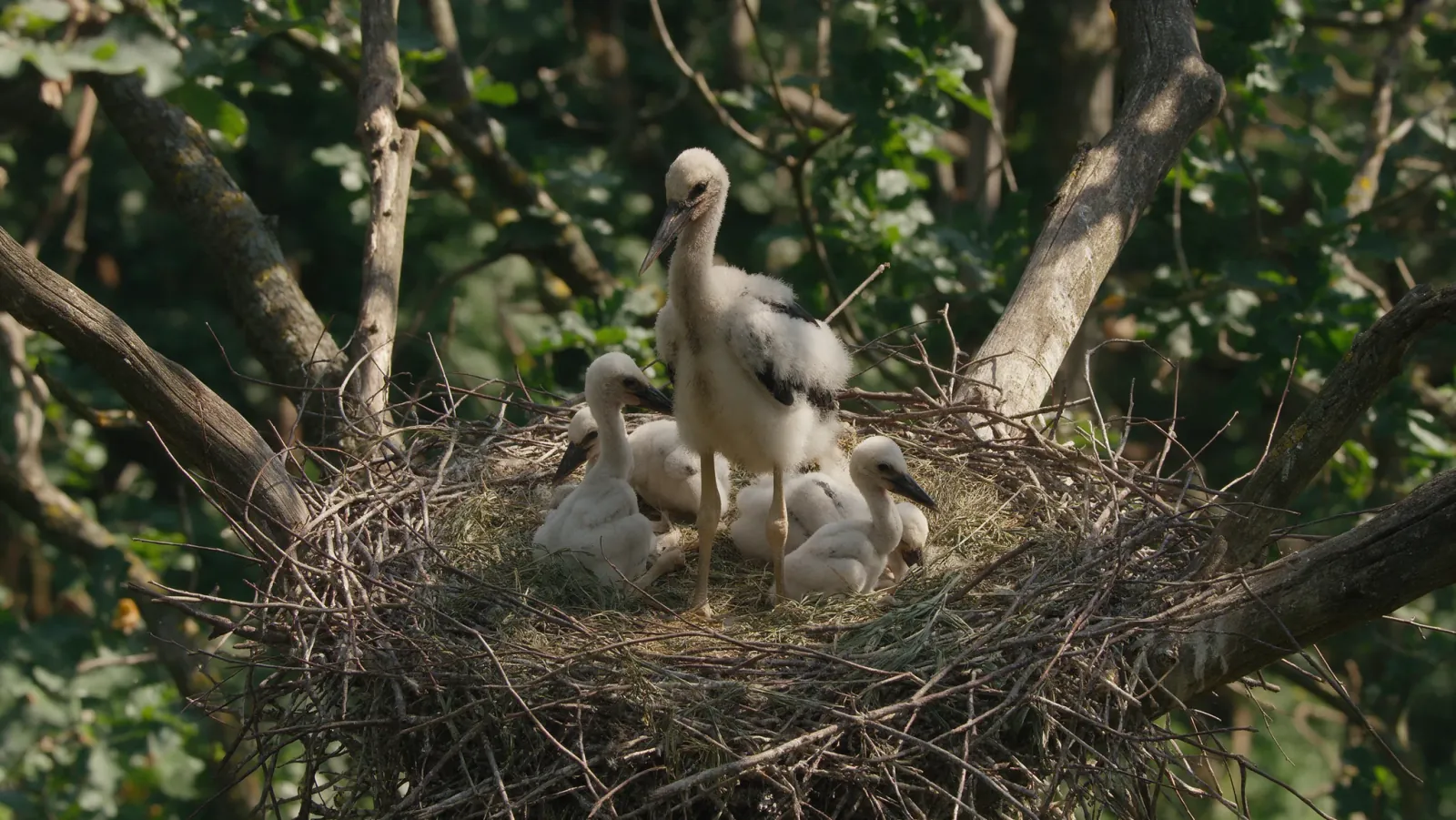
Some families keep a small object from those days on the shelf, a white stork with the birth date, standing where the night light falls. A room was prepared for a person before anyone knew them, and the preparation was a form of welcome. If you want that marker for your own season, adopt a stork and set the date on the base.
Explore the gift