A white stork chick hatches at about 70 grams, covered in down and unable to stand. Eight weeks later it is a long-legged bird approaching the size of its parents. Most of that change happens in the first month, and it happens on food carried to the nest by two tired adults.
The first three weeks
The fastest growth comes early. A chick that hatched as a soft scrap begins to lengthen within days. Its legs thicken, its neck stretches, and its belly fills out. The down stretches over a body that is changing shape underneath it.
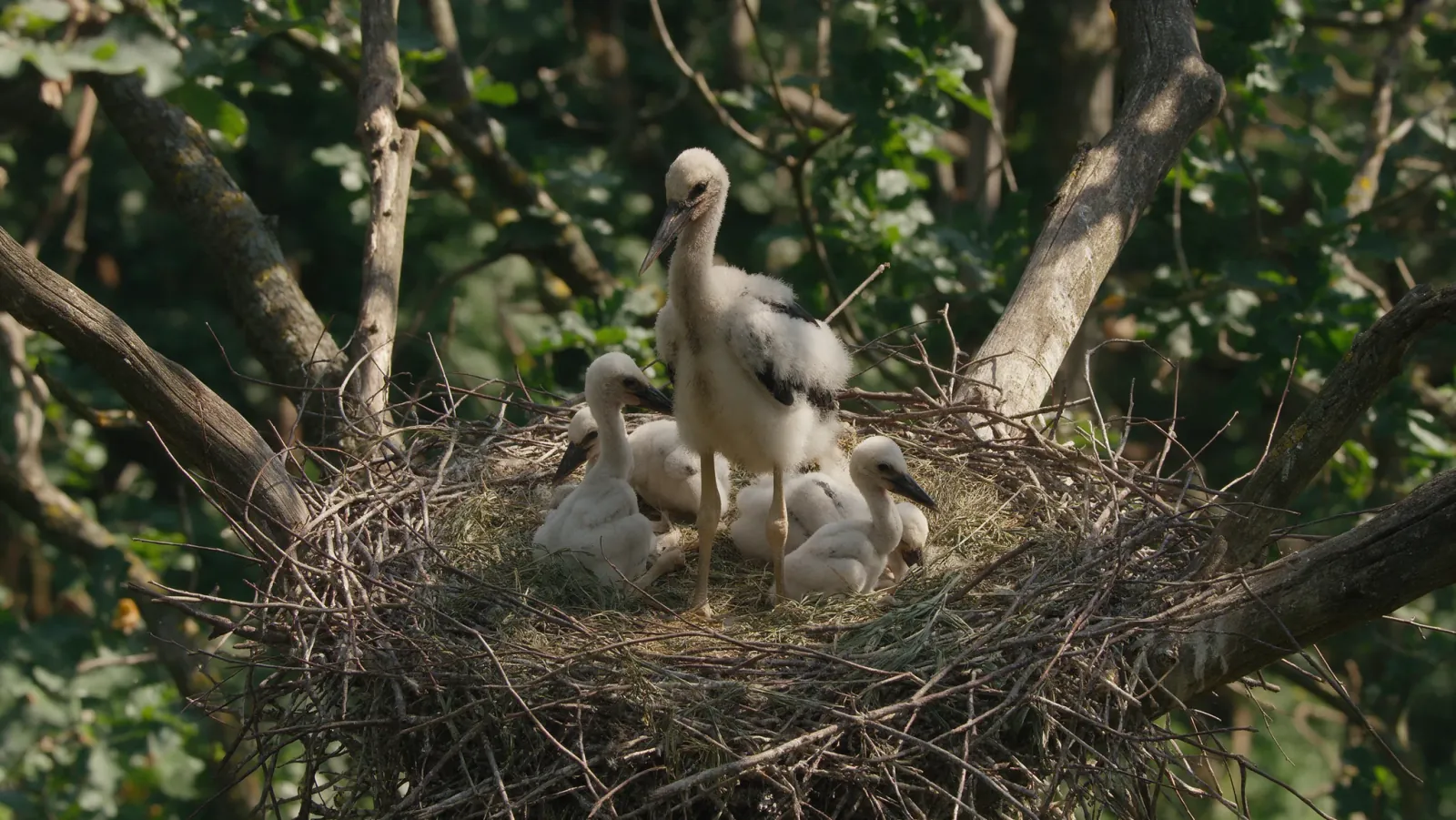
This is when the parents work hardest. The chicks cannot regulate their own heat and cannot feed themselves, so the adults provide warmth and food at a rate that leaves little time for anything else. A nest with four chicks is a full-time operation, and every trip to the meadow is followed by another.
Most of the size a stork will carry as an adult is laid down in its first two months. The bird grows fast over one summer and then stops. Growth is not a smooth line. A good feeding day shows in a full crop; a cold, wet day shows in a quiet nest and a brood that has stopped calling.
A chick's weight is hard to read by eye, and the change shows in the way it fills the nest. A bird that could hide under a parent in its first week takes up the whole cup within a month. The parents feed the appetite that comes with that growth, and the nest becomes a place of constant arrivals.
Pin feathers and blood
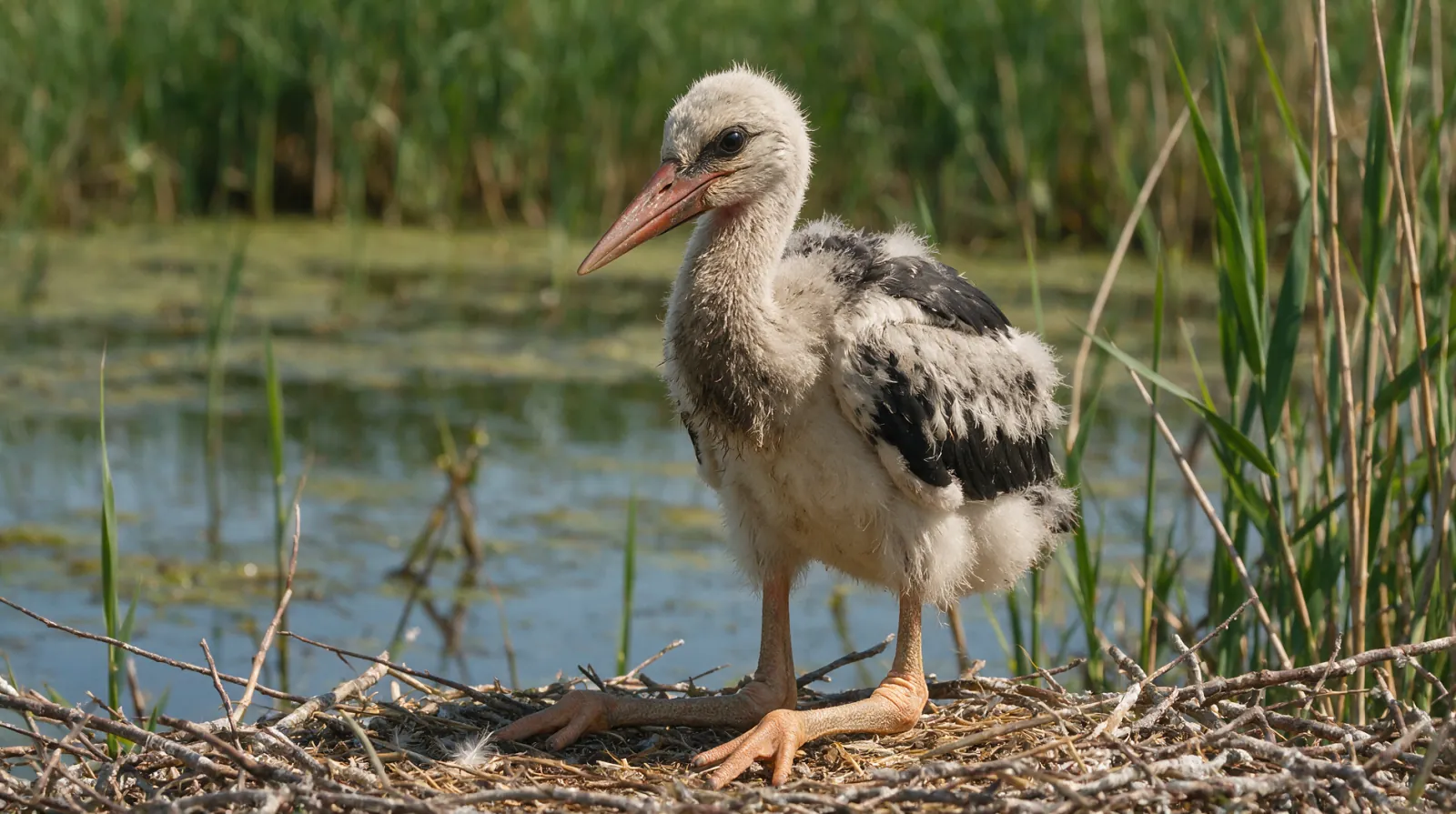
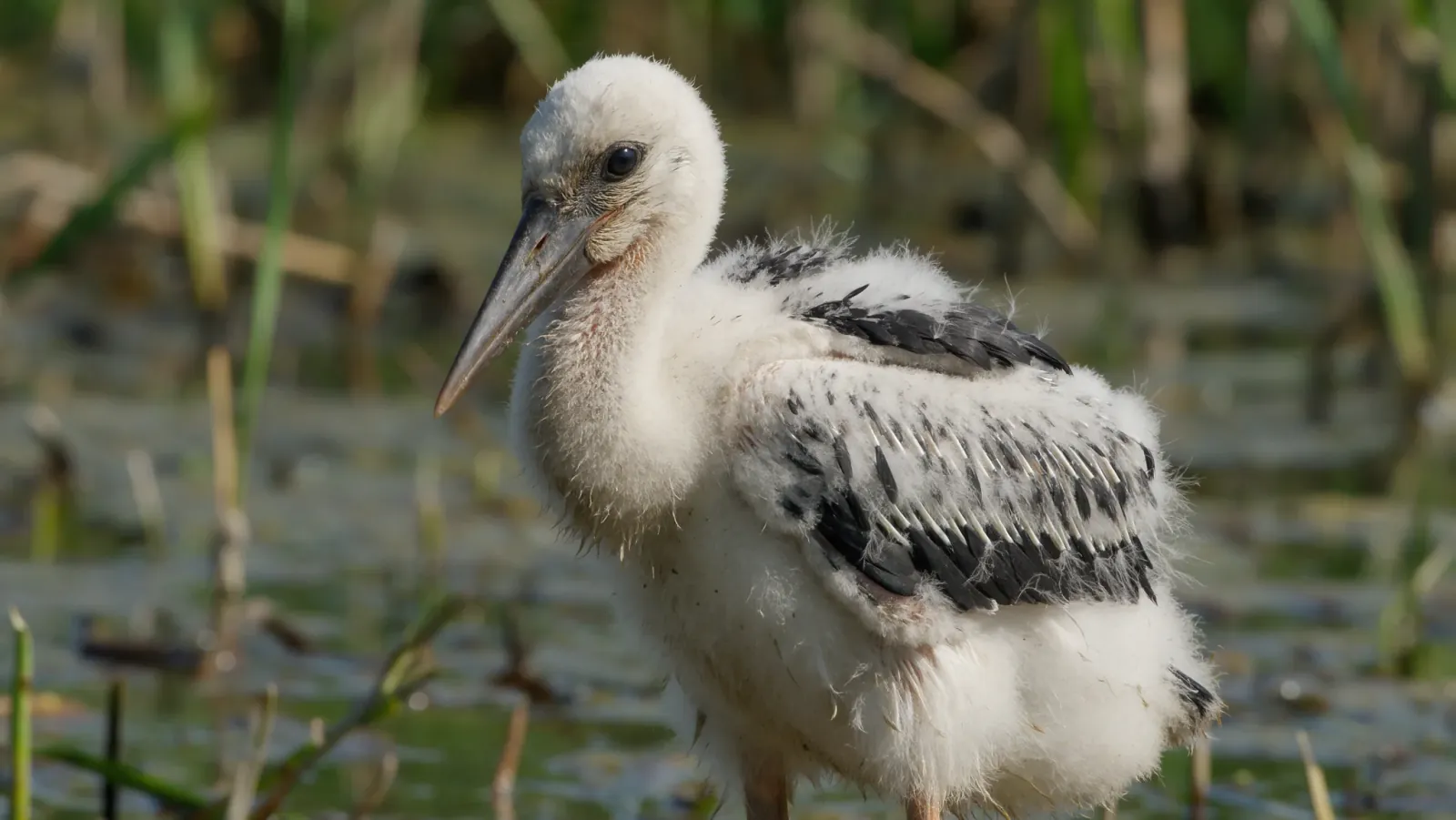
The first real feathers appear as dark quills pushing through the down. They look like pins, and for a while the chick is a patchwork of fluff and spike. Each quill is a sheath that protects a growing feather inside, and the feather unfurls slowly from the tip.
A growing feather has a blood supply. The quill is alive, and vessels run up the shaft to feed the feather inside. If a blood feather breaks, the chick can bleed. A blood feather is a growing feather, and a broken one costs the chick days of regrowth. A fall or a rough landing can damage one, and the parents cannot repair it.
The feathers arrive in an order. The body feathers come first, then the wing feathers, then the tail. By the time the body is covered, the chick still looks unfinished, because the longest feathers are the ones that take longest to grow.
A chick in pin feathers looks uncomfortable. The quills are delicate, and a fall or a rough landing can damage one. The brood heap that kept the chicks warm in their first weeks becomes crowded later in the season, when the birds are heavier and the feathers are growing.
Why the wing feathers wait
The wing feathers are the last to open and the most expensive to grow. They have to be long, strong, and correctly aligned, and they take weeks to unfurl. During that time the chick is heavier, hungrier, and still unable to fly, which puts more pressure on the parents.
The chick still has to be fed while it cannot fly, and the wing feathers give no return until they are open. The parents carry the cost of a part that will only be useful after the chick has left. In the week before fledging the flight feathers are nearly full length, and the chick spends hours flapping against the air.
Flight feathers have to carry a bird that will soon weigh several kilograms. The wing bones and the breast muscles grow with them. A chick can stand and flap before the quills are fully open, and those first flaps are exercise rather than flight.
The black flight feathers complete last, and they are the ones that make the wing work. Until they open, the bird stays on the nest. The white body is already in place, and the contrast at the wingtip arrives with the final set of quills.
The adult pattern
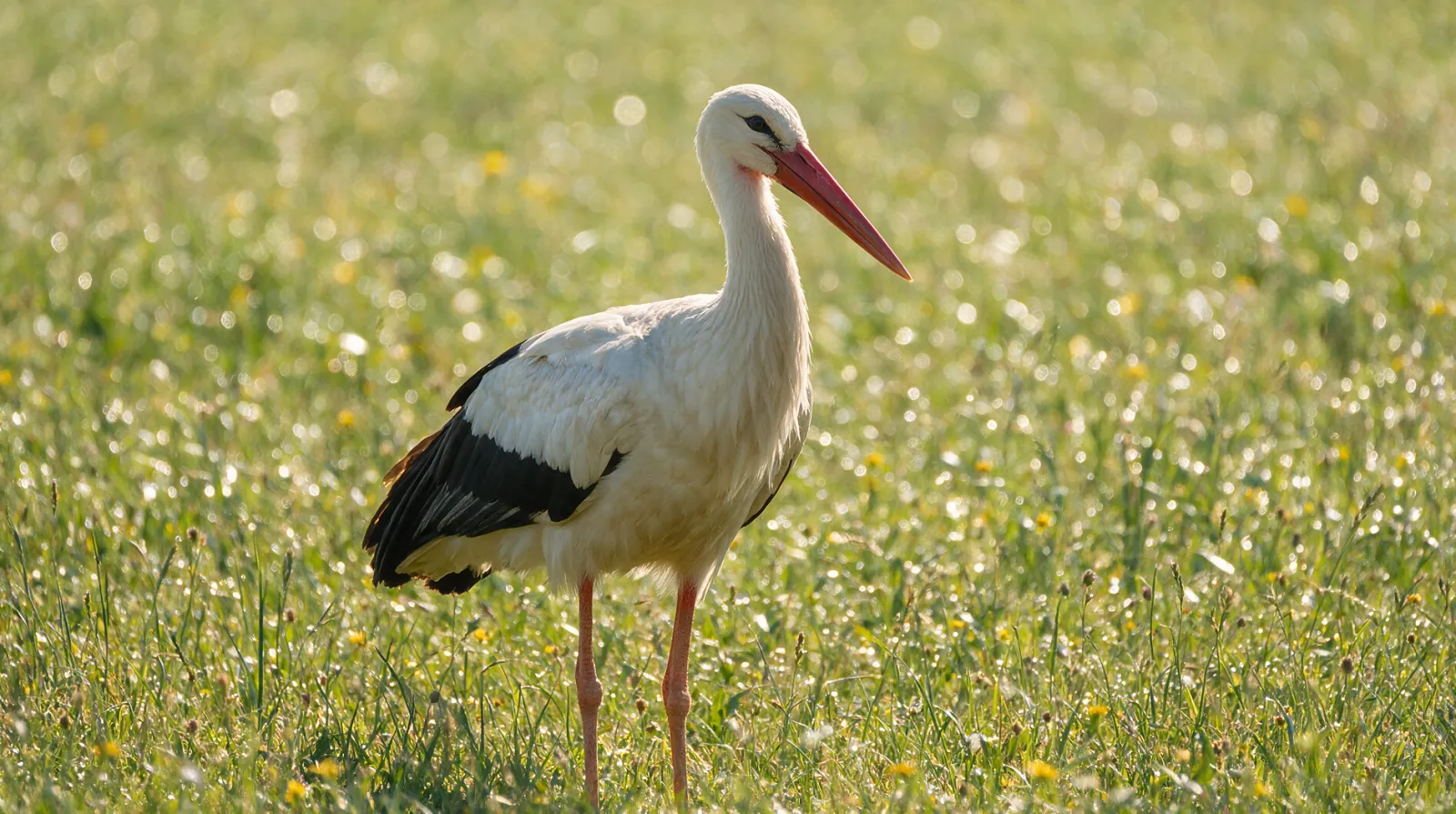
An adult white stork is white with black flight feathers, a red bill, and red legs. The chicks have a darker bill and duller legs, and these colours change as the bird matures. The plumage is the same in both sexes, and a young bird looks like an adult once its flight feathers are in.
The change is gradual. A chick may have black wingtips and a white body while still covered in down on its head. The bird looks unfinished, which it is. The last white tufts cling to the head and the underside after the rest of the body has feathered.
The white down is temporary, and the black flight feathers are the first clear sign of the bird it will become. The pale chick and the adult are the same bird at two stages of one summer.
The cost to the parents
Feeding a brood takes a toll. The adults fly out to the meadows again and again, carrying frogs, insects, and small vertebrates back in their throats. They feed the chicks, then leave to find more. In the peak weeks the trips begin at first light and continue until the light goes.
A parent may lose weight while the chicks gain it. The food goes into the young, and the adults live on what is left. This is one reason the breeding season is short. The pair cannot sustain that pace for long, and the young must be ready to leave before the adults run out.
The pair's own condition matters too. A bird that has spent the summer feeding four chicks enters autumn lighter than it began the spring, and the journey south will draw on what remains. The food that built the brood came out of the parents.
The nest grows with the chicks. The pair adds material as the bodies take up more space, and the platform rises at the rim. The structure records the growth even when the birds themselves are too close to measure.
The shape of a stork
By the fourth or fifth week the chick has the outline of a stork. The neck is long, the legs are long, and the bill is a pale dagger. The body is still lean and the feathers are still incomplete, but the bird is recognizable. It stands for longer periods, stretches its wings, loses its balance, and recovers.
A person who visits a nest every few days sees the growth as a series of jumps. The chicks are taller. The gap between the oldest and the youngest is still there, but both have moved. The down has retreated to the head and the underside.
By the time the growth spurt ends, the nest is crowded. Four storks the size of their parents do not fit easily on a platform built for two. The birds stand at the rim because there is nowhere else to stand. They flap, and wait for the next meal. The season has turned from raising chicks to preparing them for the air, and the first flight is about eight weeks after hatching.
Explore the gift