A white stork in a heatwave stands with its bill open, its wings held away from its body and its legs painted white with droppings. Each of those habits moves heat out of the bird.
The open bill
A stork cannot sweat. It pants. The bill opens, the throat flutters, and air moves quickly across the moist lining of the mouth. Water evaporates and takes heat with it.
The fluttering is fast enough to blur. On a hot afternoon the sound from a nest is a soft, continuous rattle of breath.
Panting costs water, and a stork on a roof has little to spare. The bird balances the need to cool against the need to stay hydrated, and it usually stops panting when the sun drops.
Wings held out
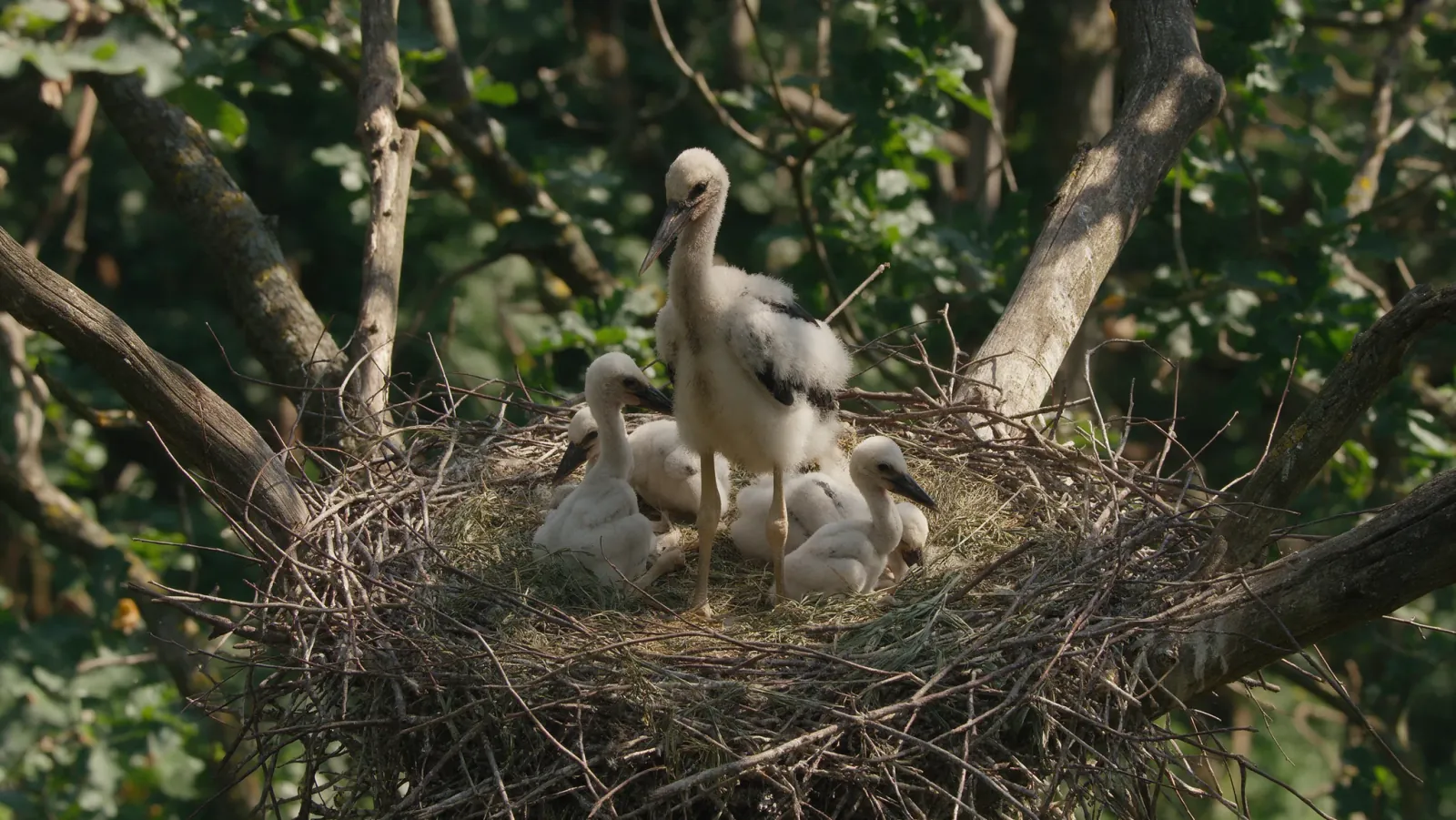
A stork on a nest in full sun will let its wings hang away from the body. Air moves over the shaded skin and carries heat off. The same posture shades the chicks in the cup below.
At midday the parent may stand over the brood with its wings partly open, and the chicks press into the shadow. The adult takes the sun so the young do not.
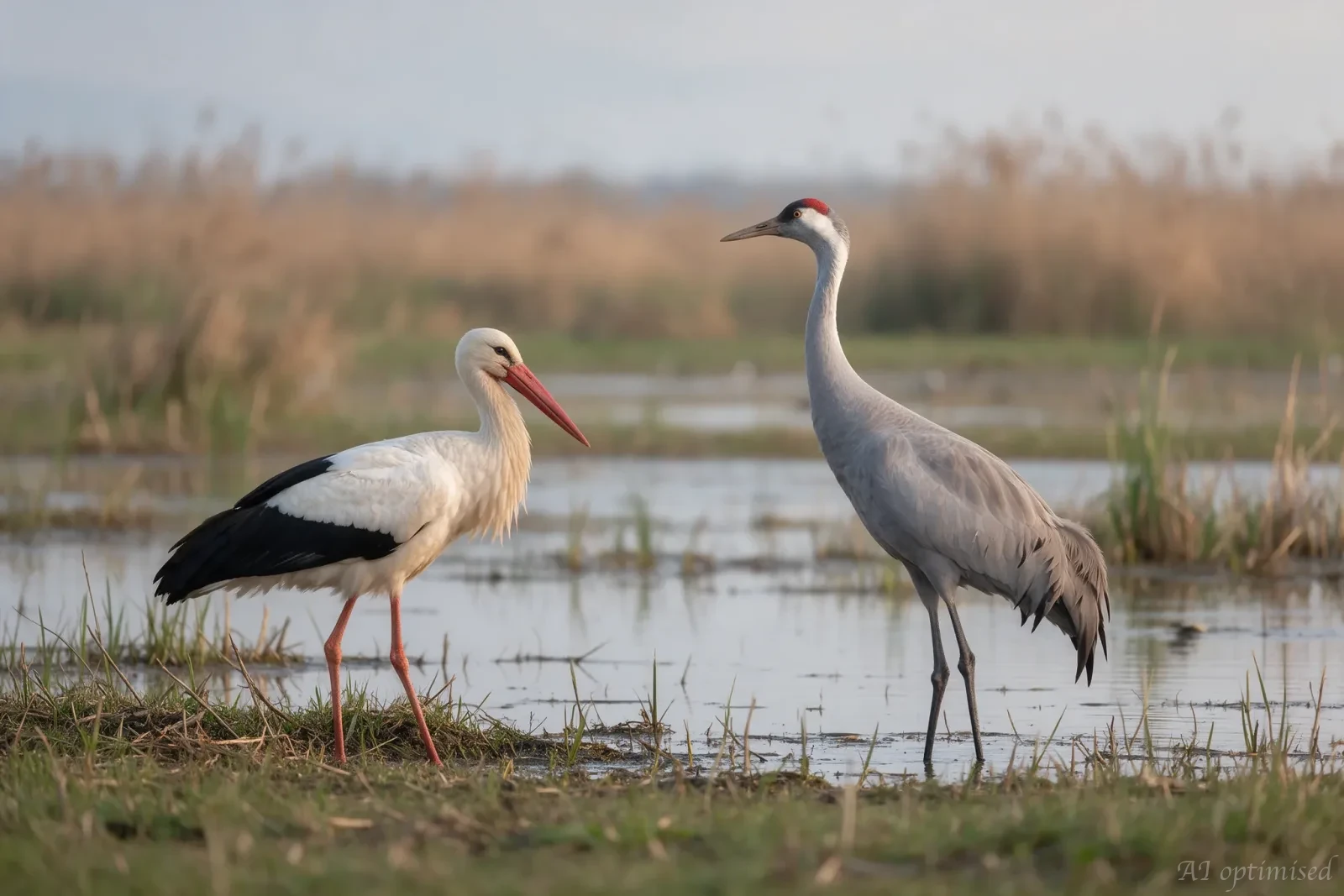
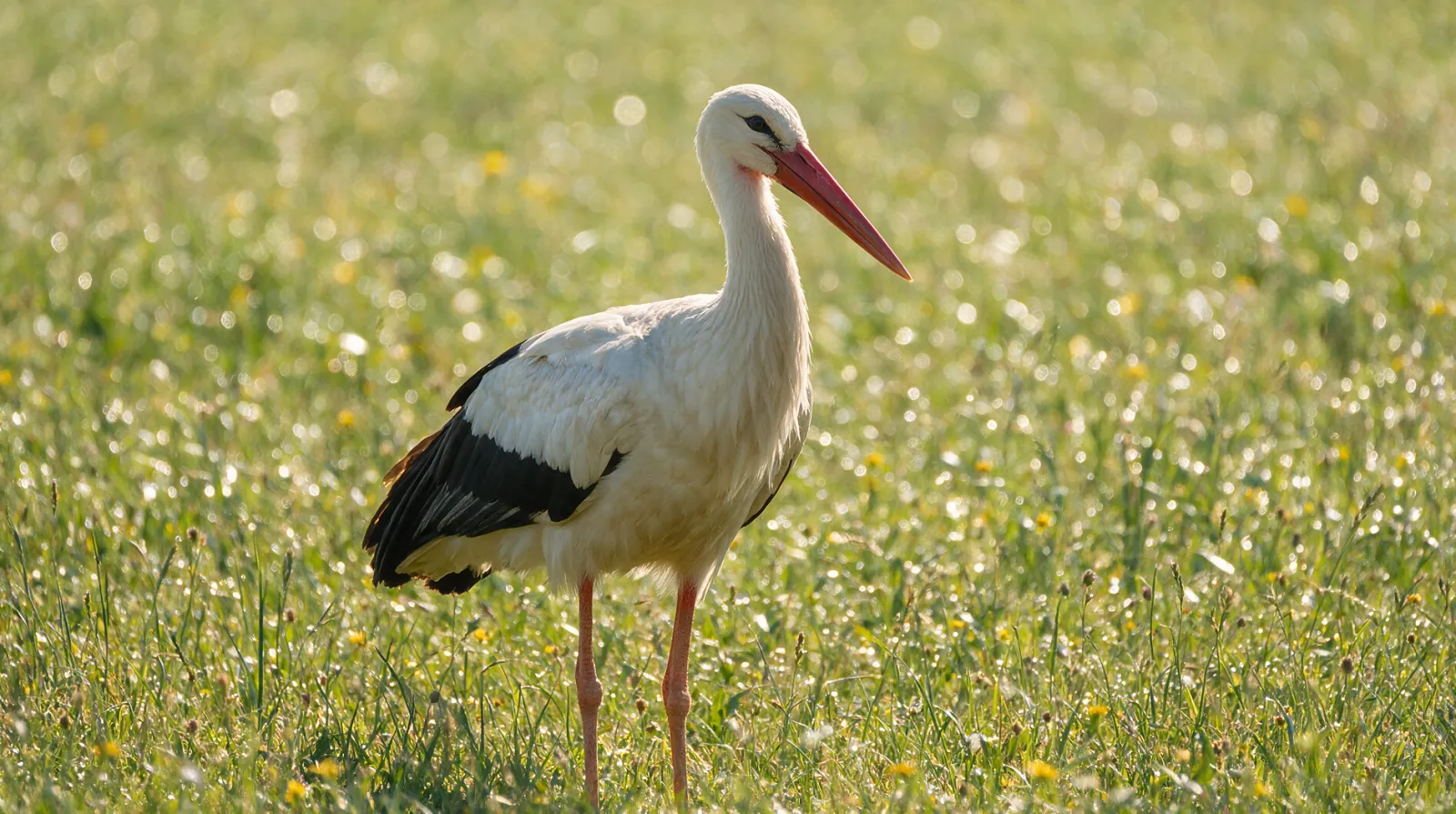
A bird on a meadow uses the same trick. The wings lift, the body tilts, and the bird waits out the worst of the afternoon in a posture that looks like exhaustion and is a form of control.
Legs painted white
Storks and some other large birds cool their legs with their own droppings. The bird lifts its tail and lets the white mess run down its legs. As the water evaporates, the legs cool, and blood returning to the body is cooler than it would be.
The habit is called urohidrosis. The white legs of a stork in summer are a cooling system at work, and the mess is part of the method.
A stork in a hot country often looks as if it has walked through white paint. The colour is the visible sign of an animal managing its temperature.
Getting out of the sun
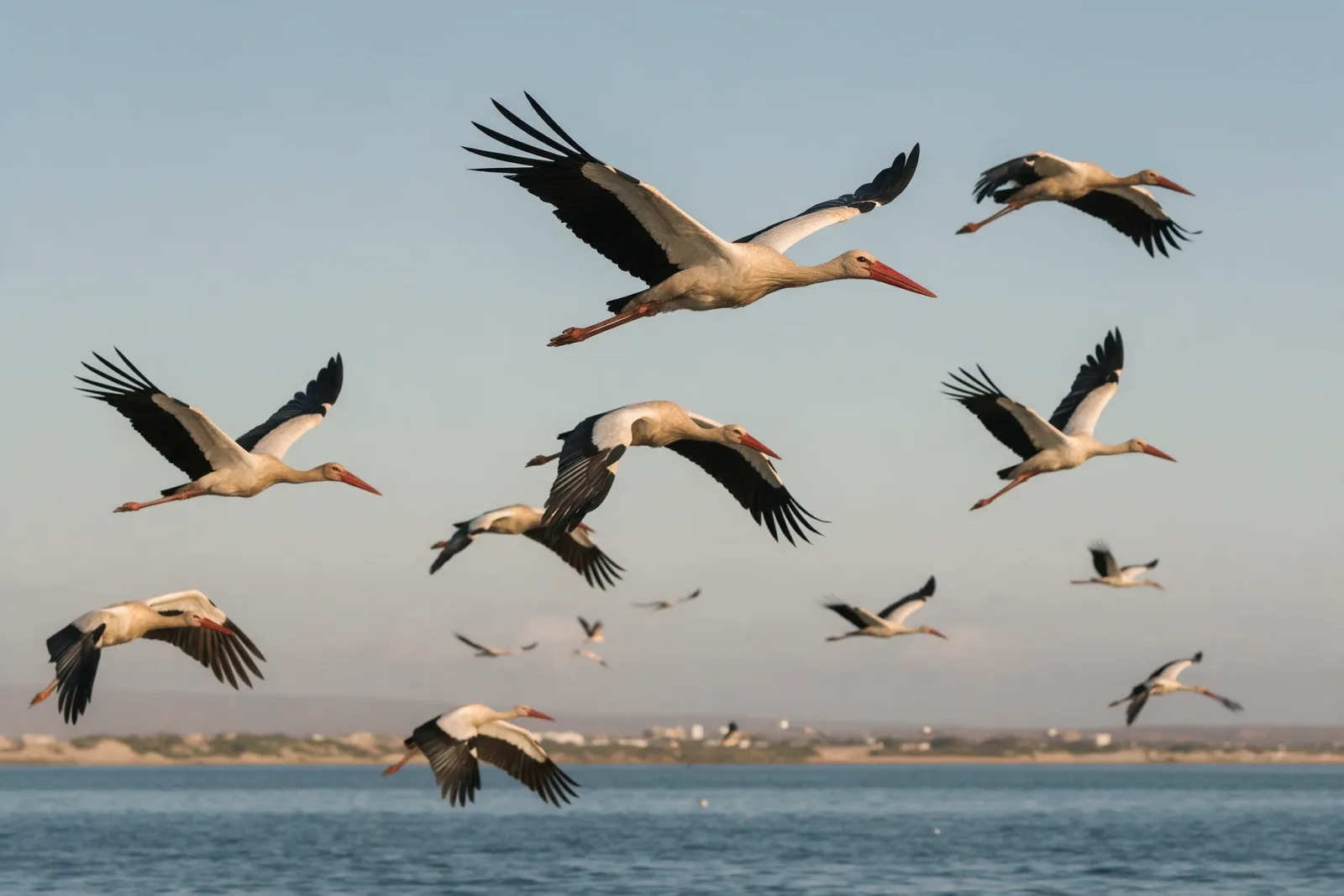
A stork has options beyond the nest. It can stand in the shade of a wall, wade into a river, or fly. Rising air carries a bird to cooler heights, and a stork that circles in a thermal in July is often simply getting above the heat of the ground.
Water helps more than anything. A stork that finds a shallow pool will stand in it, and a bird on a hot roof will fly to a wet meadow if it can. The legs go in first, and the bird settles with the water around its ankles.
The worst place to be
A nest on a metal platform in full sun can reach a temperature that kills. The metal heats, the sticks dry, and the chicks have nowhere to go. The parents stand over them and carry water, and the shade of an adult body is the only cover.
A nest on a chimney has more thermal mass beneath it, and a nest in a tree has leaves nearby. The place a pair chooses in spring decides how hard the summer will be.
Water for the chicks
A parent can carry water in its bill and pour it over the chicks. The down gets wet, the evaporation cools the small bodies, and the chicks lie with their bills open.
On a day of forty degrees, that small act matters. A chick that is too hot goes quiet and stops begging, and a parent that keeps it wet can make the difference between a brood that fledges and one that does not.
The shape of a hot day
Storks feed early and late and rest through the middle. The pattern is plain in a village in August. Birds stand on nests with their bills open and their wings out, and the fields are empty until the light softens.
When the heat breaks in the evening, the birds go back to the grass. The white legs dry, the bill closes, and the hunting starts again.
Explore the gift