A white stork eats whatever the wet ground offers, and the offer changes from April to September. Frogs come first, insects take over in summer, and voles fill the gap when the ditches shrink. The bird is a generalist with a long bill, and its year is a series of switches between one kind of prey and another.
Frogs in the spring ditch
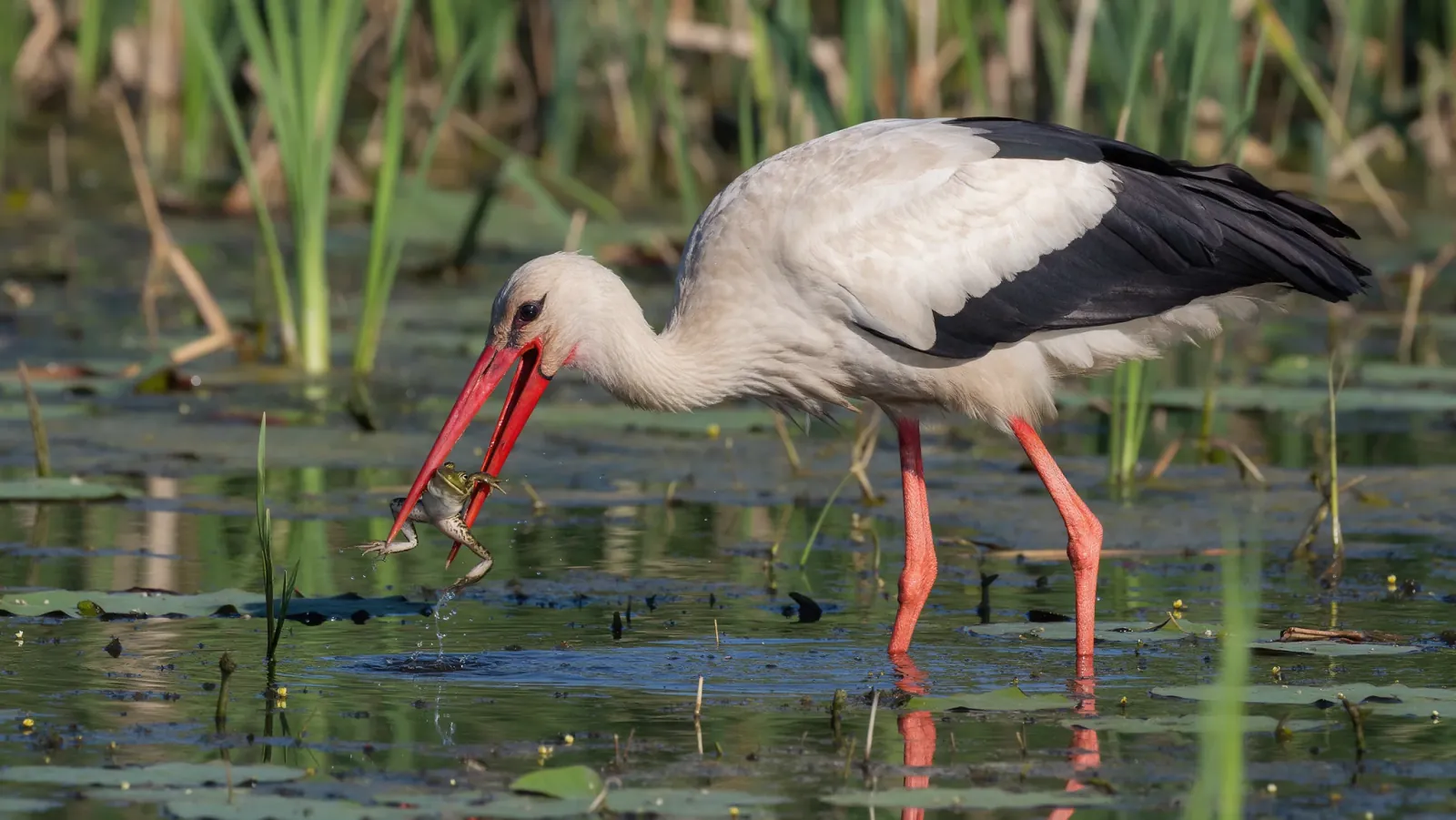
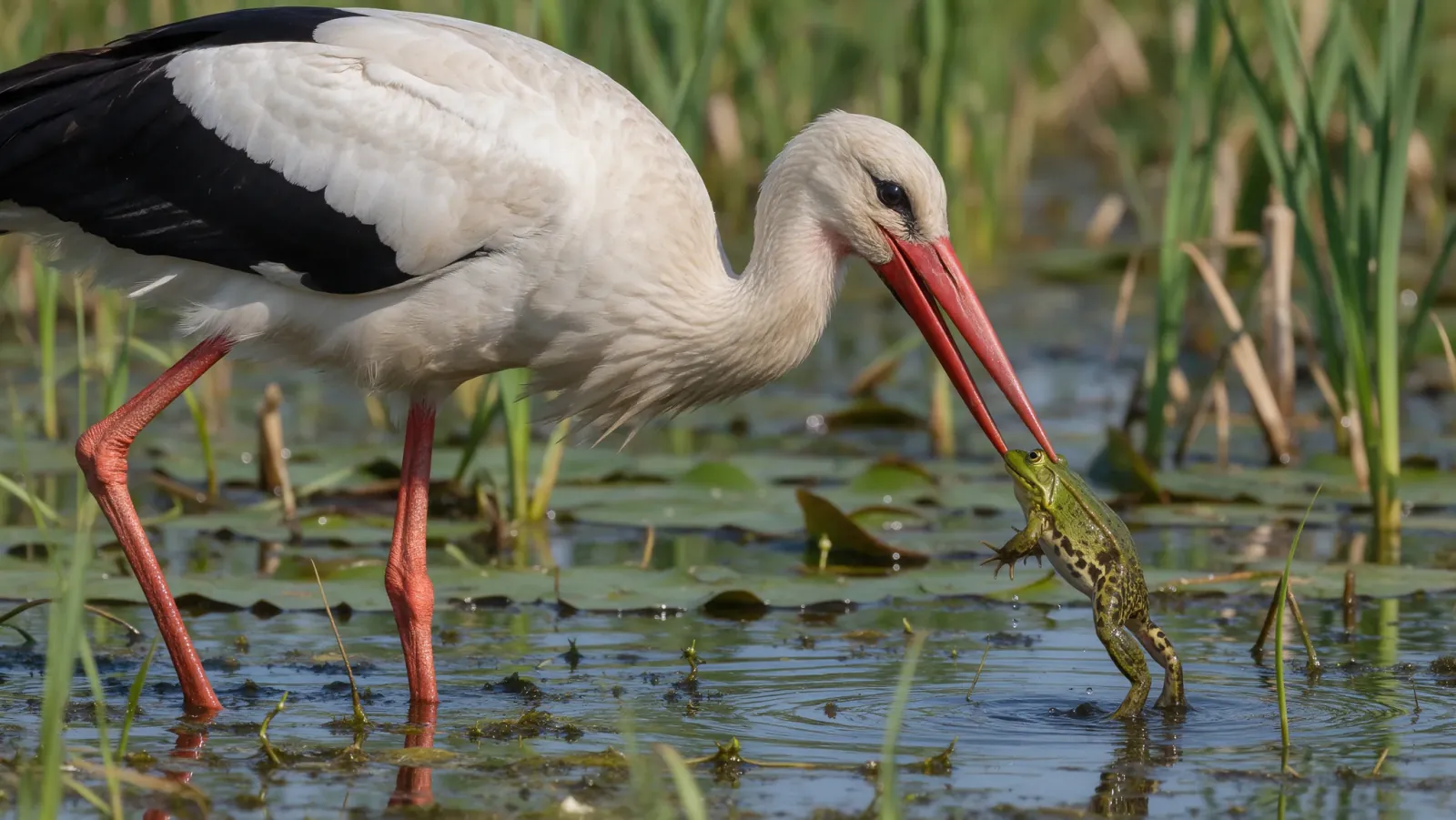
Frogs are the most dependable food a white stork finds in a wet meadow. The bird is built for them: long legs for shallow water, a straight bill for a fast strike, eyes that judge the distance. A frog sits low in grass or half under water, and it moves in a way the stork's eye can follow. The bird walks slowly with its head down, and when a frog shifts the bill drives at the spot the eye already chose. A pair can feed four growing chicks from a few hundred metres of ditch. The meal is swallowed whole, and the stork is walking again before the grass stops moving. Small frogs go down easily. A large one takes a little work and a shake. Frogs are cold-blooded, and their activity follows temperature. A warm, wet night leaves the marsh loud, and the hunting is easy the next morning. A cold, dry week sends them into the mud, and the stork must look elsewhere.
Frogs need still water for their eggs, so they gather in shallow pools, ditches, flooded wheel ruts and the quiet corners of a wet field. Tadpoles graze the algae that grows on stems and stones. Most of the frogs a stork eats in July were tadpoles in the same ditch in April. A pond that dries before the tadpoles grow legs takes the next generation with it, and the stork feels the loss the following season, when the grass is quiet. A dry spring is hard on frogs and therefore on storks. Some adults bury themselves in damp mud and wait for rain, and the bird cannot follow them into cover.
The summer switch to insects
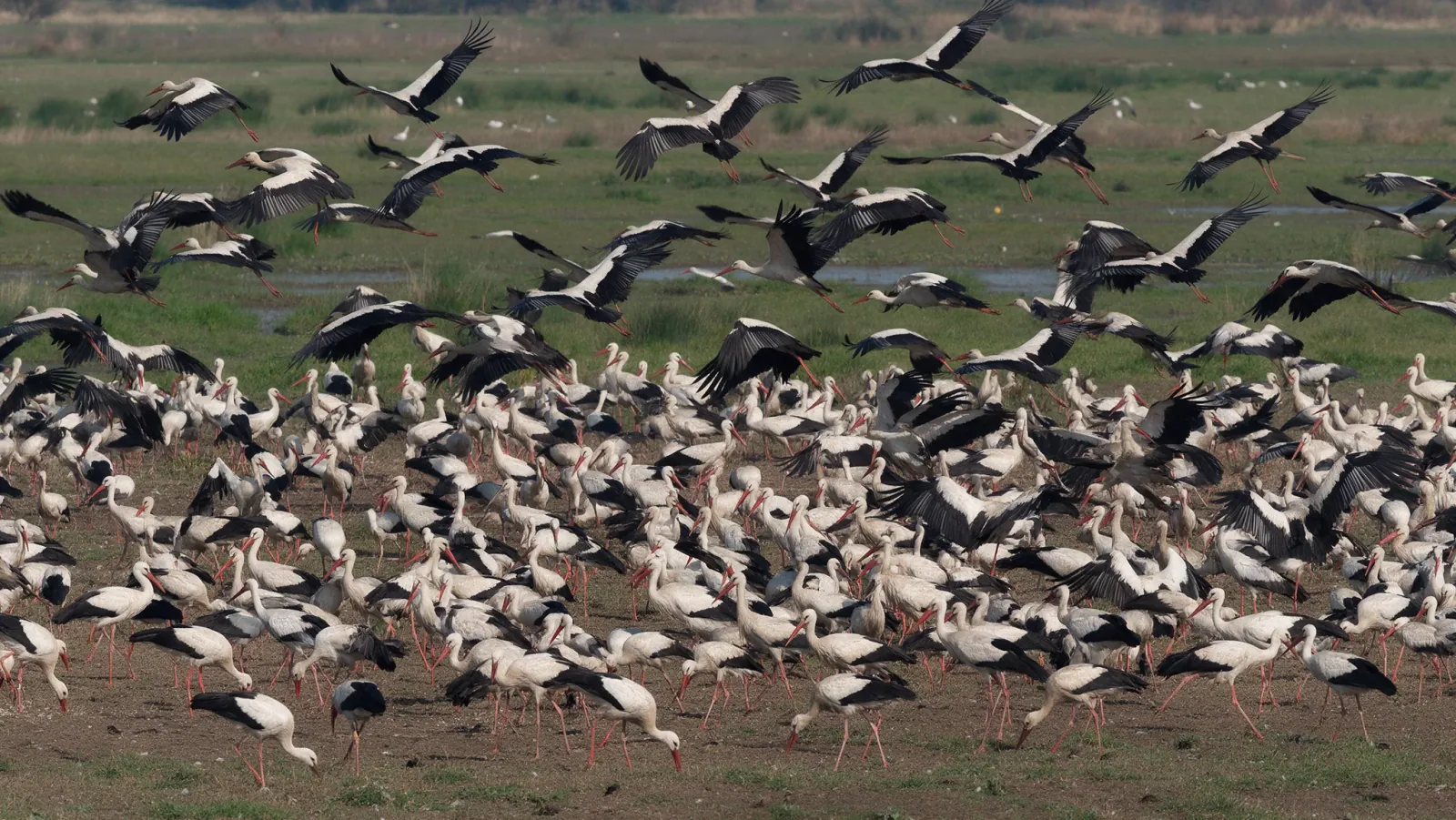
In early spring the stork hunts what the cold left behind: frogs, voles and slow fish in the ditches. As the soil warms, insects start to move and the diet widens. Grasshoppers flick through dry grass, beetles climb stems, and larvae appear wherever there is rotting vegetation. By midsummer a stork may take dozens of small items in an hour. The crop of a hunting adult can be packed with insects before it flies back to the nest.
A nest with four chicks is a demand that never stops. Insects are the practical answer because they can be gathered quickly and in bulk. A parent arrives with a bill full of grasshoppers, the chicks seize them, and the adult leaves again. The growth of a chick in its first weeks is paid for in small, repeated deliveries. Warm, damp weather keeps the supply going. A heatwave that bakes the ground can cut it within a week, and the parents then travel further between meals. Grasshoppers do well in dry grass. Flies and larvae do badly when the ditches shrink.
Rough grass and mown strips
Insect numbers follow the shape of the field. A meadow cut early and grazed tight has little cover. A rough field with tussocks, nettles and a wet corner holds far more. Storks work these edges all day, stepping through long grass and snapping at whatever their feet disturb. A two-metre strip left uncut can hold more grasshoppers per square metre than the mown middle. On a farm that keeps such strips, the bird has a route to walk every morning.
Haymaking looks like destruction and often works the other way. When a field is cut, the ground is suddenly open, and insects and voles are exposed for a few days. Storks follow the mowers at a distance, picking over the fresh stubble. The birds learn the rhythm of the season and appear in the field the morning after the tractor leaves. Field margins matter for the same reason. A strip left uncut along a ditch holds insects through the heat, and the stork can work it in the afternoon when the open field is bare.
Voles away from water
A white stork is a wader first, but it walks dry meadows too, and in those fields the small rodents under the grass become important. Voles are common, the right size for a single swallow, and they live in the kind of rough, unmown ground the bird likes. A vole is small and round, with short legs and a blunt face, and it spends its life in runs cut through the grass and tunnels just below the surface. That constant movement is what gives it away. A stork standing still can see a stem twitch, or a line of grass bend and then hold, and it knows something is underneath.
The bird walks a few steps, stops, watches, and strikes where the movement was. Voles are fast in their runs and slow to cross open ground, and a stork's long legs cover the distance in two strides. A meadow with many voles is a meadow a stork walks in a pattern, returning to the same patches every morning because the runs stay in the same place. The week after mowing is a good week for a hunting stork, when the cut grass leaves the animals exposed.
Voles feed more than storks. Kestrels hover over the same runs, barn owls hunt them at night, and herons take one if it crosses open ground. Vole numbers swing widely between years. In a thin year the storks switch back to frogs and insects, and a pair with chicks must work harder and travel further.
Pellets and the record of a meal
A vole is a drier meal than a frog, with a lot of fur and bone for its size. The stork swallows it whole, and the parts it cannot digest are packed into a pellet and cast up later. Find one under a nest and you can see what the birds have been eating: fur, beetle cases, the hard parts of insects, sometimes a small bone. A pellet is one of the few ways to read a stork's diet without following the bird.
A year of alternatives
By late summer the grasshoppers thin out, the larvae have turned into adults, and the easy food is over. The stork shifts toward whatever will build fat for the journey south. Insects still appear on warm afternoons, and a bird feeding on a mown field can find them into September. Then the first cold night cuts the numbers and the meadow goes quiet. Before departure the bird feeds on wet meadows and freshly cut fields, taking grasshoppers, beetles and the last of the voles. A stork that finds a ditch full of small fish will work it for days. The fat laid down now carries it across the Mediterranean and the Sahara, and the state of a September bird is a summary of the summer it has had. A wet June shows in a strong September flock. A dry one shows in lighter birds and later departures. The bird that leaves in good condition has a better chance of returning to the same roof in spring.
Explore the gift