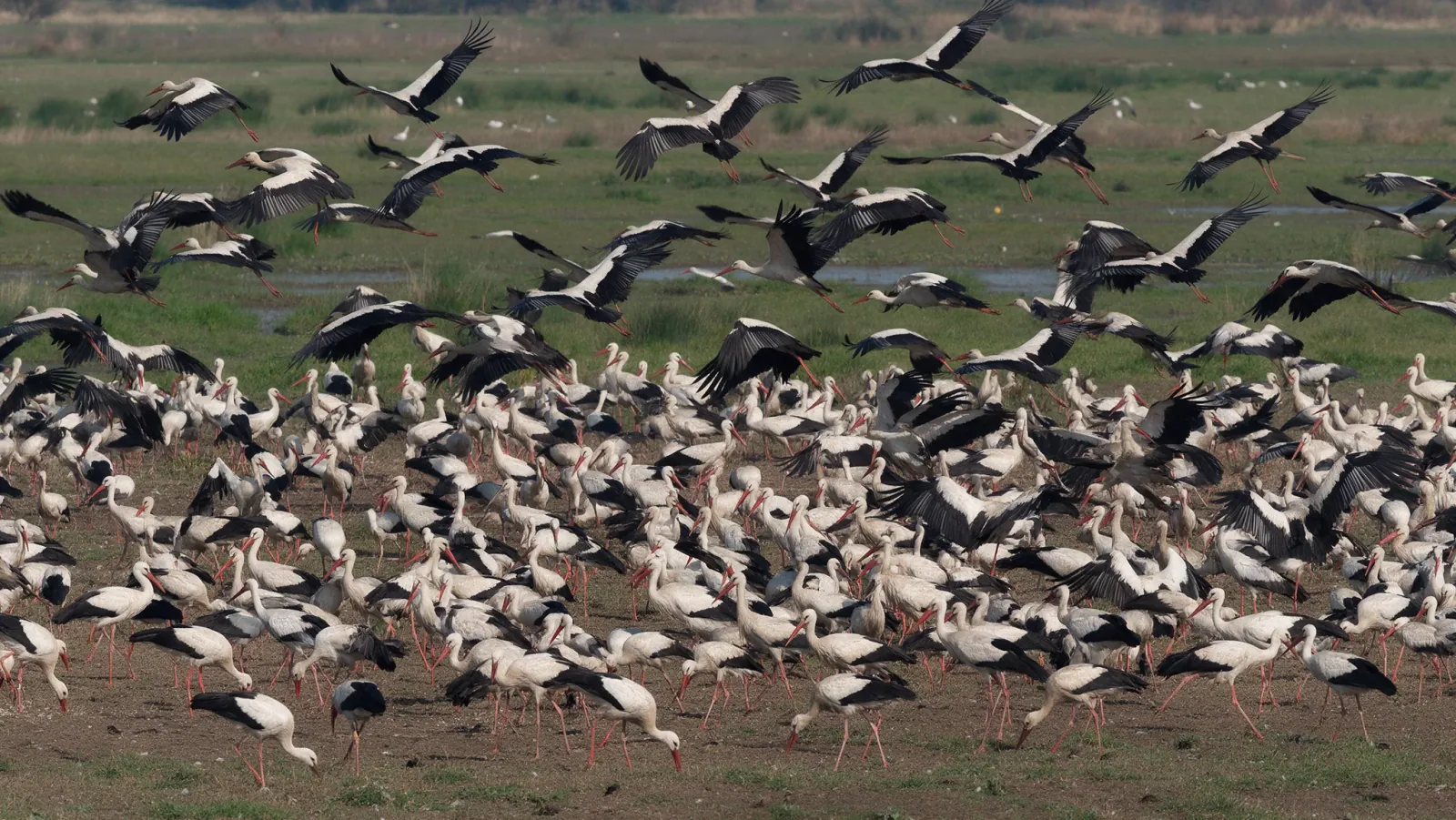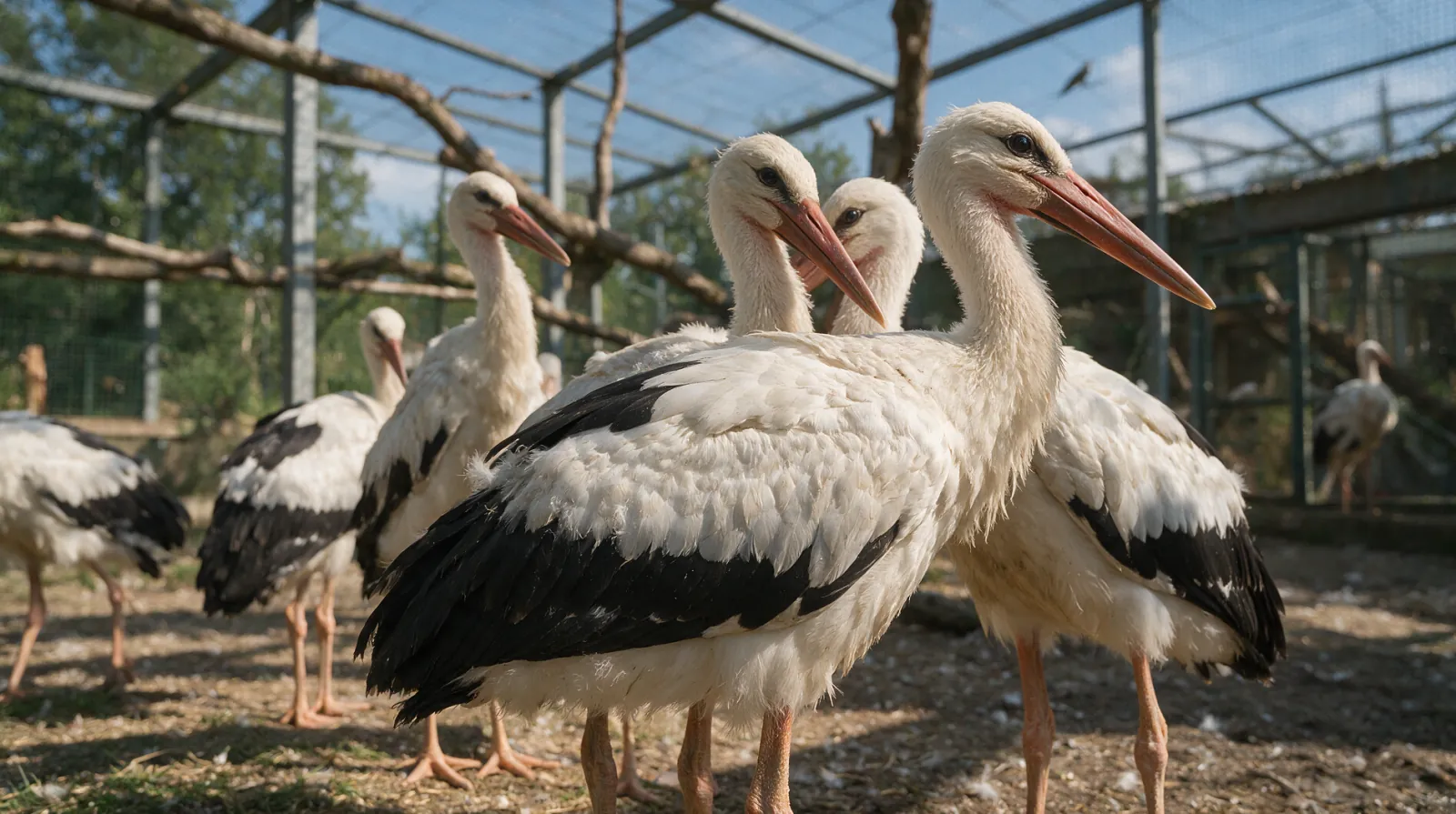
The white stork returned to Britain from inside large aviaries, carried from Poland and released into English fields.
A reintroduction is slow work. Birds are kept, fed, watched and then let go, and the project waits to see whether they nest, whether their chicks survive, and whether the next generation comes back.
The Knepp project
The best known attempt began at the Knepp Estate in West Sussex in the 2010s. Birds came from Poland and from rescue centres, and they lived in big release aviaries before the doors were opened. The estate had the things storks need: wet clay fields, ponds, scrub, pasture and old oaks.
Partners included the estate, conservation groups and Polish stork specialists. The birds wore rings and tags so they could be followed. Some flew north, some crossed to the continent, and some settled.
The first nests
Storks do not breed in their first year. They need time to find a mate, a nest and a territory, and the early years of a reintroduction are mostly waiting. Pairs formed. Nests appeared on oak branches and on platforms. The first wild chicks fledged at Knepp a few years after the first release, the first storks known to be raised in the wild in Britain for centuries.
A chick on a nest is the point of the whole exercise. Adults can be released anywhere. A wild-raised bird is evidence that the countryside can still support them.
Where the birds are now
Sussex remains the centre. Birds have nested in Kent, Surrey and a few other southern counties, often on private land. Some pairs use platforms on poles, some use trees, and a few use roofs. The population is small enough that each nesting pair is known.
Reintroduced storks wander. A bird seen in a new county in June may be a young bird exploring, and it may not stay. The projects ask people to report rings and tags.
What a stork needs from the land
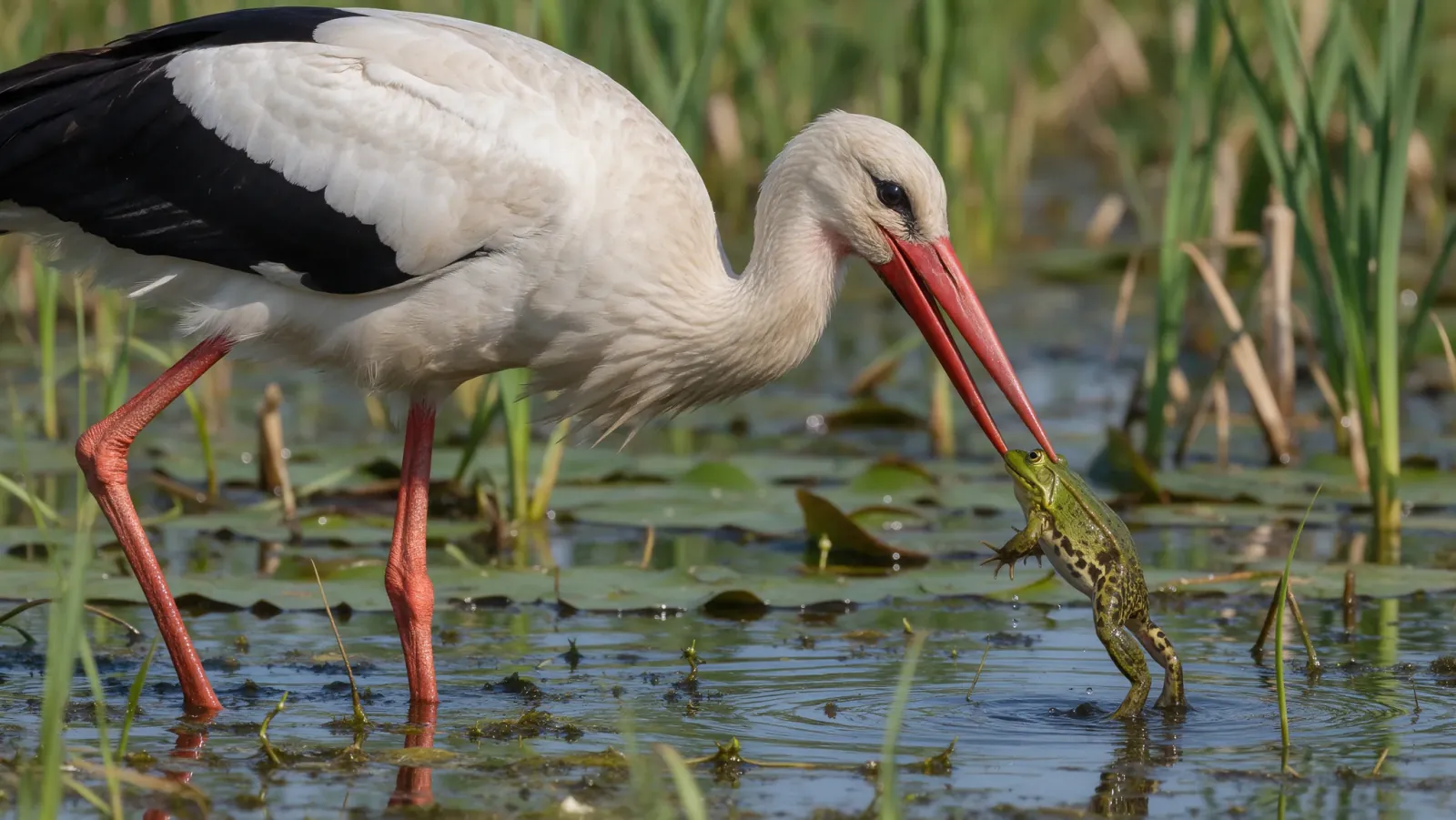
A stork is a big bird with a big appetite. Chicks are fed frogs, insects, earthworms, voles and fish, and the adults need a steady supply through the breeding season. That means wet ground, shallow water and grass that is not sprayed or drained.
The Knepp approach relies on a messy farm: scrub, ponds, unimproved pasture, grazing animals and dead wood. Storks hunt in that mix. A tidy farm with straight fields and no wet corners holds far fewer of the things a stork eats.
A commitment measured in decades
White storks can live for more than twenty years, and a pair that succeeds will use the same nest season after season. A reintroduction runs for decades. It is a long arrangement between birds, land and people, and it needs the land to keep working after the cameras have gone.
Some of the released birds have crossed to the continent and returned. Others have stayed in southern England all year. Both outcomes tell the project something about how the birds read the new countryside.
The arguments
Reintroductions attract debate. Some people ask whether a bird that needs nest platforms and managed land counts as wild. Others point to the centuries without storks and see a restored species. Both positions are reasonable, and the project continues either way.
What is clear is that the birds are not yet independent of people. Platforms, monitoring and habitat management are part of the picture, and they will be for years.
Seeing them
Spring and summer are the months. Knepp runs walks and safaris, and other southern reserves have birds. Storks are easy to see when they are on a nest and hard to see when they are feeding in tall grass. Keep your distance, use binoculars, and follow the site's rules.
A nest platform on a dead oak, a bird standing over two grey chicks, and a second bird arriving with a beak full of grass: that is what the project has produced so far.
Explore the gift