The white stork is numerous enough to be counted in the hundreds of thousands, and mobile enough that no single figure stays true for long. It breeds across Europe and western Asia and winters across Africa south of the Sahara. Any count is a snapshot taken while the population is moving.
Why an exact count is hard
The breeding range runs from the Iberian peninsula east across Europe and into western Asia. The winter range is a different map, spread across a continent. The birds split between two great flyways, one west and one east, and they move twice a year. A bird that is always arriving or leaving is hard to put a single figure on.
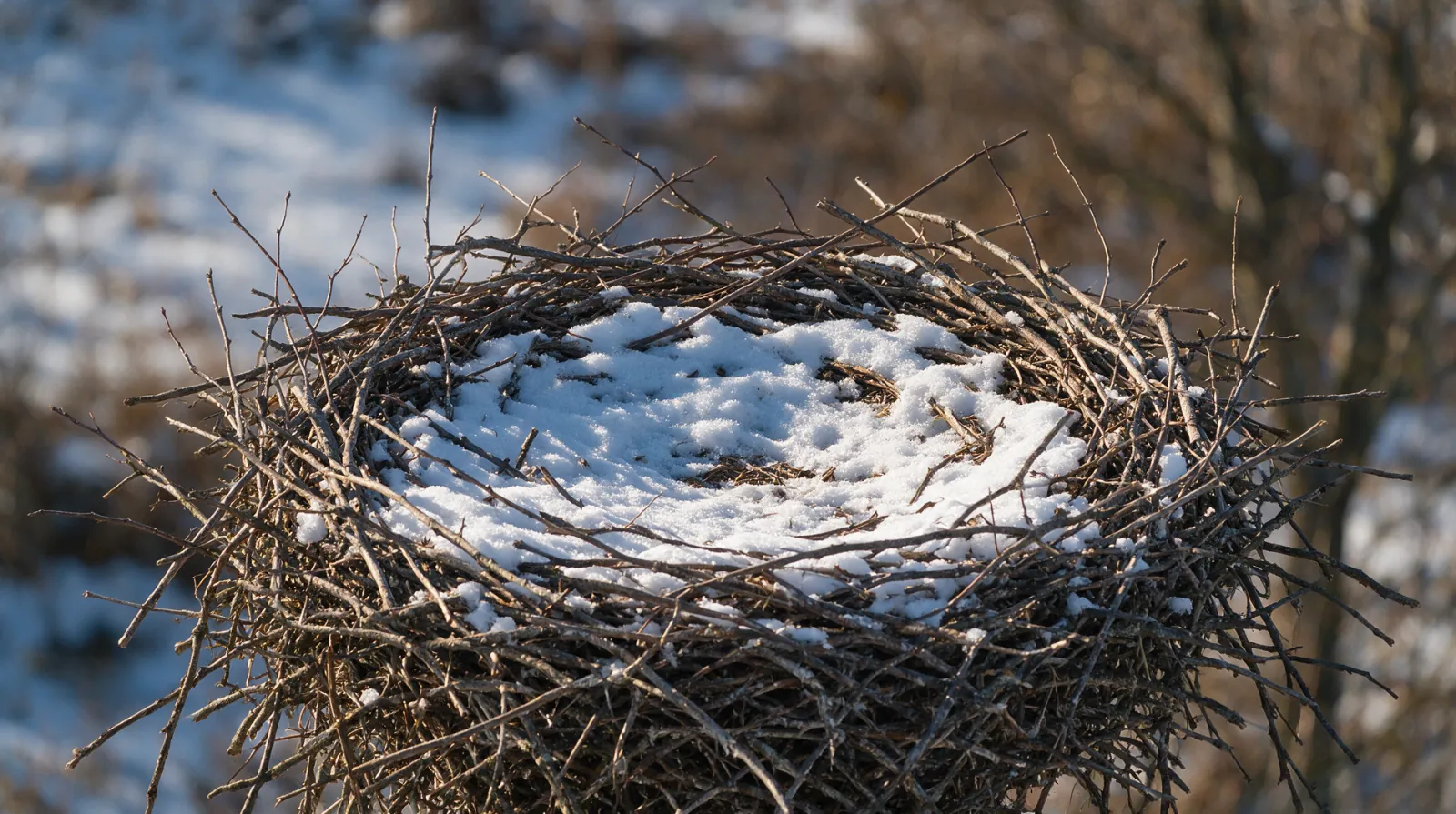
Nests are the easiest thing to tally because a nest stays put. A winter roost is harder. It can hold thousands of birds one night and be empty the next, and a roost missed on one evening can throw a regional total off. The counters work with both kinds of number and treat the result as an estimate. The estimate is always a little behind the birds. By the time the figures are added up, the flocks have moved again.
A count made nest by nest
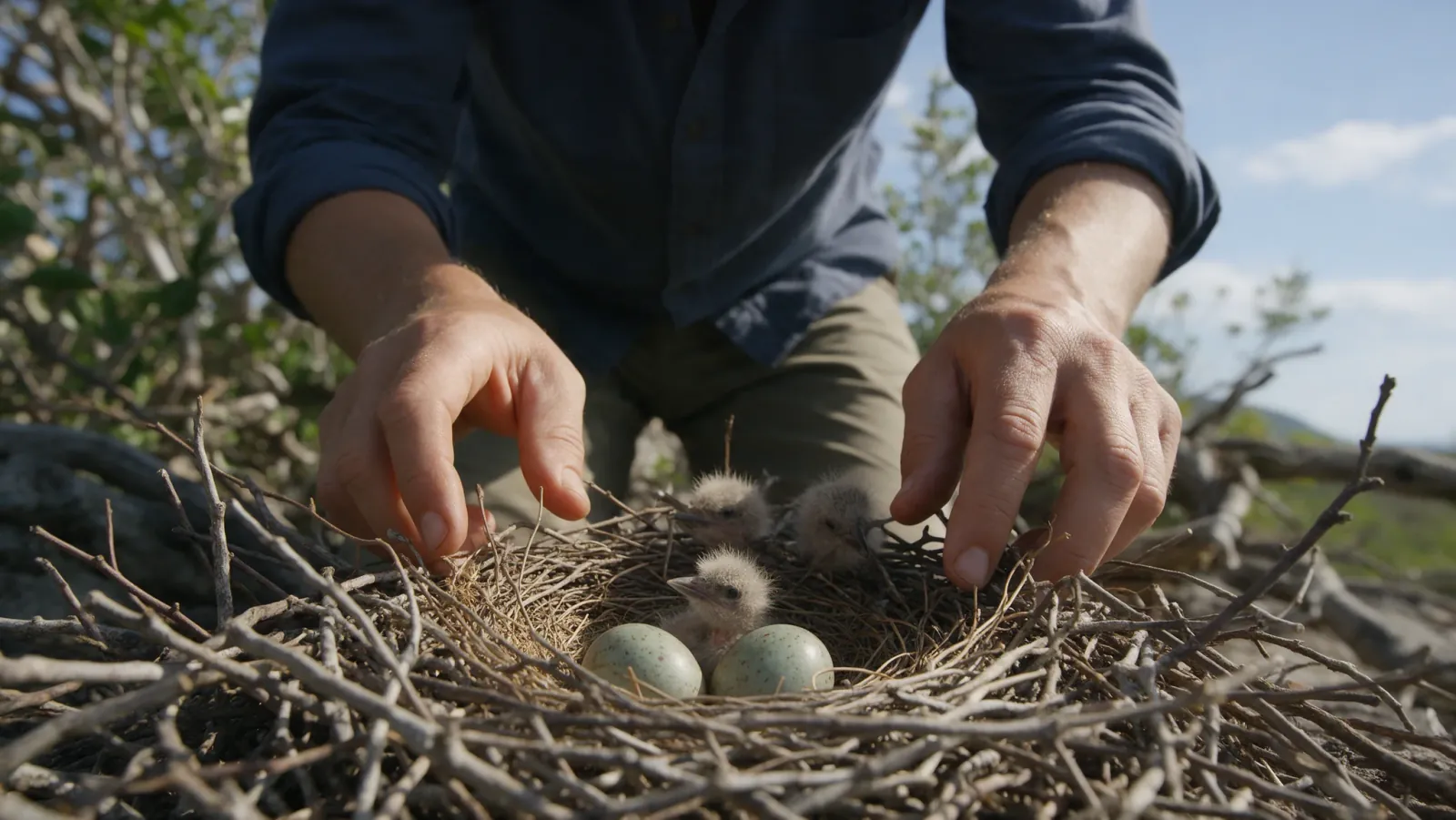
Most nesting counts are done on foot or by car, village by village, with a clipboard and binoculars. A counter walks the roads and marks every occupied nest, noting whether there are eggs or chicks and how many young fledge. The work is repetitive and slow, and it has to be repeated each year to mean anything. A nest stays where it was built, which makes it easier to count than a roost.
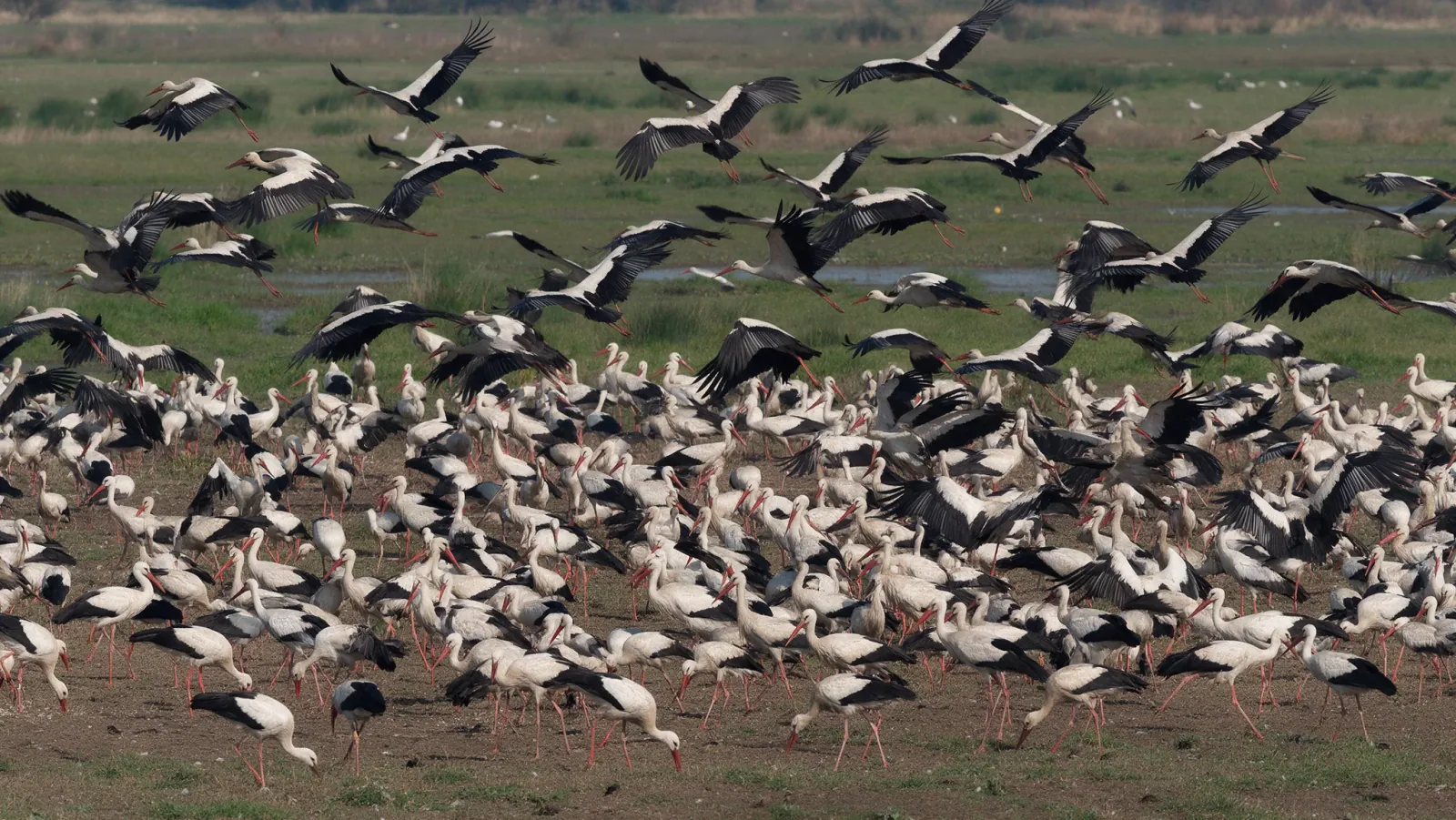
Winter counts rely on roosts. Counters arrive at dusk and tally the birds as they come in, often in cold fields and at the edge of water. Each method has gaps. Together they build a figure that is close to the truth, stitched from national surveys and local counts. The people who do the work are often volunteers who know which nests should be occupied and which fields the birds use in winter.
The work is not glamorous. It means cold mornings, long roads and the same village every spring. A counter learns the history of a roof: which nest has been occupied for decades, which platform was put up last year, which pair arrived early. That local knowledge is part of the count, because a figure on its own says little without the memory of the place.
The countries that hold the bulk
At the top of the list sits Poland. More white storks nest there than in any other country, and the bird has been treated for generations as a member of the household, a tenant on the chimney who pays no rent. Spain and Ukraine hold very large breeding numbers too. Germany, Belarus and Portugal also carry substantial shares.
Spain holds the largest part of the western population, the birds that cross the Strait of Gibraltar. Spanish storks nest on rooftops, on electricity poles, and in the cork oaks and church towers of the south. Some have stopped migrating altogether, finding enough food in the mild winters to stay north all year. Ukraine's birds spread across the open steppe and river valleys, and many winter in East Africa, returning over the Bosphorus and through the Levant. Poland holds more nesting white storks than any other country.
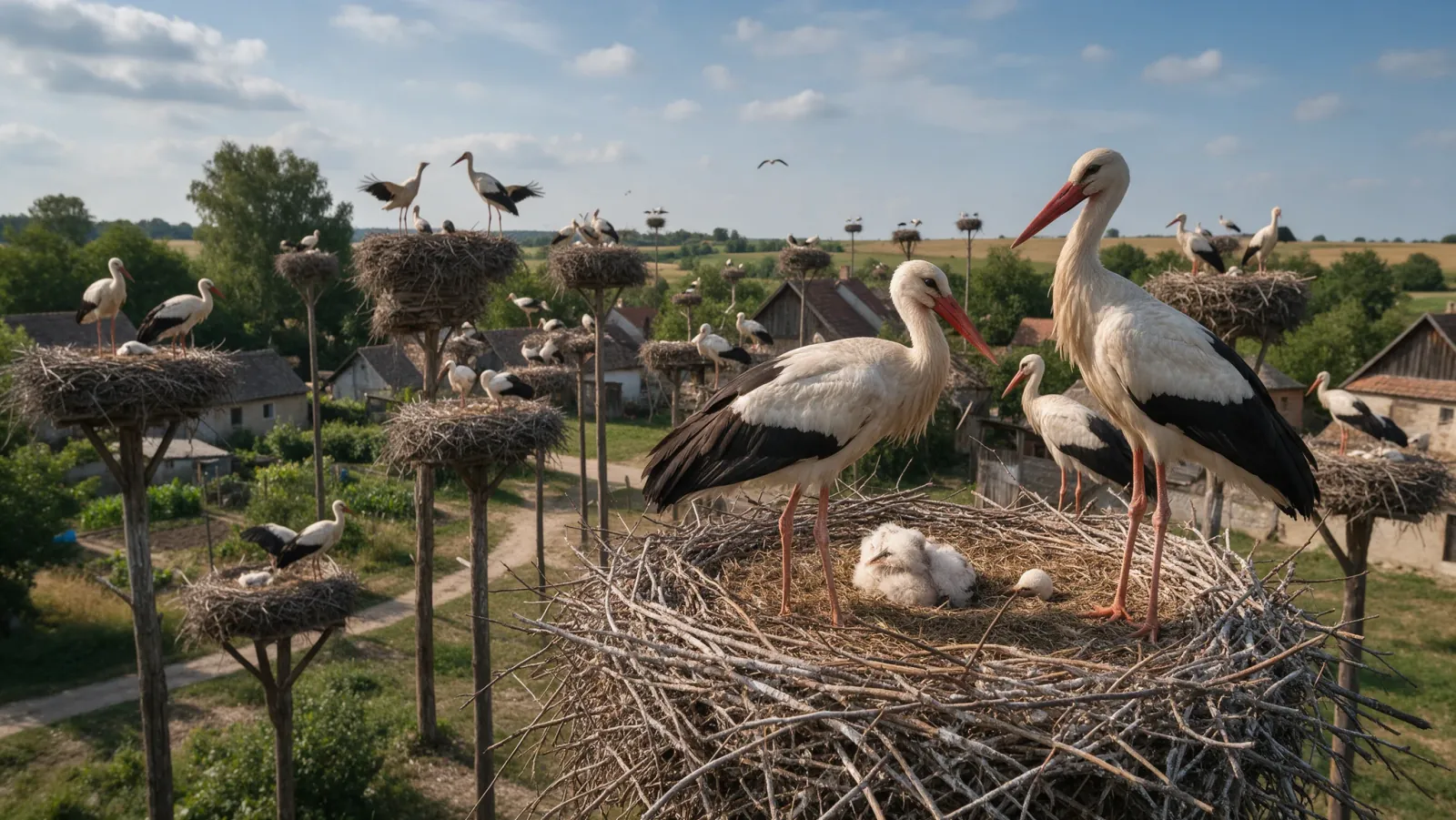
The ranking comes from national nest counts, and the figures are not perfectly comparable. A country with more counters finds more storks, and a volunteer survey in one place may be more thorough than a government count in another. The order at the top is not in doubt. The exact numbers are estimates.
A new life in town
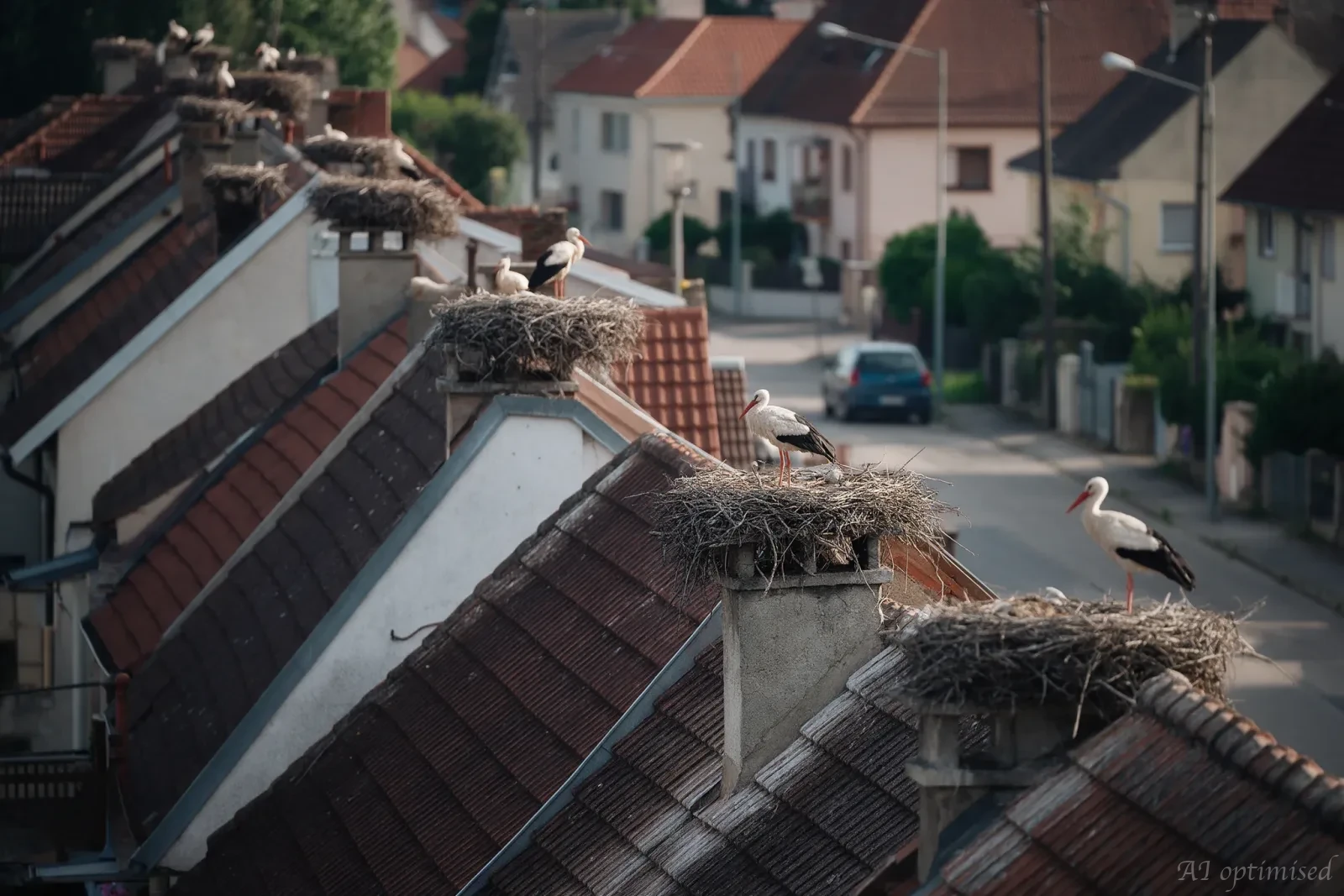
The city gives a stork what a village gives it: a high, safe place to nest and food within reach. Rooftops, towers and street lights stand in for trees and poles. Below them, parks, canals, riverbanks and freshly cut grass turn up frogs, worms and insects. Where the country has one field, the city has a hundred small green patches, and the bird learns the routes between them.
White storks are calm near people, and a bird that hatches on a city rooftop accepts the sound of cars as the weather of the place. Towns with nesting storks have built platforms, trimmed trees and changed building plans to leave a nest in place. Some towns name their storks and keep a map of the nests. The urban stork keeps its wildness even as it lives among us. It arrives in late winter, raises chicks above a bus stop, and leaves in autumn.
The move into cities came from the birds as much as from the places. Generation by generation the birds have settled deeper into human streets. Towns have learned to walk past a bird on the pavement, and some have changed building plans to leave a nest in place. The city rewards an adaptable bird, and the white stork is adaptable.
The farm still matters
Farmland is the bird's oldest setting. A nest sits on the chimney or on a tall pole, a wide platform of sticks that grows a little every year. Farmers repair the poles and count the birds as part of the holding. When a field is cut or turned, frogs, voles and insects are flushed into the open, and the stork walks behind the machine. At haymaking a small flock can gather behind a single tractor.
The small wet places matter most: the shallow ditch along the lane, the wet corner of a pasture, the hedge-bottom where the grass stays cool. Bigger fields, fewer hedges, drained corners and more silage grass have removed much of that ground. A farm that keeps a wet corner and a rough hedge does more for the bird than a platform alone. A farm that keeps its ditches and hedges keeps its storks with them. The same is true of a pasture that floods in spring and dries in summer. Those small wet places are the working capital of the bird's summer, and they cost almost nothing to leave alone.
The bird has moved to where the food still is, sometimes to towns and rubbish dumps, sometimes to the wet margins that remain.
What the numbers are for
A national survey can show whether a region is gaining or losing birds, and it can point to a cause. A fall in nesting pairs often shows up before a fall in the winter roosts, which gives people time to look at drains, power lines and changes in farming. The count is a warning system as much as a record.
Numbers are how people know whether a species is holding steady. A rising population tells its own story of wet meadows restored and cables marked. A falling one is an early warning, written in a missing return. The people who count are often the first to notice, because they know which nests should be occupied. They stand in cold fields in March and add one nest at a time, and the empty platform is as clear to them as the occupied one.
Explore the gift