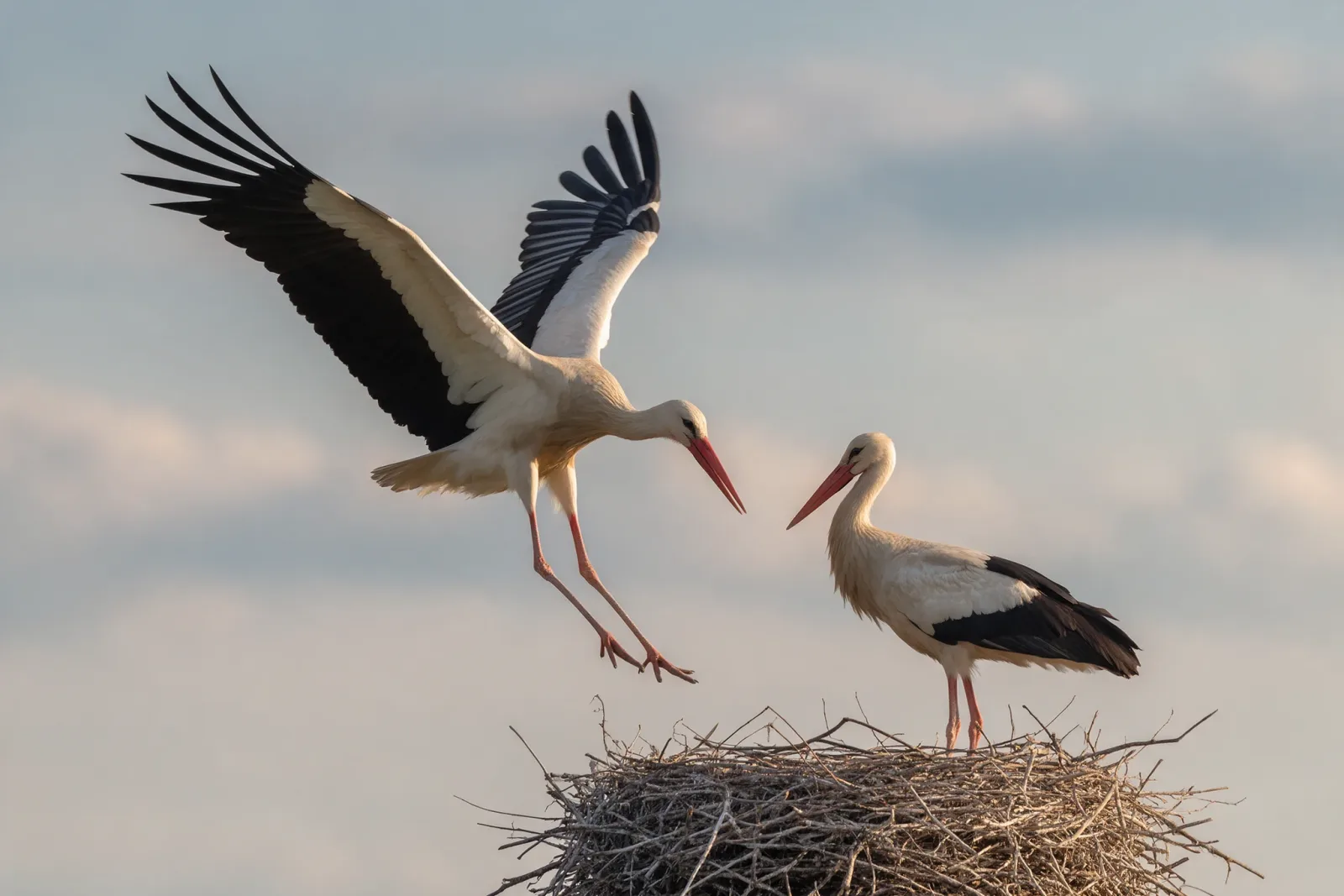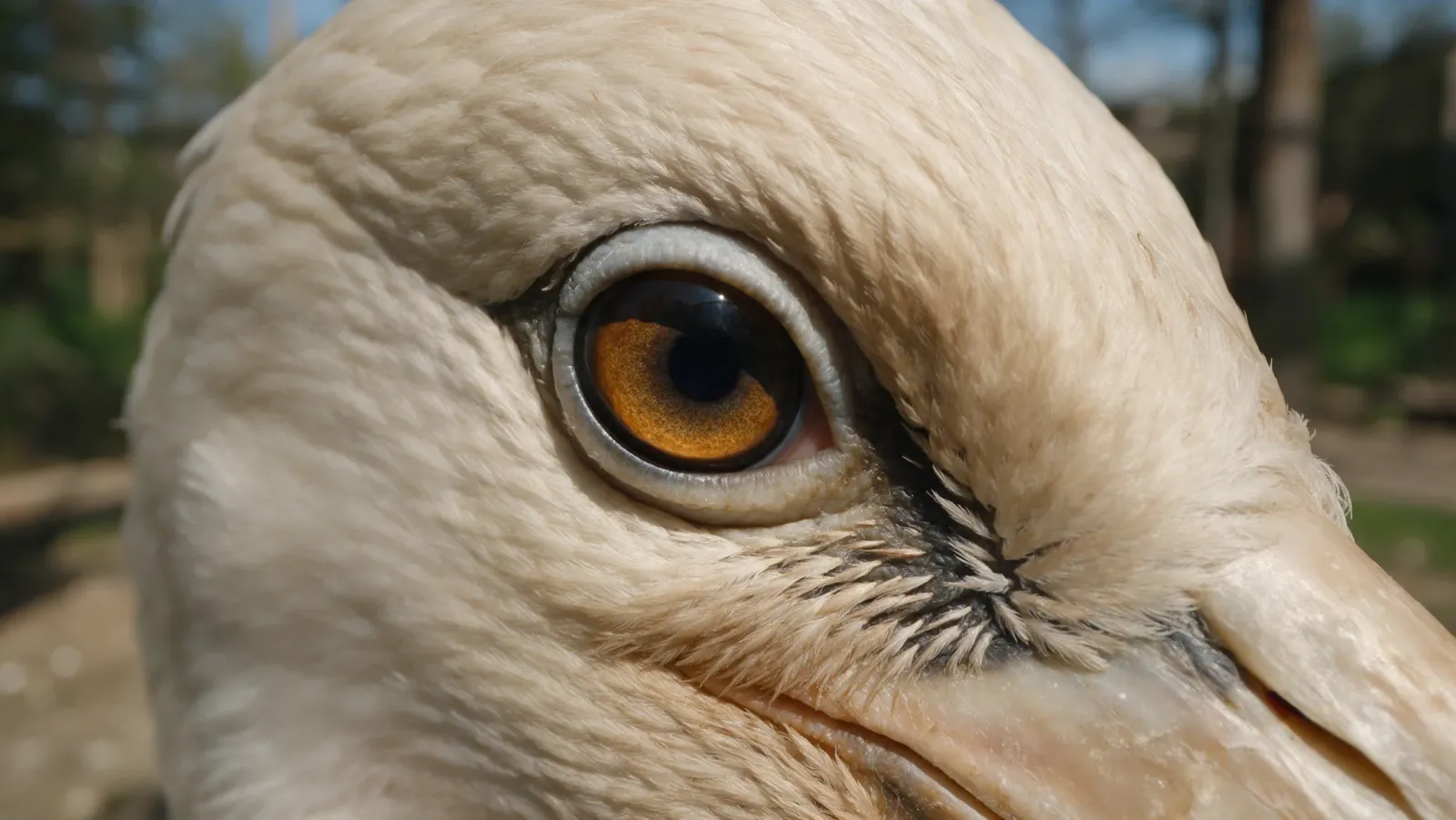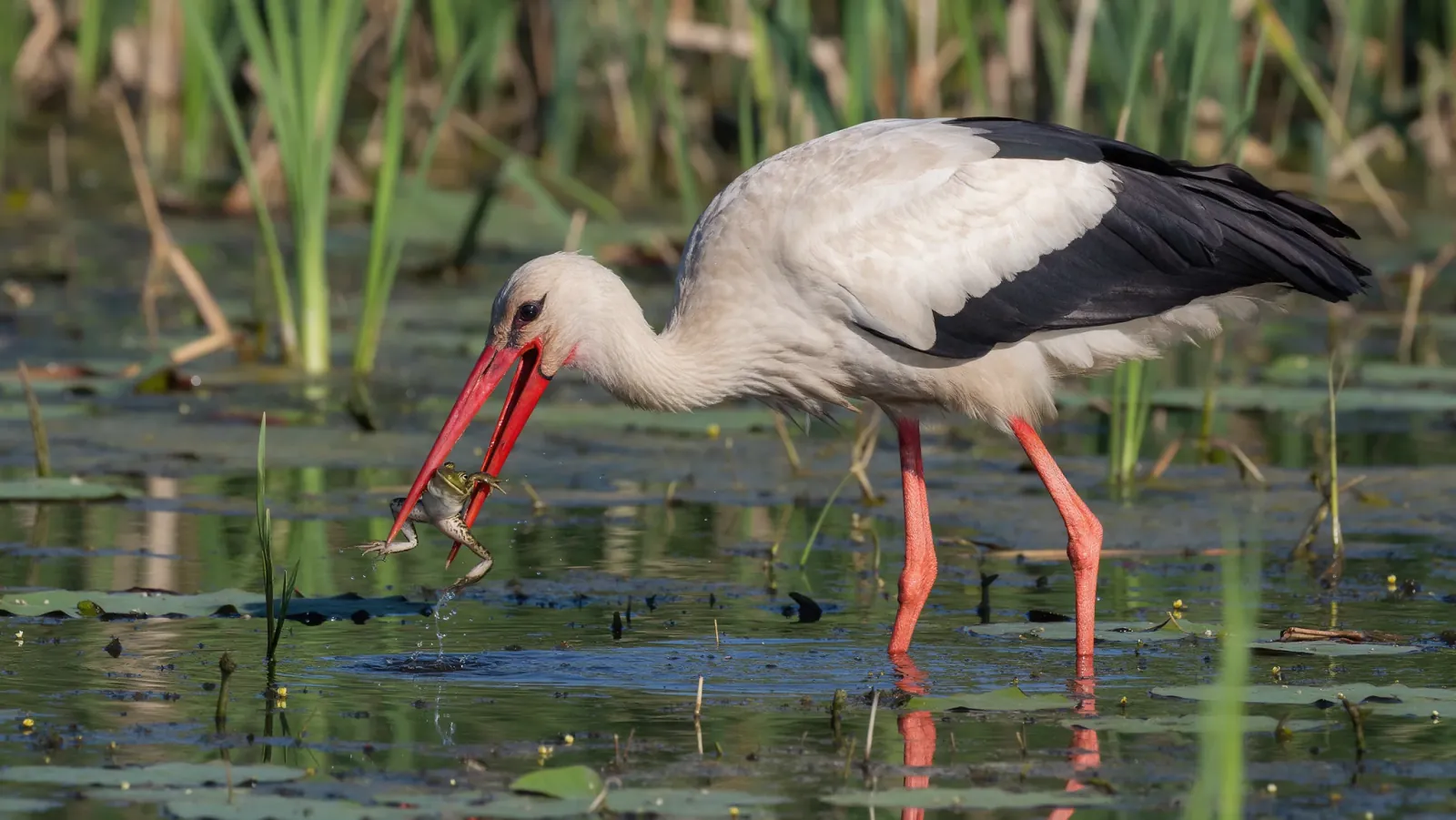
A white stork eats small things, and it eats a great many of them. Frogs and grasshoppers, earthworms and beetles, voles and little fish. Whatever crawls, hops or swims through the wet grass of a summer meadow is likely to end up in its bill. The bird swallows each catch whole and lets the stomach finish the work.
A bill that catches
The long red bill darts into grass or water, snaps shut and comes up with something alive. The stork walks slowly with its head low, watching for movement. When a frog shifts or a grasshopper lands, the bill shoots forward and the meal is over.
Food is swallowed whole. There is no chewing and no carrying away. The stork catches, tips its head back and moves on. The bill closes along its whole length, so a small, fast creature has little room to escape once the two halves meet.
The shape suits the method. A stork does not chase prey so much as reach, snap and swallow. Its long legs keep the body clear of the grass and water while the bill works, and its long neck lets the tip arrive without the bird stepping closer. The catch is a single motion repeated through the day.
The wet meadow table
Most hunting happens in wet places. Marshes, flooded fields, the shallow edges of ponds and slow rivers. Frogs hide there, insects hatch there, and earthworms rise after rain. A dry field holds far less, so the stork follows the water.
Water does more than hold food. It softens the ground so the bill can probe, and it crowds small animals into a narrow strip along the edge. That strip is where a stork spends much of its day. A wet meadow after a summer shower is a table already set.
The bird works the strip in both directions, stepping through the mud and watching the surface. A frog sitting too near the edge is caught with a quick stab. A beetle moving between stems is taken before it reaches cover.
Storks also follow the plough. Turning soil brings worms and insects to the surface, and the birds gather behind the machine. The habit is old, and it has tied storks to farmland for as long as people have worked these fields.
Swallowed whole
A frog goes down the throat still wet and lands in a stomach built for prey that arrives in one piece. There is no chewing and no slow meal. Strong acid starts on the skin at once and works into the small bones.
Because a stork eats whole animals, its stomach is used to hard things. Bone, fur, feather and the tough shell of a beetle all arrive together. The stomach is a chemical grinder, and it runs on acid. The acid is strong enough to break down skin, muscle and small bones, and enzymes take the soft tissue apart and turn it into something the bird can absorb.
A muscular stomach helps with the harder pieces. Acid softens the catch, and the muscle works it down. The two stages let a bird with no teeth deal with whole animals, shells and all. A frog that was alive a minute before is on its way to becoming stork.
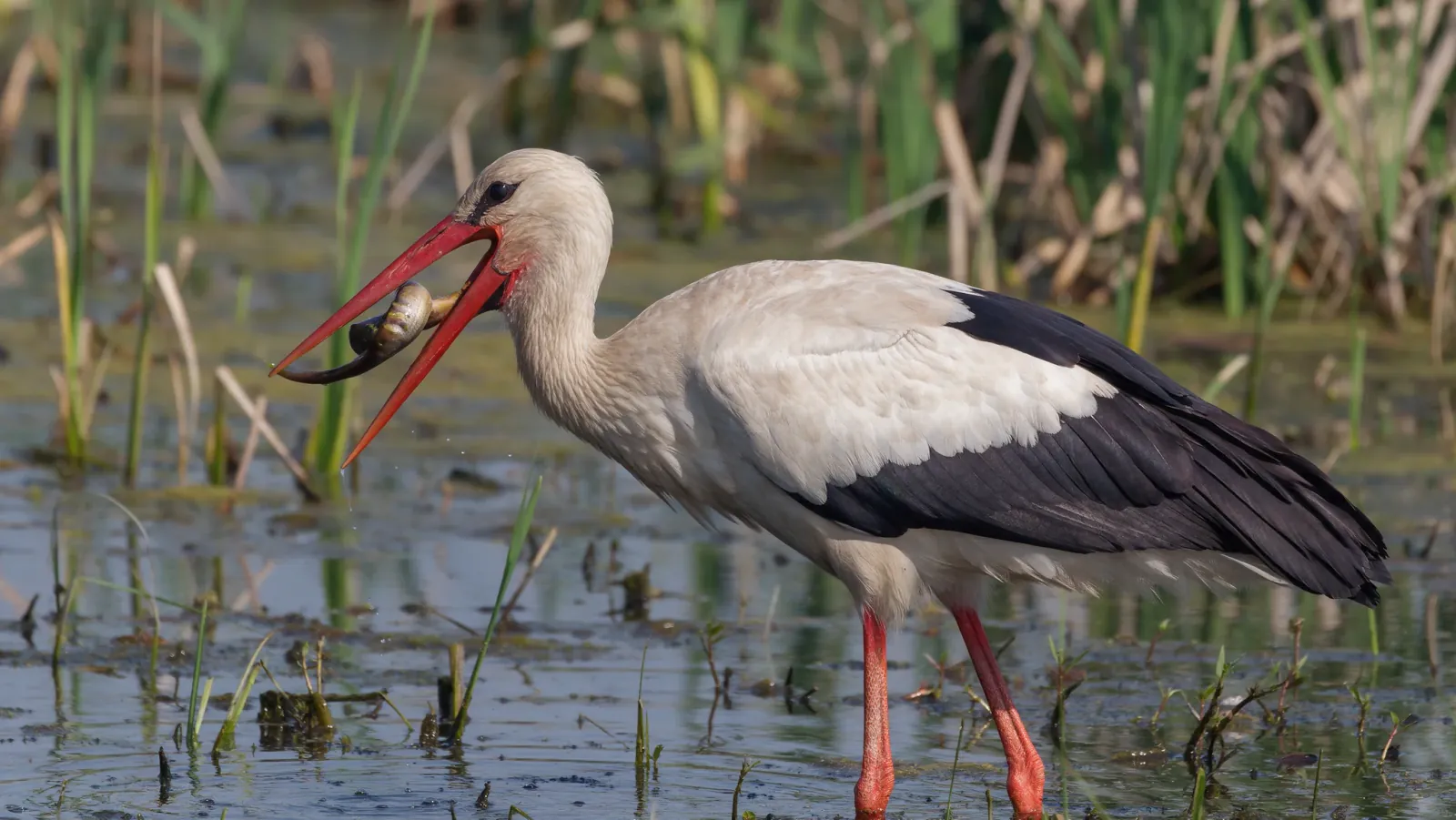
Not everything gives way. The hardest pieces of a frog, a few coarse bones, the chitin of a large insect and the hair of a vole can pass through the stomach without dissolving. The bird takes what it can use and lets the rest travel on.
Acid, muscle and the pellet
The undigested pieces gather and are pressed together into a tight pellet. The stork brings the pellet back up through its bill and drops it. It is a neat bundle of everything its food contained that the bird could not turn into itself.
A pellet on the ground beneath a nest is a small record of what the stork ate. It holds the hard parts that survived the acid, and it shows what the bird was finding in the fields around the nest.
A stork carries no stored meal in a pouch the way some birds do. Each frog is swallowed and digested as it is caught. The only carrying the bird does is for its chicks, when an adult brings food home in its throat and passes it up, soft and easy for a small bird to swallow.
The stomach is a place of work, and it stores nothing. Food moves through and becomes warmth and energy. A meal caught at noon is gone by evening, and by morning the stork is hungry again. That quick turnover suits a bird that hunts small prey all day. It never catches one large reserve, so it catches many small meals in a steady line.
A small tongue in a long bill
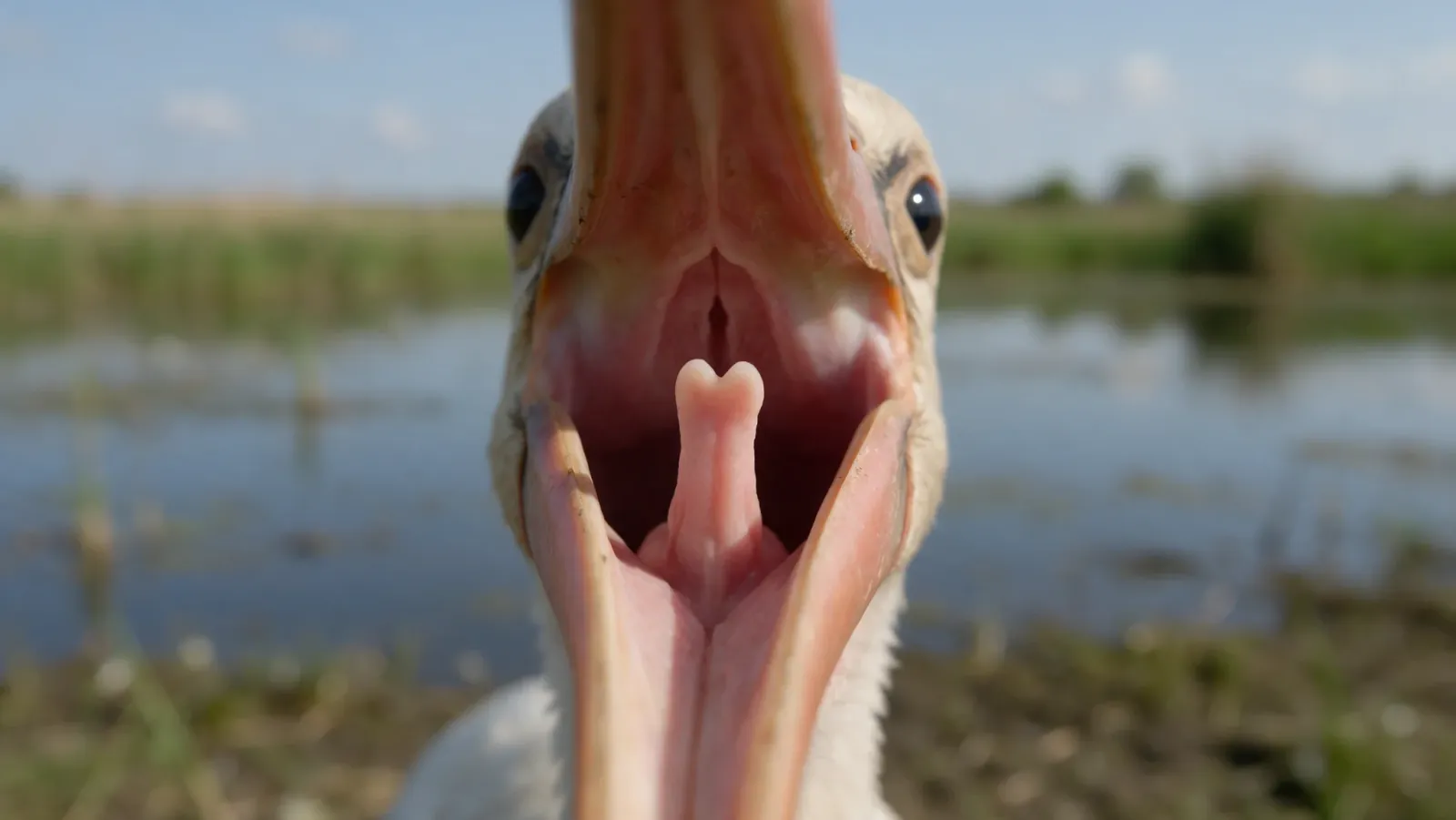
The tongue sits low inside the bill, short and narrow, and mostly keeps out of the way. It leaves room for the work the stork is built for: seizing food and swallowing it whole.
Behind the hard edges of the bill there is very little room. The tongue is short and narrow, little more than a strip of flesh along the floor of the mouth. It does not reach the tip of the bill. The stork does not move food around the way a parrot or a duck might. It catches, tips its head back and lets the food slide down. The tongue stays clear of the traffic.
A large, agile tongue would be a hindrance to a bird that swallows whole animals. A frog or a small fish needs a clear throat. The stork's small tongue leaves the passage open, and it helps guide each mouthful back while the head tips.
The tongue carries a sense of touch as well. A nestling's tongue helps it feel the food an adult lowers into its open bill. A stork also has few taste buds, and it does not choose food by flavour. It chooses by sight and by what the bill feels. The tongue is a guide for the swallow, and the meal is gone in a moment.
A different winter
In autumn the stork flies south, and its diet changes with the country. On dry African ground it takes locusts and other insects stirred up by grazing animals and by fire. The bill is the same, and the patience is the same. Only the food changes.
The frogs of a European spring and the locusts of an African dry season are far apart in every way. To a stork they are the same thing: small, common and worth catching. The bird asks little more of its food than that it moves.
A stork that eats many things rarely goes hungry for long. It can follow the rain, the insects and the frogs, and find a meal somewhere. A specialist would need its one food present every day. A stork needs only that something small is moving in the grass. The diet is broad because the bird travels broad.
The catch is often shared. Adults bring food back to the nest and tip it out for the chicks, and the young birds take it from the floor of the nest. A wet season means more frogs, more insects and more food for a growing brood. Two adults must bring enough for themselves and for several young, and the hunting day stretches from first light to dusk.
A stork's year is a long succession of small meals. A good day ends with a full stomach, and the next morning begins the same search.
Explore the gift