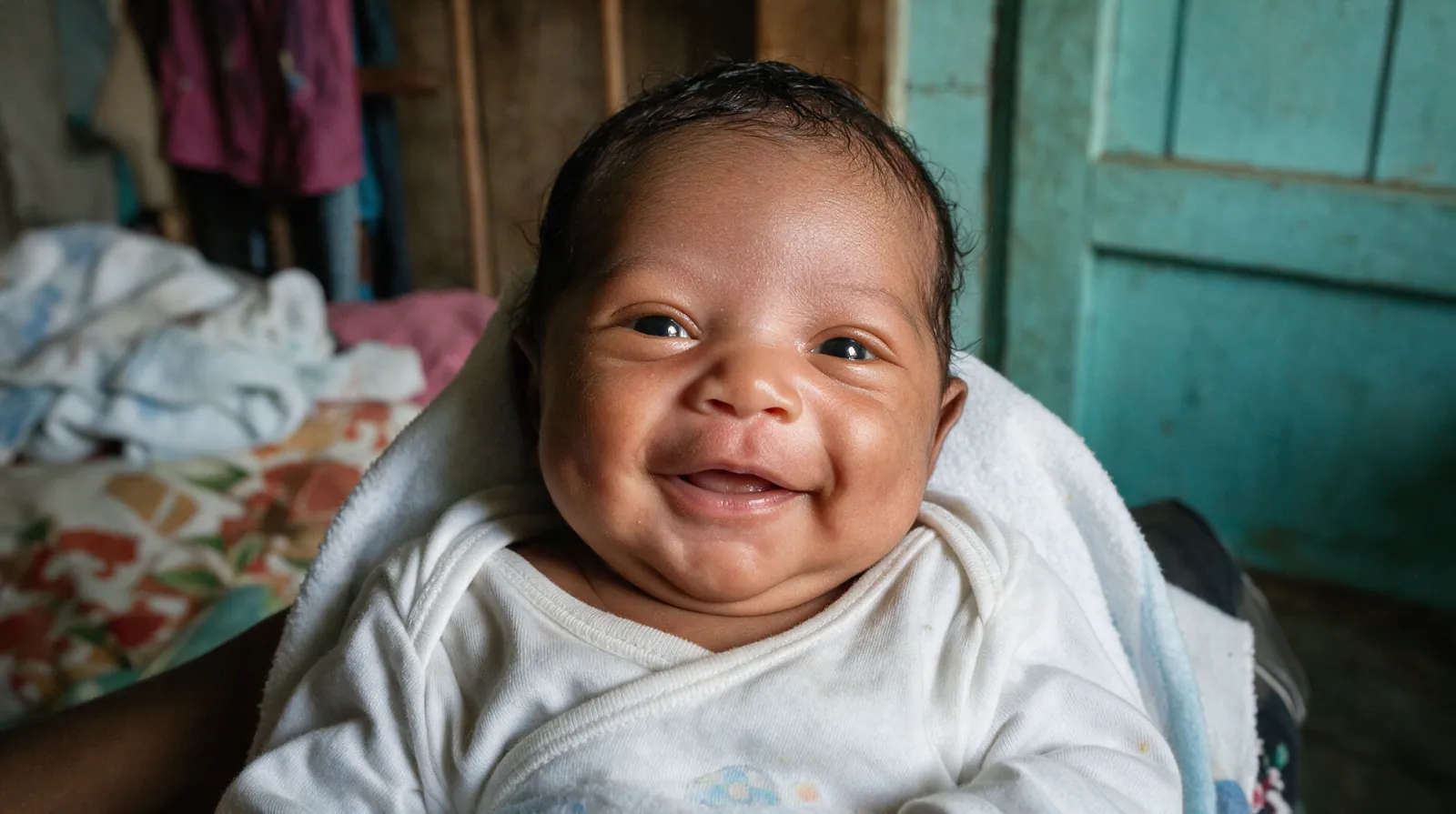
When the baby smiles for the first time, you will not be sure it happened. Then it will happen again, and you will be sure. Somewhere around six weeks, the smile arrives while the baby is awake and looking at your face. That one is aimed.
The reflex and the real one
In the first weeks a sleeping baby will sometimes smile, and it means nothing except that the nervous system is firing. A newborn smile is a reflex, and it is not aimed at you. You can tell the difference by the eyes. A reflex smile comes and goes in sleep. A real smile involves the eyes and stays for a second, waiting for an answer.
The social smile is the first deliberate act of communication. It says: I know you, and I am glad you are here. It is also the beginning of a conversation that will run for the rest of your life.
You will do ridiculous things to get another one. Silly faces, high voices, a scarf over your head. All of it is allowed. The first one may happen at the changing mat, which is unglamorous and fitting. Nappy changes are face to face, close, and repeated many times a day.
The name said plainly
You will say the name before the baby knows it is a name. In the first weeks it is a sound you make while doing something else: nappy, bottle, cot. The baby hears the sound and the tone together. Meaning arrives slowly. Somewhere in the first months the baby will turn its head when you say it, and you will feel the word land.
Say the name while you feed, while you change, while you walk. Repetition is how a sound becomes a fact. Use the name often, and in full. A name said clearly and warmly is the first lesson in being addressed. Nicknames can come later, and they will. If the name is long, the child will shorten it eventually. For now, say the whole thing. If the name came from somewhere, tell that story too: a grandmother, a book, a place you walked before the baby was born.
The name will be said in every register: the cheerful one at the door, the tired one at three in the morning, the sharp one when the baby has bitten you. A name carries the whole household in it. Try not to let the name become only a warning. For every sharp no, there should be several ordinary uses, said kindly.
One day the child will say its own name, and it will be wrong, and you will not correct it. Write the mispronunciation down. It will not last long, and you will want it later.
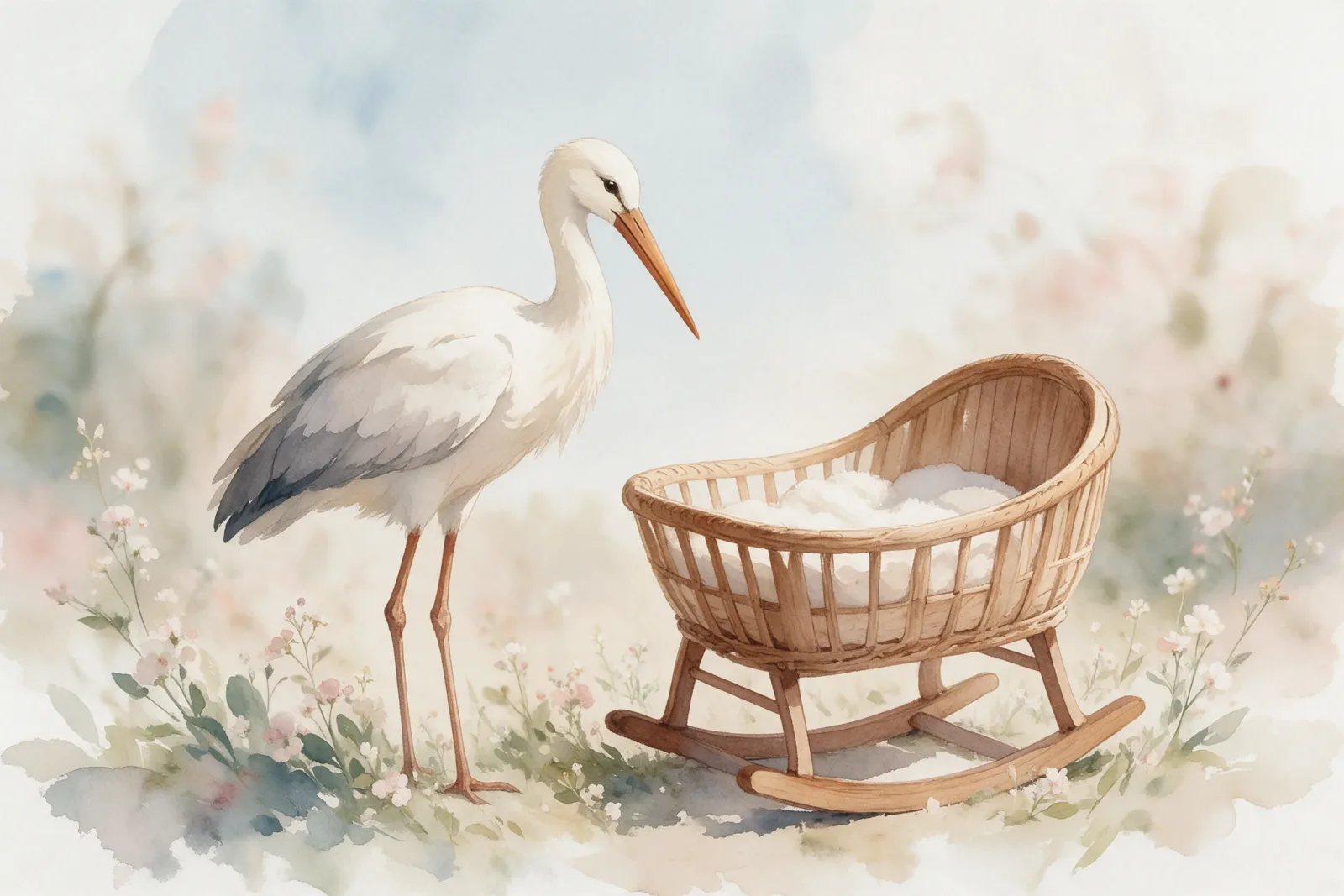
Some families tell the child the story of the stork that brought it, a white bird on a roof, a bundle in the beak. The story is old and not true, and it is a way of saying you were expected. That is true, whatever the bird did.
The first meeting
The sibling who just became one did not choose the job. One morning there was a baby in the house, and the child who was here first became a person with a role. Talk about the baby before it arrives, in plain terms. A child who has been told what to expect copes better with what happens. Show the cot, the pram, the tiny clothes. Let the child touch them.
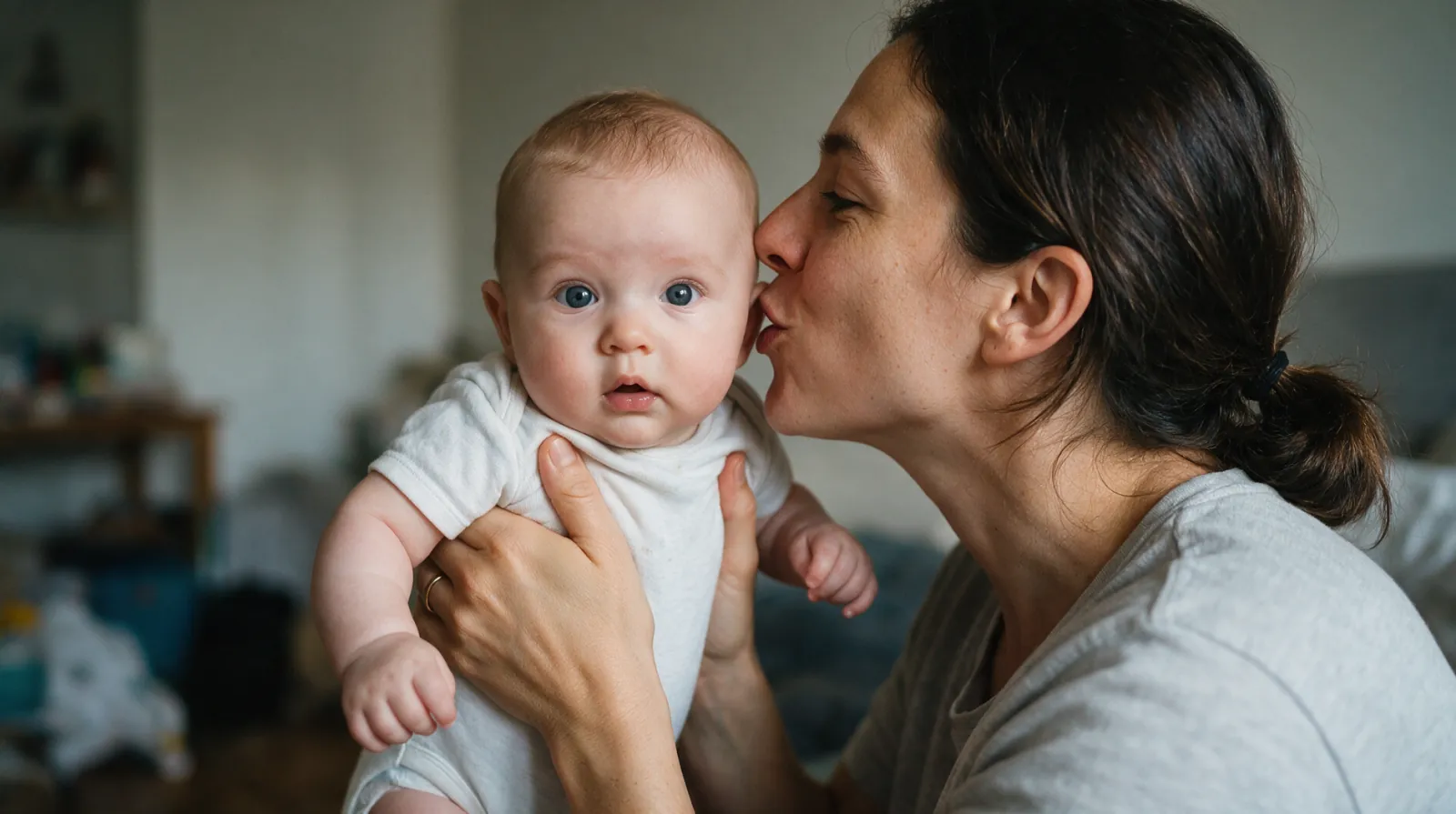
Keep the first meeting short and calm. Let the older child come to the baby. Sit down with the baby and let the child approach, look, and leave if it wants. Do not ask for a kiss. Do not say the baby loves it. Give the child room to be unimpressed. Unimpressed is a normal first reaction, and it passes.
Have someone else hold the baby when the child arrives. Coming into a room to see a parent holding a newborn is a hard first image. Avoid promising that nothing will change. Everything will change, and the child will notice. Promise something truer: there will still be a story at bedtime, and I will still come when you call.
Ten minutes a day
Regression is ordinary. A child who was dry may wet again. A child who slept may start waking. The behaviour is asking a question: am I still yours? Answer it directly. Ten minutes of undivided attention does more than an hour of distracted togetherness. Say the true thing out loud: you are still my child, and I am not going anywhere.
Pick a time that belongs to the older child alone. Bath time, a walk, a book. Ten minutes of full attention, every day, is worth more than a whole afternoon of half attention. Let the child choose the activity. Let it be boring. The message is simple: this part of the day is yours, and the baby is not invited.
Expect it to be worse at bedtime. The day is over and the competition for attention is sharpest then. Plan for extra patience at exactly that hour. If a day goes wrong, start again the next day. The ten minutes are a practice, and practices survive missed days.
The face that is the whole world
For a newborn, one face is the whole of company. A baby's universe is small, and you are most of it. That is the whole known world: a face, a voice, a pair of arms. Everything else is weather.
This is why you can be exhausted and still be the only thing that works. This is also why a baby can be perfectly happy on a lap for an hour, and miserable in a room full of toys. The lap is the world. The toys are decoration.
Your face is being studied all day. A baby learns expressions by watching yours. This is also why your mood travels. A baby will pick up tension before it understands a word. Keep the room calm where you can, and repair it out loud when you cannot.
Being everything is a heavy job, and nobody should do it alone. A baby needs one reliable person, and that person needs other adults. Take the help. Let someone hold the baby while you sleep, or walk it around the block while you sit in a quiet room.
The world widens
At some point you will leave the room and the baby will cry. That cry is a milestone. It is a good sign, even when it is hard to hear. Short separations, with a return, teach the lesson that matters: people go, and people come back. Start with a minute, then five. Do not sneak out. Say goodbye, even to a baby who cannot answer. The return is the lesson, and a goodbye makes the return visible.
The world will widen on its own. A grandparent, a childminder, a friend, a nursery. Each new person takes a piece of the job. You will feel both relieved and sidelined, sometimes in the same hour.
One day you will hear the siblings laughing in another room, and you will not know what the joke is. The sibling relationship is the longest one in the family, and it starts here. It will include jealousy and affection, sometimes in the same hour.
By three months the baby will smile at almost anyone, which is charming and slightly insulting. The smile will narrow later to the people who are there every day. One day it will smile at you across a room, and you will feel the whole first year in it.
Explore the gift