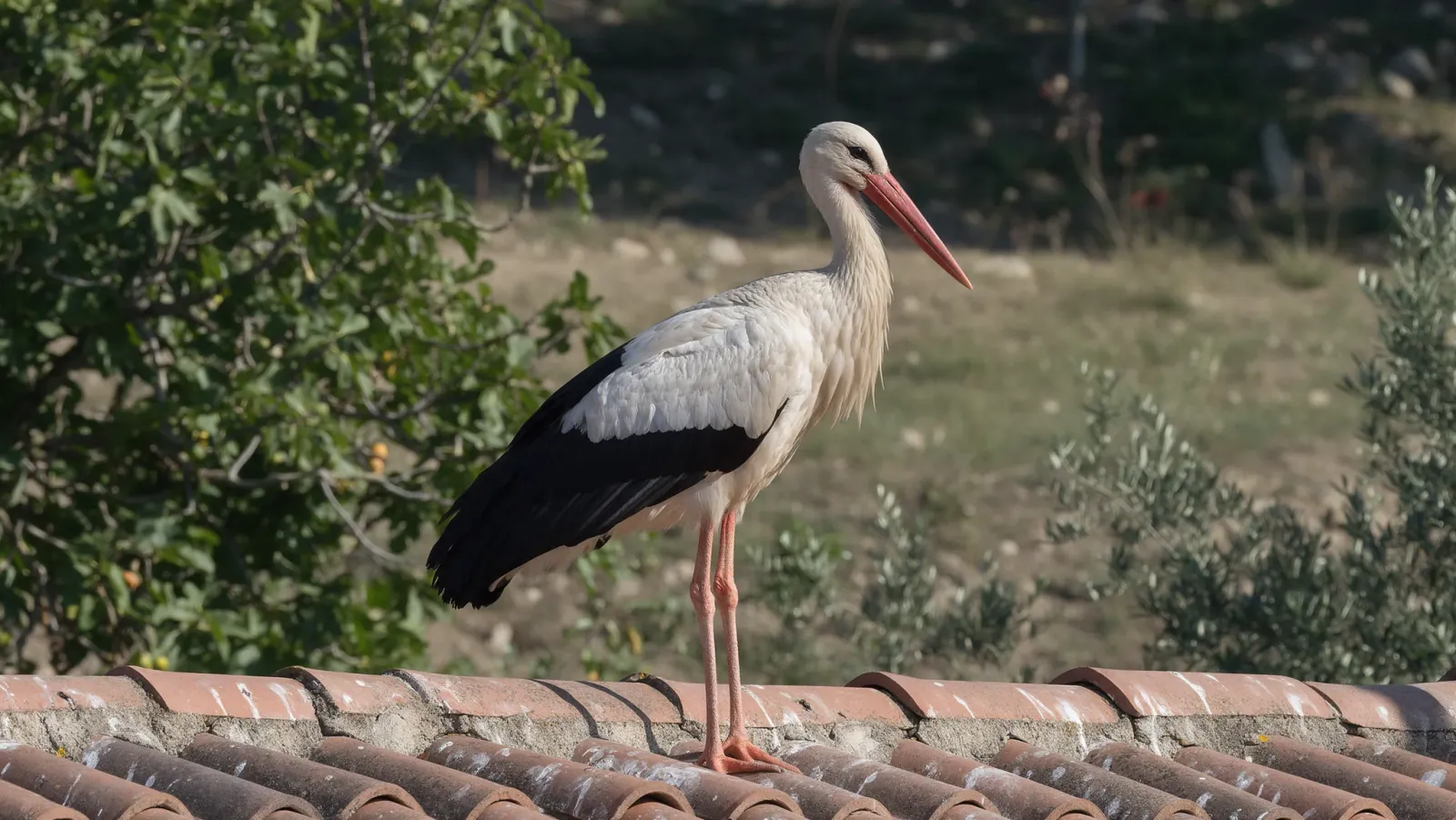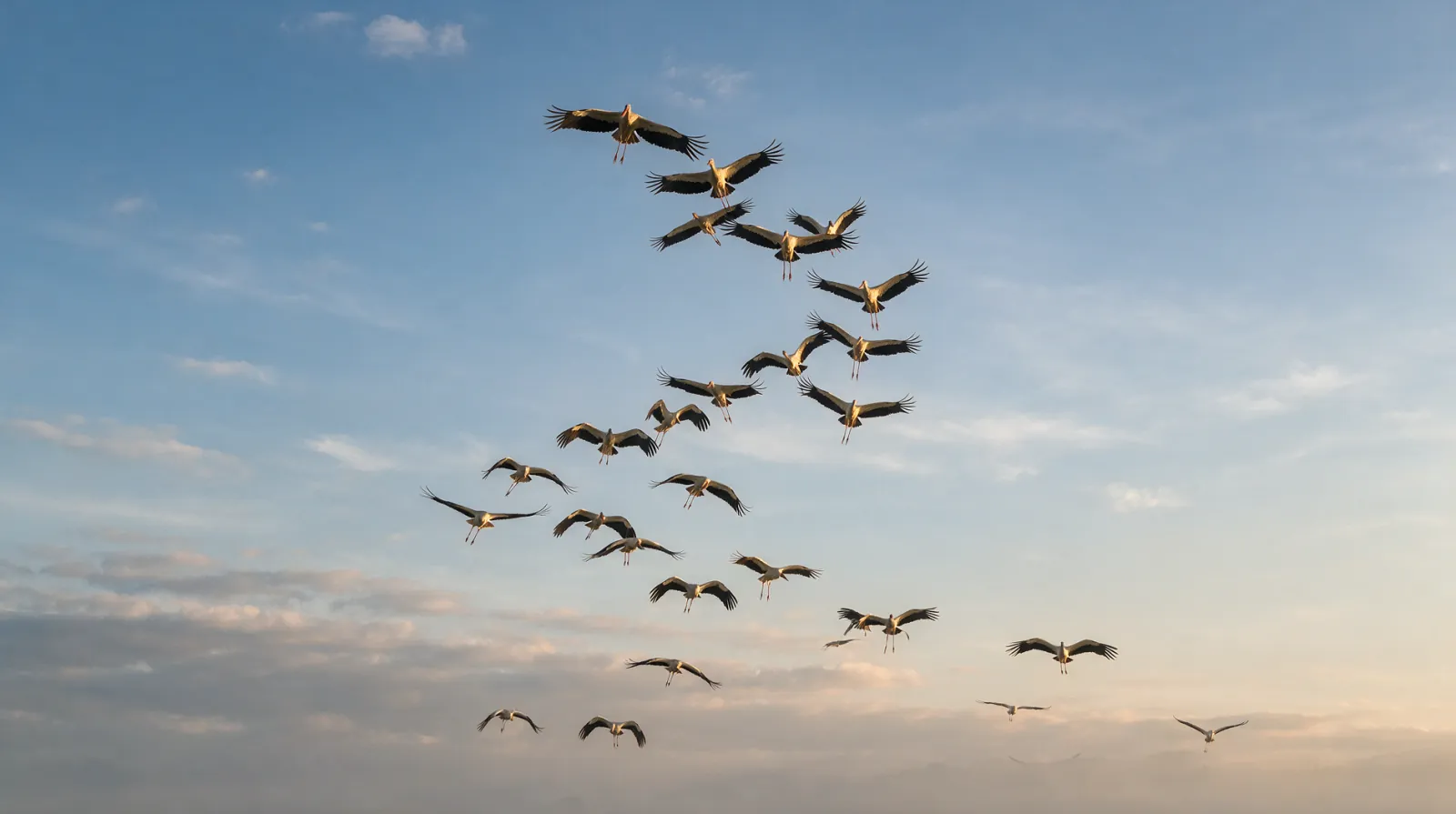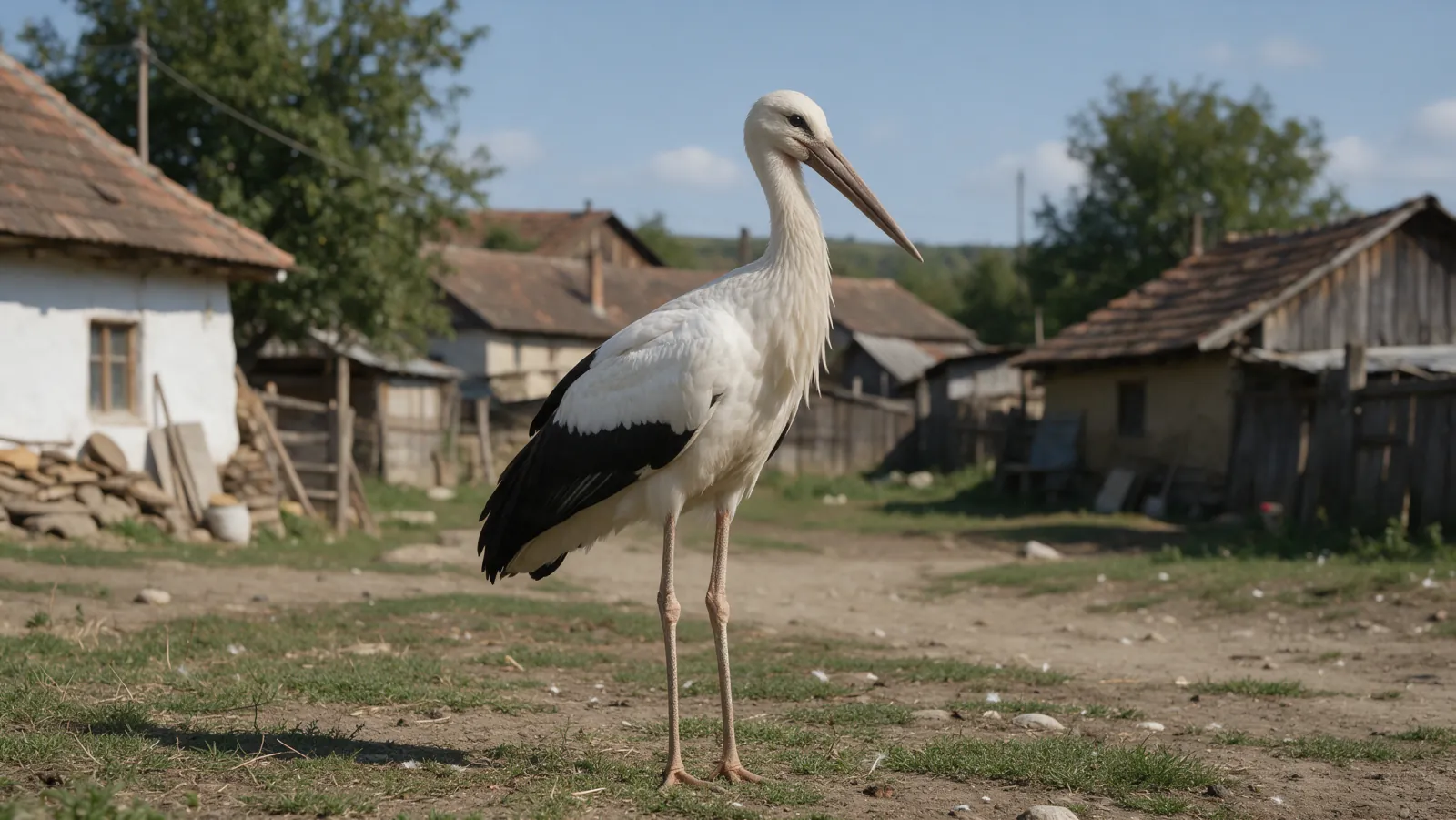
A village with storks on the roofs is usually a village with a particular kind of farming, and that farming supports far more than storks. Old barns, ponds, hedges, wet meadows and unpaved yards hold a range of plants and animals that a modern settlement loses. The stork is the most visible tenant, and the rest is there for the same reasons.
Roofs and eaves
A stork platform is heavy, high and permanent, and it attracts neighbours. House sparrows nest in the sides of the nest, swallows and martins build under the eaves below it, and bats roost in the roof spaces of old buildings. These species need holes and ledges that modern construction seals. A village that repairs its roofs without blocking the gaps keeps its summer birds. The stork nest is the largest of those ledges, and the smaller birds use it as a foothold. The stork is the largest tenant, and the smaller birds use its bulk as cover. A row of old roofs with gaps and tiles holds more than a row of new ones, and the difference is measured in bird calls on a June evening.
The nest as property
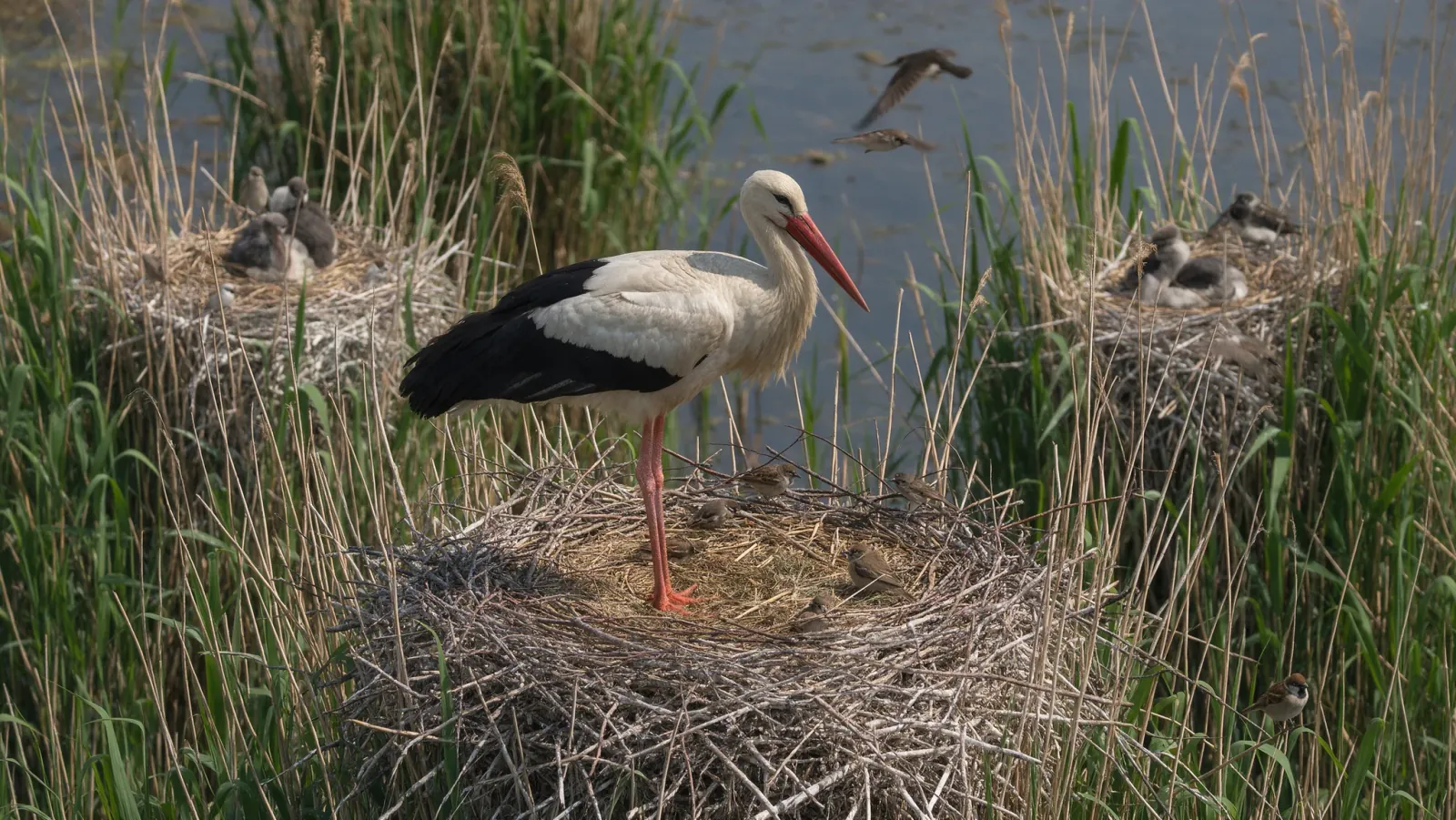
A stork nest is valuable because it is big, high and permanent. It is a metre across, made of sticks and lined with grass, and it stays in place for years. House sparrows tunnel into the sides and line the interior with feathers, and several pairs can share one stork nest without troubling the owners. Starlings use the gaps. A stork nest is a block of flats with a very large landlord, and the tenants move in as soon as the sticks are in place.
An abandoned stork nest is a platform for a kestrel, and sometimes for a long-eared owl or a barn owl if the site suits. Kestrels hover over the fields and need a high ledge for a nest, and a stork platform provides one without the bird having to build. Old nests are part of the village's stock of nesting places. Jackdaws are cavity nesters and will sometimes take over a stork nest, filling it with sticks and twigs. The storks usually win, because they are larger, but a pair arriving late can find its nest occupied. The competition is part of the life of a long-lived structure. A nest is worth fighting for because good sites are scarce, and every spring the birds renegotiate who holds the roof. Some nests hold sparrows even in winter.
Barns, orchards and dead wood
Barns hold owls, and old orchard trees hold hole-nesting birds, lichens and insects. A row of pollarded willows or an ancient oak at the edge of the village can hold a remarkable range of species. Dead wood is part of it: beetles and fungi need standing dead trees, and woodpeckers need the holes they leave. A tidy village with no old trees and no dead wood is a village with fewer birds, however neat it looks. Dead wood is a habitat with a schedule, and each stage of decay supports a different set of species. An orchard left unsprayed and unpruned is a different place from a tidy one, and the difference shows in the insects and the birds that eat them.
Ponds, ditches and verges
The pond at the edge of the village, the ditch along the lane, the wet hollow that never quite dries: these are the small waters that link the village to the marsh. They hold frogs, newts, dragonflies and water plants. A pond shaded by trees and stocked with fish loses much of that. One with a sunny edge and some open water keeps it. Small waters matter out of proportion to their size, because they are close together and animals can move between them. The wet hollow that never quite dries is often the most important water in the village, because it holds tadpoles after the ditches have gone. A village pond with a soft bank and no carp is a nursery for frogs and newts.
Villages are joined by verges, hedges and ditches, and these thin strips are the routes that wildlife uses to move between one good place and another. A hedge with a rough bottom, a verge cut once in late summer and a ditch left wet can link a pond to a meadow and a meadow to a wood. A village's biodiversity depends on the connections as much as the patches. When every verge is flailed to the ground and every hedge is trimmed flat, the small places survive in isolation.
Droppings and the ground below
A nest produces a steady rain of droppings, food scraps and feathers. Below it, the grass grows darker and taller, and insects gather on what falls. The soil under an old nest is richer than the field around it. This is a small effect, but it is the same one that makes seabird islands green. A stork colony writes its presence into the ground under the nests, and the writing lasts as long as the platform does. The effect is small, and it lasts as long as the nest does.
A bird that weighs three or four kilos and walks the same bank every morning leaves a path. The grass is pressed down, the mud is broken, and small pools form in the footprints. Those pools hold water after rain and give tadpoles and insect larvae a place to live. A stork's routine creates wet micro-habitats along the edge of a ditch, and other birds use them.
What removal costs
Removing a stork nest is usually done for roof repairs, and it removes more than a pile of sticks. The sparrows lose their nesting place, the swallows lose a perch, and the platform that might have held a kestrel is gone. Rebuilding a nest takes years, and storks often abandon a site after a disturbance. Keeping the platform and working around it is usually cheaper than losing it. A roof with a stork on it needs maintenance, and it also holds a whole community of smaller birds that have nowhere else to go.
A village without storks has usually lost the wet fields that fed them, and the other species that used those fields go with them. Keeping the nest is easy. Keeping the fields is the work, and the stork is the sign that the work is being done.
A bird that keeps ground open
The stork needs short grass, shallow water and a clear view, and it returns to places that stay that way. Grazing animals and people with scythes kept those places open for centuries, and the bird followed the farming. When grazing stops and the meadow grows up, the stork leaves. The bird depends on whoever keeps the ground open, whether cattle or a mower. That is why a stork village is a farming village, and why the roofs empty when the fields go quiet. A mower can do some of that work, and a herd adds dung, flies and hoof prints. Where the fields are converted to maize or cut early, the birds lose their larder and the village loses its storks.
Explore the gift