Every autumn, white storks leave Europe for Africa, and every autumn insects make journeys of their own. Some dragonflies cross seas, some moths travel hundreds of kilometres at night, and the air is full of small bodies moving south. The two kinds of traveller use different methods and the same weather. Both need places to stop, and a marsh is the best place either of them can find.
Two kinds of traveller
A stork is a glider. It circles in a thermal until it reaches the top, then slides forward to the next rising air, losing height slowly. This is efficient and it depends on sun-warmed ground. A dragonfly or moth is a powered flyer, and many insects use tailwinds to move long distances. The bird uses the air's lift; the insect uses the air's push. On a warm autumn day both can be moving over the same plain, at different heights, for the same reason: the season is ending. A stork can travel a long way on rising air, and an insect can hold its course only while the wind allows.
Thermals and the shape of land
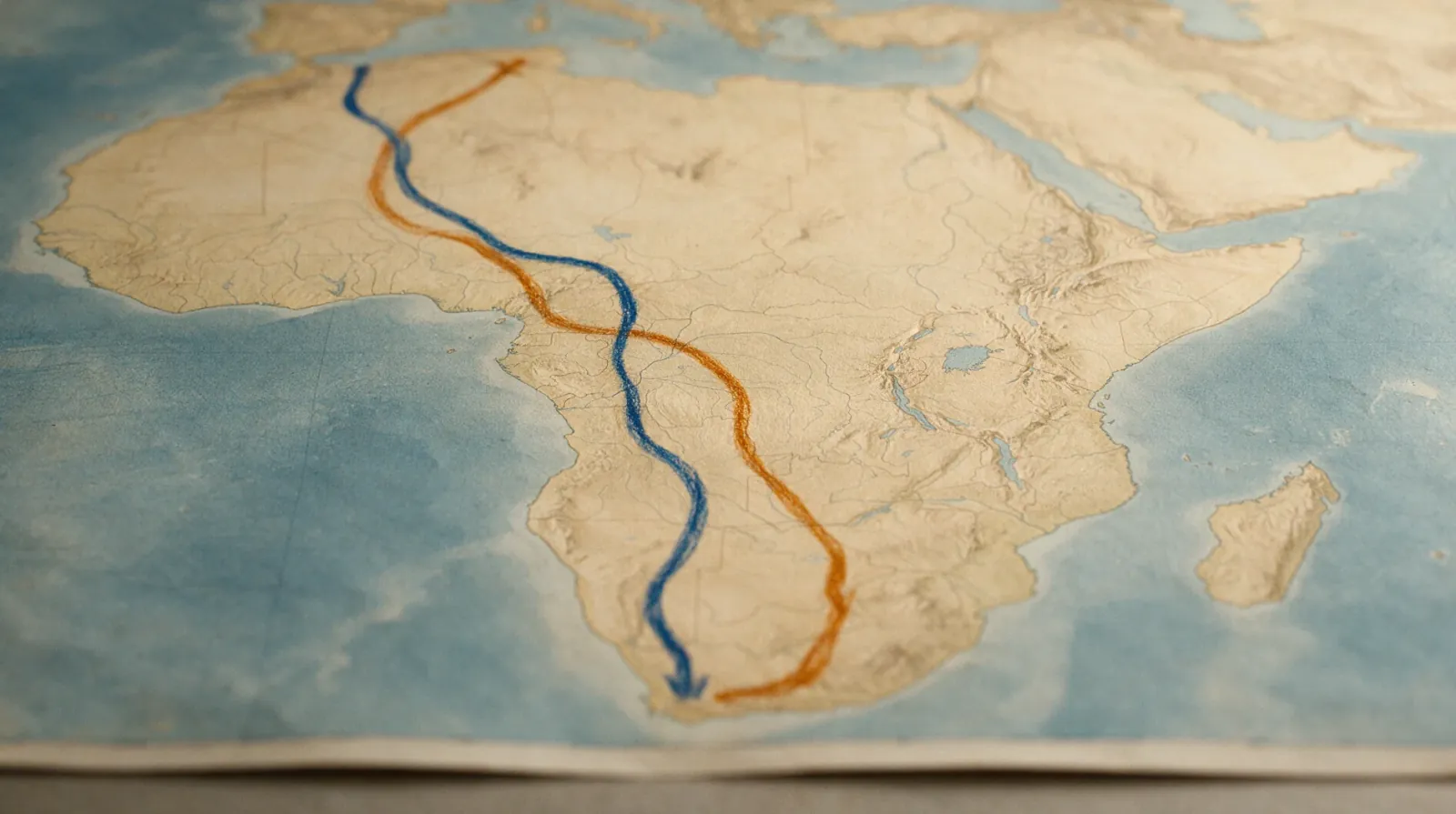
Thermals form over ground that heats quickly: ploughed fields, dry grassland, rock. Storks seek them out and avoid large stretches of cold water, which is why they cross the Mediterranean at narrow straits rather than over the open sea. Migration follows the land, and the land's shape decides the route. Insects are less constrained, though many also follow coastlines and valleys. Both travellers end up funnelled through the same few places, and those places are worth protecting.
Wetlands as service stations
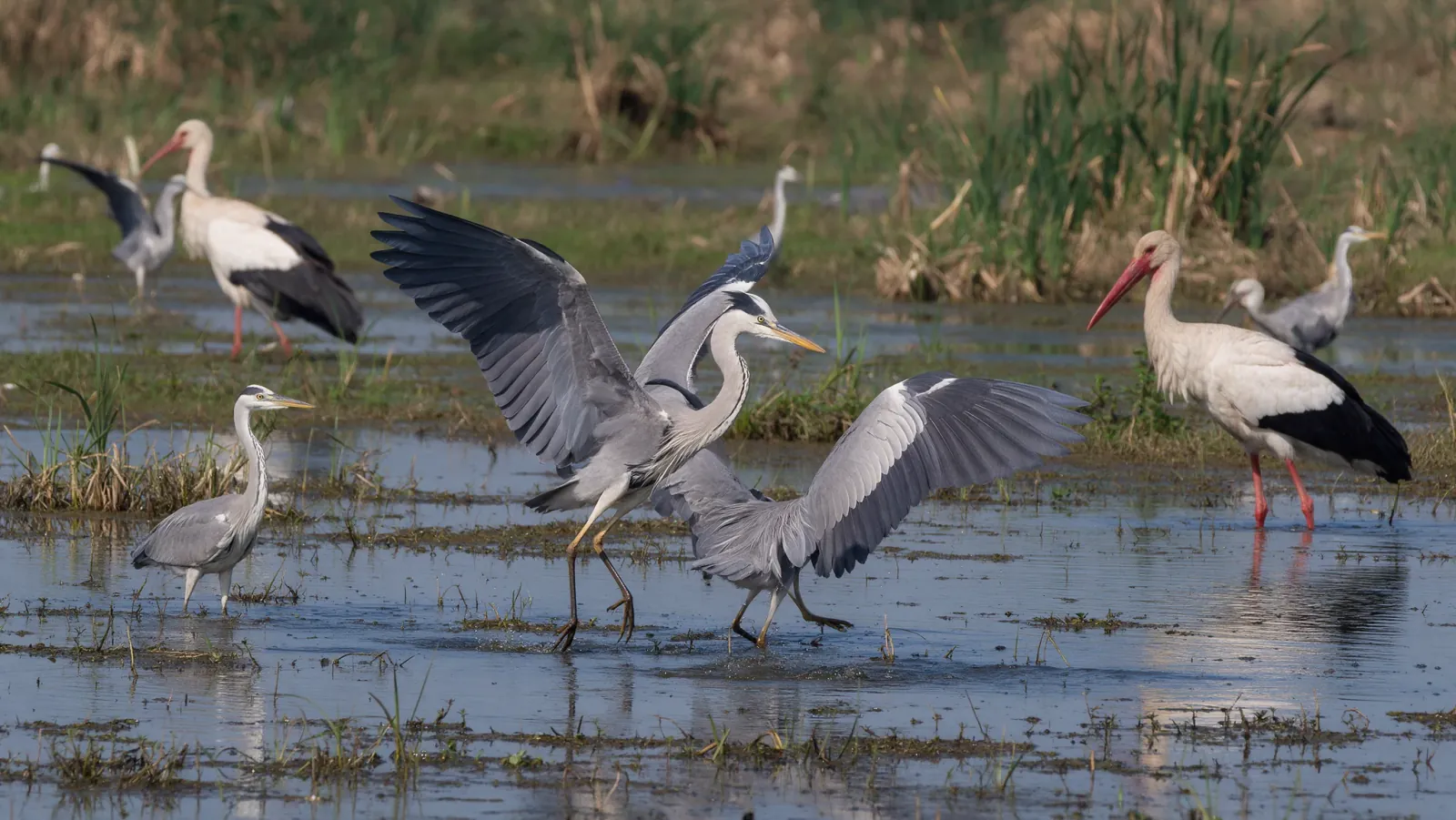
A migrating stork needs food and rest, and a marsh provides both. After a long flight the bird lands in shallow water and hunts frogs and insects for a day or two before moving on. Insects also gather at wetlands, both to feed and to shelter from wind. A chain of wetlands along a migration route works like a series of service stations, and losing one makes the next stage harder. This is why conservation of storks depends on places far from the nest. A marsh that has been drained is a stage removed, and the next flight is longer.
Storks eat insects during migration, in the air as well as on the ground. Swarming insects can be caught in flight, and a flock of storks will sometimes feed on aerial insects over a field. The birds also follow ploughs and grass fires, taking what is exposed. The migrating stork is an opportunist in a hurry, and it will eat whatever the country offers.
The Sahara
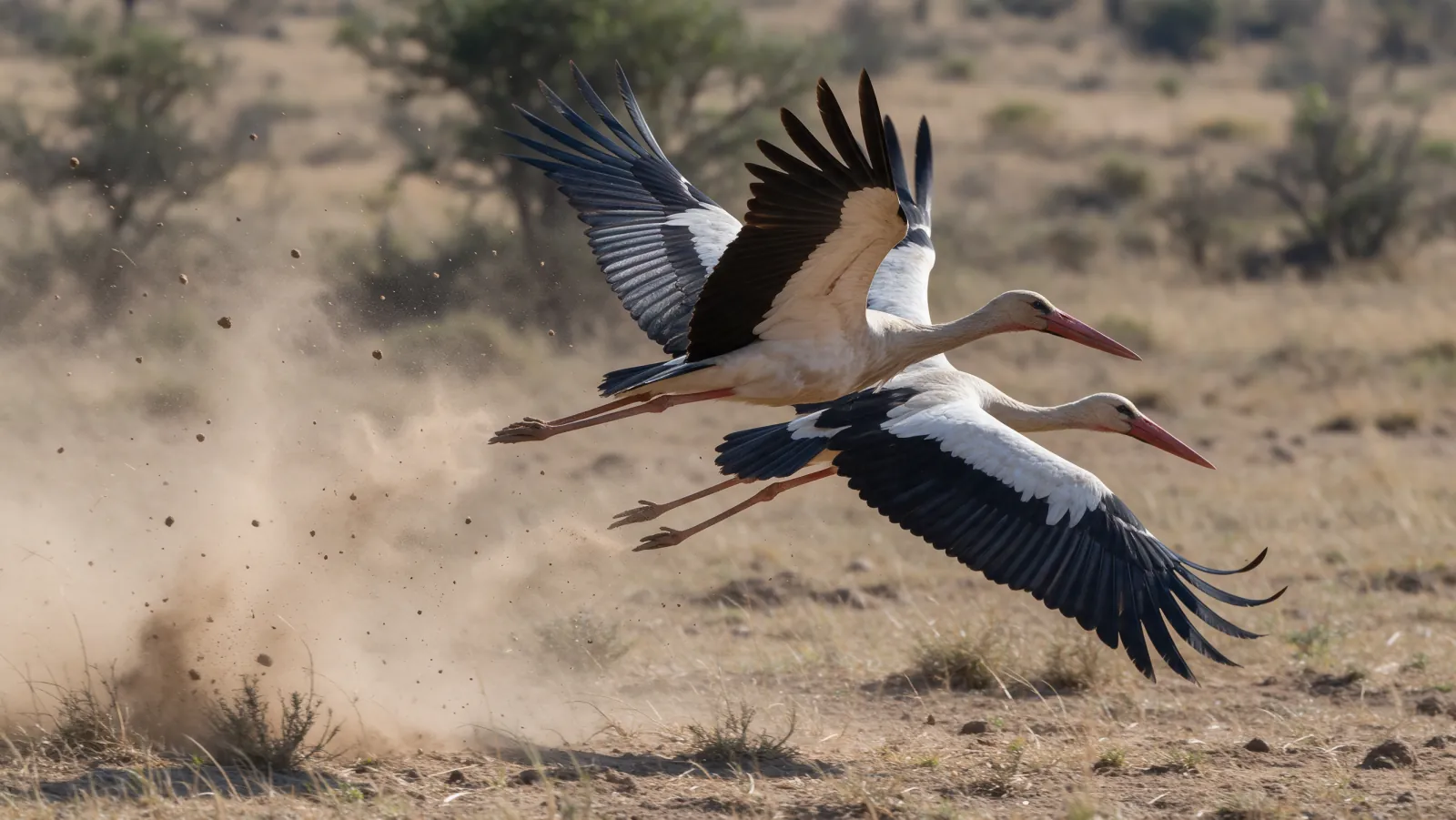
A few days of hard flying over sand, usually on a broad front, need fat reserves and favourable winds. Insects cross the desert too, some at high altitude on the wind, and many die on the way. The desert is a filter for both, and the birds that survive it are the ones that left in good condition. A stork that leaves the European marshes in poor condition has little margin over the sand. A stork that fed well on European wetlands in August has a better chance in September.
The winter savanna
In winter the white stork is a different bird in a different country. It stands in dry grass on the savanna, often in loose flocks, and it feeds on whatever the season offers: grasshoppers, termites, frogs, small rodents and carrion. The Sahel and the savannas south of the Sahara are dry for much of the year, and the storks follow the rain. When a storm passes, the ground comes alive, and the birds gather where the water has fallen. They also use farmland, grassland and the edges of lakes. The stork's winter range is broad because its food is scattered, and a flock may move many times in a season.
At night the storks gather in trees, on cliffs or on open ground, sometimes in large numbers. A roost is a place to digest and to be safe, and the birds leave it in the morning in loose groups. Flocks form and break up through the winter, and a bird may move hundreds of kilometres between roosts. The flock is the stork's winter unit, and it is also how the bird finds food, because a landing flock draws others.
Fire, herds and the winter larder
Grass fires are common in the dry season, and storks are drawn to them. The flames clear the tall grass, and insects and small animals flee or are exposed. A stork walking the blackened ground can pick up grasshoppers and beetles that had been hidden. Birds follow fire lines for the same reason they follow a mower in Europe: the cover is gone and the food is in the open.
Grazing animals do the same work as fire, keeping grass short and disturbing insects. Storks follow cattle, antelope and camels, and they take the insects that rise around them. Termite swarms are another seasonal food, appearing after rain and providing a rich, brief meal. The winter diet is a mirror of the summer one: insects first, then frogs and small vertebrates when the water allows.
The cuckoo on the same calendar
The cuckoo and the white stork arrive in Europe within weeks of each other, from the same continent, to do very different things. The cuckoo usually arrives in April, and its call is one of the first signs that the season has turned. Storks often arrive earlier, and the birds that wintered in Africa return to the same nests to repair them. Both are responding to the same things: day length, warmth and the insects that follow. A cold spring delays the insects and the birds together, which is why the two arrivals can vary by weeks from year to year.
The female cuckoo lays her egg in another bird's nest, often a reed warbler's, and leaves the foster parents to raise the chick. Both birds leave Europe in autumn, and both winter in Africa, but they do not share the same places. White storks spread across savanna and farmland, often in flocks. Cuckoos winter in woodland and thicket, and many of them move further south. The two migrants use the same continent in different ways, and that is why the loss of a stopover or a wintering area affects them differently.
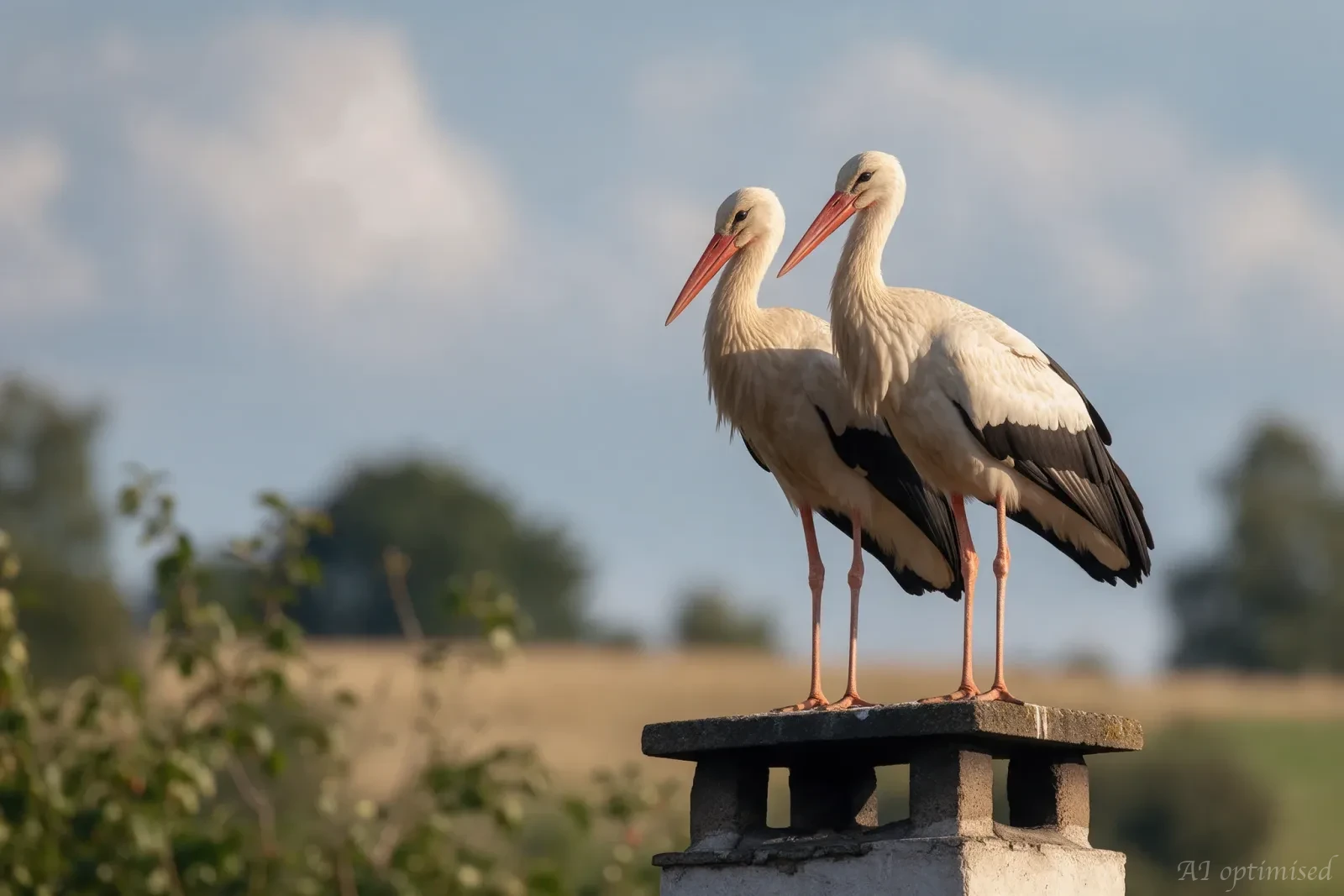
The return north begins in late winter, and the birds arrive on their breeding grounds from February onward. The timing depends on the weather and the condition of the bird. A stork that fed well in Africa can afford to leave earlier and claim the best nest. The winter and the breeding season are one cycle, joined by the flight. A poor winter shows up as a late arrival and a smaller clutch.
The cuckoo is declining across much of Europe, and the stork has recovered in some regions while remaining scarce in others. Both depend on a spring with insects and a countryside that has not been simplified. The cuckoo's call and the stork's rattle are both measures of how the season is going. When one goes quiet, the other is usually in trouble too.
Explore the gift