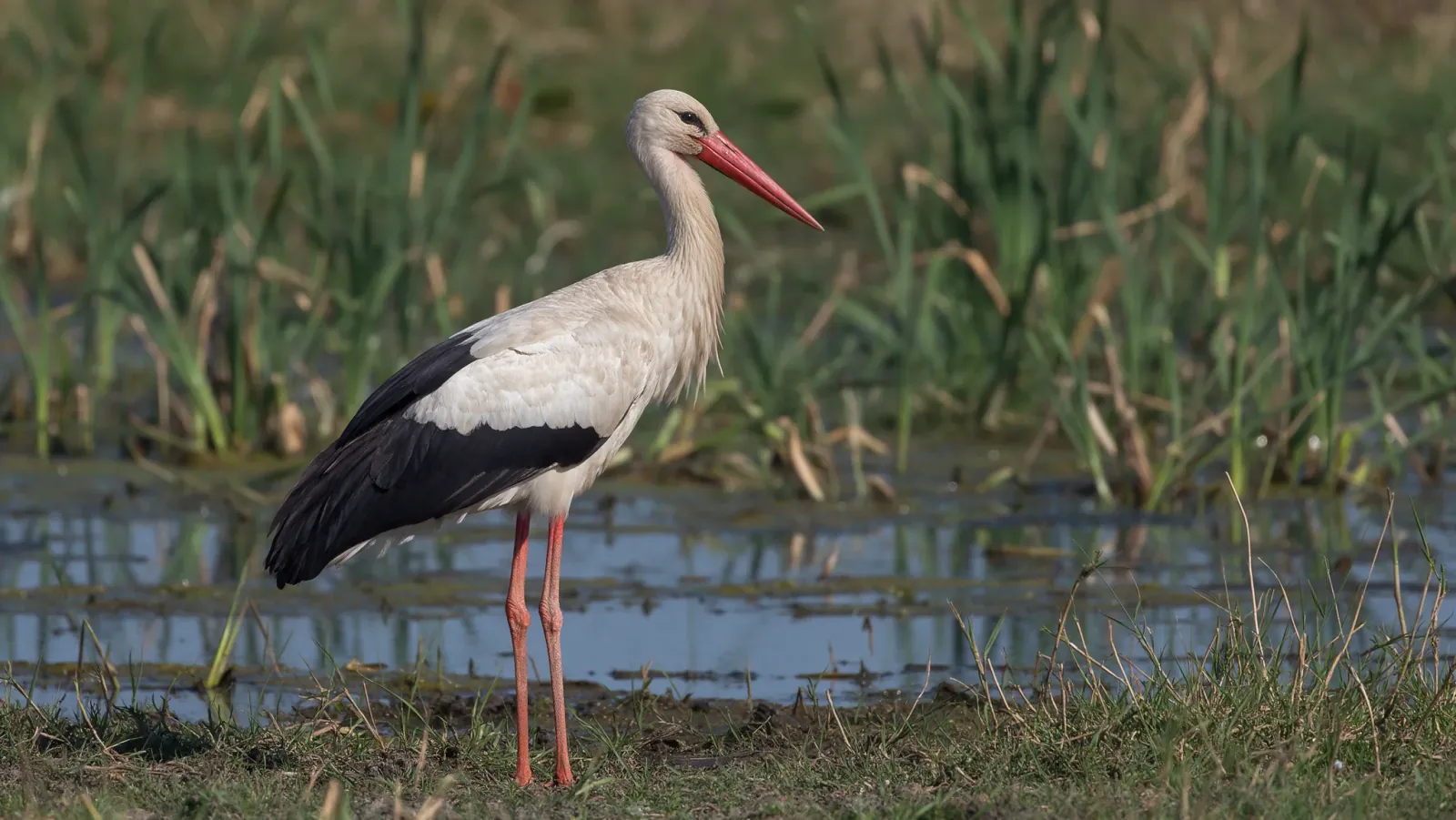
What eats a stork is a short list, because an adult white stork is a metre tall, wary, and armed with a bill like a spear. Few animals will take on a bird that can stab at an eye. The danger is concentrated earlier in life, in the egg and the chick, and it comes from animals that can reach a nest or catch a young bird before it flies.
The nest is the weak point
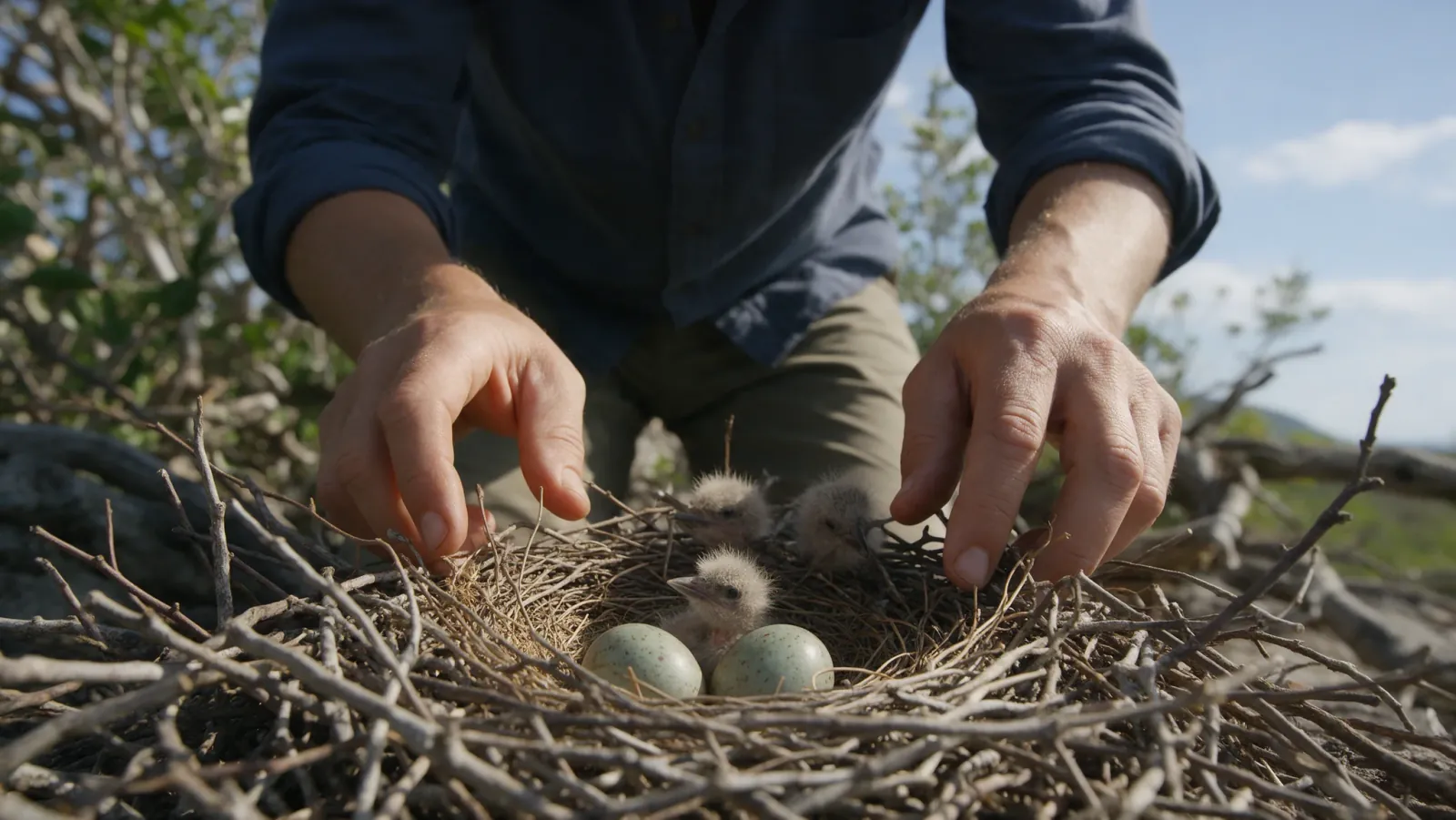
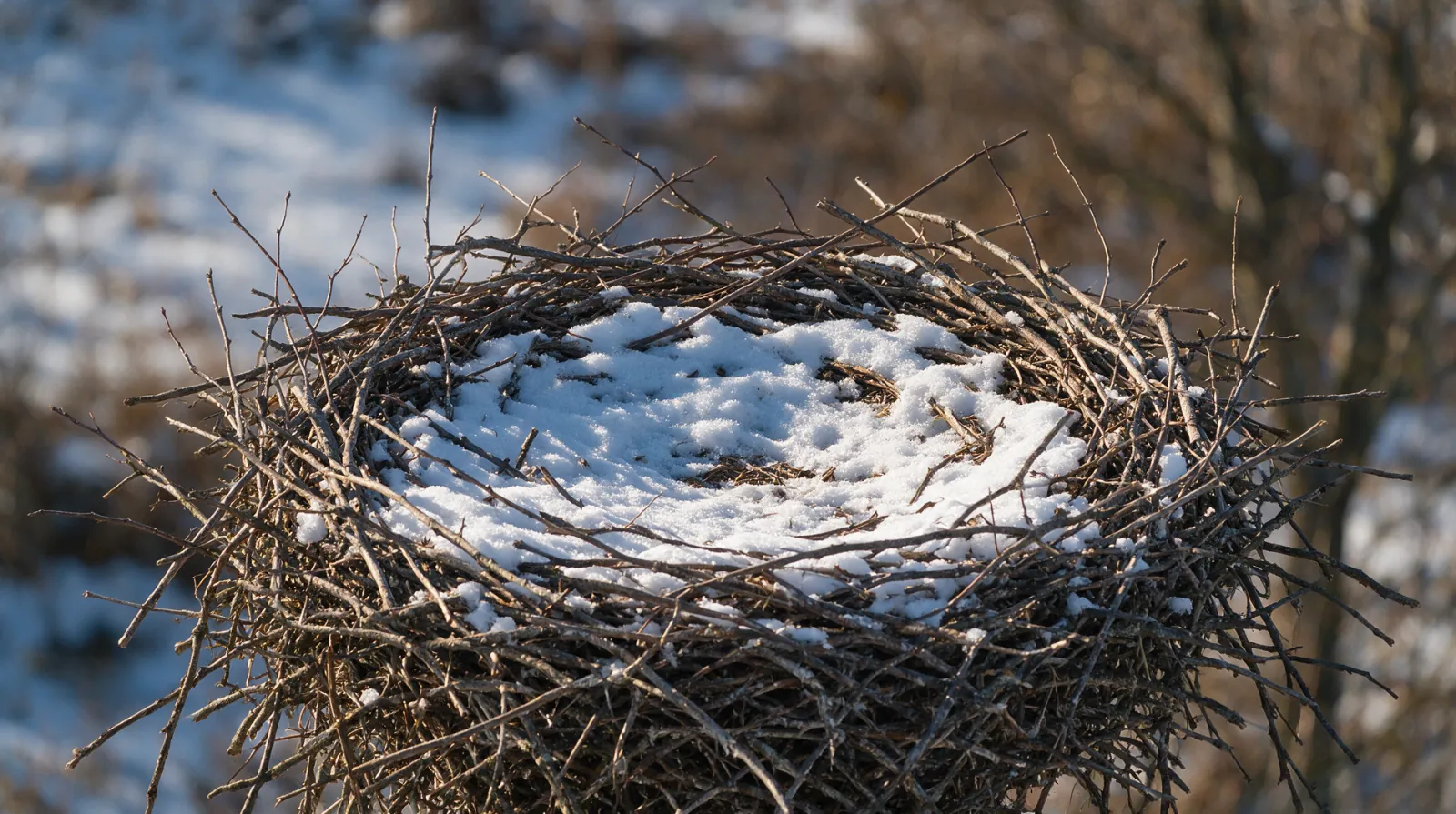
A stork's nest is a big platform of sticks on a roof, a chimney or a pole, and it is open to the sky. That suits the bird, which needs a clear approach and a wide view, but it leaves the eggs exposed. An unattended nest is an invitation. The parents take turns, and one bird is almost always standing over the eggs. When a pair is disturbed and both fly, the clock starts, and a quick raider can take an egg in the minutes before they return.
Crows, ravens and gulls
Corvids are the most common thieves. Crows and ravens are watchful birds that learn where nests are and test them for weakness. A pair of crows working a stork nest can draw the adults off and take an egg while they are away. Large gulls do the same on coastal nests. The stork's answer is size and noise: it stands, spreads its wings, and clatters its bill at anything that comes close. Most raids fail because the nest is never left alone for long.
The display makes the bird look larger and tells every other stork in the village that something is moving nearby. A nest on a roof is also a lookout. The parent sees a raider coming from a long way off, and the clatter carries across the fields.
The fox below
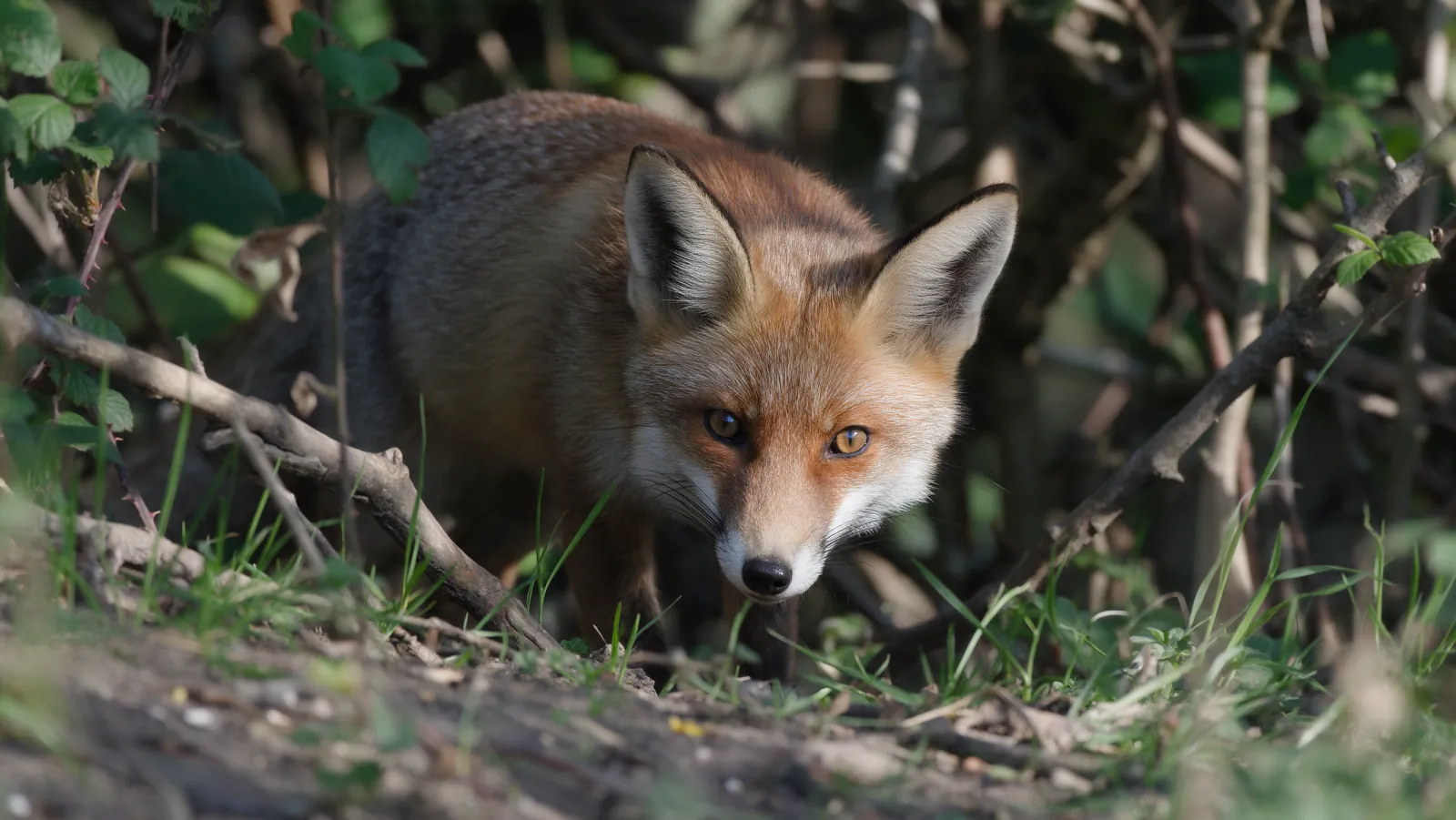
A fox is a patient hunter and a capable climber of banks, walls and rough ground, though not of smooth poles. It works beneath a nest, waiting for a chick to fall or for a low platform to become reachable. Most stork nests are placed too high, which is the main reason storks choose roofs and poles over stumps. Where a nest is low, a fox can take eggs and small chicks. The adults alarm from above, clattering and flapping, and the fox usually moves on to easier food. The fox's whole strategy is patience at the base of something tall.
The risk rises at dusk. Foxes hunt in low light, and a stork's eyes are not made for it. A parent on the nest at night sleeps lightly, waking at small sounds, and the chicks are quiet by instinct. On bright moonlit nights the bird is more alert. On windy, rainy ones the noise covers an approach. Most losses happen in bad weather, when visibility is poor and the adults are tired.
A chick that leaves the nest before it can fly is in trouble. It lands on the ground, where a fox, a dog or a car can reach it, and the parents can only circle and clatter. Young storks often exercise their wings for days before the first flight, leaning into the wind and jumping, and a gust can carry one over the rim. The rim of the nest is a boundary the whole family has to respect.
Why height works
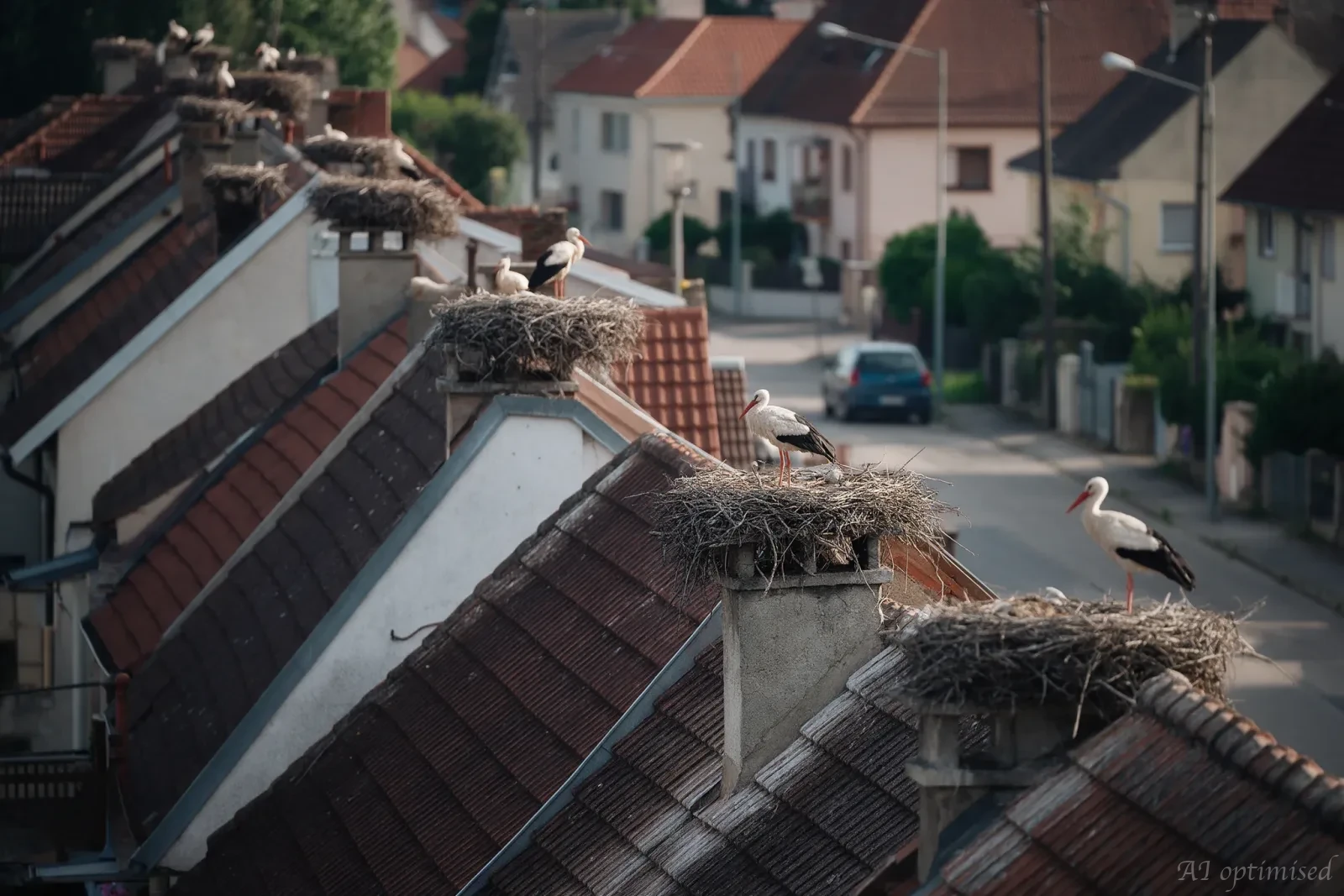
A smooth pole offers no foothold, and a steep roof is nearly as good. That is why storks build on chimneys, church towers, telegraph poles and purpose-built platforms, and why they return to the same site for years. The nest itself grows with each season as the birds add sticks, which raises the rim and makes the platform more secure. Height is a form of architecture, and the stork is good at it. A colony on a row of roofs is a colony the local foxes cannot reach.
Low nests fail more often. A platform on a shed roof, a stack of sticks on a wall, a pole that has rotted and dropped: these are the nests that lose eggs and chicks. Storks that choose badly often move the next year, rebuilding higher on the same building or shifting to a neighbour's chimney. A successful nest site is reused, and young storks tend to return to breed near where they hatched.
The eagle in the air
The eagle and the stork meet as unequal neighbours. A white-tailed eagle is heavier, faster in a dive and built for killing. It has broad wings, strong feet and a hooked bill for tearing. The stork is a walker and a wader, with long legs, a straight bill and a taste for frogs and insects. One bird is built to seize; the other is built to pick.
A stork travels by soaring, riding thermals in wide circles and gliding to the next rising air. That is efficient over long distances and it keeps the bird high, where it can see for miles. It also puts the stork in the eagle's element. An eagle can climb and turn inside a stork's circle, and a stork caught above open ground has few options. The stork's safety lies in seeing the eagle early and putting distance between them.
Storks nest in the open, on the highest thing in the village, and that placement is a surveillance system. A bird on a nest sees a large raptor long before it is close, and it can alarm the whole roof. Storks also feed in open fields with a clear view, and they look up often between strikes. On migration they gather in loose trains, and a flock sees more than a single bird. If one stork starts to climb away or alarm, the others follow. Numbers make an attack confusing, and confusion is usually enough. The crossing points concentrate the birds, and they also concentrate the danger. A single stork in a strange place is the bird most at risk.
For all the tension, eagle attacks on storks are uncommon. An adult stork is a large, awkward meal that can injure a raptor with its bill, and eagles prefer prey they can subdue quickly. The two species mostly ignore each other at a distance, using the same country for different meals.
The dangers that are not animals
The largest threats to white storks now come from human infrastructure and human action. Power lines kill birds that collide with them, especially young ones learning to fly and adults in poor visibility. Illegal shooting remains a problem along migration routes. Draining a marsh removes the food a pair needs to raise chicks, which is a slower kind of loss. A stork's chances depend less on escaping a predator than on the state of the wet ground it feeds from.
A young stork faces its hardest months after it leaves the nest. It has to learn to find food, to judge distance, and to avoid the wires and fences that cross every European field. Many do not survive their first migration, and the losses are highest among birds that left late or in poor condition. The dangers of the nest are brief. The dangers of the journey are spread over thousands of kilometres. The birds that survive to old age are usually the ones that found good marshes and learned to avoid the wires.
Explore the gift