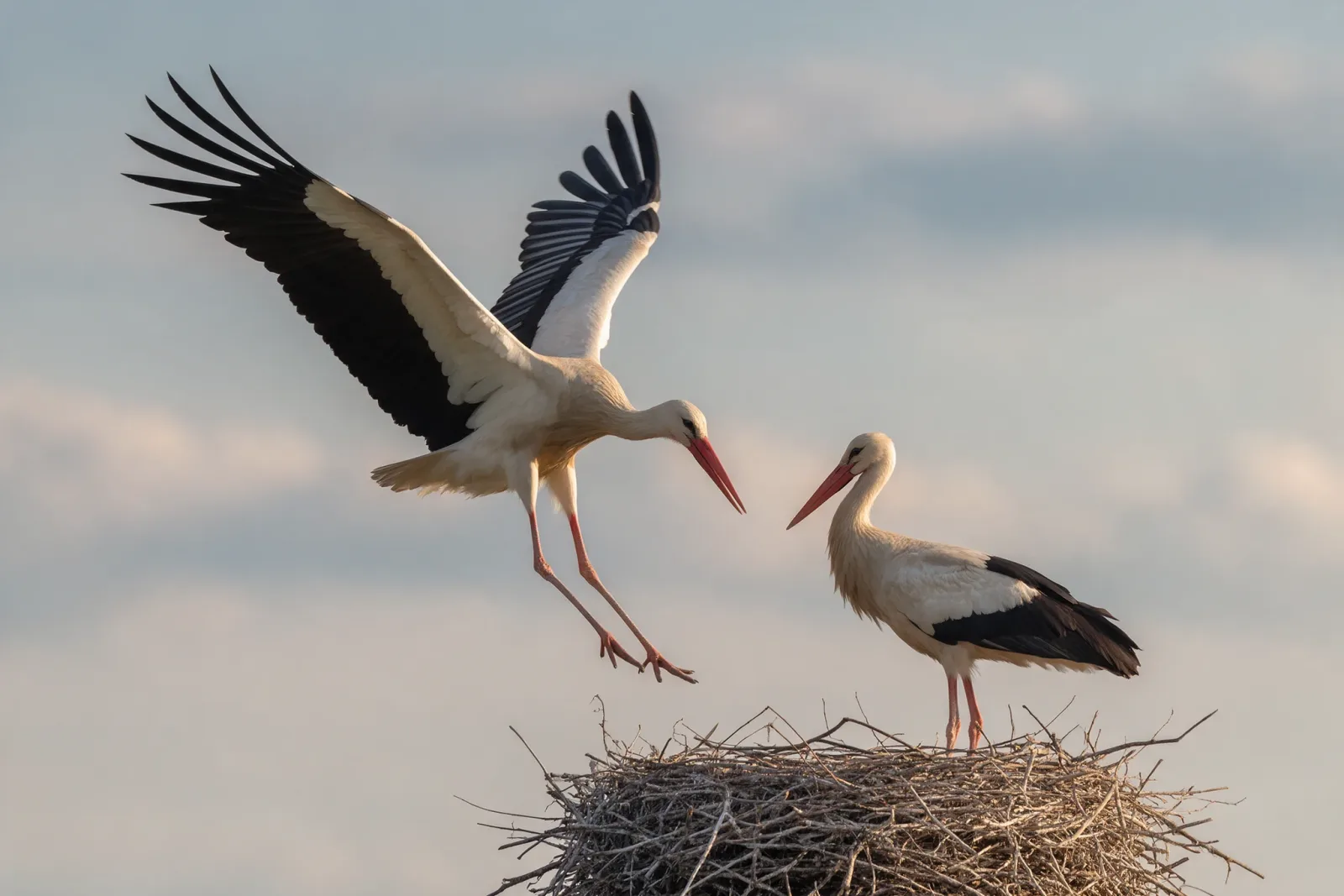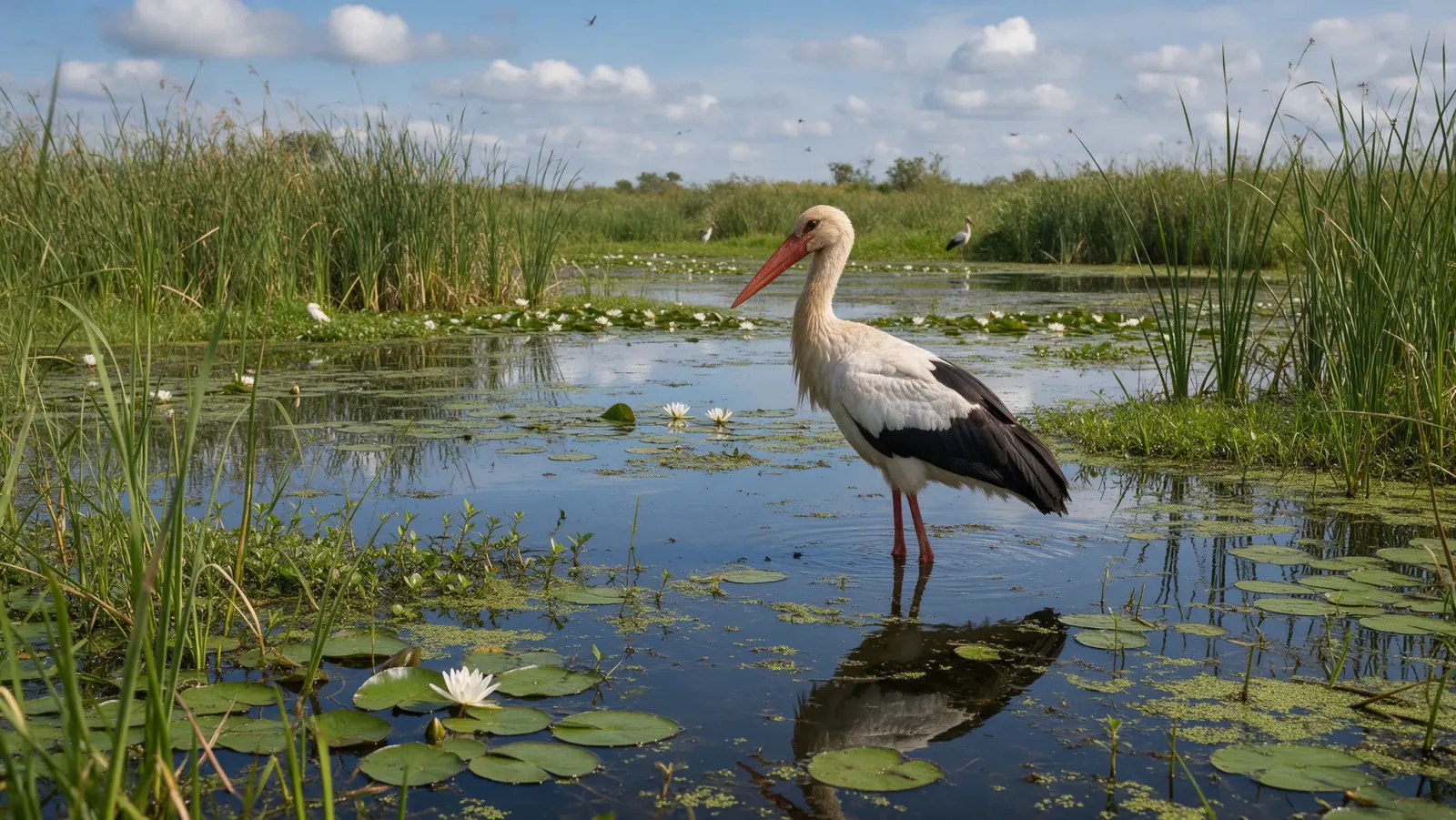
A wetland is a set of connections that all run through water. Sunlight feeds algae and plants, plants and algae feed insects and tadpoles, those feed frogs and fish, and those feed herons, storks and otters. Dead things fall back into the mud and are broken down to feed the plants again. A white stork at the top of this web is easy to see. What it is standing on is mostly invisible.
The base
Several things capture sunlight at once. Algae in the water, duckweed on the surface, reeds at the edge and grass on the bank all take it in, and dead plant material feeds a separate chain of decomposers. A marsh runs on both living plants and dead ones, which is why shallow, silty water can be so productive. The mud holds the recycled nutrients, and the plants take them up again in spring. The water carries the whole arrangement. When the level holds, the plants grow, the grazers multiply and the hunters follow. When it drops, the base dries and every link above it feels the loss within weeks.
A meadow that is cut and grazed keeps producing fresh growth, which is why old hay meadows are so rich in insects. Every animal in the marsh is running on last spring's grass, and the amount of grass depends on water and light. Drain the field and the base of the chain shrinks before anything else changes.
The grazers
Tadpoles, snails, water fleas and insect larvae graze the algae and the plant surfaces. They are small, numerous and short-lived, and they turn plant growth into animal tissue quickly. A pond in May can be thick with them. The grazers are the first animal link in the web, and their numbers set the ceiling for everything above. When the water is clean and the plants are healthy, they multiply fast. They are the food that turns a spring flood into a summer of frogs, and their peak comes before the chicks hatch.
The hunters by depth
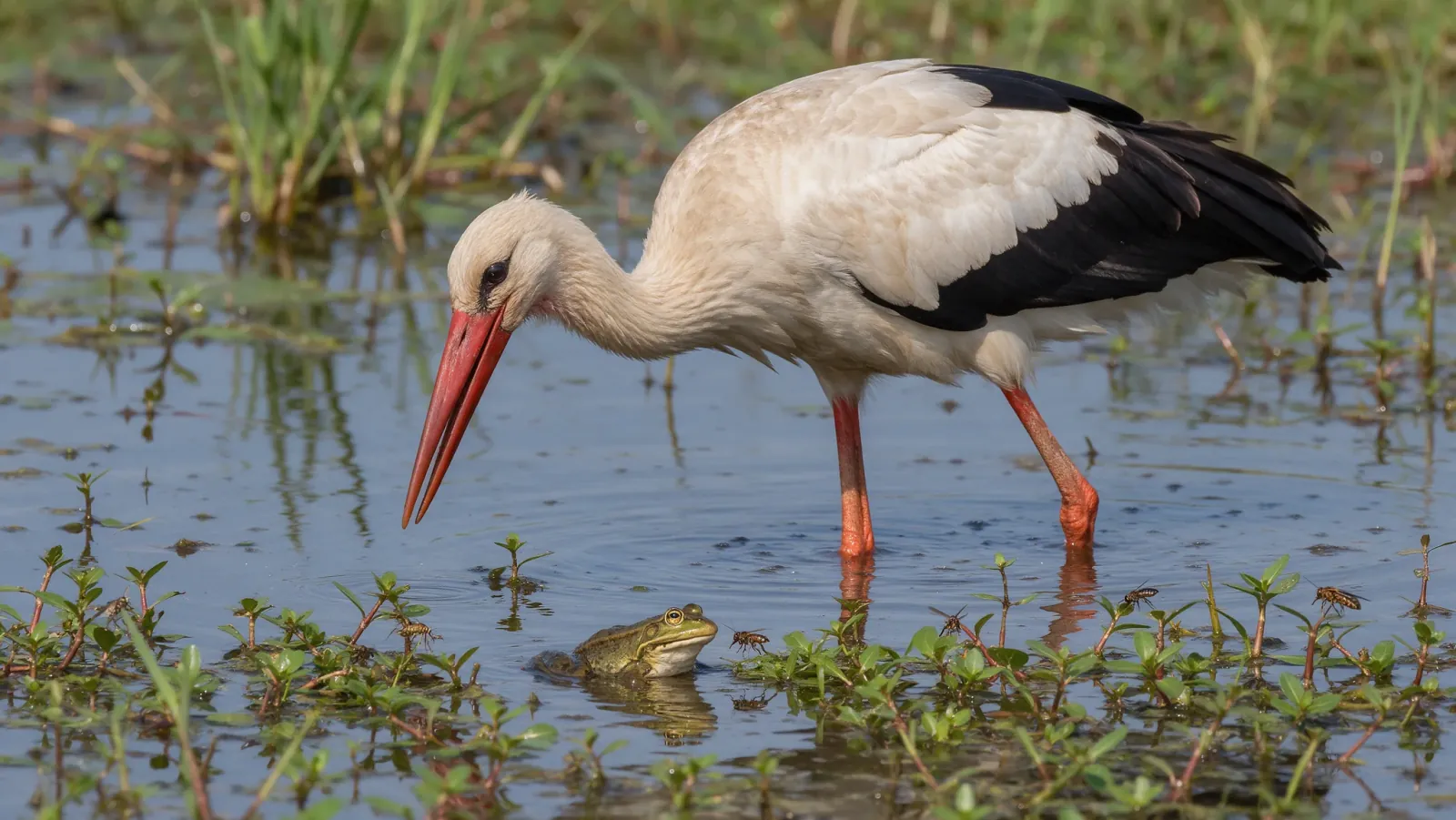
Dragonfly larvae, diving beetles, fish, newts and frogs hunt the grazers. Herons, egrets and storks hunt the hunters. Each has a different method and a different depth, which is why so many predators can share one marsh. The web is divided by size and by depth, and every bird finds a place where its technique works. The stork takes the shallowest, most open water, and it takes the largest prey it can swallow.
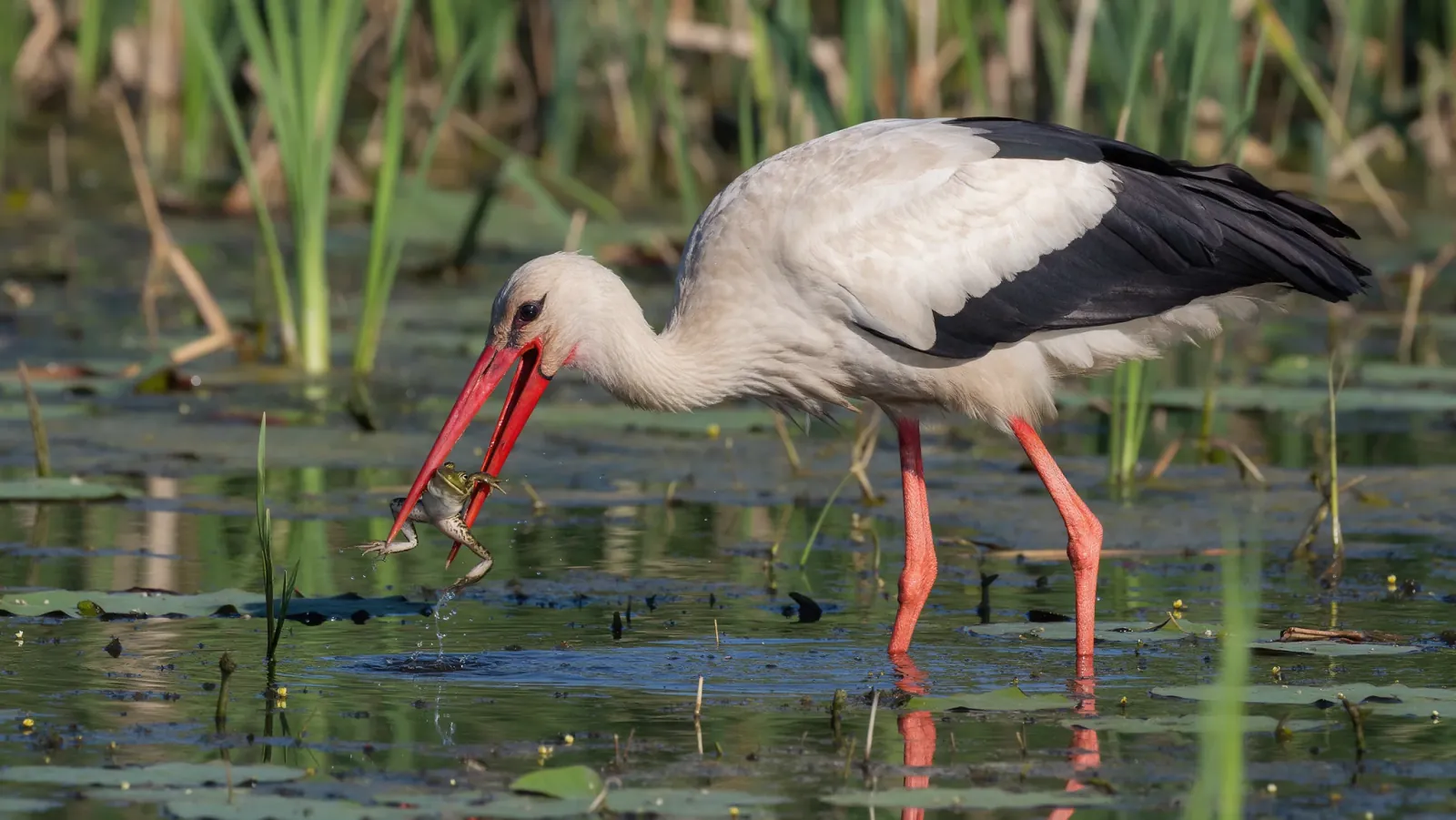
A white stork eats frogs, voles, fish, insects and eels, which makes it an opportunist. That flexibility is its strength. When one link fails, the bird can switch to another. In a wet June it eats frogs, in a dry July it eats grasshoppers, and before migration it eats whatever builds fat fastest. The stork is a generalist at the top of a chain that is different every week.
The scavengers
The web continues after a kill. Crows, gulls and eagles take carrion, and worms, flies and fungi break down what is left. A dead fish or a dead frog feeds a different set of animals than a live one, and that set is just as important. A marsh that loses its scavengers loses its cleanup crew, and nutrients pile up in places where they cannot be recycled. The stork itself will eat carrion when it finds it, especially in winter. A dead fish on the bank is gone within days, taken by gulls, crows and beetles, and the nutrients it held return to the soil and water.
The mud underneath
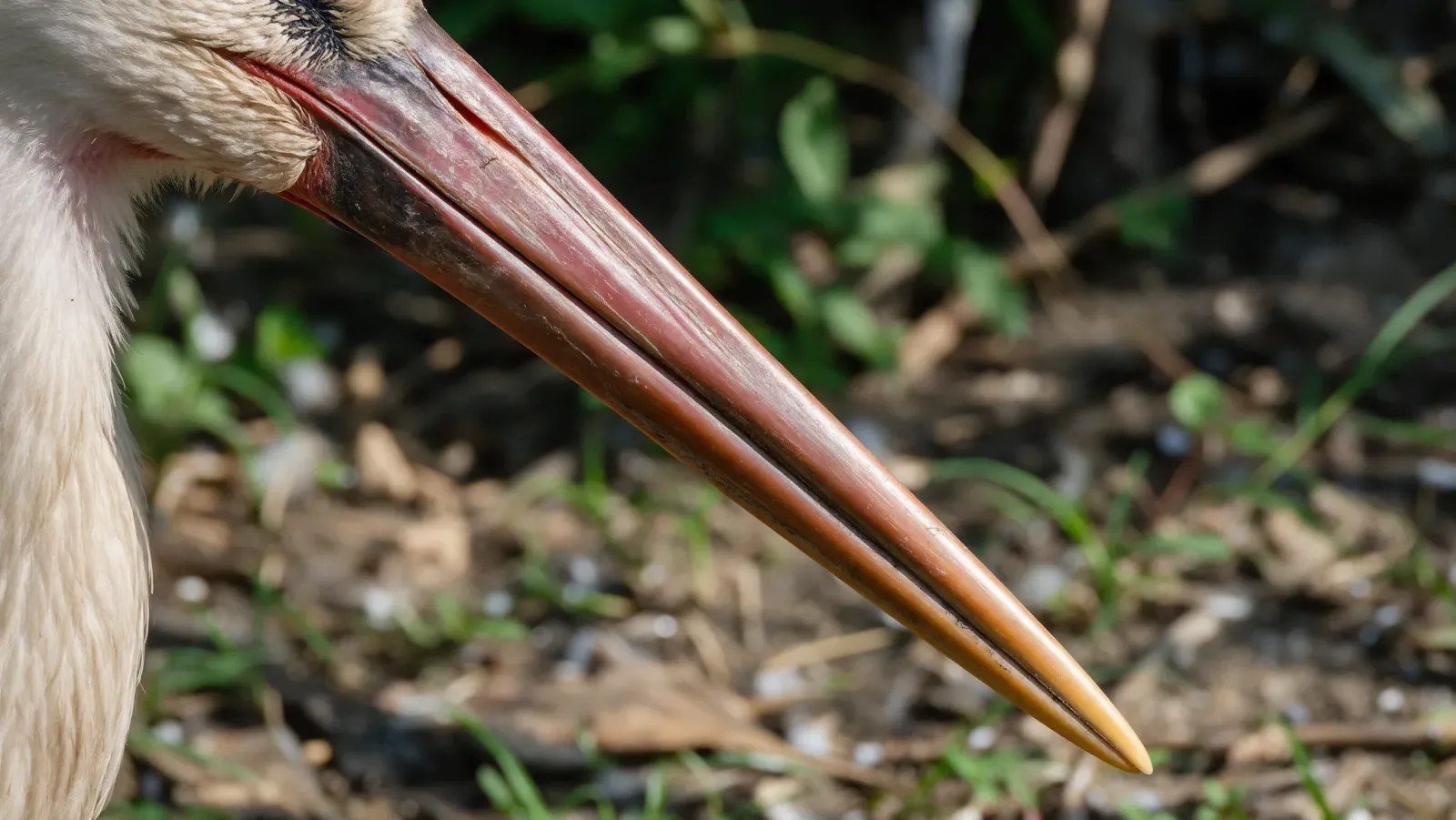
Marsh mud is black, soft and smells of eggs and decay, and it is the busiest part of the wetland. A square metre of wet mud can hold thousands of small invertebrates. Tubifex worms wave from their burrows, midge larvae curl into tubes, snails graze the surface, and beetles and bugs move through the top layer. The mud is a pantry that the rest of the marsh raids all year. A stork's bill going into soft ground is reaching into that pantry, even when the bird is aiming at a frog. Resting eggs and buried seeds wait in the same layer, so a dried pool can refill with life after the first rain.
Every autumn the reeds and grasses die back, and the dead stems fall into the water. Bacteria and fungi, then worms and larvae, break them down. The process uses oxygen, which is why marsh mud is often black and why it smells of sulphur a few centimetres down. Decay is the marsh's way of turning last year's growth into this year's food. Without it the dead plants would pile up and the water would fill in.
When the mud releases nutrients, algae and water plants use them, and the small animals that graze algae multiply. That is the base of the chain that ends in a stork's bill. A drainage ditch lowers the water table, the mud dries, the bacteria change, and the release of food stops. A marsh that has been drained still has mud, but it is no longer working mud. The difference shows in the number of frogs the following spring.
A short chain and its buffers
The food chain from insect to stork is short, and that is why it is easy to break. Grass grows in the wet ground, insects eat the grass, frogs and voles eat the insects, and a white stork eats the frogs and voles. Four or five steps, each dependent on the one below. Each step up loses most of the energy, which is why a marsh needs a very large base of plants and insects to support a few large birds.
A short chain has few buffers. If the frogs fail because the pool dried, the stork has insects and voles to fall back on. If the insects fail too, the nest suffers. Each link is also exposed to its own problem: pesticides for insects, drainage for frogs, mowing for voles. The fewer steps between sunlight and stork, the more directly the bird feels a change at the bottom.
A dry summer tests the web. The pools shrink, the grazers concentrate, and the predators find them more easily. Frogs bury themselves, insects move to damp corners, and the birds travel further between meals. Some links break. Then rain returns and the system reassembles from the mud, the resting eggs and the survivors. A wetland is built to absorb bad years, as long as the bad years do not come every year. Drainage removes that buffer, and a marsh that cannot dry and refill loses the ability to recover. A marsh that holds water into summer can carry a nest through a bad week, and one that dries early cannot.
Insects emerge from the water and fly onto the land, where birds, bats and spiders eat them. Amphibians breed in water and feed on land. Herons nest in trees and hunt in water. The web crosses the boundary constantly, which is why a narrow strip of marsh is rarely enough. The wet centre needs dry edges, trees, hedges and rough grass, and the animals move between them every day.
Explore the gift