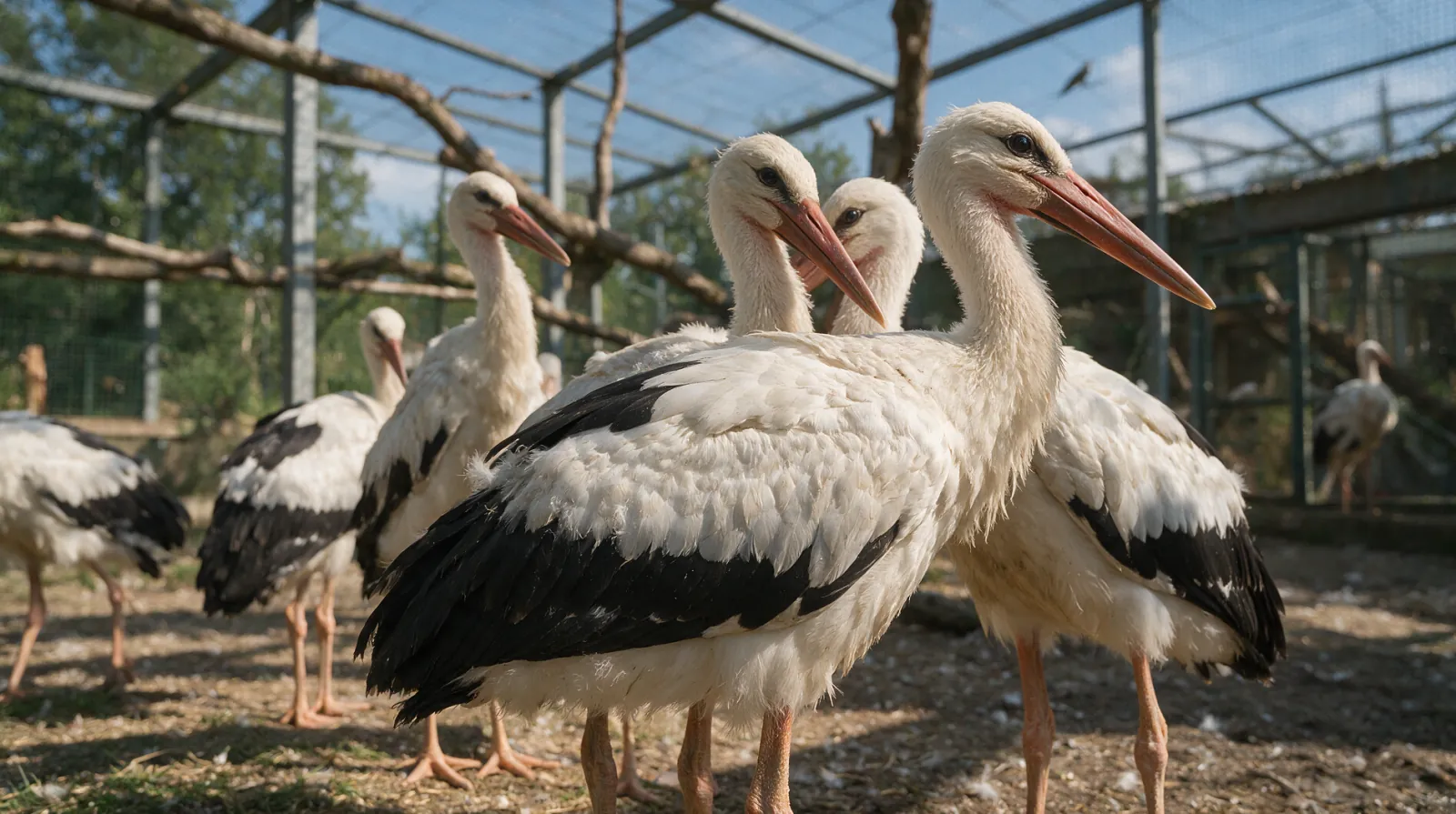
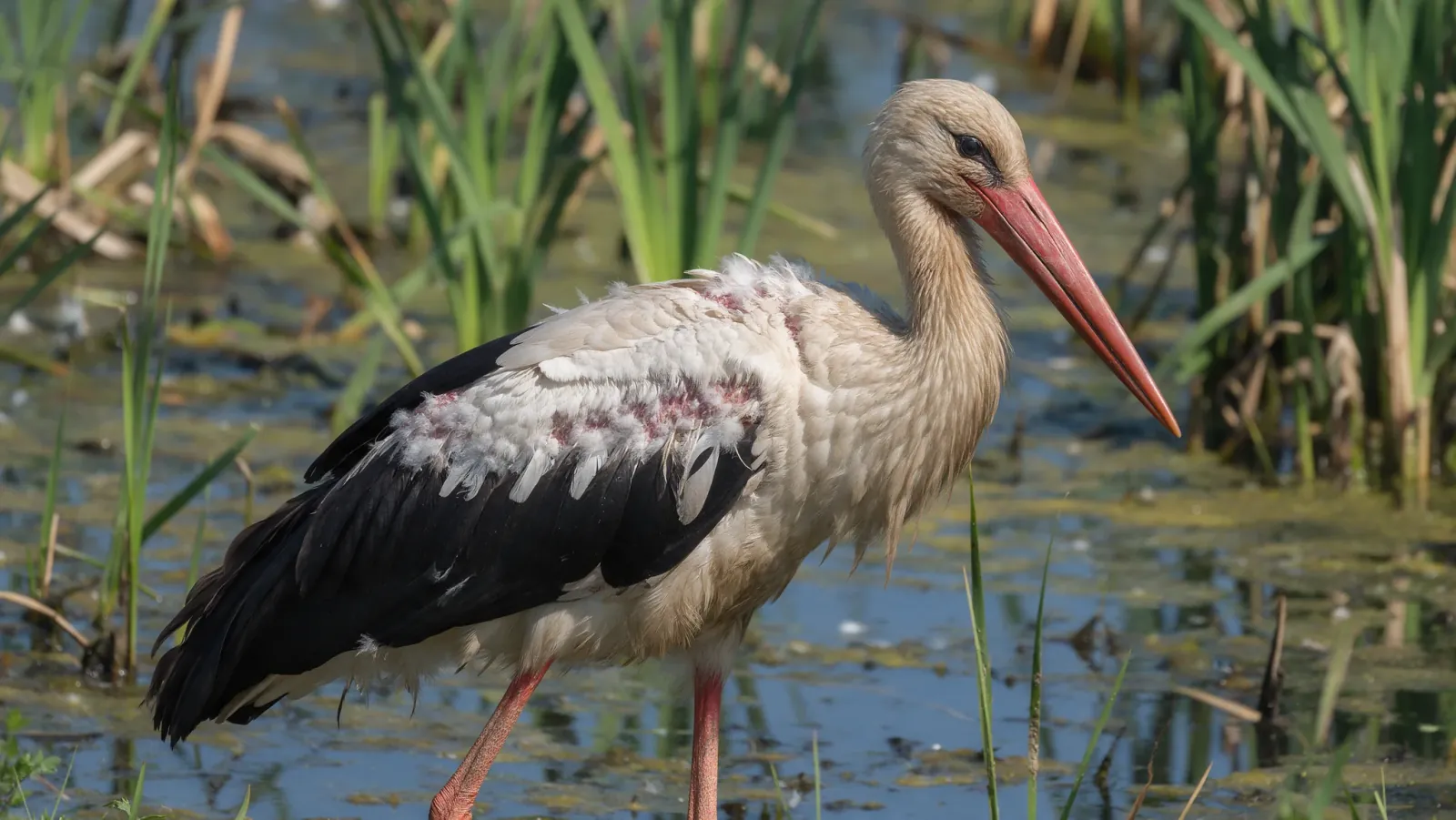
A white stork has no song, so it speaks with its bill, and the bare skin at its throat carries part of the message. The plumage carries another. A bird that looks plain on a roof can flash red and black in the space of a greeting. The rattle is also the first sound a chick hears from its parent, and the one it learns to answer.
A bill built for snapping
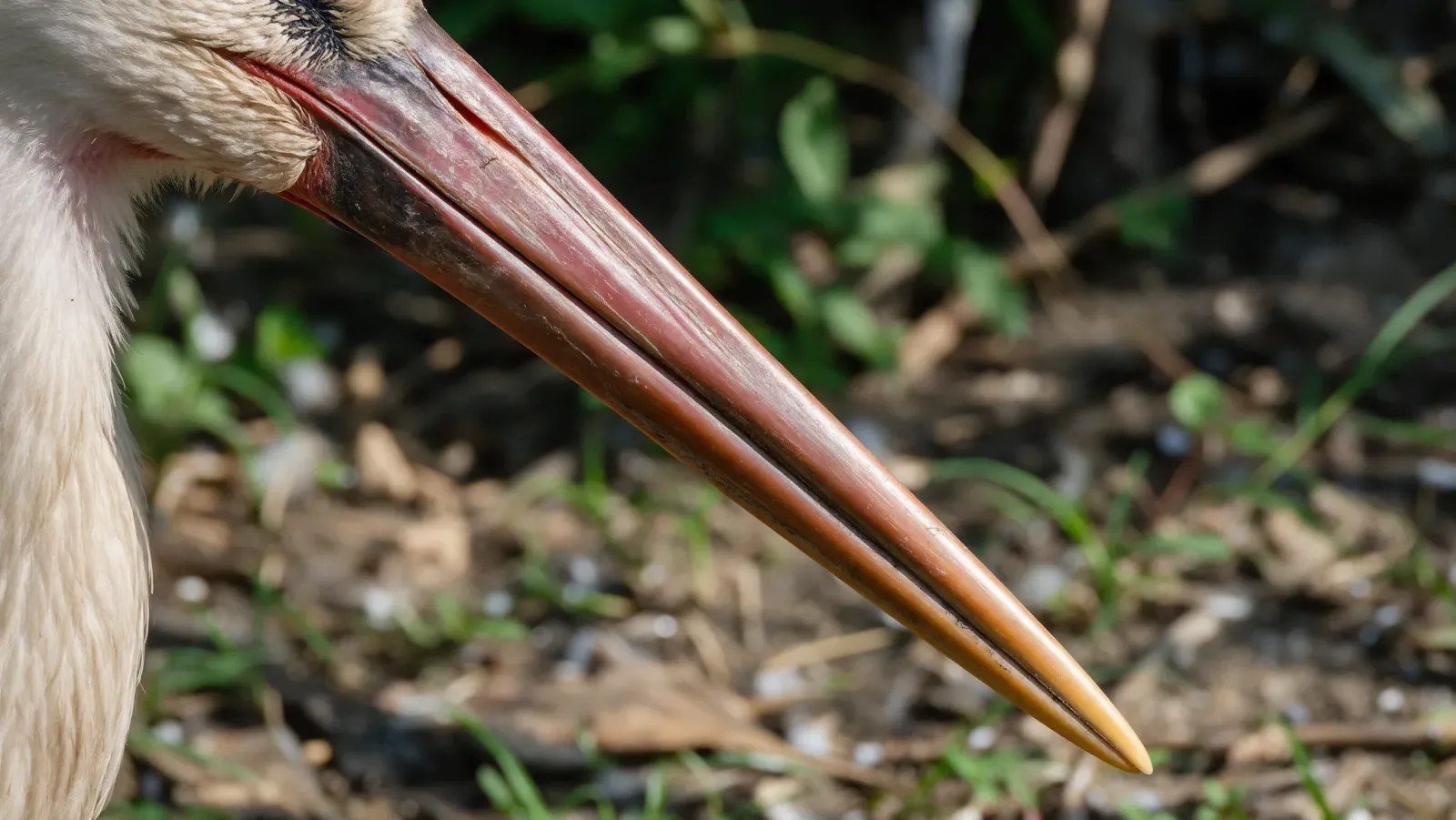
The bill is long, straight and pointed, strong enough to hold a frog and quick enough to snap shut in a fraction of a second. Its length and hardness make the clatter work. The two halves meet cleanly, and the impact travels up the hollow structure of the bill like the body of a small drum. The bill is both the tool and the instrument. The same one that snaps in display is the one that hunts, greets and warns. The long red bill opens and shuts again and again, fast enough to blur, and the two halves strike each other and produce a dry rattle that carries across a field. The sound is loud and hollow, and the stork uses it for most of the things a songbird uses a song for.
What the clatter says
A pair clatters as a greeting when they meet on the nest, heads thrown back and bills to the sky. A stork clatters to warn away a neighbour that has come too close. Adults clatter at the nest, and the chicks, once old enough, clatter back. Greeting, threat and claim all come out of the same sound. The difference between them is carried in the speed and pitch of the snapping. To snap the bill properly a stork throws its head back until the beak points almost straight up. The posture shows the red throat and the long bill at once, and it lets the bird put the full force of its head behind each snap. The display is often done by both birds at the same time, facing each other. It looks like bowing, a kind of nodding dance done with the beak instead of the feet. A nest with young in it is a noisy place. The chicks clatter as soon as they can, and the sound becomes a chorus when a parent arrives with food. The adults answer, and for a moment the whole nest is rattling. In a village with several nests, the sounds answer each other from roof to roof. The rattle carries through the boards of a roof and down a chimney, and people in the house know it as the sound of spring.
The red throat
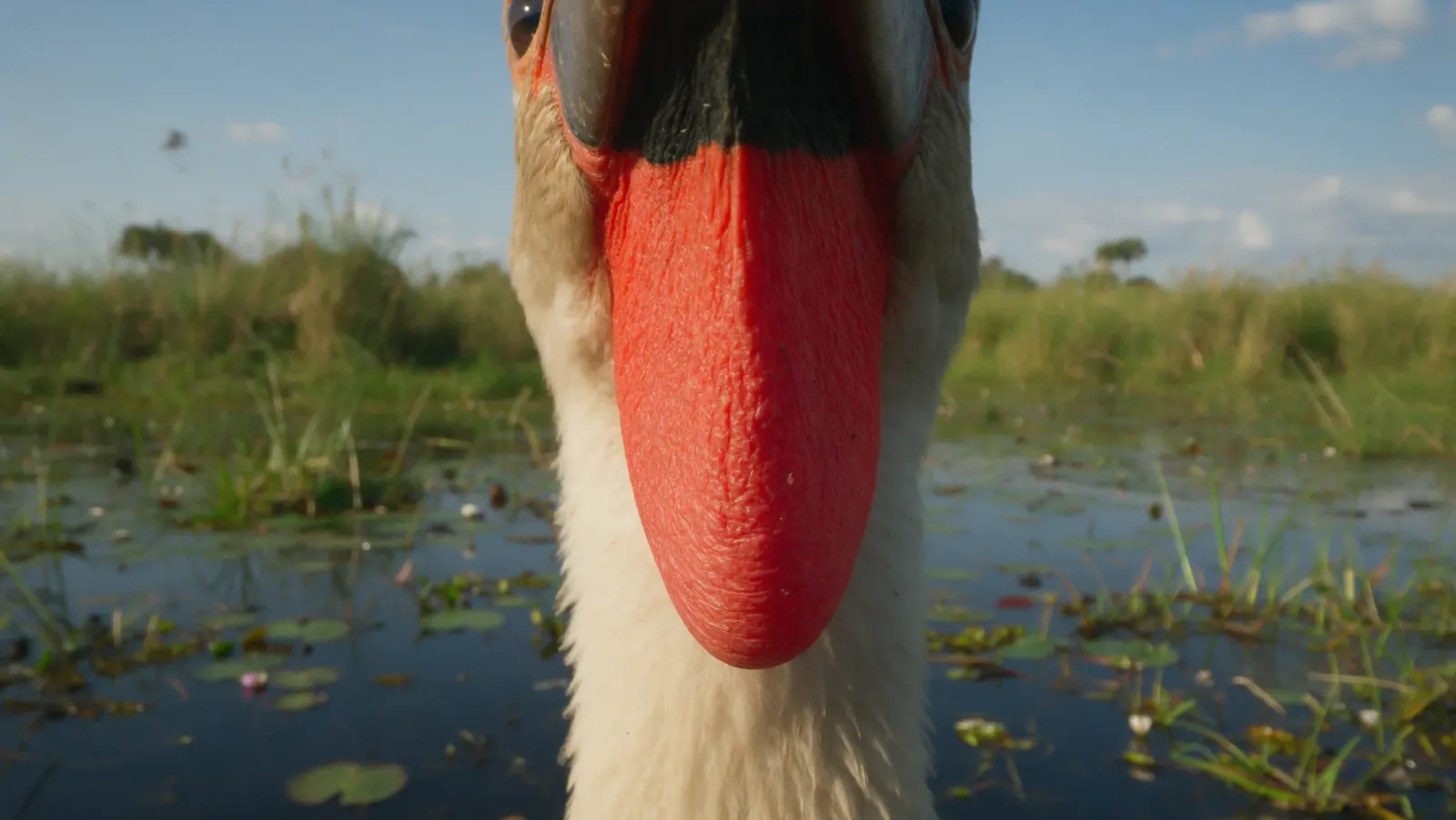
The patch shows most clearly when the bird lifts its head to clatter. The patch is one of the few places on the bird without feathers, and in the breeding season its colour deepens. The colour lives in the skin. The skin there is thin and bare, and the colour comes from blood moving close beneath the surface. When the bird is calm the patch can look pale; when it is excited the same patch flushes red. The change is quick and real, a living signal rather than a fixed mark. The bareness has a purpose too. Feathers would hold heat and muffle the throat, and the bare skin lets the bird lose warmth while it works. The patch sits where the neck meets the breast, and it is easy to miss when the bird is calm. When two storks meet on a nest they greet each other with the full clatter, heads tipped back until the bills point at the sky. Each bird shows its patch to the other.
A signal of condition
A bright red throat also tells a partner something about the bird wearing it. A thin, dull patch can point to a bird in poor condition, and a full red one to a bird that has wintered well and is ready to breed. The colour is information the body gives away for free. Birds that are unwell often show it in the bare skin first, which dulls before the feathers do. The same is true of a bright eye or a glossy wing: a healthy bird looks healthy, and a mate can read it at a glance. Most of the time the red throat is hidden. The stork folds its neck, the head settles against the white chest, and the bare skin all but disappears into the feathers. A bird at rest looks almost entirely white and black. The red is kept for the moments that matter. In flat light the patch looks brownish red, and in sun it is bright. The throat is easiest to see in spring, when pairs are back on the nest and the birds clatter often. A pair on a chimney will greet each other many times a day, and each greeting lifts the head and shows the patch. Standing below, you hear the rattle before you see the red.
Where the black sits
The white feathers and black tips are the signature of the white stork. Seen on the ground, the bird looks mostly white, a tall pale shape on red legs with a red bill. The black is there, folded away at the back of the wing. The black is on the flight feathers, the long primaries and the secondaries that do the work of flying. They are the outermost and rearmost feathers of the wing, and when the wing is folded they lie under the white feathers of the shoulder and body. That is why a standing stork can look almost entirely white. The black tips are there all along, tucked out of sight. A stork preening on a roof often works those hidden feathers, reaching back with its bill.
Why the tips are black
Flight feathers take the most wear. They push against the air, hold the bird up and steer it, and they work harder than any other feather. The black colour comes from melanin, the same pigment that darkens hair, and melanin makes a feather tougher. A dark flight feather is a stronger flight feather. The parts of the wing that work hardest are the parts that are darkest, and the white feathers cover the body and keep it warm. The white is not pure white either; in flat light it looks creamy, and against snow it looks grey. In the air the pattern makes the bird easy to read. The broad white wings with their black trailing edge are visible from far off, and they separate the white stork from birds that are all dark or all white. The black tips make the wing look as if it has been dipped in ink. At a distance the black band is often the first part of the bird to show. A young white stork leaves the nest with wings that look brown rather than black. The flight feathers are dull at first, and the white of the body is lightly streaked with grey. The clean black and white comes with age and with wear. By the bird's second summer the pattern is close to the adult's, and after a few moults it is complete.
Explore the gift