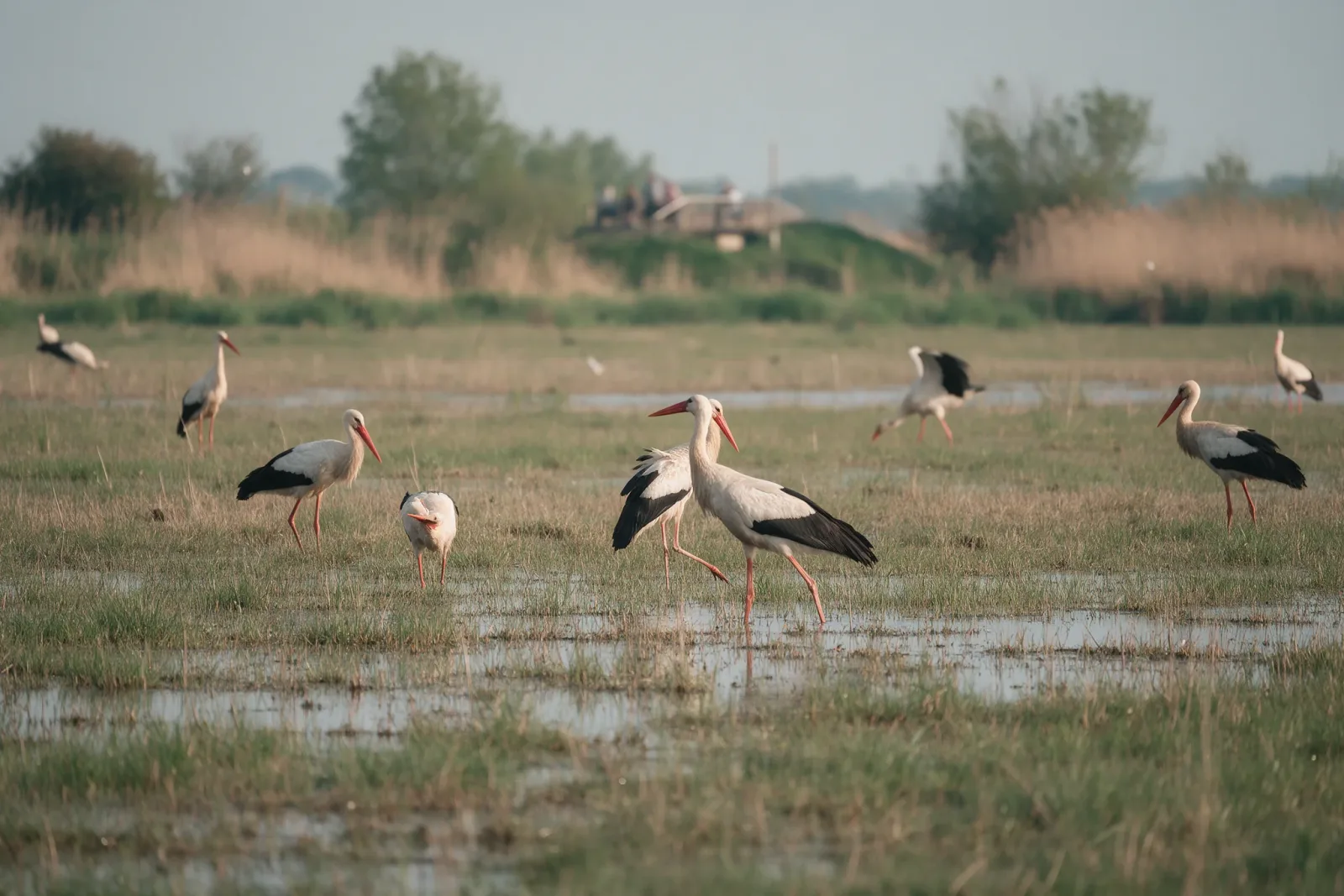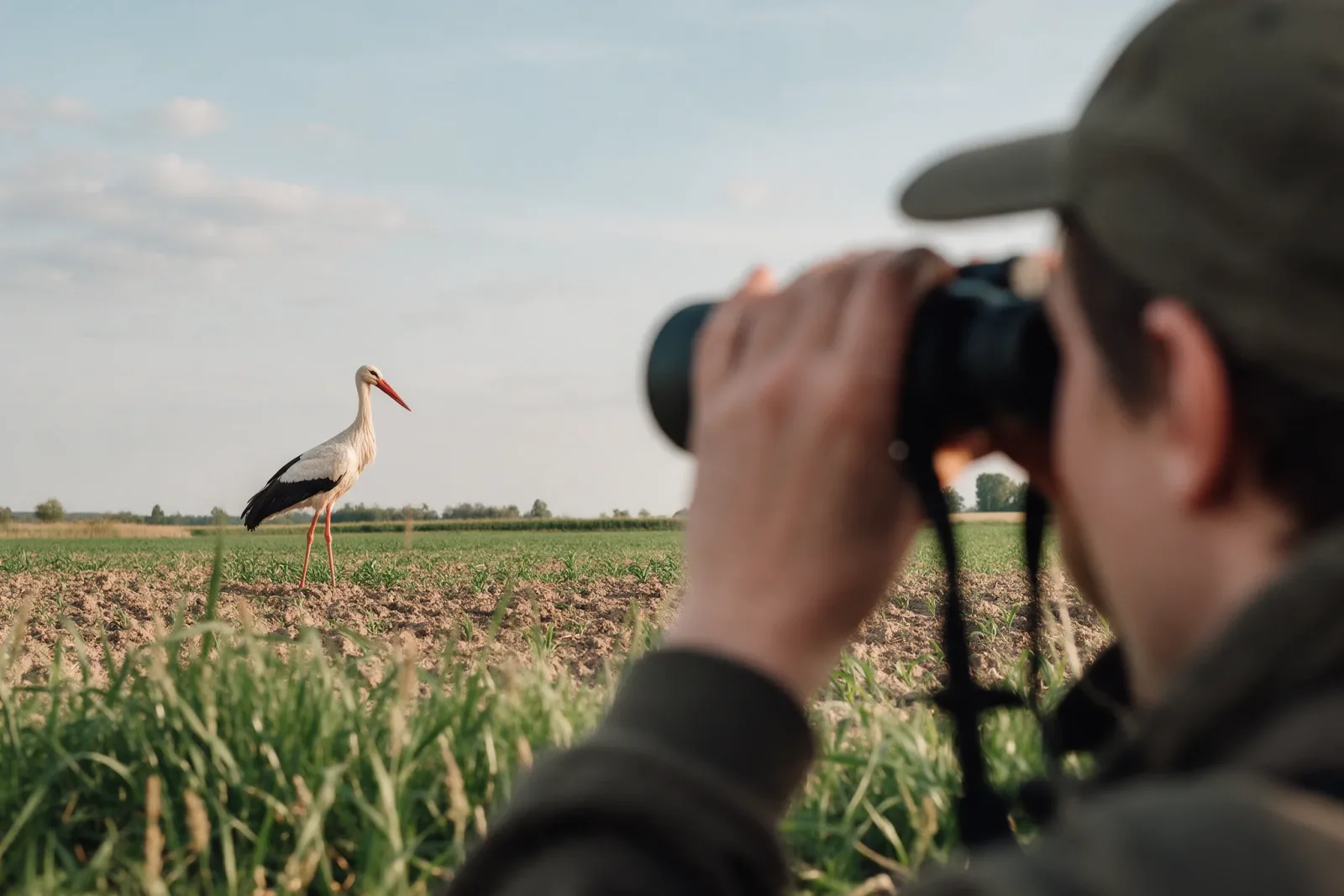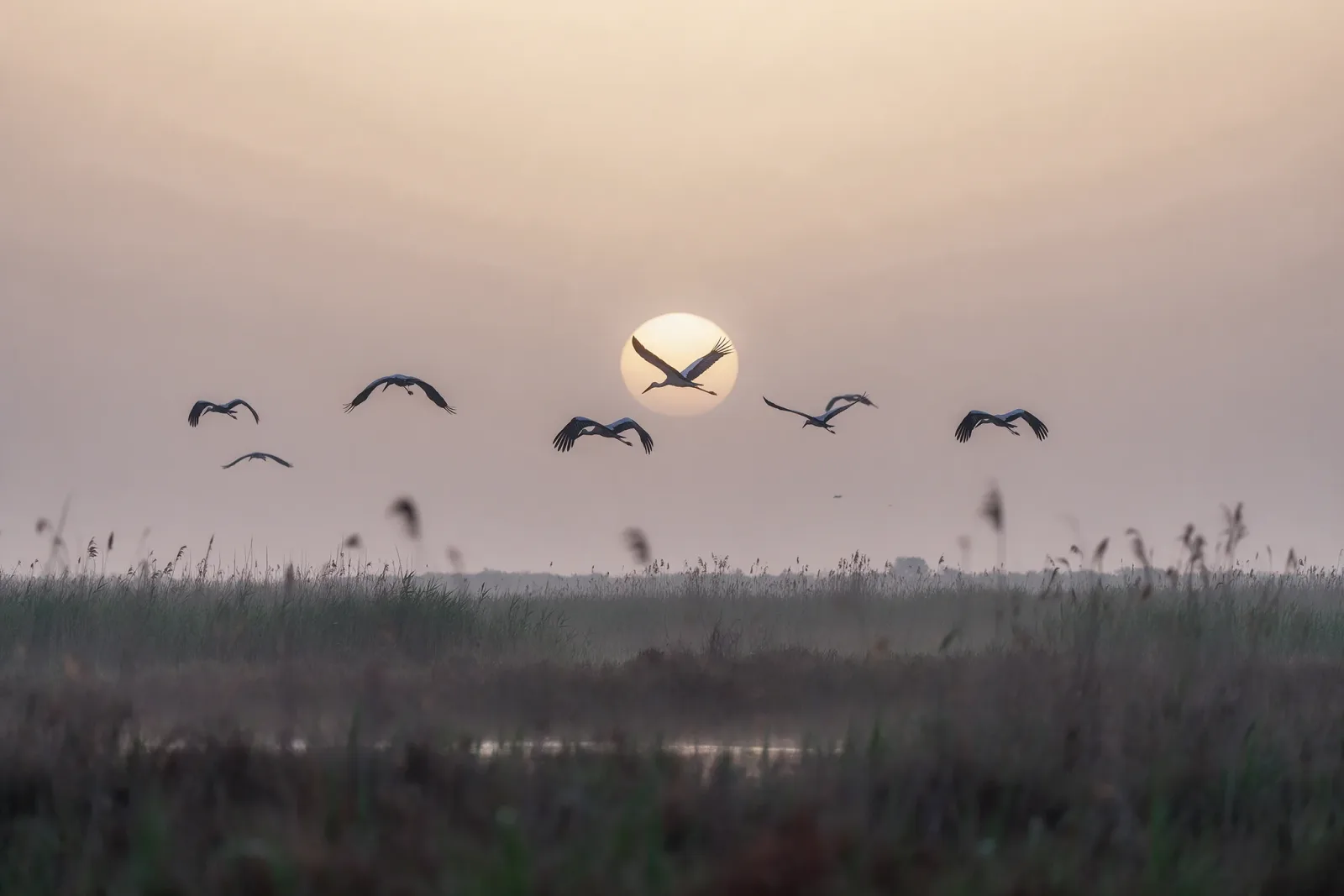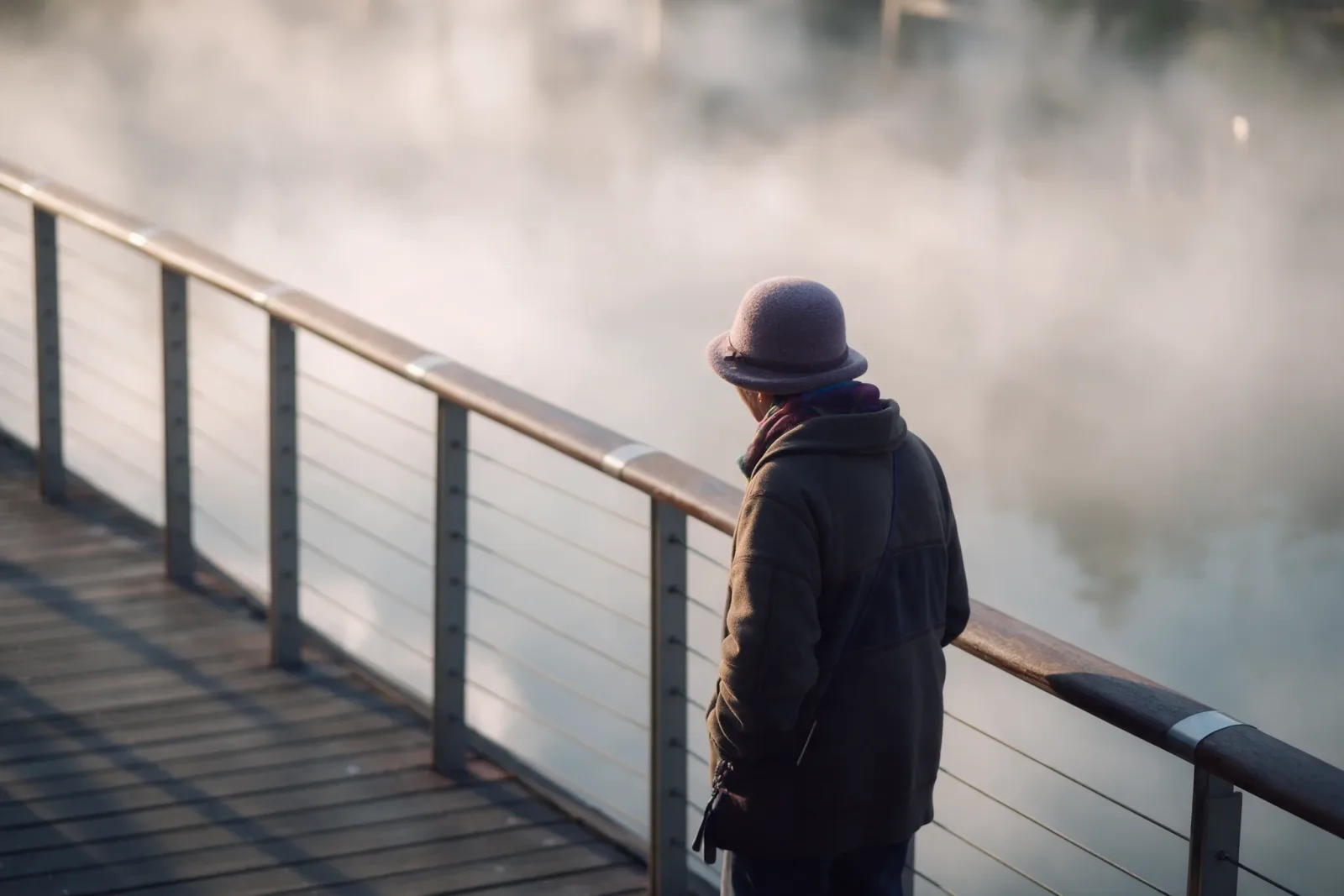
The loneliness of watching alone is not a sadness but a fullness, and it is one of the quietest pleasures the marsh has to give. When you go out alone with no one to point for and no one to keep pace with, the field opens differently. You hear more, you stand still longer, and the stork that would have been frightened off by a group stays and goes about its business a few paces away.
Alone, you move at the marsh's pace
A group walks at the pace of its fastest member and stops for its slowest. Alone, you move at no one's pace but the place's. You can stand in one spot for twenty minutes because a stork is standing there too. You can take the long way along the ditch. Nothing has to be decided, no one has to be kept entertained. The marsh sets the rhythm, and for once you are free to keep it.
Alone, you notice the small things
There is a kind of attention that only comes when you are the only witness. A wren in the hedge, a reed moving with no wind, the exact moment a stork turns its head. These small things do not survive company. They need a watcher who has gone quiet, and the loneliest hours are the ones that give them up.
The long silence before the bird
Most of watching alone is waiting, and the waiting is not empty. You learn to be comfortable in the silence before anything happens, to stand in the cold and the damp and not mind, because you have chosen to be there. Then the bird comes, or it does not, and either way the hour has been worth something.
Solitude is not loneliness
There is a difference between being alone and being lonely. A marsh alone is not empty. It is full of birds and water and light, and the watcher who goes alone is never really without company. The stork is company, the wind is company, the long light on the water is company. Loneliness is what happens in a crowd that will not stop talking. Solitude is what happens when the crowd is gone and the world rushes back in.
Carry the quiet home
The watcher who goes out alone comes back changed, a little quieter, a little more at ease in silence. The stork seen alone is remembered more sharply, because no one diluted it with words. That is the gift of watching alone, and it is one you can return to whenever the noise of things gets too loud.
Explore the gift