A white stork's day is mostly standing, and the standing has work in it. The bird wakes before light, waits for the ground to show, hunts the wet grass, stands through the middle hours, and returns to the nest at dusk. Light and temperature keep time, and the round repeats with little drama.
Before the light
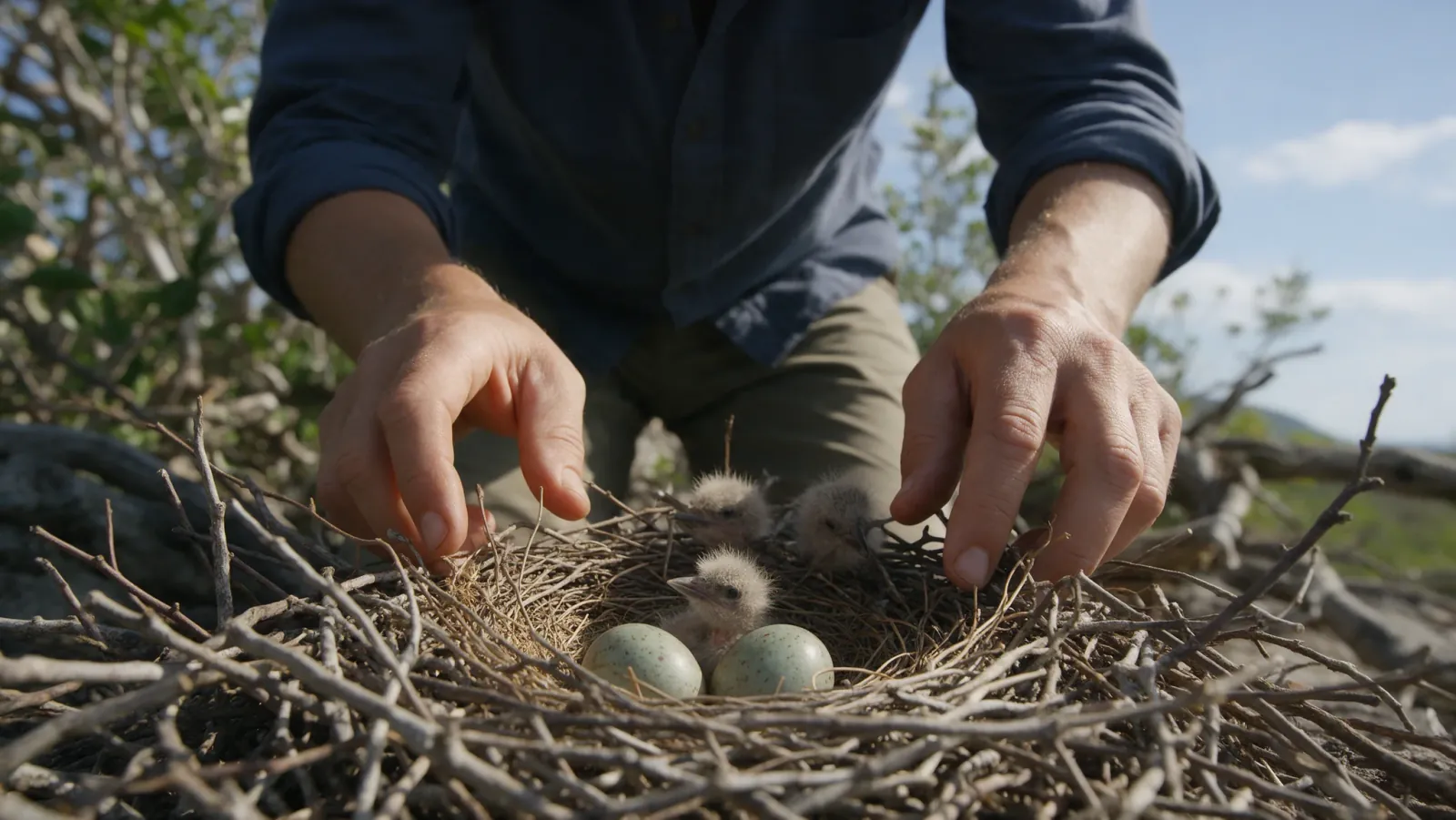
The bird has slept standing, or low on the nest with its head tucked into the feathers of its back. It stirs when the first grey arrives, uncouples its legs, and stretches one wing and then the other. On a nest with eggs or small chicks the next move is to settle back down. The hour before dawn is the coldest of the night, and the eggs cannot be left. The first job of a stork's day is keeping the clutch warm through the last of the cold. The bird arranges itself over the cup, shifts the eggs gently with the underside of its bill, and waits. The wait is part of the day. Storks hunt by sight, and there is no point walking a meadow while the ground is black. The bird stands, or sits, and watches the field below come out of the dark. The grass appears first, then the ditch, then the far treeline.
The wait for the ground
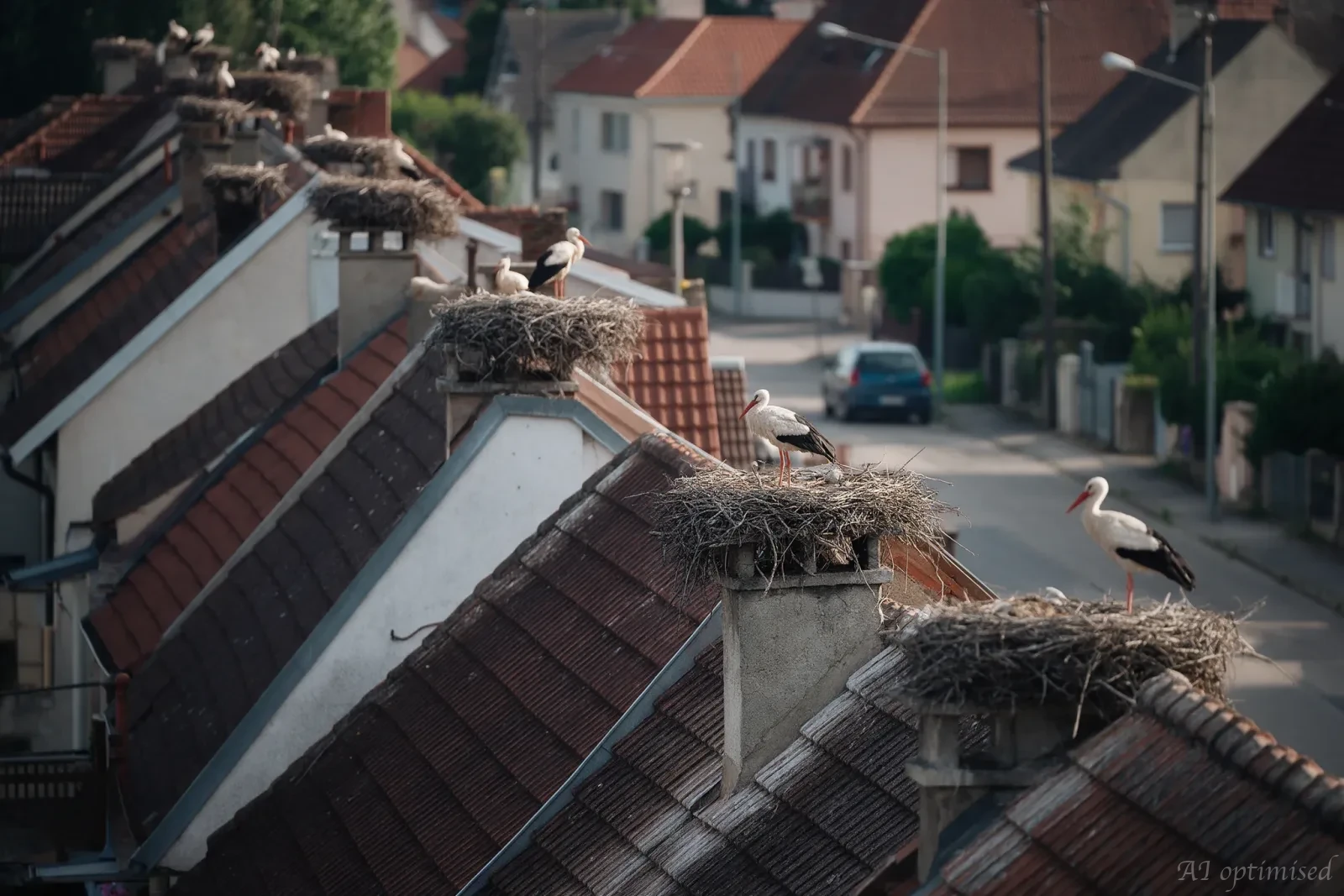
The colony wakes in the same slow order. One bird clatters on a nearby roof, then another answers, and the noise moves along the street. Mist lies in the low ground and the first insects begin to move in it. A stork that has not eaten since the previous evening is patient through all of this, because patience is what the light demands. On a wet morning the start is slower. On a wet morning the day shrinks to the nest and the nearest ditch. Rain breaks the surface everywhere, and the strike loses its advantage. The bird waits longer, feeds in shorter bursts, and comes back to the nest sooner. The chicks are fed less often, and they complain, and the parent stands over them and takes the weather. By mid-morning the rain usually thins, the frogs come up, and the bird leaves on the same line it uses on a dry day.
The first hunt
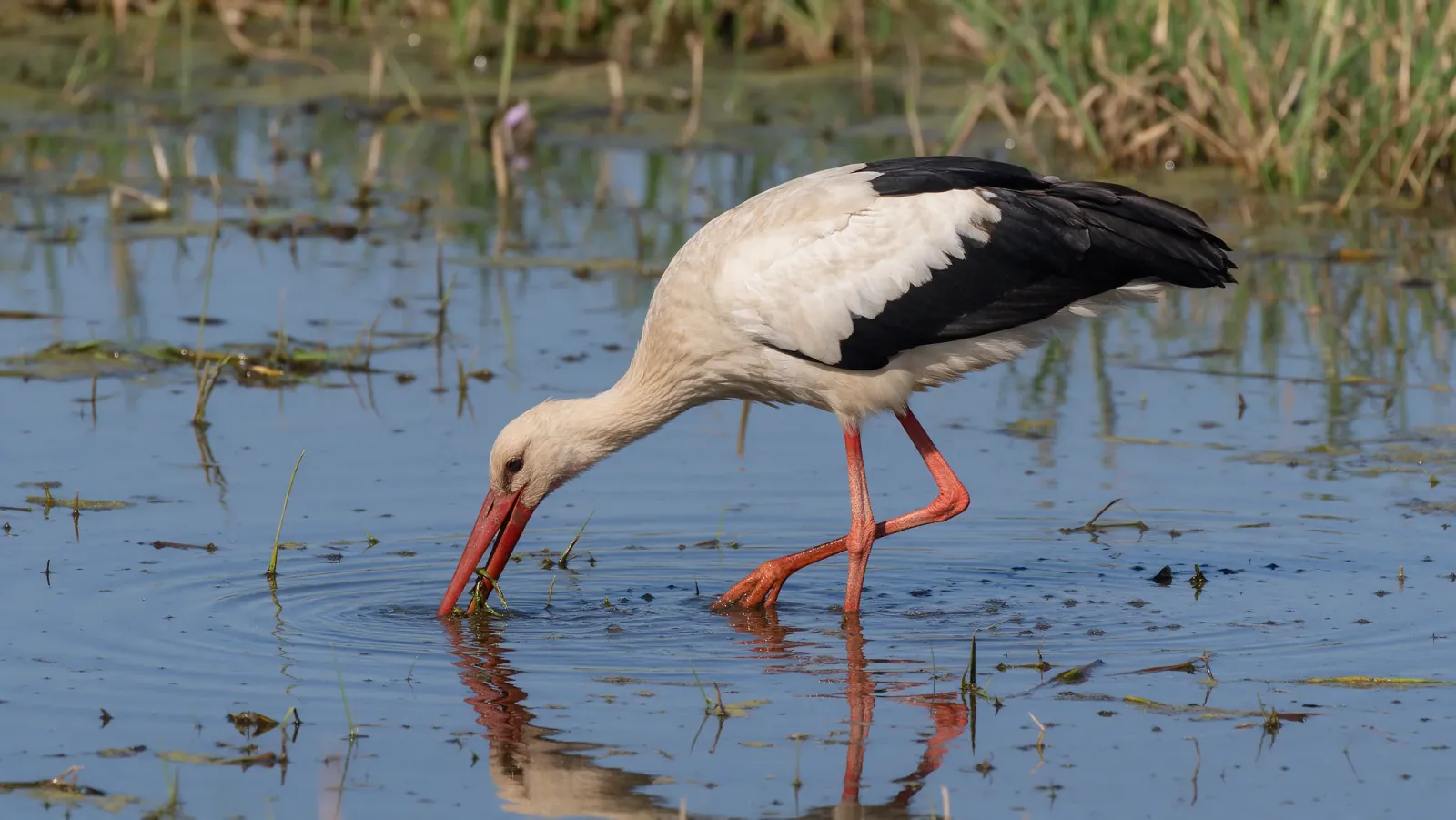
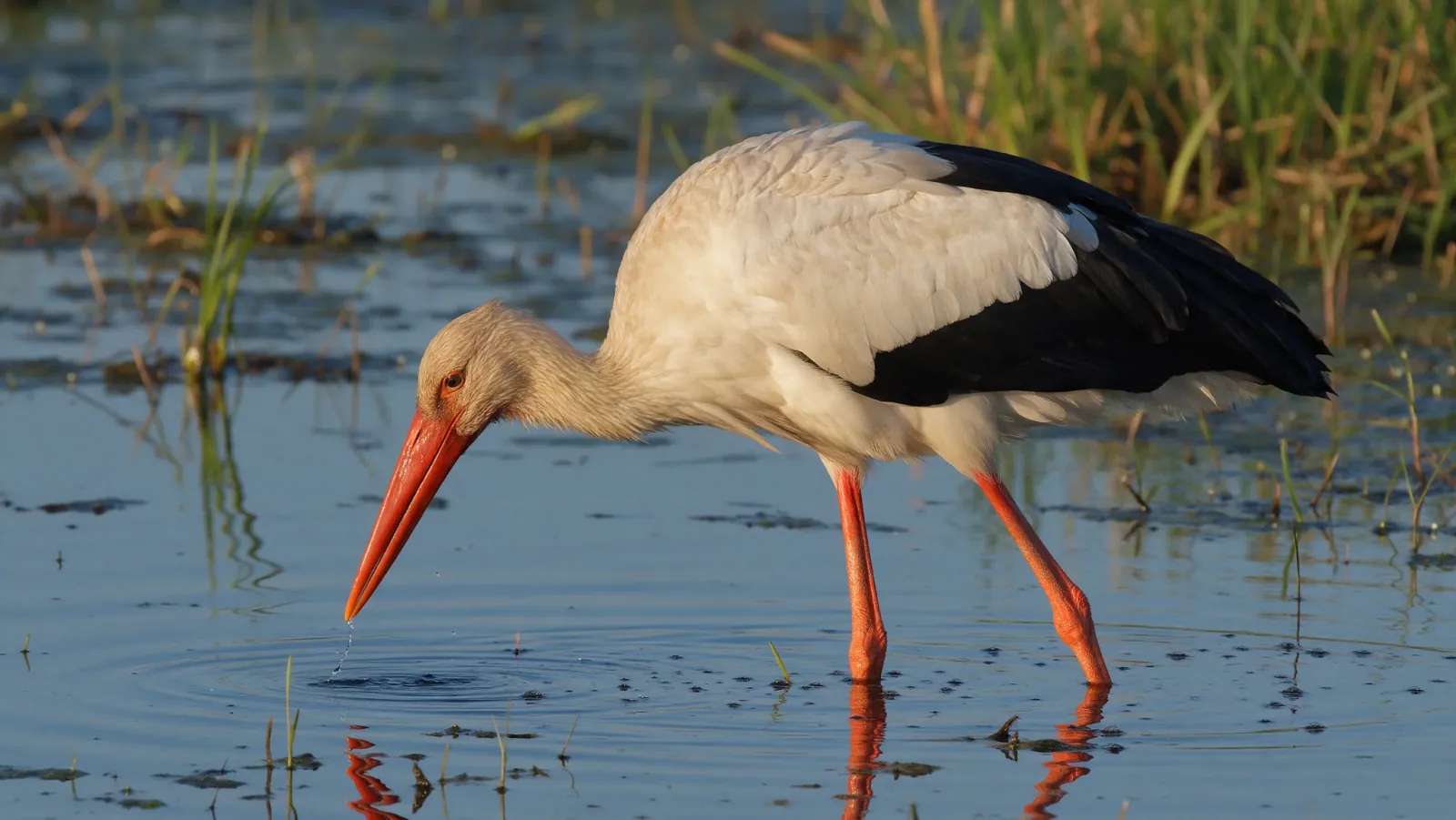
When the ground is visible the bird leaves. A stork without chicks walks out into the nearest wet field and starts to hunt. A parent flies, and the first trip is often the longest and the most productive. The air is cool, the grass is wet, and the frogs and insects are slow and near the surface. A stork with chicks hunts for several mouths, and the early hours are when the meadow gives up the most. The bird works the same corners it used the day before, walking, stopping, striking, and moving on. The first trip also sets the pattern for the rest. A bird that finds frogs in one wet corner returns there through the morning, and a bird that finds nothing moves along the ditch. The parent comes back with a bill full of food, and the changeover takes a moment. The sitting bird rises, the arriving bird steps into the cup, and the young crowd toward the newcomer with their bills open.
The middle hours
By late morning the edge goes out of the hunting. The light flattens, the grass dries, and the prey that was easy to find at dawn has moved into cover. The bird stops. It stands, often on one leg, on a roof or in the field, and does very little for an hour or more. Sometimes the wings lift a little away from the body to let the air through, and sometimes the bird sunbathes with them held wide. On the nest it stands over the chicks and shades them with its shadow. The pause in the middle of the day is part of the work, because the bird is saving strength for the evening. The middle hours are also when feathers get attention. A bird that has been feeding in wet grass comes back with the lower breast dark and clumped, and it spends a few minutes on that patch. Then it stands again. The field may look empty of activity, and the bird is resting, watching, and waiting for the light to lean.
The handover
One bird sits, the other feeds, and they swap at the nest with a bow and a rattle that lasts a few seconds. The chick that was in the shade is suddenly in the sun, and the bird that was hunting is suddenly standing over it. Two parents, one nest, and a day divided into shifts. The changeover is quick because both birds know the routine. The sitting bird does not linger at the rim when its mate returns. It stands, steps away, and flies. The arriving bird settles before the eggs have cooled, and the nest resumes its quiet. The same exchange repeats through the day, and each one is a small negotiation of hunger and shade. A bird that has been away feeding returns with what it caught, and a bird that has been sitting leaves with an empty bill and a long flight ahead of it.
The evening return
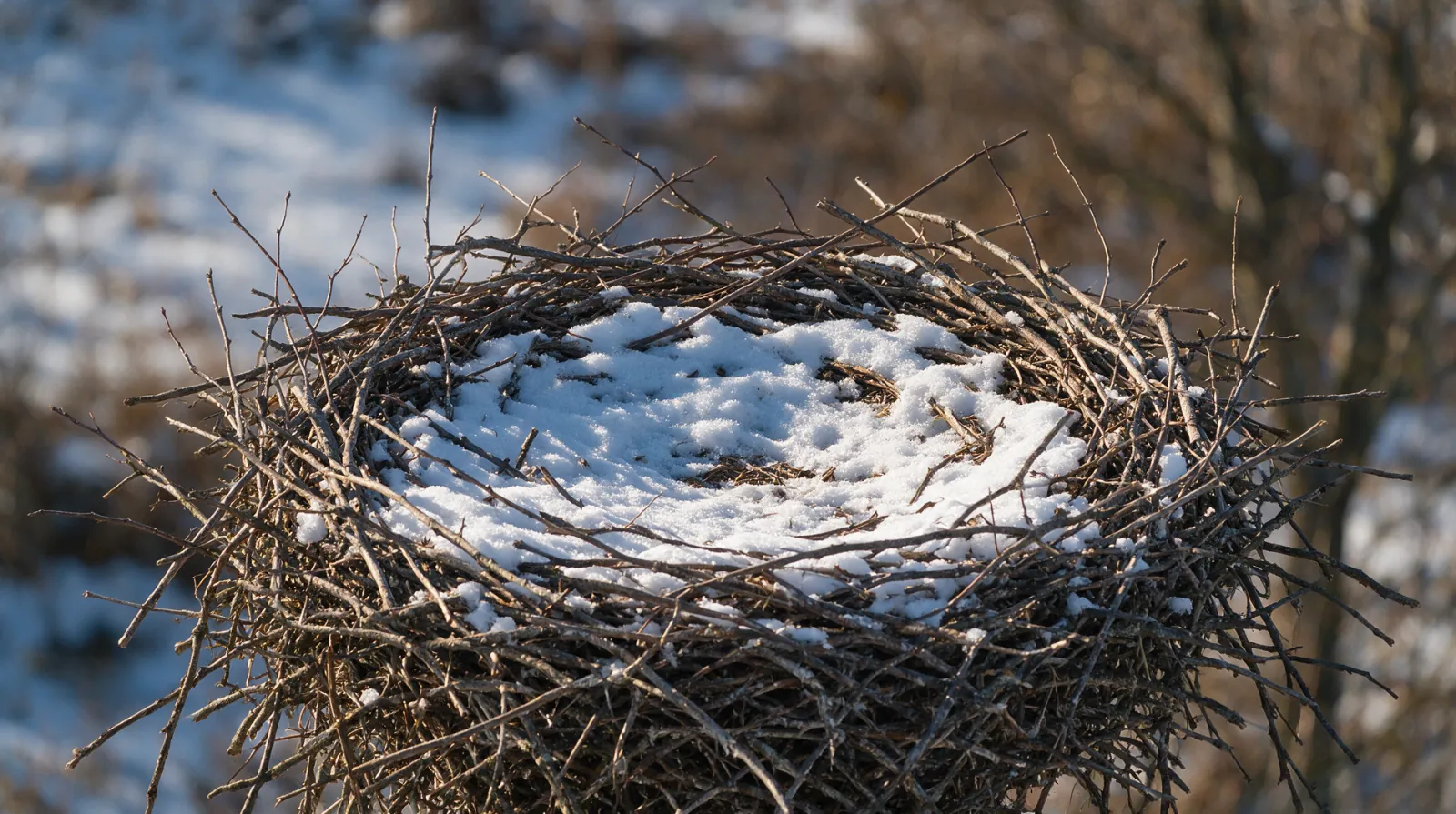
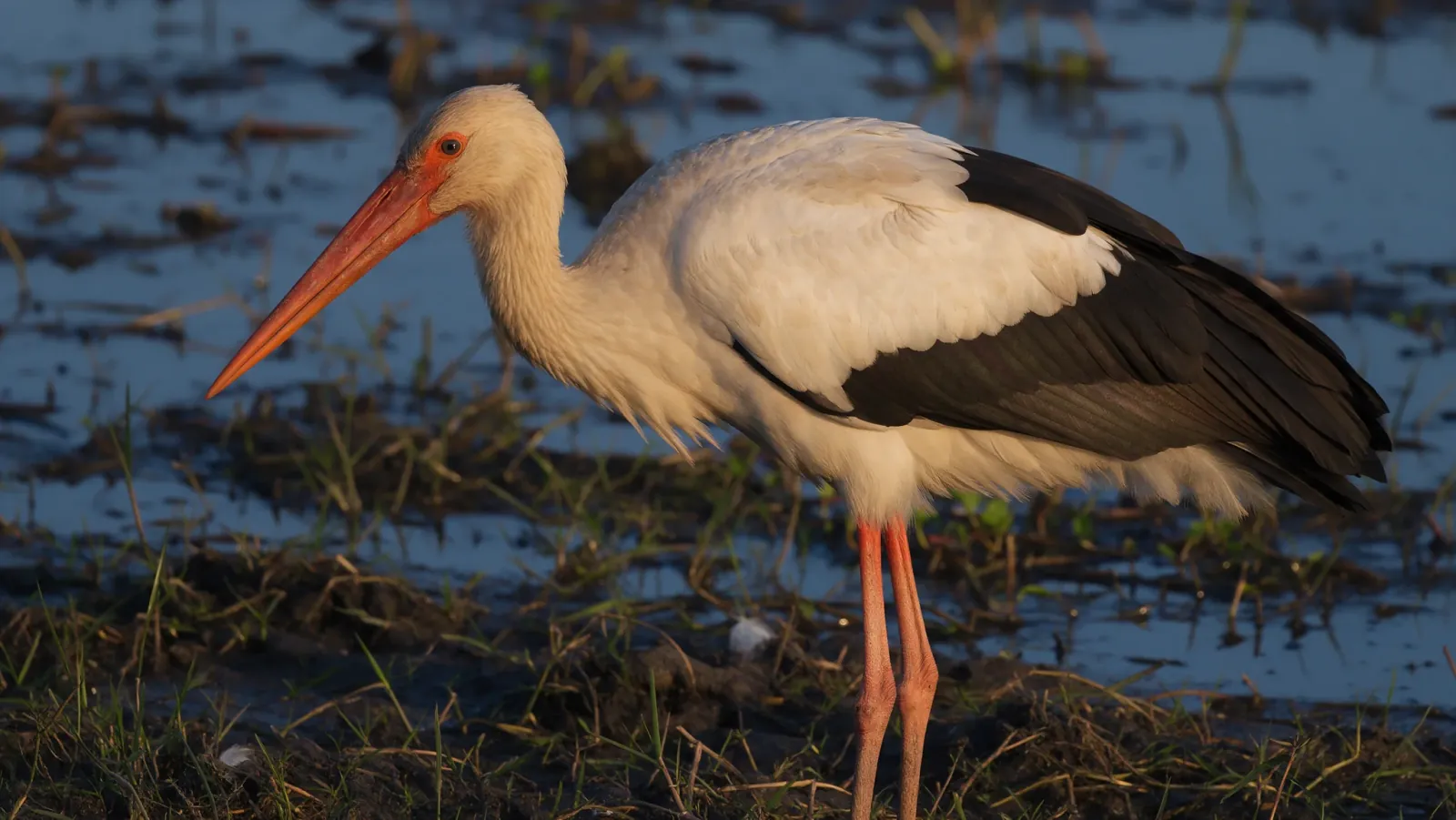
Hunting begins again when the meadow cools. The birds work the same wet corners they used in the morning. A parent makes several trips back to the nest, and the chicks are fed until they stop gaping. The light goes gold, then grey, and the bird takes one last pass over the field before it turns for home. The final flight often comes in the last of the light. A stork may spend half an hour coasting low over the meadow, a few metres up, reading the ground without any intention of landing on it. For the first hour of the night, the nest gives back the warmth of the afternoon. Twigs and dry grass hold the heat, and the cup in the middle stays warm after the air has cooled. The bird settles breast first, shifts the lining with its feet, and turns a little to fit the bowl. Late arrivals come in alone, lower than the others, and land without ceremony. The colony keeps no roll call.
The colony goes quiet
Where storks nest together, the evening brings them back within a short stretch of each other. Birds arrive on the same air, and the rooftops and poles fill with white shapes. For a few minutes there is a scatter of bill rattles and small adjustments, birds stepping around each other and settling. Then it stops. Storks have no dusk song, and the colony falls silent except for the wind and the last swifts. The quiet comes all at once, and the village underneath carries on without noticing. One bird often remains standing at the rim after dark, awake a little longer than the rest, before it lowers its head and tucks the bill away. The night is broken and shallow. A stork comes awake at a clatter from a neighbouring roof, at a chick moving under it, at a car on the lane below, and it checks the yard before it settles again.
Explore the gift