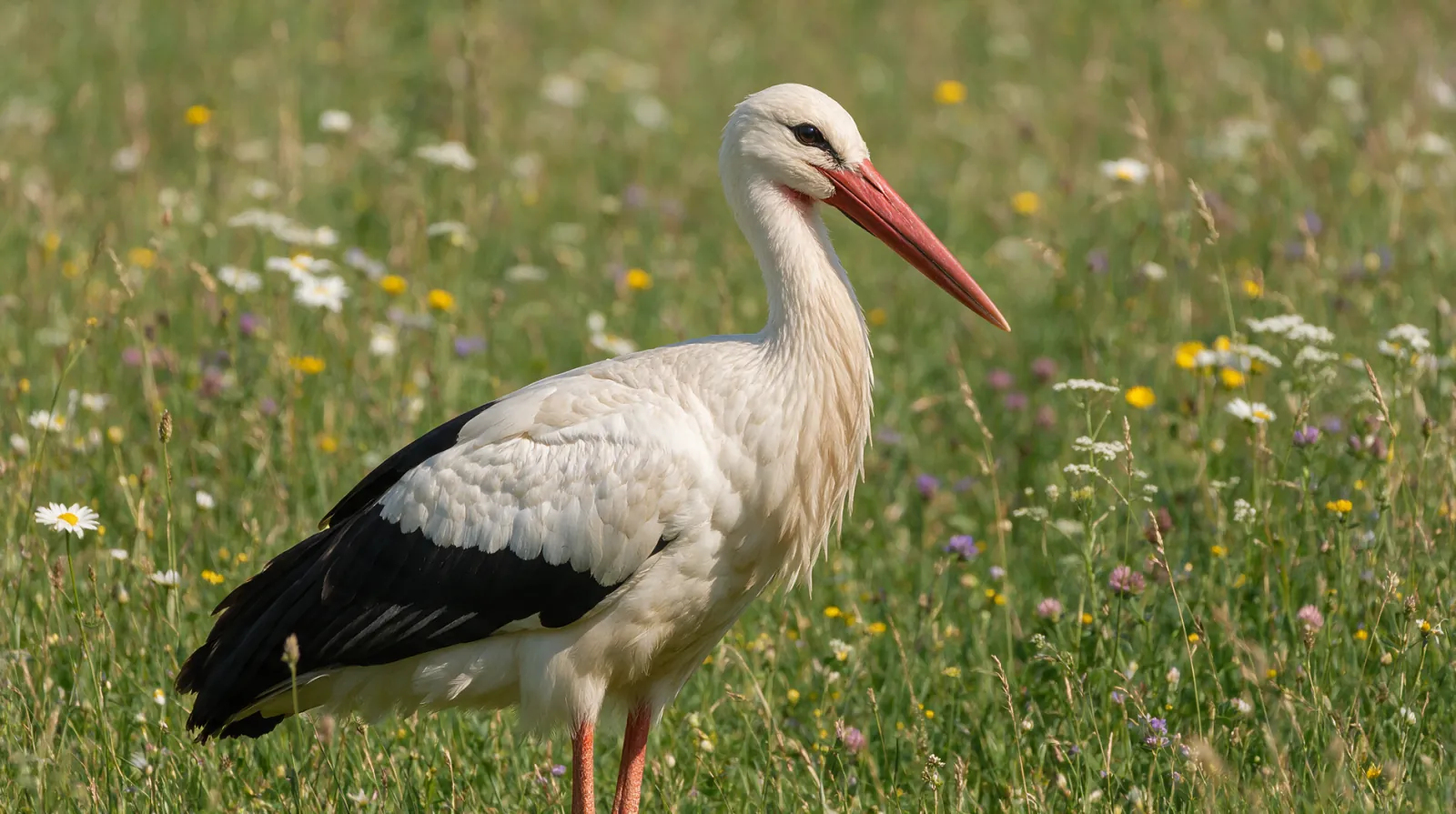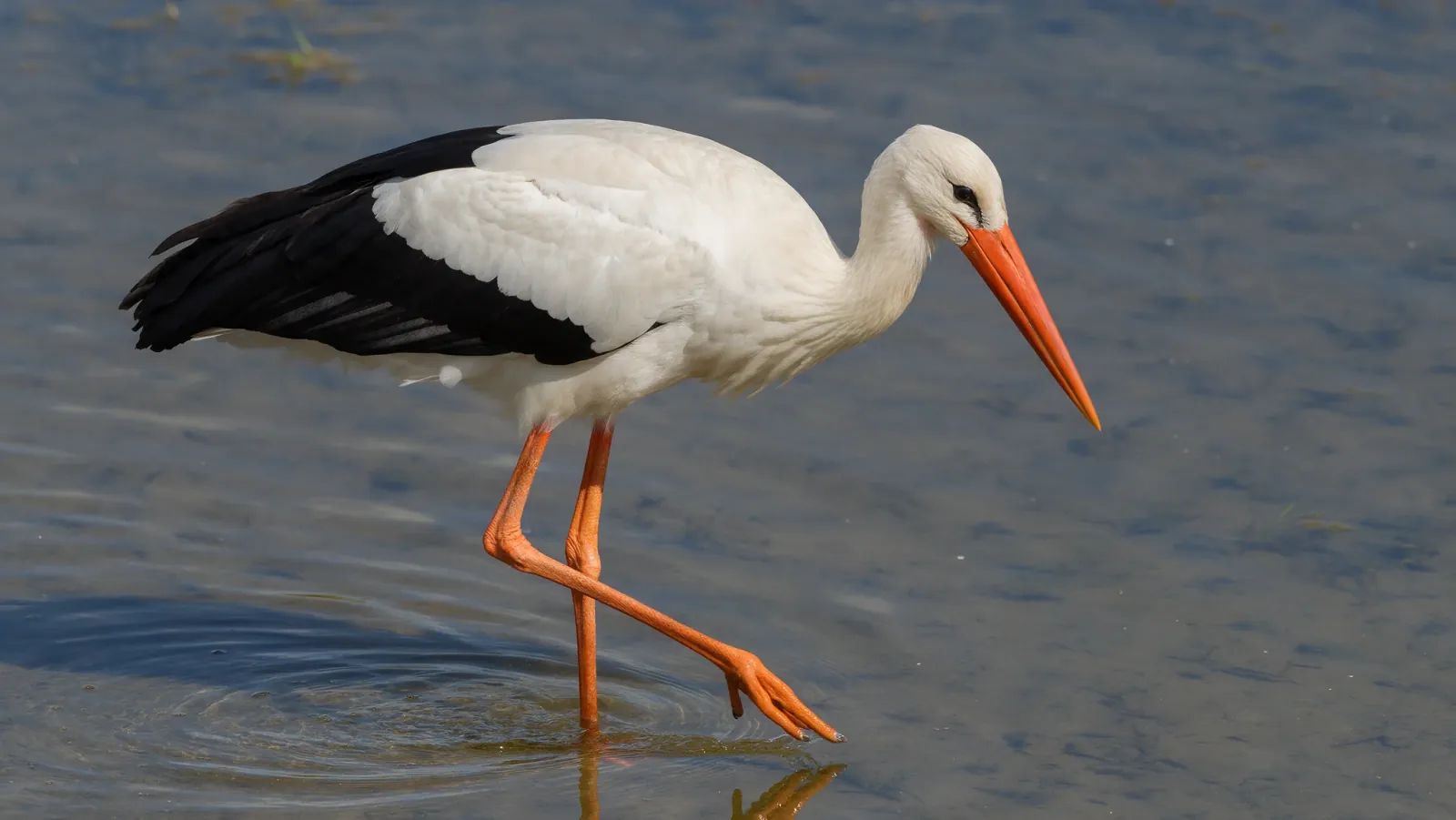
A white stork feeds on foot, and the walk is the method. The bird lifts a long leg, sets it down with care, and crosses wet grass at a pace that never hurries. It may work one meadow for an hour, stop, tilt its head, and move on. The same bird will stand in a ditch without moving for half an hour and then carry what it catches back to a nest in its bill. Walking, waiting, and carrying are three parts of one job, and each one shapes the others.
Legs made for thin water
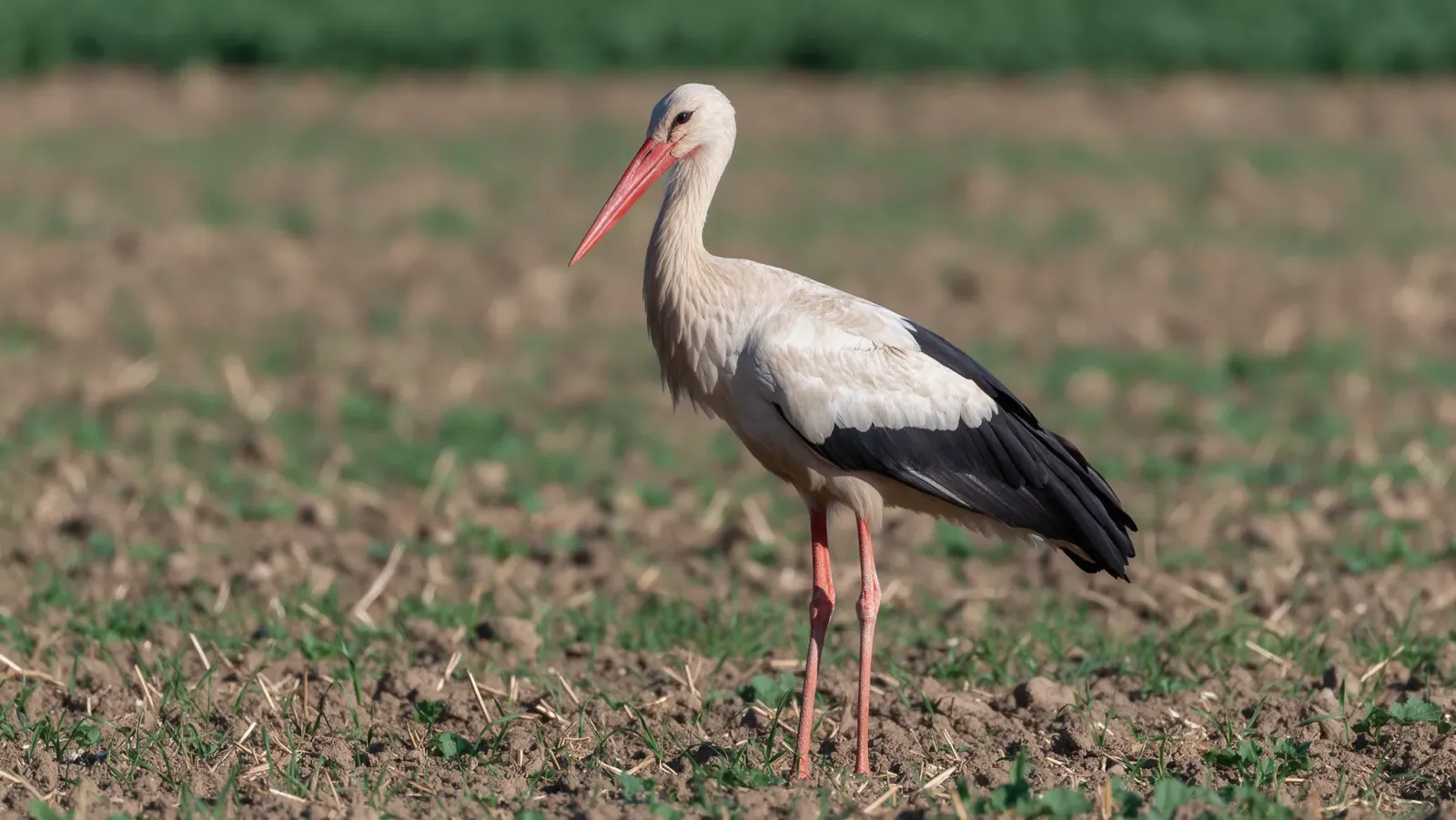
The legs are bare below the body, and the joint that seems to bend backwards is the ankle. Long shins keep the white body and the drooping tail clear of water up to the bird's knees. The toes are long and spread wide, and they carry the bird's weight across soft mud. A stork can stand in a place where a smaller bird would sink. In summer, when the water goes, the same legs part the stems of long grass, and the bird walks with its body hidden and its head above the green. The proportions explain the bird's whole way of hunting. A short-legged bird would have to swim or dive. A stork wades, and the water it can reach is the water it can hunt. The bare skin below the feathers also keeps the legs out of the wet. Mud dries and falls away, and the bird can stand in a ditch for an hour without carrying the ditch home with it.
The high, deliberate step
Watch a stork cross a field and the rhythm shows at once. One leg lifts straight up, folds, and swings forward. The foot lands toes first, the weight settles over it, and only then does the other leg move. The head stays level, the body glides, and there is no bounce in the gait. A foot placed gently makes almost no ripple, and prey in the shallows feel very little. A bird that splashed through the water would send every frog in the ditch under the mud. The slow pace covers ground completely. A morning of it can take a stork across a whole meadow and back, and the bird sees every ditch and wet corner on the way. The step also lets the bird listen. The foot touches down before the weight arrives, so the toes can test the ground and the bird can feel a ditch edge before it commits. In long grass the feet find the drop before the eyes do.
The strike and the field watch
Walking brings the bill within reach of something. The head hangs low, the eyes are on the grass or the water, and the bird reads the ring around each step and the tops of the grass. It aims a little ahead of its feet, which is why a stork often seems to stab at nothing and come up with a frog. Every dozen steps the head comes up, and the bird checks the hedgerow and the sky. A neighbour walking too close gets a stare or a short run, and then the hunting resumes. The walk is a hunt and a watch at the same time. The strike itself is the fastest thing in the sequence. The neck straightens and the bill goes down in one movement, and a frog, a vole, an insect, or a small fish comes up. The catch is tossed back and swallowed, and the bird stands for a second with its head up before walking again. A miss gets a slow look at the water and another step.
The long wait
The walk stops where the water is shallow and the small life is busy. A stork can hold one spot for half an hour with only its head moving. The head turns slowly, a few degrees at a time, and each eye takes in a wide field. The feet stay planted because the outline matters. A bird that shifts its feet breaks the shape that the prey has already accepted as part of the bank. The wait lasts as long as the odds are good. A ditch thick with frogs may produce a strike within a minute. A cold morning may give nothing for half an hour, and the bird reads the water the whole time. When a patch goes quiet, the stork takes a few steps, stops, and starts again. Patience in a stork is aimed. It moves when the water tells it to, and it returns to a stretch of ditch that paid before, at the same hour, along the same edge. In light rain the pose shows best. Water gathers on the bill, the surface is pricked with rings, and the bird watches for the one ring that rain did not make.
A bill built to carry
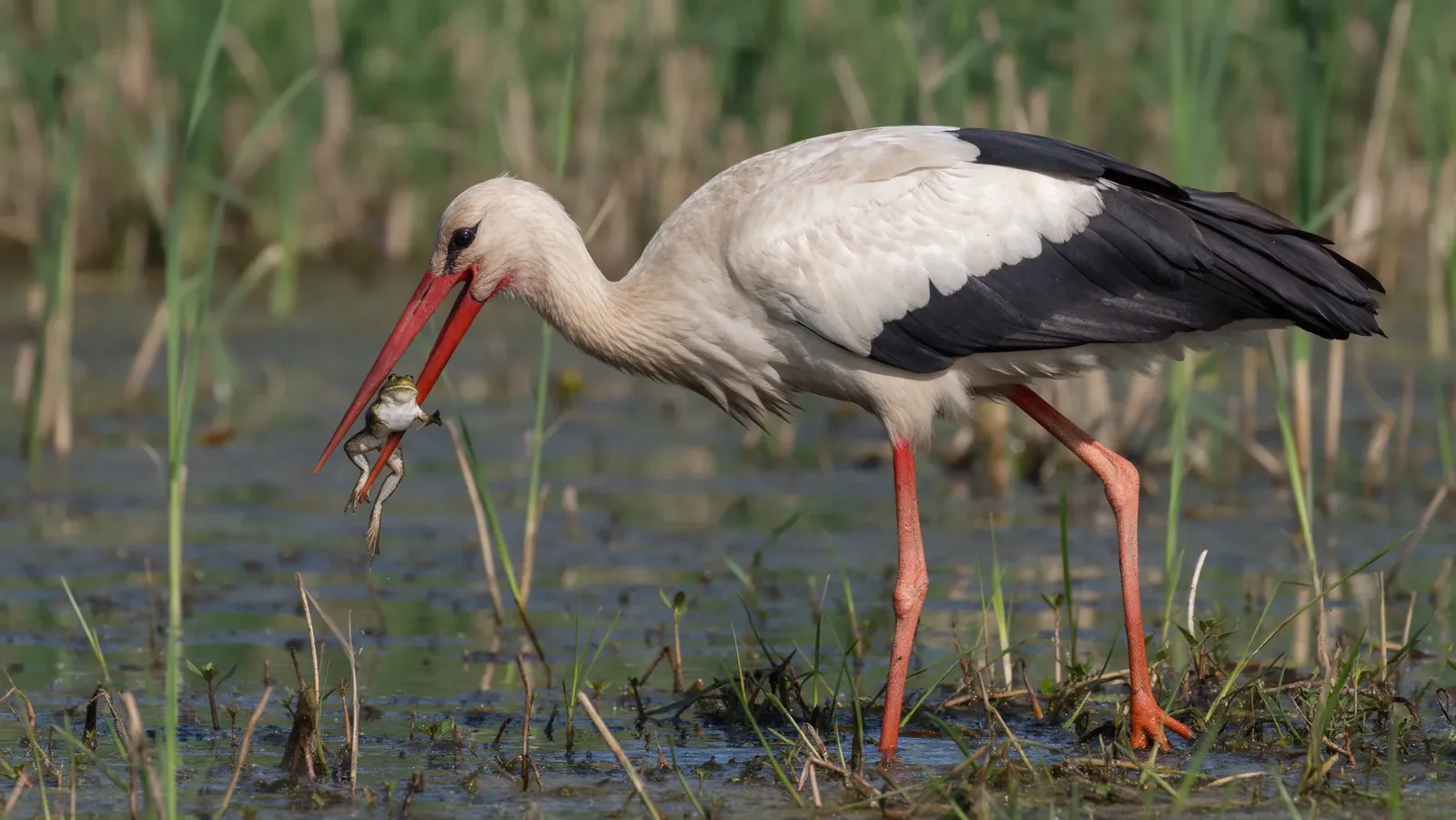
A white stork has no pouch. The bill is long, pointed, and strong, and it does all the carrying. Prey travels crosswise, gripped near the tip, where the mandibles clamp hardest. Held that way it sits clear of the face and does not disturb the flight. A stork may carry a frog or a vole for a kilometre or more without dropping it. Small prey are swallowed at once, and a bird can arrive with several frogs held like a bundle of kindling. The load depends on the mouths at the nest. A parent with small chicks brings soft items and small mouthfuls. A parent with half-grown young can bring a whole frog or a vole. At the nest the chicks surge forward with their bills wide, and the largest and quickest reaches the food first. A parent may stand above the rush and wait for a gap before it lets go. Water comes the same way. A stork can carry water in its bill to chicks too young to leave the nest, tipping it into their gaping mouths on a hot afternoon.
How a young stork learns the ground
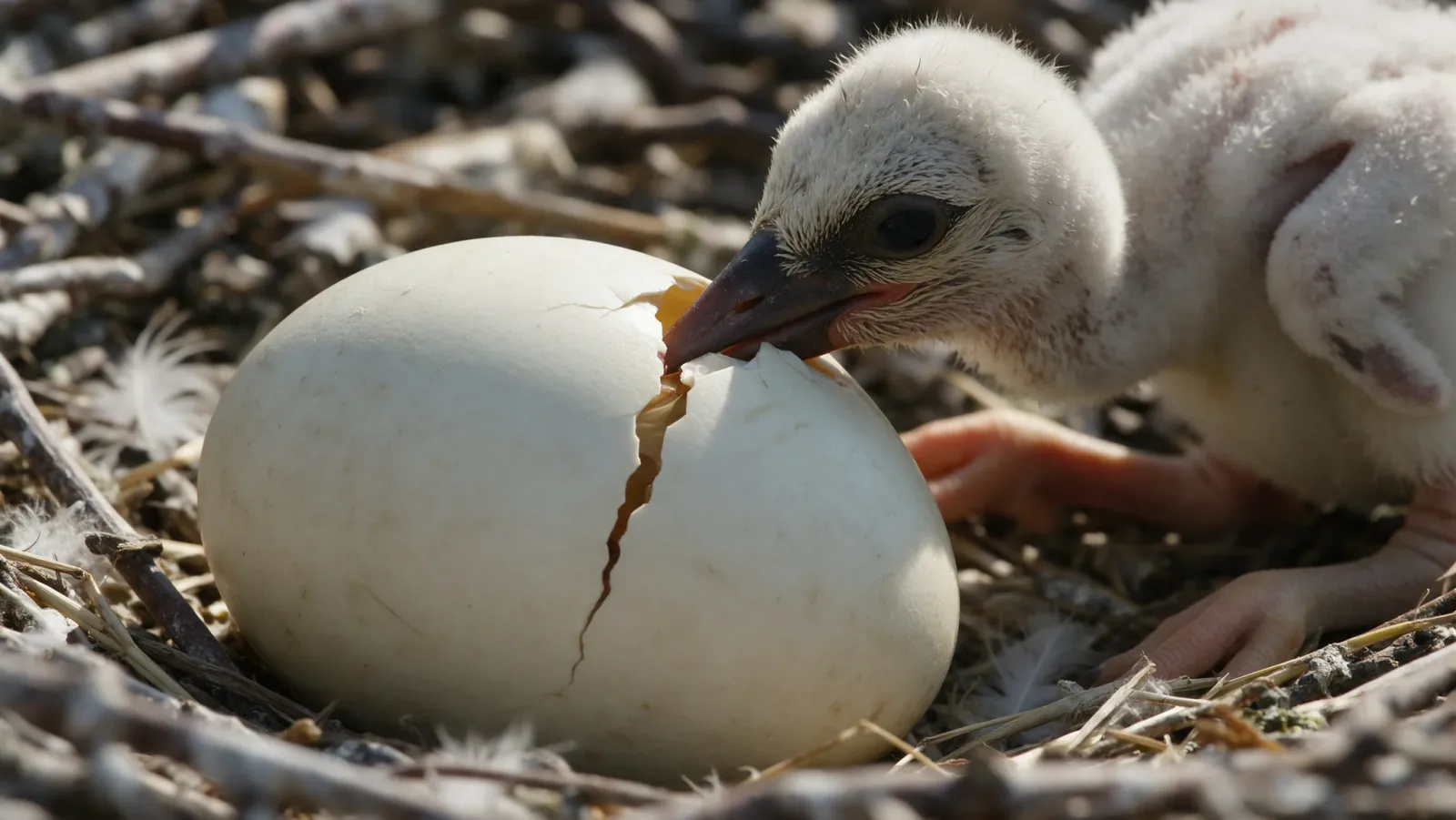
A chick starts with the nest material, grabbing sticks and tugging at a sibling's bill. On a field it walks up to a stone, a scrap of paper, a piece of string, and pecks at each one. The object is turned over, lifted, dropped, and sometimes carried a few steps. The bill works like a fingertip, and every peck sorts the world a little further into food, danger, and irrelevant. Movement pulls the young bird's attention more than anything else. A rolling leaf is followed for metres, and a beetle is watched for a long minute. The same reflex that makes a young stork chase a grasshopper also makes it watch a cat. Parents tolerate most of the mess in the nest, and a chick that grabs at a parent's eye gets a sharp peck. Most of the curiosity fades. A stork in its second year still notices a new object, and it looks first before it steps closer. Some of the cost stays. Young birds pick up twine and plastic, and some of it ends up woven into the nest or swallowed.
Explore the gift