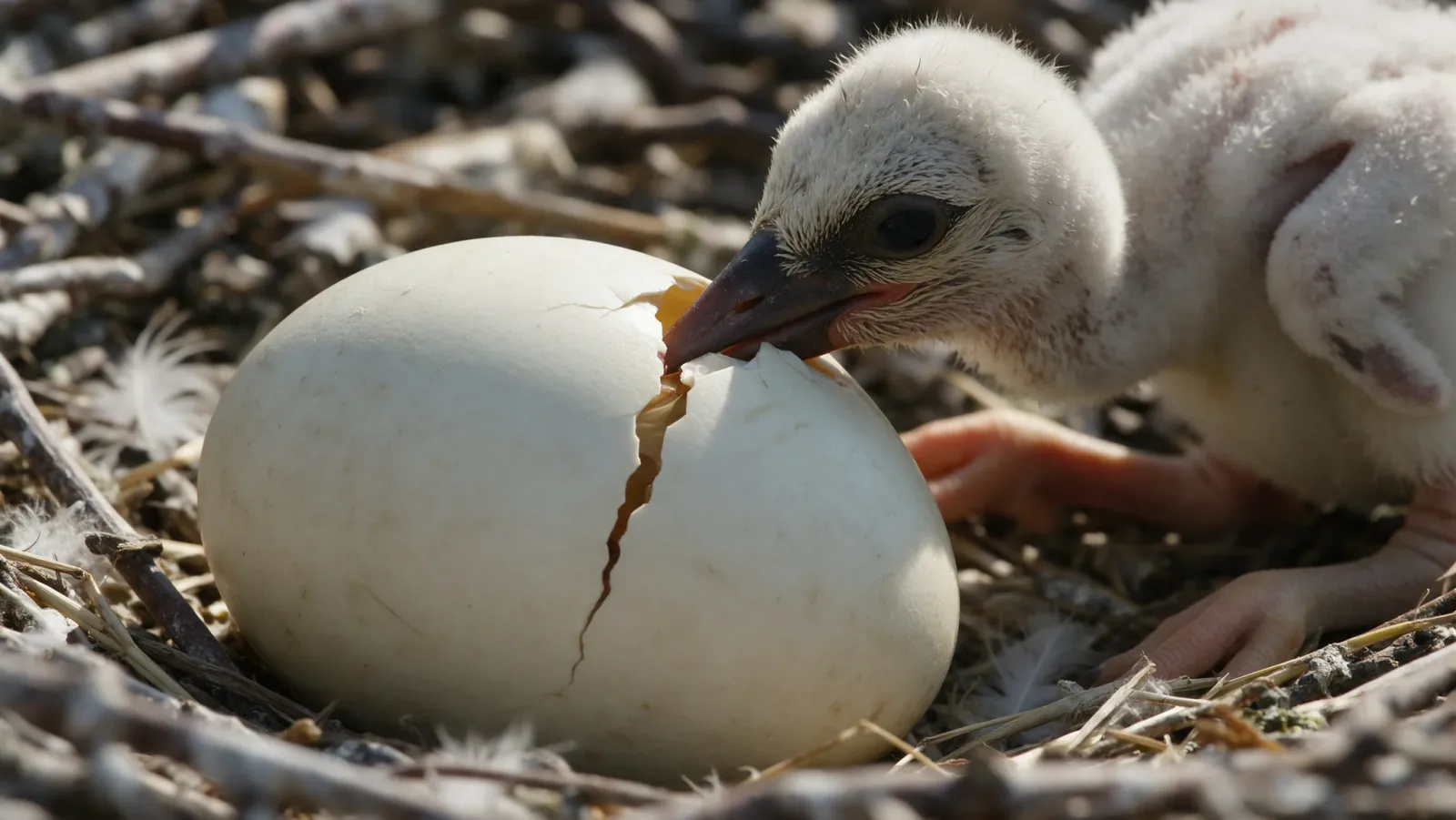
The first pip is a small hole and a large change. After about a month of incubation, a white stork chick uses a hard point on the tip of its bill to break through the eggshell from the inside. The hole may be no wider than a few grains of rice. It is the first time the chick has met the outside air.
A tap from inside
The chick has been preparing for this. Its neck muscles have strengthened, its egg tooth has hardened, and its body has turned so that the tip of the bill rests against the shell. The first strike is a series of small taps, each one weakening the shell a little more.
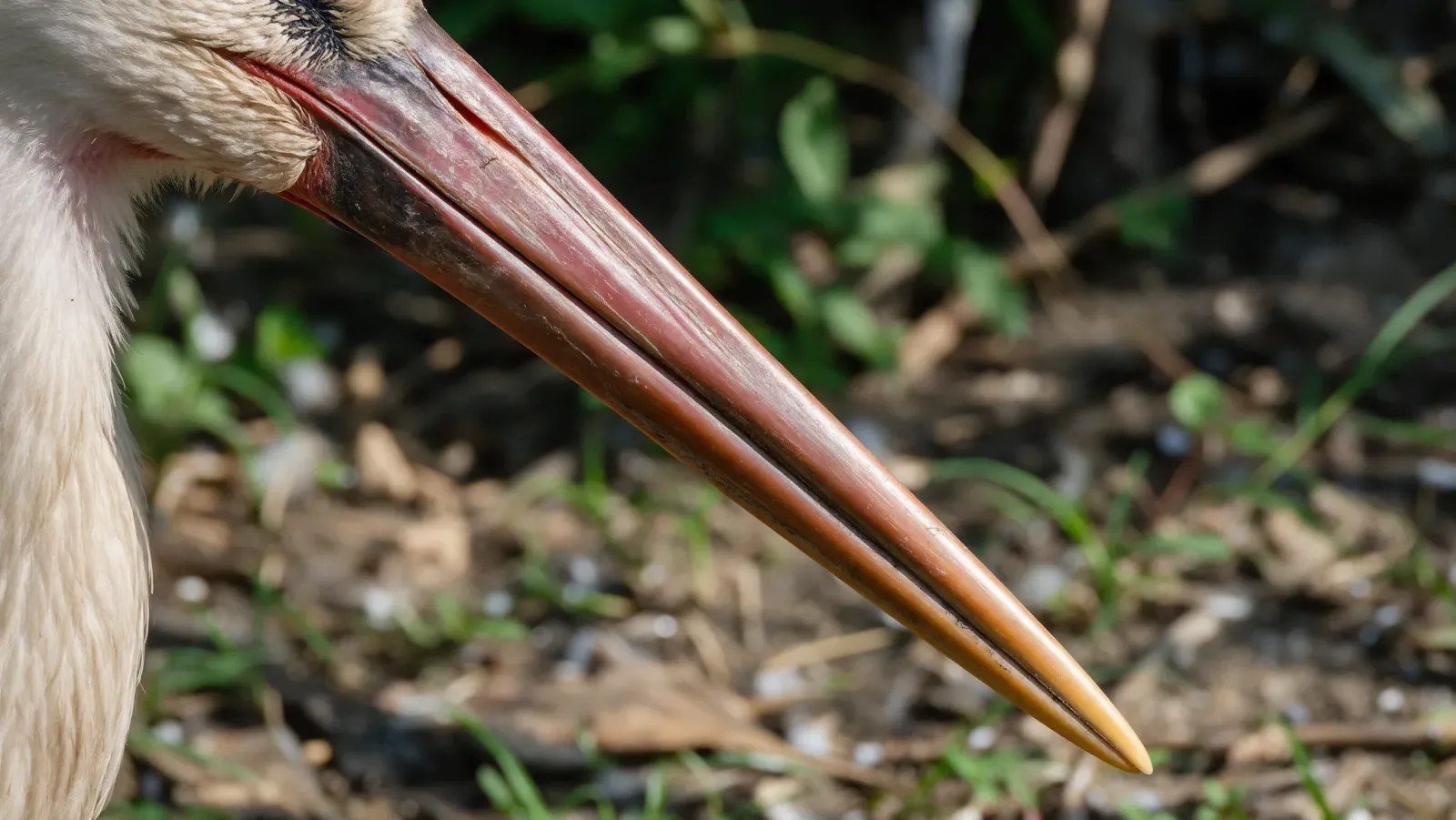
The egg tooth is a temporary tool. It sits on the upper bill and disappears after hatching. A chick gets one use out of it, and that use is the most important work of its short life so far. The egg tooth is a single-use blade that a stork carries for one day.
The tapping is not steady. The chick works, stops, rests, and starts again. From outside the nest, nothing shows. The sitting parent may shift, and the eggs may click as they are turned, but the first stage of hatching happens in the dark.
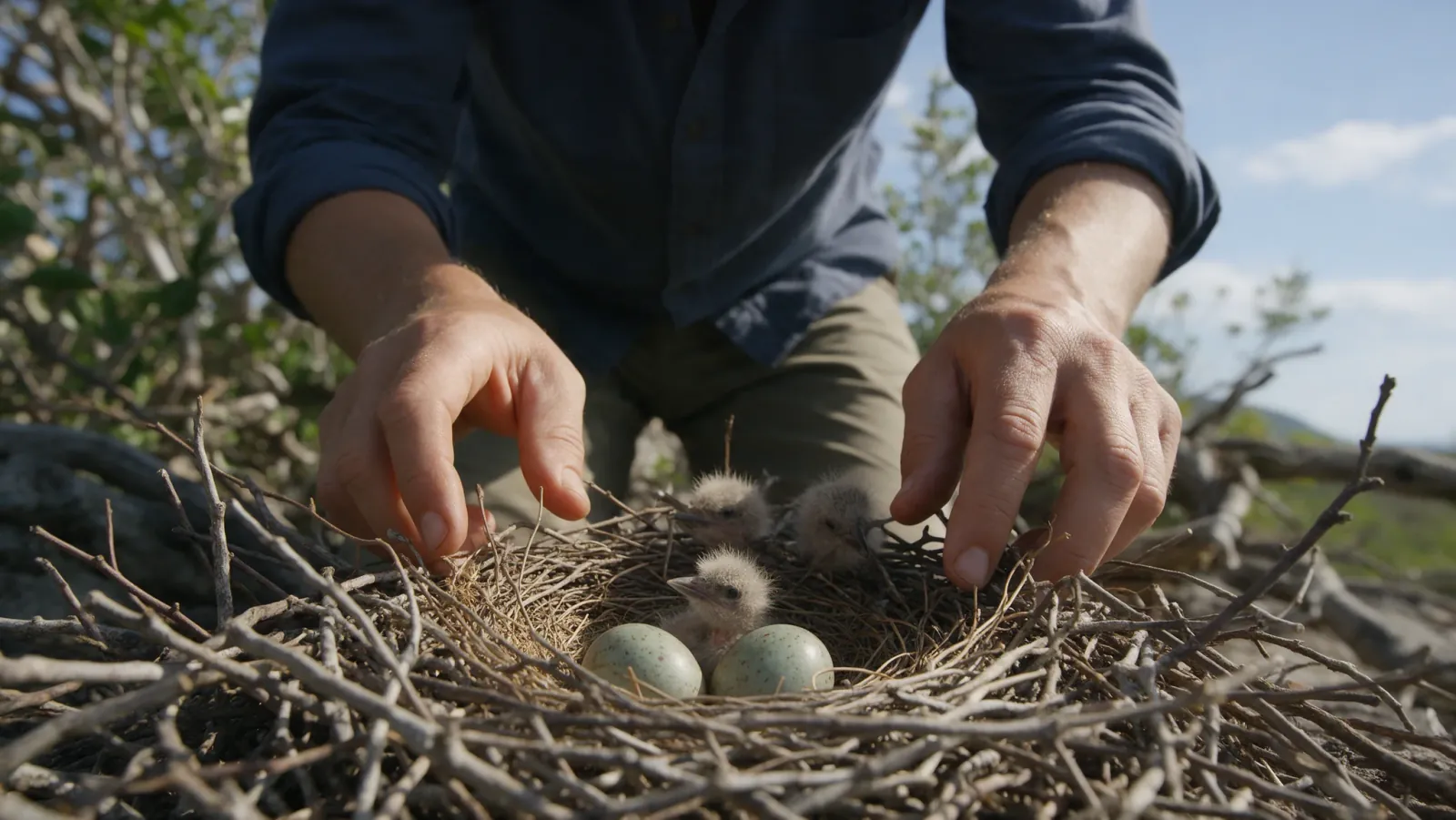
A person watching the nest sees the same bird on the same eggs. The change is inside the shell, where the chick has turned to face the blunt end and begun to use its beak as a chisel. The first taps are aimed at the spot above the air cell, and they are too small to see from the ground.
The air cell comes first
Before the chick breaks the outer shell, it breaks into the air cell at the blunt end of the egg. That pocket of air has been growing as the chick consumed oxygen and released carbon dioxide through the shell. Once the beak enters the cell, the chick can breathe air directly for the first time.
The internal pip often happens a day before the external one. From the outside, nothing shows. Inside, the chick has switched from breathing through a membrane to breathing from a small reserve of air, and it has begun to call. The air cell is the first door a chick opens, and the hole in the shell is the second.
That first breath changes the sound in the nest. The chick's call is thin and repetitive, and it carries through the shell. The sitting bird hears it, shifts its weight, and clatters softly. The other parent comes to the nest more often. Neither bird can do anything to help.
The pair's job is to keep the egg warm and to wait. They cannot break the shell without risking the chick inside, and they cannot pull the chick out. The same patience that carried them through a month of sitting now has a sound attached to it.
The ring of cracks
After the first pip, the chick presses the egg tooth against the inside of the shell and rotates its body. The crack follows the turn. A chick that turns a full circle leaves a groove around the egg, and the shell is ready to open along that line.
The work is awkward. The chick has no room to swing its head. It pushes with its neck and shoulders, stops, repositions, and pushes again. The shell is thin and strong, and the chick is weak and persistent. The rest periods are part of the work, and they can last hours. A watcher who checks at noon and again at dusk may find the same half-open egg and the same quiet.
From the first external pip to the moment the chick is free, a full day can pass. The schedule belongs to the chick, and the parents cannot move it along. Interfering with a hatching egg can do more harm than good, so the pair keeps it warm and waits. A chick that is left alone will finish the work in its own time, usually within a day of the first external hole.
The wet arrival
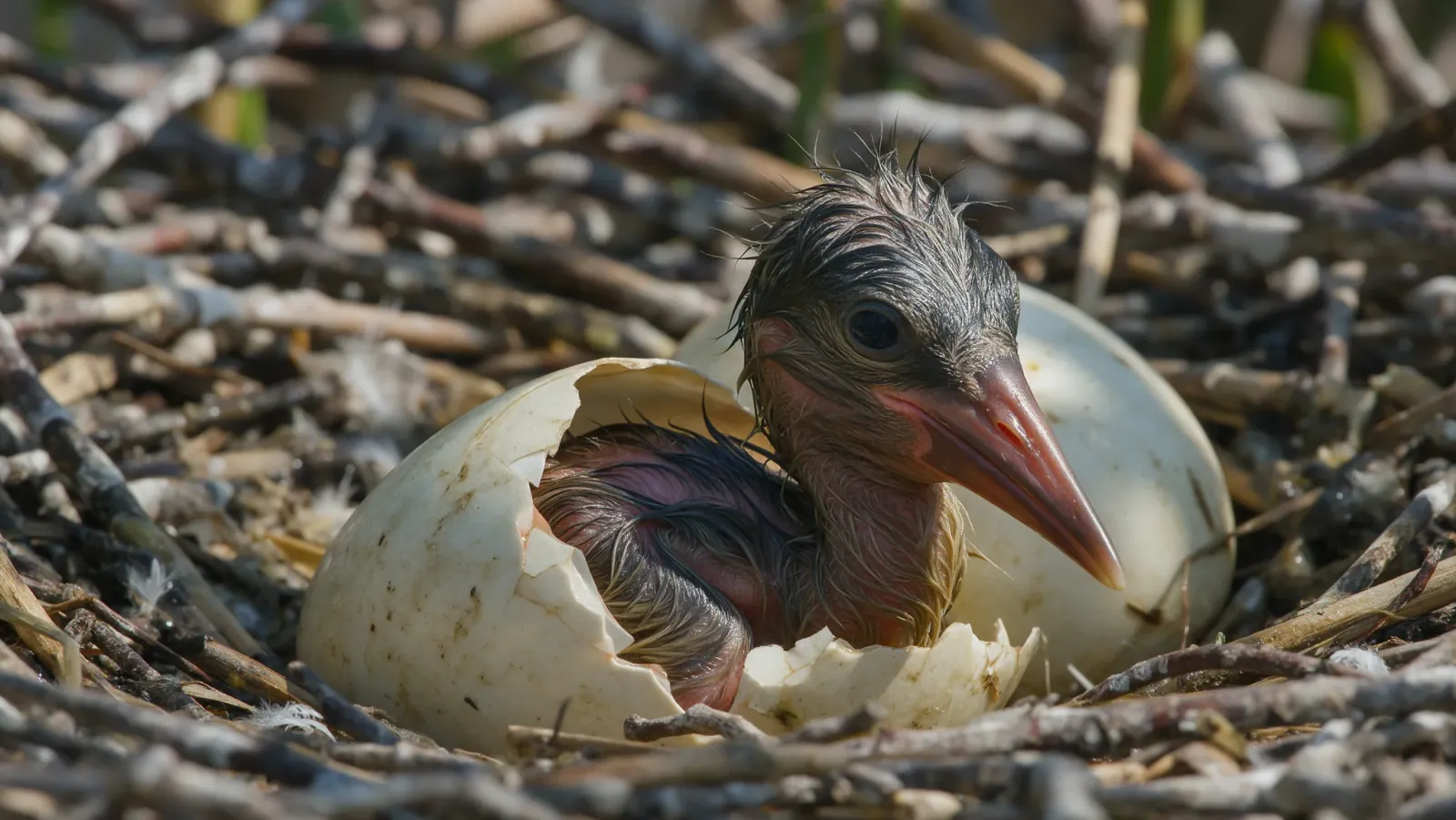
When the shell finally gives, the chick comes out wet and folded. Its down is plastered to its body, its legs are loose, and its head looks too heavy for its neck. It lies in the cup of the nest and blinks. The shell lies in pieces around it.
The parents bend over the new chick and settle it under a warm body. The other eggs may still be whole. The nest now holds two stages of the season at once, a chick and a clutch, and the pair must sit and feed at the same time. The down dries within hours and fluffs out. By evening the chick looks like a small white bird.
The new chick cannot stand for long, and its legs fold under it when it tries. It lifts its head to beg, and the parent bends over it. The other eggs may hatch a day or two later, and each arrival repeats the same wet, folded beginning.
While it worked, the chick was drawing on the yolk sac it absorbed before hatching. That reserve carried it through the effort of leaving and the first hours outside. A newly hatched stork does not need to be fed at once; the yolk pays for the first day. The last of the yolk is drawn into the body through the navel, which closes behind it.
The first weeks of down
The downy days begin with a chick that cannot keep itself warm. The fine white coat holds warmth close, and it does not generate any. A chick alone on the nest cools quickly, especially at night and in rain. The parents solve this by brooding. One bird settles over the chicks and covers them with its body.
For the first week or so, the chicks are rarely left uncovered. As their feathers develop, their bodies learn to hold heat, and the brooding becomes less constant. A brood of three or four lies in a heap, and the heap keeps everyone warmer than a single chick could manage. The same heap is a competition: the chick at the bottom is warm and may miss a meal, the chick at the edge is cool and first to see a parent arrive.
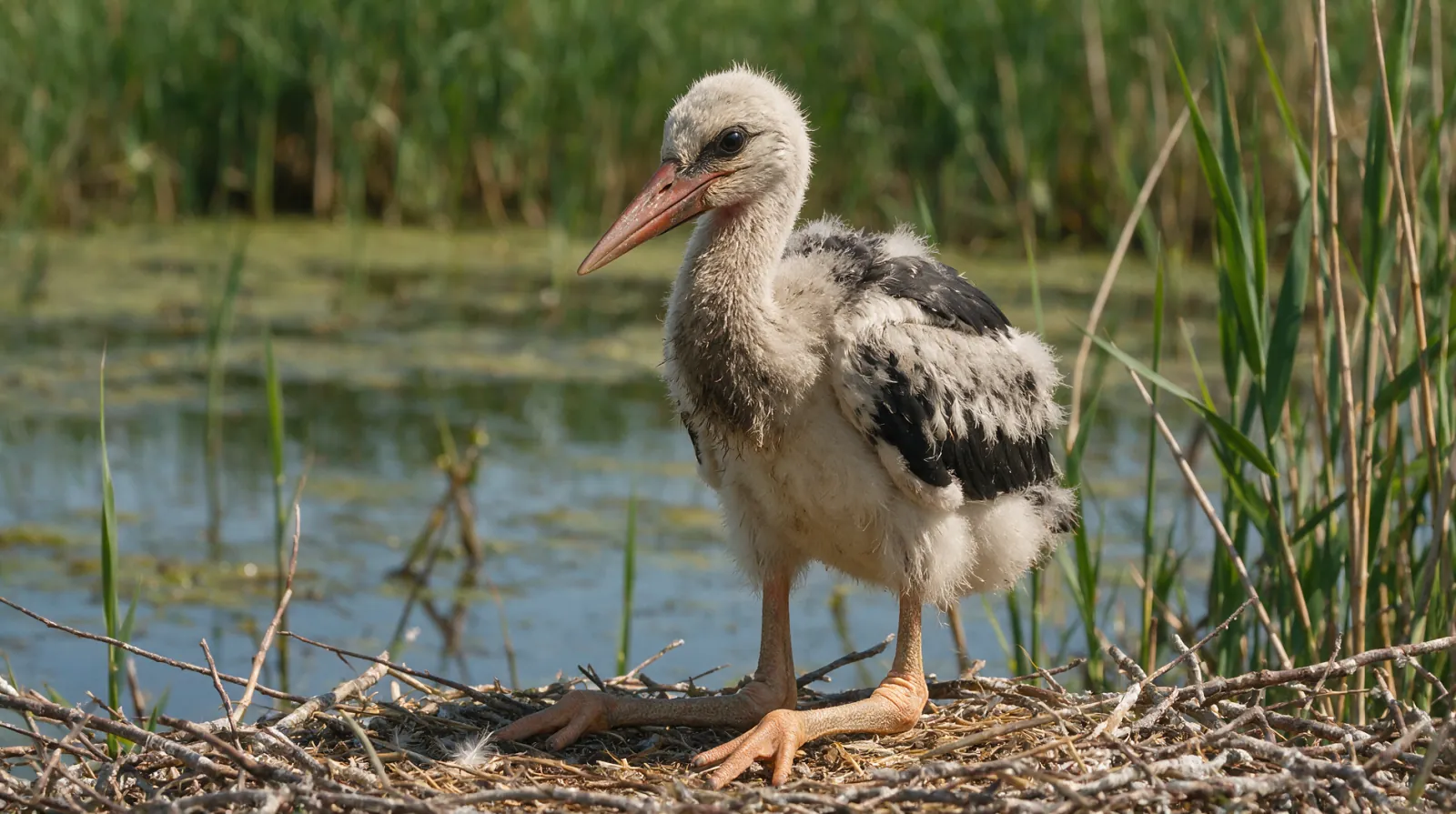
The down does not disappear at once. The first real feathers appear as dark quills along the wings and body. The chick looks patchy for a while, half fluff and half pin, and then the feathers open and the down remains only in tufts. By then the bird is standing, stretching, and watching the edge of the nest. The white down lasts a few weeks; the black flight feathers that replace it take the rest of the summer.
Weather is the first thing a downy chick learns about. Rain cools the nest and mats the down. Sun heats the sticks and makes the chicks pant. The parents respond by covering the brood in bad weather and by standing over it in strong sun, casting shade with their bodies. The nest is a shelter that moves with the weather because the birds are part of it.
Explore the gift