A white stork eats other birds. Mostly it eats frogs, insects and small mammals, and when a duckling or a chick comes within reach, the bill closes on it.
An opportunist at the water's edge
A stork hunting a marsh walks past a mallard's brood. The ducklings are small, dark and slow, and a parent duck cannot defend all of them at once. A stork that takes one has a meal of a size it rarely finds among insects.
The same happens at the edge of a colony of ground-nesting birds. Gulls, terns and waders leave eggs and chicks exposed, and a stork that walks through the colony finds them. The birds rise in a screaming cloud, and the stork keeps walking.
Raiding nests
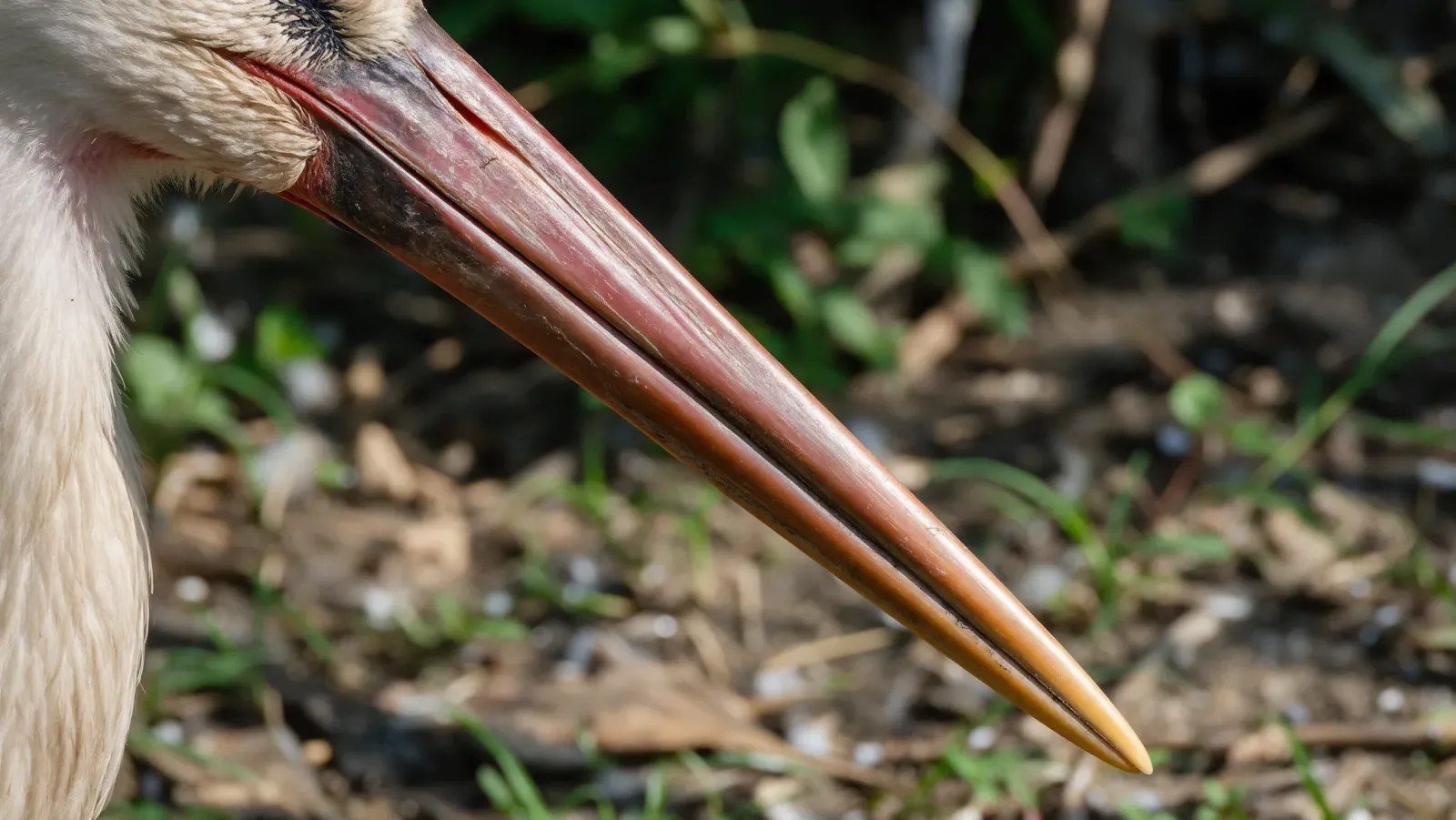
A stork can take eggs and small nestlings from a nest on the ground or in low vegetation. The bill reaches in, and the bird swallows what it finds. A stork's menu is limited by what it can catch and swallow, and a young bird fits both limits.
This is part of the hostility between storks and other birds. A colony will mob a stork that comes too close, and the noise carries across the water. The stork usually takes the abuse and moves on, because the next patch of grass may hold a frog.
Fish and eggs
Storks wade in shallow water and take fish when they can. A stranded fish in a drying pool is easy, and so is a frog that has nowhere to go. Eggs are softer still. A nest on the ground with a clutch in it is a meal that costs the stork nothing but a short walk.
Carrion appears on the list too, and so does food waste. A stork is not fussy, which is part of why the bird lives so close to people.
The smallest chick
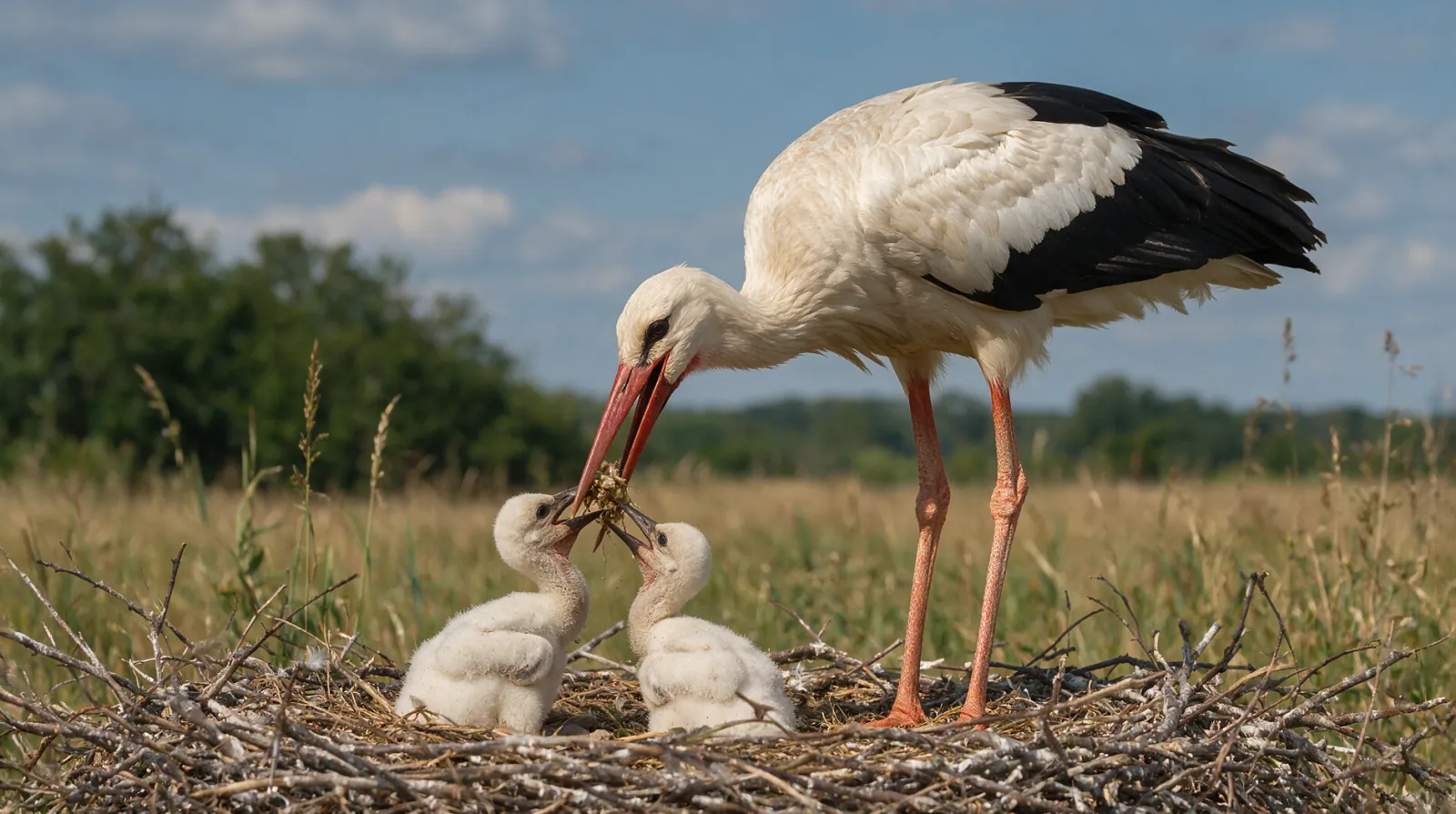
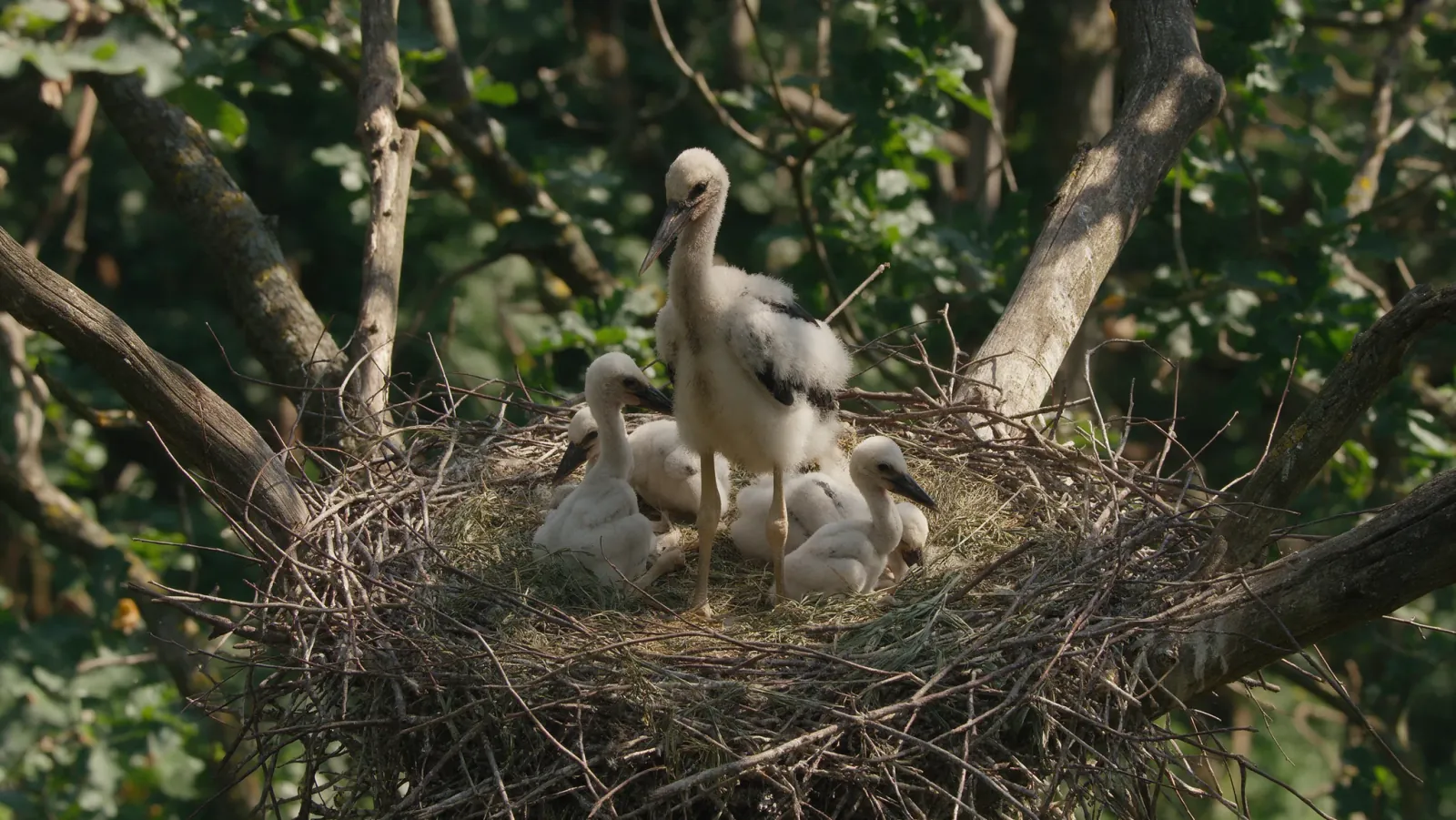
White storks hatch two to five chicks, and the youngest often dies in the nest. The parents feed the chick that begs hardest, and the smallest may be pushed aside or pecked by its siblings. In a hard season the parents may kill and eat a chick themselves.
The habit is called siblicide, and it appears in many birds that raise more young than the food supply can support. A brood that starts with four chicks often ends the summer with two or three, and the nest is no place of perfect harmony.
How often it happens
A stork's day is mostly insects, and a bird is a rare item on the list. The habit shows up when the chance is easy: a duckling in shallow water, a chick that cannot fly, a nest at the height of a stork's bill.
Adults of larger species are a different matter. A heron or a gull can injure a stork, and a stork that has learned to fear a colony will not push its luck. Most of the birds taken are young, and most of those are taken in a few weeks of spring. An injured adult is a different prize, and a stork will take one if it can.
Watching without judgement
In a wetland in spring you may see a stork swallow a duckling and then stand in the sun as if nothing has happened. The duck will call, the other ducklings will scatter, and the stork will go back to hunting frogs.
The scene is hard to watch and easy to explain. The bird is a predator with a broad menu, and a small bird is on it. The same bird will spend the rest of the afternoon catching grasshoppers, and the marsh will go on.
Explore the gift