A stork walk works best with a sheet in hand and a rule about distance. The birds are large and easy to see, and a group can tick most of these marks from a path without leaving it. Print one sheet per child and let each person keep a tally.
Before the walk
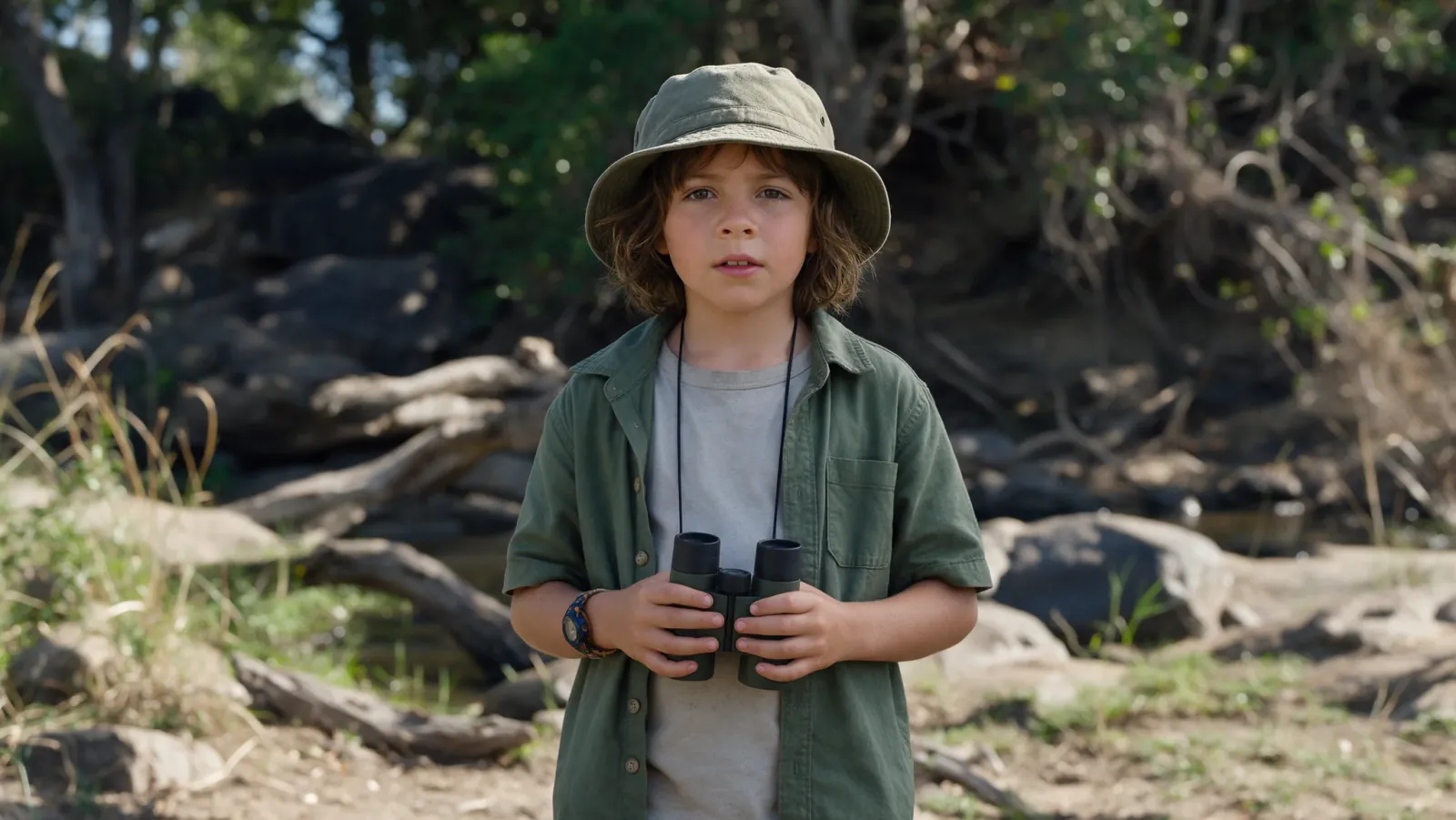
Walk quietly and keep to the edge of the path. Binoculars help, and so does a teacher or parent who can point out a nest before the group arrives. Note the time, the weather, and the place at the top of the sheet. Pack a pencil, a clipboard, and a snack. A short walk with a clear turning point works better than a long one, and a small group sees more than a loud one. A good stork walk is mostly standing still and looking. Tell the group that a stork will move away if people walk toward it, so the best view comes from a little distance.
Marks to tick on the ground
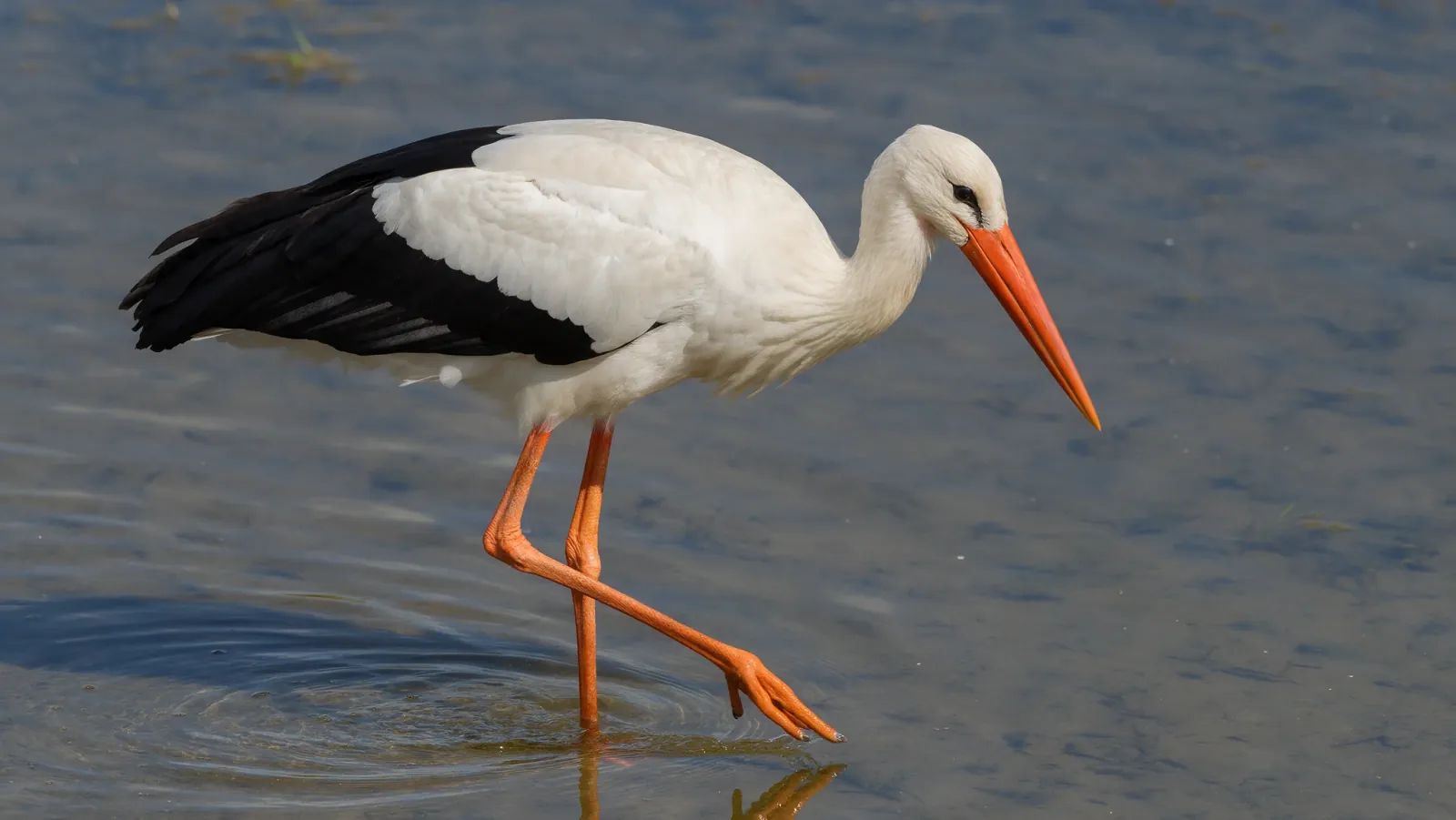
When a stork is standing, tick the white body, the black wing tips folded along the back, the long red legs, and the straight red bill. Watch how it moves: a slow walk with the head forward, a stop every few steps, a quick strike at the grass. The bird often feeds in a field that has been cut short, where frogs and insects are easy to see. If it is resting, tick the leg tucked up into the feathers. The red legs against white feathers are the easiest mark on the sheet. A young stork may show duller, greyer legs and bill, and that is worth a note in the margin.
Marks to tick in the air
Look for a large bird with broad wings, the neck stretched out in front, and the legs trailing behind. Tick a deep, slow flap followed by a long glide. Tick a bird circling without flapping, riding air that the group cannot feel. Storks leave the ground in the morning once the air begins to rise, so a midday walk often gives the best flight views. A stork in a thermal looks like it is drawing slow circles in the sky. The black trailing edge of the wing shows clearly from below. If several birds are up, note whether they fly in a loose group or a line.
Marks to tick at the nest
A stork nest is a heap of sticks on a pole, a roof, a chimney, or a dead tree. Tick two birds at the nest, one arriving with a stick, or a white head showing above the rim. Old nests are often used again and get bigger each year. Some nests sit on platforms built on poles, put up by people who want the birds to stay. The nest is usually the easiest thing to find, because it sits where people can see it. Keep the group back and let the birds come and go.
What to write down
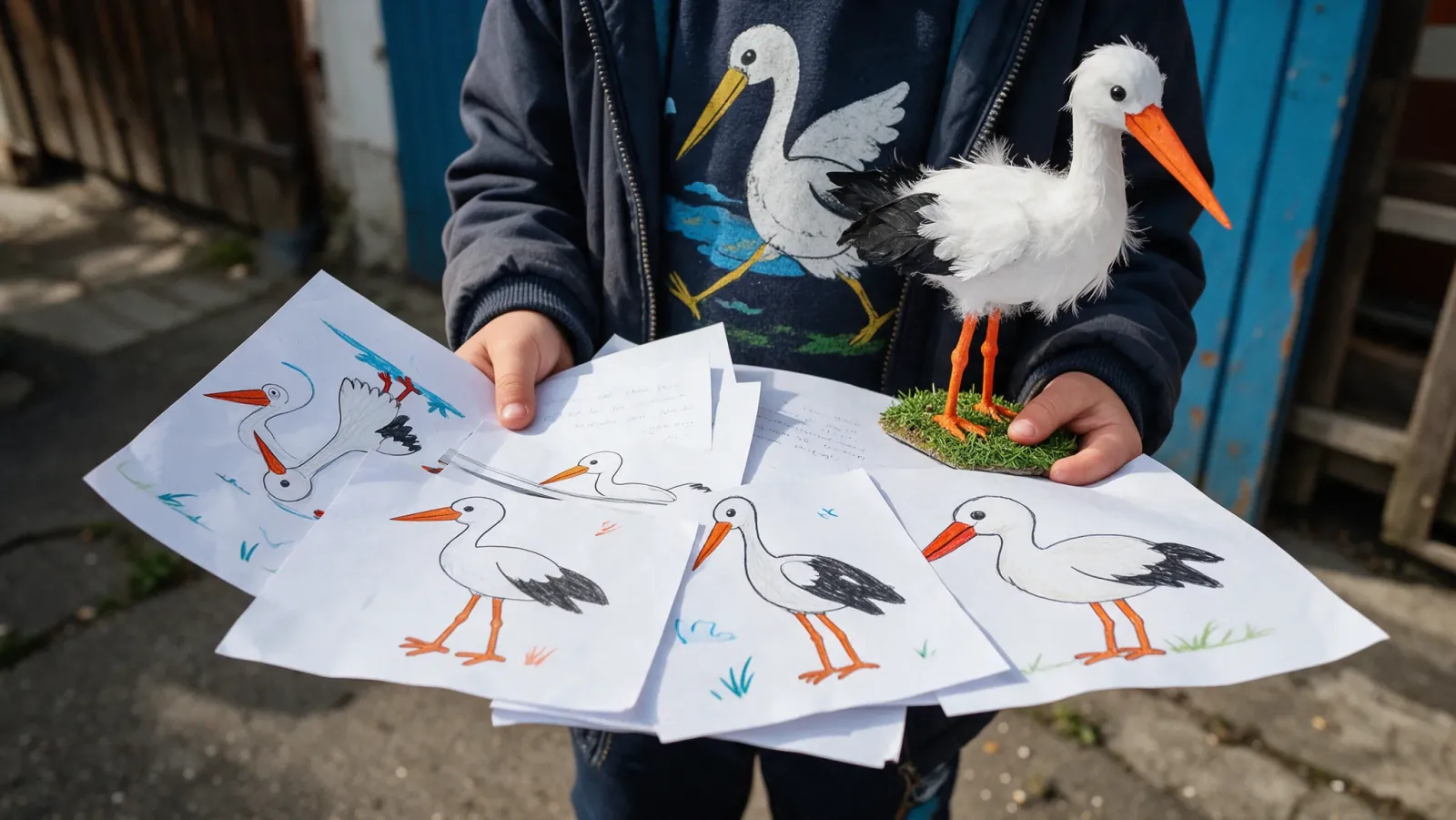
At the end of the walk, write the number of storks seen, what each one was doing, and any sound heard. A bill clatter is a mark of its own. Add a sketch of the nest or the bird's shape in the air. Compare notes at the end, because two children often see different things. Six ticks and one good sketch make a full sheet. A walk with no storks still counts if the group notes the empty nest, the wet field, and the weather. A nest with birds on it is worth a longer stop. A group that wants a stork of its own can adopt one and follow its story at home.
Explore the gift