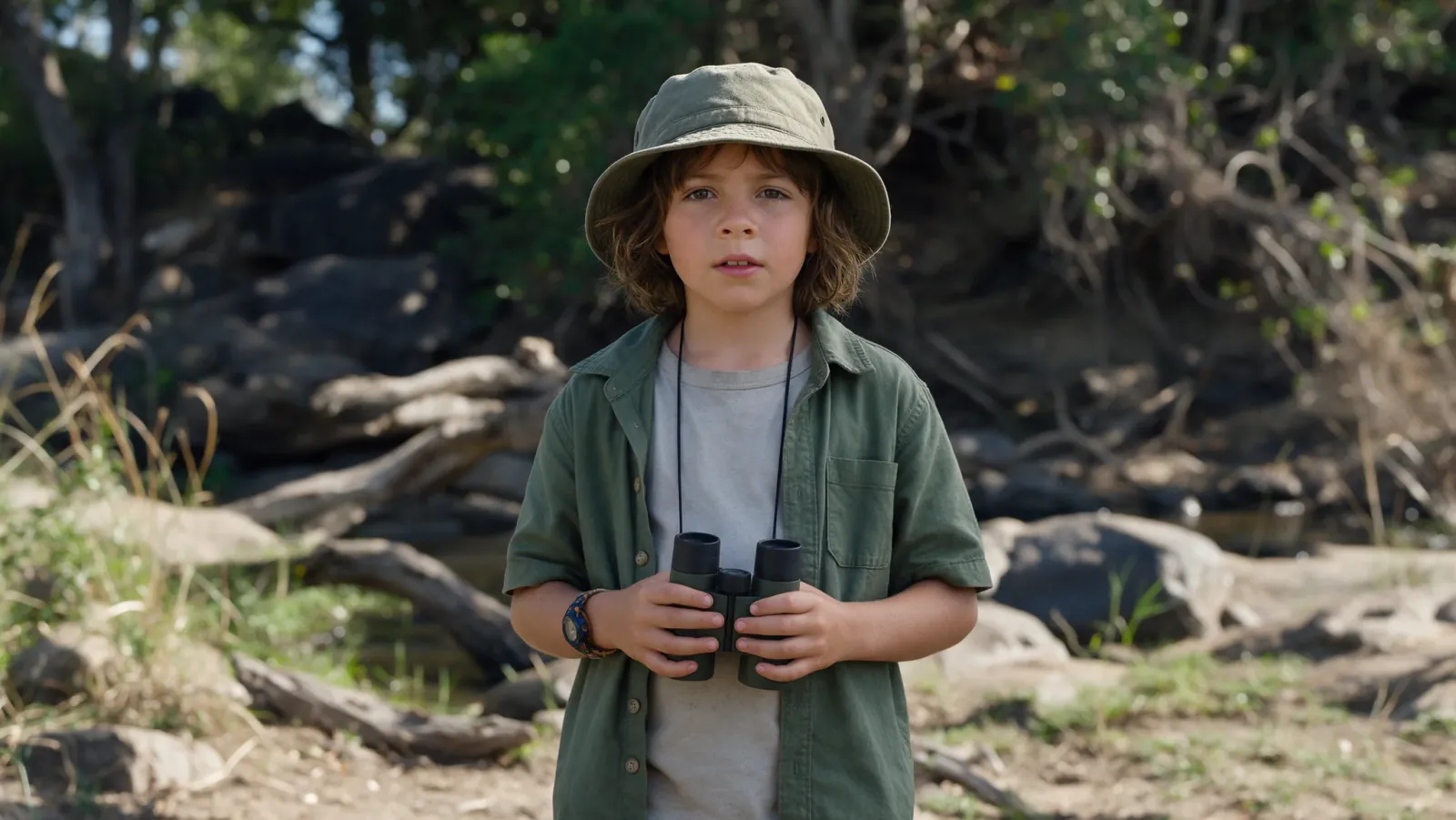
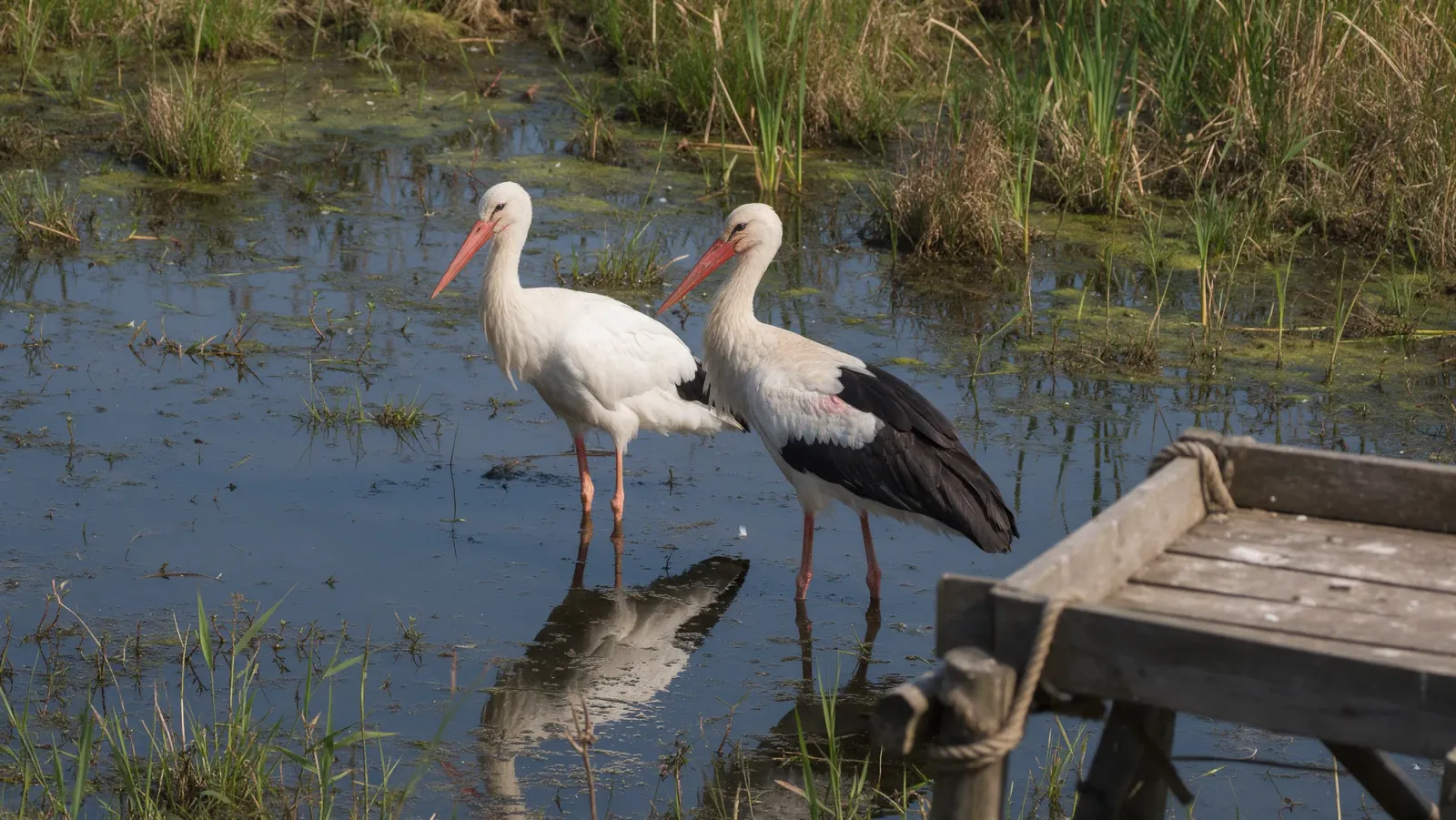
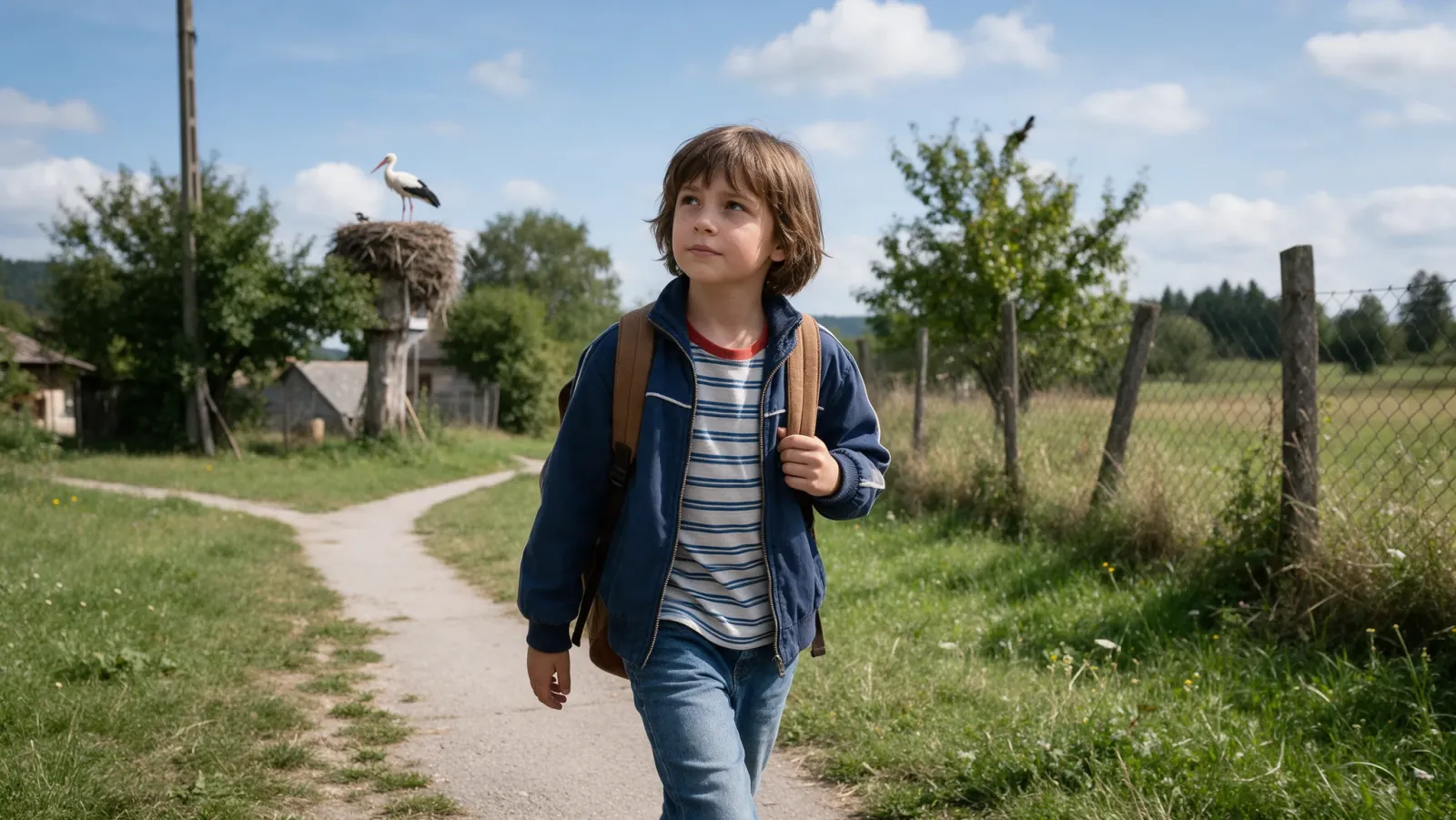
The stork in the school project starts with a question from a teacher: choose an animal and learn about it. One child picks the white stork, and a folder begins to fill.
The reasons are small and specific. The long red legs. A nest on a farmhouse roof. A bill that clatters instead of singing. A child does not need a large reason to begin.
Choosing one bird
Children choose for small reasons. The black tips on the wings. A bill clattering on a farmhouse roof. The sound of the word. The reason does not need to be large, and it usually is not.
The white stork makes a good subject because there is a great deal to learn. A nest of sticks that grows year after year. A return to the same roof each spring. A journey of thousands of kilometres and back again. A real bird that crosses whole countries has caught a child's attention, and that is enough to begin.
The choice gives the child a place to stand in a playground conversation. Ask a child about the animal they picked and watch them lean forward. The leaning is the learning showing itself.
A project about a stork also has a physical fact a child can check. The bird is about a metre tall, with a wingspan near two metres, and it stands in fields within reach of many towns.
The project also gives the family something to do at a weekend. A drive to a known nest, a walk along a wet field, a pair of binoculars in the car. The research moves outside the folder.
The choice also tends to stick. A child who picks a stork at seven may still be able to tell you the wingspan at twenty, and the telling comes with a small, private pleasure.
Facts that turn into pictures
The child learns that the stork does not sing. It clatters its bill, a fast wooden rattle that carries across a village. The child learns that it wades through wet meadows after frogs and insects, and that the nest is not abandoned when winter comes. The birds leave and return, as steady as the seasons.
Somewhere in the reading, the animal stops being a page and becomes something the child can picture. The child knows where it sleeps, what it eats, how far it flies. A fact becomes a picture, and the picture becomes a thing the child cares about.
A teacher can see the change. A child who has really learned about an animal leans forward when talking about it, and the details come out without prompting.
The facts also correct the story. The bird does not carry babies. It carries sticks, frogs, and a long journey. The child can hold both versions at once, and the holding is a skill.
A child who knows the wingspan can hold the number against a doorway at home. Two metres is wider than most door frames, and the comparison makes the bird real in a room.
The drawing on the wall
Every project has a drawing. A white body, a long orange beak, wings like half-open scissors, and a nest that is a crown of brown lines on a red roof. The picture is not accurate in the way a photograph is accurate, and it holds the bird in the way a memory holds it.
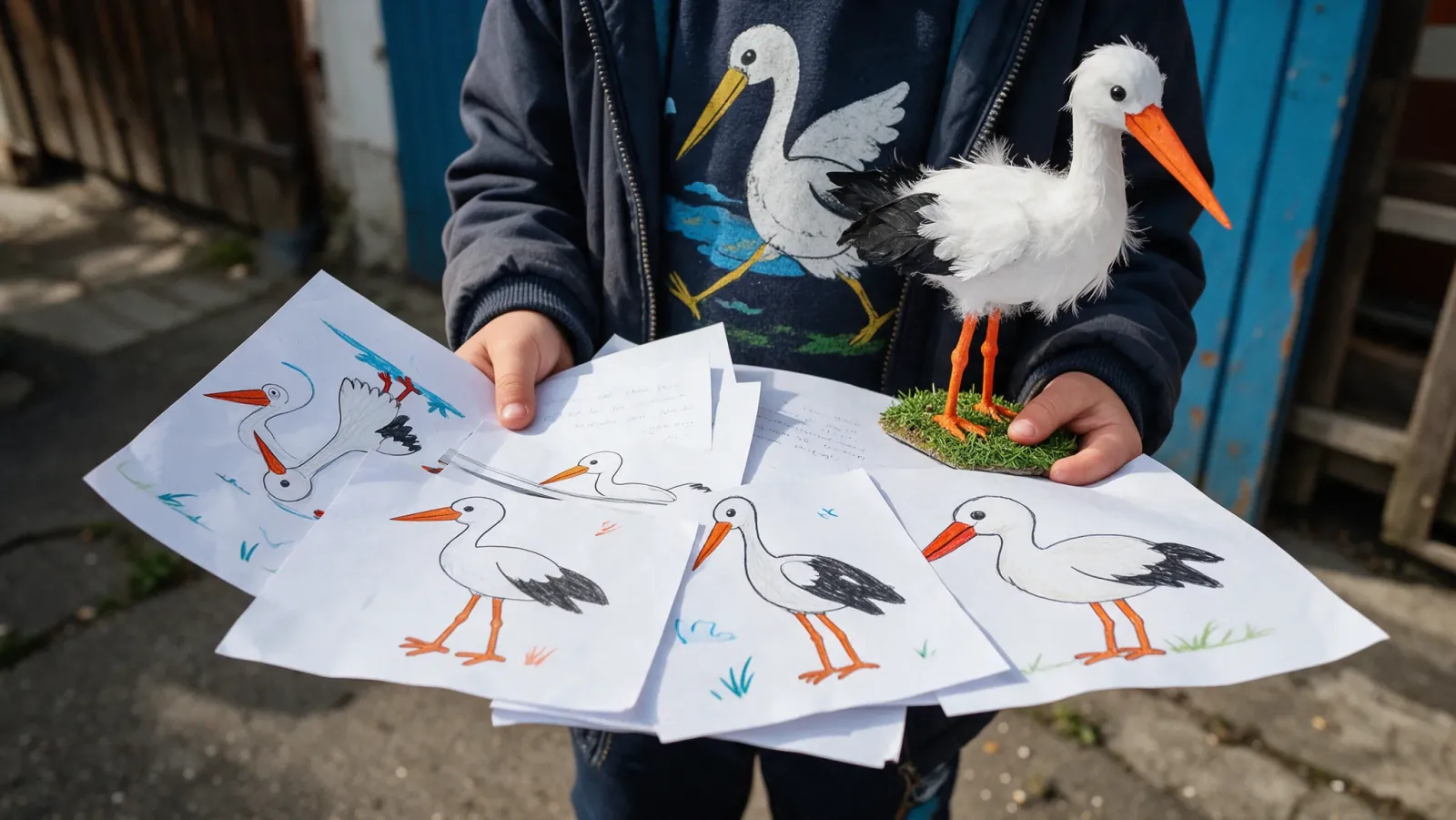
The display goes up with the others. The child stands beside it, proud in the quiet way children are proud of work done with their own hands. A teacher writes a comment. A parent takes a photograph. The stork, on a meadow or already heading south, knows nothing about any of it.
The folder ends up on a shelf, and the drawing curls at the corners. What stays is the feeling of knowing one wild thing well enough to care what happens to it.
The drawing is also a test of attention. A child who has watched a stork will put the black wingtips in, and the red legs, and the way the neck folds when the bird rests.
Small creatures first
Kindness to wild things starts with the creatures a child actually meets. A woodlouse under a stone, a bee on a flower, a snail crossing a path. The first instinct is often to poke or grab, and the first lesson is to be careful.
A parent does not need a lecture. A soft word, a cupped hand, a snail carried to the grass instead of trodden on. The child copies what the hands do, and the urge to grab slowly becomes an urge to look.
Distance is the second lesson, and it is harder. A child's love is loud and fast. The rule that wild things need room can be said in a sentence: stay back, move slowly, accept a smaller view. A white stork is more itself when nobody runs at it.
A child who stands still at a fence has learned something about loving what is wild. The loving does not require holding, and the not holding is part of the respect.
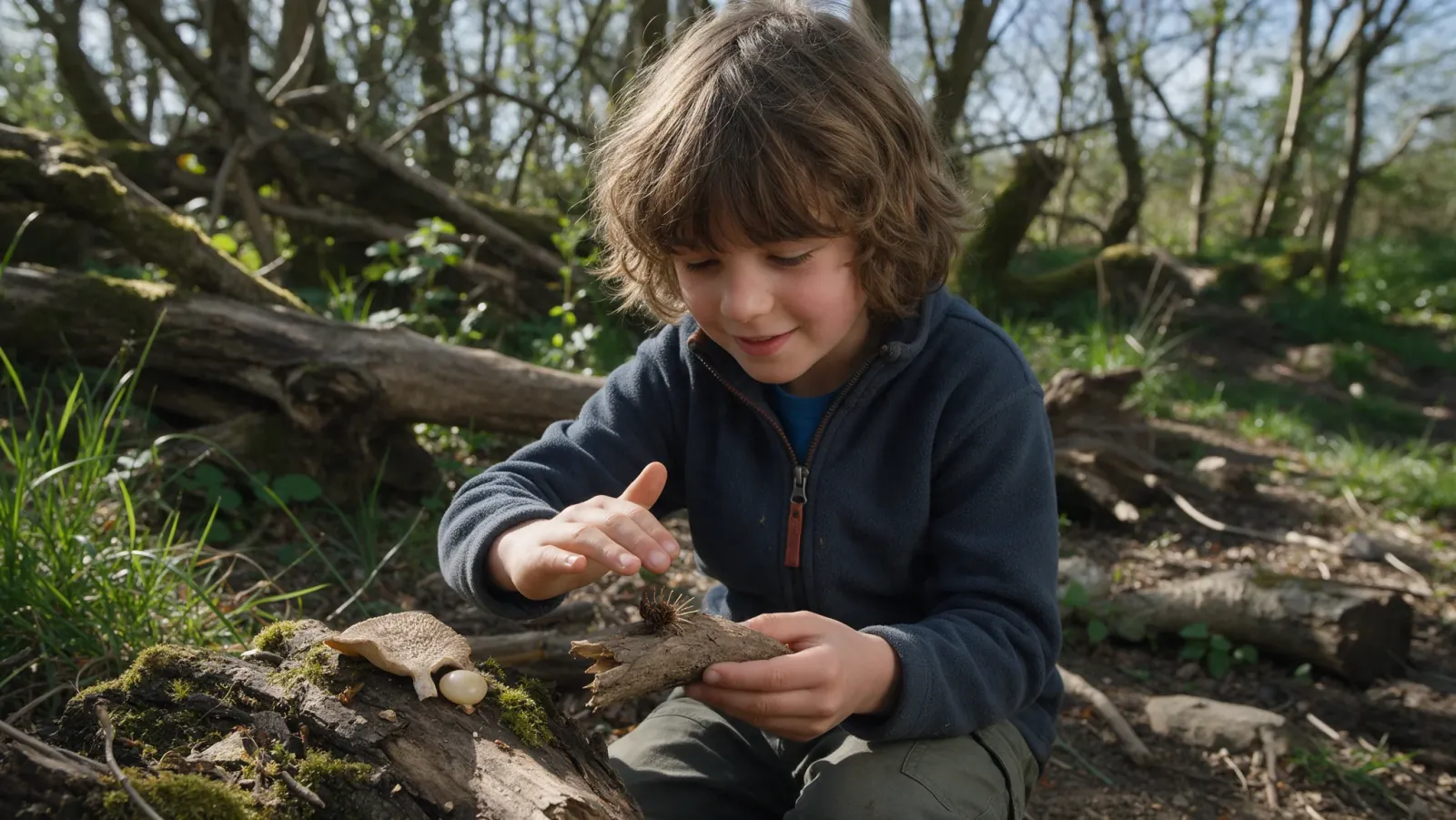
The lesson carries into the playground. A child who has learned to move a snail off a path will often stop a friend from stepping on an ant trail, and the stopping is not taught by an adult.
The questions that stay open
A child growing kind starts to ask what happens to the things they have learned to love. Why does the stork leave in autumn. What does it eat. What happens when the meadow is drained.
Some of these questions have no tidy answer, and a parent can say so. Saying I do not know, plainly and without fluster, teaches that uncertainty is allowed and that a question can stay open. A child allowed to sit with a question learns to trust their own thinking.
The hardest questions arrive at bedtime, when a child is tired enough to ask what has been turning in their head all day. A slow answer is often better than a quick one. Silence after a big question is part of the reply.
A parent who can sit beside a hard question without rushing it gives the child something a fact cannot. The child learns that wondering is allowed, and that another person will stay in the room while it happens.
What the child keeps
The project ends, the term ends, and the child still looks up when a shadow crosses the garden. That is what the work does when it lands. It gives a child a reason to keep noticing.
The facts fade, and some of them were wrong in the first place. A child will remember the roof, the clatter, the nest that gets bigger every year. The grade is forgotten and the habit remains.
Some families keep a stork at home for the years after the folder, a small object that holds the subject in the room. Adopt a stork if you want that marker, and set it where the child can point at it. The bird on the roof will be back in spring, and the child will be watching.
A child who has learned one wild thing well has a way in to all the others. The next bird gets the same attention, and the one after that.
Years later the child may not remember the grade or the teacher's comment. The bird on the roof will still be there in spring, and the child will still look up.
Explore the gift