The first day of school is a leaving, and the stork makes a good companion for it. A child walks to the gate, lets go of a hand, and steps into a wider world. A young stork does something similar when it finally pushes off the nest and trusts the air to hold it.
Days at the edge of the nest
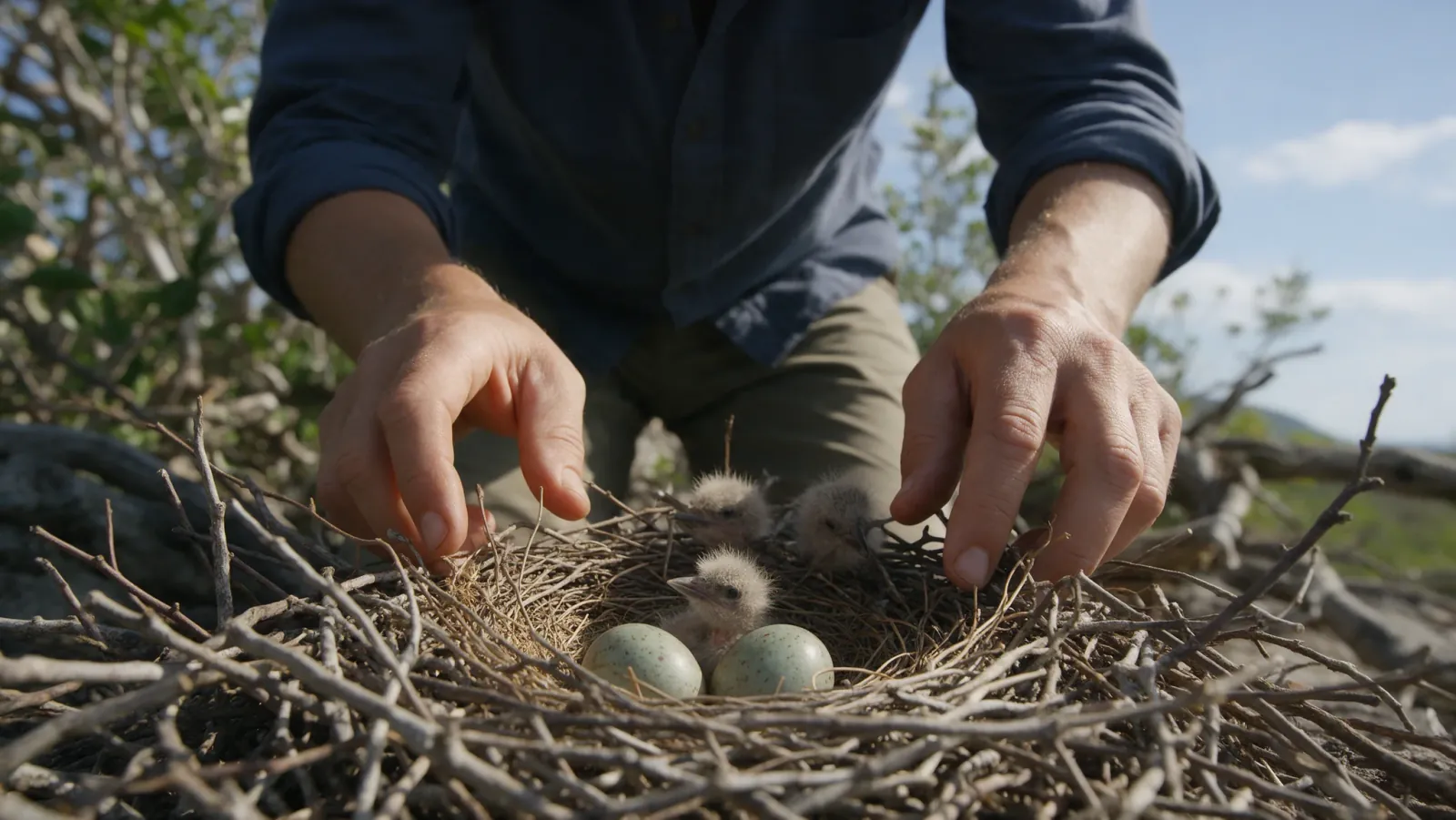
A young stork spends days flapping on the nest before it leaves. It stands at the rim, hesitates, then commits. The first morning of school has the same shape: the practised goodbye and the step into a day that has been imagined for weeks.
The brave part happens at the edge, before the wings have done any work. A child who has watched a stork on that rim has a picture for the feeling in the stomach, and a picture helps more than a speech.
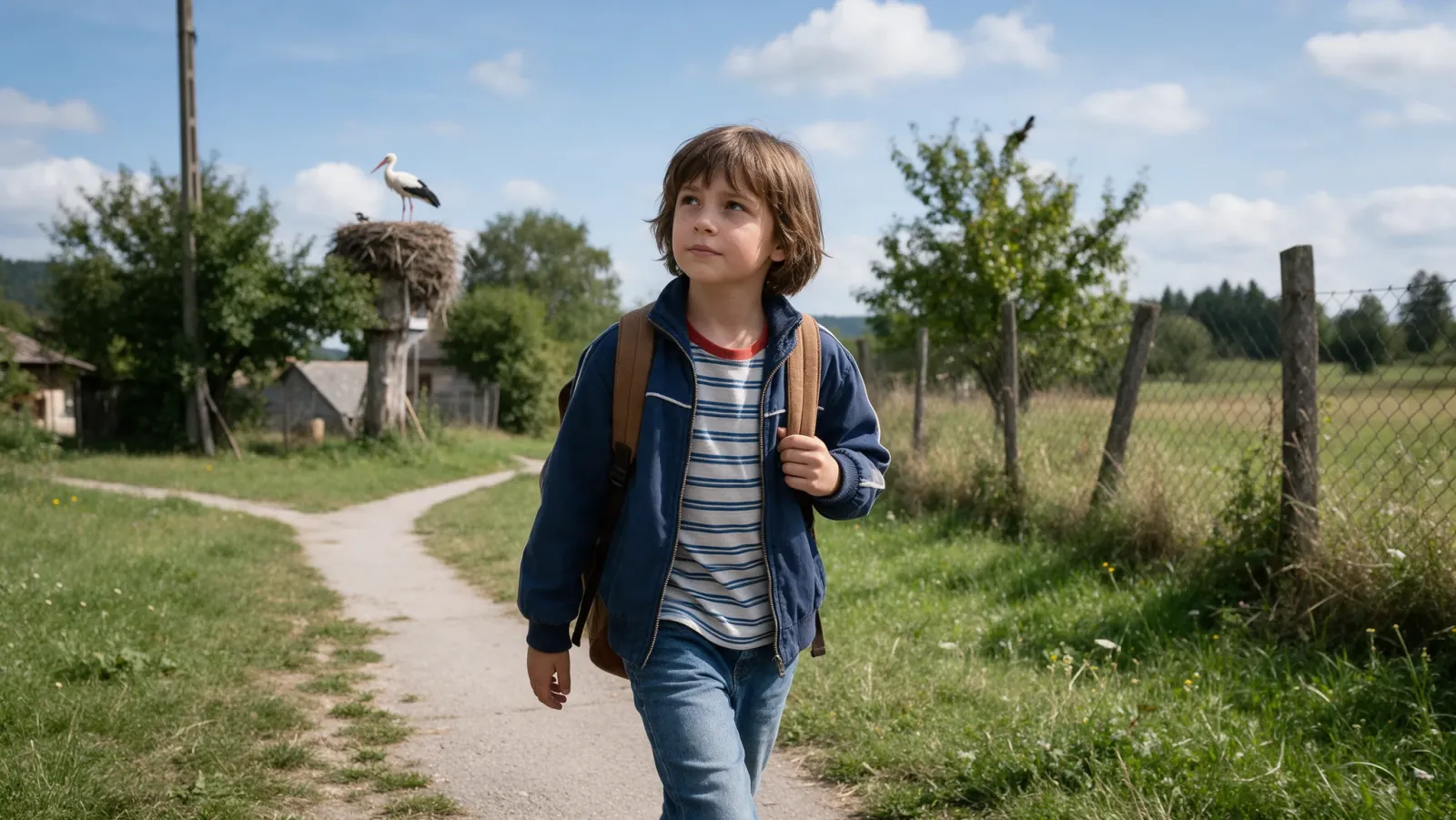
The comparison does not need to be explained at length. A parent can say it once, on the walk, and let the child carry it. The bird hesitated too. The bird stood there. Then the bird went.
Young storks also practise. They flap, they lift, they settle again. Practice looks like hesitation from a distance. The child may not say anything about it. The comparison sits quietly and does its work on the walk, and it may come back days later in a question about the nest.
The gate is a border
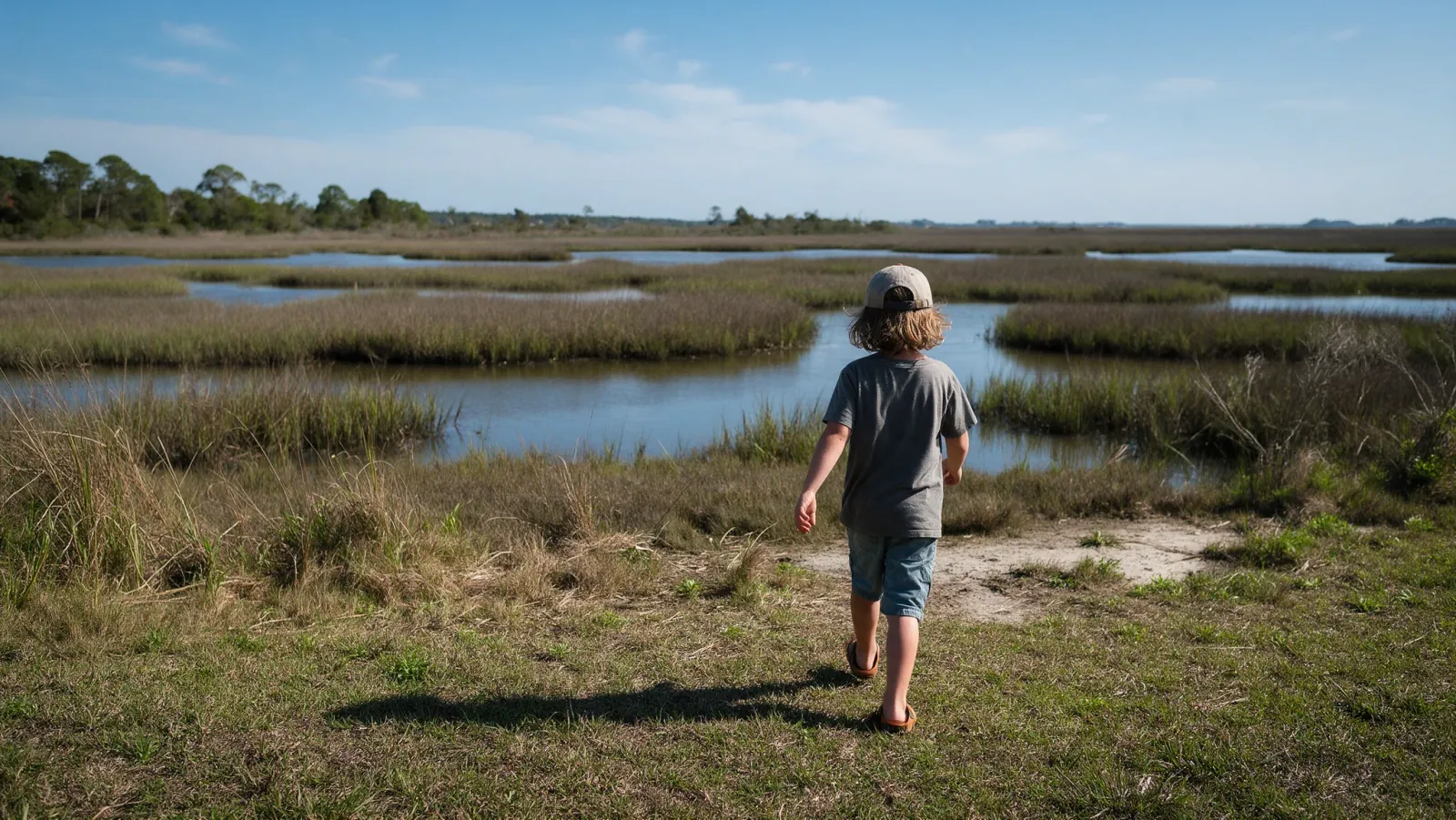
The school gate marks a line, and so does the stile at the end of a lane. The child feels the line between the known and the wider world. There is a pause, a look back over one shoulder, and then the feet carry on.
A parent does not need a speech at the line. A nod does the work. The child is walking into a place where the sounds are different and the light sits lower. The pause belongs to the crossing, and the crossing belongs to the child.
Later there will be a first solo walk to the marsh, and it will happen without ceremony. One day the child goes with a hand in yours. The next day the child pulls on a coat, stamps into boots, and sets off along the lane alone. You watch from the door until the lane turns, and then you trust the marsh to hold them for the hour the walk takes.
The gate at school has a teacher at it, and a parent on the other side of the road. The gate at the marsh has nobody. Both ask the child to cross a line and keep going.
The border is easier when it is visible. A gate, a stile, a change in the ground. A child can prepare for a line that can be seen.
The return is part of the plan
A child goes to school and comes home to the same door and the same voice calling from the hall. Knowing that the return is built in makes the leaving easier.
Say it plainly on the walk. You are going, and you are coming back. Both are true. A goodbye softens when the return is already part of the plan. The child can hold the morning without holding on to a hand.
The young stork carries the memory of the nest. It flies far, and the nest stays where it was. The child's day has the same arrangement, and the arrangement is the comfort.
The return does not need to be promised in a speech. It can be a fact of the afternoon: the same door and the same person at the table. The child learns the shape of the day from the shape of the house.
A parent can also say what will not change. The bedtime, the walk, the person at the gate. The list is short and it is enough.
School is a flock
A playground at break is a flock finding its places. Children gather, shift, call out, settle, then gather again. A child who has watched storks collect in a field before migration has a way of picturing the room.
Newness is uncomfortable and exciting at once, and it helps to name it. The stork feels it too on the first day of a long journey south, standing in a field with many others, waiting for the warm air to lift. A flock is made of birds who were each, once, the new one.
That sentence is worth saying to a child at the gate. Every child in the yard was new on some morning. The flock has room for another bird, and the yard will have room for this one.
The flock also has a rhythm. The first weeks are loud and unsettled, and then the groups settle. A child who has watched storks gather in a field knows that the noise is part of the gathering, and that it passes.
A child may come home with a new friend or with nobody. Both are ordinary in the first week. The flock takes time to sort itself, and the sorting is not a verdict.
Something small in the bag
A child who loves the stork can carry a little of it through the gate. A drawing, or a tiny white bird in a coat pocket. Nobody else needs to see it. A small private object can make a large room feel less large.
A stork gift that fits in a bag does its work quietly, noticed only by the child who reaches for it at lunch. The knowing is enough. The stork came too, and the day is a little more possible.
The first days are the steepest. Then the gate becomes ordinary, the room becomes familiar, and the child stops needing the pocket bird at lunch. It stays there anyway, a small habit of comfort, until one morning the child forgets it and does not miss it. That forgetting is its own milestone.
A parent can help the pocket object retire without making a ceremony of it. The bird goes back on the shelf, and the child knows where it is. The comfort stays available without being needed.
The walk home
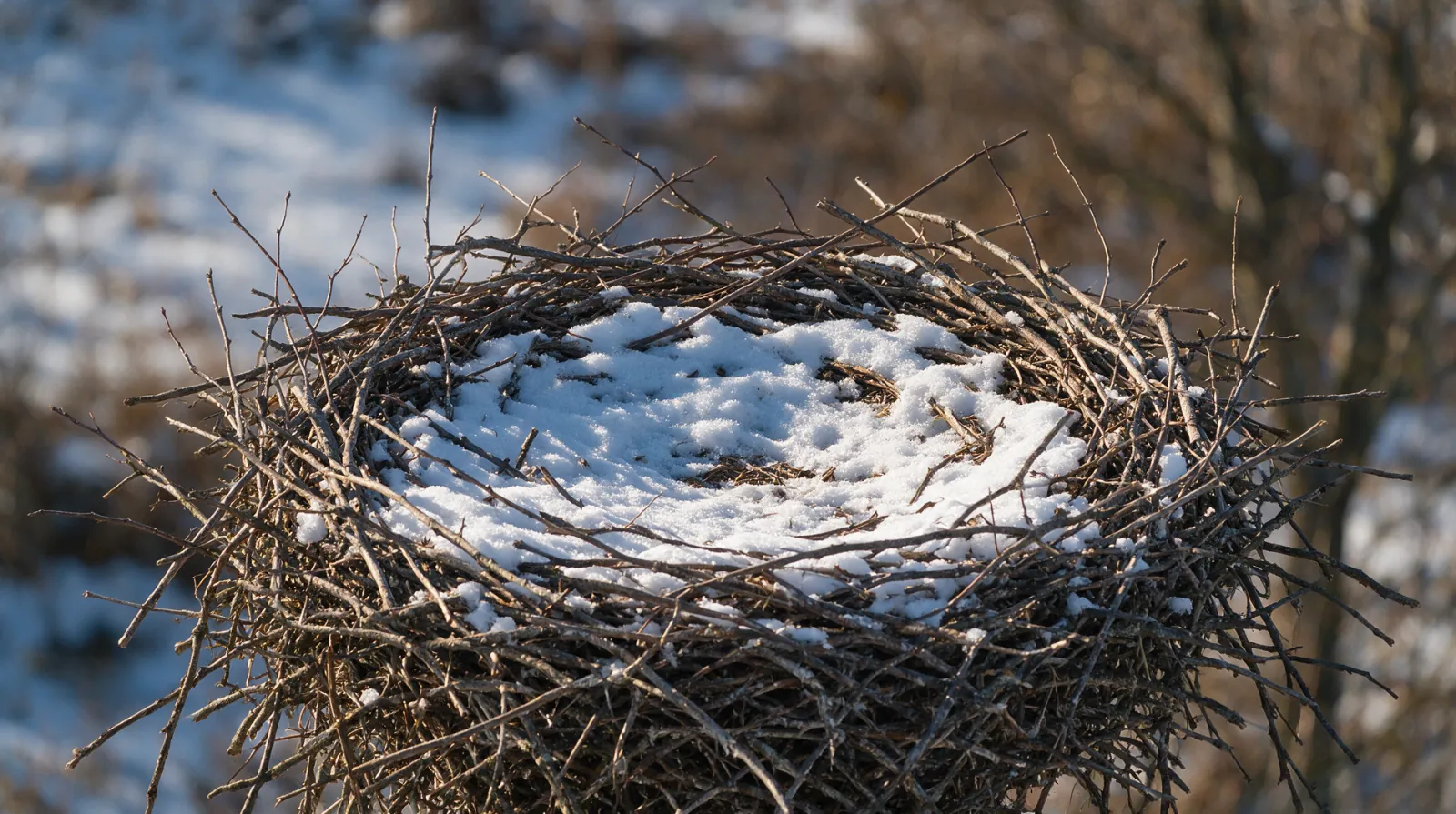
At the end of the afternoon the child comes home tired, full of new names and small complaints. The bag goes down by the door. The nest is still on the roof. The child went out and came back, and the year has begun.
The next walk will be easier. Then there will be a walk that lasts until dusk, and one that goes further than the marsh. Each one starts at the same gate, with the same pause, and the same nod.
Some milestones are best kept quiet. There is no certificate for the first morning or the first solo hour. There is the plain fact that the child went out and returned, and that in the hour between, something steadied.
The first day is followed by a second, and the second is easier. The child learns the route and the place to put the bag. The stork on the roof keeps its own schedule, and the two schedules begin to run side by side.
The stork does not follow the child to school. It stays on the roof, and the roof stays in the same place. The child can look for it on the way home.
Explore the gift