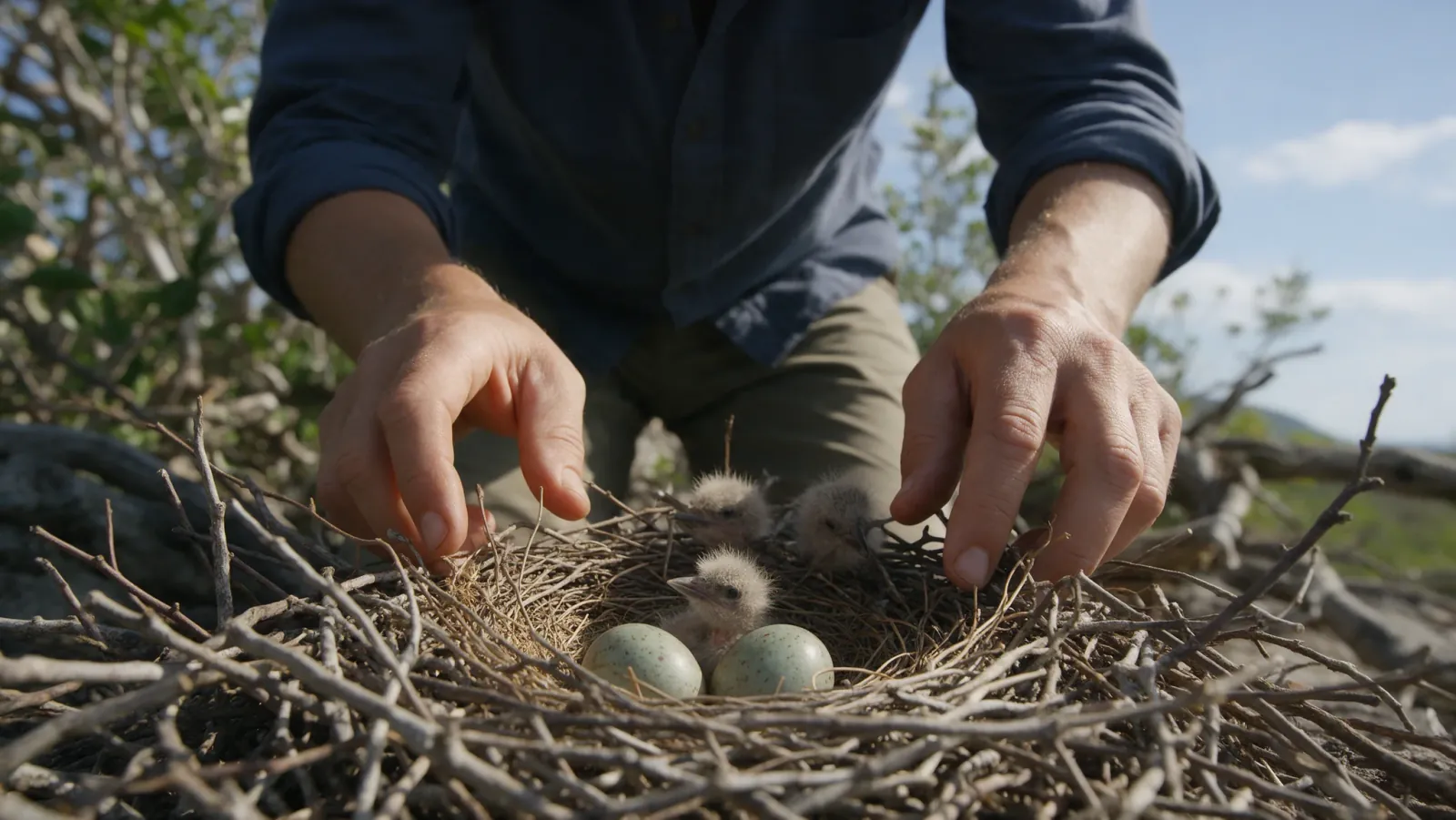
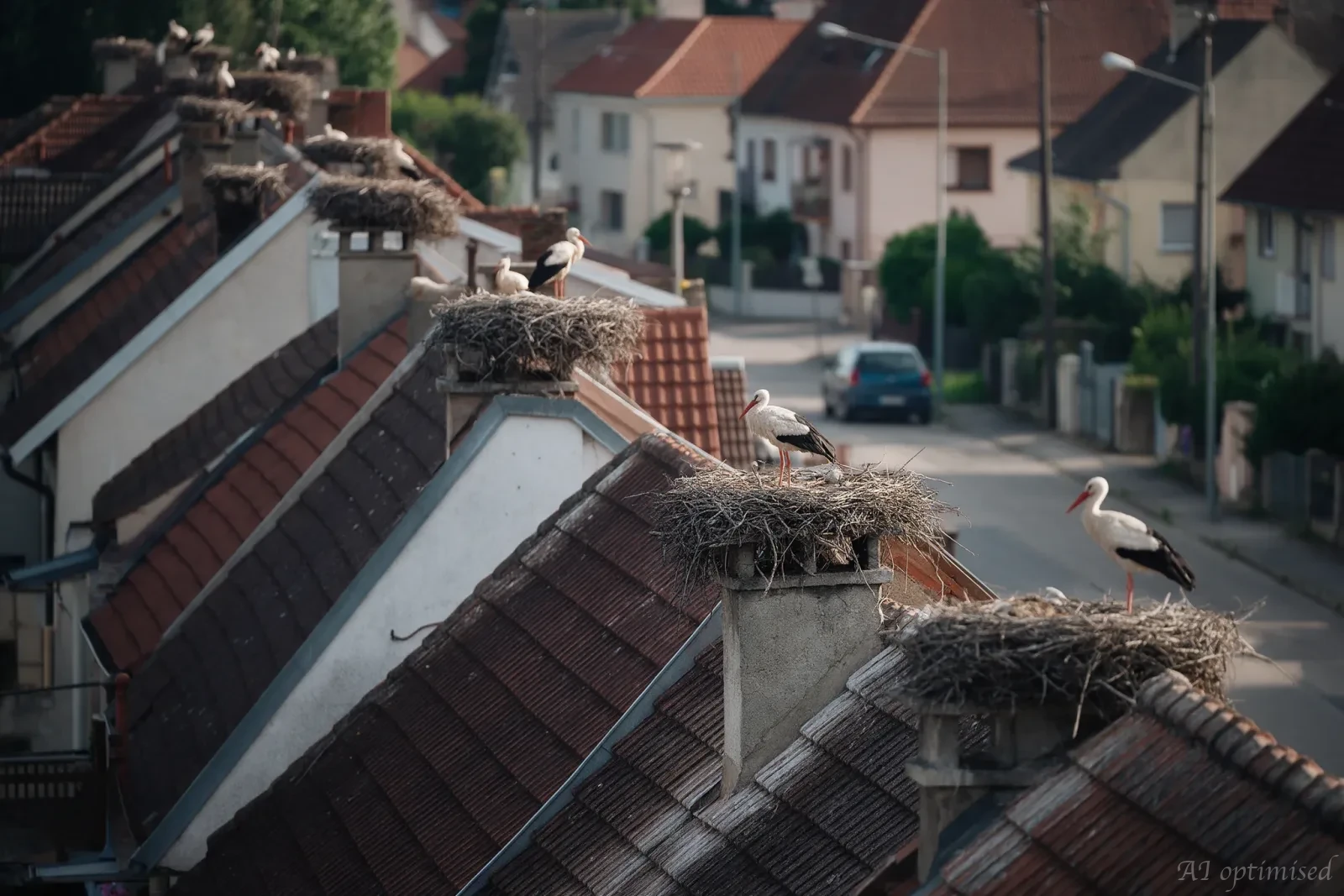
A white stork picks a nest site by height, open air, and food within reach. The bird doing the choosing is usually the male. He returns from Africa ahead of the females, often to the exact roof, chimney, or pole he used the year before, and begins repairing the platform before a partner appears.
The male comes back first
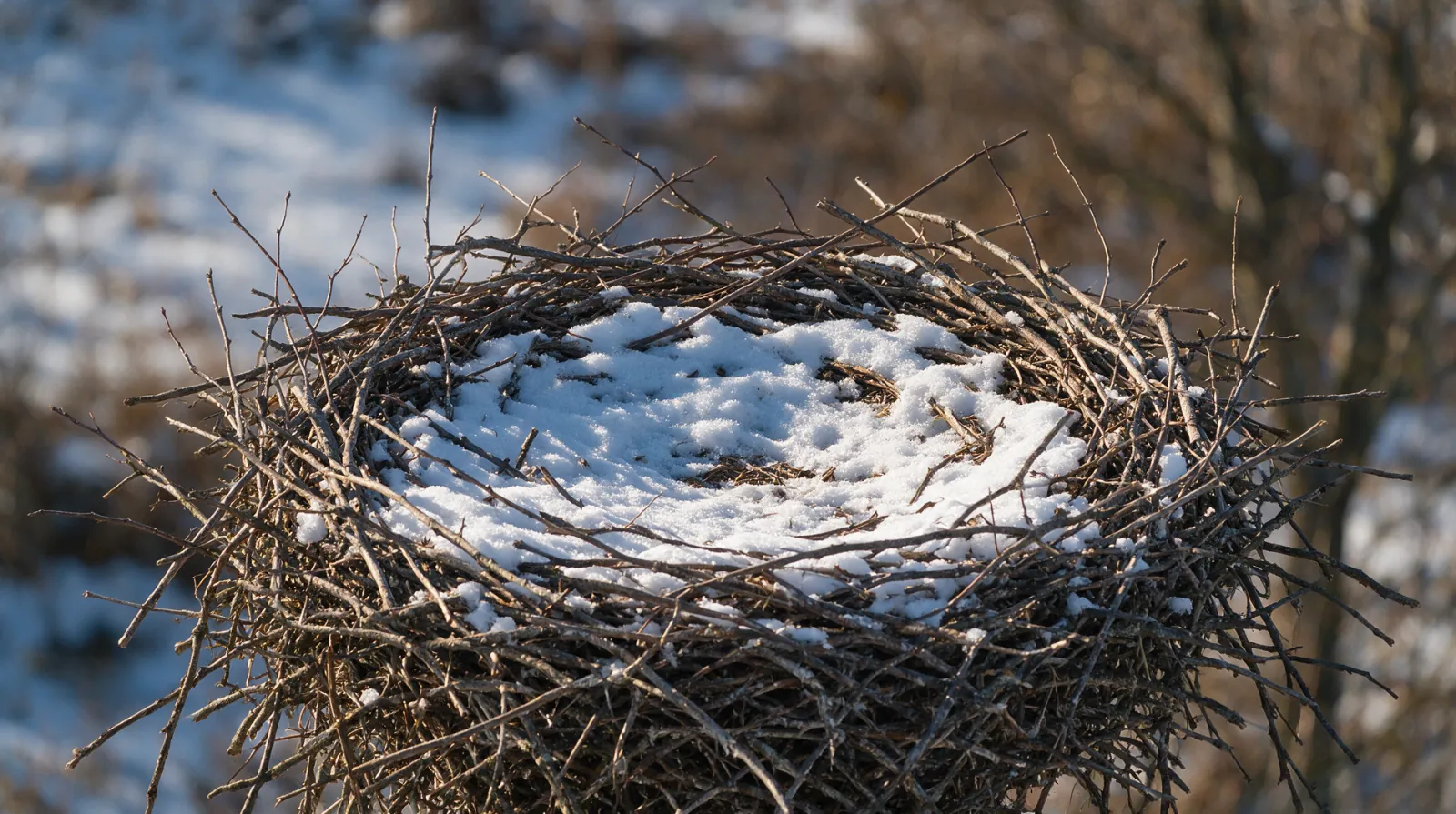
Male white storks arrive early, and many walk straight onto last year's nest. If the winter was kind the structure still stands, and the bird that held it gets it back. A good nest site is reused for years, and the male who held it last summer usually reclaims it. A young male with no nest of his own looks for a platform nobody wants: a lower pole, a barn roof at the edge of the village, a chimney that has fallen out of favour. He lays a thin plate of twigs there and waits for a female to judge it.
When she arrives the two bow to each other, and the site is taken for another season.
Height and a clear approach
The first requirement is an open platform that keeps eggs and chicks away from foxes, dogs, and cats and gives the sitting bird a long view of the fields. In the wild, white storks nested in tall trees and on cliffs. Around people they choose roofs, church towers, and poles, because those offer a flat base, a firm footing, and open air.
A stork also needs a runway. It arrives on a long glide and has to slow down and drop onto the sticks with room to spare. Branches, wires, or a steep pitch crowding the approach make a landing dangerous, and a pair will pass over a cluttered roof for a clean one nearby. The nest sits in the open on purpose, which leaves a choice of approach: from the field side, over the ridge, or along the street. A bird that dropped straight onto the sticks from a low pass would have nowhere to shed speed.
Water in the grass below
The second question is dinner. Chicks eat constantly through their first weeks, and a nest too far from hunting ground struggles. White storks hunt frogs, insects, earthworms, voles, and small fish in wet meadows, ditches, river margins, and the shallow edges of ponds.
Most pairs nest within a few kilometres of good feeding. Dry arable land can look neat and empty to a stork. The birds want soft ground where prey lives, and a hay meadow holds more than a manicured field with nothing in it. A ditch that holds water through June is worth more than a tidy field that dries in May.
A roof is a cliff with tiles
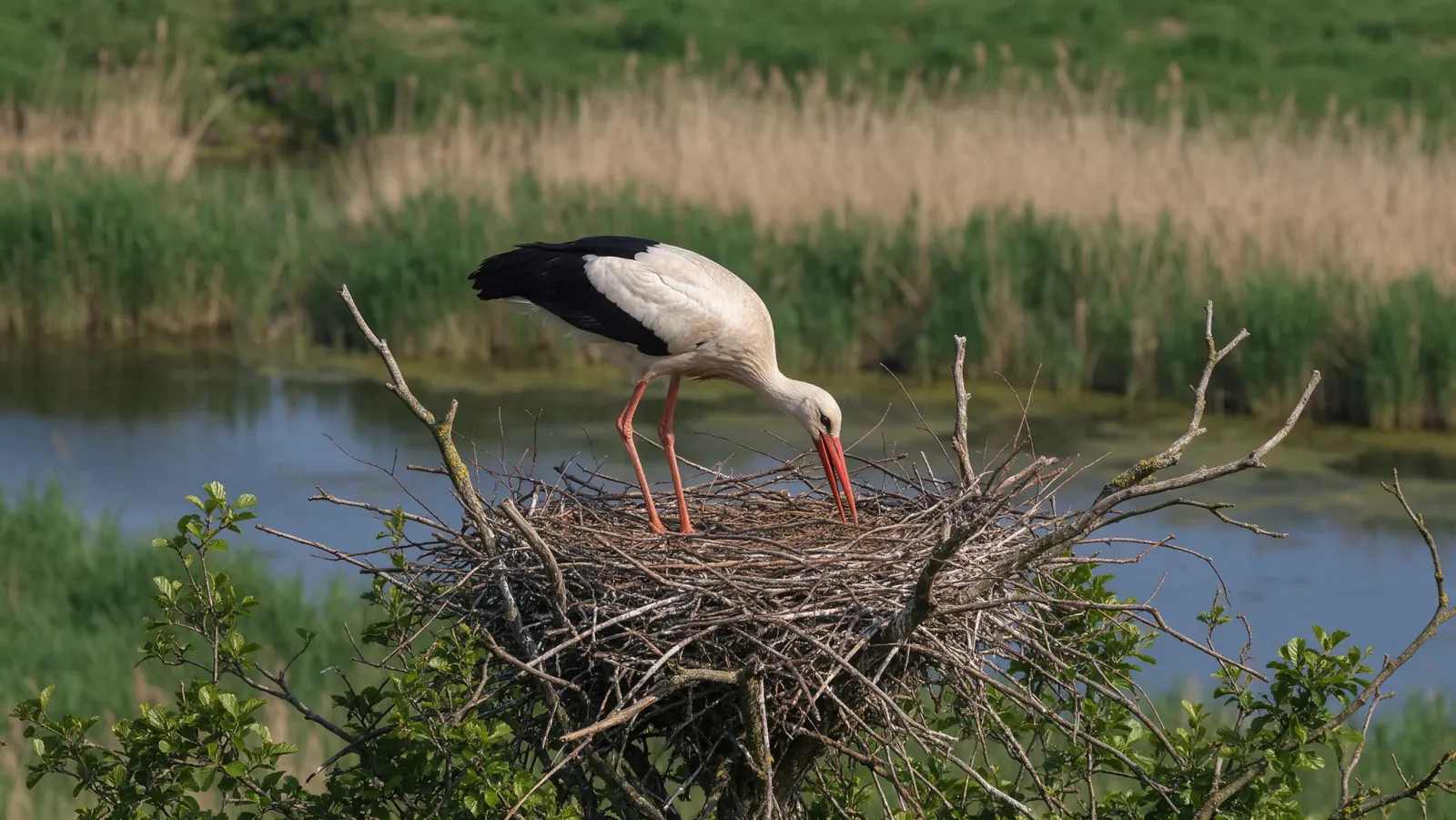
A rooftop serves the same purpose a cliff once did. The nest sits out of reach of the ground, the bare surface gives a clear flight path in and out, and the bird can see a fox crossing a yard or a person coming up a lane. In parts of Europe, people build platforms and lay cartwheels on roofs and poles for storks, and the birds move in almost at once. The eagerness shows how closely a village roof matches what the bird was already looking for. The bird found an old instinct already waiting on a chimney.
Most of the time a stork on a rooftop stands beside its nest. The nest ties the bird to the house. Between feeding trips it returns to the roof and stands there, preening, dozing, or watching the yard. On a hot day it may take a bare ridge a little apart from the nest, where the open roof catches the wind.
Neighbours, noise, and people
White storks are social, and many pairs nest near others, on the same roof or along the same street. A colony gives warning of danger and a crowd to follow when food is found. Some pairs go the other way and take a lonely chimney above a private meadow, which is a decision about food as much as about quiet.
People matter too. A stork will tolerate a busy yard and a tractor passing below. A ladder against the nest or a cat asleep on the ridge will keep it away. Where a village protects its birds, the same pairs come back generation after generation.
An old nest is a strong argument. Its base can be decades of interlocked sticks, and rebuilding that from nothing takes a pair most of a season. The bird that inherits a heavy nest inherits an advantage. Watch a pair in March and the decision is made in an afternoon: a landing, a greeting, a few sticks laid down. Nothing looks like a survey, yet the bird has weighed height, hunger, and the neighbours at once.
The approach and the flare
A stork returning home almost never arrives level with the nest. It comes in higher, sometimes circling once, and holds that height until it can judge the angle. Height is the room it needs to slow down. Wingtips make small adjustments, the tail opens and closes, and the body tilts a few degrees at a time. In a crosswind the corrections come faster, and the bird may break off, climb, and try again from a different line.
Speed comes off in the final stretch. The stork lifts its wings into a deep V and cups them, so air presses on the underside and the body pitches up. The brake is the wings, held open and slightly forward until the bird is almost stationary. A headwind makes the flare last longer and the touchdown softer. In still air the stork drops faster and needs a hard beat at the end. It can also beat backwards, driving its wings against its own momentum, which buys another moment above the sticks.
The legs come down late. Both reach out together, toes spread, and the bird aims for packed sticks near the rim rather than the soft cup in the middle where the eggs lie. A foot on loose twigs can roll, so it takes the edge. The grip closes, the wings fold in stages, long primaries first, and the bird stands for a moment with its body still tilted forward before it straightens.
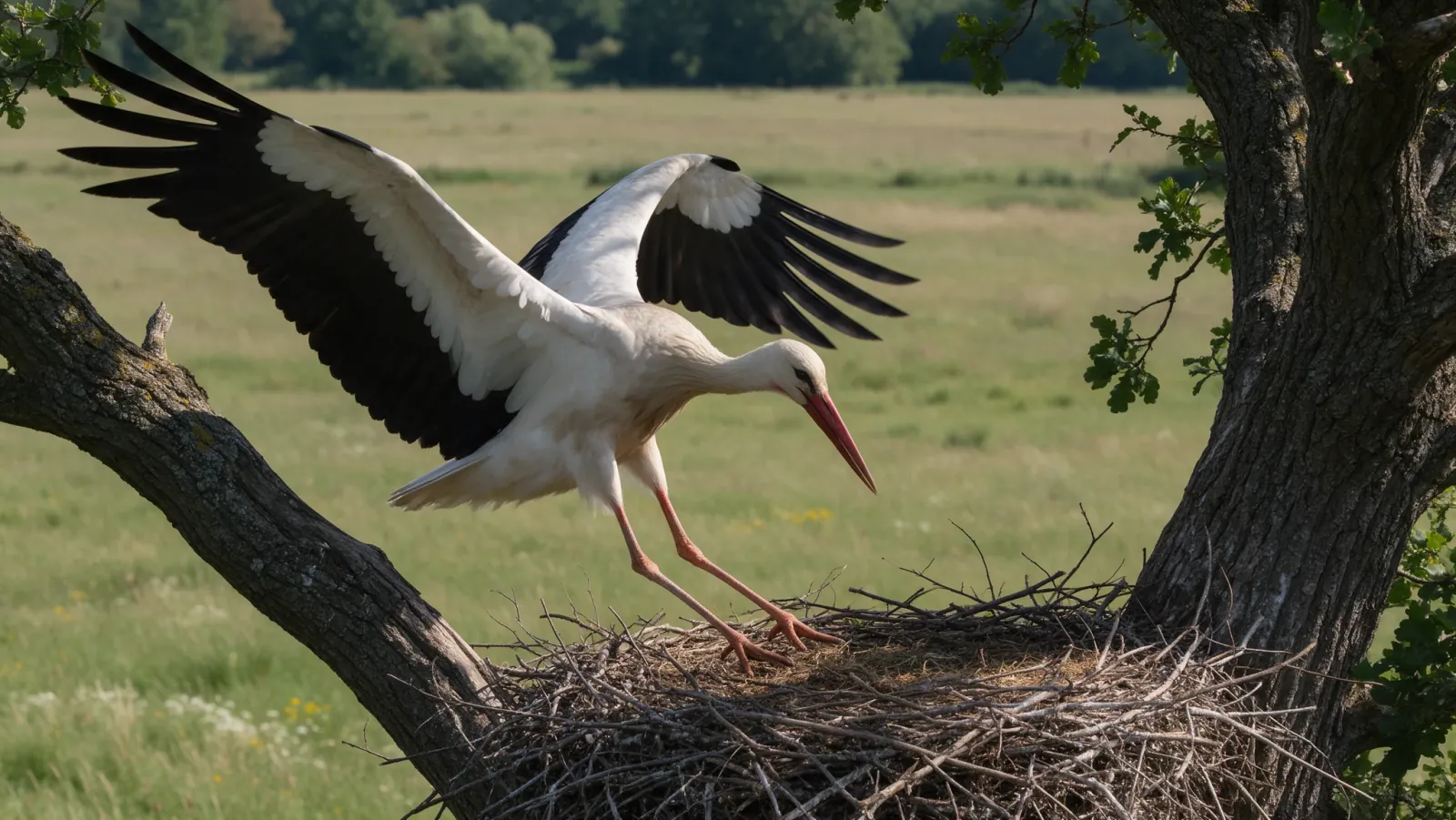
On a nest with large chicks, the parent comes in steeper and stops shorter, landing with one foot on the rim and the other still in the air. If the approach is blocked it circles once, tries again, or lands on the roof beside the nest and walks the last metre. A stork with a full bill and four hungry chicks takes whatever edge it can get. The young are not gentle about it, and the parent is often still folding its wings while the food is being pulled from its bill.
Landing is also a greeting. A stork arriving where its mate stands will bow as soon as its feet are set, head dipping and bill rattling, and the two may clatter together for several seconds before either moves. Arrival and welcome run into one movement. The bird repeats the whole sequence dozens of times a day through the season, and it never looks quite the same twice.
Explore the gift