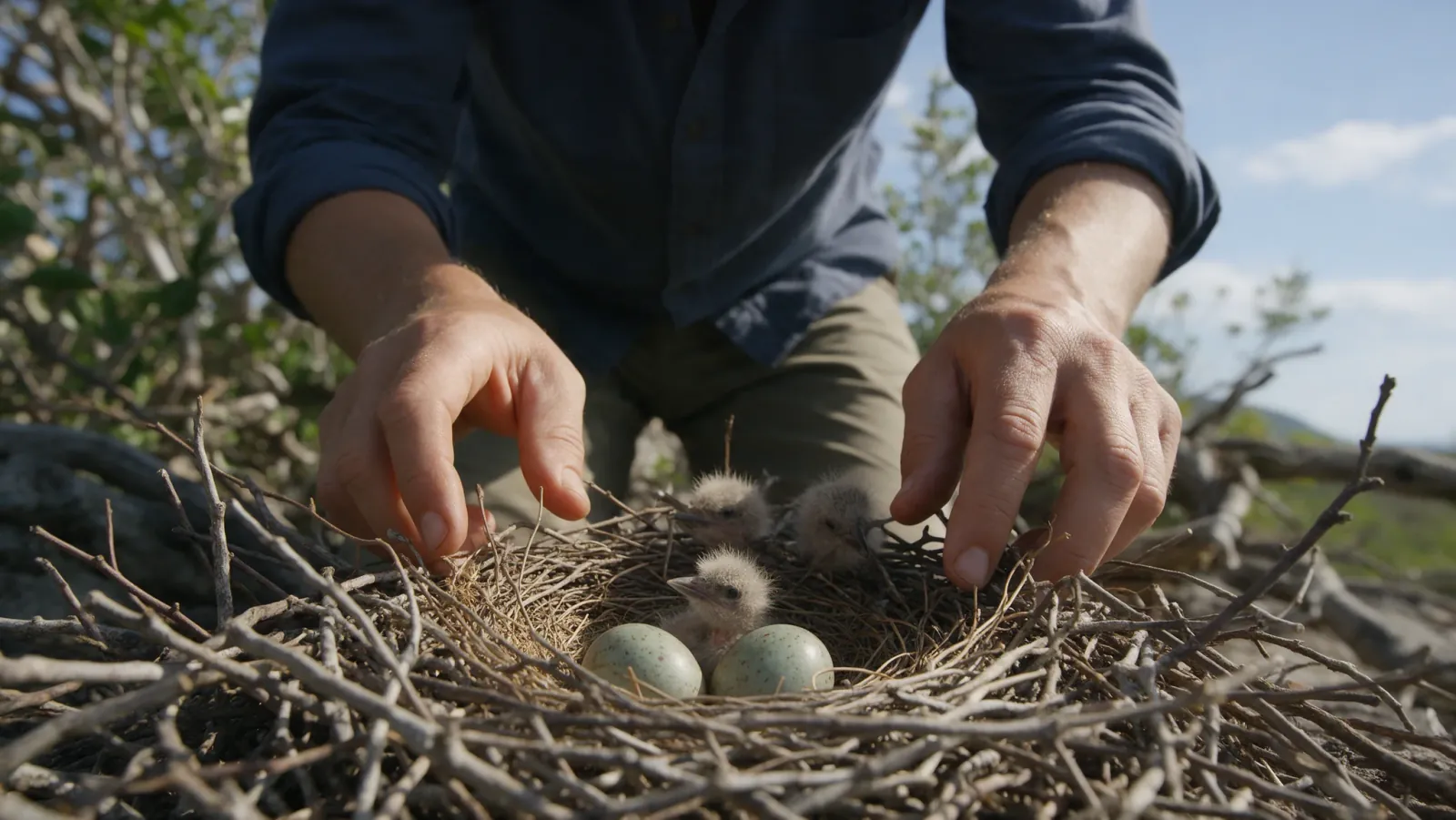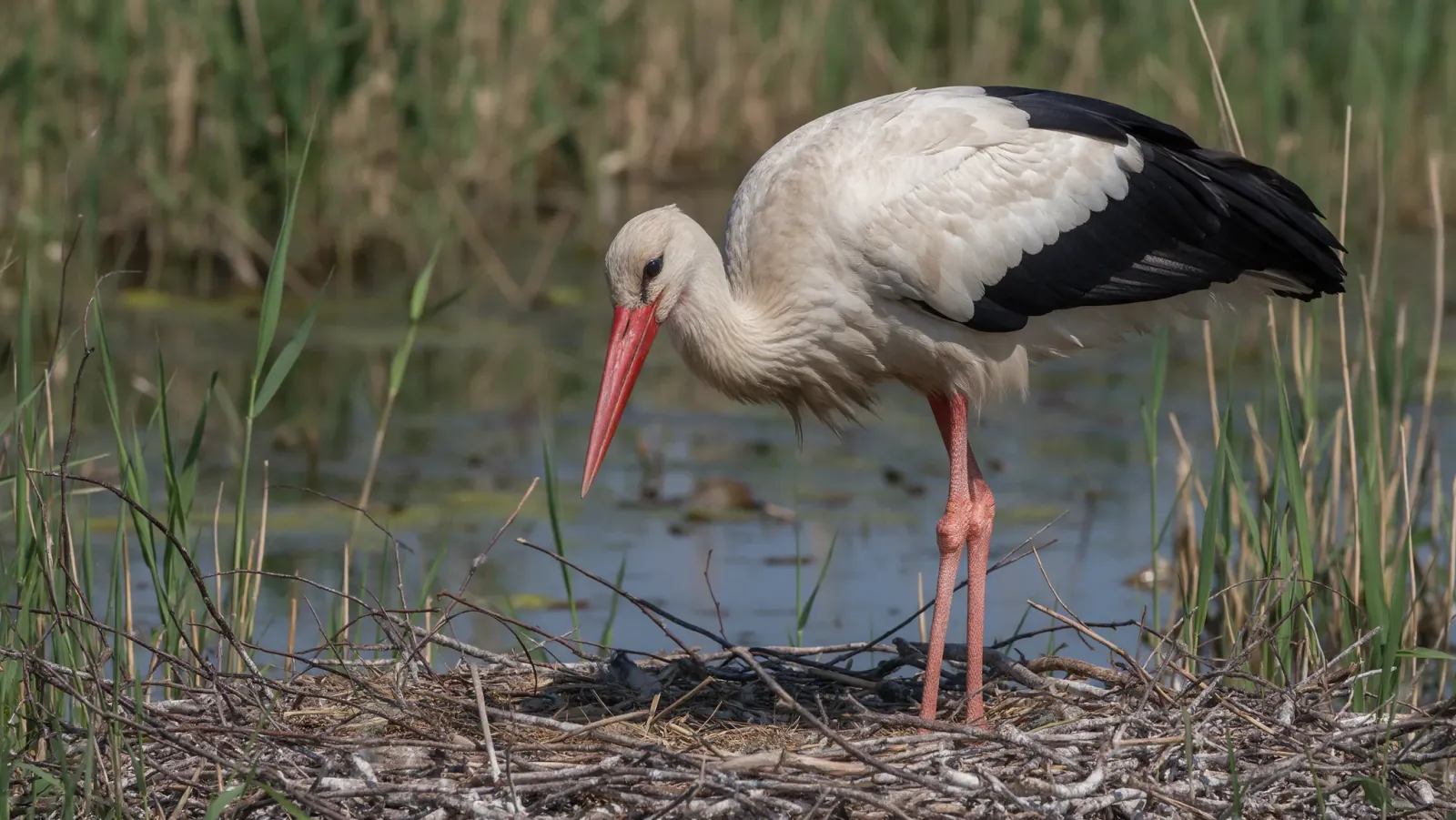
A white stork holds a small piece of air around its nest and almost nothing else. It will fly kilometres to feed across fields that belong to no bird, then come home to a claim the size of a room. The same attachment brings it back to the same village after a winter in Africa.
A street of neighbours
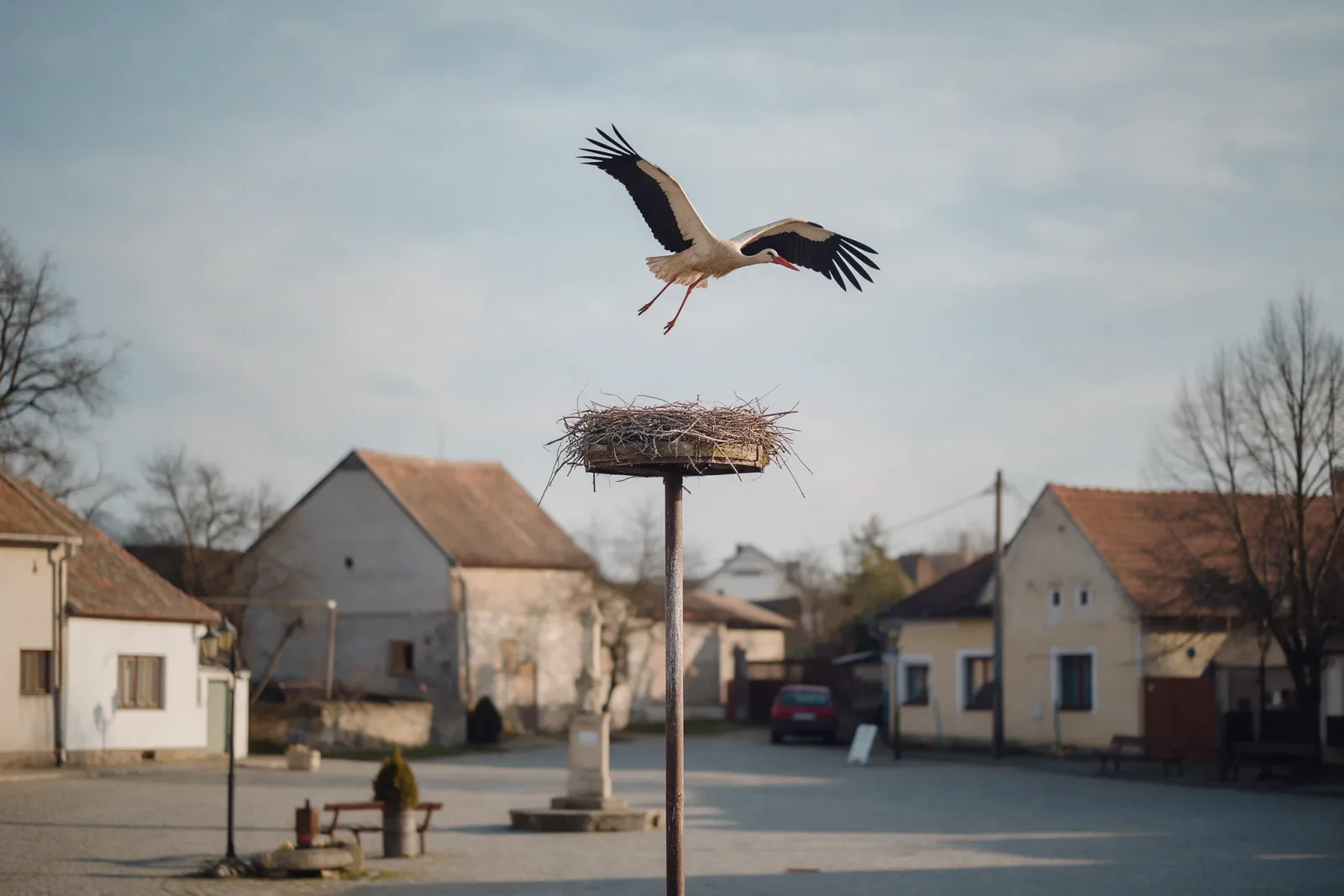
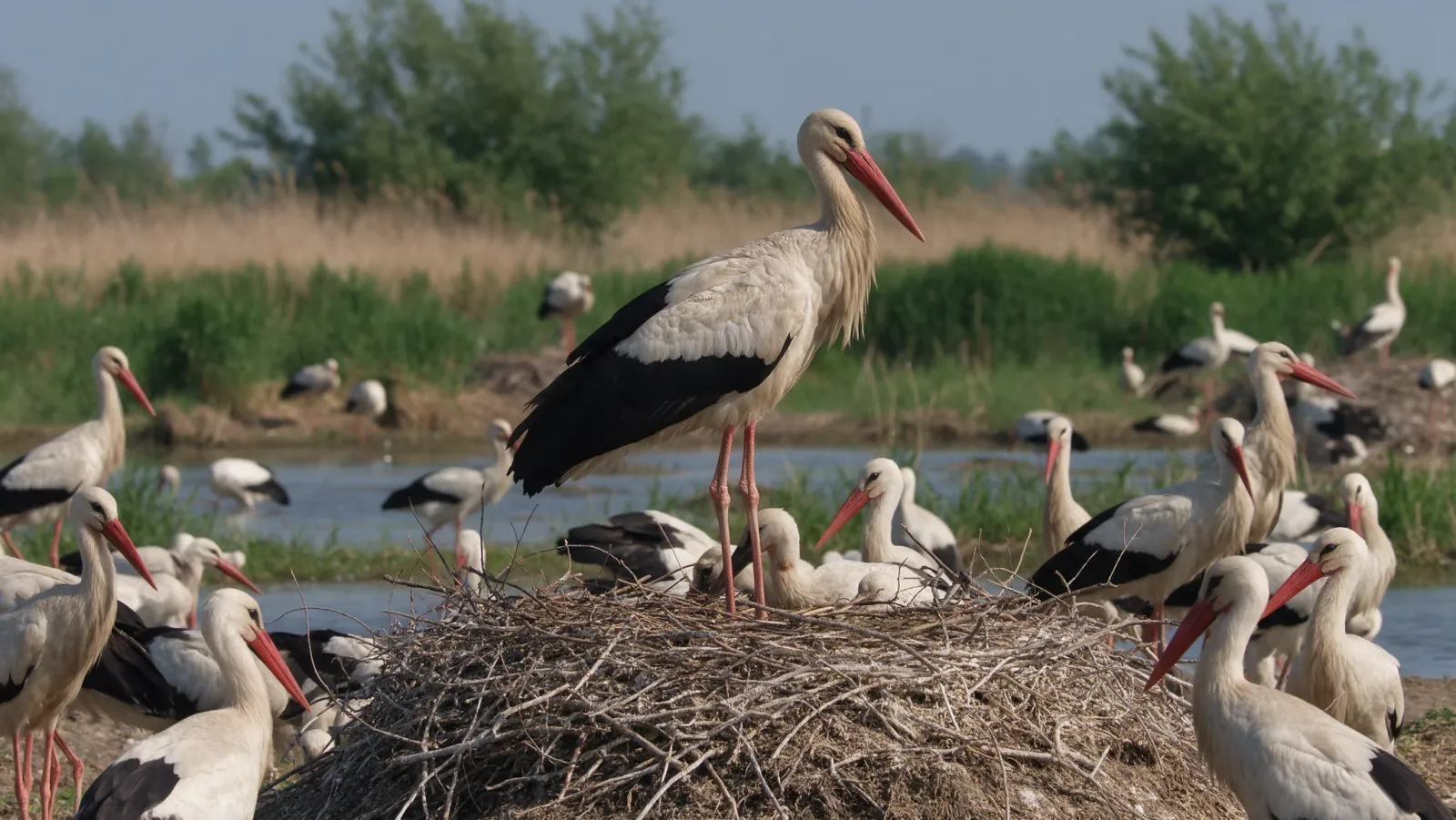
A colony is a cluster of nests on the roofs, chimneys, and poles of a village, sometimes close enough that two pairs could touch bills if they leaned out. Living at that distance needs arrangement. There is no leader bird and no single nest that rules the rest, and there is a set of standings that every bird seems to know. Those standings are tested in small encounters through the summer, and each bird behaves according to roughly where it fits. A colony works like a street where everyone knows who has lived there longest. The nests stay within sight of each other, and the air between them belongs to nobody. Company has uses. A predator near one nest is seen by birds on the next roof, and the alarm passes across the village. A field being mown draws storks from several nests, because one bird's success is visible to the rest.
Who gets the good roof
Nest sites are the clearest measure of standing. When pairs return in spring, the birds that bred on a good roof the year before take it back, and nobody argues. The nest is still standing, the pair knows it, and the claim is accepted before it is tested. Young pairs arriving for the first time take what is left. That usually means a lower pole, a new platform at the edge of the village, or a roof that has been empty for a reason. A pair on a low site is more exposed to foxes and to disturbance, and their chicks are more likely to be lost. An old, tall pile of sticks belongs to a pair that has been winning for years. Most disputes never become fights. Two storks face each other, stretch their necks, and rattle their bills. One lunges without connecting, and the other steps back or turns away. The whole thing is over in a few seconds. Storks can hurt each other when they do connect, and serious fights happen, and they are rare because the bird that knows it is outmatched gives way early.
The small claim
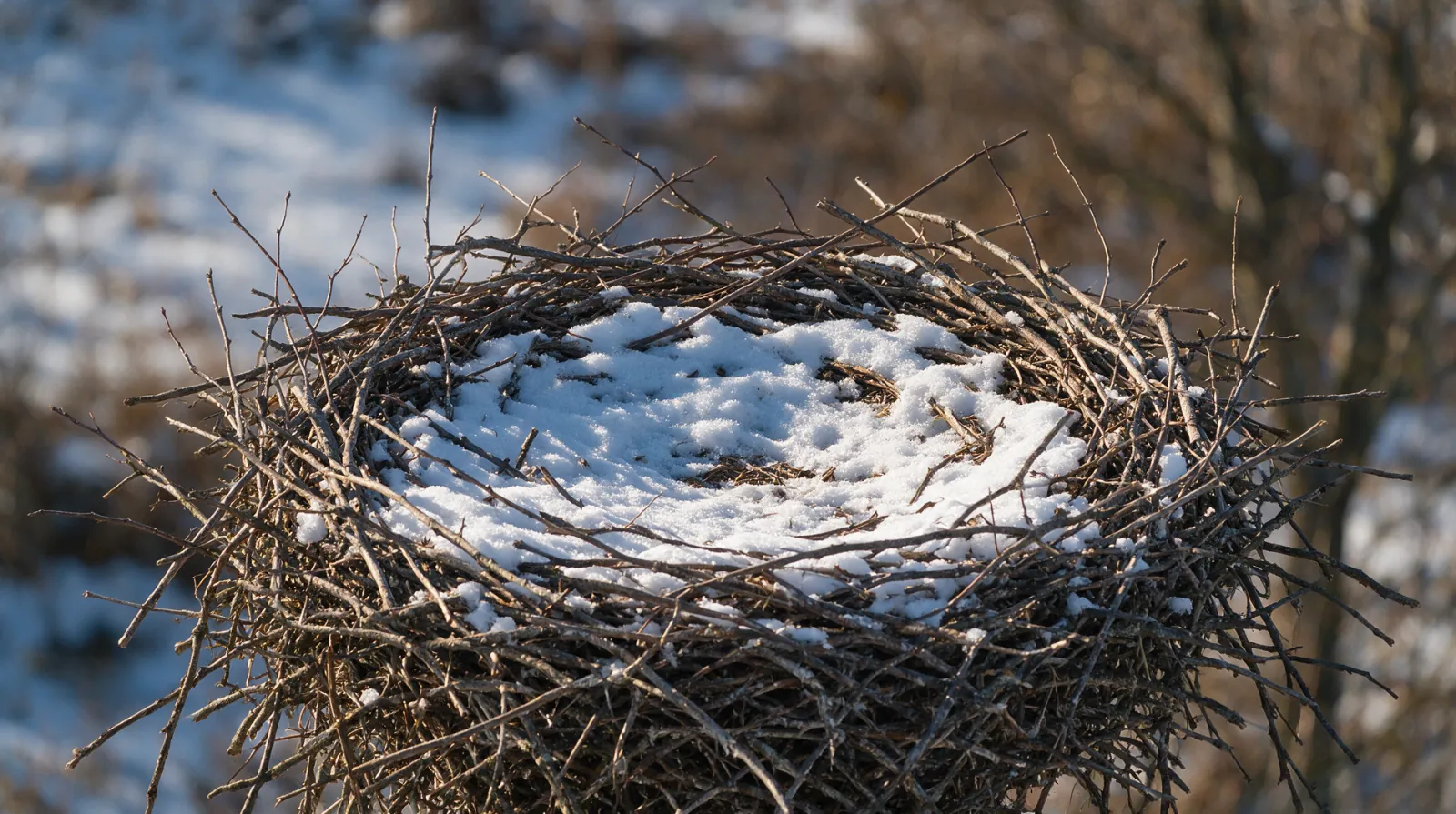
Ownership starts with the platform itself: the sticks, the rim, the cup, and the space just above them where a bird must be able to land. That space is part of the property, because a nest that cannot be approached is no use. An old nest is worth more than a new one. It is bigger, better built, and known to the pair that raised chicks in it, and a returning bird will fight harder for a familiar nest than for a strange roof. The value of the territory grows with the years the pair has spent on it. Defence is mostly display. When a stranger comes too close, the owner rises, spreads its wings, and rattles its bill in a hard, fast clatter. Most intruders veer away without landing. If the warning is ignored, the owner may lunge, snap, or fly at the intruder with legs down and wings beating. The claim is held by being shown, and a bird that shows it well rarely has to use its bill. A few metres out from the nest, ownership stops.
The lone nest
Most white storks nest in groups, and some pairs raise chicks entirely alone. A single nest on a dead tree or a lone chimney is unusual enough to notice, and it usually comes down to food. Raising stork chicks takes a great deal of food, delivered all day for weeks. A pair nesting beside a rich wet meadow can feed its young without flying far or competing with neighbours for every patch. A pair that does not share its frogs with thirty other storks brings more of them to its own chicks. Where food is concentrated, in a marsh or a flooded field, a colony can work it without any bird going hungry. Where it is scattered, one pair per valley does better. Solitude can also be protection. A colony is visible for miles, and a pair on a quiet chimney has fewer eyes watching its chicks and fewer rivals testing its claim. The trade is real. Alone, the pair loses the early warning that neighbours provide, and the birds must do all the watching themselves. A lone pair often has experience and good ground, which offsets some of the risk. A first-time pair on a poor site does worse, and the following spring it may move to a village. Storks move between the two arrangements. A lone pair may join a village if a platform appears, and a colony pair may end up apart after losing a nest site.
The first journey south
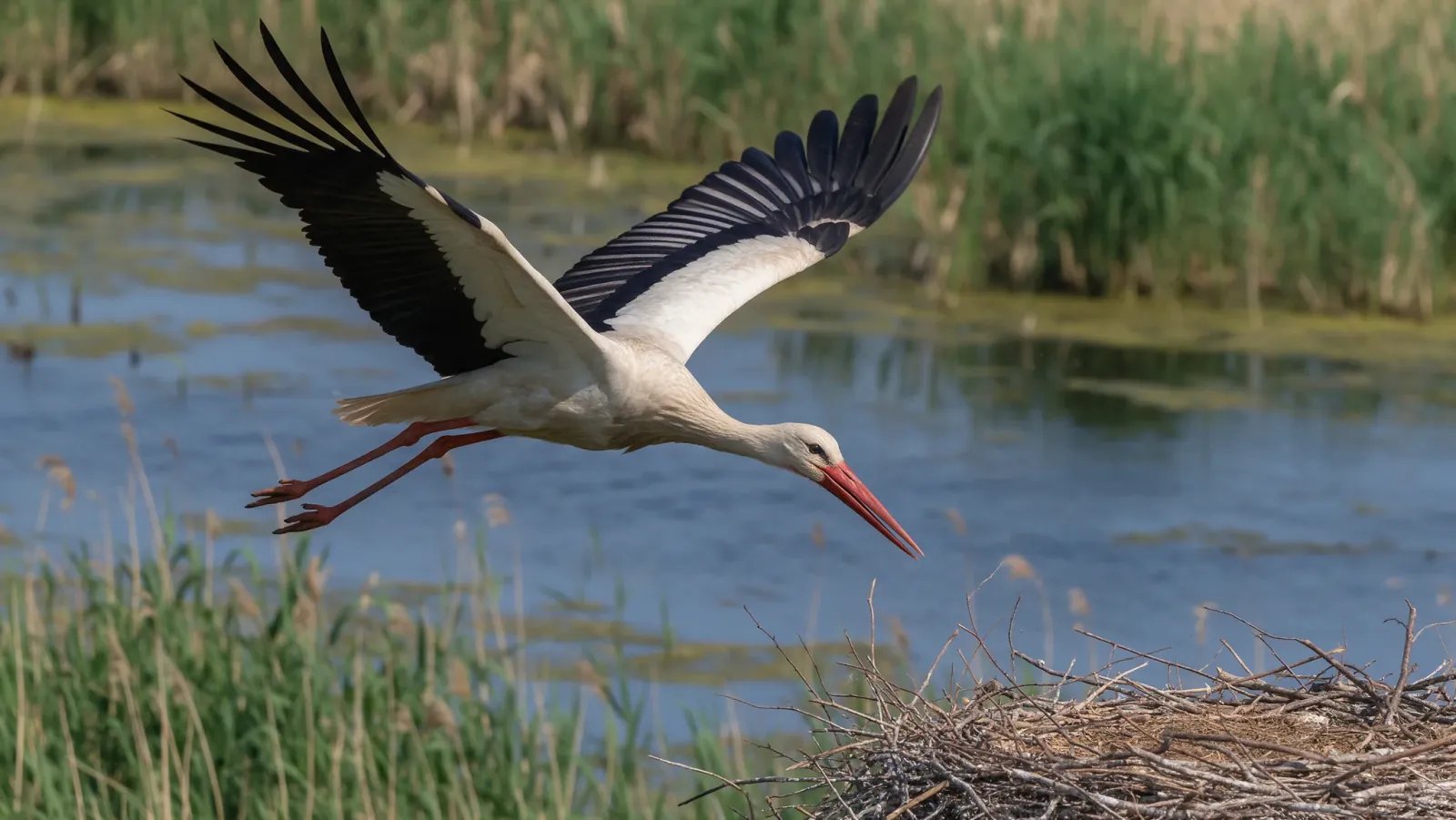
The young stork leaves in late summer with other storks, and on that first crossing it flies among birds that have made the trip before. The flock drifts south on thermals, and the young bird follows the shapes ahead of it. What it learns on the way is a long list: where the coast turns, which valleys funnel the flocks, where the good rising air is at midday, and where the birds come down to roost. A stork's first migration is also its map-making, and the map is carried in memory. By day the sun gives a heading. A bird can hold an angle to the sun and correct for the way that angle changes as the hours pass. Birds also have a sense for the earth's magnetic field, which gives them a direction when the sky is closed in. On a clear night, the pattern of stars can do the same work. Over land, a stork reads rivers, coastlines, and mountain passes. A stork does not fly the shortest line; it flies the line with the most lift under it. Thermals form over warm ground, and a flock follows a line of fields and roofs that produce them.
The last mile
The spring after that first autumn is the real test. The young bird comes north with the flock, and somewhere along the route it has to leave the company of birds headed for other villages and find its own way to the roof where it was raised. Many do not manage it at the first attempt. They settle a few kilometres off, or on a similar roof in the next village, and some pair up there and never come back to the natal nest at all. A stork's attachment to a place is strong, and it is learned rather than guaranteed. The birds that do return often arrive within days of the date they left the year before, which suggests the timing is held as firmly as the route. The final stretch is flown from familiarity. A stork that has bred on a roof before recognises the shape of the village, the church tower, the line of the street, and it comes down toward the nest rather than circling the parish. Young birds returning for the first time are less precise. The last mile is where memory shows most clearly, and it sharpens with every season the bird completes.
Explore the gift