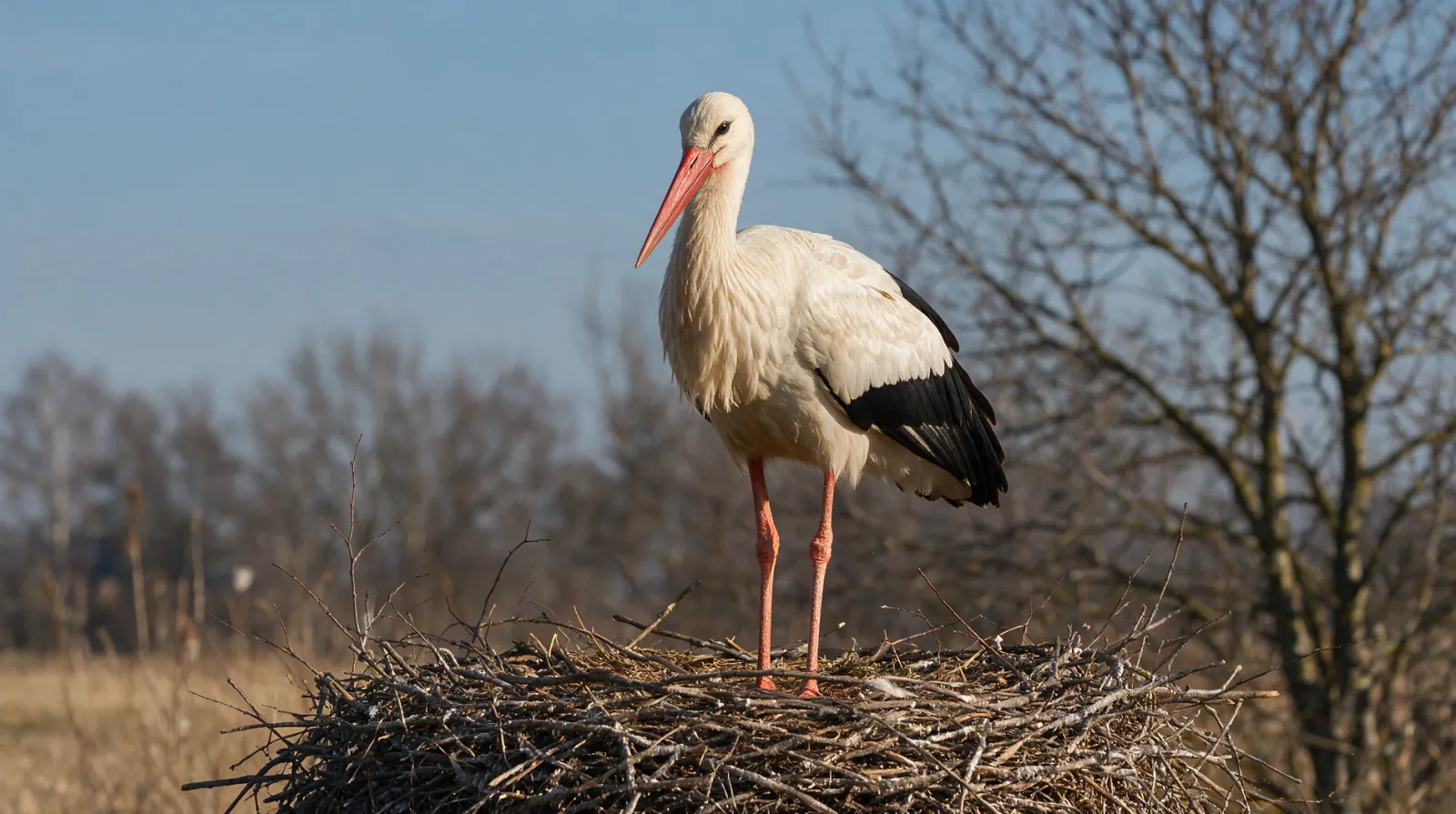
A Christmas without them is the ordinary Christmas in stork country. The nests stand empty on the roofs and chimneys, the birds are thousands of kilometres south, and the village decorates its windows around a roofline that has lost its white shapes.
December on the wintering grounds
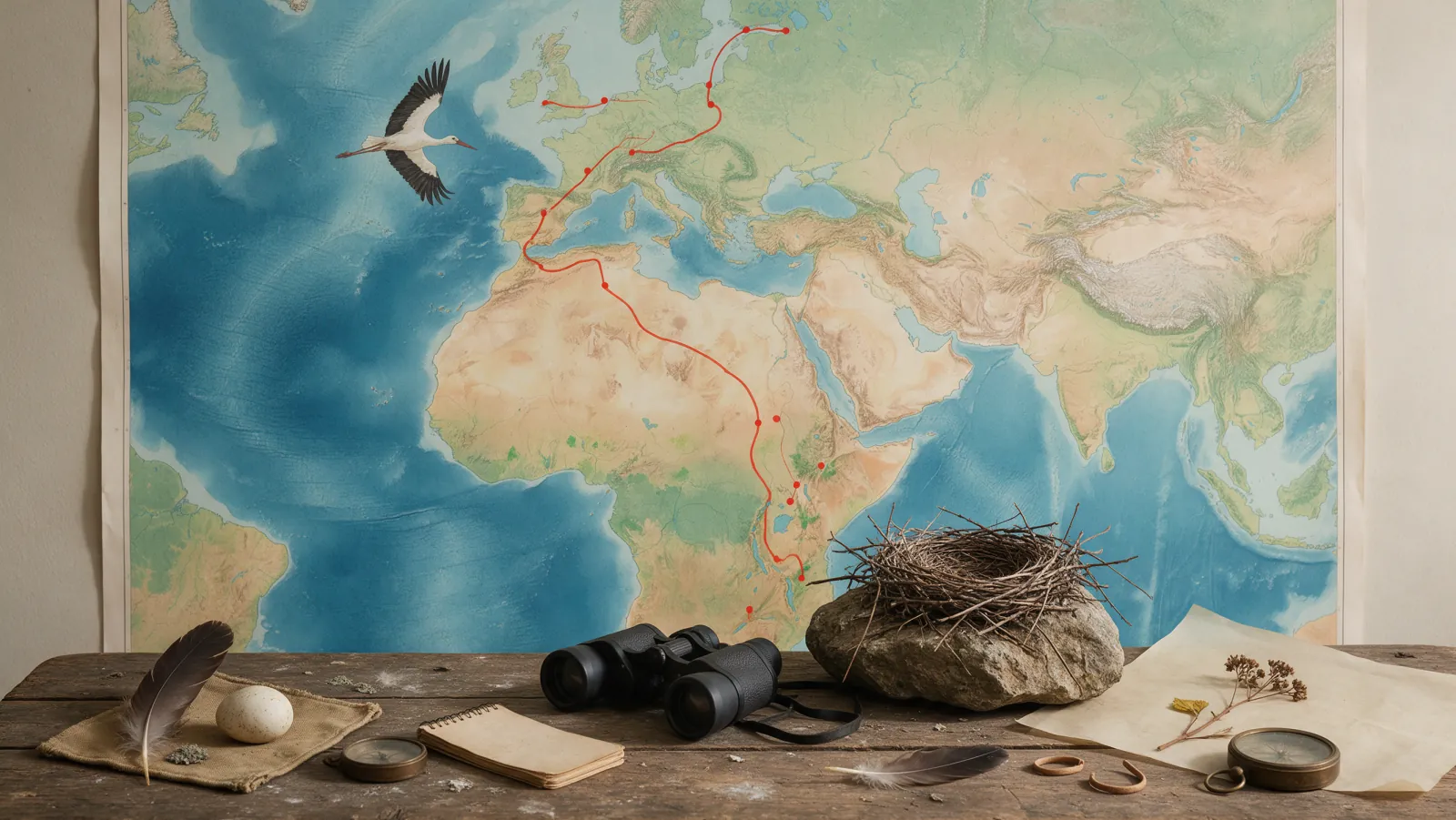
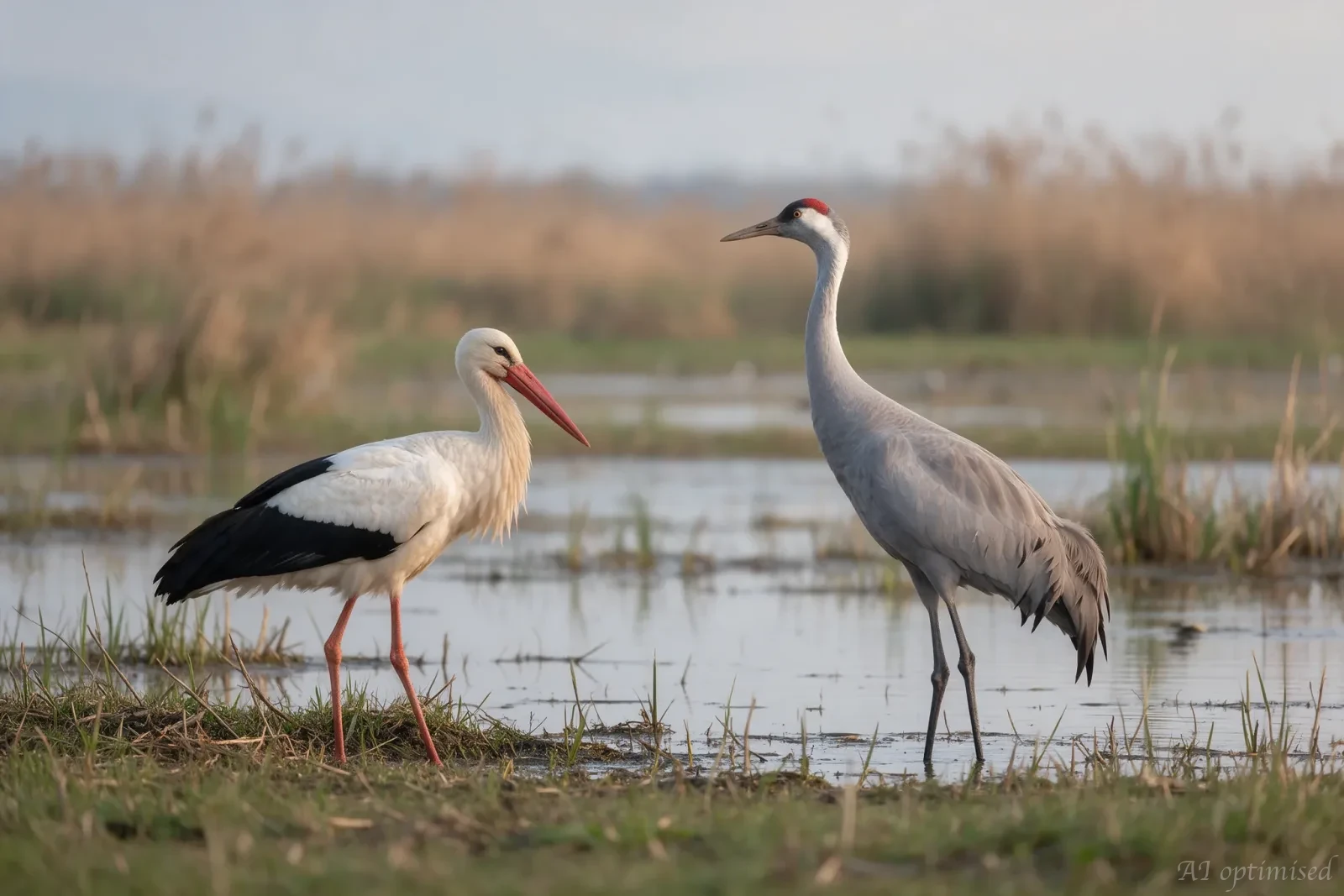
The storks that left in autumn are on African wetlands and savanna, standing in shallow water under a sun the village will not see for months. The food is there through the northern winter: frogs, insects, small fish, and whatever else moves in the shallows.
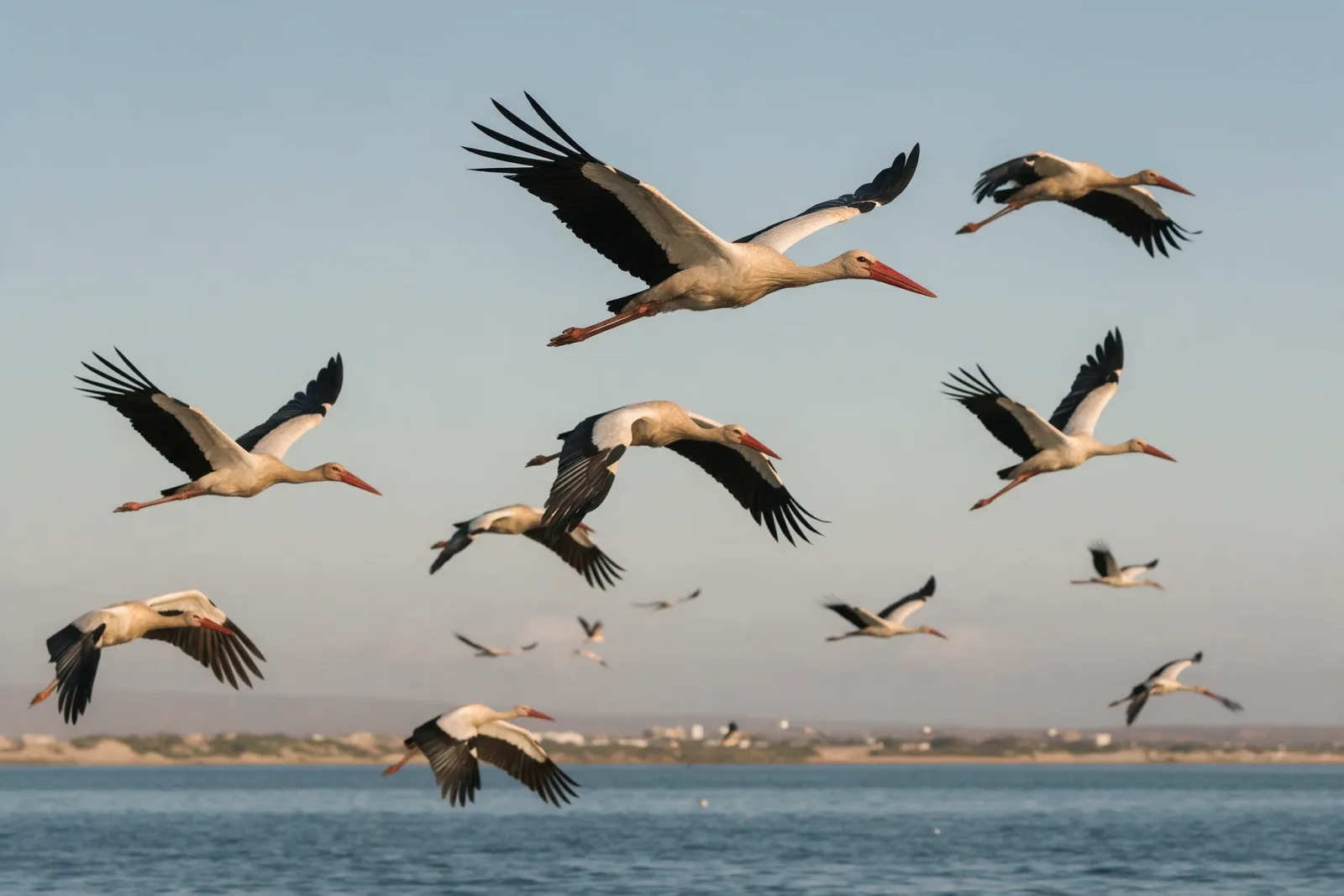
Not quite all of them go that far. Some white storks now winter in Spain and Portugal, feeding on rice fields and rubbish tips, and a few stay in southern Europe where the winters are mild. The species is flexible, and the great majority still cross the Sahara. The birds overhead in June are the same ones that are wading in Mali or Chad by December, which is difficult to hold in the mind on a cold street.
The distance is what makes the return possible. A bird that winters where food stays available comes back in spring strong enough to breed, and the north gets its storks again because the south fed them. They roost in groups, sometimes in trees, sometimes on the ground in open country, and they spend the hot hours standing still. The bird's job is to eat, moult, and build the reserves for the flight home.
The nest in the snow
An empty stork nest at Christmas is a white bowl on a white roof. Snow fills the cup and drifts over the rim, and the dark sticks show through in thin lines where the wind has scoured them. The shape that held a family in June now holds weather.
The nest survives it easily. It is a drained platform of sticks, open to the wind, and frost does no damage to dead wood. Snow adds weight for a while and then melts or blows away. The structure that was built to hold two adults and a brood of chicks is not troubled by a few kilos of snow.
Children notice the empty nests before adults do. They ask where the storks have gone, and the answer is a distance that is hard to picture. A map helps. So does the fact that the bird will come back to this exact roof, usually in March, and that the nest has been waiting for it all along.
Some households keep a stork through the winter in a different way. A family that has adopted a stork has a name, a photograph, and a bird that is somewhere warm while the roof at home is cold.
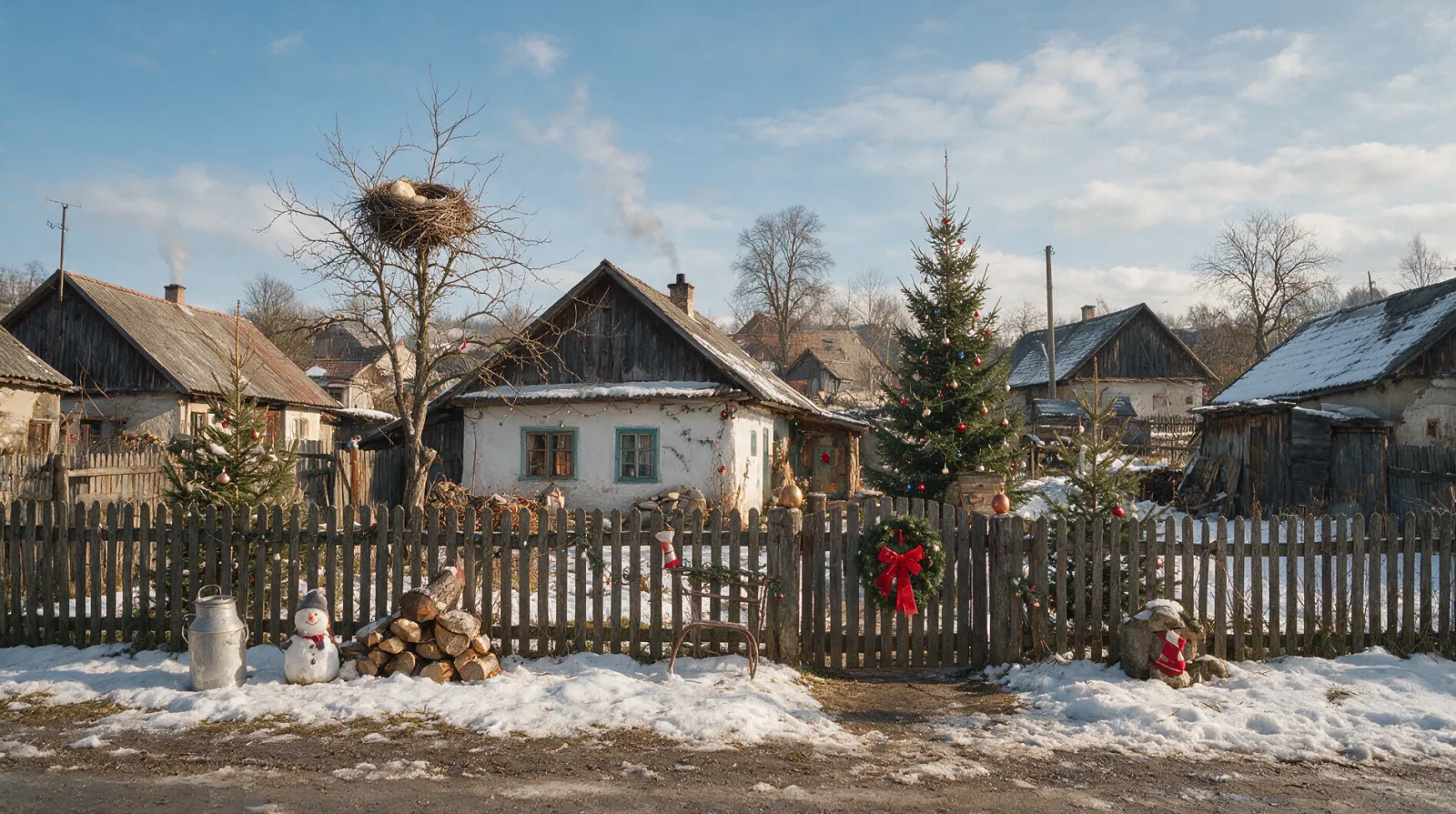
January on the roofline
The village is stripped down to its outlines now. The hedges are bare, the lanes are quiet, and the nests are visible from the far end of the street. A dark ring of sticks against a white roof is the clearest thing in the view, and everyone who lives under one glances at it without thinking.
The nest still does some work. Wind works at the outer edge all winter, and small birds use it for shelter. House sparrows and starlings slip into the gaps between the sticks, and a platform built for a two-metre bird becomes a crowded dormitory for birds that fit in a hand.
Snow settles in the cup and on the windward side. It does not harm the structure. The sticks are dead and weathered, the platform drains, and the frost that splits a stone does nothing to a bundle of twigs with air between them. A stork nest is at its strongest when it looks most abandoned.
Every stick has been through at least one winter. No one repairs a nest in winter. The wind tests it, the frost dries it, and the shape that remains in February is the shape that was strong enough to keep.
Built to be left
A white stork's nest is a pile of sticks with a shallow cup in the middle, added to every spring and repaired every time a pair returns. The same site is used for years, sometimes for decades, and the structure grows with each season. Old nests can stand as tall as a person and put real weight on a chimney.
That weight is the reason people sometimes move a nest onto a purpose-built platform. A nest that has been added to for twenty years is a serious object, and a chimney that was fine for the first five may not be fine for the next twenty. The birds accept the platform and carry on building.
All winter the nest stood through frost, snow and wind. It was built to be left and found again, and the returning bird settles onto it as if the gap had been a night. The nest is the one thing in the village that does not move with the seasons, and the bird is the one thing that always comes back to it.
The first repair
The work starts again in late February or March, when the first bird lands. It arrives at the same nest it left, often with the same mate a day or two behind, and begins by checking the rim. Loose sticks are pushed back, new ones are carried up, and the cup is deepened.
A white stork comes back to its own nest, the one it left in autumn, and often to the same mate. The pair arrive within days of each other, find each other, and start the season with a long bout of bill clattering. Nobody taught them the route. Young birds find it themselves, and adults repeat it, and the fidelity runs in both directions: to the nest and to the partner.
When the storks return, the village starts living outdoors again. Doors open, the street gets used, and the sky has its birds back. Children ask how long until the chicks hatch. Old people give an answer and are usually close. Nobody announces the first egg, and within weeks the whole street knows anyway.
The return starts a clock the village can see. Feeding, courtship, incubation, then the long noisy business of raising chicks, all of it runs from the day the first bird lands.
A year with a visible hinge
The cold loosens, the fields soften, and the first storks stand again on nests that were empty all winter. That return is older than any calendar, and it has always felt like the start of the year.
A village can mark January and feel nothing. Then one morning a white shape drops onto the chimney, and the whole place knows the year has moved. The date varies a little each year, and nobody minds. A week early or a week late is close enough when the sign is a bird.
By June the roof will be loud and the parents thin. By August the young will be practising flight. None of that has begun yet, and the whole summer is waiting inside a single arrival. By the end of March the nest has fresh sticks on the rim again, and the first egg is not far off.
Explore the gift