Following the stork through the seasons is the actual content of a stork gift. The card is the beginning, and then the year unrolls: arrival, eggs, chicks, departure, absence, return. A family that follows one bird ends up knowing the shape of a European year without ever being taught it. The bird keeps to a schedule older than the calendar on the kitchen wall.
Spring: the nest is taken
The first message of the year is usually the best one. The bird is back, standing on the platform it used last summer, clattering its bill with its head thrown back. The sound carries a long way, and it is the sound of the season starting. It is also the moment the family's winter of checking an empty map ends.
White storks return to the same nest year after year, and pairs often meet there again. The platform gets repaired with sticks and grass, and the work is visible: a nest that looked abandoned in February becomes a construction site in March.
The bird does not arrive to an empty stage. Neighbours on other roofs are already clattering, and the village has its spring soundtrack back. The first message often includes a photograph of the bird on the platform, and the platform looks much as it did in August, with a few more sticks.
Summer: chicks on the platform
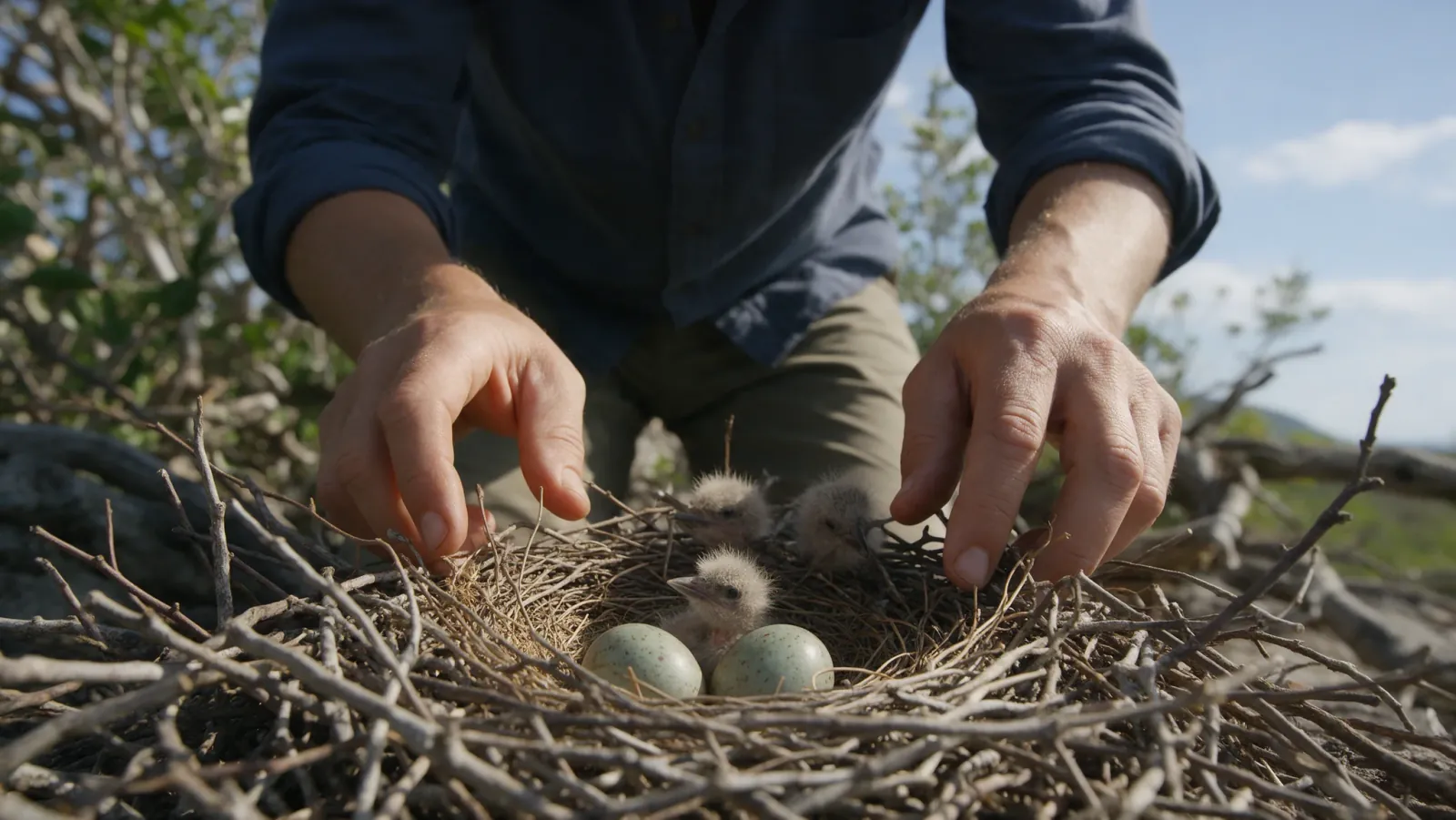
Eggs come in April or May, usually four or five, laid a couple of days apart. Incubation takes about a month. Then the nest holds a row of grey fluff with black bills, and the parents spend the daylight hours flying out and back with frogs, insects and small mammals.
Chicks grow fast and fight for the front. By July they are standing, stretching, and flapping at the edge of the nest. The first flight is the event of the summer, and it usually happens when the young are around two months old, though they keep coming back to the nest to be fed for weeks afterwards.
The summer updates are the ones a child asks for. Photographs of chicks in a row, a parent arriving with something in its beak, a nest that looks too small for the birds standing in it. Some families print two or three of these and put them beside the card, which turns a shelf into a small record of the year.
Heat is part of the season too. In a dry July the meadows harden, the frogs go deeper, and the birds travel further for food. A stork's summer is work, repeated from first light until the nest is quiet. A wet spring means more frogs in the ditches and better fishing; a dry one sends the birds further from the nest.
Autumn: the gathering
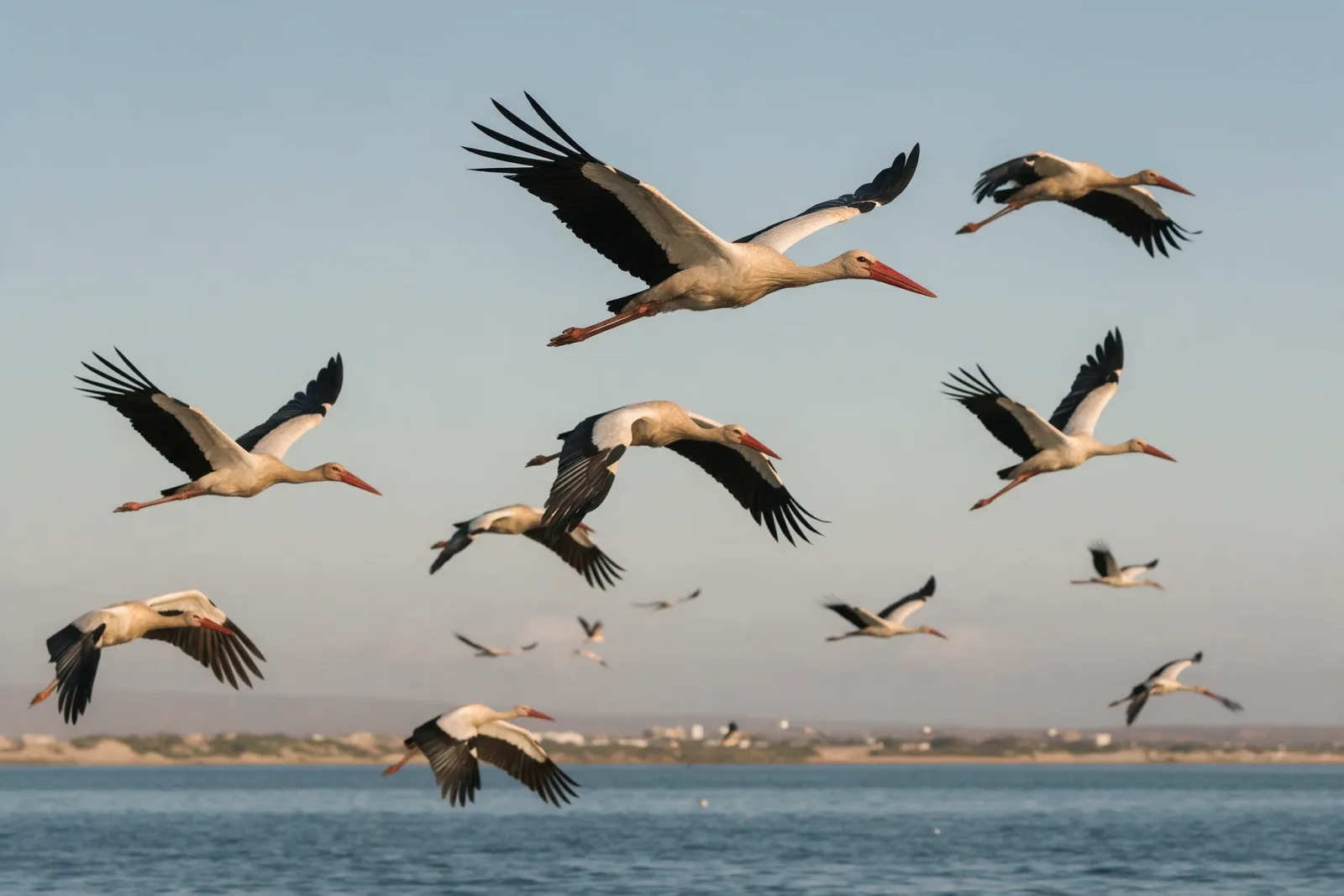
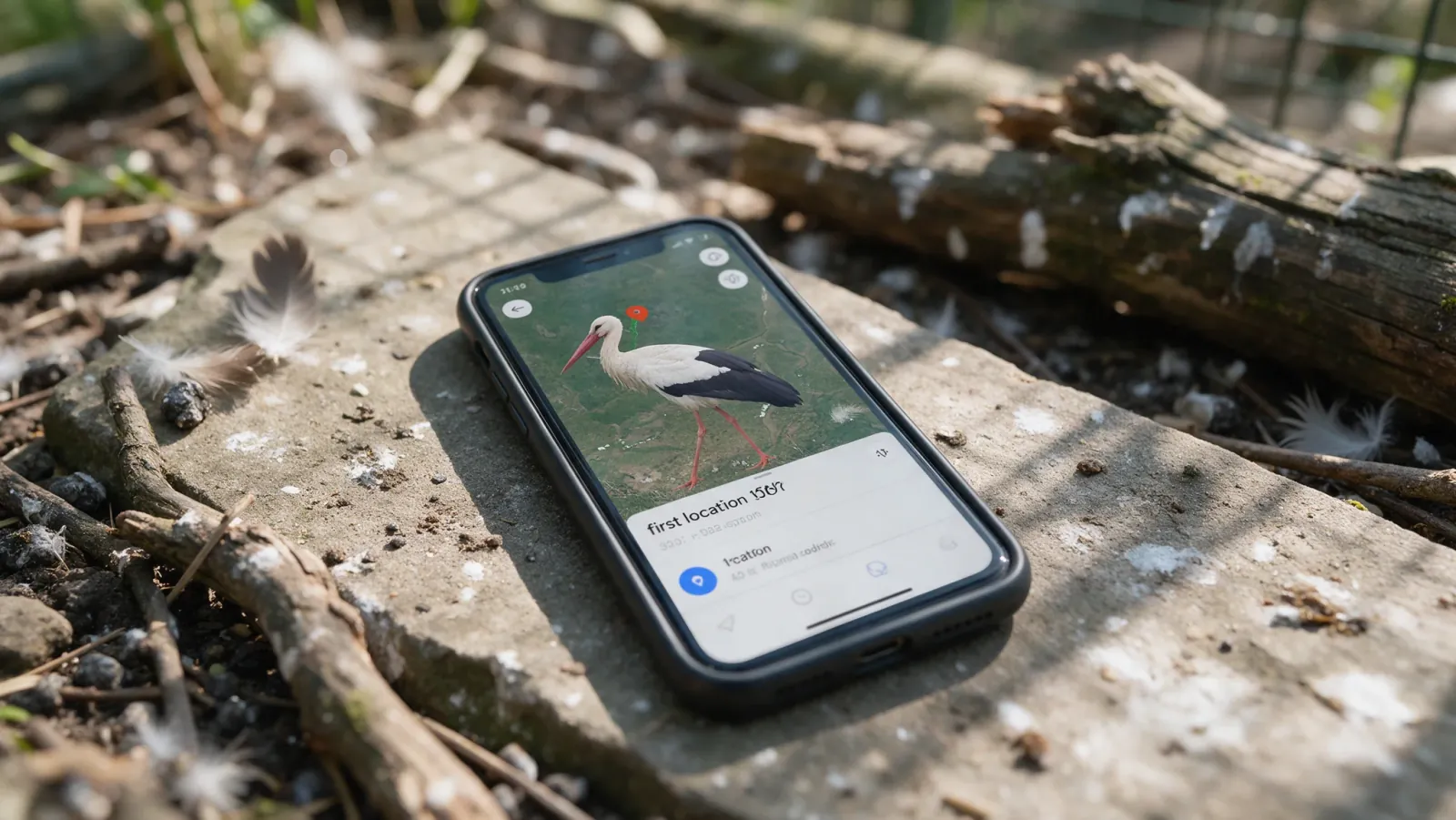
In late summer the fields fill with storks. Families from different nests gather where food is easy, feed heavily, and drift south in loose groups. The updates change character: fewer photographs of a nest, more of a bird standing in a ploughed field or circling over a ridge.
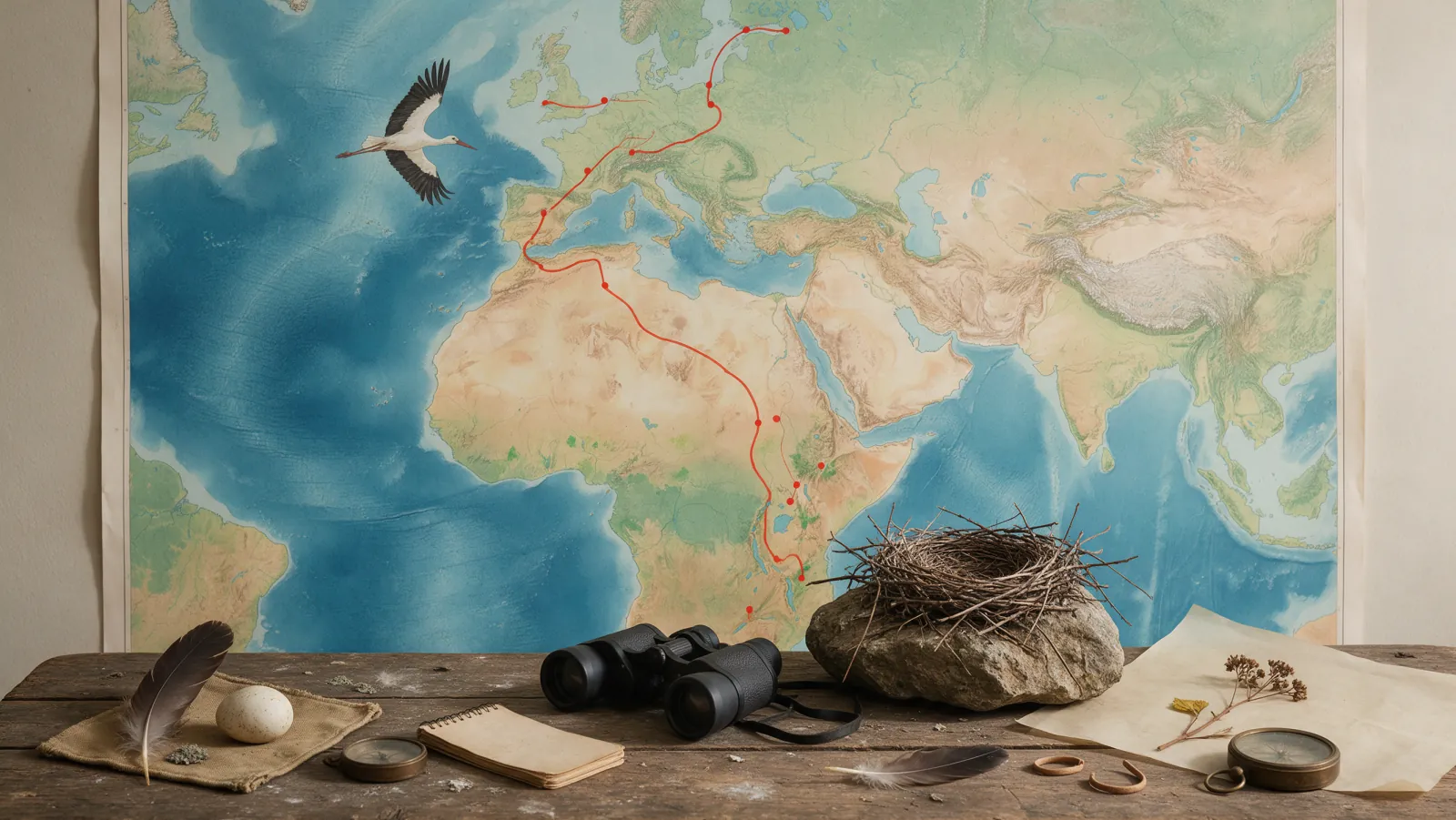
Then the messages get sparse. The bird has crossed the sea at Gibraltar or the Bosphorus and is moving through Africa. A child learns what a long absence feels like when the map stops moving for a while.
The gathering has its own energy. Dozens of birds on one field, all feeding, none of them interested in the family watching from a screen. Before they go, many move to big river valleys and coastal marshes, where the feeding is good and the thermals are strong.
The desert leg
A white stork is a bird of wet ground. Its food lives in shallow water and long grass: frogs, insects, small mammals, fish when it can get them. None of that exists in sand. The crossing is a fast, deliberate journey through a place with nothing to eat and nothing to drink.
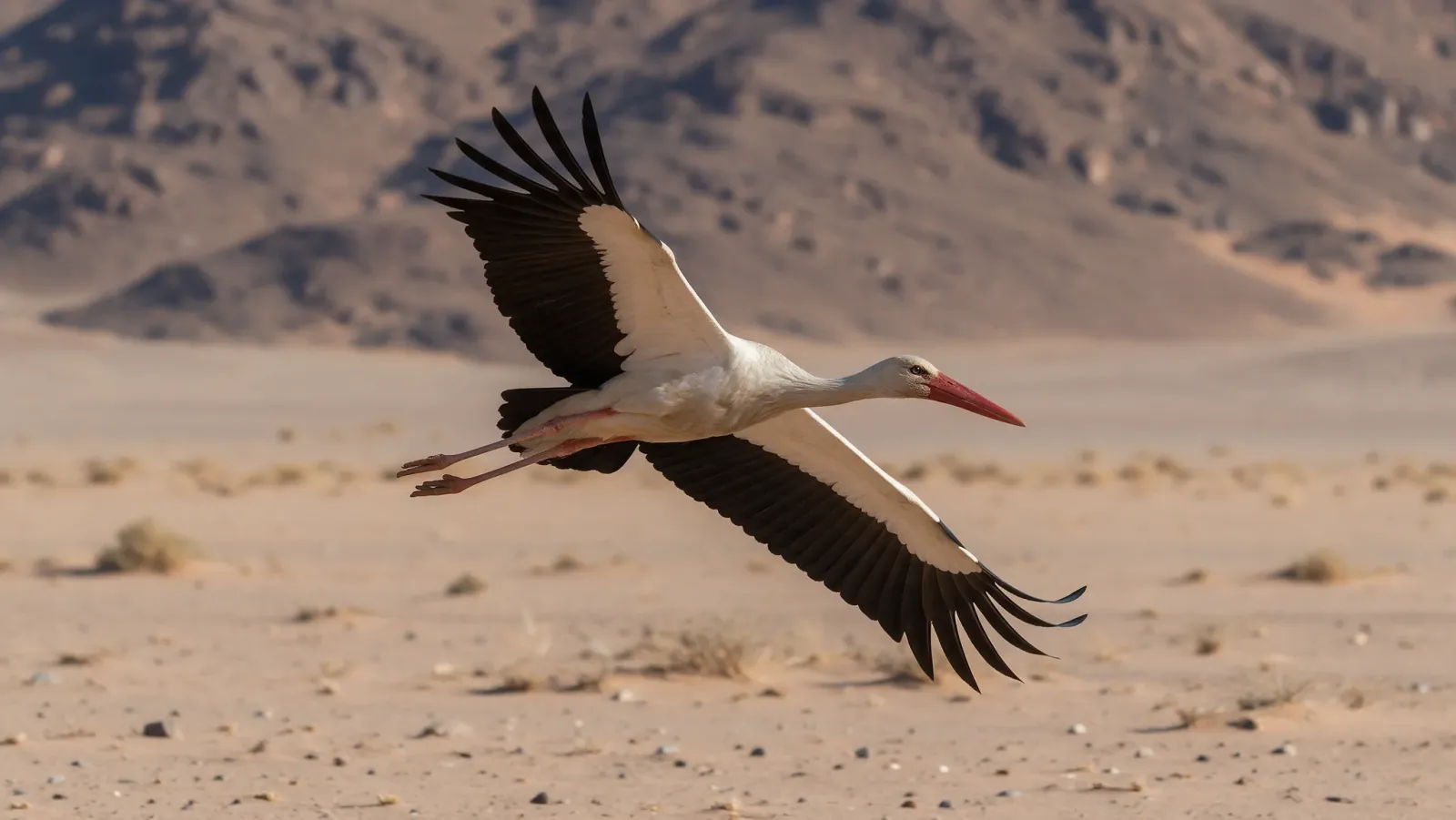
Storks cross the Sahara without carrying water, riding thermals by day and standing on sand at night. They wait for the ground to heat, rise on the first good column of air, and cover as much ground as they can before the afternoon cools. Flapping costs energy the bird cannot replace.
The birds come down in the evening and rest on the ground, often in flat, open places where nothing can approach unseen. They do not feed. A night in the desert is cold, and the bird spends it standing, because there is nowhere safe to sit. The picture is a large white bird in the dark, on sand, waiting for the sun to make the air work again.
The news goes quiet over the desert. Sometimes the reason is technical: a transmitter's signal has to travel a long way from a place with no infrastructure. Sometimes the bird is simply out of range of anything that can pass a message on. The quiet is not the same as a problem. It is what the middle of a long journey sounds like.
Winter: the quiet months
The bird is on grassland and shallow water south of the Sahara, often in the company of storks from all over Europe. Days are spent feeding, resting, and avoiding whatever is bigger. The far side of the desert is dry grassland, scrub, shallow seasonal water, and a great many insects after rain.
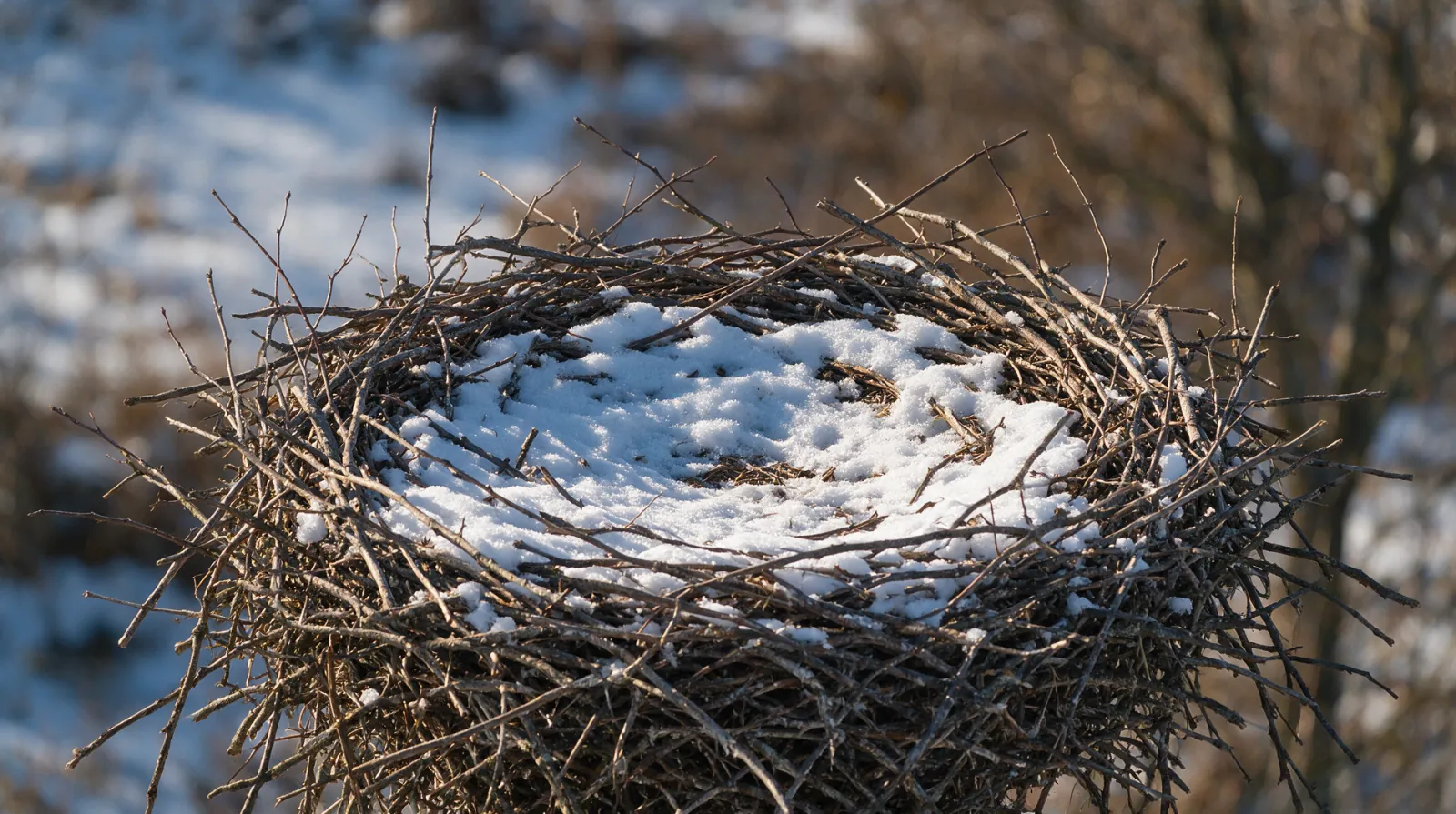
At home the nest is empty and the weather is bad. The empty nest is what makes the spring return mean something. Without the winter, the return would be a fact rather than an event. The weather where the bird is has its own rhythm: warm days, patchy food, and a move whenever the ground dries.
The map is worth opening in January, when the distance between the nursery and the bird is at its longest. The line runs from a European roof to a place the family has never been, and it is still a line, not an absence.
The second spring
Then it starts again. The same platform, the same bird, a new year of eggs. The child is a year older and knows the sequence now: back, eggs, chicks, gone.
A gift that repeats on a yearly cycle is a rare thing to give a child. The bird keeps to its schedule, and the family keeps looking up. Nothing gets used up, and nothing needs replacing.
The second year is easier to follow and harder to predict. A nest can fail. A chick can be lost. A platform can be taken by another pair. The family that followed the first year knows which questions to ask, and the bird answers them by doing what it does.
If the gift was given at a birth, the child's first year and the bird's year have run in parallel: the bird reached its nest around the time the baby came home, the chicks hatched while the family was learning to sleep in short stretches, and the departure came in late summer. By the birthday, the cycle is nearly complete, and the card from the first week now refers to something that has happened.
The cycle is what makes the gift repeat without anyone arranging it. The bird does not need a reminder, and the family does not need a subscription. The card stays on the shelf, and the page keeps the sequence in order.
Explore the gift