Older than the baby bundle is a stork that carried souls, and older than the lucky roof is a stork that kept watch through the worst of the year. The white bird has been given several solemn tasks in European legend. It ferried the dead and the unborn between worlds, it took the shape of a mother who would not leave her children, and it stood in a frozen field until the thaw came. Each story treats the bird as a creature of return.
A bird between two worlds
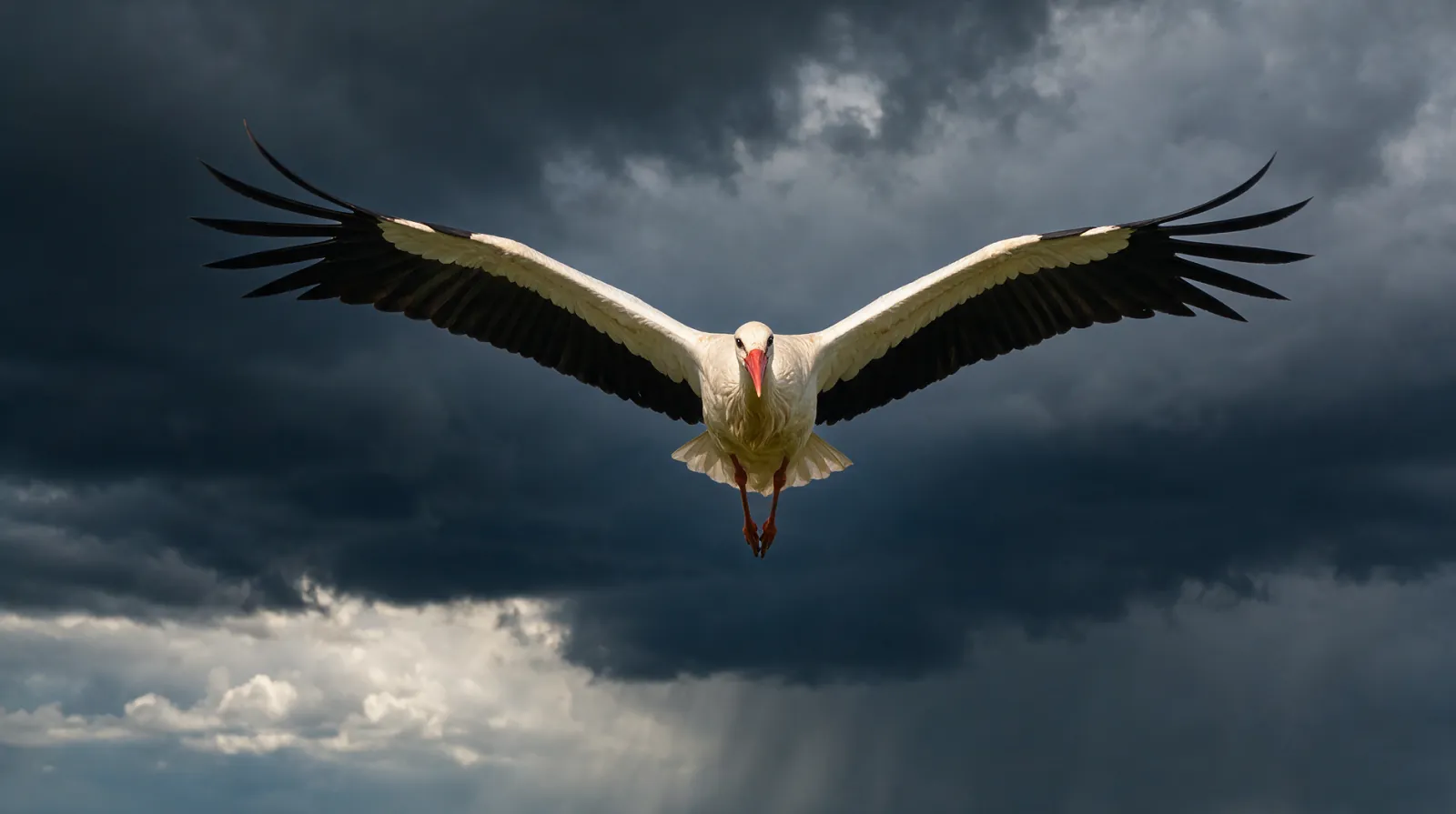
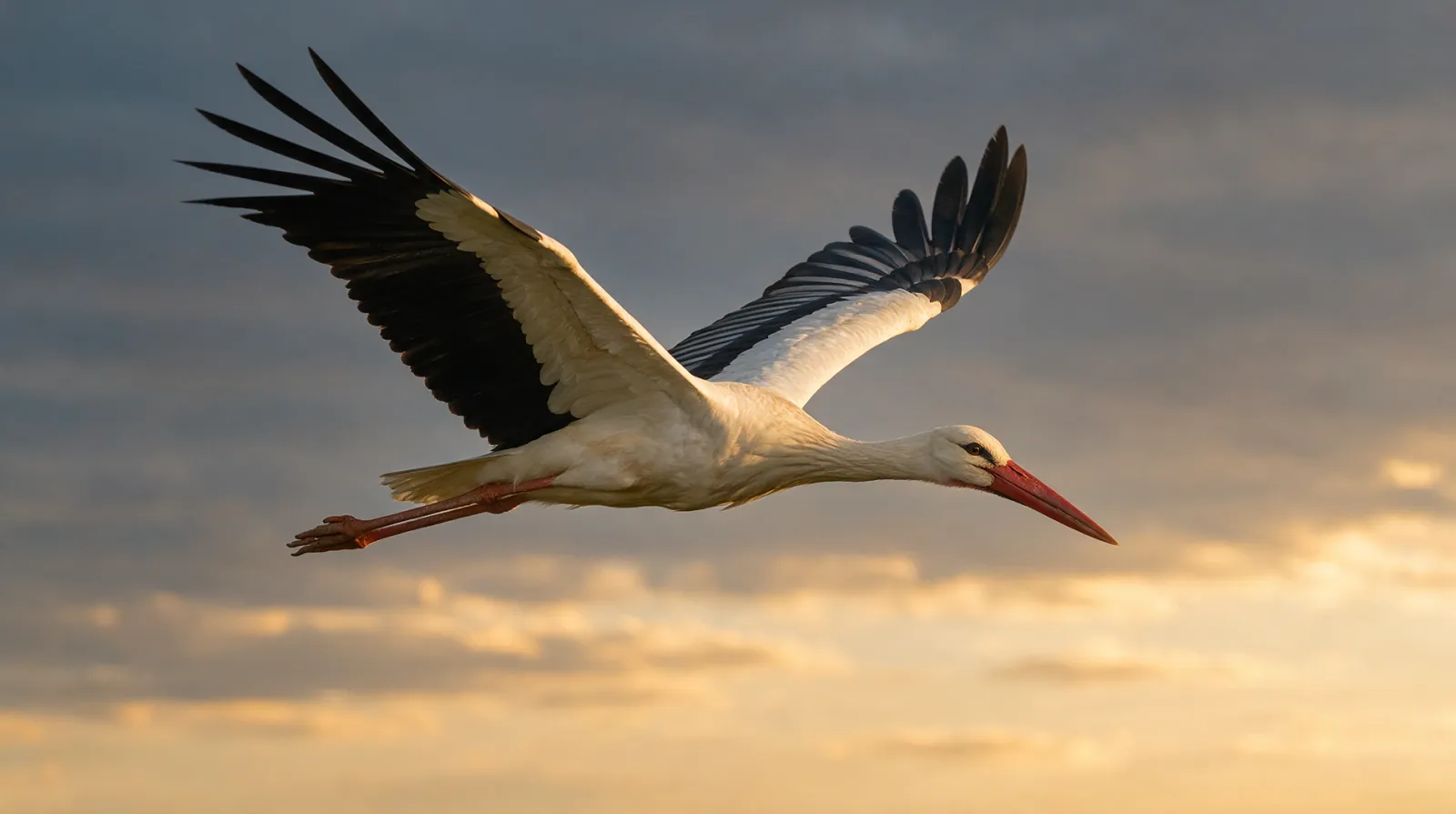
The stork travels farther than most creatures a village would know. It leaves in autumn, vanishes across the sea, and returns in spring. To people who never saw where it went, that long absence looked like a journey between worlds, a road only a few creatures could travel and come back from.
A bird that could go so far and return must know the road both ways. So it was chosen to carry what people most wanted brought home. The distance made the bird a messenger, and the return made it trustworthy.
The white feathers helped. White was the colour of the dead in much of northern Europe, the colour of souls and of the shroud, and the stork wore it as its own. A white bird crossing the sky read as a soul crossing over. A child who saw one at dusk would point and know exactly what it was. The bird's colour did half the storytelling. No one had to explain why the stork had been chosen for the task.
Souls before babies
The soul story and the baby story were once one story, and the split between them came later, when the babies were all people remembered. In the folk mind, unborn children waited somewhere beyond, and the stork fetched them and brought them to the family. The bird carried souls in both directions, the ones arriving and the ones leaving. A newborn was a soul that had come back, and the stork had carried it. The baby bundle and the soul bundle were never two different things.
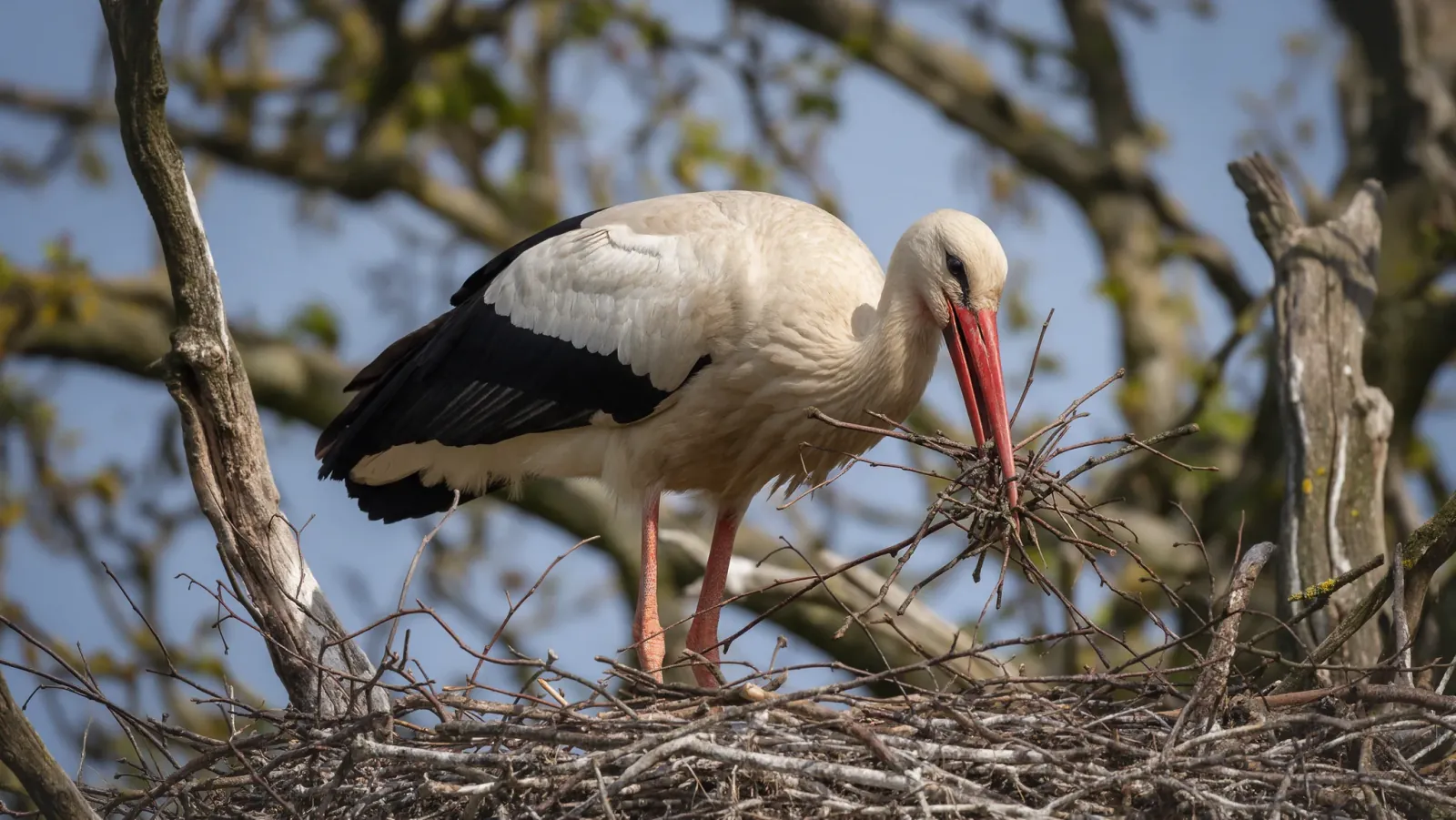
When a stork lands on a nest and throws its head back to clatter its bill, the sound carries a long way across the quiet roofs. Folk tradition heard that clatter as a call, a way of telling the house that a soul had arrived or was about to. The bird announced what it carried, and the people below listened.
The clatter is the stork's only real voice. It does not sing, and that silence strengthened the idea that it belonged to a quieter, larger task. A bird with no song could be trusted with a message too large for words.
The comfort of a return
The story's point is comfort. If the stork carried souls, then nothing was ever really lost. The dead were simply travelling, and the same bird that took them would one day bring someone back.
Grief softened into waiting, and waiting had a shape: a white bird on the horizon in spring. The road between here and wherever we came from is long, and it is walked in both directions. Someone is always on it, and the wings are white.
The legend is gentle and patient. It says the road is walked in both directions, and that a roof is never truly empty. A white bird carrying the ones we love toward a roof that knows them. The image asks for no proof. It asks only that a person look up in spring and feel that the distance has a traveller.
The mother on the roof
A woman with small children and no easy way to protect them is at the centre of an old shapeshifting tale. It is one of the gentler shapeshifting tales, and it explains, in its own way, why the stork is so watchful, so faithful, and so devoted to a single nest.
The story opens in a household where a mother has small children and no easy way to protect them. In some tellings she is parted from them. In others she must leave for a time. The details vary, and the story stays the same: a mother who will not be separated from her children. Rather than lose them, she asks to be changed, and she becomes a white stork. The change lets her remain, watching over the children from the roof and the fields beyond the house. She gives up her voice and keeps her post.
As a stork, the mother nests on the roof of the house where her children sleep. She watches over them from above, comes and goes with the seasons, and returns each spring without fail. The clatter of her bill on the chimney is her way of announcing that she is home again.
The story turns the stork's real habits into proof of the mother's love. The bird's faithfulness to one nest, its patient watching, and its yearly return all become signs of a mother who cannot forget her children. The natural history and the tale fit together without a seam.
The tale also explains a rule. A stork is never harmed, never hunted, and never driven from the roof, because the bird might be a mother in another shape. In some versions the children know. They see the stork on the roof and understand that it is their mother, and they feed it and leave water for it and greet it when it returns in spring. The bird cannot speak, and it does not need to.
The frozen field
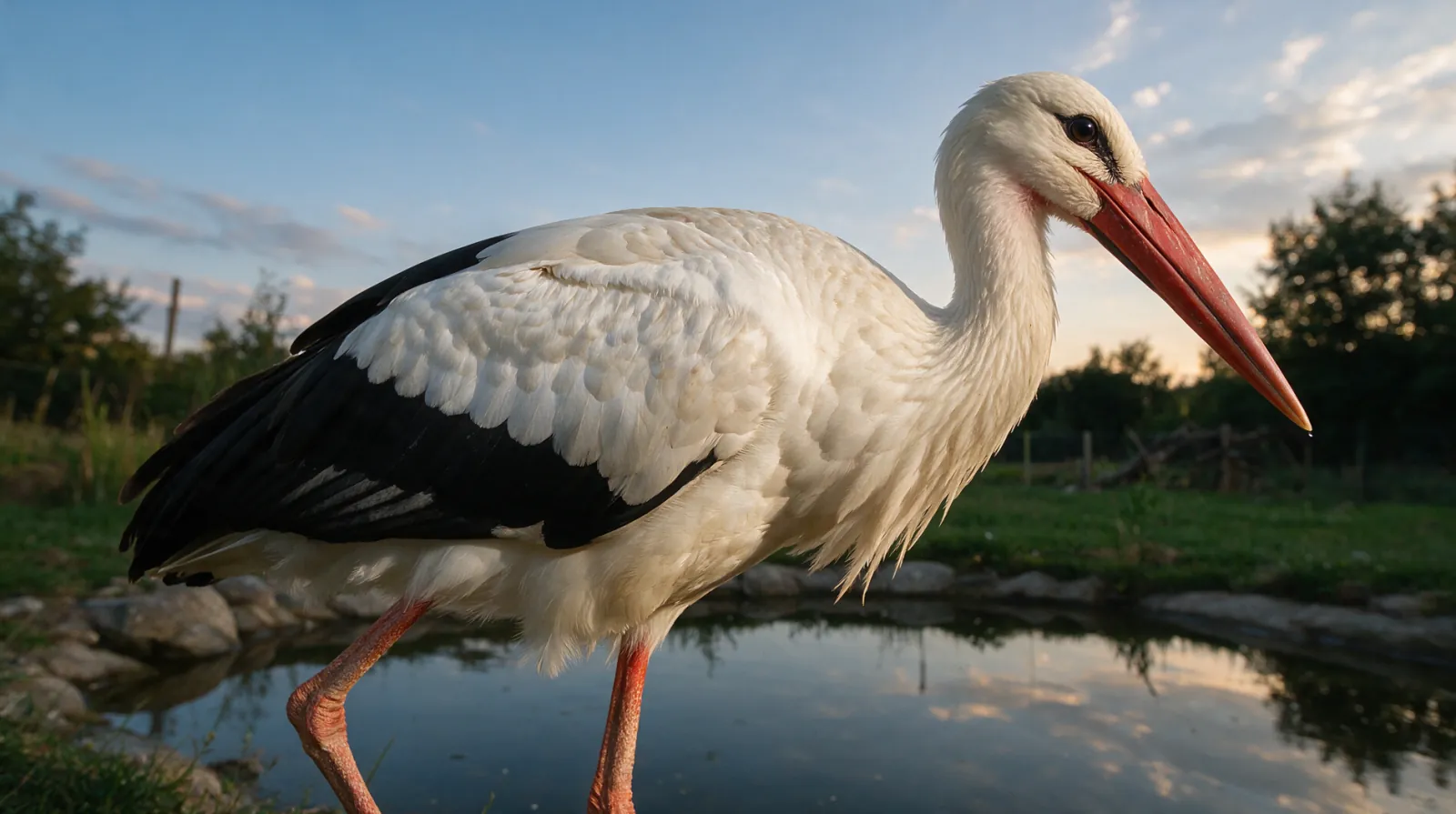
Some winters a stork lingers in the cold while the rest of the flock has gone south, standing in the frozen field as the light drains away. A white stork that stays into the cold is usually one that could not keep up, a young or weakened bird that missed the gathering and found the sky empty. To the people who watched it, the lone stork seemed to have stayed on purpose, holding its ground because it had something to finish.
The frozen fields made the bird easy to see. A white shape against white ground, so still it might have been carved there. People left food at the edge of the village and watched from the windows. The stork became a shared concern, a neighbour who had gambled on the weather.
The omens around the frozen stork were gentle rather than fearful. A stork that survived the winter was a sign that the household would survive whatever came. A stork that stood in the snow and lived to see the spring was proof that patience outlasts hardship, that the hardest season ends.
Some tales said the frozen stork was keeping watch, holding the nest through the dark months so that no other creature could claim it. The bird stood sentry in the cold so that the nest would still be waiting when the flock returned. The year could begin again without loss.
The story gave a shape to the season itself. Winter in those villages was long and hard, and the frozen stork made it bearable by making it a vigil. The bird and the people were waiting together, the people inside and the bird outside, all of them holding on for the same thing. The first warm wind. The first break in the ice. The stork's stillness was endurance, the refusal to leave before the thing you are waiting for has arrived.
When spring came and the stork was still alive, the village told it as a triumph. The bird had stayed, and the bird had won, and the lesson was written into the story: hold your ground, keep warm, and the year will turn. The thaw was the proof. The ice broke, the meadows softened, and the stork walked out of the field it had refused to leave. The bird that had looked frozen was only waiting.
The stork lands on the nest, and the family hears the clatter.
Explore the gift