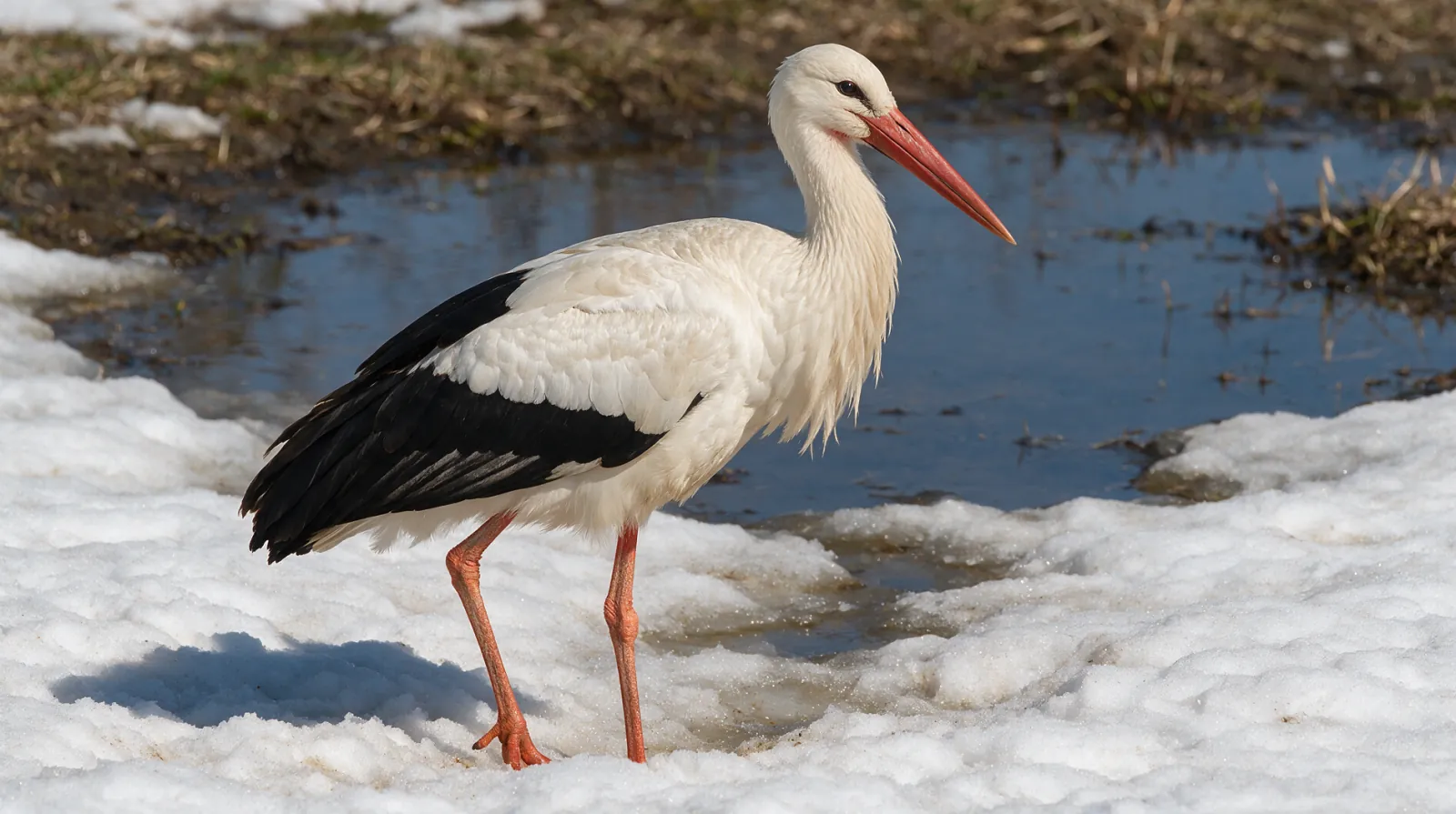
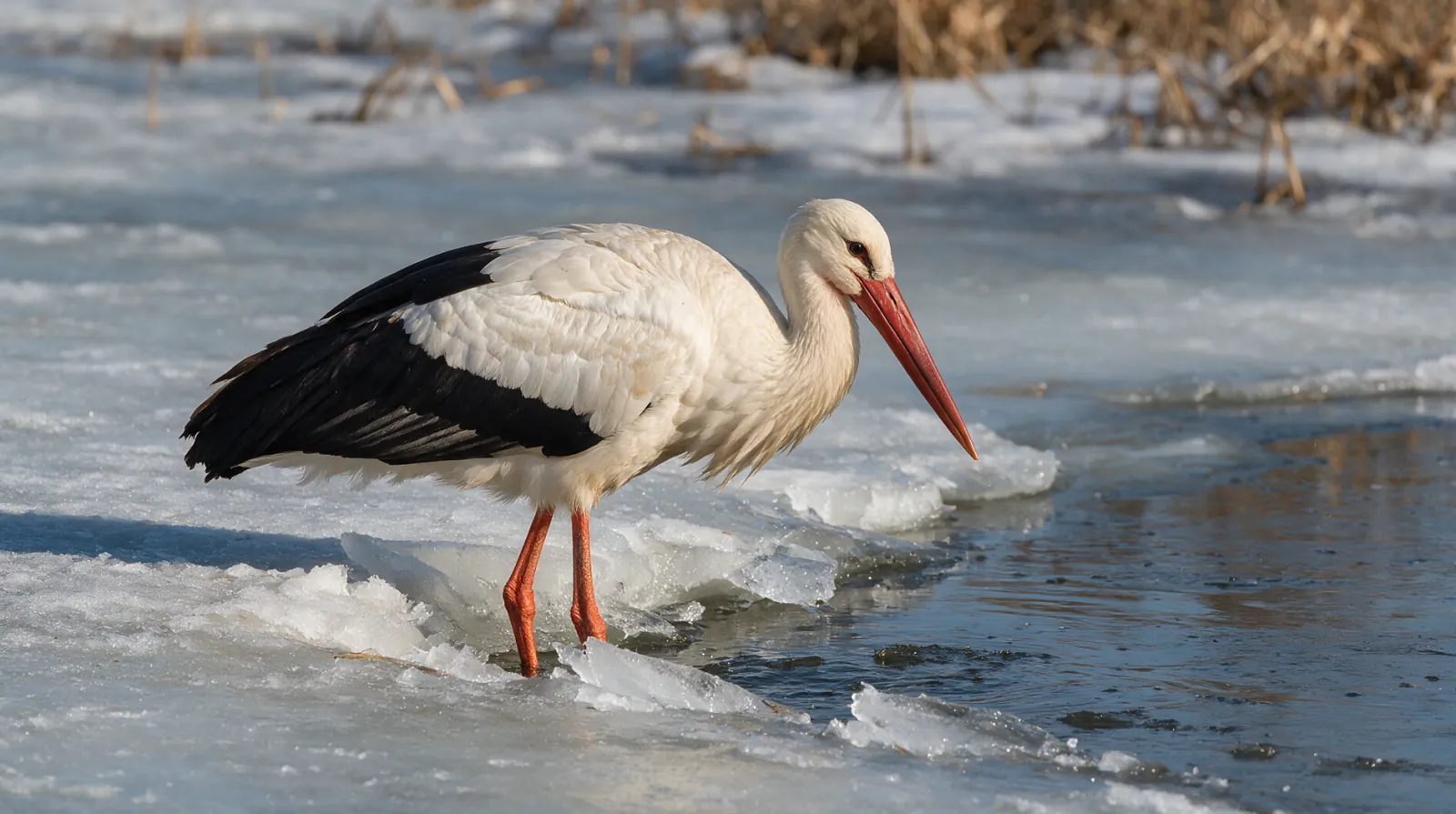
The thaw arrives as a sound before it arrives as a season. Ice groans, then splits with a crack that carries across the fields, and the dark water underneath shows again. A white stork still travelling north needs only a little of that open water to stop.
The sound of the thaw
The marsh has held still since December. The thaw gives it a voice. Pieces of ice ride the current into the ditches, water starts to move and speak, and the whole place becomes noisy after months of silence.
The sound builds over a week or two. A cold night seals the edges again, and the next mild afternoon opens them. The thaw is a negotiation with the weather. It can move forward for three days and lose a week to a hard frost. Nothing about it is steady, and the birds that depend on it are used to the argument.
A spring-fed pool can keep a patch of dark water all winter, and a moving ditch can stay open in the middle while its edges are solid. Those places are where the thaw starts, and they are where the first birds look.
The first open water often appears where the sun reaches: the south bank of a ditch, the shallow edge of a pool, the dark line where a spring feeds in. A moving ditch can stay open in the middle while its edges are solid. A single one of those gaps is enough to change the season for a bird.
Open water means food
What the broken ice reveals is food as much as water. Frogs that have been buried in the mud come up into the shallows, insects start to move, and the first hatches appear over the wet grass. The ground softens enough for a bill to work, and the edges of the pools become feeding ground again.
A stork arriving into this finds what it needs after a long flight: shallow water, slow prey, and no need to travel far between them. The bird walks the edge with its usual patience, and the first good meal of the year is taken within sight of the nest.
The bird works the edge rather than the middle, walking the soft line where water meets grass. Prey is concentrated there, and the escape routes are short. A channel deeper than a stork's leg is a channel it cannot use.
One thawed puddle can hold the first week of the season. The bird works it carefully, takes what it can, and waits for the next mild day. The feeding improves over weeks rather than days, and the bird keeps returning to the same ditch long after the ice has gone.
The first frog is a small event that matters. It proves the water is working, and it gives the bird a reason to stay. More will follow as the shallows warm.
The first frog
Something moves in the shallows while the edges of the pool are still cold. It sits in the sun for a while and disappears at the first shadow. A stork that finds it has found proof that the water is working.
Frogs do not all wake at once. The ones in the shallows move first, and the ones deeper down wait for warmer water. The green follows a similar order. It appears first on banks and verges and the south side of hedges, then spreads across the open field, then reaches the shaded ditch. The first green and the first frog belong to the same story. The colour and the small lives arrive together, and the bird follows both.
The green that spreads
A field in early spring can look brown from the road and hold a thin wash of green at the edge. The first shoots come through cold soil, and the first grass greens at the base of a south-facing bank. Nothing announces it. The colour simply begins, and only the people who watch closely catch it at the start.
For a stork the green is a signal. The ground is thawing, insects are stirring, and the long frozen season is loosening. A bird will not fly north into a dead, brown land. It waits for proof that feeding will be good, and then it comes.
The green is the invitation, and the bird is the answer. A white stork standing in a field of first green, pale shoots around its red legs, is one of the most satisfying sights of the year. The colour and the wing meet, and the season has both of its promises at once.
The green is a promise with a timetable. It appears first where the sun reaches, and it spreads from there. Farmers read the same signs. The first green means the soil is workable, and the first ploughing of the year often happens within days of it.
When the thaw stalls
Some years a block of cold air sits over the continent, the wind keeps coming from the north, and the mild days never string together long enough to open the ground. Frost returns at night weeks after it should have gone.
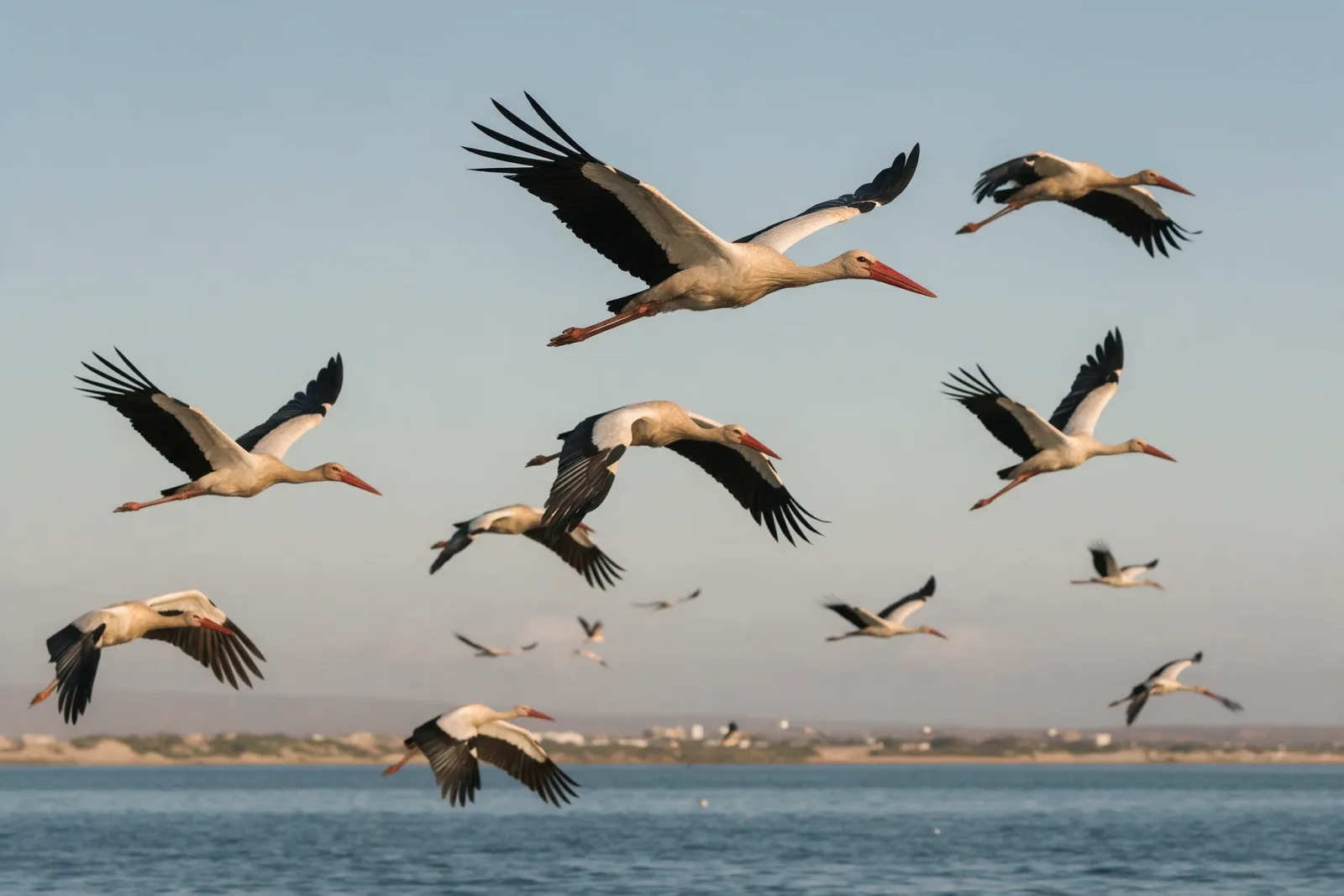
The birds arrive on time, driven by the lengthening days, and find the north still locked. They have just flown from Africa and used most of their fat to get here. They need to feed heavily in the first weeks back, and the food sits under ice or deep in frozen soil. An early bird can lose a week of feeding and never make it back in the season's timetable.
The oldest birds suffer most, because they arrive first to claim nests they have used for years. Some stand on the nest in the cold. Some walk the few open margins looking for something to catch. A late spring pushes the eggs back, then the chicks, then the first flights. The whole chain compresses at both ends.
A cold north wind takes heat off a standing bird, and a stork will turn its back to it and wait. Some birds give up and move on to another site. Some wait. The nest is held, but the pair is behind, and the eggs will be laid later than they should be.
A little water is enough
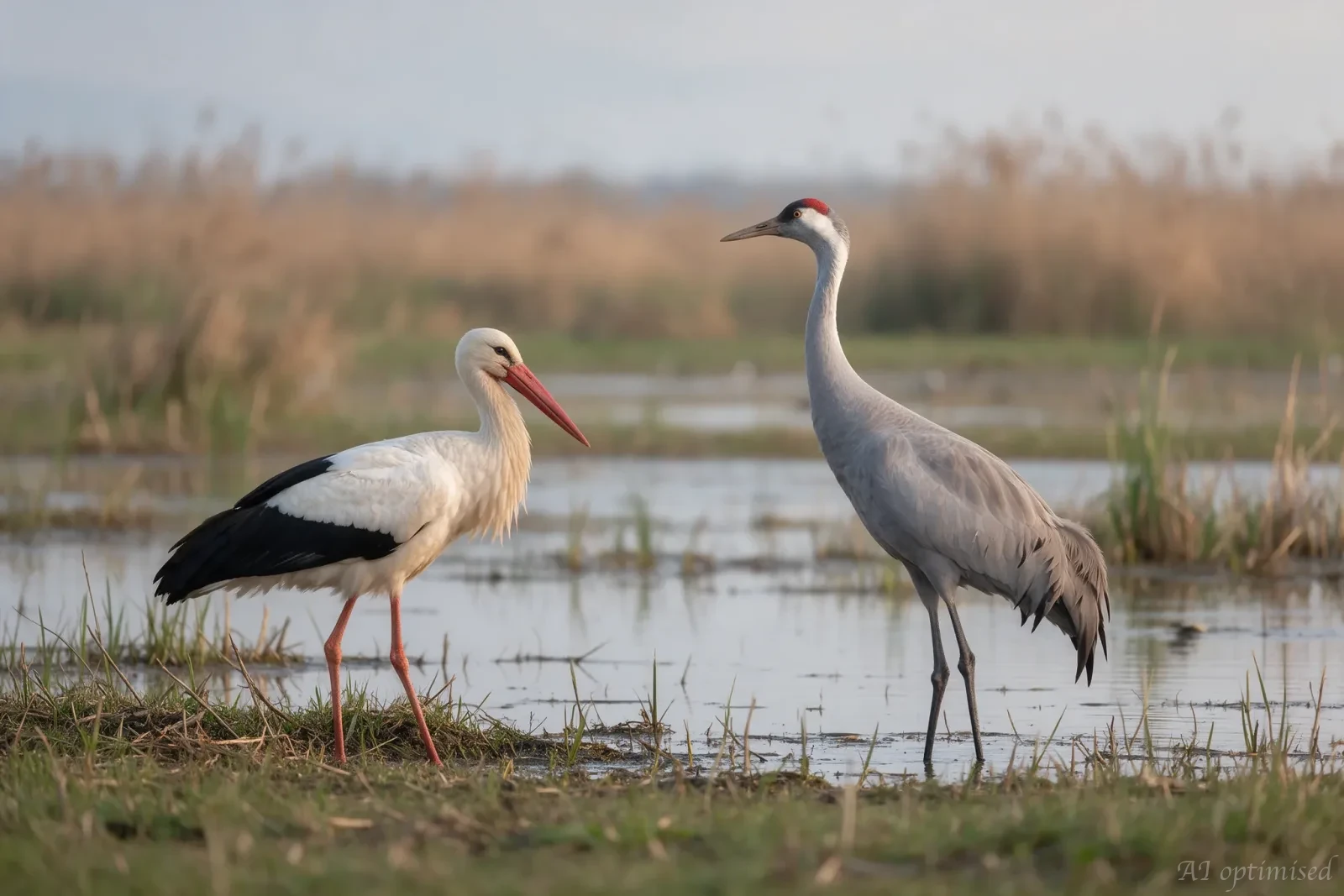
The marsh does not need to be fully open. A single ditch running, one corner of a pool cleared of ice, a soft edge where the sun reaches: that is enough to keep a stork alive while the rest of the marsh catches up.
The thaw arrives in pieces, and the bird takes each piece as it comes. It works the open margin, takes what it can, and waits for the next mild day. By the time the frogs are loud and the meadow is green, the hard part of the year is behind it. The late frost may still return, and the bird will stand through it on what it has managed to eat.
A late spring can also cut the food supply at the worst moment. If the cold delays the insects and the frogs, the parents work harder for each meal just as the chicks need more. Some nests fail. Others raise fewer young than they would in a good year. By June the meadow is loud and the nests are full, and the cold weeks are folded into the fat of the chicks. The late spring is remembered for its waiting. The birds carry its cost in their bodies.
Explore the gift