A white stork lands on a village roof while the fields are still grey, and the date is remembered in shops and at bus stops. It has come from African wetlands, following the warming land north. February softens the light, March softens the ground, and April puts the bird back on the chimney it left in late summer.
The light lengthens first
In deep winter dusk arrives early and the day feels grey from end to end. February changes that. Each evening holds a little later and each morning arrives a little sooner, and the difference is measurable at a kitchen window before anyone names it. People leave the curtains open and walk more slowly at dusk.
Great tits begin their two-note call again, and on still mornings the hedges are louder than they have been for months. The ground loosens at the same time. Deep frost lets go, ice thins at the edges of the pools, and on mild days the soil turns dark underfoot. Ditches start to move and water stands in the low corners of the fields.
None of it is spring. Cold returns, snow returns with it, and a week of soft weather can end in a hard frost that sets the puddles again. The ground lets go one soft day at a time, and it has to be slow, because the birds are still a continent away.
This is when people start looking up. Empty nests draw the eye, every large bird gets a second look, and binoculars come out of a drawer. Some years a single stork arrives in late February, ahead of the weather, and the village knows by evening. Most years the sky stays empty.
What the thaw unlocks
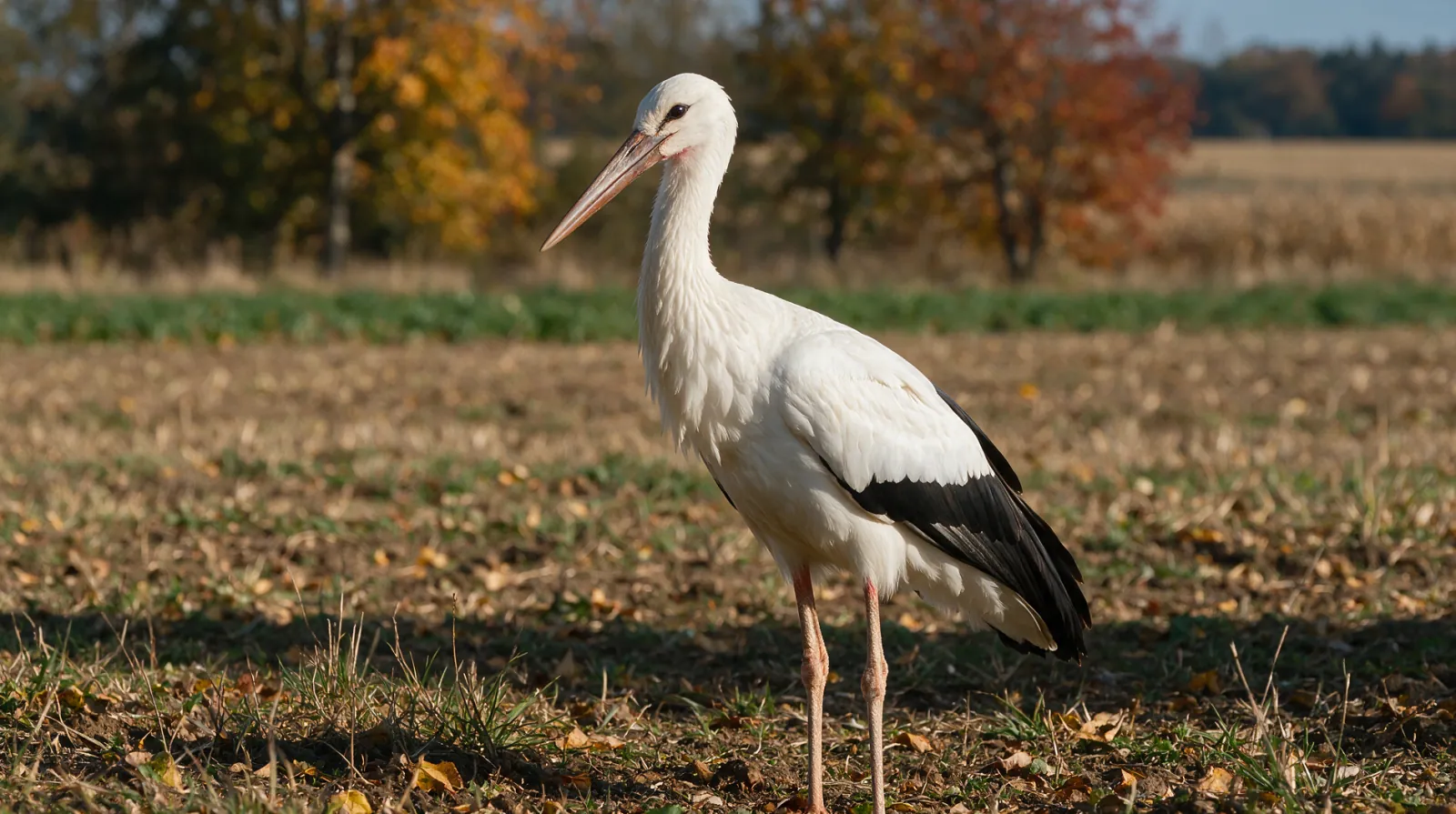
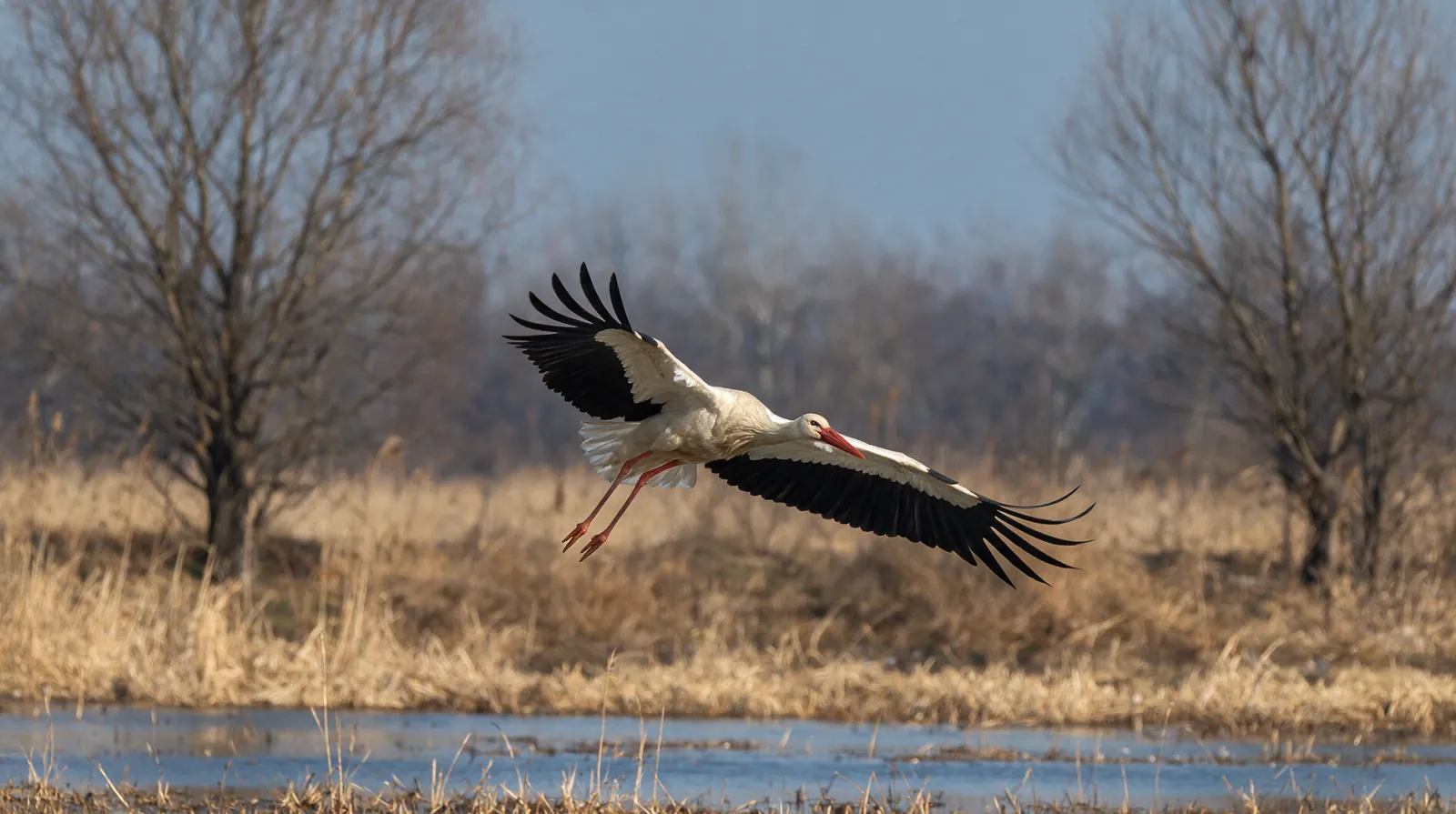
Thawed ground is the reason for the journey. A stork feeds by walking slowly through wet grass and shallows, then driving its long bill down after frogs, insects, worms and whatever else moves in the ditch. Frozen soil refuses the bill. Soft soil gives it up, and a single warm puddle can hold enough food to carry a bird through its first cold days back.
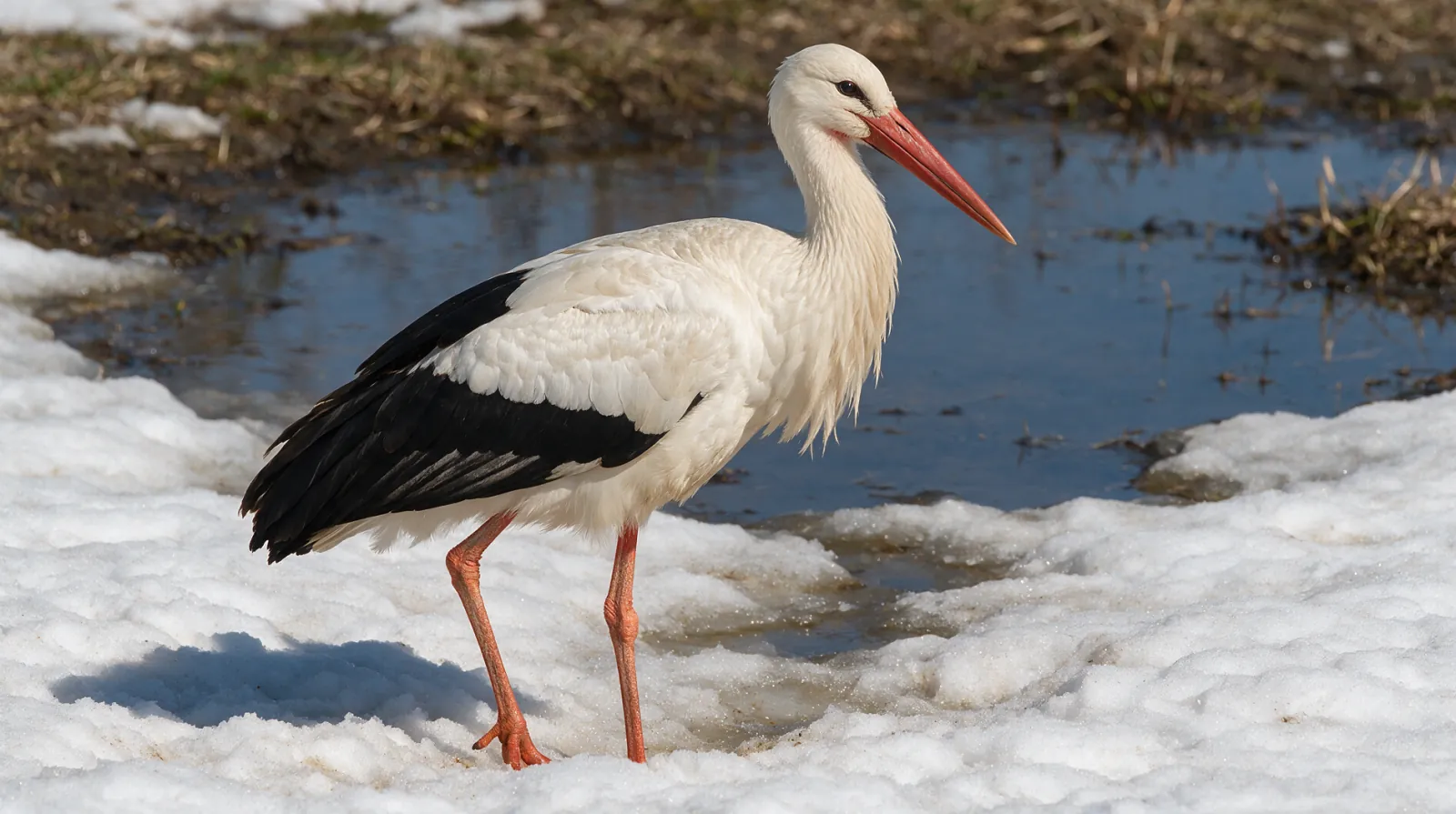
Snow does not vanish in one motion. It sags, darkens at the edges, then runs. Water gathers in the low corners of the field, ditches start to move, and the earth softens from the top down. The first open water of the year is also the first table of the year. The stork works the edge of it, one deliberate step at a time, in light that is still thin and grey.
A bird back this early is thin. The flight from Africa has burned most of what it stored, and the first week home goes almost entirely into feeding. It walks the wet margins from first light, rests through the middle of the day, and walks again until dusk. There is no long courtship yet, no hours of clattering on the nest. The job is to turn a field of thawing mud into enough strength for the weeks ahead.
Why the earliest birds gamble
Most first arrivals are older storks returning to a nest they have used for several seasons. Coming back early lets a pair repair the platform before rivals pass through, and the best sites on a roof or a pole are worth having. The cost is real. A late frost can lock the ground again, and food stays scarce while the cold holds.
A stork that waits for settled weather may find its nest occupied. The early bird accepts a few hungry weeks and a few nights of hard frost. By the time the meadow is properly awake, it owns the highest, driest platform in the village, and the eggs are laid before the late arrivals have finished arguing over roofs.
The gamble has another edge. A bird that comes back to a familiar roof does not have to search for a site, and the weeks saved go into feeding and courtship. The same instinct that sends it north early keeps the best platforms in the same pair of bills, season after season.
Riding the equinox thermals
Around the middle of March the sun crosses the equator, day and night come out even, and the northern half of the world leans toward the light. The word equinox comes from two Latin words for equal night, and the evenness lasts a day before the light starts to win.
The storks move with that change. They come north as the light lengthens, following the warmth and the food that come with it, and they time the arrival so the fields are softening and the frogs are waking. The equinox is a date for us and a set of conditions for them.
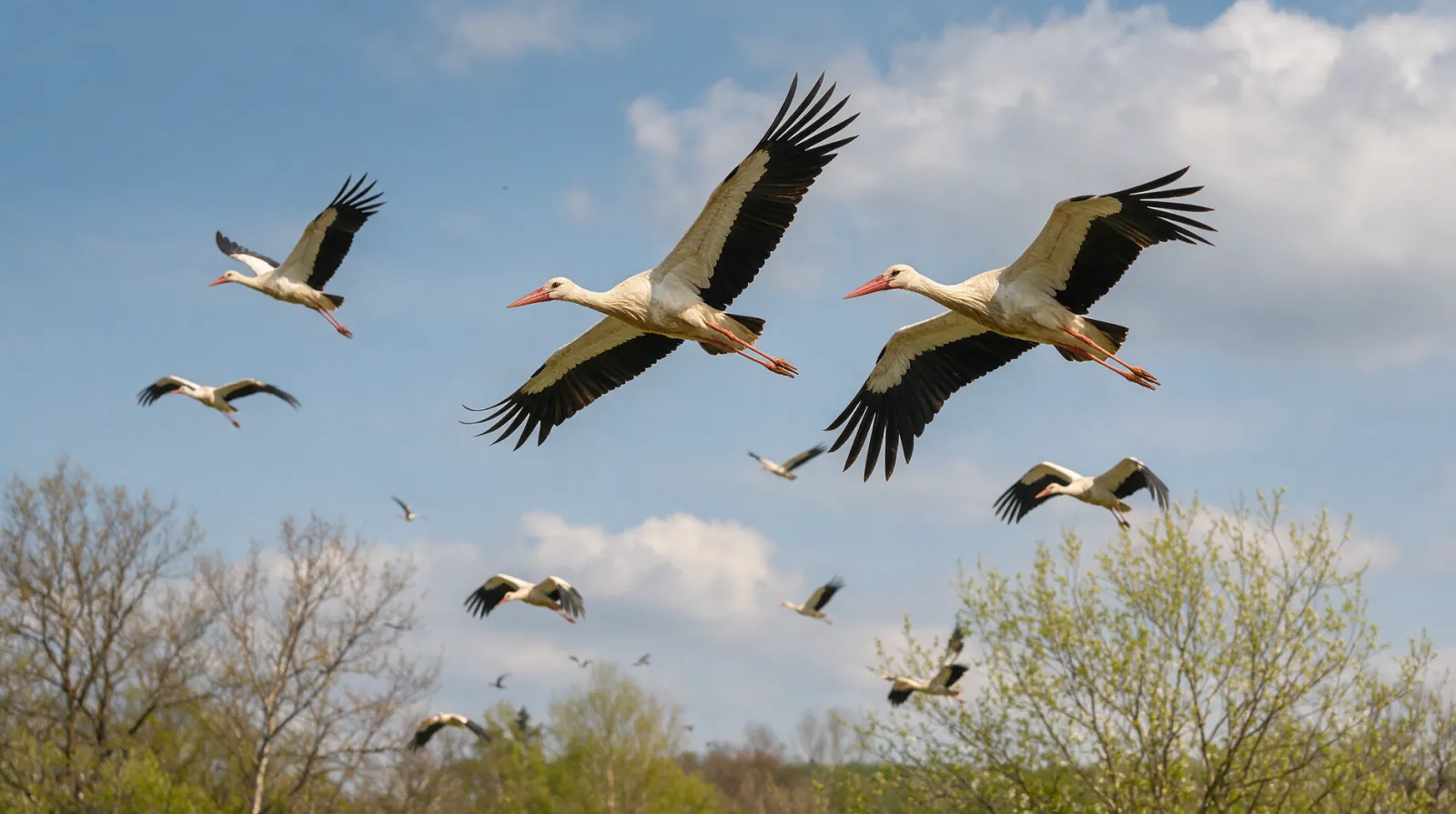
Storks are heavy birds, about a metre tall with a two-metre span, and they cannot flap their way across a continent. They climb on rising air instead. A thermal lifts them in wide circles, they glide forward and down to the next one, and repeat for hours without a single wingbeat. That kind of travel needs ground that is warming. In March the sun starts to heat fields, roofs and dark plough again, and the columns begin to form. Thermals do not rise over cold ground or open water, which is why the flocks follow the warming land and cross the sea only where it is narrow.
Mild days and cold nights still alternate, and a stork that arrives into a cold snap waits it out, standing on the nest with its bill tucked. Then a warm afternoon brings half a dozen birds circling over one street, dropping with their legs forward onto old nests.
The same roof, the same mate
By April the storks have been travelling for weeks. They left the wintering grounds in Africa, crossed at the narrow straits where the sea is shortest, and pushed north as the days lengthened. Flocks travel loose. They stop wherever the fields are wet, rest for a day or two, feed heavily, and climb again on the next morning's warm air.
The final leg is the easiest. The rivers begin to look familiar, then the line of a roof, then one particular chimney. A stork can find a nest it has used before without any help from us, and it arrives at the same address year after year.
A returning bird circles the roof two or three times, then lowers itself onto the platform it left behind. The landing is public. Anyone in the street hears the bill clattering, a sharp wooden rattle that carries further than a dog's bark. The mate often arrives a day or two later, or the two come in together. Within an hour the nest is being checked and the loosened sticks pushed back into place. Then the pair stand side by side with their heads thrown back and clatter in greeting. It is the same sound they use to see off intruders.
Site fidelity keeps the return running. A stork that knows a roof knows its height above the street, its shelter from the wind, its distance from the nearest wet meadow. Moving would mean learning all of that again, and the nesting season is too short to waste on a search.
Repairs and the first egg
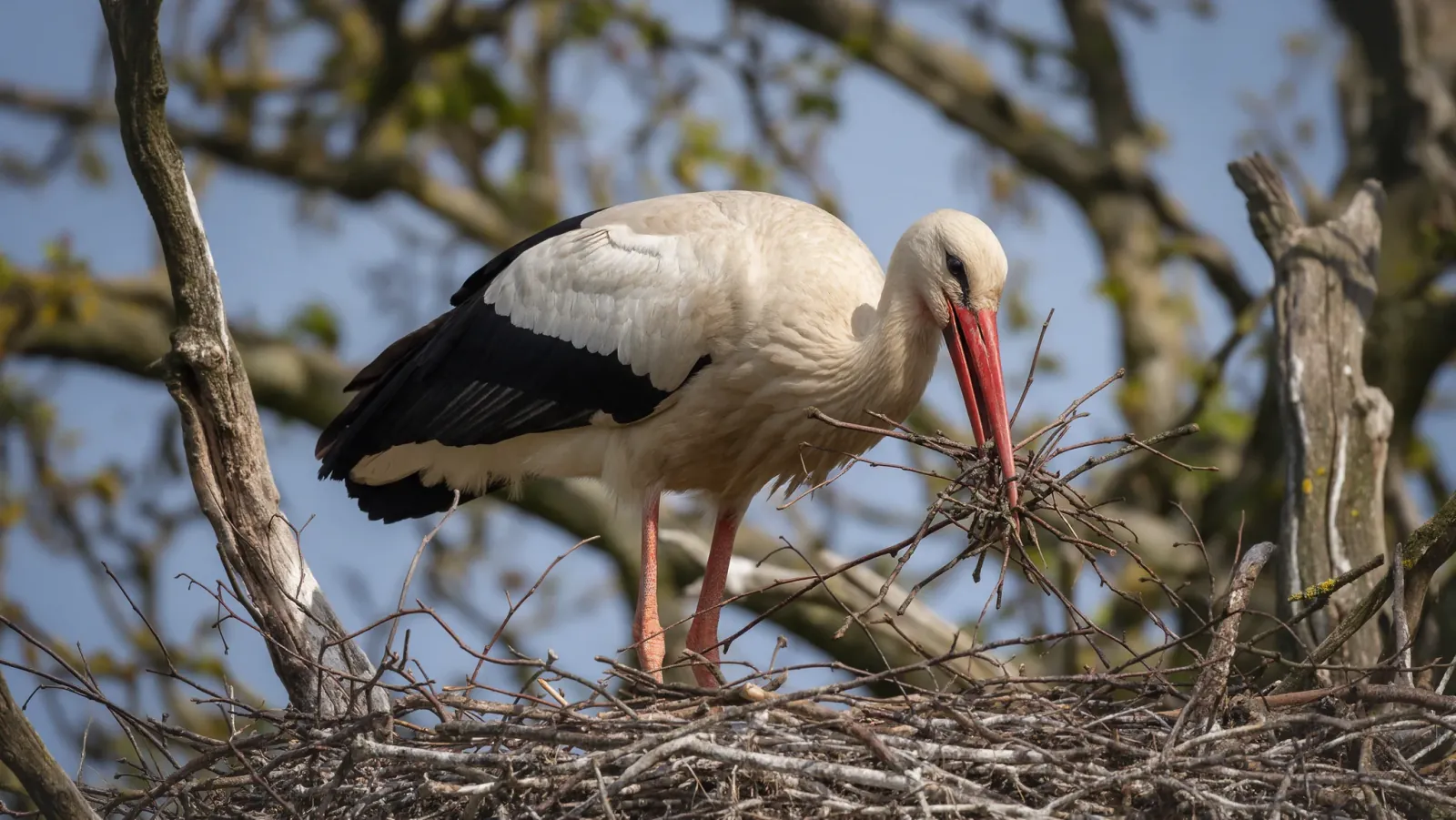
Winter has done its work. Sticks are carried up in the bill, placed with a turn of the head, and packed into the rim, and the cup in the middle is deepened. A pair in good condition can add a surprising amount of material in a week. The repairs are also a claim. Fresh sticks on a platform say plainly that the site is taken, and passing storks read the message without landing.
Some of these platforms stay in use for decades, growing heavier and taller with each season. A well-kept nest in April is a summer already under way.
The birds spend the next weeks feeding hard, mating and settling in. The eggs come later, and the chicks later still, timed so that the brood grows through the longest days of the year. For now the roof is occupied, the clatter is back, and the light stretches further into every evening.
Explore the gift