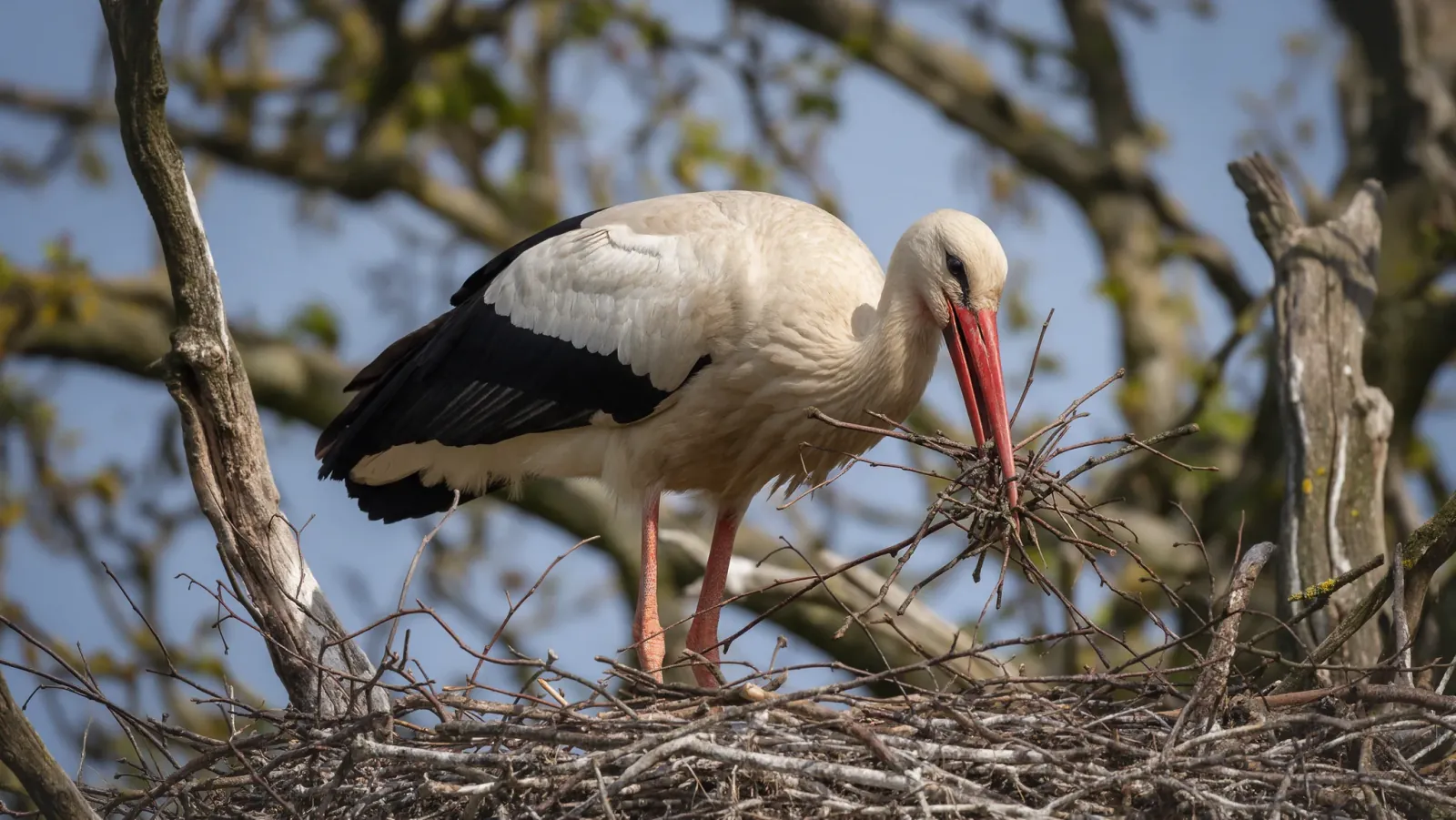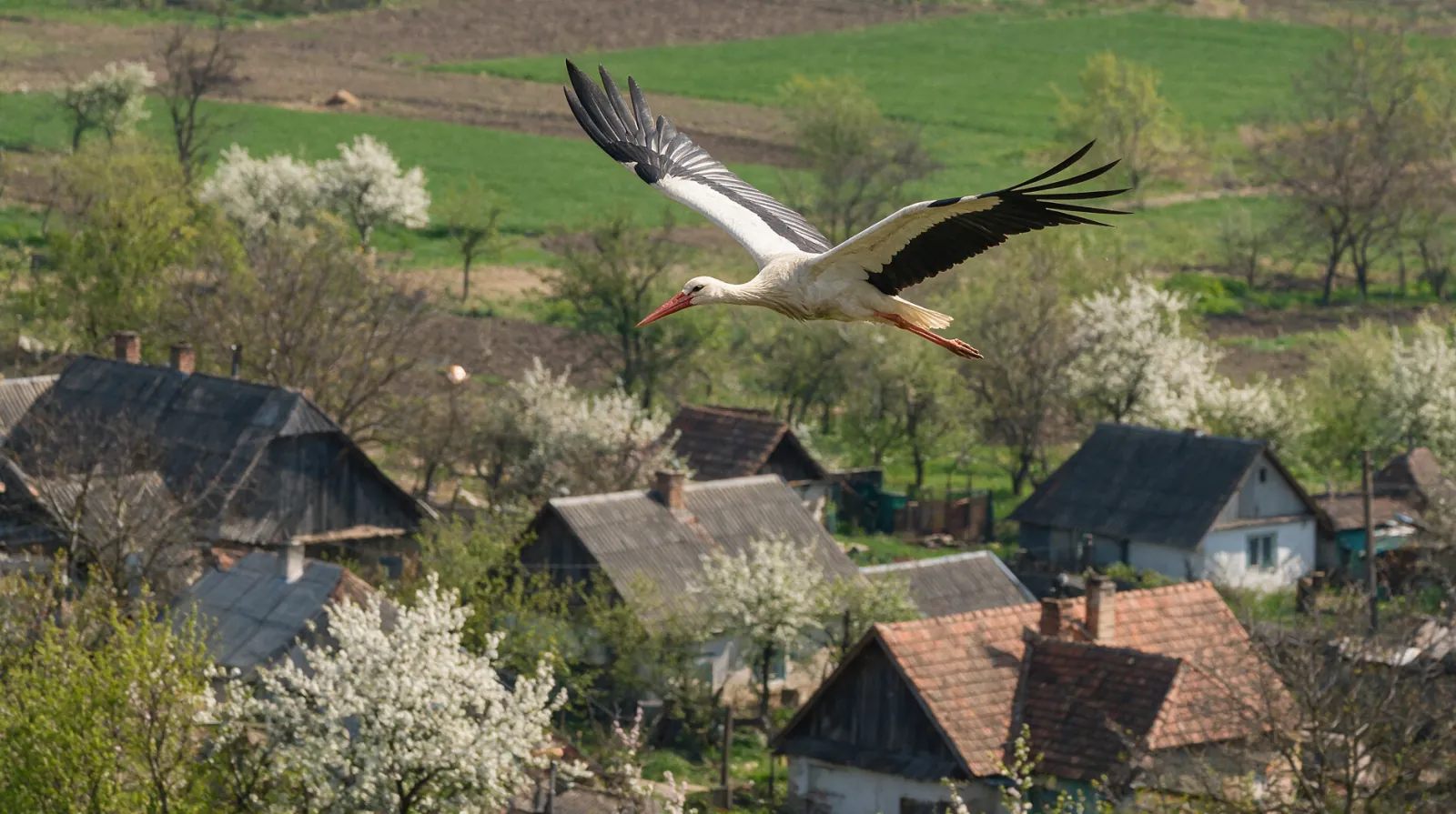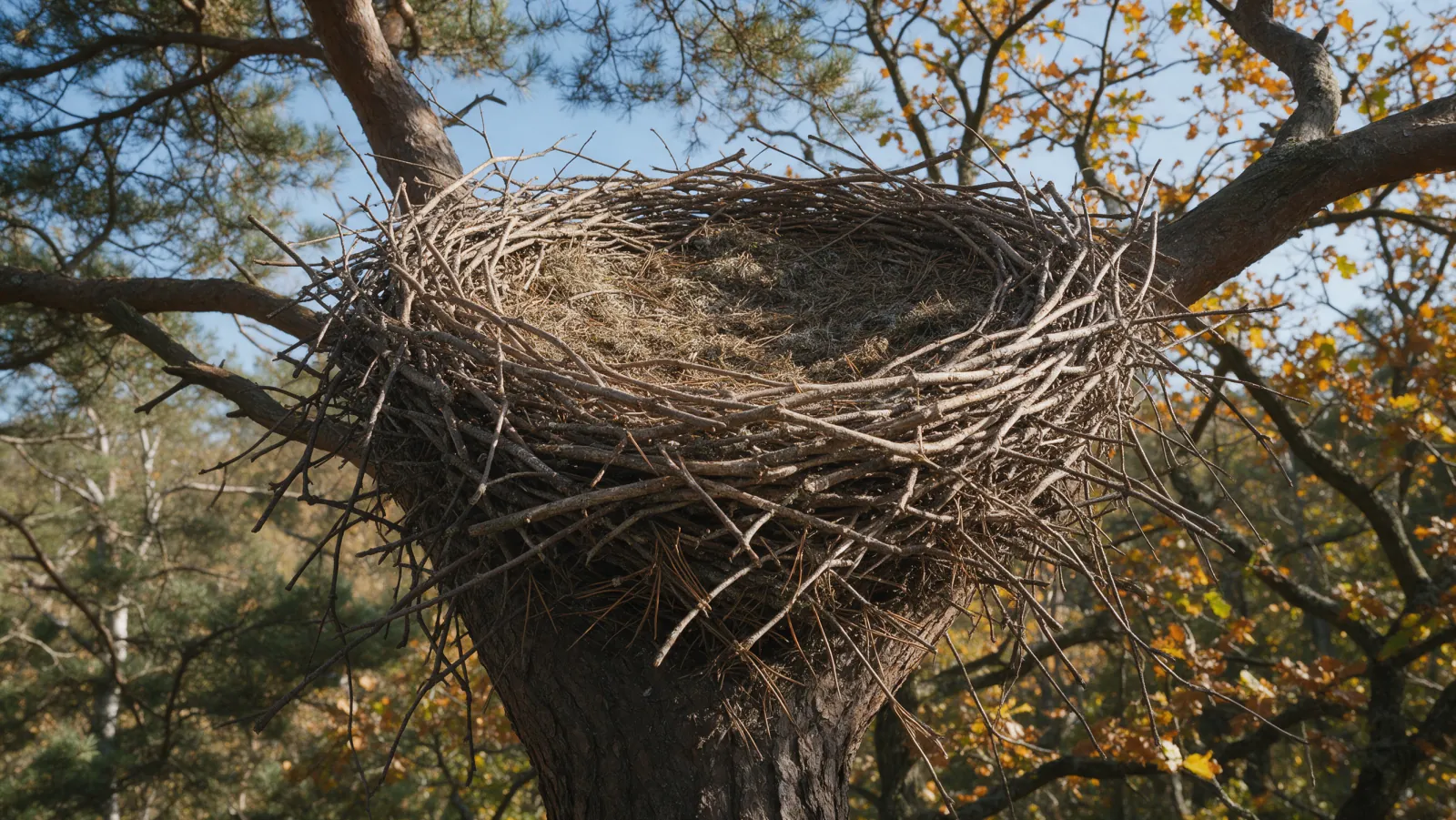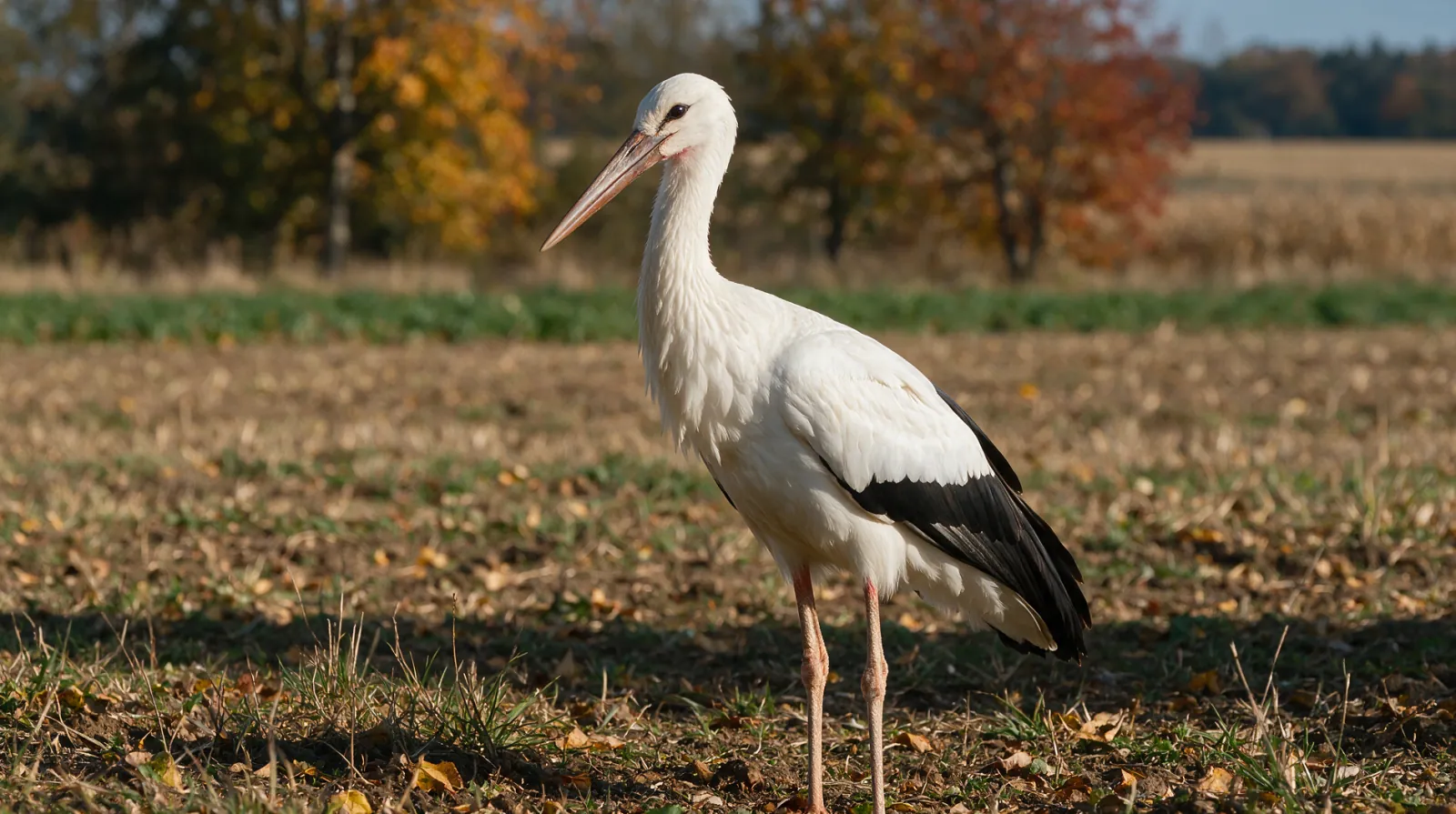
A tractor turning the first furrow of spring pulls up worms, larvae and mice, and storks follow it across the field. The habit is as old as ploughing.
A field turned over
Ploughing lifts soil that has been covered all winter. Grubs, worms and insect larvae come to the surface, and so do the small mammals that live in the field. A stork walking behind the plough finds food with very little effort.
The bird does not need to dig. The plough does the work, and the stork takes what the blade turns up.
A freshly turned furrow is also warm and open. Insects that were buried are exposed to the light, and a stork can see them against the dark soil.
The queue behind the tractor
In March and April, a stork may walk a few metres behind a tractor for an hour. Other birds join in: gulls, cattle egrets, crows. The flock follows the machine because the machine exposes food. Cattle egrets and gulls work the same furrow, and the storks ignore them.
The birds learn the sound. A stork that has fed behind a plough will come to a field when the engine starts, and the pattern is easy to see in any farming district. The bird may arrive before the tractor reaches the headland. A stork that has fed on a ploughed field will return to the same farm for years.
Why spring
A stork arrives from Africa in late winter and early spring. It has flown thousands of kilometres, and it needs to rebuild condition before breeding. The first ploughing of the year is a rich, predictable meal at exactly the right time.
The spring plough and the stork's return run on the same calendar, and the bird has learned to meet the farmer in the field.
Later in the season the same fields feed the chicks. A parent that knows where the tractor works can fill its crop and be back at the nest within the hour.
The old bond
White storks have lived beside farming for centuries. Grazing animals kept grass short, mowing opened the meadow, and irrigation made wet ground for frogs. The bird followed the work.
In Portugal and Spain, that bond is still visible. Storks nest on farm buildings and feed in rice fields and ploughed land. The bird is a common sight in the parts of the countryside that still have mixed farming.
The bond has a cost. Land that is drained, built over or farmed with heavy chemicals holds fewer frogs and insects, and the storks that depend on it move to landfills or disappear.
The danger in the furrow
A tractor is a large machine, and a stork is a bird that stands its ground. Birds are injured by mowers and by ploughs, and chicks in nests on poles near fields can be disturbed by machinery.
Farmers who watch for storks can avoid the worst. A slow pass, a look ahead, and a nest left alone until the chicks fly all help. A stork that has learned to trust a tractor will not always move in time, which puts the responsibility on the driver.
Watching the field
Find a ploughed field in early spring and wait at the edge. A stork will arrive on foot, or land with a long glide, and begin to walk the open soil. The bird's head goes down, the bill opens and closes, and the furrow gives up its insects one after another.
Other storks may join, and the group spreads across the field in a loose line. The scene explains the habit without any theory. The plough turns the ground, and the stork follows the food.
Explore the gift