The first white storks come north before the grass has warmed. A bird that left a shallow African wetland may reach a European village while the ditches still hold ice at the edges and the frogs have not begun to call. Every bird makes the journey for itself, even when it flies inside a flock.
A flight that starts in warm air
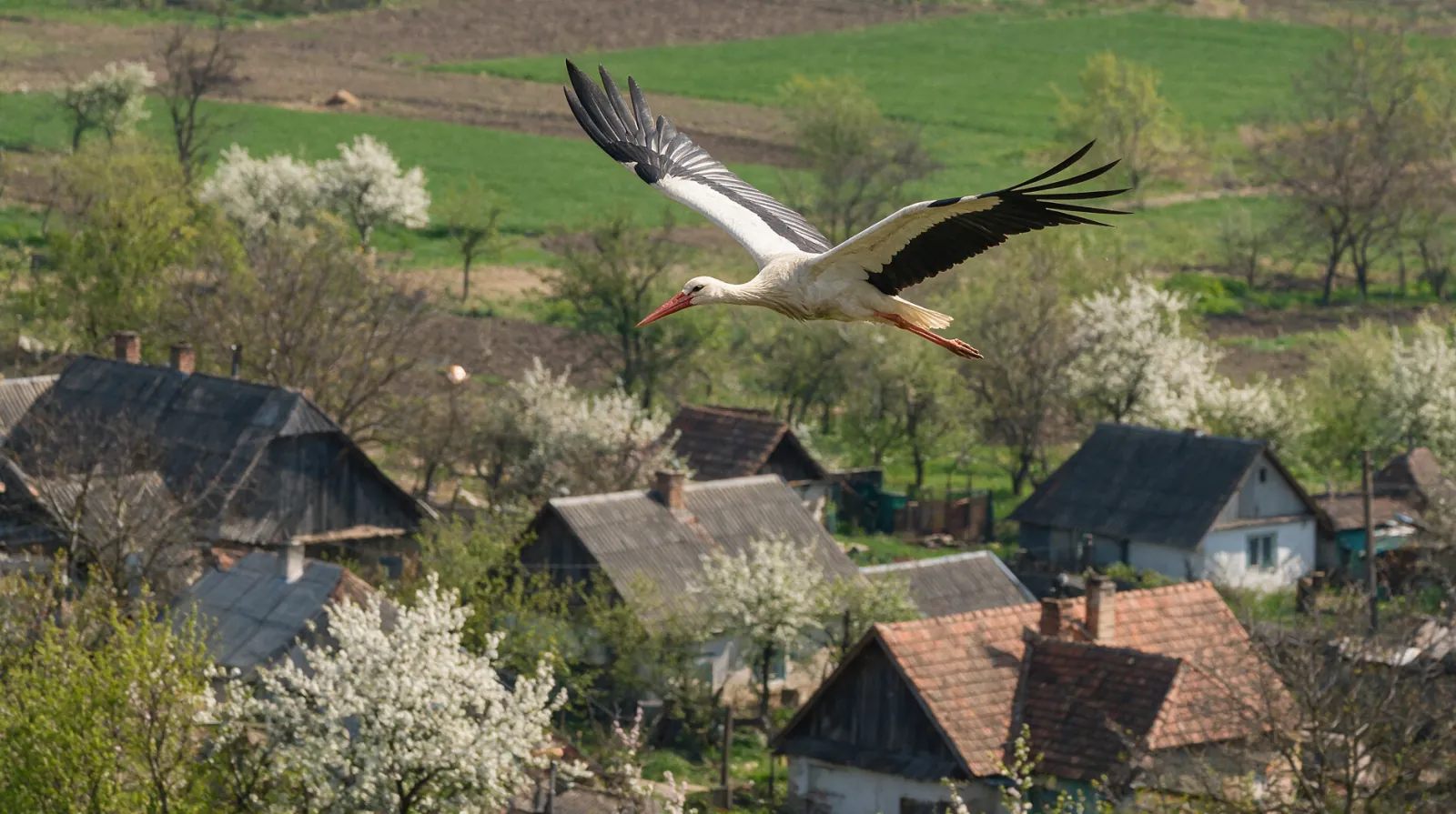
A white stork travels on thermals, the columns of rising air that lift from ground heated by the sun. The bird cannot see the air. It reads the signs: a buzzard turning in a slow circle, dust lifting from a field, the tilt of an older bird's wing. When it finds a column it spirals up without a beat, and the fields below shrink into a patchwork. Then it glides, losing height by inches, until the next column catches it. On a good day a stork travels for hours and flaps for minutes. The skill is patience and attention, and young birds learn it by copying the birds around them.
Sula learned it on her first flight north. She had hatched the summer before on a village chimney, crossed the sea with the flock in autumn, and spent the winter on warm ground where the water lay shallow and the light stayed flat. When the days lengthened, the flock grew restless. One morning she rose with it and pointed home. Every evening her legs trembled from the air, and every morning she rose again.
The long way to the water
White storks avoid open water. There is nowhere to stand, nowhere to feed, and a tired bird that goes down over the sea does not come up again. The flock follows the coast for days, adding miles to keep land under its wings. The route bends with every bay and headland, and the birds sleep on sandbars and in shallow bays. A stork would rather add a hundred miles than fly over a stretch of water it cannot land on.
At the crossing the flock waits. A crossing needs a steady wind off the land, one that pushes a bird across instead of fighting it. The shore fills with storks from other routes, hundreds of them standing in the shallows and watching the sky. The oldest birds turn their heads into the breeze, and the younger ones read the weather by them. Then a morning comes when the air changes, and the flock lifts in a long loose line. Sula flew in the middle of it, the grey water sliding beneath her, and kept her eyes on the far shore until it stopped being a smudge and became fields.
The desert behind her
Lumi had crossed that dry country many times before this spring, and it had never been easy. Heat rises in waves off the sand, and the thermals that carry a bird upward grow thin and unreliable above so much bare ground. She flew low and steady where the air was cooler, beating her wings through stretches that offered nothing to glide on. By day the sand threw back the heat. By night the temperature dropped enough to make her fluff her feathers.
The desert asks one thing of every bird that crosses it: keep going when the body wants to land. At the far edge the ground turned green, and she dropped beside the first pool she found and drank until her sides heaved. The fat she had carried from the south was thinning. The last days were the longest, and she flew close to the ground where the fields gave off a little lift.
The first green field
The land changes as the birds go north. Dry ground gives way to ditches full of water and grass that shines. Sula landed one evening in a pasture loud with frogs, and something in her settled. The water in the ditches was warm from the sun, and every shallow held something moving. She waded with the others, and when a frog moved her bill closed on it before she had decided anything. The whole journey had been for this: soft ground, shallow water, and food within reach. She fed until the light went soft and the flock folded down for the night.
For Lumi the arrival had a different sound. She knew the village before she saw it. Bells, a tractor, the low hum of a road came up to her on the warm air, and with it the smell of woodsmoke. She tilted her wings and let herself fall toward the roofs. The old nest on the chimney was still there, a few new sticks blown in over the winter, the rest as she had left it. A stork's memory for a roof is long.
The gamble of arriving first
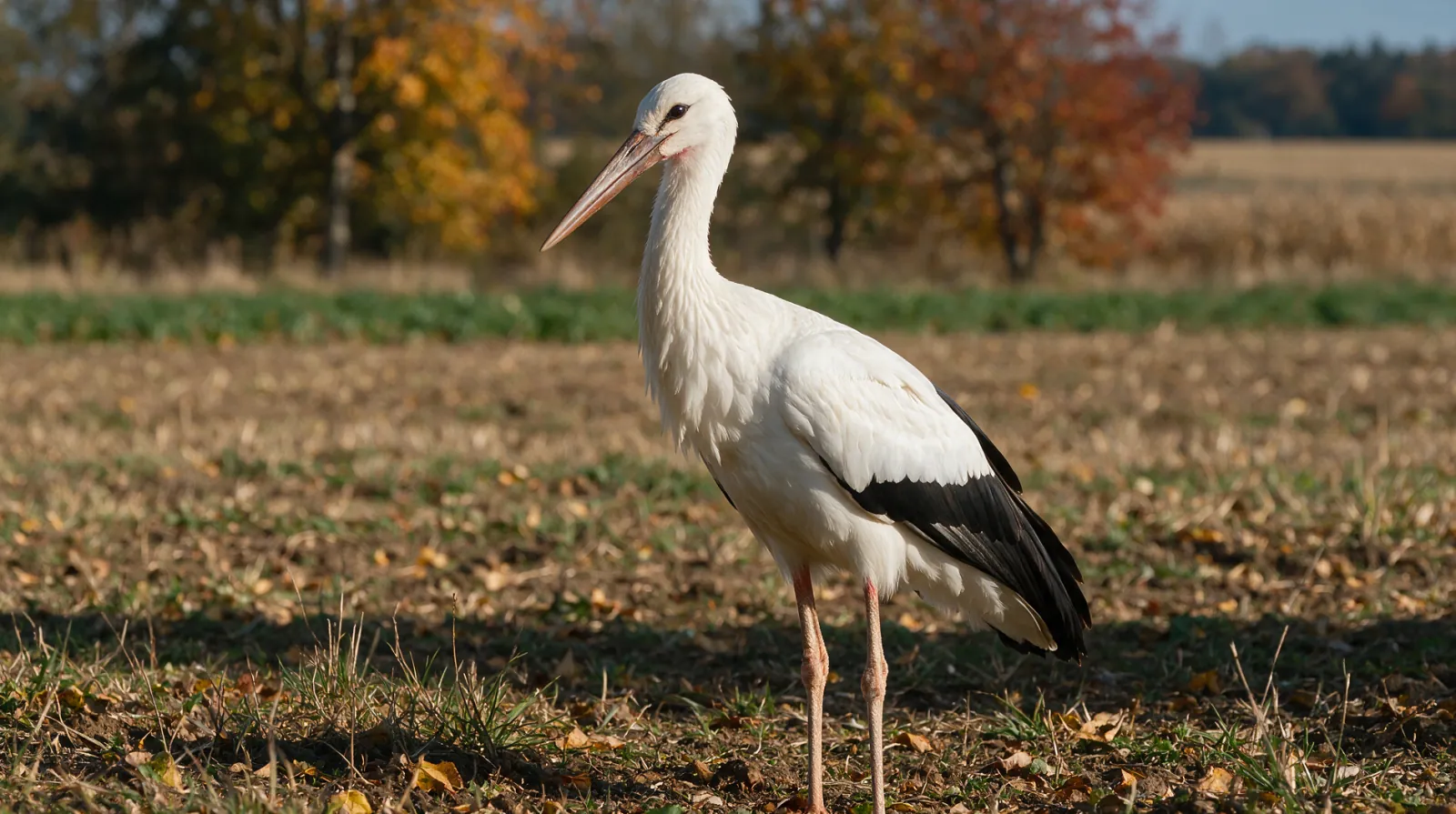
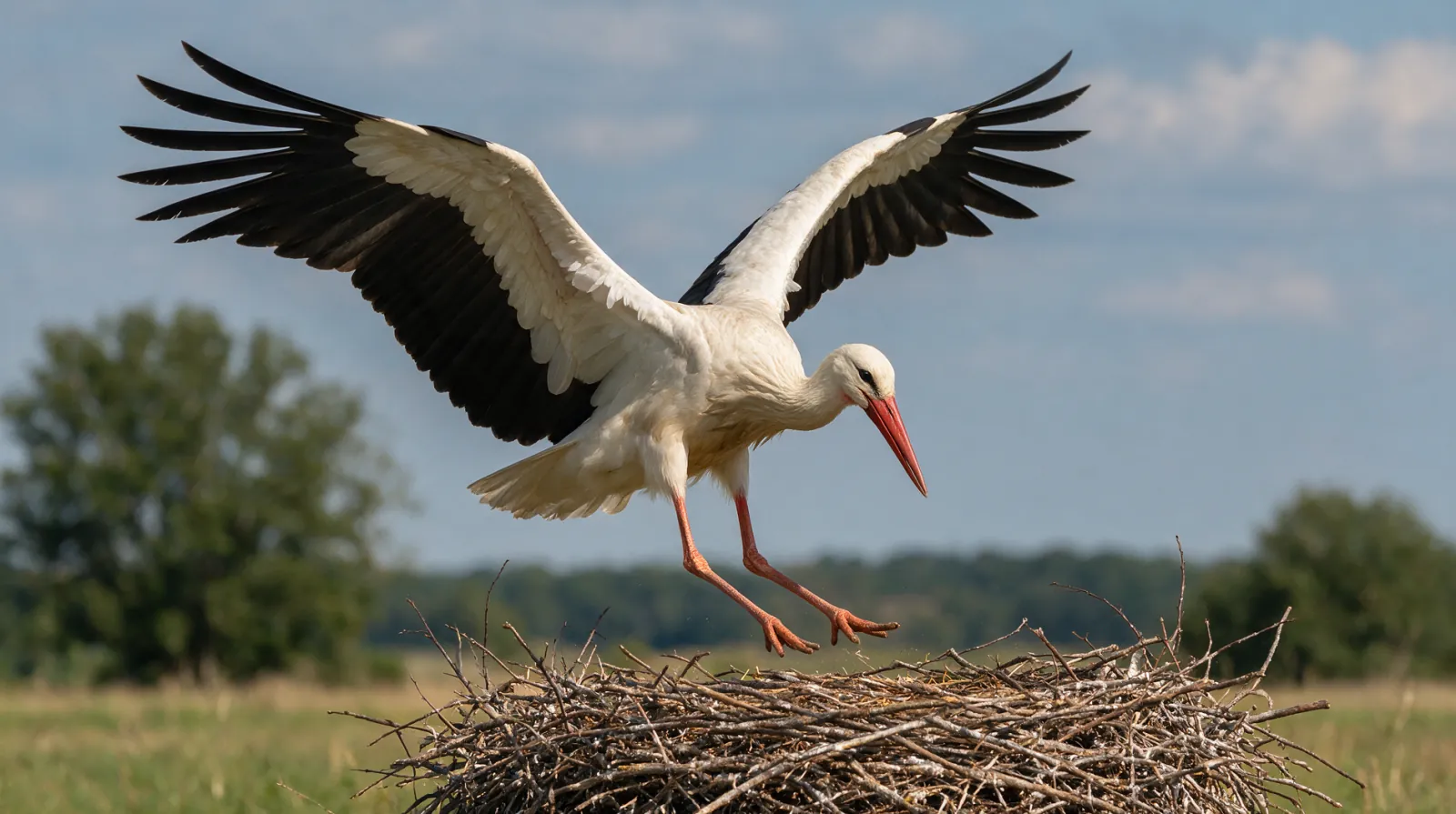
Orion arrived before any other stork, when the fields were still wet and the frost had only begun to lift. His nest stood on a pole at the edge of the village, a heap of sticks that had lasted through the winter. No one had come to it. The roofs were bare, the fields were bare, and the only sound was water running off the land. An early arrival means standing alone, and Orion had done it before.
There are reasons to come early. The best nest sites go to the first birds back, and the first frogs go to the first bills. The price is weather. For the first days the ground was hard and cold, and Orion walked it slowly, finding little. He knew where water gathered in the low places, and he watched those spots for the first frogs. He worked the ditches at midday, when the sun had softened the mud a little, and he turned over old cowpats for beetles. A stork that arrives early arrives hungry.
The warmth did not last. A wind came down from the north, and the mornings turned white with frost again. Orion pulled his head into his shoulders and stood for hours on one leg, saving what strength he had. Rooks and sparrows watched him from the hedgerows, and he watched them back, the only white shape in all that grey.
What the cold takes
A white stork eats what lives in shallow water and damp soil. When the water freezes, the food is sealed away. Frogs stop moving, insects vanish, and the soft ground goes hard. A stork can take a cold night. A week without food is what kills it. Storks are large birds and can take a cold night. No bird can take a week without food. In a bad spring, some early arrivals do not survive, and the ones that do come out of it thin.
Orion paid that price. On the third morning of the frost he flew down to the ditch and found the water sealed under a skin of ice. The ice was thick enough to bear a stone, and he walked out on it and stood, listening. There was nothing else to do but wait for the wind to turn.
The nest that waited
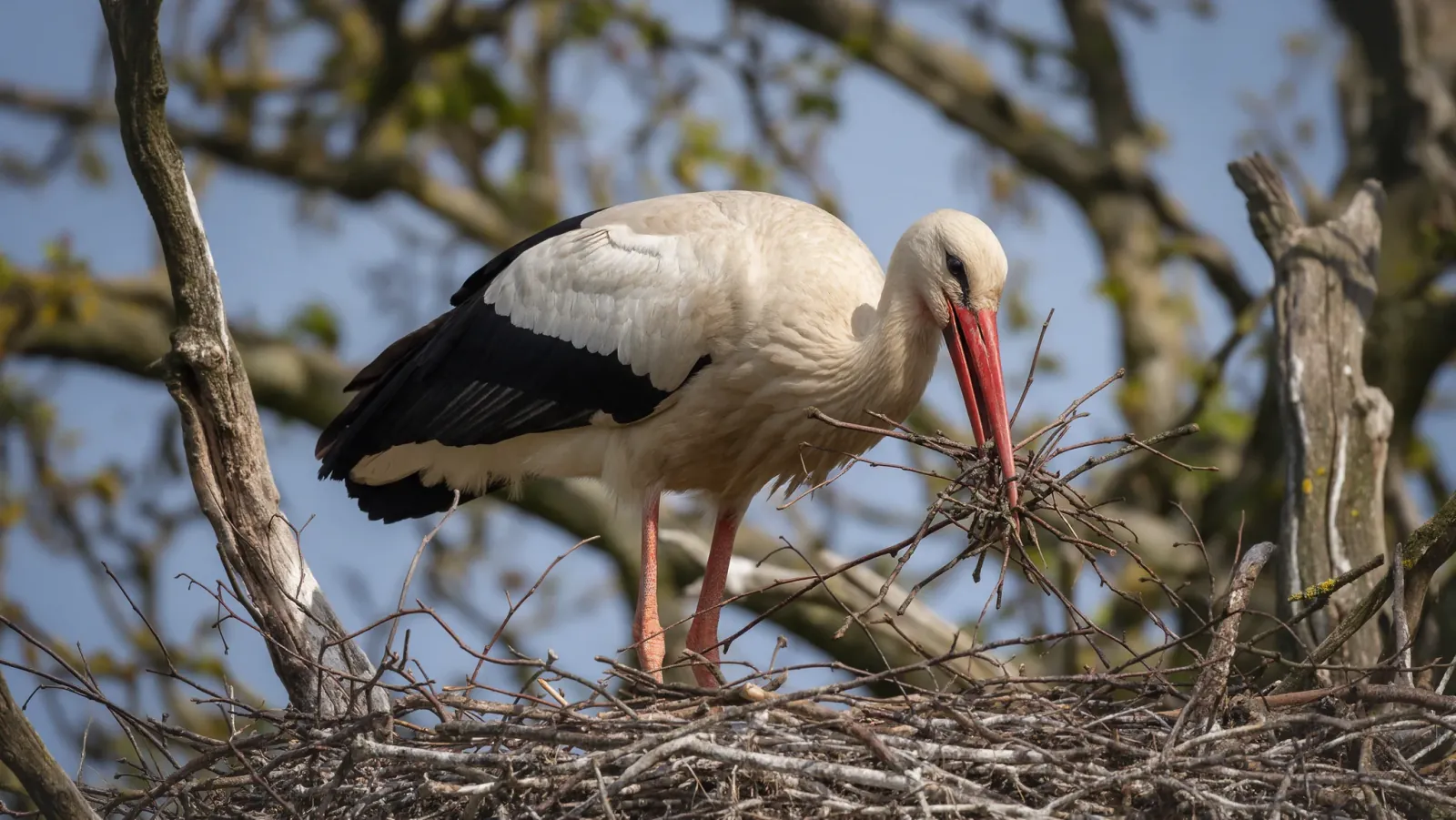
A stork returns to a site, and the same pair often meets there again. The nest is repaired each spring from the same old materials. A stick here, a nudge of grass there, and the cup is restored. Lumi stepped into hers and stood for a while without moving. The chimney had held the day's warmth, and she pressed her breast to it. Below, a cat crossed the street and a child stopped to point.
On the third day another stork landed beside her. They clattered their bills in the fast drumming that means welcome and recognition at once, and the sound carried over the rooftops. By the end of the week there was an egg in the cup, white and warm beneath her.
Sula found the nest where she had hatched, thick with sticks, knocked about by winter but standing. She landed on the rim and looked out over the roofs. A door opened below and someone stepped out to look up. Spring had reached the north, and she had arrived with it.
The first stork home may stand alone for a week. Then the others come over the hill, the village fills with clatter, and the empty nest becomes a place again.
Explore the gift