A white stork chick breaks out wet and weak, covered in thin down, and within a day it is lifting its head to beg. The nest it enters is already loud with siblings at different stages. Everything it meets in its first summer is new, and most of it arrives through the bill of a parent.
The first crack in the shell
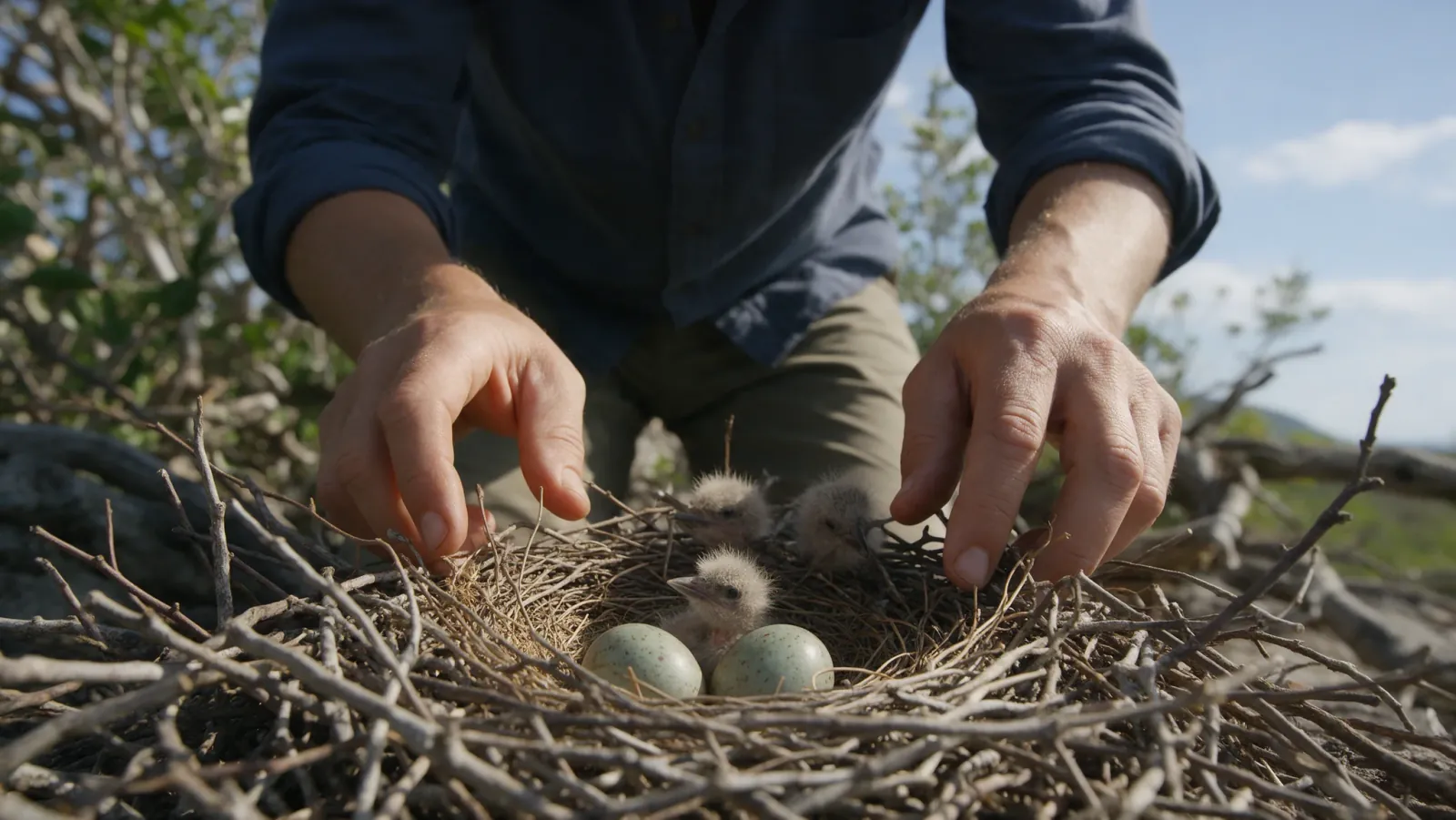
A chick works its way out with a small hard point on the upper bill, turning slowly inside the shell until the cap lifts off. The effort can take hours. When it finishes, the bird is damp and exhausted, and its eyes open over the next few days. Stork eggs hatch a day or two apart, so the nest holds chicks of different sizes from the start.
That gap matters. The older chick is stronger and reaches first when food arrives. In a stork nest, the first days decide who eats first for the rest of the summer. Parents feed the birds that gape highest, and the smallest chick has to work for every mouthful.
The first meal
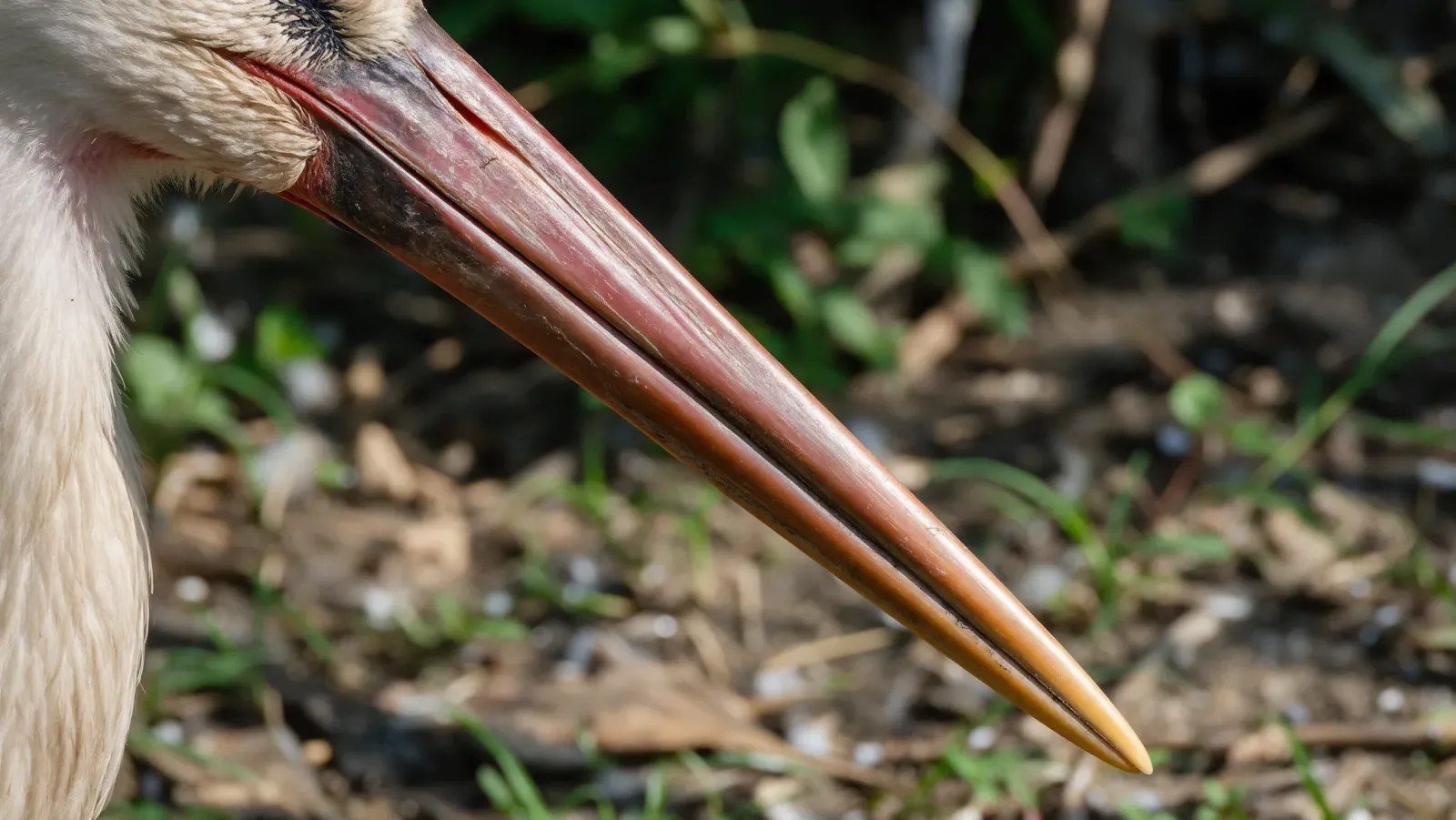
The first food comes tipped from a parent's bill, soft and half digested. A chick cannot stand or aim well, but it can throw its head back and open wide, and the reflex is enough. From then on the shape of the day is set: a parent lands, the nest erupts, and the food disappears in seconds.
Water comes with the food. Chicks cannot fly down to a pond, so frogs and insects carry the moisture they need. On hot days the parent stands over them with its wings half open, and the shade matters as much as the next meal.
The demand grows with the chick. A bird that could not stand in its first week is soon shuffling across the cup and stretching its neck over the rim. The parents answer by hunting more, and the nest becomes a place of constant arrivals. A single wet meadow can supply a family for a day, and the pair work it until the light goes.
The colony around the nest
The nest is one household in a larger settlement. A colony can be a row of roofs in one village, or chimneys and poles spread across a district. Each nest keeps its own rhythm, and together they make a neighbourhood in the air.
The nests sit close enough that the birds can see and hear each other. Greetings, squabbles and warnings pass along the row all day. A midsummer colony is loud: chicks beg with open bills, parents clatter as they land, and the noise rises when an adult arrives and falls back once the food is gone. A silent colony in July would be the worrying thing.
Life at close quarters produces friction. A stork stealing sticks from a neighbour's nest is a common sight, and the bird that comes back to find its rim shortened will clatter in protest. Most of it is noise rather than injury. The colony argues, settles, and goes back to feeding. Young birds practise on the nest edge, flapping until the platform shakes, and their neighbours ignore it the way neighbours do.
Feeding holds the colony in place. Every nest is a claim on the wet ground around the village, and the birds fan out over the same ditches and meadows each day. Where the land is wet and unsprayed, the colony grows. Where the ditches are drained, the nests may stay but the chicks are fewer.
The first stand
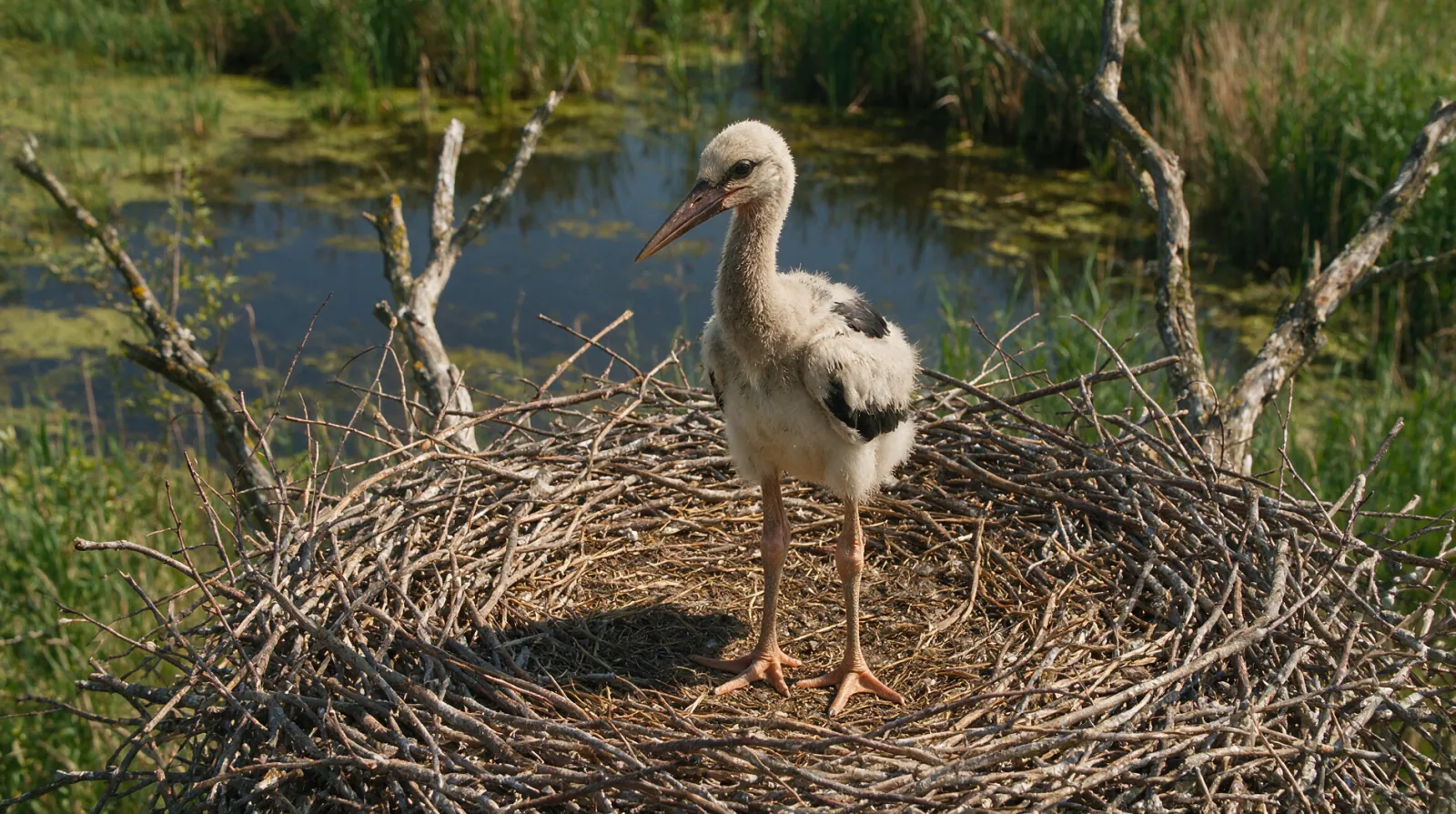
By the second week the chick is stronger on its feet. It pushes up on its legs, wobbles, folds, and tries again. The first proper stand is short and shaky, and it changes the nest, because a standing chick can see over the rim, preen, and shuffle toward the arriving parent.
Feathers replace the down in stages. The white coverts come through, then the black flight feathers, and the bird begins to look like the thing it will become. By late summer the young are close to the size of their parents, and they still beg like hatchlings.
Spring does not spare the nest. A cold rain can soak the chicks while the parent is away, and a late frost can settle on the roof in the same week the birds hatched. The adult covers them when it is there, and when it is not, the chicks huddle low in the cup and wait.
Shade and water matter through the same weeks. By June the roof takes the full sun, and the adult stands with its shadow thrown across the young. A chick that has just learned to stand also learns to lie still through the middle of the day.
Practice at the rim
It starts where the bird is safe. A young stork stands at the rim, beats its wings again and again, and feels the nest shake under the effort. The wing beats get stronger through August, and the muscles that will carry it to Africa are built in these short bursts.
It also watches. When an adult comes in to land, the young bird sees how the wings are held, how the feet come forward, how the body balances. A young stork learns most of its flying from the birds that feed it.
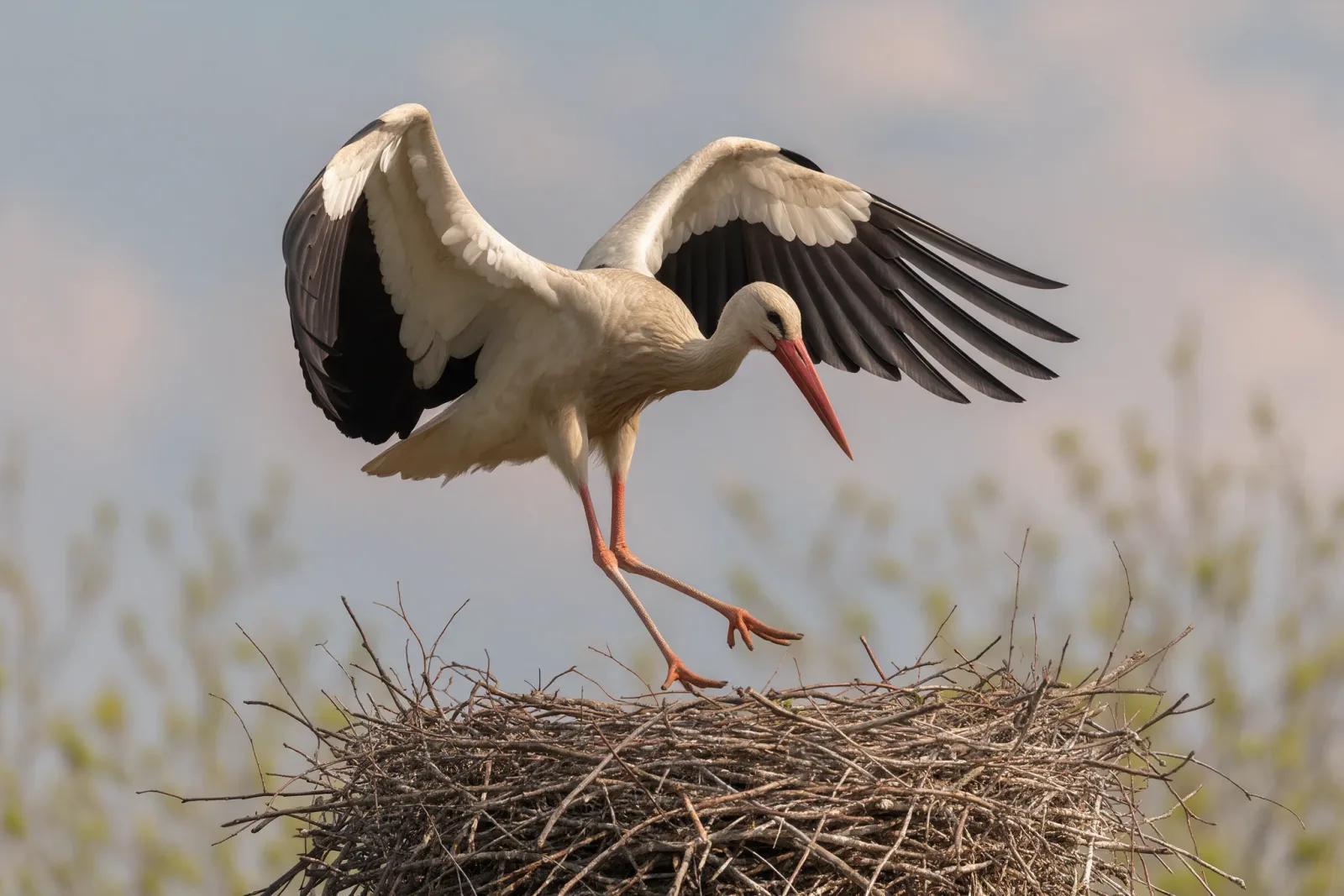
The first real flight usually crosses a few metres of air to the nearest roof. The landing is often a stumble. The bird grabs at the tiles, folds its wings in the wrong order, and stands there looking surprised. Then it does it again. The hops get longer, the landings get cleaner, and one afternoon a young stork circles the whole village and comes back to the nest it was born on.
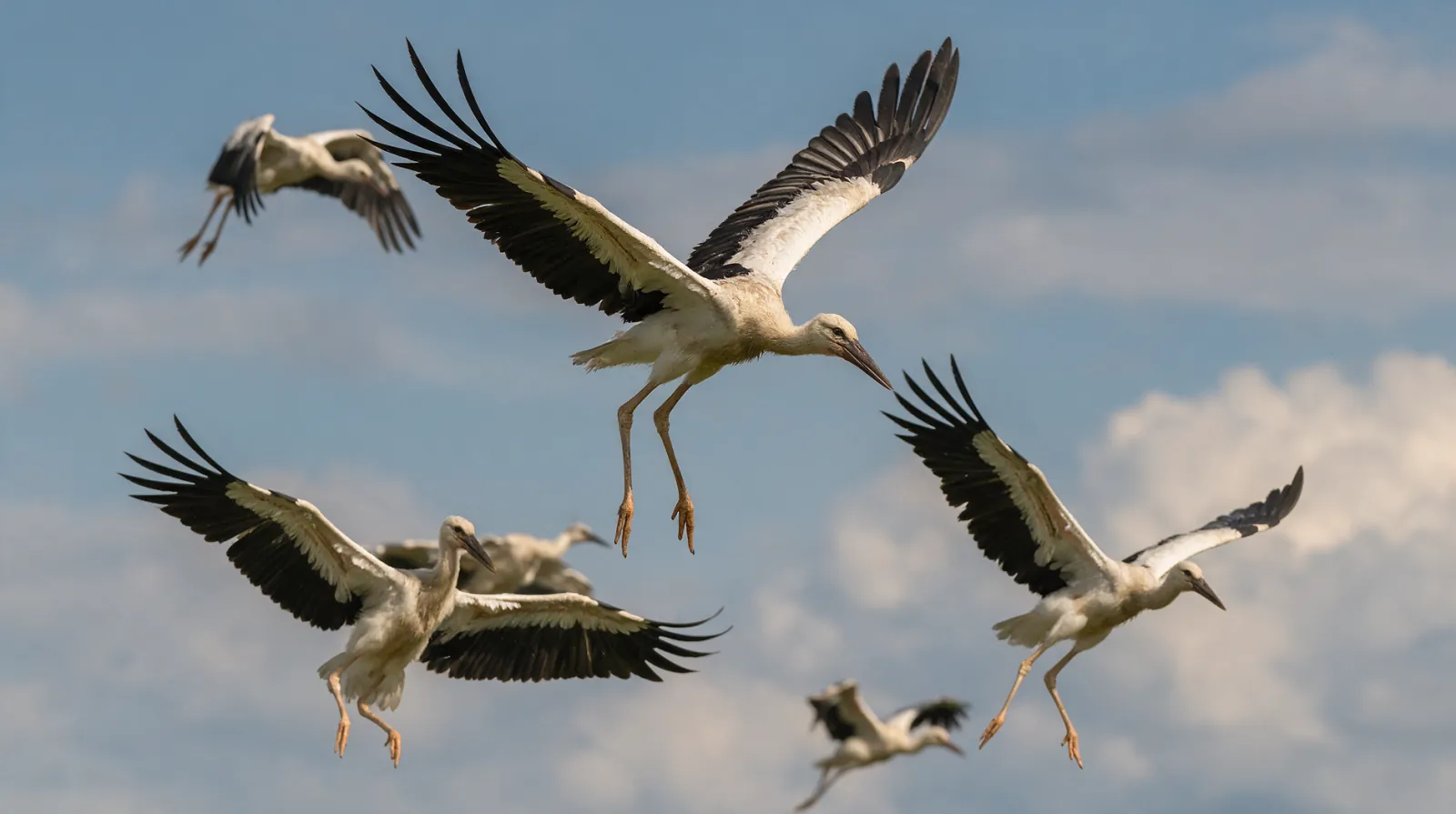
The first flight
Staying up is a separate skill from getting off the nest. White storks are soaring birds, and they travel by finding rising columns of warm air, circling up on them, then gliding away to the next one. A young bird has to learn where those columns form, how to turn tightly enough to stay inside one, and how to leave it at the top.
A dark ploughed field, a car park, the roof of a barn: each releases heat differently, and the birds learn the map of the village from above. By late August the strong fliers can stay up for long stretches with little effort. The weak ones work harder for every metre.
The practice has a deadline. Within weeks these birds will set out on a journey of thousands of kilometres, and the ones that handle the air well will feed better and travel further each day. Some of them will make that journey without an adult. Young storks often leave after the older birds and find the way without being shown. The practice flights over the village are the only training they get.
As the flights get longer, the young return less. They still come back to be fed, but the visits thin out, and by the end of August the nest is quiet for hours at a time, for the first time since spring. By the end of the season the young are strong, the nests are worn, and the adults are thin again. Some families adopt a stork to mark a first year with a name and a small white bird on a shelf, which keeps the season where they can see it.
Explore the gift