September and the leaving arrive in the same weeks. The birds that spent the summer scattered across roofs and meadows begin to collect in the open fields, feeding hard and growing restless as the light shortens. The gathering is the first stage of the journey south, and it happens in plain view of the village.
The gathering in the fields
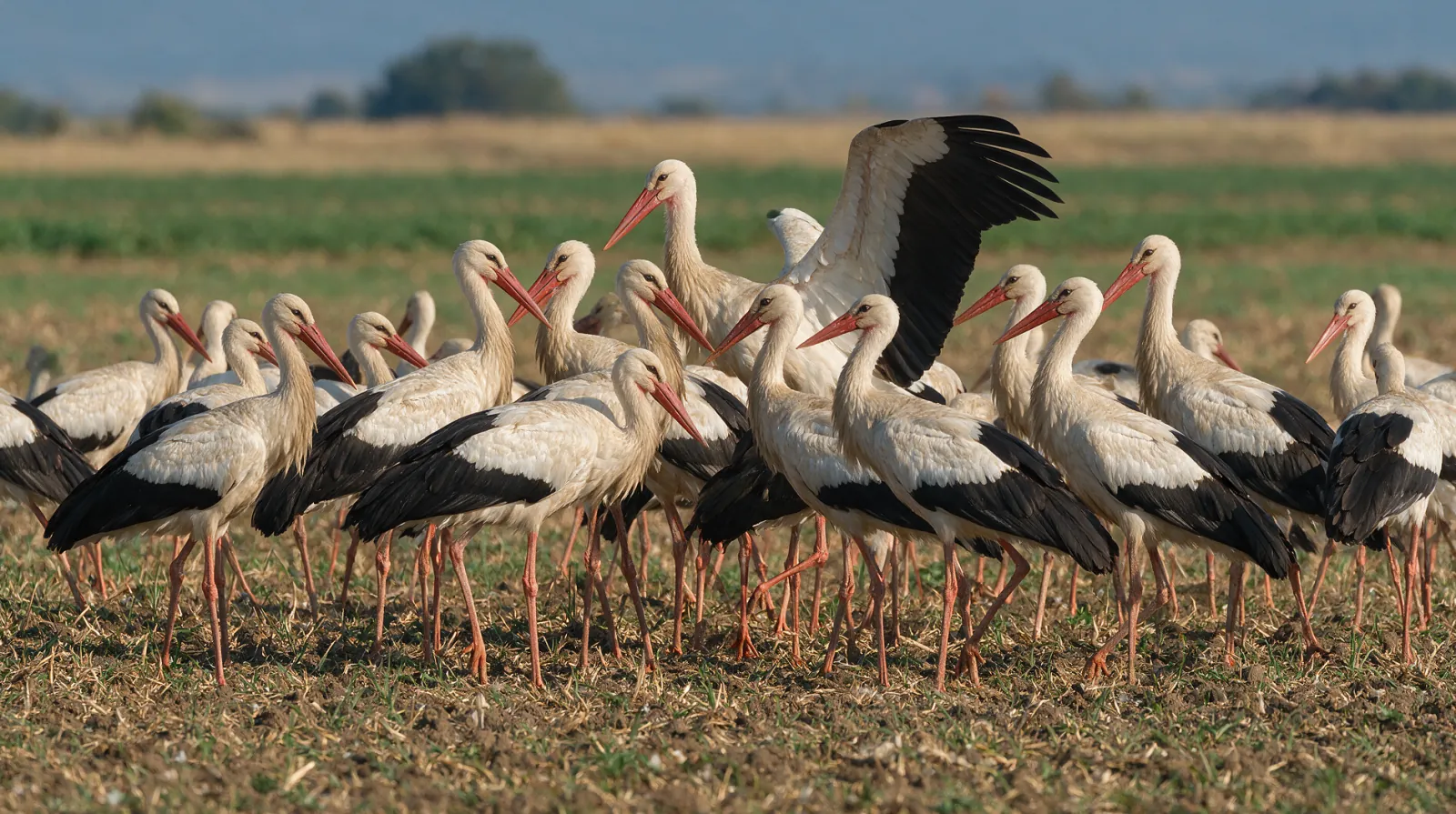
Through September the flocks build. Young birds and old feed side by side, and more arrive from the farms and villages around until a single field can hold dozens of white shapes. They stand close together, walk the stubble, and lift in small groups for no obvious reason before settling again.
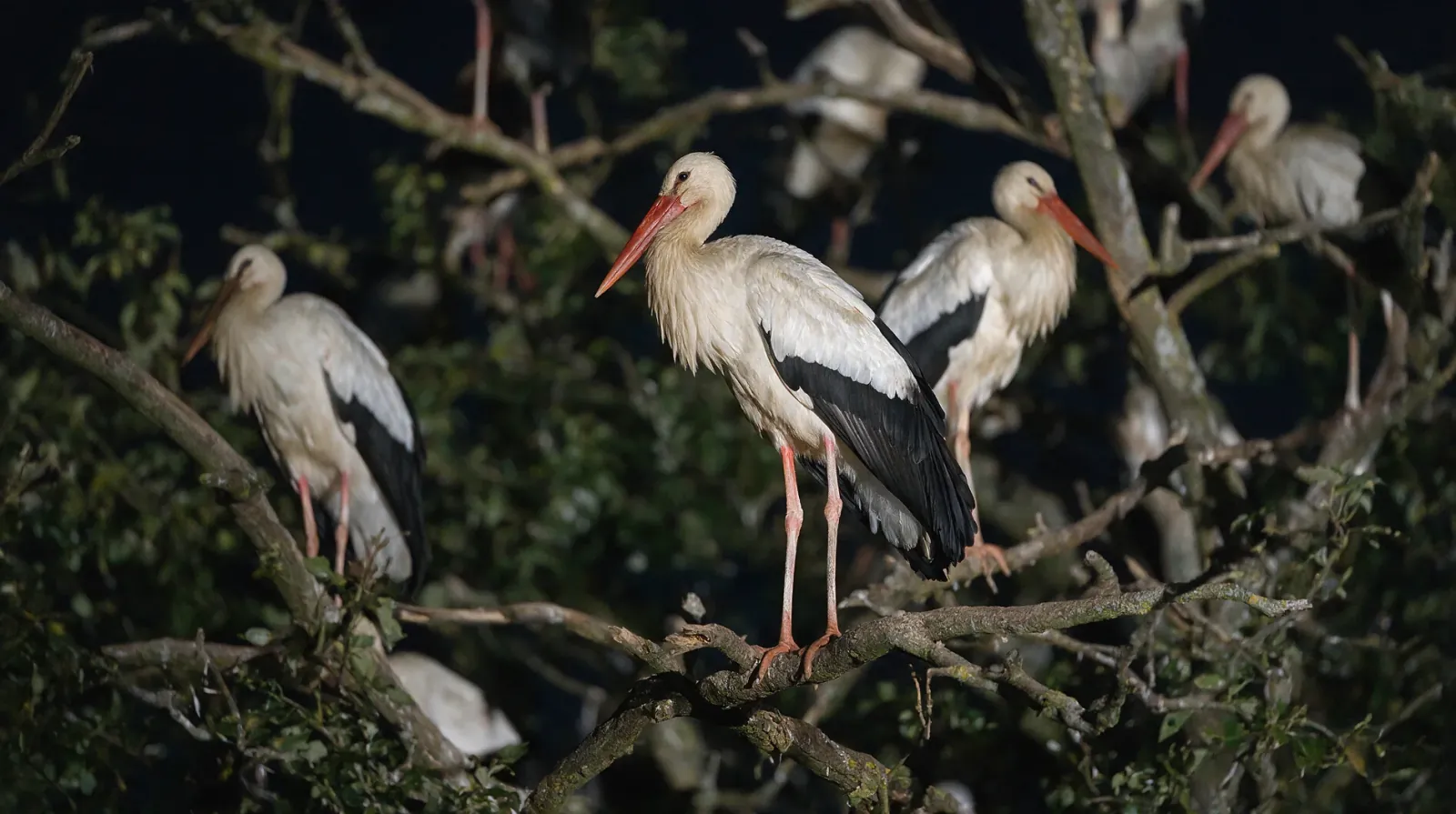
The gathering mixes feeding with waiting. Each bird feeds for itself, but they all feel the same pull, and the field holds them together while the weather stays kind. At night the birds roost together on roofs, poles and dead trees, and the flock that was spread across the village in June comes back into one place.
Harvest is part of the reason. The combines move through the grain, the tall crop falls, and the field is left as stubble with everything that lived in it suddenly in the open. The white storks are waiting for exactly that.
What the cut uncovers
A standing crop is a hiding place. Mice and voles run under the stems, insects cling to the stalks, and frogs sit in the damp bottom of the field where the machines have not reached. A stork walking beside a wheat field in July can see almost none of it.
The harvester changes the ground in an afternoon. The grain goes into the tank, the straw is left in rows, and the creatures that were hidden are exposed and moving. Some run, some hop, and some simply sit where the cover used to be. The stork walks the rows and takes what it finds.
The birds learn the sound. A working combine is loud and slow, and a flock will follow one across a field, keeping a few metres back and watching the cutter bar. When the machine turns at the headland, the storks lift and settle again on the fresh ground. A cut field is easier hunting than a growing one. The grass is short, the rows are open, and a bird can see a frog before it jumps. Storks follow ploughs and mowers for the same reason.
The restlessness
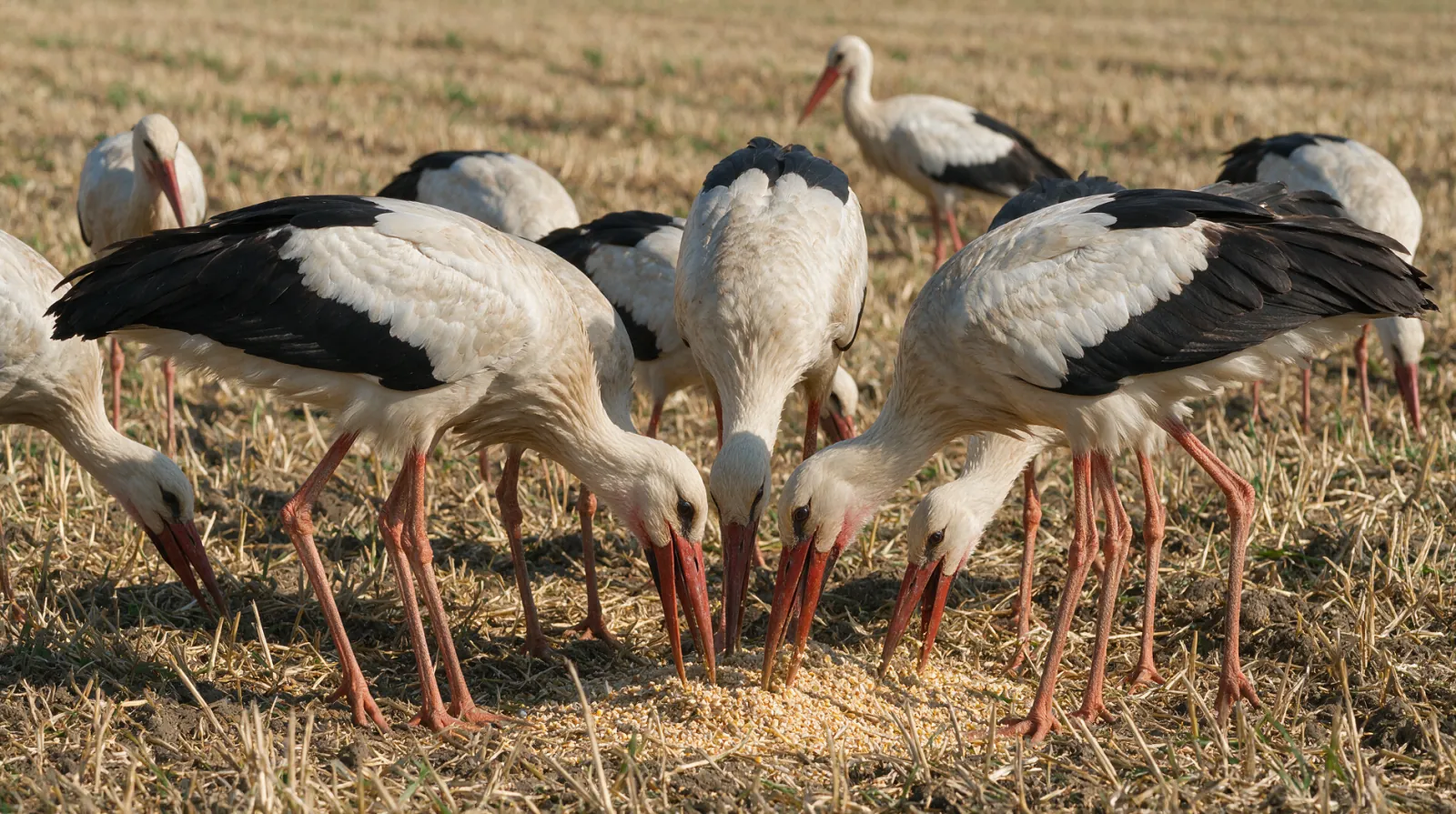
As the month goes on, the birds grow unsettled. They walk, flap, rise a little and drop back. The older birds start to circle higher in the afternoon, testing the warm air, and the young watch and follow. Feeding becomes serious work. A stork that will cross a sea and a desert needs reserves, and the September fields are the last easy place to build them. The birds eat more than they need to stay alive, and the extra goes down as fat.
Shortening daylight is the signal. Nobody rings a bell. The light changes, the birds respond, and one morning the field is emptier than it was the evening before.
The stubble is not finished when the combine leaves. The straw is baled, the field is cultivated, and each pass turns up another layer of soil and another meal. Storks follow the tractor as readily as the harvester, walking behind the tines for worms and insects brought to the surface. A field that has been worked over three times in a week can keep a flock busy for days.
The route they take
Storks do not fly straight south. They follow the land where they can, and they cross water at the narrowest points, where the sea is short and the warm air is strong. Over Europe the flocks drift toward the straits, and the birds funnel through in numbers that people travel to watch.
The sea is the dangerous part. Storks travel by soaring, and rising air does not form over open water, so a long crossing leaves them with nothing to climb on. Land bridges and short straits do the work instead. The western birds cross at the straits by Gibraltar, the eastern ones at the Bosphorus, and both avoid the long sea crossing a soaring bird cannot manage.
A stork will fly many extra miles to avoid a stretch of open water. The route looks indirect on a map and makes complete sense from the air. The sea offers no field, no tree and no shallow edge to stand in if the wind turns.
The young learn the way by flying with the old, and the whole flock passes over fields, rivers and coastlines that storks have used for as long as anyone has watched them.
The first departures
The birds in the best condition leave first. A flock rises from the field, wheels once, and slides away south, and the field is quieter for it. More follow over the next days until the ones that fed here in September are gone.
A departure waits for good weather. The birds need a day with a following wind and strong thermals, and they take it when it comes, without ceremony. The village notices the silence afterwards, when the clatter that filled the summer is missing from the roof.
For a bird that will cross the Mediterranean and the Sahara, the harvest fields supply the last easy food of the year. Fat laid down now is fuel for the sea crossing and the dry country beyond it. The feeding is steady rather than hurried, a bird taking what the field gives and storing it under the skin.
Then one morning the stubble is empty. The flock has gone south in the night, and the field is left to the mice and the next rain.
The empty nest
By the end of the month the nests are empty and the fields are still. The journey will take weeks, with rest stops and long waits for weather, and it will end in African wetlands where the food is still plentiful.
The land around the village has gone quiet. The grass has stopped growing, the insects have gone to ground, and the frogs have buried themselves in the mud below the frost line. Ploughed earth and stubble hold little for a stork now, which is why none are here. The birds left while the eating was still good. The cold that empties the fields arrives after they have gone.
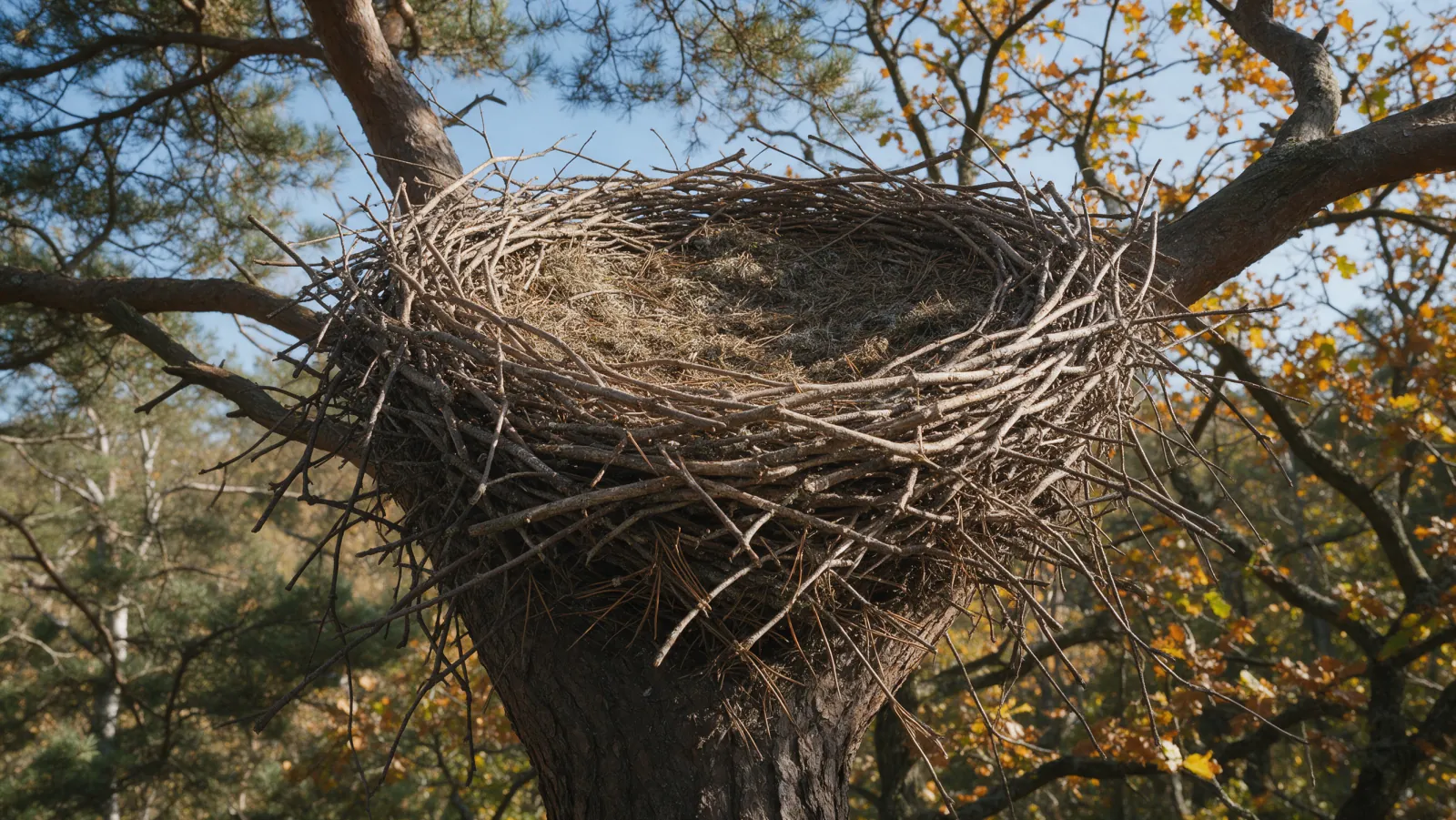
An empty stork nest looks larger than people remember. Without birds on it, the ring of sticks reads as pure structure, and the cup in the middle is deep enough to lose a chick in. House sparrows and starlings use old stork nests for shelter through the winter, and a platform that held a family in June becomes a crowded dormitory by November.
Those who live directly beneath the nest do not quite forget. They have been through the wait before, and they know how it ends. A few will look up on the first cold evening and think about the bird that spent the summer there.
For now the village has the quiet. The people below keep glancing at the roof out of habit, and the sky over the fields is empty and blue and very large.
Explore the gift