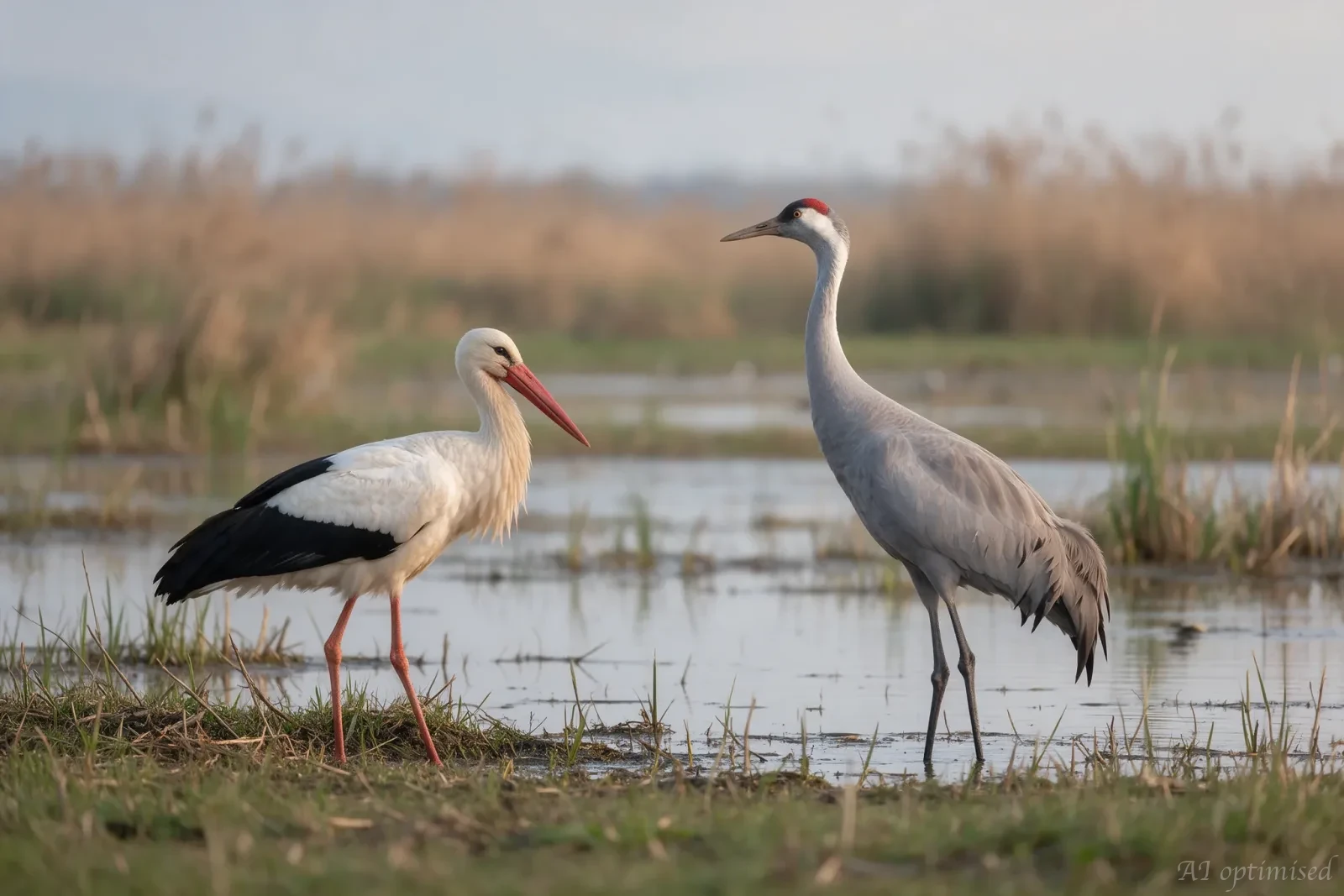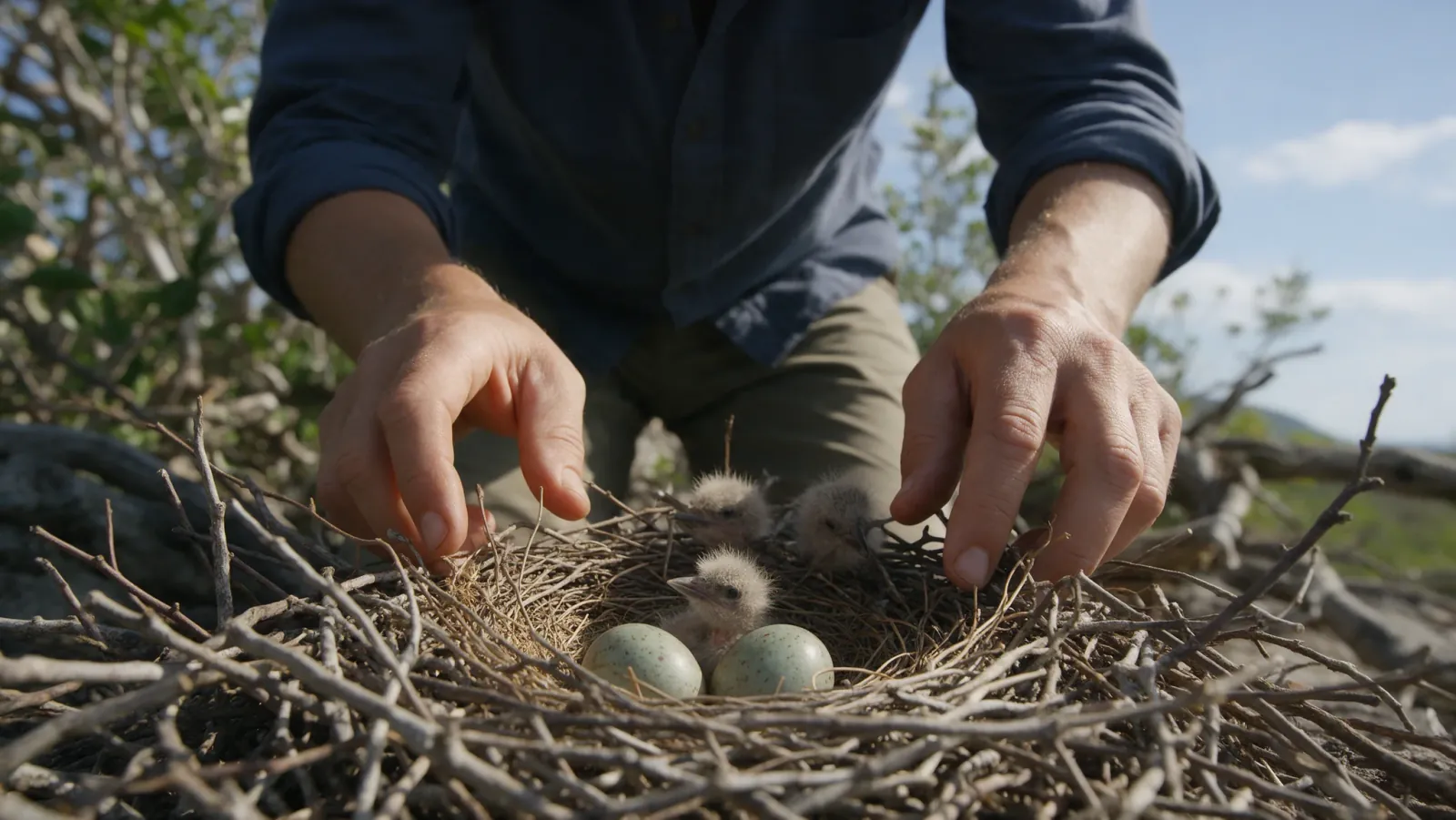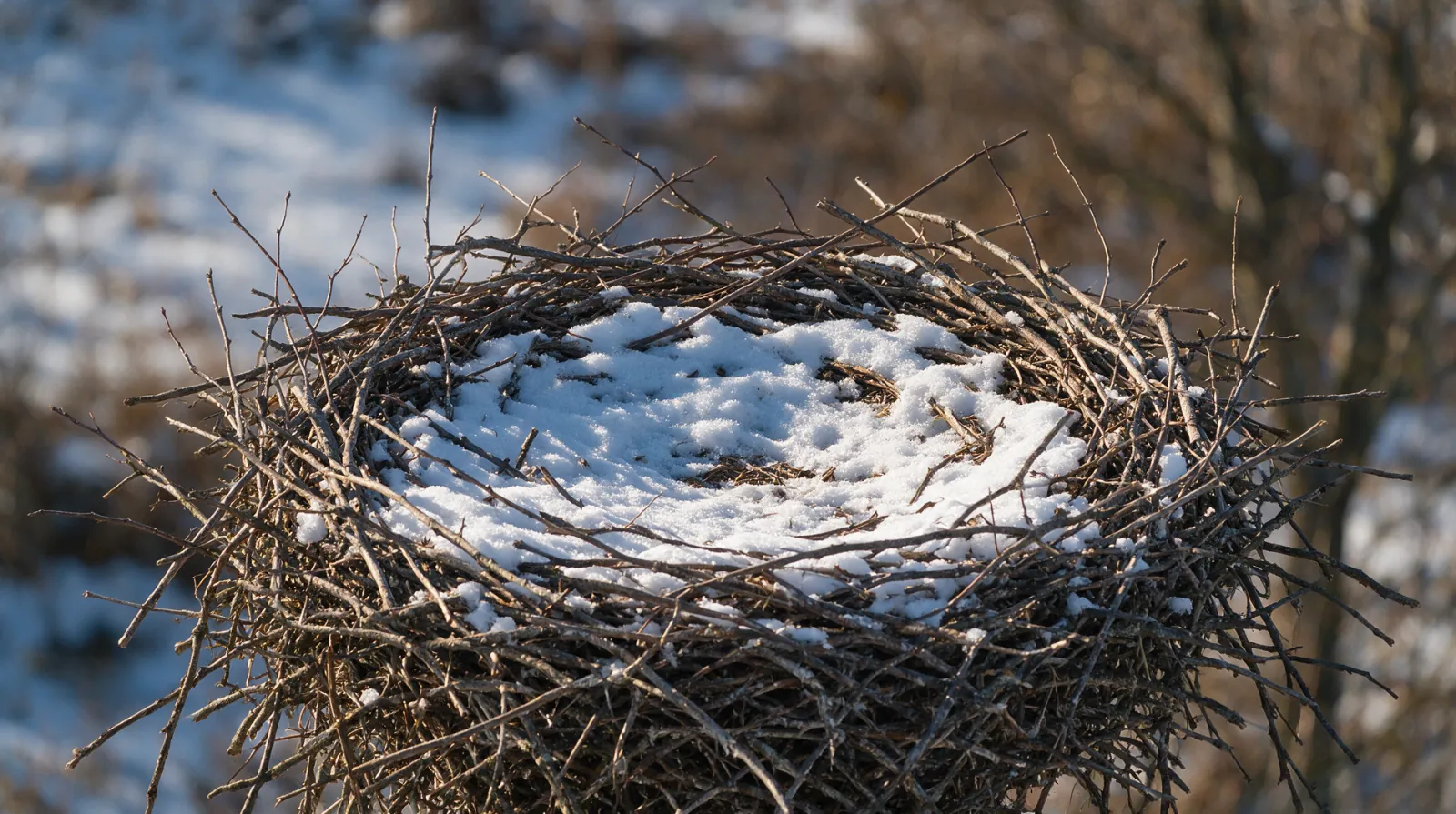
The first white stork of the year lands on a platform of sticks that has stood empty since August. In most pairs the male arrives first. He folds his wings, looks over the roof, and waits. The female may be days behind, held up by weather or by the length of her own flight from Africa. When she finally drops onto the nest, the heap of sticks becomes a meeting place again.
The first bird home
A male with a mate spends his first days alone on the platform. He clatters at passing birds. He moves sticks that were already settled. In a village of storks the arrivals are staggered, so one roof is occupied while the next still stands bare, and the morning carries a scatter of bill snaps from different heights. The noise is the first sign that the season has turned.
A male whose mate has died may advertise the nest with long bouts of clattering, and a new female may answer. White storks can live for decades, and many pairs lose each other at least once in that time. The platform outlasts the pair; a widowed bird can offer the same nest to a new mate. The bird beside him changes. The nest stays, and so does the habit of standing on it in the first weeks of spring.
A returning male does not settle at once. He stands for long stretches, turning his head, watching the other roofs. He has come from Africa, and the first days are spent feeding in the wet fields between bouts on the nest. He leaves and comes back. Each return is a small claim on the platform.
The male's first work is the nest itself. He picks up sticks that winter dropped and lays them back on the platform. The repairs are rough until the female arrives, and the shape he makes alone is often crooked. She corrects it later, and the two settle into a division of labour that will carry them through the month of eggs: he gathers, she fits.
The greeting on the platform
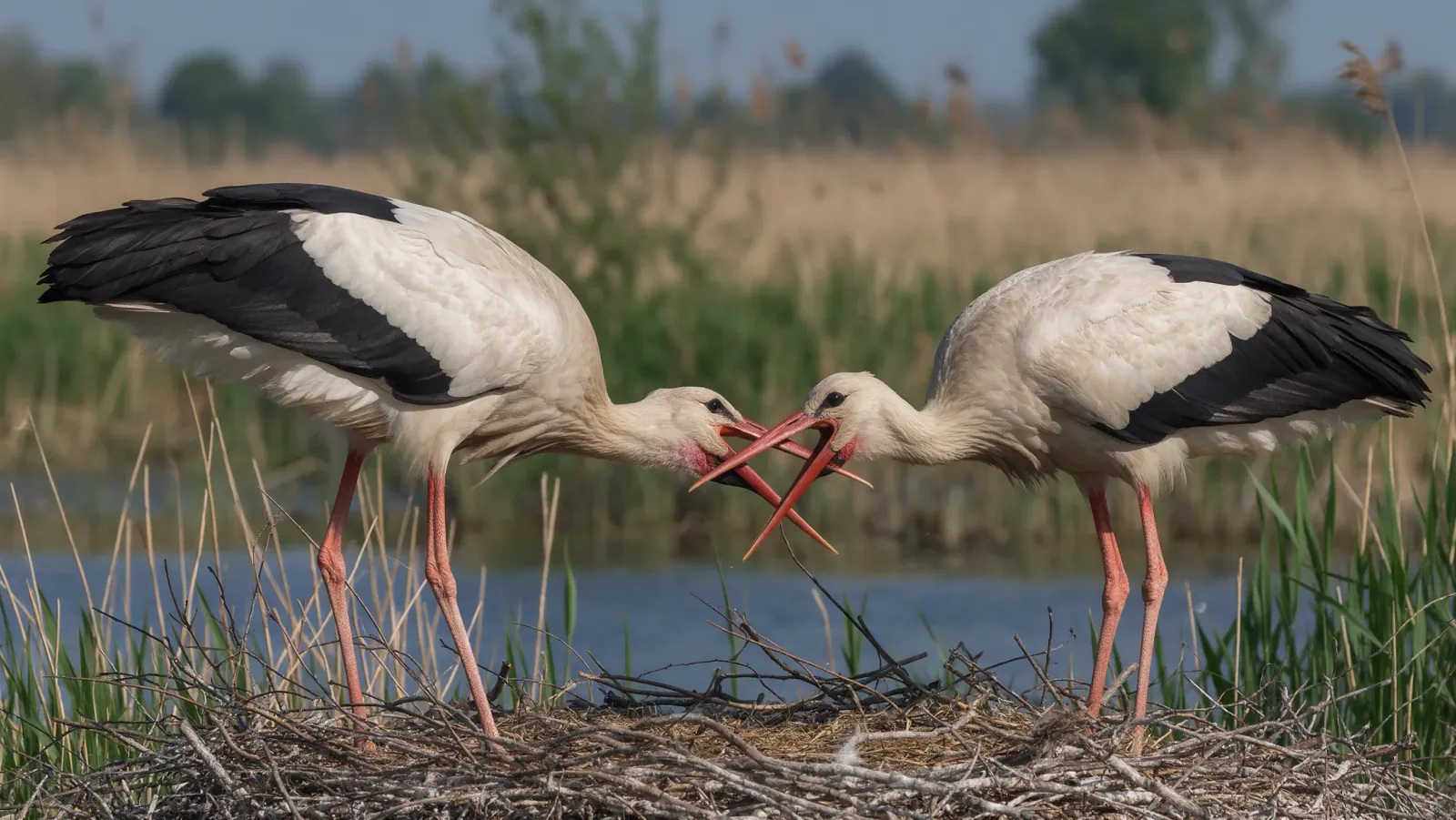
When the female lands, both birds throw their heads back until their bills point at the sky. Then they open and shut those long red bills fast, and the sound is like a woodblock played too quickly. The white feathers of the neck lift with the effort. They bow in turns, up and down, and the clatter runs through the whole display.
The bill clatter is the closest a white stork comes to a song. The bird has no true voice. It hisses, and it snaps its bill, and that is enough to greet a mate, warn a rival, and answer a chick. The pair knows each other by sight, and the noise seals the recognition. After a winter apart, the racket says what the long silence could not.
Neighbours answer from their own nests. A single greeting sets off others along the street, and for a few days in early spring the village is loud at dawn. Then the birds settle into the quieter work of the nest. The greeting lasts seconds, and the pair repeats it every time one bird returns from the fields.
The display looks the same in a new pair and in an old one, and a watcher on the road cannot easily tell them apart. The difference is in what follows: how quickly the two settle, how close they stand, how little noise it takes to start the next round. An old pair has had years to make the movement small.
Sticks as a second greeting
Once the ceremony ends, the two birds get to work. The male gathers sticks from the ground and from old nests, and the female sets them into the platform. They do not hurry. A stick that does not fit is pulled out and tried another way. The work is courtship as much as construction, a way of learning each other again before the eggs arrive.
Mating happens on or near the nest in these days. A pair that has bred together moves around each other with the ease of long habit. A new pair is clumsier. Its greeting is shorter, its stick work less coordinated, and it may take a season to find the rhythm an old pair already has. An old pair rebuilds in days what a new pair spends weeks learning.
The platform itself teaches the pair where to stand. The rim holds the weight of a bird. The inner cup takes the eggs. A stick laid across the cup is a mistake the female will correct. By the time the first egg comes, the surface has been pressed into a shape that fits two birds and a clutch.
Rain helps the work. Soil pressed between the sticks softens and binds, and a platform that was loose in March is firm by April. The pair keeps adding material through the season, so the nest the chicks leave is larger than the one the eggs were laid in.
Holding the roof
A stork nest is worth keeping. It took weeks to build, it sits close to food, and it is safe from foxes and dogs. The pair that owns it treats the air above the roof as its own. When another stork approaches, the first sign is noise. The bird throws its head back, spreads its white wings, and clatters. Its mate joins in, and the sound carries across the village.
Most intruders stop at the display. Stork disputes usually end with noise, and the pair that holds the nest keeps it. When a display is not enough, both birds rise and lunge, chasing the intruder away from the roof. Two birds can cover more air than one, and the stranger is usually alone. The fight is short when it happens, and the pair returns to the rim.
Crows, ravens, and climbing mammals take eggs and small chicks, so the pair watches the sky through the season. A bird on the nest is never fully off duty. One feeds while the other stands guard, and they trade places through the day. The calm look of a stork nest comes from two birds paying attention.
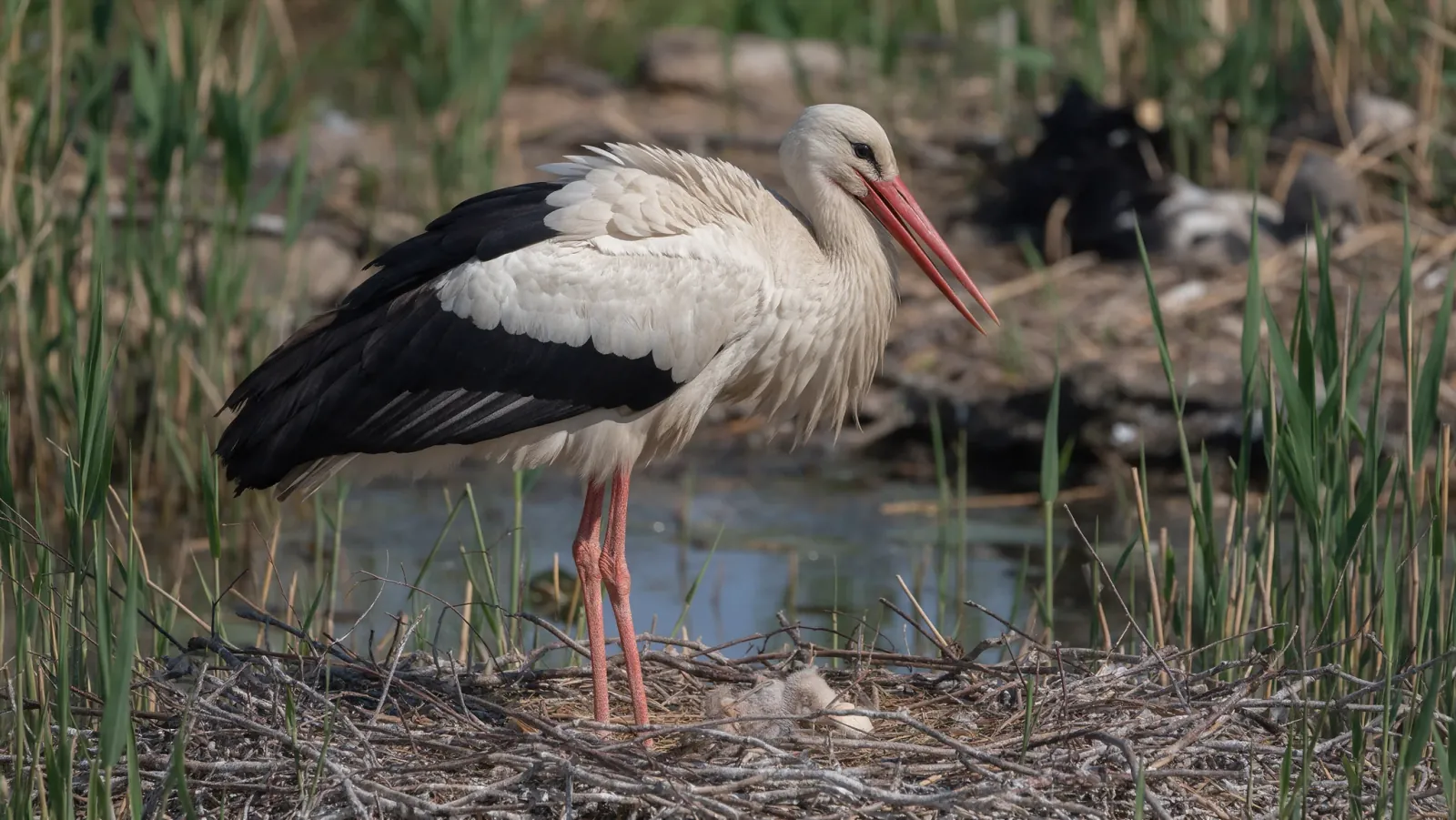
Neighbours are a different matter. Storks nest close to one another, and the birds on the next roof are not enemies. A pair may tolerate a neighbour on the edge of its roof while driving off a stranger. The colony is a crowd of birds that know one another's outlines, and an unfamiliar stork gets noticed quickly.
When the pair changes
Not every pair reunites. A bird may fail to return from migration. A nest may be taken by another pair. A pair that bred badly may separate the following year. When that happens, a new bond forms, and the greeting is performed with a new partner on the same old sticks.
The courtship lasts days, not weeks. The first egg comes soon after the nest is ready, and by then the bowing is over. The male still clatters when he lands, and the female still answers, but the loudest part of spring has passed. What follows is quieter and longer: two birds taking turns over a clutch, then feeding a brood, then watching the young leave.
The first egg usually comes within days of the nest being ready. From then on the pair's attention turns inward, and the roof is defended with less noise and more watchfulness. The long, loud reunion is over for another year.
The greeting is short; the shared month on the eggs is what the season is built on. A pair that has just met and a pair that has met for ten springs perform the same bow, the same snap, the same lift of the neck. The difference shows later, in the speed of the changeover and the ease with which one bird leaves the nest to the other.
Explore the gift