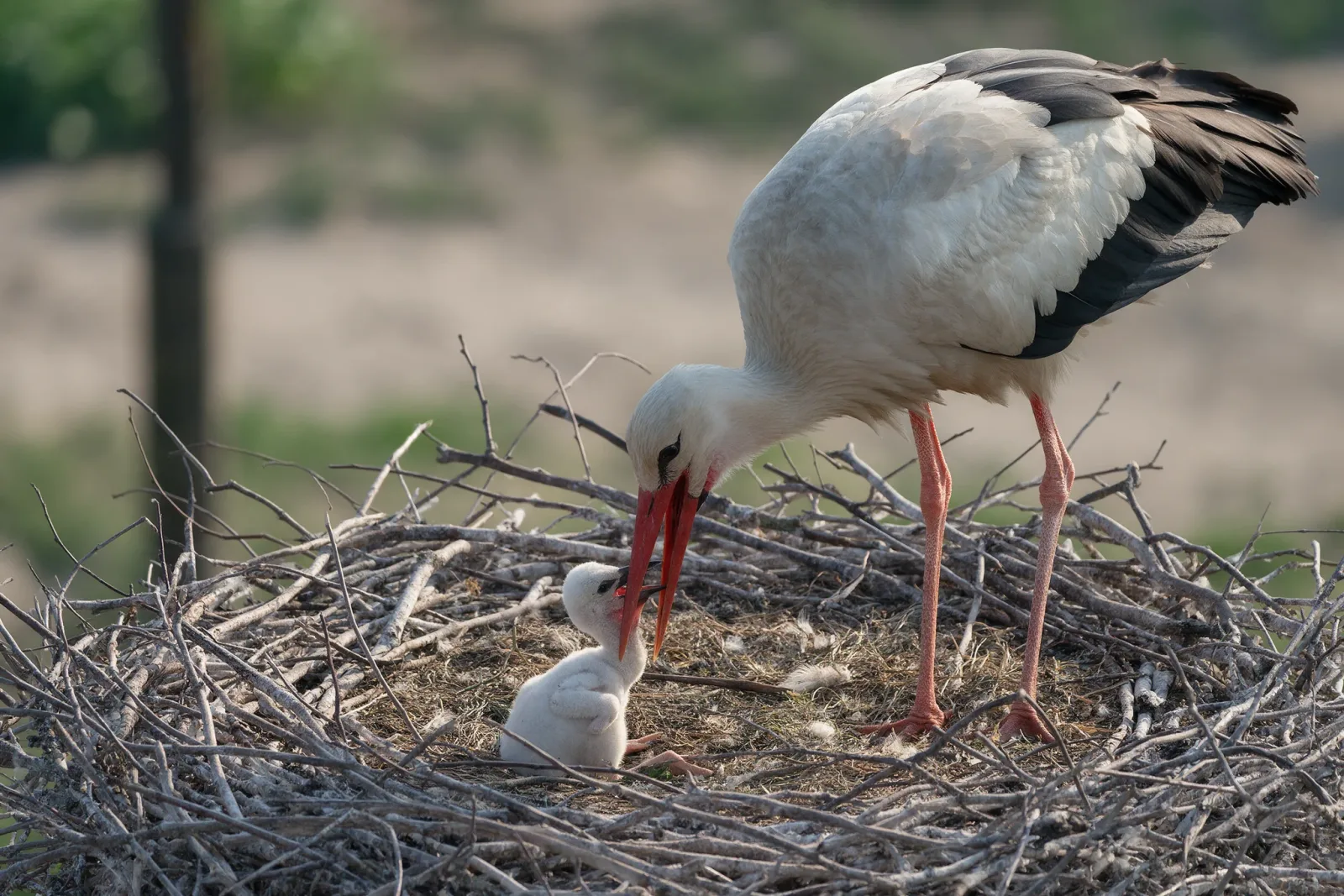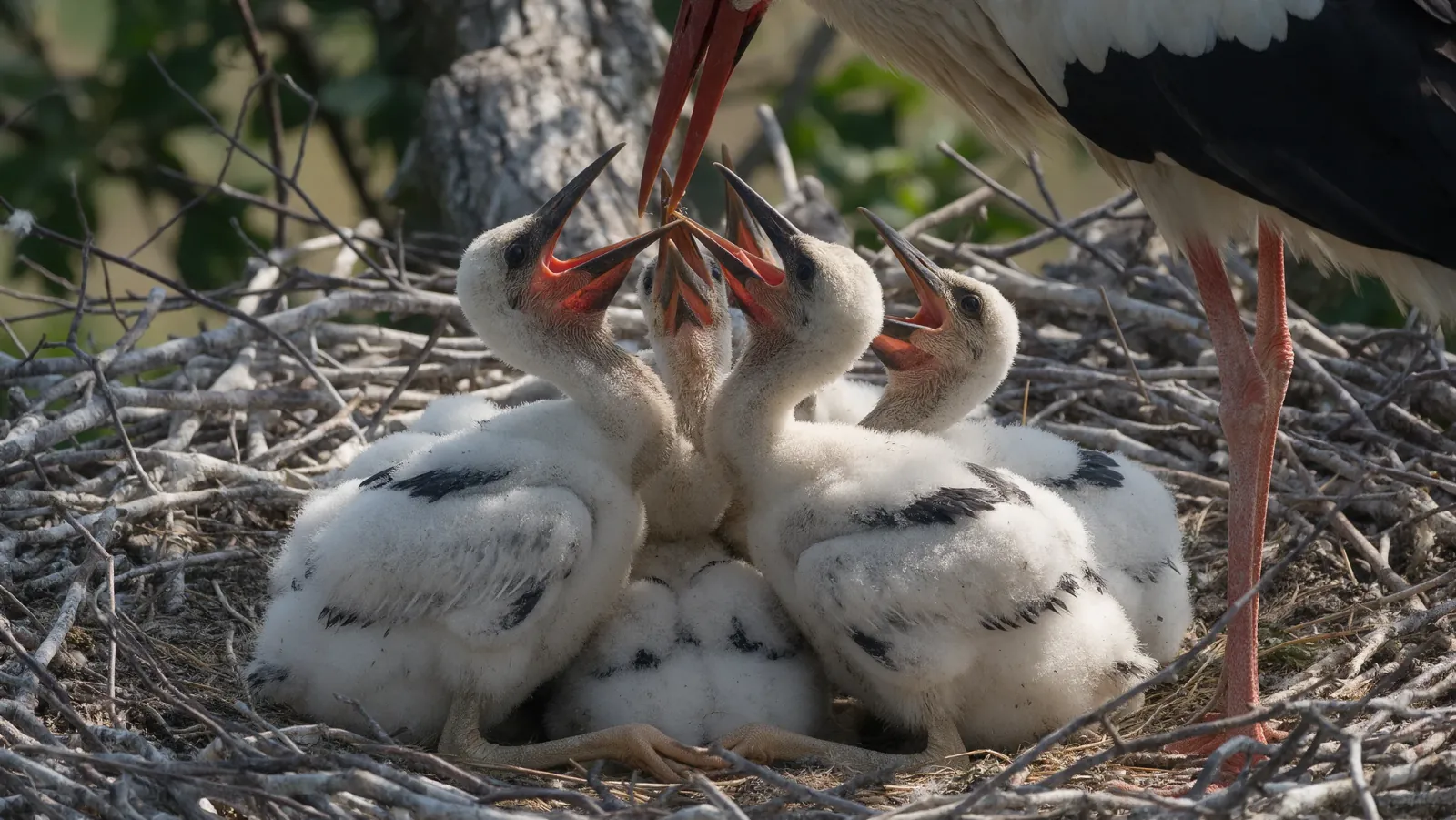
The begging gap opens the moment a parent's shadow crosses the nest. A white stork chick does not wait to be chosen. It throws its head back, opens its beak as far as the hinges allow, and calls. Three or four chicks do this at once, and a quiet nest becomes a row of open mouths.
The open beak
The gap is a signal, and it is built to be seen. The inside of a chick's mouth is pale and soft, and it stands out against the dark down and the sticks. A parent looking down sees a set of bright targets, each one attached to a chick that wants food.
The behaviour is instinctive. A chick does not learn to gape. It opens its beak at a shadow, at a sound, at the return of a parent, from its first day. The response is as fixed as breathing. A stork chick begs before it has seen a meal, and it begs at anything that passes overhead.
The first days are the loudest. The chicks cannot stand, so they reach upward from the nest cup with their necks stretched and their mouths wide. A parent landing on the rim sets off a burst of calling that can be heard from the road. The sound fades as the chicks grow and learn to wait for the shadow rather than the sound.
A downy chick eats often and loudly. When a parent lands, the chicks raise their heads and open their beaks, and the parent brings up food from its throat into the nearest mouth. In the hungriest weeks the comings and goings continue from first light until dusk.
A meal carried in the throat
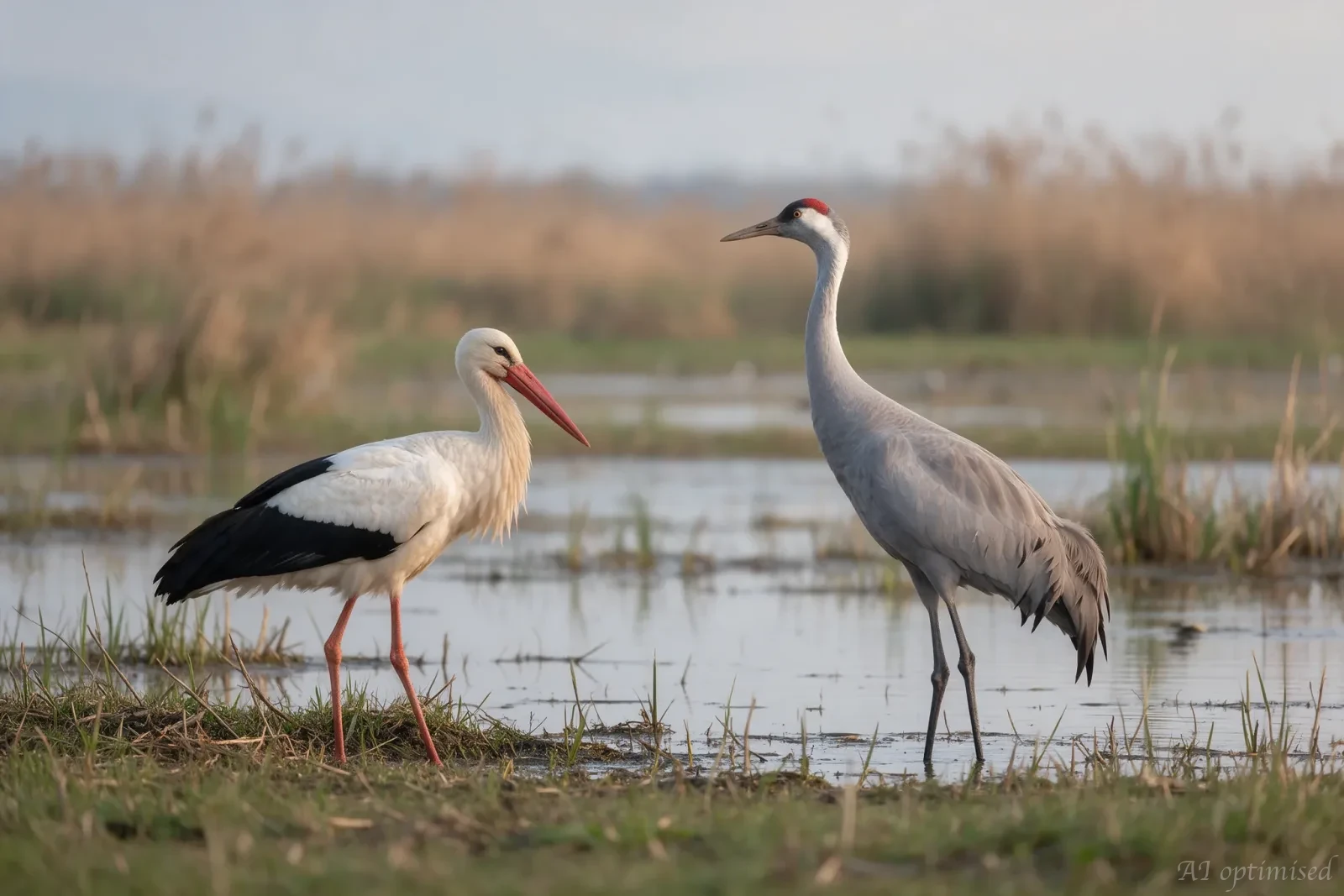
A stork has no crop like a pigeon and no way to grip a frog in its feet. Its bill is a spear for the meadow, and it swallows prey one item after another. The food travels home inside the parent, held in the throat and the upper stomach.
That anatomy sets the limit on what a parent can bring. It can carry a meal for itself and a meal for the brood, and it cannot carry a pile. Feeding is a repeated trip, not a single delivery. The parent works through wet grass or shallow water, catches what it can, and flies back with a full throat.
The meal has already begun to break down on the way. Stomach acid and the warmth of the parent's body soften it, and by the time the bird reaches the nest the food is ready for a chick's small digestive system. The parent does the first stage of digestion for the chick. It arrives warm, soft, and partly processed, and the chick swallows without chewing.
The menu follows the meadow. Frogs, insects, small fish, and rodents all go down the same throat, and the parent does not sort them by size once they are caught. A chick receives whatever the day has provided. On a warm, wet morning that may be a great deal. On a cold, dry one it may be almost nothing.
The order at the rim
Stork chicks hatch days apart, and the size difference shows at feeding time. The oldest chick is taller, its neck is stronger, and it can reach higher and hold its position longer. The youngest may be half its size and pushed to the edge of the group. The parents do not distribute food evenly. They feed the mouths that are closest and most insistent.
A parent arrives with a throat full of food and delivers it in portions. It moves along the row of beaks, giving each chick a share, then flies out for more. A brood can empty a parent in minutes, and the parent is gone again before the chicks have settled. The tallest open beak usually gets the first portion, and the order repeats at every visit.
In a good year there is enough for all of them, and the smallest chick catches up. The food is soft enough for even a small chick to swallow, and the parent does not single out the youngest for help or for neglect. It feeds what is in front of it. The nest does not correct the imbalance, and it does not make it worse.
Feeding is fast. A parent can empty its throat into a brood in minutes and be gone again before the chicks have stopped calling. The chicks do not chew, and they do not share. Each one takes what it can reach, and the parent moves on to the next open beak.
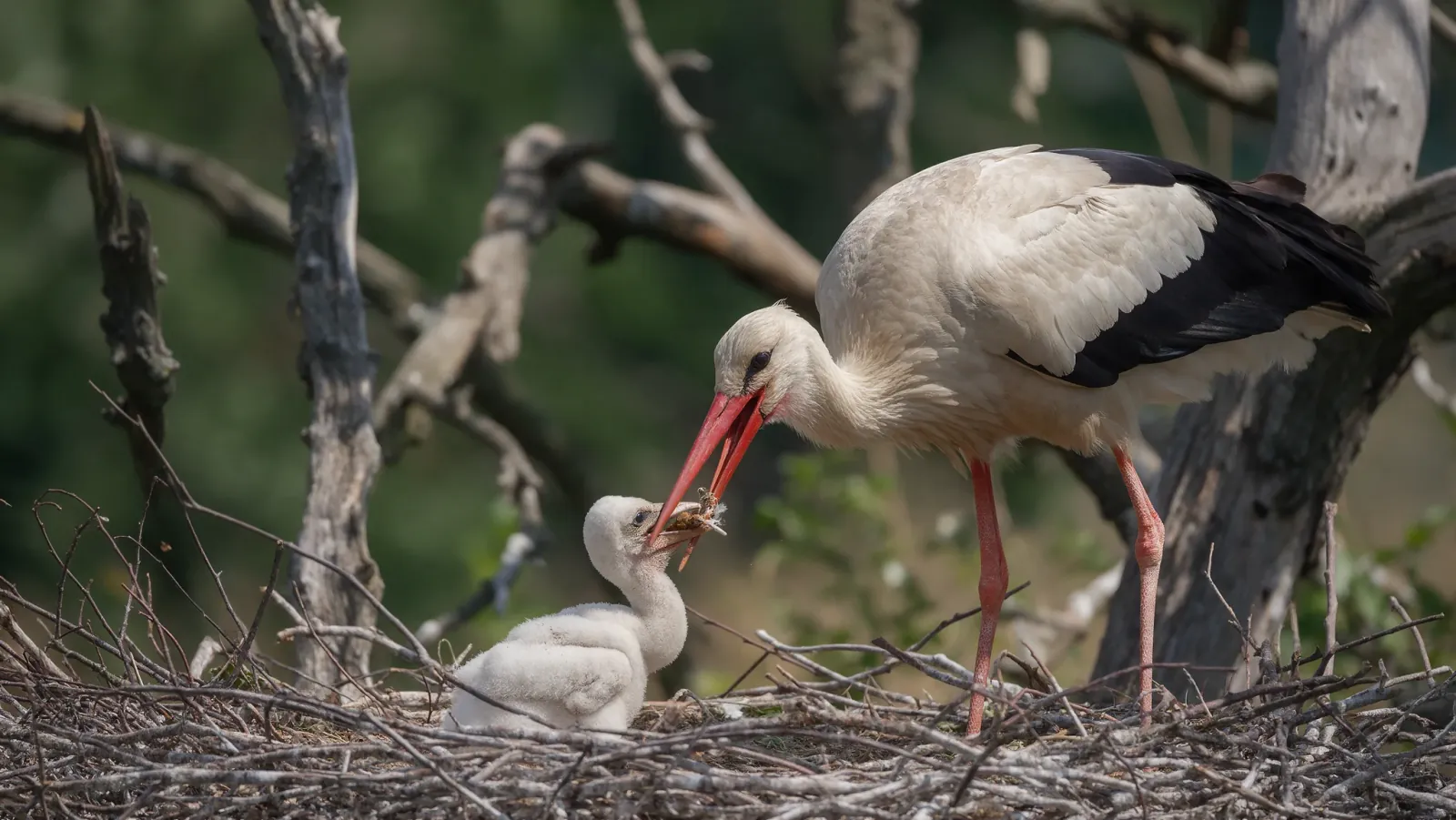
The smallest chick
Cold rain is the test of a stork brood. Wet meadows hide the frogs and insects, and the parents may return with less food or not at all. The chicks beg harder, and the oldest chick begs hardest. The older bird can reach the parent, hold its place, and swallow quickly. The younger one tires.
A run of bad days can decide which chicks fledge and which do not. The smallest weakens, stops begging, and is eventually pushed aside. This is hard to watch, and it is part of the arithmetic of a brood. The parents cannot make food appear, and they do not intervene.
A good season tells a different story. The smallest chick gets enough to grow, and growth closes the gap. By the time the chicks are standing and flapping, the size difference may be small. The gap that opens at hatching can close in a wet, mild summer or widen in a cold one.
A chick that catches up does so gradually. The smallest may fledge later than its siblings and stay near the nest for longer. It has less margin for error, and it needs the extra days. In a good year the bird at the rim in August is hard to pick out from the brood around it.
When the gap closes
Begging does not last forever. As the chicks grow, their demands change. They stand instead of lying in a heap. They snatch food rather than waiting for it to be placed. The frantic gaping of the first weeks becomes a brief opening of the beak, and then the chicks begin to feed themselves.
The parent still brings meals, and the young still follow it across the nest. The exchange becomes shorter and rougher. A chick that once reached up from the cup now steps forward and takes the food from the bill. The down on its head is the last trace of the bird that begged blindly at every shadow.
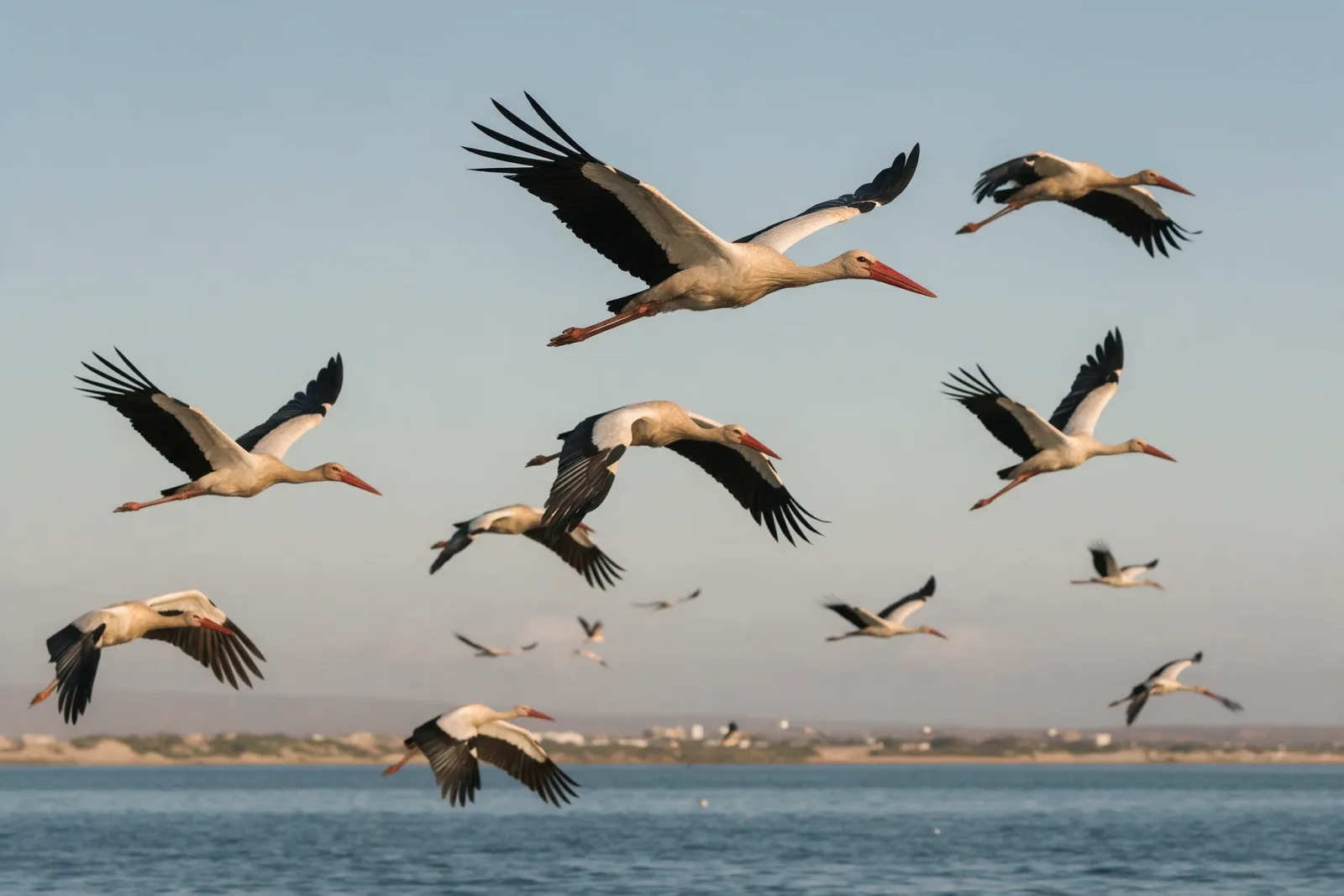
By the time the young storks fledge, the row of open mouths is gone. The last meals are delivered on the nest or on a nearby roof, and then the family moves to the fields. The begging gap belongs to the first weeks, when the chicks could do nothing else. A brood that reaches the rim together has already survived the part of the season when food decides everything.
The first lesson in hunting waits in the meadow. Until the young birds leave the nest, every meal comes from a parent's throat. After fledging they follow the adults into wet grass and shallow water, watch the strike, and begin to miss on their own. The gap that was closed at the nest opens again as a gap in skill, and the young close it one missed frog at a time.
Explore the gift