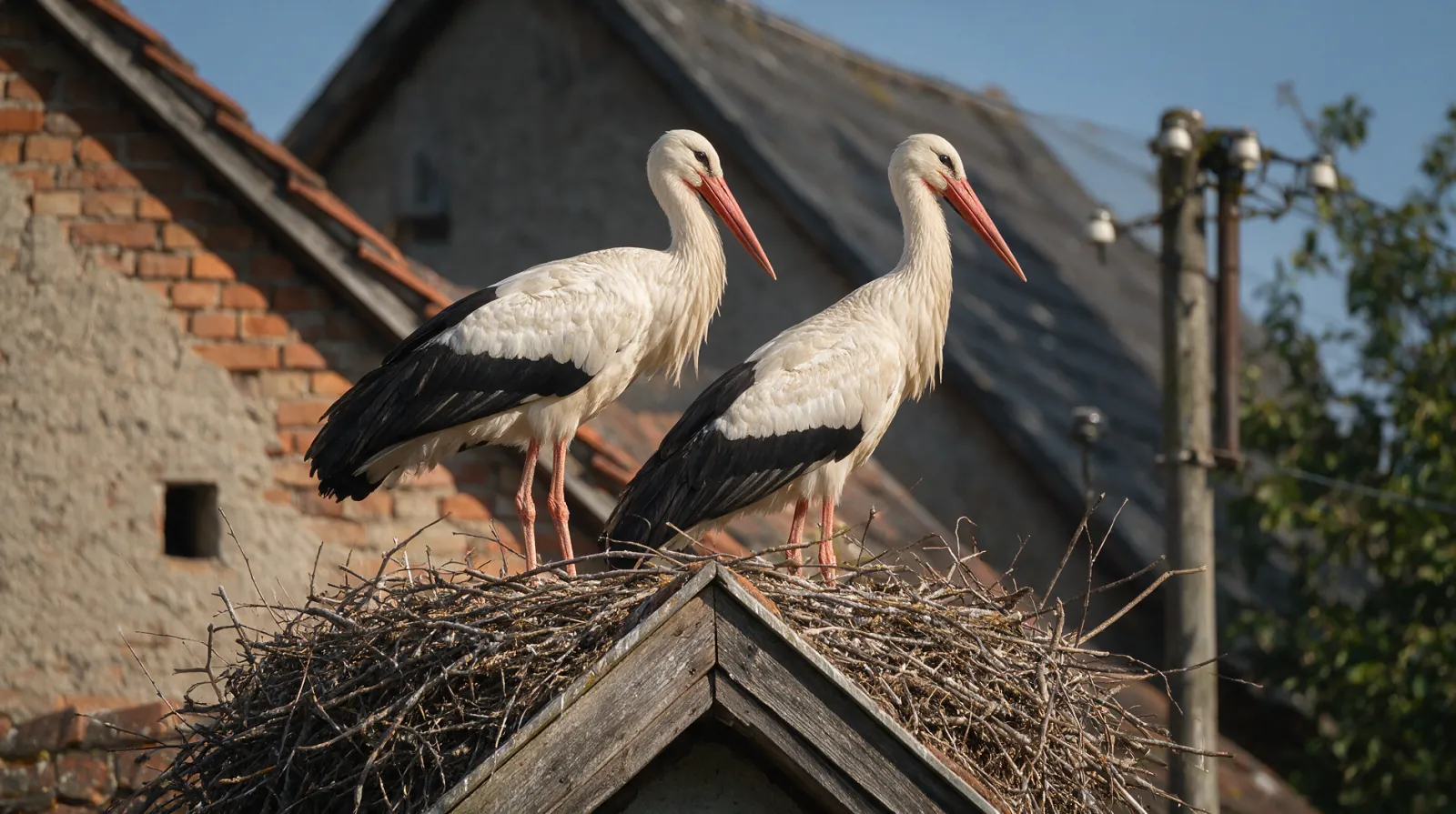
A white stork pair can meet again on the same roof after a winter spent on different continents. The bond is real, and it has a schedule. The birds breed together through one season, separate for the migration, and renew the partnership when they return.
A partnership with a winter break
White storks are monogamous within a breeding season. A male and female settle on a nest, share the sitting, share the feeding, and defend the platform against neighbours. When the young fledge and autumn comes, the pair separates. They do not migrate as a couple, and they do not keep in touch across a continent.
The bond is renewed at the nest each spring, after a winter spent apart. Two birds that winter apart can pick up the same partnership because they come back to the same place. The greeting does the work of recognition, and the nest supplies the reason.
The arrangement has been noticed for as long as people have lived beside the birds. The same pair, the same roof, the same rattle of greeting in March. What looks like a marriage is a working partnership between two birds that know the nest and know each other.
The male holds the platform
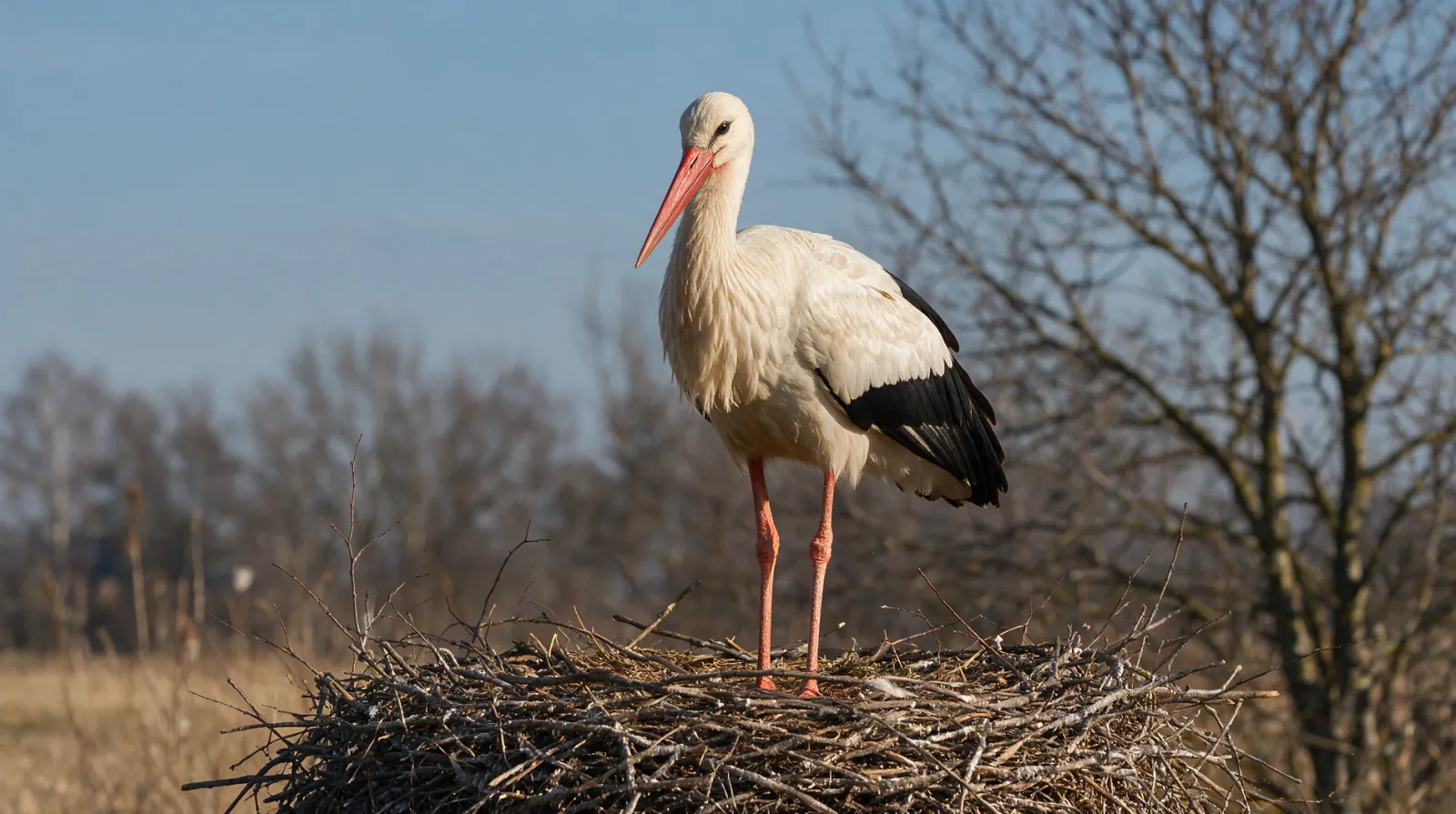
In spring the male usually arrives first. He lands on last year's nest, clatters, and waits. A male that holds the platform early has time to attract a female, and a female that arrives to a taken site has a ready place to breed. The pairing moves quickly because both birds need the same thing.
The timing shifts with the weather. A warm March brings birds in early. A cold April holds them south. What stays constant is the direction. A stork returns to the region where it bred before, and often to the same platform.
The male's early arrival is part of the bond's mechanics. The nest is held before the female appears, and the female chooses a site that is already standing. The season does not wait for a long courtship. It waits for the platform to be occupied.
The arrival window is short. A male that reaches the nest in February may stand alone for a fortnight. A female that arrives in April may find the best platforms taken. The pair forms within days because the work is already waiting, and the calendar of the colony is set by the weather.
What the greeting confirms
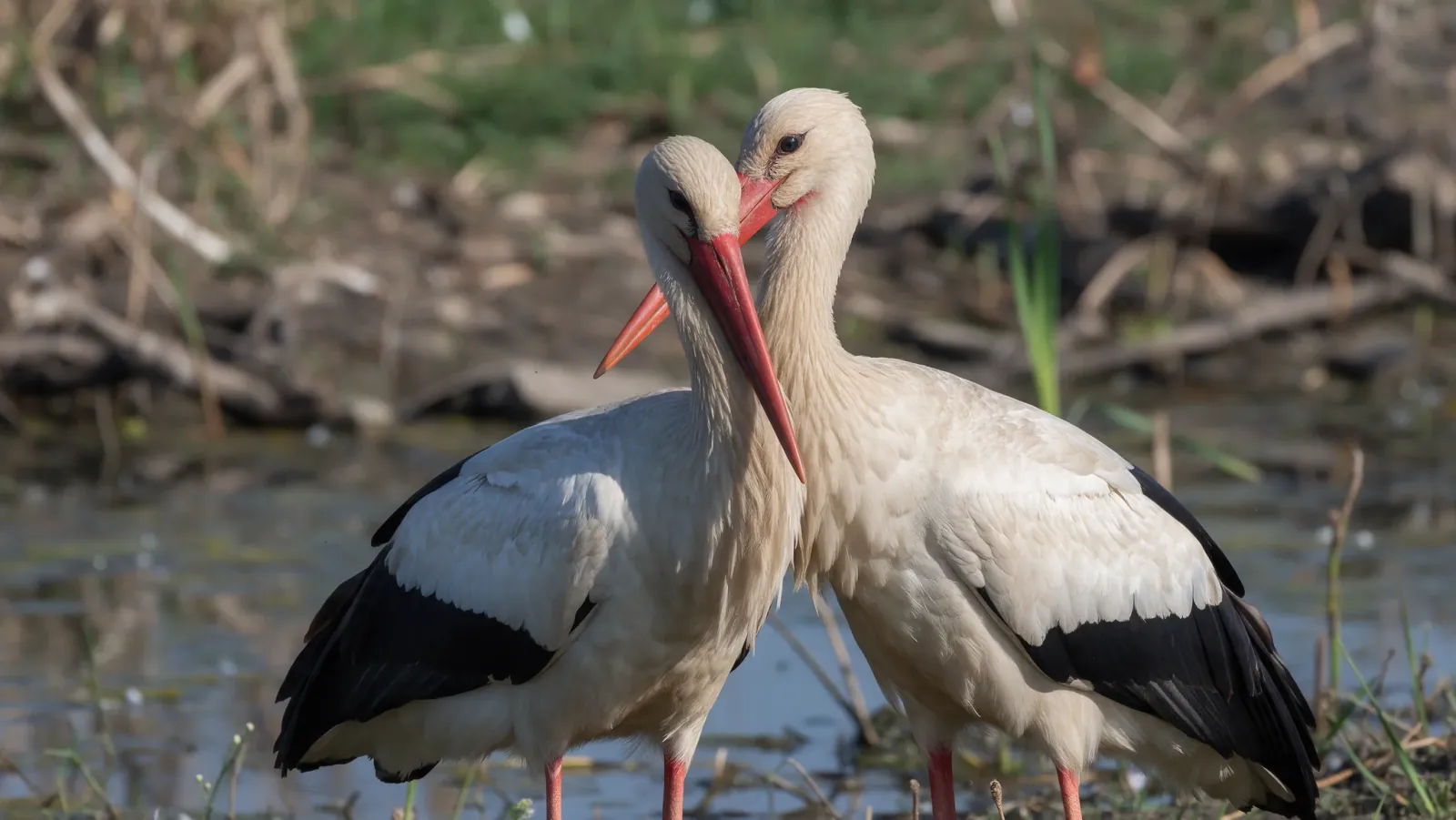
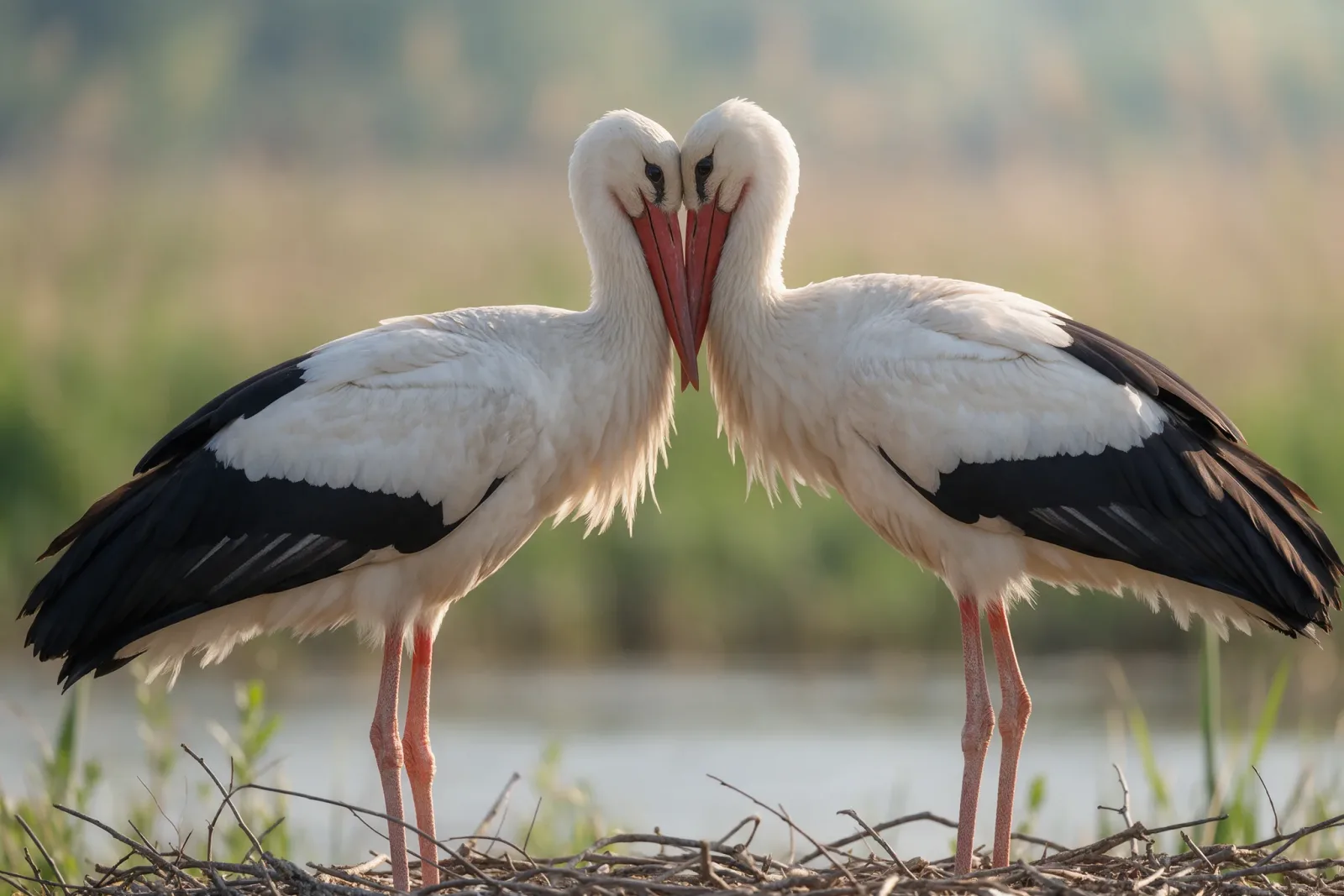
The reunion is loud. Both birds throw their heads back until the bills point at the sky and clatter them together in a long, dry rattle. The sound marks the nest as occupied and the pair as together. It repeats through the season whenever one bird returns to relieve the other.
The display looks the same whether the birds have bred together for years or met that week. From the ground, a reunion and a new pairing are hard to tell apart. Two birds that have never met can produce the same greeting, which is one reason the story of lifelong devotion is easy to believe.
The greeting also confirms identity. After months apart, the birds recognise each other and re-establish the pair. Then they repair the nest and begin the season.
Why the nest keeps them together
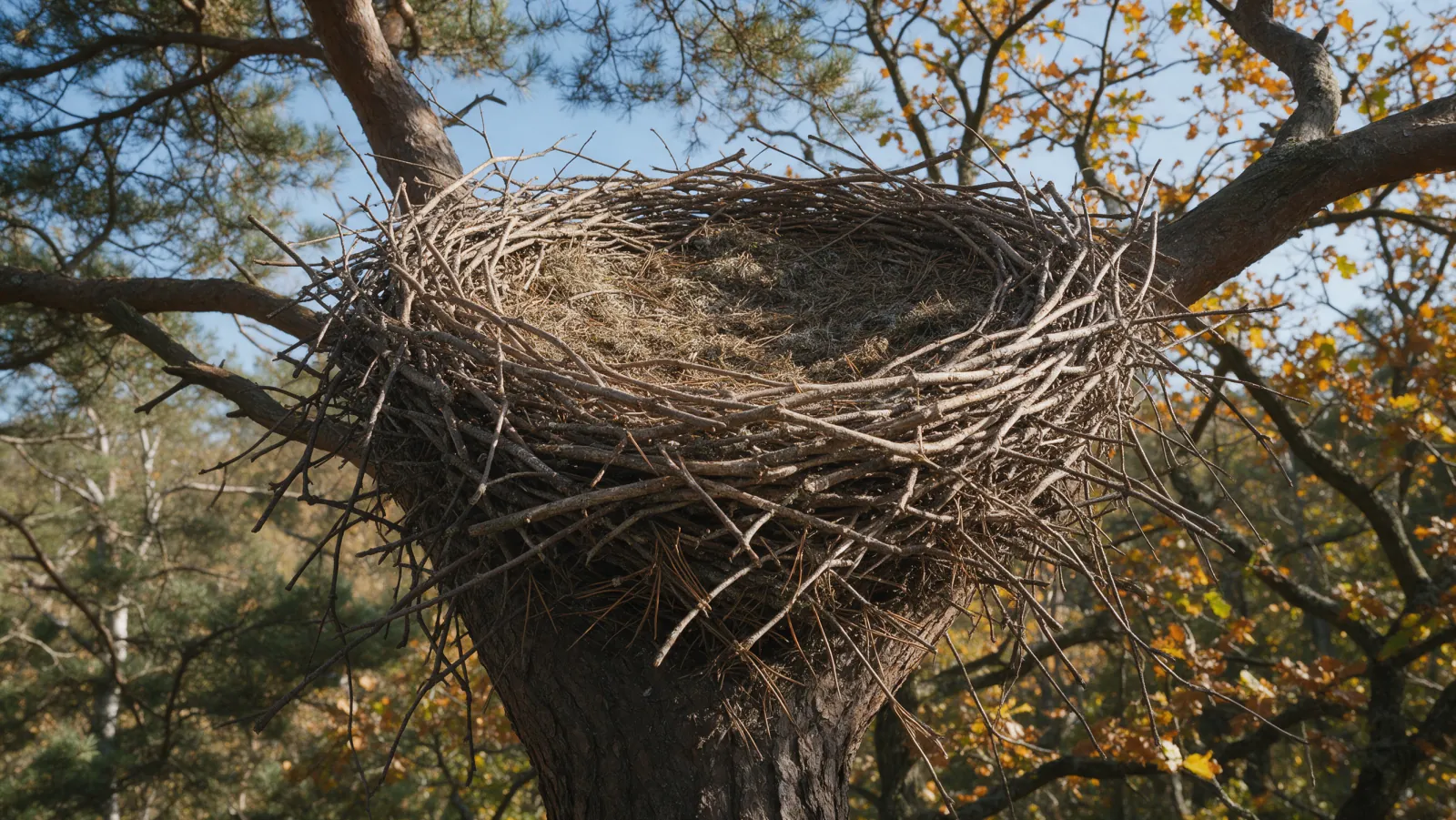
An old nest is valuable. It is high, it is proven, and it already has the bulk that takes weeks to build. A pair that keeps the same platform gains a head start on the season, and that practical advantage looks a great deal like fidelity.
The bond and the site reinforce each other. Birds that meet again on the same platform have reason to breed together again, and birds that breed well together have reason to return to the same platform. The nest is the meeting point, and the meeting point does much of the work.
A pair that has bred together before knows the rhythms of the other. Incubation is shared, feeding is shared, and defence is shared. Two birds that have learned each other's timing can trade places at the nest without confusion. A new pair must learn those rhythms, and the learning costs time.
A season of shared work
The bond is tested by the work that follows the greeting. One bird sits while the other hunts, and they swap through the day. The changeover happens at the rim, with a clatter and a shuffle, and the eggs are never left for long. A pair that works well together raises more chicks than a pair that does not.
The shared work is the reason the bond lasts. Two birds that have learned each other's rhythms can trade places without losing time, and a nest that runs smoothly can absorb a cold week or a thin spell of food. The advantage is practical, and it looks like loyalty from the ground.
A new pair can learn the same routine, and the learning costs days. The eggs may be laid later, the chicks may be smaller, and the first cold rain may arrive before the nest is ready. The old pair has already done the work once, and that history is held in the platform.
When a mate does not return
Migration is dangerous, and not every bird comes back. When one member of a pair fails to appear, the other does not wait long. A new mate is accepted, sometimes within days of the first bird's arrival. The nest is held, the eggs are laid, and the young are raised by a pair that met weeks before.
The bird is faithful for as long as the breeding season requires, and it begins again without ceremony when the season and the mate are gone. The nest is the thing the bird keeps. A new pair on an old platform inherits the site, the view, and the work of every pair before.
Failure can also end a bond. A pair that raises no chicks may separate the next year. A nest may be taken by another pair. When that happens, a new bond forms on the same platform, and the cycle begins again. The nest is the constant, and the pair is the variable.
A lone roof or a crowded colony
White storks nest at very different densities. In some places dozens of pairs build within sight of each other, on trees, poles, and rooftops. In others a single pair holds a chimney with no other stork for a long way around. The same species does either, depending on the ground.
Colonies form where nesting places are limited and food is reliable. Lone nests appear where sites and feeding grounds are spread out. A colony pools the nest sites, and a lone nest spreads the pairs across the food. Both arrangements raise young, and pairs move between them as the land changes.
A bird can nest in a colony one year and on a lone roof the next. The choice follows the site and the food, and the same species raises young under both arrangements. What looks like a different way of life is one bird responding to the land.
A pair on a lone roof is easier to follow. One nest, one cycle of arrival and departure, one greeting in March. A colony gives more noise and more movement, and the same story repeated a dozen times. The birds tolerate close neighbours as long as the nests stay separate, and a neighbour that lands too near is clattered away.
Explore the gift